标签: North America

北美洲

  • Trump says US to pause operation to guide vessels through Strait of Hormuz

    Trump says US to pause operation to guide vessels through Strait of Hormuz

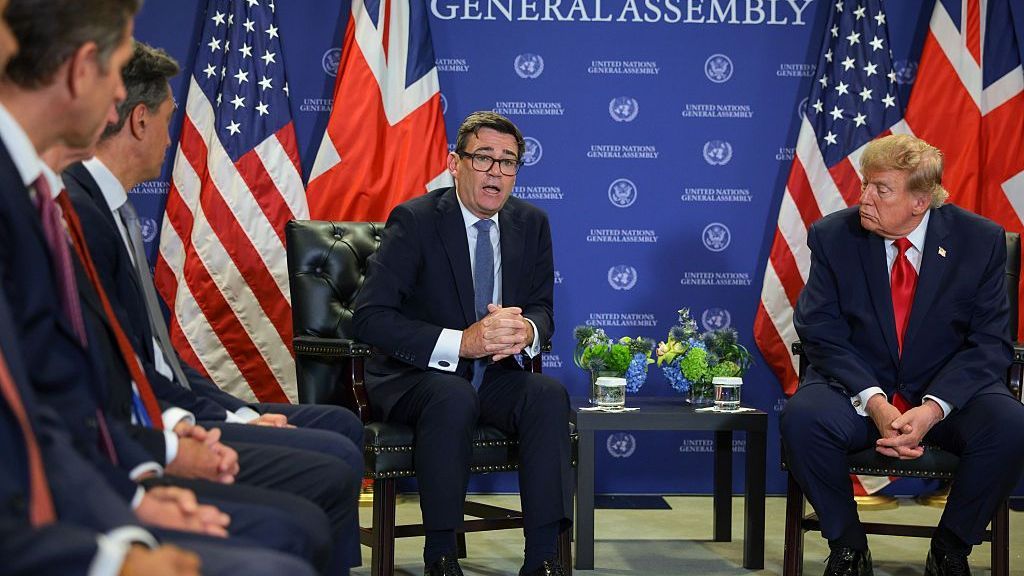
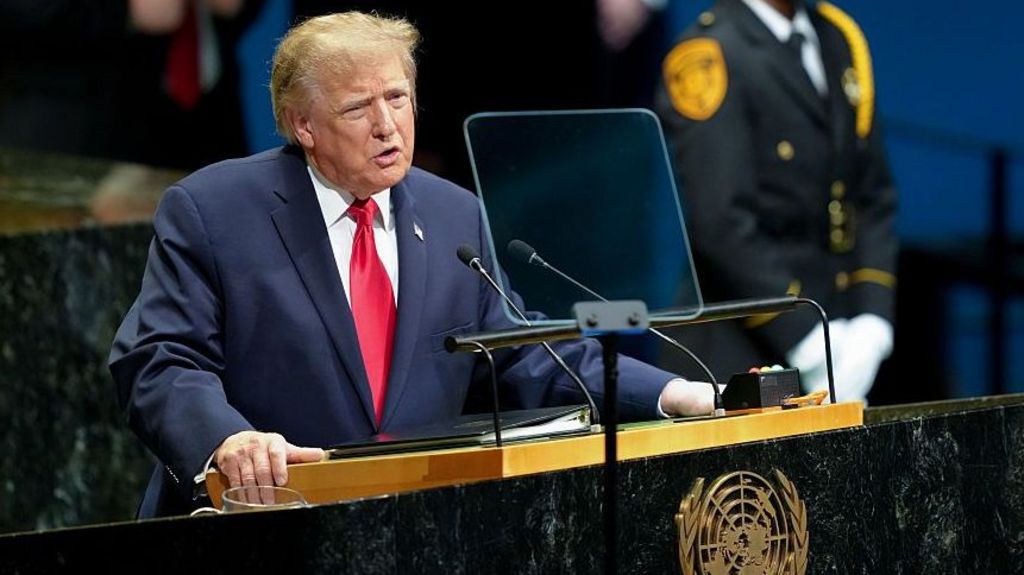
    In a sudden announcement Tuesday evening, former President Donald Trump disclosed that the United States will suspend its recently launched operation to escort stranded commercial vessels through the strategically critical Strait of Hormuz for a temporary period. Codenamed Project Freedom, the maritime security initiative launched just days earlier will be halted by mutual agreement between Washington and Tehran, Trump said, citing significant headway toward a new negotiated agreement with Iran.

    Iranian state media has framed the pause as a clear strategic victory for Tehran, framing the decision as a forced retreat for Trump following repeated failures to force the Strait of Hormuz, a vital chokepoint for global energy supplies, to reopen unilaterally. The announcement came concurrently with a statement from US Secretary of State Marco Rubio confirming that Operation Epic Fury, the opening joint US-Israeli air offensive against Iran launched in late February, has concluded after meeting all its stated military objectives.

    Trump took to social media to clarify that the decision to pause Project Freedom came at the request of Pakistan, which has served as a neutral diplomatic intermediary between Washington and Tehran throughout the recent escalation. He emphasized that the existing US economic and naval blockade of Iranian ports will remain in place, keeping the core pressure campaign against Iran intact.

    The sudden reversal caught many observers off guard, as it directly contradicted messaging from top US administration officials just 24 hours earlier. Secretary of Defense Pete Hegseth, Joint Chiefs of Staff Chairman Gen. Dan Caine, and Rubio himself had all publicly pledged just one day prior that Project Freedom would continue until full freedom of navigation was restored to both the Strait of Hormuz and the broader Persian Gulf. Speaking to reporters Tuesday, Rubio acknowledged the administration’s preference for a diplomatic settlement, noting “We would prefer the path of peace. What the president would prefer is a deal.”

    The future trajectory of the standoff remains deeply uncertain. The Trump administration has repeatedly stressed that Project Freedom was a separate, independent initiative from the ongoing port blockade, which is designed to squeeze Iran’s economy into making concessions. The core goal of Project Freedom was to guide dozens of stranded commercial vessels out of the Persian Gulf and reopen the waterway to regular global trade, a move intended to ease pressure on energy markets and stabilize the global economy. If the temporary pause sees shipping companies and their maritime insurers continue to face interference from Iranian authorities, Trump will struggle to claim the operation achieved its core goals. On the other hand, administration insiders have suggested that pausing the initiative — which Tehran strongly condemned as a violation of its territorial sovereignty — could be a confidence-building measure to lure Iranian negotiators back to the bargaining table.

    Rubio’s Tuesday statement followed a sharp uptick in tit-for-tat clashes that had stoked widespread fears that the months-long US-Iran ceasefire was on the brink of collapse. On Monday, the United Arab Emirates (UAE) reported that its air defense systems had intercepted Iranian missiles and drones for the second consecutive day, including an alleged strike on an oil export terminal in the Emirate of Fujairah, located just outside the Strait of Hormuz. The UAE called the incident a “dangerous escalation” of regional tensions. Iran issued a flat denial of any involvement in attacks on the UAE Tuesday, with a military spokesperson stating “If such an action had been taken, we would have announced it firmly and clearly.”

    Late Tuesday, the UK Maritime Trade Operations (UKMTO) agency confirmed that a verified source had reported a commercial cargo vessel was hit by an “unknown projectile” in the Strait of Hormuz. No additional details on the vessel, crew, or extent of damage were immediately released.

    The current crisis traces back to February 28, when the US and Israel launched Operation Epic Fury, a large-scale wave of air strikes across Iranian military and infrastructure targets. In direct response, Tehran blocked all commercial transit through the Strait of Hormuz, the waterway through which roughly 20 percent of the world’s daily oil and liquefied natural gas supplies pass. A ceasefire was brokered between the two sides in early April, under which Iran agreed to halt all drone and missile strikes on Gulf Arab states including the UAE. Despite the ceasefire agreement, very few commercial vessels have been able to transit the strait in the months since, and the US maintained its own naval blockade of Iranian ports in parallel.

    Clashes flared again just one day before Trump’s announcement. The US said it had destroyed seven Iranian fast attack craft operating in the strait, while Iran claimed it had fired warning shots at a US naval vessel. Both sides rejected the other’s claims. Two separate commercial vessels reported coming under attack Monday, while one confirmed it had successfully exited the strait under US military escort as part of Project Freedom.

    Speaking to reporters Tuesday, Rubio warned that Iran had so far rejected the path of negotiation, adding “What that may lead to in the future is speculative.” He claimed the joint US-Israeli air strikes had inflicted “generational destruction to their [Iran’s] economy” and urged Iranian leaders to “check themselves before they wreck themselves in the direction that they’re going.”

    For his part, Hegseth stressed that the existing ceasefire with Iran remains in effect, telling reporters “Right now the ceasefire certainly holds, but we’re going to be watching very, very closely.” Gen. Caine added that while Iran had carried out 10 separate attacks on US forces since the ceasefire went into effect, all had been “below the threshold” required to resume full-scale hostilities “at this point.”

    When asked by reporters what actions by Iran would constitute a ceasefire breach, Trump simply replied “You’ll find out because I’ll let you know.” The president reaffirmed his belief that a negotiated settlement to end the standoff is still achievable.

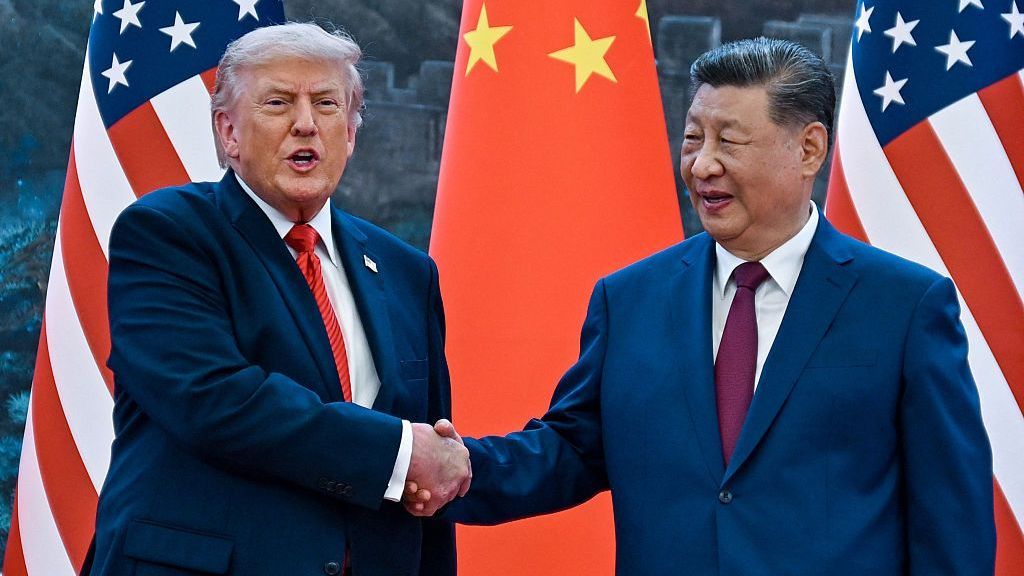
    The conflicting messaging from senior US administration officials points to a broader reluctance within Washington to resume large-scale military operations, a move that would roil already fragile global energy markets, send oil prices skyrocketing, and face strong opposition from a large majority of the American public. Trump also confirmed that he is currently consulting with Japanese leaders on the strait reopening and expects to hold a constructive discussion on the issue with Chinese President Xi Jinping during his upcoming visit to China next week.

    Iran’s parliamentary speaker Mohammad Ghalibaf, who also served as Tehran’s lead negotiator in last month’s US-Iran talks, struck a defiant tone in comments earlier Tuesday. “We know well that the continuation of the status quo is intolerable for America, while we are just getting started,” Ghalibaf said. He blamed the United States and its allies for undermining shipping and energy security through ceasefire violations and the ongoing blockade, adding “However, their evil acts will fail.”

  • Researchers discover where coyote who made epic swim to Alcatraz really came from

    Researchers discover where coyote who made epic swim to Alcatraz really came from

    A male coyote that captured national attention after reaching California’s Alcatraz Island by swimming across San Francisco Bay has upended researchers’ initial assumptions about his journey, with new DNA analysis revealing the animal swam nearly twice the distance experts originally estimated. The coyote’s unexpected January arrival on the site of the infamous former federal prison marked the first confirmed coyote sighting on Alcatraz in more than five decades, leaving both scientists and visiting tourists stunned.

    When the sighting was first reported, wildlife specialists assumed the coyote had set out from the city of San Francisco, a crossing of just over one mile. But new genetic testing completed on samples collected from the animal has traced his origins to Angel Island State Park, a full two miles away from Alcatraz, the National Park Service (NPS) announced in a public statement Monday. To date, the coyote’s current location remains entirely unconfirmed, despite weeks of targeted monitoring.

    National Park Service wildlife ecologist Bill Merkle noted that the team’s working hypothesis had long centered on a shorter crossing from San Francisco, due to the obvious reduced physical challenge of that route. “We couldn’t help being impressed by his accomplishment in making it to Alcatraz,” Merkle said in the release. “Coyotes are known to be resilient and adaptable, and he certainly demonstrated those qualities.”

    The extraordinary crossing was first captured on camera by tourists in late January, whose footage of the coyote pushing through cold, choppy Bay waters to reach Alcatraz’s shore surprised both researchers and local San Francisco residents. The animal quickly gained a fanbase online, with many people dubbing him “Floyd,” a nod to the fictional getaway driver for iconic outlaws Bonnie and Clyde.

    Shortly after the sighting, NPS officials set up a network of camera traps and audio recorders across Alcatraz to track the coyote’s movements. Officials also began planning efforts to capture and relocate the animal over concerns that the predator would prey on the island’s vulnerable native seabird colonies. To confirm the coyote’s origin, researchers collected track measurements and samples of the animal’s scat, which were sent for genetic analysis at the University of California, Davis. The lab results confirmed the coyote belonged to a well-documented coyote population already established on Angel Island, confirming his 2-mile starting point for the epic swim.

    The NPS’s release, headlined “Alcatraz Coyote Wasn’t a City Boy After All,” also noted that the San Francisco Bay Area is home to three separate, genetically distinct coyote populations, a testament to the species’ widespread adaptability across urban and wild landscapes. Despite weeks of intensive monitoring across Alcatraz, the coyote has not been spotted since the initial tourist sighting, and officials no longer believe he remains on the island.

    “We don’t know what happened to the coyote,” Merkle said. “But he proved himself an expert swimmer to get to Alcatraz, and I hope he made a successful swim back home to Angel Island.” Coyotes, which are native North American canids closely related to wolves, have spread across nearly the entire continental United States, and are now commonly spotted even in urban green spaces and upscale residential neighborhoods across San Francisco.

    In a separate recent development tied to Alcatraz, the island long nicknamed “The Rock” for its reputation as an unescapable maximum-security fortress made headlines again this spring when the Trump administration proposed a $152 million budget allocation to lawmakers that would fund rebuilding the shuttered penitentiary and reopening it as a modern high-security prison for the country’s most dangerous incarcerated people. The request covers the first year of construction costs for the project.

  • Apple to pay $250m to iPhone buyers over AI features lawsuit

    Apple to pay $250m to iPhone buyers over AI features lawsuit

    Technology giant Apple has agreed to pay out $250 million (£184 million) to settle a class-action lawsuit brought by iPhone customers, who accused the company of deceptive marketing around its promised Apple Intelligence artificial intelligence capabilities. The legal dispute, which was resolved in a settlement filed with a California federal court on Tuesday, closes out consolidated claims that were first filed last year. Notably, Apple has not admitted to any wrongdoing as part of the agreement.

    The suit centers on allegations that Apple misled consumers through false advertising for its Apple Intelligence suite, a lineup of AI-powered upgrades that includes a heavily promoted overhaul of its Siri voice assistant. Plaintiffs claim the company marketed advanced AI features that were not available at the time of purchase, have not launched to date, and may not roll out for at least two years — if they ever arrive at all.

    Under the terms of the settlement, eligible consumers who purchased either an iPhone 15 or iPhone 16 between June 2024 and March 2025 will receive payouts ranging from $25 to $95 per device.

    An Apple spokesperson addressed the litigation, noting that the claims only targeted the availability of two specific features out of the full slate of Apple Intelligence tools the company has already rolled out. “We resolved this matter to stay focused on doing what we do best, delivering the most innovative products and services to our users,” the spokesperson said.

    In a revised complaint submitted last week for the consolidated class action, legal representatives for the iPhone buyers argued that Apple’s AI marketing campaign constituted deceptive commercial practice. “Apple promoted AI capabilities that did not exist at the time, do not exist now, and will not exist for two or more years, if ever, all while marketing them as the breakthrough innovation,” the legal team wrote.

    The complaint further alleges that Apple rushed this aggressive AI marketing push specifically to keep pace in the high-stakes global AI race currently being led by newer players like OpenAI and Anthropic. Outgoing Apple CEO Tim Cook has faced repeated public criticism over recent years from analysts and consumers who argue the company has lagged behind competitors in rolling out breakthrough innovative products.

    A core part of the plaintiffs’ argument centers on the promised upgraded Siri, which Apple marketed as a transformative update that would turn the tool from a “limited voice interface into a full-fledged personal AI assistant.” According to the legal team, this reimagined Siri never materialized for consumers, and the recently launched iPhone 16 shipped to customers without any trace of the full Apple Intelligence platform Apple had promoted.

  • Vivek Ramaswamy wins Republican nomination for Ohio governor

    Vivek Ramaswamy wins Republican nomination for Ohio governor

    On Tuesday, a seismic shift in Ohio Republican politics took place, as former presidential candidate and loyal Donald Trump ally Vivek Ramaswamy locked up the GOP nomination for governor, clearing a path for him to lead the traditionally manufacturing-heavy Rust Belt state in what is already shaping up to be one of the most watched general election races of 2026.

    Unconfirmed preliminary results from the Ohio primary confirm Ramaswamy, a 38-year-old health tech entrepreneur, easily defeated his only remaining primary challenger Casey Putsch – a car designer best known for his automotive-focused YouTube channel – to advance to the November general election, multiple U.S. media outlets reported Wednesday.

    Ramaswamy first catapulted onto the national political stage in 2023, when he launched a long-shot bid for the 2024 Republican presidential nomination opposite Trump. Though his rapid-fire speaking style and unapologetically conservative tone made him a viral favorite during primary debates and earned him a nationwide social media following, he dropped out of the presidential race early after failing to gain traction with Republican voters. Immediately after exiting the race, he threw his full support behind Trump, quickly rising to become one of the former president’s most prominent and visible surrogates during the 2024 general election. He also played a key early role in developing Trump’s proposed Department of Government Efficiency initiative before handing off leadership of the project to billionaire entrepreneur Elon Musk.

    When he announced his candidacy for Ohio governor, Ramaswamy cleared the field of most high-profile Republican contenders. To fuel his campaign, he has drawn heavily from his personal wealth, loaning his campaign committee $25 million, according to a report from The Columbus Dispatch. On Tuesday, he benefited from both his pre-existing national name recognition and a reshuffling of Ohio’s Republican Party leadership triggered when former U.S. Senator JD Vance of Ohio ascended to the vice presidency. Vance, a fellow Trump-aligned Republican, traveled to Cincinnati on Tuesday to cast his ballot for Ramaswamy and other GOP candidates.

    Trump publicly celebrated Ramaswamy’s primary victory in a post to his Truth Social platform Tuesday, writing: “I know Vivek well, competed against him, and he is something SPECIAL. He is Young, Strong, and Smart!” Current Ohio Republican Governor Mike DeWine, who is barred from seeking re-election this year due to strict state term limits, has also endorsed Ramaswamy.

    The general election will pit Ramaswamy against Democratic nominee Amy Acton, Ohio’s former state public health director who rose to prominence for guiding the state’s response to the COVID-19 pandemic. Acton ran unopposed for the Democratic nomination, and the contest is already shaping up to center heavily on the ongoing political fallout of pandemic-era public health policies.

    In 2020, under DeWine’s leadership, Ohio adopted a more moderate approach to pandemic restrictions than many other Republican-led states, implementing measures including temporary bans on in-person dining at restaurants and a last-minute postponement of the state’s 2020 presidential primary to slow virus spread. Six years later, widespread conservative backlash to those policies – including mask mandates and school closures – has given Ramaswamy a opening to attack Acton, who was the public face of Ohio’s pandemic response.

    Ramaswamy recently released a campaign ad accusing Acton of abusing her power by unilaterally postponing the 2020 primary in defiance of a court order. In an unusual rebuke that upended expectations, DeWine, who has endorsed Ramaswamy, stepped forward to defend Acton from the claims. “I told her to issue the health order,” DeWine told local NBC affiliate NBC4. “The decision was mine.”

    Ohio has trended sharply toward the Republican Party in recent election cycles, but political analysts expect the general election race to be highly competitive, with spending projected to skyrocket as both parties pour resources into the contest ahead of the November vote.

    In adjacent Indiana, another high-stakes Republican primary drama unfolded Tuesday, as seven incumbent GOP state senators who defied Trump’s demands to pass a partisan pro-Republican redistricting map last December faced primary challengers backed by the former president. Last year, 21 Senate Republicans joined all 10 Democratic lawmakers to block Trump’s preferred redistricting plan, defying intense public pressure from the former president, who warned that any Republican who voted against the plan would risk losing their seat in a primary challenge.

  • How did Heidi Klum become a living Met Gala sculpture?

    How did Heidi Klum become a living Met Gala sculpture?

    The annual Met Gala, New York City’s most prestigious red carpet event that celebrates boundary-pushing fashion and art, consistently produces viral moments that capture global attention. One of the most talked-about looks in recent event history came from supermodel Heidi Klum, who transformed herself into a striking living sculpture that stopped the show when she walked the red carpet. Now, Mike Marino, the award-winning prosthetic make-up artist behind the avant-garde design, has pulled back the curtain on the intricate process that brought the eye-catching concept to life.

    Creating a one-of-a-kind costume that would stand out among hundreds of high-profile celebrity looks required months of planning and hundreds of hours of hands-on work, Marino explained in his behind-the-scenes reveal. The project began with collaborative brainstorming between Klum and the design team, centered on the theme of that year’s Met Gala exhibition, which set the creative tone for all attendees’ looks. Klum pushed for a bold, experimental concept that would lean into the event’s tradition of theatrical, art-forward fashion, settling on the idea of a living, moving sculptural form that blurred the line between clothing and fine art.

    From there, Marino and his team worked to translate the abstract concept into a wearable design, starting with detailed mold-making to ensure the prosthetics fit Klum’s body perfectly. Every element, from the texture of the sculpted surface to the weight of the finished piece, was adjusted to allow Klum to move naturally while maintaining the dramatic visual impact of the sculpture. The application process on the day of the Gala took more than six hours, with Marino carefully layering prosthetics, blending edges, and adding custom finishing touches to create the seamless, solid-sculpture effect that wowed onlookers and photographers alike.

    Marino’s reveal has shed new light on the unsung work of prosthetic and special effects make-up artists in creating the most memorable Met Gala looks, turning a simple red carpet appearance into a global cultural moment. Klum’s bold choice to embrace such an experimental design also reinforced the Met Gala’s reputation as a space where high fashion and contemporary art collide to create unforgettable work.

  • Man charged with attempted Trump assassination indicted for assaulting Secret Service officer

    Man charged with attempted Trump assassination indicted for assaulting Secret Service officer

    A 31-year-old California man accused of plotting to assassinate former President Donald Trump during a high-profile Washington DC gala has been hit with an additional felony charge, federal prosecutors announced this week. Cole Tomas Allen, a resident of Torrance, California, now faces a fourth count of assaulting a U.S. law enforcement officer with a deadly weapon, following the brazen April 25 attack at the annual White House Correspondents Dinner.

    The new indictment, which was unsealed Tuesday and signed by U.S. Attorney Jeanine Pirro, replaces the initial criminal complaint filed against Allen last week. It comes amid ongoing public questions about the circumstances of the April 25 incident, specifically whether a wounded Secret Service officer was hit by friendly crossfire from a fellow agent responding to the threat. The officer suffered a non-life-threatening injury in the exchange of gunfire, authorities confirmed.

    Allen already faced three core charges from the initial complaint: attempted assassination of the sitting U.S. president, illegal transportation of a firearm and ammunition across state lines with intent to commit a felony, and weapons violations related to discharging a firearm during the commission of a violent crime. A grand jury formally voted to indict Allen on all four counts last week, and he made his first in-person court appearance in Washington DC last week, though he has not yet entered a formal plea to the charges. He remains in federal custody as the case proceeds.

    According to unsealed court documents, Allen arrived at the Washington Hilton hotel — the venue for the annual dinner — heavily armed: he was carrying a semi-automatic handgun, a pump-action shotgun, and three sharp-edged weapons when he attempted to breach a security checkpoint one level above the dinner’s basement ballroom space. When gunfire erupted, current President Donald Trump, Vice President JD Vance, members of the presidential cabinet, and dozens of other senior White House officials were immediately evacuated from the event, while hundreds of attendees took shelter under their dining tables.

    The attack has triggered a full internal review of White House and Secret Service security protocols for major public events attended by senior leadership. Background checks into Allen’s history show he is an alumnus of the prestigious California Institute of Technology, and attended a local congregation in the Los Angeles area. Federal campaign finance records also show he made a $25 donation to a Democratic PAC supporting Kamala Harris’s 2024 presidential campaign.

    Court filings also include details of a message Allen allegedly sent to his family immediately before the attack, stating that senior administration officials were pre-designated targets, ranked by their position in government. He added that he was willing to confront anyone in the venue to reach his intended targets, according to the documents. If convicted on all counts, Allen faces the possibility of life imprisonment, federal prosecutors confirmed.

  • Watch: Hundreds of beagles rescued from breeding facility being rehomed

    Watch: Hundreds of beagles rescued from breeding facility being rehomed

    A massive animal welfare effort is underway in the U.S. state of Wisconsin, where hundreds of beagles are currently going through the rehoming process following a high-profile rescue operation. More than 1,500 dogs total are being removed from a large-scale commercial breeding facility, after sustained public protests from animal rights activists pushed for action against the operation.

    The campaign against the breeder drew widespread public attention, with activists highlighting concerns over cramped living conditions, lack of adequate veterinary care, and the exploitative practices common in large-scale commercial dog breeding operations. Following the release of all the dogs from the facility, animal welfare organizations have stepped in to coordinate veterinary checks, behavioral assessments, and adoption placements for every beagle rescued.

    Volunteers and local animal shelters across the region have mobilized to support the effort, opening up space, providing foster care, and processing adoption applications from prospective pet owners eager to give the rescued dogs a second chance at life in a loving home. The operation marks one of the largest single canine rescue efforts in the state in recent years, shining a renewed spotlight on debates over commercial breeding regulations and animal protection standards.

  • Mission is to preach peace, says Pope in response to Trump attacks

    Mission is to preach peace, says Pope in response to Trump attacks

    A high-profile public disagreement between former U.S. President Donald Trump and Pope Leo has taken center stage in global diplomatic discourse, centered on competing stances toward the ongoing Middle East conflict, just as U.S. Secretary of State Marco Rubio prepares for a key two-day visit to Vatican City and Italy.

    The core of the conflict stems from Pope Leo’s consistent, vocal opposition to the U.S.-Israeli military campaign against Iran. In a recent public statement, the pontiff reaffirmed his long-held pacifist position: as a spiritual leader, his core mission is to spread the Gospel and advocate for global peace, and he will not step back from that calling even in the face of harsh political criticism. “The mission of the Church is to preach the Gospel, to preach peace,” Pope Leo told reporters ahead of Rubio’s arrival. “If someone wants to criticize me for preaching the Gospel … I hope simply to be listened to because of the value of God’s words.” Last month, he doubled down on this stance, noting, “As a pastor, I cannot be in favour of war. I would like to encourage all to make efforts to look for answers that come from a culture of peace and not from a place of hate and division.”

    Trump has repeatedly lashed out at the Pope over these anti-war remarks, distorting the pontiff’s position to claim Pope Leo supports Iran acquiring nuclear weapons—a claim Pope Leo has never made. In an interview with conservative radio host Hugh Hewitt this week, Trump argued that the Pope’s stance is “endangering a lot of Catholics and a lot of people.” On social media, Trump went further, attacking Pope Leo’s character and legitimacy, claiming he was only elected to the papacy because church leaders picked an American to curry favor with his administration, writing “If I wasn’t in the White House, Leo wouldn’t be in the Vatican.” He also labeled Pope Leo “WEAK on crime” and “terrible for Foreign Policy.” After that social media post, Trump drew widespread backlash for sharing an edited image that depicted him as a Jesus-like figure; he later tried to downplay the incident, telling reporters he believed the image showed him as a doctor before the post was removed.

    Several top U.S. officials have lined up to support Trump’s criticism of the Vatican. Vice President JD Vance, a convert to Catholicism, argued that the Vatican should “stick to matters of morality” rather than weigh in on international military policy. Even so, U.S. Ambassador to the Holy See Brian Burch has sought to downplay tensions between the two governments, telling reporters this week that there is no “deep rift” between Washington and the Vatican. “Nations have disagreements, and I think one of the ways that you work through those is … through fraternity and authentic dialogue,” Burch said. He added that Rubio’s scheduled meetings with Vatican and Italian leaders will create a structured space to work through any existing differences.

    The disagreement has also created friction between Trump and Italian Prime Minister Giorgia Meloni, once a close political ally of the former president. Meloni, who has also criticized the Middle East conflict, has publicly come to Pope Leo’s defense. When reporters asked whether she would meet with Rubio during his visit, she simply confirmed, “I think so.”

    Rubio, a Catholic himself, is set to hold a series of meetings with both Vatican officials and Italian government counterparts during his trip. A spokesperson for the U.S. State Department confirmed that the official agenda for the visit includes advancing bilateral relations between the U.S. and both Italy and the Vatican, discussing the ongoing crisis in the Middle East, and aligning on mutual interests in the Western Hemisphere. The visit comes as diplomatic positioning around the Middle East conflict continues to split global leaders, with this high-profile clash between a sitting pontiff and a former U.S. president putting new attention on the rifts over the war.

  • ‘I thought he was going to hit me’ OpenAI co-founder says of Musk

    ‘I thought he was going to hit me’ OpenAI co-founder says of Musk

    OAKLAND, Calif. — In dramatic testimony unfolding in a Northern California federal courtroom, OpenAI President and co-founder Greg Brockman has laid bare a tense 2017 confrontation with Elon Musk, the billionaire initial co-founder who is now locked in a bitter legal battle over OpenAI’s shift to a for-profit structure. The trial, which is scheduled to run a full month, entered its second week this week as the two sides clash over what Musk knew about OpenAI’s planned transition away from its original non-profit founding model.

    Brockman, who is named as a defendant in Musk’s lawsuit seeking to roll back OpenAI’s corporate restructuring, told jurors that Musk began pushing aggressively to seize greater control of the startup just two years after its 2015 founding. The billionaire reportedly tried to court both Brockman and fellow early co-founder Ilya Sutskever to build support for his power grab, a courtship that Brockman described as systematic “buttering up.”

    When Brockman rejected Musk’s proposal to expand the billionaire’s influence over the company, Brockman testified, Musk’s demeanor shifted suddenly and sharply. The confrontation grew so heated that Brockman told the jury “I actually thought he was going to hit me.” The meeting wrapped up immediately after the exchange, with Musk announcing he would cut off the financial backing he had provided to OpenAI since its launch.

    Court documents introduced by OpenAI’s legal team included August 2017 text exchanges between Sutskever and Brockman that referenced the pressure campaign, with one message asking: “Will a model 3 make you be willing to accept massively unfavourable terms?”

    The core of Brockman’s testimony has centered on a key point at the heart of the dispute: he confirmed that Musk was fully informed years ago of OpenAI’s long-term plans to adopt a for-profit structure to support massive capital needs for AI research. Founded as a non-profit entity, OpenAI later established a capped-profit subsidiary to raise billions in investor funding, and last year moved to reorient the entire company around its for-profit operations. Musk, who departed the OpenAI board in 2018, has argued the transition violates the founding agreement he helped craft, while OpenAI maintains all changes were done with Musk’s full knowledge.

    Since leaving OpenAI, the startup has grown into one of the world’s most valuable technology firms, following the explosive mainstream success of its flagship product ChatGPT. Musk, who has become one of OpenAI’s most prominent public critics, launched his own rival AI startup xAI in 2023, directly competing with OpenAI’s dominant chatbot.

    The next witness expected to take the stand is Shivon Zilis, a former OpenAI board member who is also the mother of four of Musk’s children. During his testimony, Brockman noted that Zilis remained on OpenAI’s board long after Musk left the company, saying “We trusted her to keep the Elon conflict under control.” Zilis departed the board in March 2023, just as Musk prepared to publicly launch xAI. Brockman also told jurors that when Zilis informed him she had given birth to twins years ago, he only learned Musk was the father from public reports, after which Zilis clarified the children were conceived via IVF and her relationship with Musk was entirely platonic.

  • US aviation worker accused of  using work computer to threaten Trump

    US aviation worker accused of using work computer to threaten Trump

    A 35-year-old Federal Aviation Administration contractor based in New Hampshire has been taken into federal custody on charges of threatening to assassinate former President Donald Trump, in what marks the fourth high-profile prosecution targeting threats against Trump in just one week, U.S. law enforcement officials announced Monday.

    Prosecutors allege Dean DelleChiaie, a mechanical engineer working for the FAA — the federal agency tasked with overseeing U.S. civil airspace — used his government-issued work computer to research how to smuggle a firearm into a federal facility, and directly searched the explicit phrase: “I am going to kill Donald John Trump”. Investigators also say DelleChiaie conducted online searches for personal information about the families of Vice President JD Vance and Defense Secretary Pete Hegseth.

    According to a sworn affidavit submitted to the court, the FAA first flagged DelleChiaie’s activity to federal law enforcement after he reached out to the agency’s IT department requesting that his entire search history be erased from his work device. U.S. Secret Service agents interviewed DelleChiaie at his residential property on February 3, where investigators say he confessed to carrying out the concerning internet searches.

    The affidavit notes DelleChiaie acknowledged his actions were driven by anger at the current administration over a range of political issues, including the 2024 presidential election results, presidential pardon grants, and the release of documents related to the Jeffrey Epstein case. DelleChiaie also admitted to law enforcement that he owns three privately held firearms, prosecutors confirmed.

    The threat escalated on April 21, when DelleChiaie used his personal email account to send a message to the White House with the subject line “Contact the President,” prosecutors say. In the email, he allegedly wrote: “I, Dean DelleChiaie, am going to neutralize/kill you – Donald John Trump – because you decided to kill kids – and say that it was War – when in reality – it is terrorism. God knows your actions and where you belong.”

    DelleChiaie is scheduled to make his first court appearance on Tuesday. As of Monday evening, legal counsel for the accused had not been reached for comment on the charges. If convicted on all counts, he faces a maximum sentence of five years in federal prison and a fine of up to $250,000.

    DelleChiaie’s arrest comes amid a sharp uptick in public threats against former President Trump, with three additional separate prosecutions for threats against Trump filed in the seven days prior to his arrest, the U.S. Department of Justice, which oversees the Federal Bureau of Investigation, confirmed.

    The most high-profile of these earlier cases involves former FBI Director James Comey, who turned himself in to law enforcement last Wednesday on charges stemming from an Instagram post featuring a photo of seashells that prosecutors allege contained a coded threat against Trump. On Monday, the same day DelleChiaie was taken into custody, a South Carolina man was arrested by Secret Service agents after he wrote a threat to kill Trump on the exterior of his vehicle, stating he was traveling to Washington to “kill the pres.” One week prior, a Florida man entered a guilty plea on charges of making threats against Trump, multiple members of Congress, and other senior public officials.

    “Criminal threats directed at public officials are becoming alarmingly more common, and this must stop now,” U.S. Attorney for the Northern District of Florida John Heekin said during a press conference announcing the Florida man’s guilty plea. “We have zero-tolerance for such criminality in the Northern District of Florida and will seek maximum punishments to keep our public officials safe.”

    The string of threat arrests also comes less than two weeks after a gunman forced his way into the annual White House Correspondents’ Dinner in Washington D.C., in what investigators allege was a planned attempt to assassinate Trump and other senior U.S. government officials.