标签: North America

北美洲

  • Dramatic video shows wildfire surround freight train in Canada

    Dramatic video shows wildfire surround freight train in Canada

    New dramatic video footage has emerged capturing a startling wildfire emergency in Canada, where an out-of-control blaze has completely surrounded a freight train traveling through the Canadian province of Ontario. The gripping visual content, which has spread rapidly across media platforms, offers a firsthand look at the growing danger of extreme wildfire events that are increasingly disrupting critical transportation infrastructure across North America.

    In a statement issued to the British Broadcasting Corporation, Canadian National Railway (CN Rail), one of the largest rail operators in the country, confirmed that it has enacted an immediate pause to all rail services running through the fire-impacted region. The temporary suspension, implemented as a precautionary measure to protect both crew members and critical rail infrastructure from the advancing flames, remains in effect until wildfire management teams can confirm the area is safe for operations to resume.

    This incident comes amid a rising trend of more intense and earlier-starting wildfire seasons across Canada, driven in part by rising temperatures and prolonged dry conditions that have turned large swathes of forested land into tinder. Wildfire officials have noted that this event highlights how unplanned natural disasters can quickly upend regular commercial activity, highlighting the growing need for infrastructure operators to adapt their emergency response protocols to a changing climate. As of the latest update, there have been no reports of injuries to rail personnel, though containment efforts for the surrounding wildfire are still ongoing.

  • One dead and three missing after boat sinks near Alcatraz

    One dead and three missing after boat sinks near Alcatraz

    A deadly maritime accident has left one person dead and three others unaccounted for after a multi-deck recreational vessel capsized in rough waters roughly 600 yards off California’s Alcatraz Island on Tuesday, local emergency authorities confirmed.

    San Francisco Fire Department Chief Dean Crispen shared updated details on the incident during a public press briefing, noting that the first emergency call came into local dispatch at 15:37 local time. Initial reports incorrectly referenced a vessel on fire, but when first responders arrived at the scene, they found no evidence of an active blaze. Instead, witness statements and on-site assessments confirmed that choppy bay waters caused the 50-foot three-deck pontoon boat to take on water rapidly before overturning.

    The first marine rescue unit to reach the overturned boat pulled a man in critical distress from the cold bay water and immediately initiated cardiopulmonary resuscitation, Crispen said. Despite emergency intervention, the man was pronounced dead after being brought back to shore.

    All 20 people on board were part of a group of mostly family members who had gathered on the boat to hold a memorial service, according to Crispen. Of the 20 passengers, three injured survivors were transported to a nearby local hospital for treatment, and all three remain in stable condition as of Tuesday evening. Thirteen other passengers were able to get to safety without injury and have returned to shore.

    Two local civilians, longshoreman Justin Marceline and fisherman Mike Montoya, were among the first to jump in to assist with rescue efforts before official emergency teams arrived. Marceline described the scene as total chaos when they arrived, telling Reuters that every passenger pulled from the water was either exhausted from struggling against the current or panicked and flailing in the rough conditions.

    As of Tuesday evening, a joint search and rescue operation is ongoing, led by the San Francisco Fire Department and supported by the U.S. Coast Guard. Rescue teams have committed to continuing the search for the three missing people through the night, leveraging specialized maritime search assets to cover the surrounding bay area.

  • Iran threatens to block more trade routes as US launches fresh strikes

    Iran threatens to block more trade routes as US launches fresh strikes

    A sharp escalation of hostilities between Iran and the United States has sent shockwaves through the already volatile Middle East, with both sides launching military strikes, issuing aggressive threats, and raising fears of a full-scale regional conflict. The spiral of violence began this week as the U.S. military’s Central Command (Centcom) confirmed it had conducted coordinated multi-domain strikes against Iranian targets, combining drone attacks, air raids, and naval operations. These strikes included an overnight seven-hour operation followed by additional action on Wednesday morning, building on a series of escalating confrontations between the two nations.

    Shortly after the latest U.S. strikes, Washington imposed a renewed naval blockade on all Iranian ports starting Tuesday evening, barring any commercial or civilian vessels from entering or exiting Iranian coastal waters. In a stark response to what Iran calls U.S. “acts of aggression,” the Islamic Revolutionary Guard Corps (IRGC) issued a sweeping warning that it will keep the strategically critical Strait of Hormuz closed to international shipping until the U.S. halts all hostile actions. The IRGC went further, threatening to shut down additional regional oil and gas export routes that benefit the United States and its regional allies, though it declined to specify which waterways or infrastructure could be targeted. The Strait of Hormuz is one of the world’s most vital energy chokepoints, with roughly 20% of global oil consumption passing through its waters daily, making any prolonged closure a major threat to global energy markets.

    On the political front, former U.S. President Donald Trump escalated rhetorical tensions in an interview aired Tuesday night on Fox News’ *Special Report with Bret Baier*. Trump issued an explicit threat that if Iran refuses to return to nuclear and diplomatic negotiations, his administration will launch targeted strikes on Iran’s critical infrastructure starting next week. “I’ll save the energy targets for last, but ultimately we’ll hit energy targets,” Trump said, adding that bridges and power plants would be the first targets hit. This threat comes just days after Trump shifted his earlier position: he recently walked back a threat to impose a 20% tariff on all goods passing through the Strait of Hormuz, instead saying the U.S. would pursue “massive” trade and investment agreements with Gulf Cooperation Council allies instead.

    Parallel to these political and maritime threats, Iran’s state-run broadcaster reported that the Iranian army has launched multiple independent attacks against U.S. military targets located in three key U.S. allies in the region: Jordan, Kuwait, and Bahrain. Officials from all three allied nations confirmed they had intercepted a barrage of drones and missiles launched from Iranian territory, though no details on casualties or significant infrastructure damage have been released as of this reporting.

    The rapid sequence of escalating attacks and threats has pushed the decades-long Iran-U.S. standoff to its most dangerous point in years, with regional powers and global leaders scrambling to de-escalate the crisis before it spirals into a wider conflict that could disrupt global energy supplies and destabilize the entire Middle East.

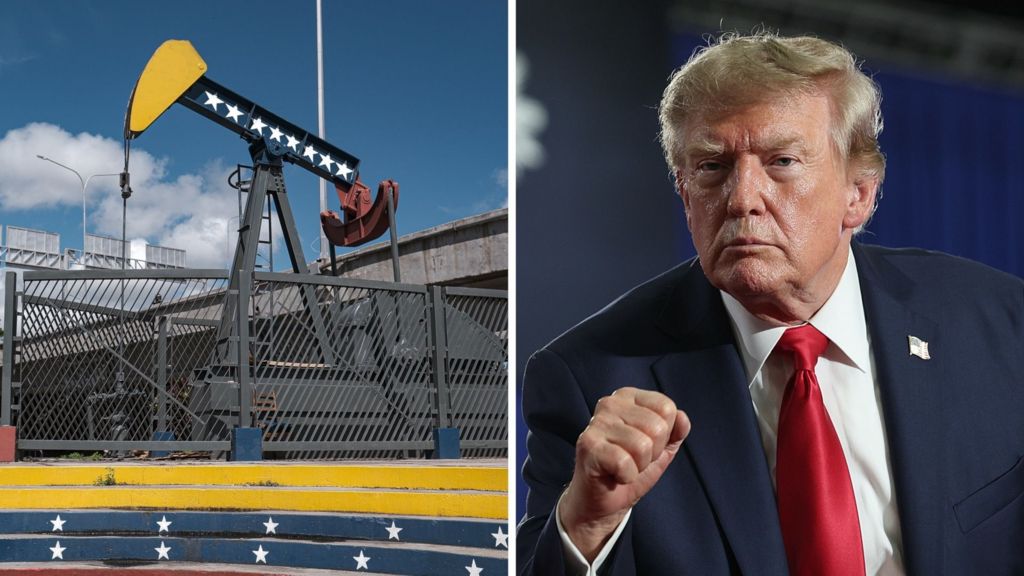
  • Trump says will withdraw plans to charge fees in Strait of Hormuz

    Trump says will withdraw plans to charge fees in Strait of Hormuz

    Just 24 hours after triggering international controversy with a plan to impose a 20 percent reimbursement fee on commercial shipping passing through the strategically critical Strait of Hormuz, U.S. President Donald Trump has announced a sudden reversal of the policy. In a post published to his Truth Social platform on Tuesday, Trump confirmed that the fee proposal will be withdrawn entirely, replaced by new trade and investment agreements that Gulf Cooperation Council states will enter into with the United States.

    The policy shift, Trump noted, followed what he described as highly productive discussions with senior leadership across Middle Eastern nations that rely on the Strait of Hormuz, the world’s busiest maritime chokepoint for global oil and natural gas shipments. “Based on highly productive conversations with Middle East leadership, I have decided to replace the 20 percent United States Reimbursement Fee with Trade and Investment Deals that the various Gulf States will be making into the United States,” Trump wrote in the post.

    Despite scrapping the fee, Trump maintained that Washington’s restrictive posture toward Iran in the waterway will remain unchanged. He clarified that the Strait will continue to be open to all commercial shipping traffic with the sole exception of vessels connected to Iran, with a full naval blockade remaining in place for any ships traveling to or from Iranian ports or carrying Iranian-origin cargo. “BY FAR, the Strait of Hormuz is open to ALL Ship traffic except for Iran,” he said. “We will therefore have a FULL Blockade, but only on Ships coming to and from Iranian ports, or carrying anything have to do with Iranian cargo,” he added.

    The reversal comes amid rapidly escalating tensions between Washington and Tehran that have derailed a recent detente between the two nations. Less than a month ago, the United States and Iran signed a 14-point memorandum of understanding designed to end open hostilities between the two sides. But a new round of U.S. airstrikes against Iranian targets, followed by retaliatory action from Tehran, has pushed the two nations back into open armed conflict. Prior to announcing the fee reversal, Trump already notified Congress on Friday that the U.S. had formally resumed military operations against Iran.

  • Trump retreat over Hormuz tolls suggests he is struggling to end Iran war

    Trump retreat over Hormuz tolls suggests he is struggling to end Iran war

    The four-month-long standoff between the United States and Iran took another chaotic turn last week when former President Donald Trump first announced a controversial 20% transit fee for all vessels passing through the Strait of Hormuz, then scrapped the plan entirely less than 24 hours later. The abrupt policy reversal has laid bare the deep strategic impasse at the heart of the ongoing conflict, leaving the Trump administration stuck between unpalatable options: escalation that risks economic and political fallout, or a negotiated settlement that falls short of the president’s promises.

    The drama unfolded on a Monday morning, when Trump took to his social platform Truth Social to announce the resumption of a full American naval blockade on Iranian shipping. As part of the new policy, he mandated that every commercial vessel transiting the strategic Strait of Hormuz — including those flagged by U.S. allies — would be required to pay a 20% fee to the U.S. The proceeds, he claimed, would cover the costs of American military operations that provide security to the volatile waterway, through which roughly 20% of the world’s daily oil supplies pass.

    By the following day, the proposal was dead. Trump walked it back completely, replacing the fee plan with a new framework that would see the U.S. strike targeted trade and investment deals with Gulf Arab allies, offering guaranteed safe passage in exchange for cooperation. This sudden U-turn came amid renewed American military strikes across Iranian territory, marking the formal collapse of a month-old temporary ceasefire and bilateral memorandum of understanding (MOU) that had been hailed by both sides as a step toward lasting peace just weeks earlier.

    That MOU, which went into effect after weeks of on-again, off-again negotiations, was intentionally vague from its inception, leaving core contentious issues to future talks. The agreement included provisions that recognized a limited role for Iran in overseeing Hormuz shipping, with the explicit commitment that Iran would facilitate safe passage for commercial vessels without charge. It also promised billions in planned international investment in Iran and a full rollback of crippling economic sanctions in exchange for Iranian cooperation.

    U.S. officials had gambled that these concessions, paired with threats of consequences for noncompliance, would convince Iran to abandon its long-held goal of asserting more direct control over the waterway that sits on its doorstep. That gamble failed. Iran responded to Trump’s announcement of the renewed blockade by ramping up attacks on U.S. allies and commercial shipping in the region, bringing traffic through the Strait of Hormuz to a near standstill. The MOU, once seen as a path out of conflict, is now effectively dead, according to regional experts.

    The 20% fee proposal itself was not an entirely new idea: Trump had floated similar arrangements multiple times over the course of the war. What makes the pivot striking, however, is its direct contradiction of public statements just one month prior from U.S. Secretary of State Marco Rubio. Rubio had harshly condemned an Iranian plan to charge transit fees for Hormuz shipping, arguing that “no country is allowed to charge tolls or fees on an international waterway” under existing international law.

    Today, both the U.S. and Iran find themselves trapped in a familiar, intractable predicament. Militarily, the U.S. has achieved its measurable objectives: it has destroyed significant amounts of Iranian naval and air assets, degraded Iranian defense capabilities, and reimposed a full blockade that has cut off Iran’s vital oil export revenue, a lifeline for the Iranian government. Even so, militarily weakened as it is, Iran retains the ability to disrupt traffic through the Strait of Hormuz, and the U.S. cannot force it to stop without committing to a dramatic, full-scale escalation of the war.

    For Trump, that escalation carries steep costs. The conflict has remained deeply unpopular with the American public, and a major expansion of hostilities would almost certainly send global oil prices soaring, reversing recent positive trends in U.S. inflation. Just one day after Trump’s initial announcement of the fee and blockade, global oil prices jumped nearly 10% — the largest single-day increase in six years. While the administration received good news this week when official data showed consumer prices dropping, an escalation would likely erase that progress, leaving Trump’s Republican party vulnerable in the upcoming November midterm congressional elections.

    At the same time, Trump has little political appetite to accept a negotiated settlement that does not deliver a deal explicitly better than the 2015 Joint Comprehensive Plan of Action struck by the Obama administration, a deal he has repeatedly criticized. This leaves the conflict stuck in a holding pattern of prolonged attrition, many analysts argue.

    “The most likely ending is a non-ending,” explained Rosemary Kelanid, Director of the Middle East program at Defense Priorities. “This has turned into a war of attrition, and wars of attrition tend to go on for a long, long period of time. He has already tried the things he can easily do, can credibly do. He can attack military targets, regime targets. He’s done that before, and it didn’t cause Iran to surrender.”

    Elliot Abrams, senior fellow for Middle Eastern studies at the Council on Foreign Relations, echoed that assessment, noting that the conflict has boiled down to a test of patience. “We’re back to where we were initially, where the question was: who’s got more patience? The Iranians, who will not be able to export oil, or the US and other countries that use Persian gulf oil?” he said. Abrams added that while there may still be room to negotiate a narrow agreement focused solely on Strait of Hormuz security, a return to the original MOU is no longer on the table.

    Even if the two sides return to talks and hammer out another ceasefire, the core intractable disagreements that sparked the conflict — control over Hormuz, the future of Iran’s nuclear program, and Iran’s regional influence — remain unresolved. Trump has recently hinted at potential airstrikes on Pickaxe Mountain, a heavily fortified Iranian nuclear research site south of Tehran, but experts question whether American strikes can inflict meaningful damage on the deep underground tunnel complex protected by solid granite.

    As the war approaches its fifth month, Trump has drawn a parallel to other long-running U.S. conflicts, such as the Vietnam War. But that decades-long quagmire ultimately destroyed the presidency of Lyndon B. Johnson and damaged U.S. global standing for a generation, a fate Trump is eager to avoid. It also contradicts a core campaign promise Trump has made for years: that he would end the era of endless “forever wars” in the Middle East that have drained American resources and political capital.

    Now, with the MOU in tatters, the temporary ceasefire collapsed, and the fee proposal dead after just one day, the end of the US-Iran conflict appears no closer than it was in the first weeks after hostilities began.

  • I changed jobs 10 times in 10 years to get the career I wanted

    I changed jobs 10 times in 10 years to get the career I wanted

    For modern workers, the traditional linear career path—climbing the ranks at a single company over decades—has increasingly fallen out of favor, giving rise to a new strategy known as “lily padding,” a deliberate approach of hopping between roles to build targeted skills and advance long-term career goals.

    At 32, Brittany Harris-Nelson embodies this new way of building a career. Over the past 10 years, she has held 10 distinct positions across six higher education institutions, ranging from entry-level student-facing roles while she was still studying to full-time administrative positions. Today, she holds her long-desired mid-level role as assistant director of student engagement at Wake Forest University in North Carolina, framing her meandering journey as intentional rather than aimless.

    “My career has been like a frog moving across lily pads,” Harris-Nelson explained. “Each step brought me closer to where I ultimately wanted to be, even if the path wasn’t always linear.” While her incremental job shifts did not deliver dramatic immediate salary increases, she notes that each new role brought improved benefits, including expanded paid time off and higher employer pension contributions, while equipping her with niche skills that prepared her for her current position.

    Harris-Nelson is far from alone in this approach. Industry analysts have identified lily padding as a defining career trend among Generation Z workers, born between 1997 and 2012. Unlike the traditional model of staying in one role to climb a corporate ladder, lily padding involves strategically jumping between jobs to supercharge employability, build a diverse skill set, and unlock access to more senior roles and long-term financial gain.

    Global workforce data supports the rise of this trend. A 2024 survey of 11,250 workers conducted by international recruitment agency Randstad found that the average job tenure for Gen Z workers in their first five years of professional work is just 1.1 years. That is significantly shorter than the 1.8-year average tenure for millennials (born between 1981 and 1996) and close to three years for older generations of workers.

    The financial benefits of frequent strategic job switching are already evident in market data. A 2025 study from UK-based financial services firm Wealthify found that workers who changed jobs four or more times over a 10-year period earned an average annual salary of £39,276, compared to £30,088 for peers who stayed in fewer roles—representing a 31% pay premium for frequent movers.

    For Adam Smiley Poswolsky, a San Francisco-based author and workplace culture speaker, lily padding was a deliberate choice to pursue meaningful work over conventional upward mobility. Over 15 years, Poswolsky held roles across four distinct sectors: government, nonprofits, creative industries, and corporate work. His resume includes stints as a project leader for the Peace Corps, an English instructor at Harvard University, a location scout for entertainment giant Warner Bros., a film producer in New York City, a campaign staffer on Barack Obama’s 2008 presidential campaign, and a fellow at a Washington-based think tank.

    Poswolsky rejected the traditional career ladder framework early on, noting it did not align with his priority of finding purpose in his work. “In each of my jumps, I was very clear on being ready for something new, but I also knew the skillset I was taking from one experience to the next,” he said. Today, the cross-sector skills he built through his non-linear journey support his current career as a well-compensated public speaker and author. “I found flexibility and happiness through this career evolution rather than via a vertical corporate structure,” he added.

    Industry leaders say this shift reflects a broader reorientation of worker priorities. Nicola Grant, chief people officer at UK insurance provider Hiscox, has observed this change firsthand across her organization. She notes that early-career professionals increasingly prioritize building a breadth of experience quickly over following a single predetermined path, actively building a portfolio of adaptable skills rather than specializing too early.

    “Younger employees are far more willing to move on if they feel their development has stalled or their advancement options are limited,” Grant explained. “Expectations have changed; people want variety, pace and to build skills that will remain relevant. It’s about a desire for growth that ultimately benefits both the individual and the organization.”

    Lucy Kemp, an employee experience specialist and strategic communications leader at IT firm La Fosse, argues that lily padding is not just a passing trend—it is the future of work. She points to shifting economic and workplace dynamics that have pushed younger workers away from long-term company loyalty: many have watched older generations put in decades of work without receiving the promised financial or professional rewards, leading to a widespread belief that “loyalty doesn’t pay off.”

    Post-pandemic workplace shifts have also accelerated the trend, Kemp explains. With more people working remotely, spontaneous on-the-job learning from senior peers has declined significantly, while automation and artificial intelligence have taken over many routine entry-level tasks. As a result, workers who want to build future-proof skills are actively seeking new roles and projects across teams, sectors, and companies to gain the experience they need.

    “People are looking at skills that will be relevant in five years’ time,” Kemp said. “They just want to learn something new and have a purpose.”

    For Harris-Nelson, that purpose-driven approach to career building defines her outlook long-term. “I see my career as an ongoing journey rather than a destination,” she said. “I’m always learning and growing.”

  • US House of Representatives passes Trump-backed bill to make daylight saving time permanent

    US House of Representatives passes Trump-backed bill to make daylight saving time permanent

    After years of stalled negotiations and bipartisan debate, the U.S. House of Representatives has taken a historic step to end the decades-long practice of twice-annual clock changes, passing the Sunshine Protection Act with overwhelming bipartisan support in a Tuesday vote. The final tally came in at 308 in favor to 117 opposed, codifying a shift to permanent daylight saving time – the clock setting currently observed across most of the U.S. from March through November each year. Under the terms of the legislation, states and territories that currently maintain full or partial exemptions from daylight saving time will retain the authority to opt for permanent standard time in their exempt jurisdictions. The push to eliminate seasonal clock changes has built cross-party momentum for more than a decade, after the U.S. Senate approved a nearly identical version of the bill back in 2022. That earlier measure, however, never advanced to a floor vote in the House, leaving the policy in legislative limbo until this week’s vote. Unlike the 2022 proposal, this iteration of the Sunshine Protection Act has secured the public backing of former president and current 2024 presidential candidate Donald Trump, clearing a key political hurdle for its passage. The origins of the U.S.’s seasonal clock-changing system date back to World War I, when policymakers first adopted daylight saving time as an energy conservation measure, designed to extend afternoon daylight hours and cut electricity consumption during the wartime production push. Under the current system, clocks are moved forward one hour in spring to enter daylight saving time, then rolled back one hour each autumn to return to standard time. For years, medical researchers, business groups and public health advocates have raised concerns about the negative impacts of twice-annual clock shifts, citing links to increased rates of heart attacks, traffic accidents, workplace productivity dips and disrupted sleep patterns. Those concerns have fueled growing congressional support for scrapping the seasonal change entirely, with lawmakers coalescing around the permanent daylight saving model to unlock the economic and public health benefits of consistent, longer afternoon daylight year-round. The bill now moves to conference committee to reconcile differences between the House and Senate versions before heading to the White House for presidential signature.

  • ‘Miracle on the Hudson’ pilot Captain Sully diagnosed with Alzheimer’s disease

    ‘Miracle on the Hudson’ pilot Captain Sully diagnosed with Alzheimer’s disease

    Seventeen years after he pulled off one of the most miraculous emergency landings in modern aviation history, retired Captain Chesley “Sully” Sullenberger III — the pilot who saved all 155 lives aboard US Airways Flight 1549 — has announced he is living with early-stage Alzheimer’s disease. The 75-year-old aviation icon shared the diagnosis in a heartfelt public post on his personal website Tuesday, opening up about his early symptoms and his decision to speak out to destigmatize the neurodegenerative condition.

    “For now, this means a name may not come easily to me, I forget a story I have recently told, or I don’t sleep as well, but I am in the beginning of this long journey,” Sullenberger wrote in his post.

    Sullenberger cemented his place as a national hero on January 15, 2009, just minutes after Flight 1549 departed New York’s LaGuardia Airport for Charlotte, North Carolina. The plane struck a flock of Canada geese shortly after takeoff, disabling both of its jet engines in an instant. With too little altitude to reach a nearby airport and a high risk of crashing into densely populated Manhattan neighborhoods, Sullenberger made a quick, life-saving decision to ditch the aircraft intact in the frigid waters of the Hudson River. Thanks to his calm expertise and split-second decision-making, every passenger and crew member on board survived the incident, which quickly became known across the globe as the “Miracle on the Hudson.”

    A former U.S. Air Force fighter pilot with 40 years of flying experience when the emergency landing occurred, Sullenberger retired from commercial aviation in 2010, one year after the incident. He never stepped back from public life, however, continuing a decades-long advocacy work to improve aviation safety standards across the industry. In 2016, his extraordinary feat was adapted into the Clint Eastwood-directed Hollywood feature film *Sully*, starring Tom Hanks as the quick-thinking captain.

    In his latest announcement, Sullenberger reflected that his Alzheimer’s diagnosis has forced him to reexamine what it means to live a life of service. His conclusion, he said, was to speak openly about his experience rather than stay private. Echoing the words he has shared for years about the 2009 emergency, he emphasized that courage is a contagious force that can bind communities together.

    “Over the years, when people would ask about the successful outcome of Flight 1549, I would say that ‘courage can be contagious,’ and on that day it helped everyone band together to get everyone off that airplane successfully,” he wrote. “Now we need that courage to battle this disease. I am now part of a larger community with many of you, and we will be courageous together.”

  • Watch: Moment Darline Graham is sworn in to senate seat

    Watch: Moment Darline Graham is sworn in to senate seat

    A historic moment in South Carolina state politics has come to pass, as Darline Graham, sister of the late sitting US Senator Lindsey Graham, has been formally sworn in to fill her brother’s unexpired senate term on an interim basis. The appointment follows the sudden passing of the veteran South Carolina lawmaker earlier this month, who died after suffering an aortic tear, a life-threatening medical emergency that claimed his life unexpectedly.

    The swearing-in ceremony, which was captured on camera by multiple local and national media outlets, marks a rare transition of legislative power within a family line in modern US congressional history. South Carolina state law stipulates that when a US Senate seat becomes vacant mid-term, the sitting governor has the authority to appoint a temporary replacement to serve until a special election can be held to select a permanent successor. Political insiders note that the appointment of Graham’s sister was widely expected in the days following the lawmaker’s death, as state leaders sought a transitional figure that would honor Graham’s legacy while maintaining stable representation for South Carolina’s voters ahead of the upcoming special vote.

    In brief comments following the ceremony, Darline Graham has indicated she does not plan to run for the permanent seat in the upcoming special election, focusing instead on upholding her brother’s policy priorities during her short time in office. Political analysts expect that candidates from both major US political parties will formally launch their campaigns for the full term in the coming weeks, setting the stage for a competitive contest that will shape the balance of power in the US Senate for the remainder of the original term.

  • What we know about latest fatal ICE shooting

    What we know about latest fatal ICE shooting

    A deadly shooting carried out by an Immigration and Customs Enforcement (ICE) officer has left one man dead in the northeastern U.S. state of Maine, prompting an independent review of the incident by BBC Verify’s fact-checking and investigative team. The verification unit, which specializes in cross-checking visual evidence and public claims to reconstruct chaotic events, is currently conducting a frame-by-frame analysis of amateur and surveillance video captured at the scene of the killing. The examination aims to answer lingering public questions about the sequence of events that led to the officer opening fire, including potential factors like the man’s actions, the context of the ICE operation, and the positioning of all parties involved when the fatal shot was fired. As of this update, no full findings from the review have been released to the public, with the team still working to corroborate details from the footage with witness accounts and official statements from ICE officials. The incident has drawn local attention to the conduct of federal immigration enforcement actions in the state, as communities and observers await clarity on the circumstances of the killing.