标签: North America

北美洲

  • FBI Director Kash Patel files $250m lawsuit against The Atlantic

    FBI Director Kash Patel files $250m lawsuit against The Atlantic

    A high-stakes legal battle has erupted in U.S. political and law enforcement circles, as Federal Bureau of Investigation Director Kash Patel has launched a $250 million defamation lawsuit against the major American magazine The Atlantic. The suit centers on what Patel calls deliberately false, reputation-ruining claims published by the outlet about his professional conduct in office.

    In the formal court filing, Patel alleges the magazine printed a series of fabricated and harmful assertions, including unproven accusations of habitual excessive drinking and repeated unexcused absences from his official duties. The lawsuit argues that the entire piece was constructed with intentionally false, manufactured allegations crafted explicitly to destroy Patel’s professional standing and force him out of his leading role at the FBI. Beyond disputing the story’s core claims, the suit accuses The Atlantic of failing to provide Patel with sufficient time to respond to the detailed list of allegations before publication, and of disregarding a pre-publication warning letter sent by his legal team. According to the filing, the outlet only granted Patel’s side a mere two hours to prepare a response to the claims. “They were on notice that the claims were categorically false and defamatory. They published anyway,” Jesse Binnell, Patel’s lead attorney, shared in a post on social platform X, alongside the full text of the pre-publication letter his team sent to the magazine.

    The original article, published by The Atlantic, drew on anonymous sources to claim that Patel’s on-the-job conduct posed a tangible risk to U.S. public safety and national security. The outlet has stood firmly behind its reporting, noting the piece was rooted in interviews with more than two dozen sources familiar with the situation. In an official statement released after the lawsuit was filed, the magazine said: “We stand by our reporting on Kash Patel, and we will vigorously defend The Atlantic and our journalists against this meritless lawsuit.”

    The story’s reporter, Sarah Fitzpatrick, pushed back against Patel’s claim that the outlet failed to properly seek comment for the piece, pushing back on that allegation in an interview with MSNBC. “We reached out for comment to The White House, and to the Justice Department, neither of which disputed anything,” Fitzpatrick said. “We gave multiple opportunities, including 19 detailed, detailed questions. So we stand by every word.” Notably, the published article even included a direct response attributed to Patel himself, in which he dismissed all claims outright: “Print it, all false, I’ll see you in court—bring your checkbook.”

    Under longstanding U.S. defamation law, established by the 1964 U.S. Supreme Court ruling in *New York Times Co. v. Sullivan*, public officials like Patel are required to meet a high legal bar to win a defamation suit: they must prove that the publishing outlet acted with “actual malice” — meaning the organization either knew the published information was false, or deliberately ignored critical fact-checking steps that would have revealed the falsity before going to print.

    The White House has publicly thrown its support behind Patel in the dispute. When reached for comment by the BBC following the lawsuit’s filing, White House press secretary Karoline Leavitt highlighted the Trump administration’s law enforcement record under Patel’s leadership at the FBI. “Under President Trump and Director Patel’s leadership at the FBI, crime across the country has plummeted to the lowest level in more than 100 years and many high-profile criminals have been put behind bars,” Leavitt said, adding, “Director Patel remains a critical player on the Administration’s law and order team.”

    Patel first publicly addressed the allegations during a Fox News interview this past Sunday, where he first confirmed he would pursue legal action against the magazine. As of press time, the FBI has not issued an immediate response to the BBC’s request for comment on the ongoing lawsuit.

  • Victory slips away as marathon runner celebrates too soon

    Victory slips away as marathon runner celebrates too soon

    The Delaware Marathon delivered one of the most dramatic and heartbreaking final moments in recent road racing history on Sunday, when a premature celebration turned a sure victory into a stunning upset. With only a few hundred meters remaining in the 42.195-kilometer race, the front-running runner had built a comfortable gap over his closest competitor, appearing poised to cross the finish line first and claim the top prize. In a moment that will be replayed in running highlight reels for years to come, the leader began slowing down early, raising his arms in celebration to acknowledge the cheering crowds lining the race course before he had actually crossed the official finish mat. Seizing the unexpected opportunity, the trailing runner, who had never given up the chase, dug deep for a final, all-out sprint. Closing the gap in mere seconds, the chaser surged past the stunned leader right at the finish line, crossing the tape first to steal the victory in a shocking turnaround. The shocking upset has already sparked widespread discussion among running communities about the importance of staying focused until the final step, serving as a cautionary tale for competitors at all levels of endurance sports.

  • Watch: Skydiver crashes into jumbotron at US football game

    Watch: Skydiver crashes into jumbotron at US football game

    A planned pre-game skydiving demonstration at a Virginia Tech University football event took an unexpected turn on Saturday, when one airborne performer veered off course and collided directly with the stadium’s massive overhead jumbotron.

    Witnesses captured the dramatic moment on camera, showing the skydiver becoming tangled in his parachute lines after the impact, leaving him suspended dozens of feet above the stadium playing field. Emergency first responders were already on standby for the event, and they immediately launched a coordinated rescue operation to extract the stranded skydiver from the scoreboard structure.

    In a statement released after the incident, local emergency management officials confirmed that the skydiver escaped the frightening collision without any reported injuries. The accident prompted a brief delay to the start of the scheduled football contest while the rescue was completed, and the event resumed as planned once the area was cleared. Organizers have not yet announced whether they will revisit safety protocols for future aerial demonstration events held at the venue.

  • Trump tariff refunds begin but consumers likely to miss out

    Trump tariff refunds begin but consumers likely to miss out

    More than two months after the U.S. Supreme Court struck down a sweeping set of Trump-era tariffs, the current Trump administration has kicked off what historians and trade analysts describe as the largest tariff repayment initiative in U.S. history. Eligible importing companies can now submit claims online to recover the billions in duties they paid, plus accumulated interest, under the administration’s controversial “Liberation Day” tariffs.

    The legal path for refunds cleared in March, when the U.S. Court of International Trade ordered U.S. Customs and Border Protection (CBP) to return the full $160 billion (around £121 billion) collected from importers under the tariffs, which were imposed using the 1977 International Emergency Economic Powers Act (IEEPA). The court’s ruling puts roughly 330,000 registered importers in line to potentially claw back at least a portion of the funds they paid.

    In a March ruling, Judge Richard Eaton emphasized that “All importers of record whose entries were subject to IEEPA duties are entitled to the benefit” from the Supreme Court’s February decision. When the official online claims portal, branded the Consolidated Administration and Processing of Entries (Cape), went live earlier this month, more than 56,000 importers had already completed their applications within the first week, submitting claims totaling $127 billion, according to early CBP data.

    CBP officials designed the Cape platform to streamline the refund process, allowing importers to submit a single bulk claim for all eligible duties rather than filing separate requests for each individual imported shipment. Approved claimants can expect to receive their full refund plus applicable interest within 60 to 90 days of approval, a CBP spokesperson confirmed.

    But the structure of the program has sparked widespread frustration, as ordinary consumers who bore the indirect cost of the tariffs through higher retail prices are excluded from direct compensation. The tariffs pushed up prices on a huge range of imported goods, from raw materials used by small businesses to finished consumer products, but only registered importing companies are eligible to file claims. While consumers could theoretically see indirect benefits if companies choose to pass recovered funds back to shoppers through lower prices, few firms have announced plans to do so, leaving millions of affected Americans with no path to relief.

    In response to the exclusion, hundreds of consumers have launched class-action lawsuits against major retailers and brands, arguing that any refunds businesses receive should be passed through to the customers that ultimately paid the tariff costs. Federal suits have already been filed against EssilorLuxottica, the parent company of Ray-Ban, global delivery firm FedEx, and wholesale retail giant Costco in multiple U.S. district courts. Costco is an outlier among major companies: chief executive Ron Vachris has confirmed the retailer plans to pass any tariff refunds back to consumers “through lower prices and better values.”

    For small business owners who absorbed higher supply costs, the exclusion is a particularly bitter blow. Sue Johnson, a small-batch lamp designer based in the Midwest, told the BBC that her key material supplier doubled prices immediately after the tariffs went into effect, cutting her profit margins dramatically. “Maybe [the importers] will get repaid, but I have no hope they’re going to refund me,” Johnson said, adding that she expects no relief from the current refund program.

    The issue of consumer compensation is further complicated by the uneven impact of tariffs on business pricing. Many importers only partially passed tariff costs through to consumers to stay competitive, meaning they absorbed a portion of the cost themselves. Tariffs also triggered secondary, hard-to-quantify costs for businesses, from higher debt loads taken on to cover upfront duty payments to lost sales from reduced consumer demand at higher price points.

    Top Trump administration officials have openly acknowledged that consumers are not expected to see direct benefits from the program. U.S. Trade Representative Jamieson Greer encouraged successful claimants last month to allocate any unexpected “windfall” refunds to worker bonuses rather than passing the money to consumers. Treasury Secretary Scott Bessent echoed that framing in February, saying “I got a feeling the American people won’t see it.”

  • Mother and six children die in Pennsylvania house explosion

    Mother and six children die in Pennsylvania house explosion

    A devastating domestic disaster has claimed the lives of a 34-year-old mother and her six young children in rural Clinton County, Pennsylvania, after an explosion sparked an out-of-control blaze that engulfed their entire residence, law enforcement officials confirmed this week.

    Local emergency dispatchers received initial reports of a large explosion at the single-family home in Lamar Township at 8:30 a.m. local time Sunday, according to an official statement from Pennsylvania State Police. When first responder fire crews arrived at the scene, they encountered the entire property fully engulfed in intense flames, making an immediate search for trapped residents impossible. All seven people inside the home at the time of the blast were later found dead.

    Authorities have identified the victims as Sarah B. Stolzfus, 34, and her six children — four boys and two girls between the ages of 3 and 11. Preliminary investigations point to an indoor propane leak as the likely trigger for the explosion, though official probes into the exact origin and cause of the incident remain active. The BBC has reached out to Pennsylvania State Police to request additional details and updates on the ongoing investigation.

    Footage captured by local media outlets on the scene shows thick black smoke billowing into the sky above the burning property, as the fire weakened the home’s structural framework and caused partial collapse before crews could bring the blaze under control.

    Neighbors described the terrifying moment of the explosion, with Christina Duck, a nearby resident, telling local broadcaster WNEP-TV that she was eating breakfast with her own daughter when the blast occurred. “I could feel it [the shockwave] and I got up and looked out the window, and I could see the flames through the windows, and I come running outside and within a minute the whole house was completely engulfed,” Duck recalled in her account of the incident.

    Duck added that neighbors who witnessed the blast immediately began running through the neighborhood to alert others and call 911, and fire crews arrived at the scene just minutes after the initial explosion. Still, the speed of the fire left no opportunity to save the home or the people trapped inside. “By the time they got here, there was no saving that house. It went up so fast,” she said.

  • Canada: Ties to US are ‘weaknesses we must correct’

    Canada: Ties to US are ‘weaknesses we must correct’

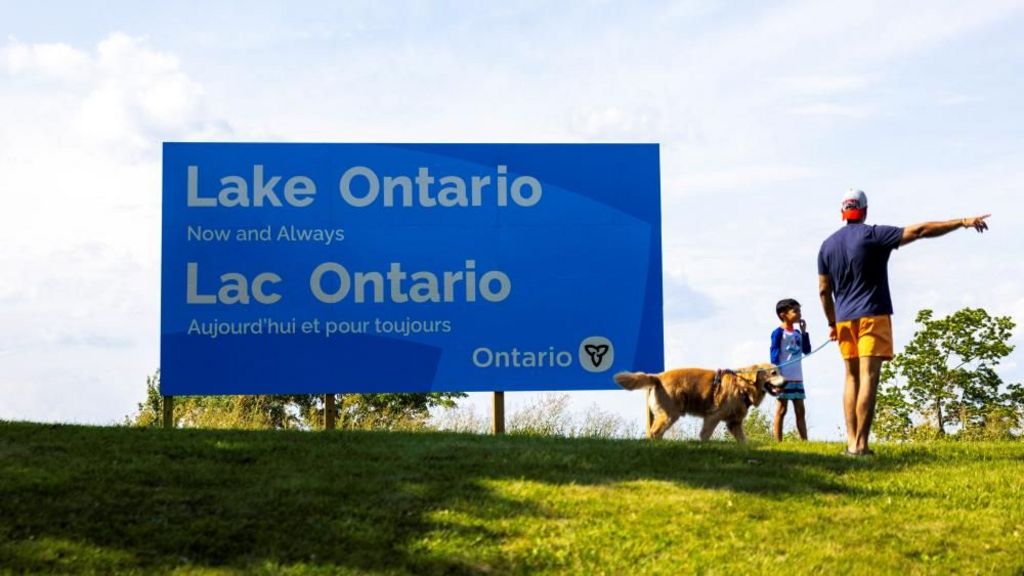
    For decades, Canada’s deep integrated economic and trade relationship with the United States has been widely framed as one of the country’s greatest economic assets, driving cross-border investment, job growth, and market access for Canadian manufacturers and resource exporters alike. But that long-held consensus is shifting dramatically, according to Canadian Prime Minister Mark Carney, who is calling for urgent course correction after sweeping changes to U.S. trade policy transformed the once-advantageous partnership into a critical vulnerability for Canada’s economic future.

    In recent remarks, Carney argued that evolving trade priorities out of Washington have eroded the stability that once made close bilateral ties a boon for Canadian economic growth. What once allowed Canadian businesses to reliably access the world’s largest single consumer market has now become a source of systemic risk, he said, leaving Canada overly exposed to sudden shifts in U.S. trade rules, tariff policy changes, and politically driven trade disputes that can disrupt domestic economic activity with little warning.

    Carney’s comments mark a notable shift in Canadian discourse around bilateral relations, opening a new conversation about the need for Canada to diversify its trade partnerships, reduce its overreliance on the U.S. market, and strengthen domestic economic resilience to insulate the country from future trade policy changes originating south of the border. The prime minister framed the push for correction as a pragmatic response to a changed global trade landscape, rather than a rupture in bilateral relations, noting that adapting to Washington’s new policy direction is a necessary step to protect Canada’s long-term economic sovereignty and prosperity.

  • Are insider traders making millions from the Iran war?

    Are insider traders making millions from the Iran war?

    An investigation by the British Broadcasting Corporation (BBC) has uncovered a striking pattern: large, unexplained spikes in trading activity occurred on financial markets in the immediate lead-up to key public announcements from the United States president related to the conflict with Iran. The findings have reignited long-simmering questions about whether individuals with access to non-public intelligence about escalating tensions and potential military action exploited their insider advantage to generate millions of dollars in illegal profits.

  • Iranian woman arrested in US for allegedly trafficking arms to Sudan

    Iranian woman arrested in US for allegedly trafficking arms to Sudan

    Federal U.S. prosecutors have announced the arrest of an Iranian national and U.S. lawful permanent resident on charges that she ran an illicit arms trafficking network brokering Iranian weapons sales to Sudan’s national military, a scheme that violated sweeping American sanctions imposed on Tehran.

    Forty-four-year-old Shamim Mafi was taken into custody by law enforcement officials at Los Angeles International Airport on Saturday, as she prepared to board an outbound flight to Turkey, according to a public statement posted to X by Bill Essayli, First Assistant U.S. Attorney for the Central District of California. Court documents unsealed following the arrest detail accusations that Mafi coordinated multiple large-scale arms deals directly with Sudan’s Ministry of Defense, moving military hardware produced by Iranian manufacturers into the war-torn Northeast African nation.

    The most high-value transaction cited in filings is a $70 million (€60 million / £52 million) contract for unmanned aerial drones, a deal for which Mafi is alleged to have arranged travel for a Sudanese official delegation to Iran, collected more than €6 million in payments from the Sudanese side, issued official payment receipts, and coordinated logistics between Iranian producers and Sudanese military buyers. Court records also add that Mafi formally submitted a letter of intent to Iran’s Islamic Revolutionary Guard Corps (IRGC) to broker a separate agreement for 55,000 bomb fuses, alongside additional deals for conventional bombs and millions of rounds of small-arms ammunition.

    To hide the transactions from U.S. regulators, prosecutors say Mafi deliberately structured deals to bypass oversight, repeatedly using unregulated informal currency exchange entities across multiple transactions in a calculated effort to evade American sanctions that ban any U.S.-based person or resident from engaging in unauthorised commercial activity involving Iranian goods or services. Essayli’s public announcement included accompanying images: one shows a woman believed to be Mafi detained by airport security personnel, while others show a military drone on an airfield tarmac and stacks of bundled cash linked to the alleged scheme.

    Mafi, who became a U.S. lawful permanent resident in 2016, has not yet issued any public statement responding to the charges against her. She is scheduled to make her first court appearance for the case on Monday, and if convicted on all counts, she faces a maximum possible prison sentence of 20 years behind bars.

    The allegations come against the backdrop of a devastating three-year civil war in Sudan, which has pitted the country’s formal national army against the paramilitary Rapid Support Forces (RSF). The United Nations has labeled the conflict the world’s worst ongoing humanitarian catastrophe, with tens of thousands of civilians and combatants killed, more than 7 million people internally displaced or refuged across neighboring borders, and widespread famine and collapse of basic public services across large swathes of the country.

    For months, global human rights watchdogs have documented widespread foreign arms flows to both warring parties, which international observers say have prolonged and intensified the violence. Amnesty International previously published research confirming that weapons manufactured in countries including China, Russia, Serbia, Turkey, the United Arab Emirates, and Yemen have been recovered from battlefields in Sudan. Tehran has repeatedly been accused of supplying military support including weapons to Sudan’s army, allegations that Sudanese government officials have repeatedly denied in past statements.

  • US releases video of forces seizing Iranian ship

    US releases video of forces seizing Iranian ship

    In a public announcement, former U.S. President Donald Trump has confirmed that American military forces carried out the interception of an Iranian-flagged cargo ship operating in the Gulf region, an operation framed as part of ongoing U.S. naval blockade activities in the strategically vital waterway. The seizure, which comes amid long-running tensions between Washington and Tehran, marks a visible escalation of maritime assertiveness by U.S. forces in one of the world’s busiest and most geopolitically significant shipping lanes. A video recording of the interception operation has been officially released by U.S. authorities, providing public visual documentation of the naval action that is expected to draw sharp reaction from Iranian officials and reverberate across global diplomatic circles. The Gulf region handles roughly a third of the world’s seaborne oil trade, making any disruption or escalation of naval tensions there a matter of widespread international concern. This interception adds another layer to the protracted standoff between the United States and Iran over maritime security, trade, and regional geopolitical influence.

  • Why and how is US blockading Iranian ports in Strait of Hormuz?

    Why and how is US blockading Iranian ports in Strait of Hormuz?

    Tensions in the Persian Gulf region have escalated sharply after the Trump administration launched a full naval blockade of maritime traffic entering and exiting Iranian ports earlier this month, an operation that has already resulted in the interception and seizure of an Iranian-flagged cargo vessel.

    In a public statement over the weekend, former President Trump confirmed that U.S. naval forces intercepted the cargo ship Touska in the Gulf of Oman, marking the first publicly disclosed seizure under the new blockade policy. U.S. Central Command (Centcom) later released footage showing U.S. Marine Corps rappelling from a military helicopter onto the deck of the intercepted vessel, confirming the boarding operation. This account contradicted an earlier social media post from Trump that claimed U.S. forces had disabled the ship by blowing a hole in its engine room.

    The blockade was implemented just weeks after bilateral negotiations between U.S. and Iranian representatives failed to reach a permanent peace agreement to end the conflict that began on February 28. A temporary two-week ceasefire is currently in effect, but the new naval move has thrown that truce into serious question. Washington’s stated goal for the blockade is to cut off two key sources of Iranian revenue: the transit fees Tehran was charging ships to pass through the Strait of Hormuz after it closed the waterway in response to U.S.-Israeli strikes, and Iran’s critical oil export revenue. Trump framed the policy as an effort to force open the strategically vital strait, telling Fox News that the U.S. would not allow Iran to control access based on political preference, and that the ultimate goal is to restore free, unregulated passage for all vessels through the channel.

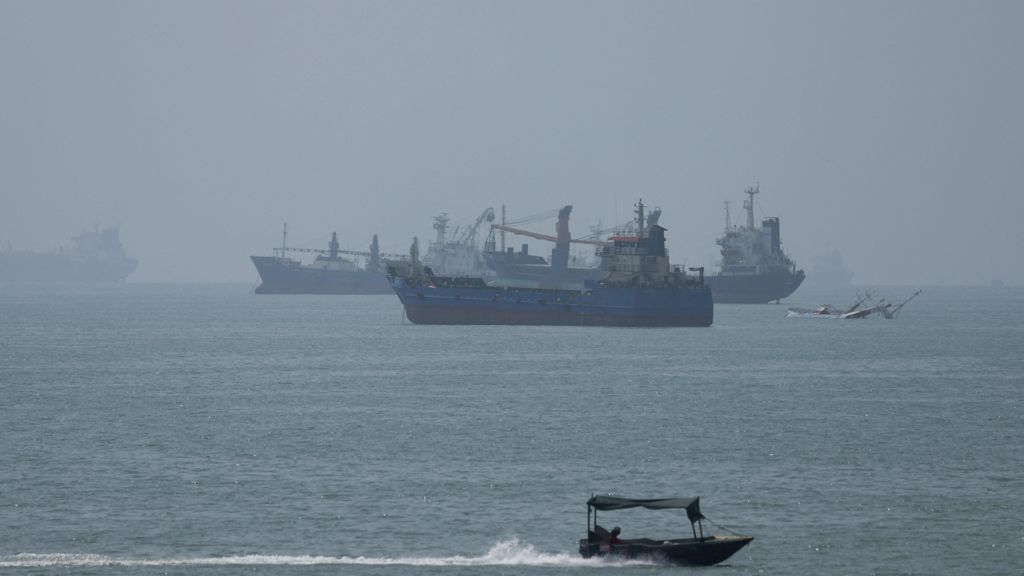
    Under the terms of the current blockade, the U.S. Navy has said that only non-Iranian commercial traffic will be allowed to transit the Strait of Hormuz, and all ships carrying humanitarian aid including food and medical supplies will be permitted to pass after inspection. Centcom has confirmed that more than 12 warships and over 100 fighter and surveillance aircraft are assigned to the blockade operation. Satellite imagery analyzed by BBC Verify on April 11 placed the USS Abraham Lincoln aircraft carrier strike group at the eastern edge of the Gulf of Oman, approximately 200 kilometers off Iran’s southern coast – the closest the nuclear-powered carrier has been positioned to the Persian Gulf since the conflict began. Two guided-missile destroyers, part of the carrier’s escort group, were also spotted in the area. Military analysts note that U.S. forces are unlikely to position major warships close to Iran’s shore to avoid exposure to Iranian missile and drone attacks, so interceptions will mostly take place in international waters of the Gulf of Oman and northern Indian Ocean after ships leave Iranian ports.

    International reaction to the blockade has been deeply divided, and the legality of the operation remains a point of fierce debate among legal experts. Iran has immediately condemned the move as an act of “state-sponsored piracy” and threatened to retaliate against Persian Gulf Arab states that support the operation by targeting their coastal port infrastructure. The International Maritime Organization, the United Nations body governing global maritime affairs, has stated that no nation has a legal right to block shipping in an international strait, with Secretary-General Arsenio Dominguez telling the BBC that even amid active conflict, there is no basis in international law to restrict transit through a key international navigation lane. However, Donald Rothwell, a leading professor of international law at the Australian National University, argues that under existing laws of naval warfare, the U.S. as a belligerent party in the conflict has the legal right to impose a blockade on enemy ports.

    The blockade has already had tangible impacts on commercial shipping in the region. Centcom confirmed that as of mid-April, six merchant vessels linked to Iran have been ordered to turn around and return to Iranian ports, and ship tracking data analyzed by BBC Verify shows at least two Iran-linked vessels have altered course after transiting the Strait of Hormuz, consistent with U.S. orders. Many shipping companies have also begun using location spoofing to disguise the position of their vessels to avoid interception.

    The strategic context for the current standoff dates back to earlier this month, when Iran announced it would reopen the Strait of Hormuz following a U.S.-brokered 10-day ceasefire between Israel and Lebanon. But Trump quickly announced the U.S. blockade would remain in place until a final comprehensive peace deal is reached, prompting Iran to reverse course and close the strait once again. Prior to the U.S. blockade, Iran continued to export oil through the closed strait, cashing in on skyrocketing global oil prices driven by the closure of the waterway, which carries roughly 20% of the world’s daily energy shipments. March 2026 marked Iran’s fifth-largest month for oil exports in the past 18 months. Approximately 82% of all fossil fuel exports leaving the Strait of Hormuz are bound for Asian markets, with China purchasing an estimated 90% of Iran’s current oil exports. Beijing has already labeled the U.S. blockade “dangerous” and “irresponsible”, and analysts widely view the policy as an effort to pressure China to take a more active role in pushing Iran toward a peace deal.

    The potential consequences of a prolonged blockade are severe for both regional security and the global economy. Leading security analysts, including BBC security correspondent Frank Gardner, have highlighted two major risks: a further surge in already elevated global oil and gas prices, and the collapse of the current 14-day ceasefire, which would reignite full-scale conflict between the U.S. and Iran and put neighboring Gulf states including Dubai, Bahrain, Kuwait and Saudi Arabia at direct risk of escalation. The International Monetary Fund warned this week that a prolonged conflict and sustained high energy prices could push the global economy into recession, with the United Kingdom forecast to suffer the worst impact among all advanced economies. For Iranian civilians, the blockade also raises serious food security concerns, as Iran relies heavily on imported grain and wheat to feed its population.

    Commercial shipping data shows that prior to the conflict, roughly 3,000 vessels transited the strait each month; that number has dropped to just a handful per day during the current hostilities, triggering a major fuel crisis across energy-dependent Asia. Many Asian governments have already implemented emergency measures to conserve fuel, including ordering remote work, shortening the national work week, declaring public holidays and closing universities early. The UK government has confirmed that British forces will not participate in enforcing the blockade, though Royal Navy minesweepers and anti-drone assets will continue routine patrols in the region. Trump has said other nations will join the blockade effort but has not named any contributing countries, and claimed that NATO has offered assistance to clear mines the U.S. accuses Iran of laying in the strait, with the goal of reopening the waterway to full traffic in the near term.