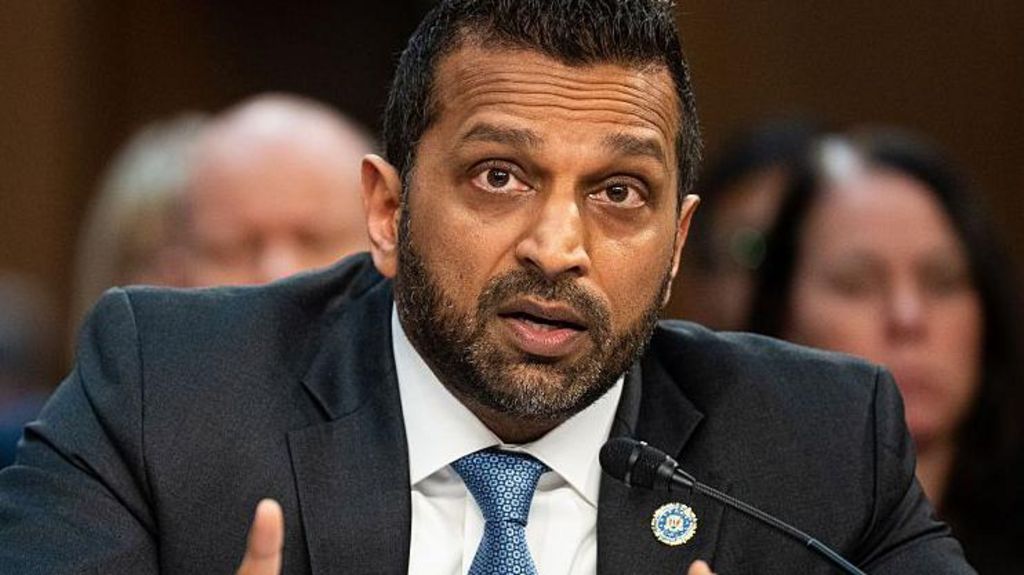
A high-stakes legal battle has erupted in U.S. political and law enforcement circles, as Federal Bureau of Investigation Director Kash Patel has launched a $250 million defamation lawsuit against the major American magazine The Atlantic. The suit centers on what Patel calls deliberately false, reputation-ruining claims published by the outlet about his professional conduct in office.
In the formal court filing, Patel alleges the magazine printed a series of fabricated and harmful assertions, including unproven accusations of habitual excessive drinking and repeated unexcused absences from his official duties. The lawsuit argues that the entire piece was constructed with intentionally false, manufactured allegations crafted explicitly to destroy Patel’s professional standing and force him out of his leading role at the FBI. Beyond disputing the story’s core claims, the suit accuses The Atlantic of failing to provide Patel with sufficient time to respond to the detailed list of allegations before publication, and of disregarding a pre-publication warning letter sent by his legal team. According to the filing, the outlet only granted Patel’s side a mere two hours to prepare a response to the claims. “They were on notice that the claims were categorically false and defamatory. They published anyway,” Jesse Binnell, Patel’s lead attorney, shared in a post on social platform X, alongside the full text of the pre-publication letter his team sent to the magazine.
The original article, published by The Atlantic, drew on anonymous sources to claim that Patel’s on-the-job conduct posed a tangible risk to U.S. public safety and national security. The outlet has stood firmly behind its reporting, noting the piece was rooted in interviews with more than two dozen sources familiar with the situation. In an official statement released after the lawsuit was filed, the magazine said: “We stand by our reporting on Kash Patel, and we will vigorously defend The Atlantic and our journalists against this meritless lawsuit.”
The story’s reporter, Sarah Fitzpatrick, pushed back against Patel’s claim that the outlet failed to properly seek comment for the piece, pushing back on that allegation in an interview with MSNBC. “We reached out for comment to The White House, and to the Justice Department, neither of which disputed anything,” Fitzpatrick said. “We gave multiple opportunities, including 19 detailed, detailed questions. So we stand by every word.” Notably, the published article even included a direct response attributed to Patel himself, in which he dismissed all claims outright: “Print it, all false, I’ll see you in court—bring your checkbook.”
Under longstanding U.S. defamation law, established by the 1964 U.S. Supreme Court ruling in *New York Times Co. v. Sullivan*, public officials like Patel are required to meet a high legal bar to win a defamation suit: they must prove that the publishing outlet acted with “actual malice” — meaning the organization either knew the published information was false, or deliberately ignored critical fact-checking steps that would have revealed the falsity before going to print.
The White House has publicly thrown its support behind Patel in the dispute. When reached for comment by the BBC following the lawsuit’s filing, White House press secretary Karoline Leavitt highlighted the Trump administration’s law enforcement record under Patel’s leadership at the FBI. “Under President Trump and Director Patel’s leadership at the FBI, crime across the country has plummeted to the lowest level in more than 100 years and many high-profile criminals have been put behind bars,” Leavitt said, adding, “Director Patel remains a critical player on the Administration’s law and order team.”
Patel first publicly addressed the allegations during a Fox News interview this past Sunday, where he first confirmed he would pursue legal action against the magazine. As of press time, the FBI has not issued an immediate response to the BBC’s request for comment on the ongoing lawsuit.