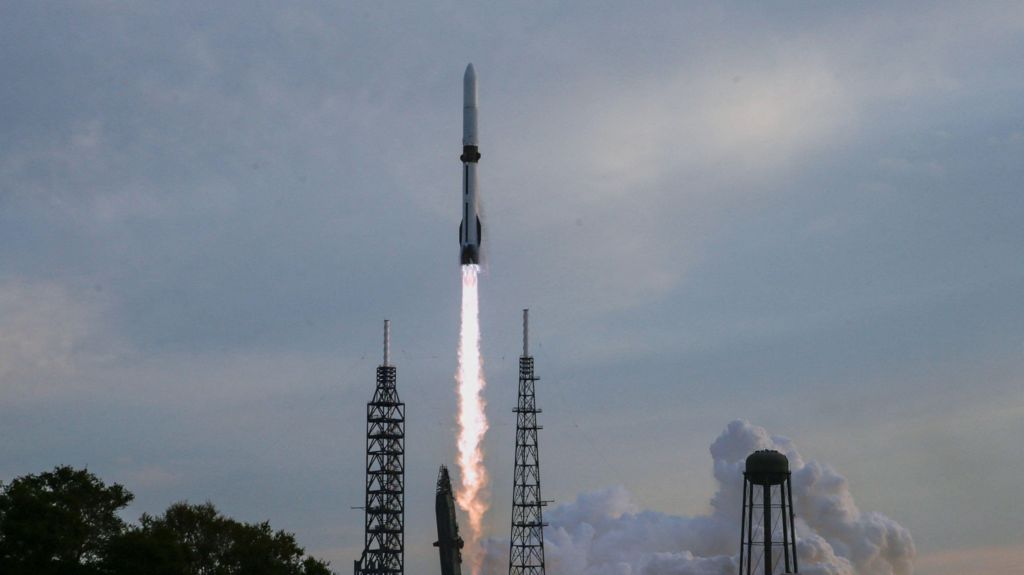
Blue Origin, the private space exploration firm founded by Amazon billionaire Jeff Bezos, has been forced to ground its flagship New Glenn rocket following a botched satellite launch that has triggered a formal investigation overseen by U.S. aviation regulators. The incident, which unfolded Sunday during only the third operational flight of the next-generation heavy-lift rocket, saw the vehicle fail to deliver an AST SpaceMobile communications satellite to its targeted low Earth orbit, rendering the $insured payload completely unusable.
In public comments following the failure, Blue Origin CEO Dave Limp confirmed that the root cause of the malfunction traces to insufficient thrust generated by one of the rocket’s engines. “We clearly didn’t deliver the mission our customer wanted, and our team expects,” Limp acknowledged, adding that the company is already working through a root-cause analysis to identify necessary fixes. The U.S. Federal Aviation Administration (FAA), which regulates commercial space launch activities in the United States, has formally required Blue Origin to lead a full mishap investigation, with regulators overseeing every stage of the process.
“The FAA will oversee the Blue Origin-led investigation, be involved in every step of the process and approve Blue Origin’s final report, including any corrective actions,” an agency spokesperson confirmed. No timeline for the completion of the probe has been released, and the FAA noted that it will make a final determination on when New Glenn can return to active launch operations only after reviewing the investigation findings and approving any planned corrective changes. Limp expressed confidence that the company would address the issue quickly, stating that the investigation would allow the team to “learn from the data and implement the improvements needed to quickly return to flight operations.”
Market reaction to the launch failure was immediate: AST SpaceMobile, the company that owned the lost satellite, saw its share price drop more than 6% in trading on Monday. While AST confirmed that the financial loss from the destroyed payload would be covered by insurance, the firm declined to disclose the exact value of the lost asset. The satellite was intended to expand global mobile phone connectivity, a fast-growing segment of the satellite industry that has drawn investment from some of the world’s largest technology firms.
The failed launch comes at a critical moment for Blue Origin, which had already lined up a dozen New Glenn launches for the remainder of 2025, including its own upcoming TerraWave project that plans to deploy thousands of connectivity satellites to low Earth orbit. Blue Origin is not the only Amazon-linked firm expanding into this space: Amazon itself recently closed an $11 billion acquisition of a satellite manufacturer and operator to advance its competing Project Leo, which aims to build out a large low Earth orbit connectivity constellation.
Both Blue Origin and Amazon currently find themselves playing catch-up to SpaceX’s Starlink network, founded by billionaire Elon Musk. Starlink already operates thousands of functional connectivity satellites in orbit, providing global internet access to consumers and businesses even in remote, hard-to-reach regions of the world. Starlink has become one of SpaceX’s most profitable business segments, and the company is widely expected to hold its initial public offering later this year in what market analysts predict could become one of the largest public listings in history.