标签: North America

北美洲

  • US inflation rate eases to 3.5% as gasoline prices fall

    US inflation rate eases to 3.5% as gasoline prices fall

    New official government data has revealed that U.S. inflation cooled notably in June, driven by a sharp drop in gasoline prices that has brought the annual rate of price growth down to its lowest level in months. According to the U.S. Bureau of Labor Statistics (BLS), consumer prices rose 3.5% over the 12 months ending in June, marking a meaningful drop from the 4.2% annual increase recorded in May.

    The biggest factor pulling down the overall inflation rate was a steep 9.7% monthly decline in retail gasoline prices in June, even though pump costs remain significantly higher than they were at the same point last year. Recent weekly data from American motorist advocacy group AAA shows that prices at the pump have already started to shift again: as of Tuesday, the national average for a gallon of regular gasoline stood at $3.86, up seven cents from the average recorded just one week prior.

    The unexpected rebound in pump prices comes on the heels of a sharp spike in global crude oil costs, triggered by renewed military conflict in the Middle East that threatens to disrupt global energy supplies. On Tuesday, Brent crude, the global benchmark for oil pricing, climbed to $87 per barrel, a jump of nearly $10 over just 24 hours. This sudden surge follows new U.S. military strikes against Iran carried out earlier this week. In conjunction with the strikes, former President Donald Trump announced a new naval blockade of the Strait of Hormuz, the critical chokepoint through which roughly a fifth of global oil trade passes daily. Trump also imposed a 20% fee on all cargo transported through the key waterway, raising fears of prolonged disruption to global energy markets that could send inflation rising again across the U.S. and other major economies.

    While the latest inflation reading has been welcomed by policymakers and consumers alike, many economic analysts warn that the current period of cooling price growth could be short-lived. If energy prices remain elevated or continue to climb in the coming weeks, the downward trend in inflation could reverse quickly, putting renewed pressure on U.S. household budgets and complicating efforts by the Federal Reserve to stabilize the economy.

  • Iowa hosts Shanghai youth for softball and cultural exchange

    Iowa hosts Shanghai youth for softball and cultural exchange

    The historic connection between Iowa and China, first forged through agricultural trade in yellow soybeans, has entered a new chapter this week, as a group of young Chinese athletes and delegates arrived in Oskaloosa, Iowa for the nine-day Musco Youth Sports Exchange, combining competitive softball play with immersive cultural exchange between Shanghai and local American youth.

    The visiting delegation includes players from Shanghai’s Beisibao U13 girls’ softball team, alongside senior representatives from the Shanghai Baseball and Softball Association, the Shanghai Friendship Association, and the Shanghai Sports Federation. Over the course of their visit, the young athletes will compete against local youth teams, live with host families, and experience daily life in a small Midwestern American community, building personal connections that extend far beyond the softball diamond.

    Launched just last year in 2025, the exchange program held its inaugural event in Shanghai, where more than 100 young athletes from China and the United States gathered to compete, share cultural experiences, and build cross-border friendships that have persisted into 2026. Organizers built on that successful first meeting to bring the program to Iowa this year, with the long-term goal of establishing a permanent, recurring platform to foster youth connection between the two countries.

    Jeff Rogers, CEO of program sponsor Musco Lighting, emphasized that sports create an organic, low-barrier pathway to bring young people from different backgrounds together. Unlike traditional formal exchange programs, this initiative blends head-to-head competition with co-ed mixed teams made up of both Chinese and American players, giving athletes immediate opportunities to collaborate and bond both on and off the field. Rogers noted that the organization plans to expand the program beyond softball in coming years, exploring opportunities to add other popular sports including American football, pickleball, and tennis to the exchange roster.

    “We like all sports, and we’ll continue to do youth exchange through sports,” Rogers told China Daily in an interview on site. “It’s not just softball. We’ll look at expanding into football, pickleball, tennis — wherever we can find the opportunity.”

    Speaking at the program’s opening ceremony, Chinese Consul General in Chicago Wang Baodong, who threw out the ceremonial first pitch to mark the start of the exchange, encouraged the visiting Shanghai athletes to compete with respect for their opponents, embrace the chance to learn from their American peers, and carry the spirit of bilateral friendship forward into the future. Wang emphasized that personal connections forged between young people form the strongest foundation for positive China-U.S. relations long-term.

    Oskaloosa Mayor David Krutzfeldt echoed that sentiment, noting that Iowa’s deep, decades-long ties with China are primed to grow through expanded grassroots cooperation and people-to-people exchanges like this program. Krutzfeldt called on the visiting athletes to fully immerse themselves in local Midwestern culture during their stay, and experience the hospitality of the Oskaloosa community firsthand.

    “You’re going to truly immerse yourselves in American culture and experience what life is like in the Midwest United States. I expect you will experience firsthand the genuine warmth of our community,” Krutzfeldt said. “Our relationship with China is one that needs to be enhanced, needs to be warmer. We have much to offer one another.”

    Recalling Iowa’s early efforts to build formal and informal ties with China dating back decades, Krutzfeldt added that he remains optimistic about the future of bilateral exchange, and hopes to see people-to-people connections deepen further in the years ahead.

    Two-time Olympic softball medalist Michele Smith, who attended the opening ceremony, shared her perspective on the unifying power of the sport, noting that softball has long served as a common ground for athletes from China and the United States, dating back to the two countries’ iconic matchup at the 1996 Atlanta Olympic Games. Smith emphasized that even with language and cultural differences, shared love of a sport creates immediate common ground for young athletes to connect.

    “It’s a great sport for girls around the world,” Smith said. “Sport helps people connect despite differences in language and culture, allowing athletes to build lasting friendships. Sport brings everybody together, and it reminds us we’re similar. We might grow up in different cultures and speak different languages, but we play the same sport. We meet each other, we stay in touch, and especially nowadays, the young athletes can continue to communicate even after the trip is over.”

    Sarah Lande, one of Iowa’s most prominent long-standing advocates for China-U.S. ties who is widely recognized as an “old friend” of China, emphasized that the future of the bilateral relationship depends entirely on the next generation carrying forward the spirit of friendship and connection. Lande expressed hope that exchange programs like this will expand to give more young people from both countries the chance to interact and build personal bonds.

    “I wish the whole world could get together this way,” Lande said. “Once we get young people playing together and understanding other countries, that’s what that going to keep the future world together. As it spreads, we can have these young people share it.”

  • Man killed during ICE encounter in Maine

    Man killed during ICE encounter in Maine

    A 26-year-old Colombian man legally residing in the U.S. was shot and killed by a U.S. Immigration and Customs Enforcement (ICE) deportation officer during an enforcement operation early Monday in Biddeford, a coastal Maine city, according to multiple state and federal officials. The incident has triggered immediate calls for a full, impartial probe, coming on the heels of a second controversial fatal ICE shooting that killed an unintended target in Texas just one week prior.

    Ryan Fecteau, Speaker of the Maine House of Representatives, first confirmed the shooting via a Facebook post Monday morning, noting that Maine State Police and the state’s Department of Public Safety had secured the scene, with the Federal Bureau of Investigation (FBI) tapped to lead the independent investigation. Fecteau later updated his post to confirm the victim’s identity details: a 26-year-old Colombian national who was in the U.S. legally and held a valid Social Security number. Federal authorities have not officially released the deceased’s name to the public as of Monday.

    Maine Attorney General Aaron Frey outlined the official preliminary account of the encounter in a Monday statement. According to Frey, the officer was carrying out enforcement actions tied to a final order of removal when the victim attempted to flee the scene by driving his vehicle directly toward the officer, prompting the fatal gunfire. Multiple local residents reported hearing at least four separate shots during the incident.

    User-posted videos circulating on social media offer on-the-ground context of the aftermath. One clip captured a man clinging to the driver’s side window of a white sedan as the vehicle spun in place, while another footage shows ICE agents removing the victim’s body from the driver’s seat and surrounding the remains on the ground.

    Maine’s top elected officials have all weighed in on the tragedy, calling for transparency to answer lingering questions. Governor Janet Mills confirmed she had received an official briefing on the incident, while U.S. Senator Susan Collins emphasized in a post on X that the shooting demanded a full and unbiased investigation. Biddeford Mayor Liam LaFountain said he was deeply shaken by the news, noting “situations like these are alarming and frightening.” “My thoughts are with the family and loved ones of the person who died as they face an unimaginable loss,” LaFountain said. “They deserve compassion, dignity and, in time, a full understanding of the circumstances that led to this tragedy.” He joined other leaders in calling for a complete, transparent investigation into the killing.

    U.S. Senator Angus King told reporters at a noon news conference at Portland International Jetport that Department of Homeland Security (DHS) officials had confirmed to him the victim was a man in his 20s who had been served a final removal order, and that agency officials claimed the victim had “weaponized the vehicle” against the officer.

    The Maine shooting comes as ICE has drastically scaled up immigration enforcement operations across the U.S. in recent weeks, with the agency increasingly targeting individuals not already held in law enforcement custody. It also follows a separate fatal shooting just seven days earlier in Houston, Texas, that has already stirred significant controversy.

    In that July 7 incident, ICE agents fatally shot 52-year-old Lorenzo Salgado Araujo, a Mexican father of three who had lived in Houston for 35 years and had no criminal record. Salgado Araujo was not the target of the ICE operation; he was driving to his construction job when agents in unmarked black vehicles pulled his van over. An official ICE statement claimed Salgado Araujo “refused to follow multiple verbal commands” and used his vehicle as a weapon to try to run over an agent, who then opened fire. But accounts from three passengers in the van, relayed by their attorney, contradict that narrative, saying Salgado Araujo never attempted to ram agents. Crucially, none of the responding ICE officers wore body cameras, leaving no definitive visual evidence to verify either account. Salgado Araujo’s son Ronaldo told local media his father was in the process of applying for legal permanent residency and was well-aware of how to interact with law enforcement during stops. U.S. Representative Al Green has formally called for a full investigation into the Houston killing.

  • Tech experts, economists warn of rapid AI disruption

    Tech experts, economists warn of rapid AI disruption

    A coalition of more than 200 top technology pioneers and leading economists has sounded the alarm over the unprecedented speed at which artificial intelligence is set to reshape the global economy, releasing a public statement Monday that calls for immediate, proactive action from policymakers and industry leaders to prepare for the coming shift.

    Organized by the advocacy group We Must Act Now, the statement counts an extraordinary roster of high-profile signatories: more than a dozen Nobel Prize-winning economists, top executives from leading AI development firms including OpenAI and Anthropic, former Google CEO Eric Schmidt, and globally recognized AI researchers. Stanford economist Erik Brynjolfsson, one of the lead organizers of the initiative, explained that the statement was crafted to push the economics profession and global policymakers to stop underestimating AI’s potential to upend existing economic structures.

    “While there has been a noticeable shift in how our field views AI, there remains a dangerous gap between what we recognize as a coming transformation and the preparations we have in place,” Brynjolfsson said. “I worry deeply that we are not ready for the tsunami of change that is approaching faster than many expect.”

    The statement lays out three core pillars of the group’s warning. First, it projects that AI capabilities will grow exponentially more powerful over the coming decade, outpacing most public and institutional expectations. Second, this rapid advancement will trigger an economic transformation larger in scale than the Industrial Revolution — but unfold over a dramatically shorter timeline, bringing both massive opportunities for broad gains in living standards and severe risks including large-scale involuntary job displacement. Third, the statement argues that economists, policymakers, and technology leaders cannot afford to delay action: they must immediately invest in understanding the economic impacts of transformative AI, and build the regulatory guardrails, adaptive institutions, and aligned incentives needed to steer AI development toward a human-centric model that benefits all of society.

    Unlike past waves of technological innovation that unfolded over generations, AI’s disruption will compress massive change into just a handful of years, leaving little time for workers, businesses, and governments to adapt, experts warn. 2024 Nobel Prize-winning MIT economist Daron Acemoglu drew a parallel to the disruption robots caused in global manufacturing, noting that a similar shift driven by AI in a far shorter timeline would impose severe, unnecessary harm on household livelihoods if unmanaged.

    University of Virginia economics professor Anton Korinek emphasized that past general-purpose technologies — from steam power to electricity to personal computing — gave societies decades to adjust laws, build new institutions, and help workers transition. “AI may give us only a few years,” Korinek said. “We cannot improvise our strategy and build the systems we need in the middle of an ongoing transformation. Waiting for absolute certainty about AI’s impacts means we will be too late to avoid the worst harms.”

    Yoshua Bengio, a pioneering AI researcher at the University of Montreal and Turing Award winner who signed the statement, echoed that urgency, arguing that leaving AI’s trajectory entirely to unregulated market forces risks leaving the vast majority of citizens behind. “Based on the clear current trajectory of AI development, it is highly plausible that AI will drastically transform our economies,” Bengio wrote. “We must be intentional and make collective, democratic choices, rather than letting market forces play out and risking leaving most citizens behind.”

    Recent industry analysis backs up these warnings, projecting dramatic shifts in global labor markets by the end of the decade. Digital business firm Clickvision synthesized multiple independent studies to estimate that between 85 million and 92 million jobs worldwide could be displaced by AI automation by 2030, even as between 97 million and 170 million new roles are created by the technology. The analysis found that as much as 30% of all current jobs in the United States could become at least partially automated by 2030, and 60% of all roles will see major changes to their core day-to-day tasks as AI integration becomes standard. Even today, 11.7% of U.S. jobs are already fully automatable with existing technology, and Clickvision projects that 14% of the entire global workforce will be forced to switch career fields entirely by 2030 to remain employed.

    Market analytics outlet datarefs.com identifies the sectors at highest immediate risk as manufacturing, customer service, transportation, and retail. Roles that rely heavily on existing AI tools — including interpreters, translators, and entry-level research positions that rely on generative AI tools such as ChatGPT, DeepL, and Google Translate for core tasks — also face a high risk of displacement in the near term. Younger workers and workers in advanced, highly tech-integrated economies are expected to face the most intense disruption from the shift, the outlet reported.

    Notably, the experts signing the statement do not argue that AI will be a net negative for global society. Like past transformative technological shifts from the Industrial Revolution to the rise of personal computing, AI is expected to deliver long-term benefits that lift overall living standards. The core concern of the group is not AI itself, but the unprecedented speed of its adoption and transformation, which outpaces the adaptive capacity of existing labor institutions, social safety nets, and regulatory frameworks — a gap that could leave millions of workers vulnerable to unnecessary economic hardship without immediate intervention.

  • Death of Graham puts pressure on Republicans

    Death of Graham puts pressure on Republicans

    The unexpected passing of longtime U.S. Senator Lindsey Graham at age 71 has thrown Senate Republicans into a precarious position, amplifying existing strains on the party’s narrow one-seat majority that is already stretched thin by the extended absence of Senate veteran Mitch McConnell.

    Preliminary results from a Washington D.C. medical examiner point to an aortic dissection as the immediate cause of Graham’s death, with a final official cause pending the completion of toxicology screenings. Graham, who was first elected to represent South Carolina in the U.S. Senate in 2002, leaves behind a political legacy defined by a sharp ideological shift: he began his Senate tenure as an outspoken critic of former President Donald Trump, once labeling Trump the “most flawed nominee in the history of the Republican Party,” but later evolved into one of Trump’s most unwavering Congressional allies.

    With the Senate’s 53-47 Republican majority already down one voting member due to McConnell’s month-long absence, Graham’s death leaves the party without a critical vote for the foreseeable future. Eighty-four-year-old McConnell, the long-serving Republican leader, broke his public silence on Sunday to confirm he had been hospitalized after a fall that caused him to lose consciousness, followed by a mild case of pneumonia that extended his recovery period away from Capitol Hill.

    South Carolina’s governor holds the authority to appoint a temporary replacement to fill Graham’s Senate seat until a permanent successor is elected in the November midterm election. As of Sunday, no name had been announced for the interim appointment, but prospective candidates for the open permanent seat are expected to formally declare their campaigns this week. Multiple Republican names have begun circulating among political circles as potential contenders, per reporting from the Associated Press, with U.S. Representative Ralph Norman emerging as an early popular pick.

    Graham’s empty seat comes at a critical legislative juncture for the Republican caucus. Graham chaired the Senate Budget Committee, which is currently advancing key provisions of Trump’s voter ID legislation. A prominent foreign policy hawk with a long record of pushing for aggressive U.S. intervention overseas, Graham was also a leading supporter of expanded U.S. military action against Iran. His position will be missed as the Senate prepares to consider a new request for additional military funding for the ongoing conflict with Iran.

    Just days before his death, Graham completed his tenth official trip to Ukraine, where he has long been a vocal backer of Kyiv in its conflict with Russia, and spoke to reporters alongside destroyed Russian military vehicles on public display in the capital. In May, he made headlines for introducing a bill that would grant Trump authority to impose new tariffs on China over its purchases of Russian oil and gas, and repeatedly made critical public remarks about China and its international relations. He spent much of his career opposing the 2015 nuclear deal with Iran reached under former President Barack Obama, and repeatedly called for preemptive military strikes against the Iranian government.

    Trump issued a public tribute to Graham on social media Sunday, calling him “one of the greatest people and senators I have ever known.”

  • How US commerce secretary’s Epstein links were uncovered by British whistleblower

    How US commerce secretary’s Epstein links were uncovered by British whistleblower

    A former senior Wall Street executive has uncovered new documentary evidence that contradicts public statements from U.S. Commerce Secretary Howard Lutnick regarding his long-concealed business relationships with convicted sex offender Jeffrey Epstein and Britain’s disgraced Prince Andrew. Simon Andriesz, who previously served as a managing director at BGC Partners — a financial brokerage under Lutnick’s Cantor Fitzgerald umbrella — shared his findings from the massive cache of publicly released Epstein court documents with members of the U.S. House Oversight Committee ahead of Lutnick’s May 2025 confirmation hearing appearance.

    Andriesz, who has been locked in a years-long legal battle with his former employer after blowing the whistle on accounting misconduct at BGC in 2016, told the BBC he uncovered a 2018 email chain directly exchanged between Lutnick and Epstein about a joint startup investment both men held stakes in. After noticing that Cantor Fitzgerald executives routinely used initials instead of full names in internal communications, Andriesz searched the 3.5 million-page document trove for Lutnick’s initials HWL, rather than his full name — a search strategy that uncovered the correspondence missed by other researchers.

    In the exchange, Epstein asked Lutnick directly for his perspective on growth prospects for Adfin, a digital advertising startup that counted both Epstein and Cantor Fitzgerald as investors. Lutnick replied that the firm was finally generating revenue and predicted it would become financially self-sufficient within the next 12 months. This directly contradicts Lutnick’s public and congressional testimony that he had no knowledge of Epstein’s investment in Adfin until 2025, and that he had only met Epstein once as neighbors in Manhattan 20 years prior.

    The newly released Epstein files also contain a 2012 photograph showing Lutnick alongside Epstein on Little St James, Epstein’s private Caribbean island, years after the financier’s 2008 conviction for soliciting prostitution from a minor. In a separate finding, Andriesz uncovered details of a 2013 business proposal from Cantor Fitzgerald to partner with then-Prince Andrew, who was a close associate of Epstein. The plan outlined a £1 million loan to a firm controlled by Prince Andrew in exchange for exclusive access to the prince’s high-level global business contacts, a deal Andriesz described in an interview as an attempt to “buy a prince.”

    Epstein himself warned Prince Andrew’s business advisor against the exclusive terms of the deal, which required Prince Andrew to only introduce wealthy clients to Cantor Fitzgerald. Documents show advisors from both sides negotiated the proposal for four months before it was ultimately abandoned. Cantor Fitzgerald did not deny that discussions took place, but confirmed the deal was never finalized. Prince Andrew, who was stripped of his royal titles in 2025, has not responded to requests for comment on the proposal.

    When Lutnick appeared before the House Oversight Committee in May, he repeated his claim that he had only learned of Epstein’s Adfin investment in 2025, stated he unequivocally condemns Epstein’s criminal actions, and noted he has never been formally accused of any wrongdoing tied to the sex offender. All 21 Democratic members of the committee signed a formal letter calling for Lutnick’s immediate resignation, accusing him of lying to Congress about his ties to Epstein.

    In response to questions from the BBC, the U.S. Commerce Department dismissed the allegations as a partisan political distraction, arguing there is no evidence of wrongdoing on Lutnick’s part. The White House echoed this defense, calling the BBC’s reporting a “pathetic and desperate attempt to slander” Lutnick, who it described as the most consequential commerce secretary in modern U.S. history. BGC Partners has dismissed all of Andriesz’s allegations as “categorically false,” arguing multiple investigations across different jurisdictions have failed to substantiate his claims. The firm says it terminated Andriesz’s employment in 2017 for refusing to follow medical guidance, declining to perform core job duties, and abandoning his role, and denies any retaliation against him for whistleblowing.

    Andriesz, who now lives in a quiet seaside village in Cornwall, UK, says his decade of legal conflict with Cantor Fitzgerald and BGC has destroyed his career, drained his finances, and damaged his health. Though he received a $420,000 whistleblower award from U.S. regulators after BGC was ordered to pay a $3 million penalty for supervision, reporting, and record-keeping violations stemming from his original 2016 allegations, he says neither U.S. nor UK authorities have held the firm or its leadership fully accountable, nor protected him from retaliation. He told the BBC he has been frustrated by the lack of public and official interest in his findings on Lutnick’s ties to Epstein.

    Epstein died by suicide in a New York jail in 2019 while awaiting trial on federal sex trafficking charges, leaving behind a massive trove of personal and business documents that have been gradually released to the public over the past year. Lutnick, a prominent Wall Street executive, was appointed to lead the Commerce Department by President Donald Trump in 2025, after which he sold his controlling stake in Cantor Fitzgerald and transferred leadership of the firm to his sons.

  • UAE condemns Iran’s ‘brazen’ attack on tankers as US launches fresh strikes

    UAE condemns Iran’s ‘brazen’ attack on tankers as US launches fresh strikes

    The strategic Strait of Hormuz, a critical global energy chokepoint, has erupted into a fresh wave of geopolitical crisis, following a deadly attack on two Emirati tankers and a sweeping new announcement from U.S. President Donald Trump that risks upending global shipping markets. The rapid escalation comes after three consecutive nights of U.S. strikes on Iranian military targets, marking a sharp breakdown in a recent ceasefire agreement between the two long-standing adversaries.

    On Monday, the United Arab Emirates’ Ministry of Defence issued a formal statement condemning what it called a “brazen” Iranian attack on two of its national tankers transiting the strait. The strike left one Indian crew member dead and eight others injured, six of whom are Indian and two Ukrainian, with four casualties in critical condition. The ministry called the assault a severe violation of international law that undermines regional security and stability.

    Shortly after the attack, Iran’s Islamic Revolutionary Guard Corps (IRGC) took responsibility for the strikes in a Telegram statement. The IRGC claimed the two tankers had ignored multiple navigation warnings, disabled their location tracking systems, and attempted to traverse a route marked as dangerous due to prior mining activity. The corps added that any vessel cooperating with what it calls the “aggressor enemy” will only face consequences including damage, delayed passage, and the risk of triggering a global energy crisis. The IRGC confirmed it had disabled both targeted tankers.

    The attack capped a 48-hour period of steadily escalating military exchanges between the U.S. and Iran. On Monday, following strikes for the third straight night, President Trump announced via his Truth Social platform that the U.S. would reinstate a full naval blockade of Iranian ports and impose a mandatory 20% charge on all cargo shipped through the Strait of Hormuz, set to take effect at 16:00 Eastern Time on Tuesday. The U.S. leader framed the toll as reimbursement for security costs, claiming the U.S. would now serve as the official “Guardian of the Hormuz Strait,” while asserting that all non-Iranian shipping would retain fair and open access to the waterway.

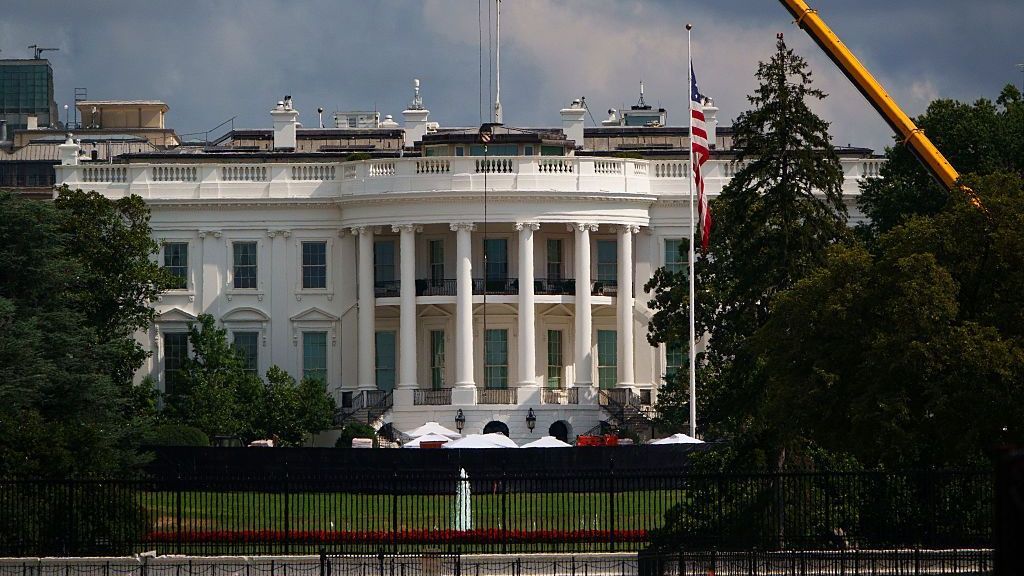
    Speaking to reporters at the White House, Trump said the U.S. was hitting Iran “very hard” and working to eliminate all of Tehran’s offensive capabilities while securing full control of the strait. When asked about the prospects for a negotiated end to the ongoing conflict, Trump maintained that a diplomatic deal remained within reach. U.S. Central Command (Centcom) confirmed it carried out the latest round of strikes on Monday afternoon, targeting military sites across multiple Iranian locations including Bushehr, Bandar Abbas and Abu Musa, with the stated goal of further degrading Iran’s capacity to attack commercial shipping. In response, Iranian state media reported that Iran’s army had targeted U.S. military assets stationed in Kuwait.

    Iran’s foreign minister Abbas Araghchi offered a sharp, sardonic retort to Trump’s announcement, leaning into the president’s own framing on X. Araghchi acknowledged that any power providing safe passage for commercial vessels through the strait deserves compensation, noting that “Iran has always been the GUARDIAN of the Strait and will remain so FOREVER.” He added that Trump’s proposed 20% rate is far too high, quipping that “We will be fair.” Iran’s top military spokesperson Ebrahim Zolfaghari went further, warning that any U.S. interference in the management of the strait will be considered an act of war against Iranian sovereignty, and that expanded conflict would spread flames across the entire Middle East.

    The International Maritime Organization (IMO), a United Nations body that oversees global shipping regulations, has already rejected Trump’s proposed toll outright. A spokesperson told Reuters that the organization “stands firmly against charging fees for passage through straits used for international navigation,” adding that there is no international legal basis for imposing mandatory transit tolls on commercial shipping through the waterway. As of Monday, ship tracking data from MarineTraffic shows that while a small number of vessels are still moving through the strait, overall commercial traffic remains heavily restricted.

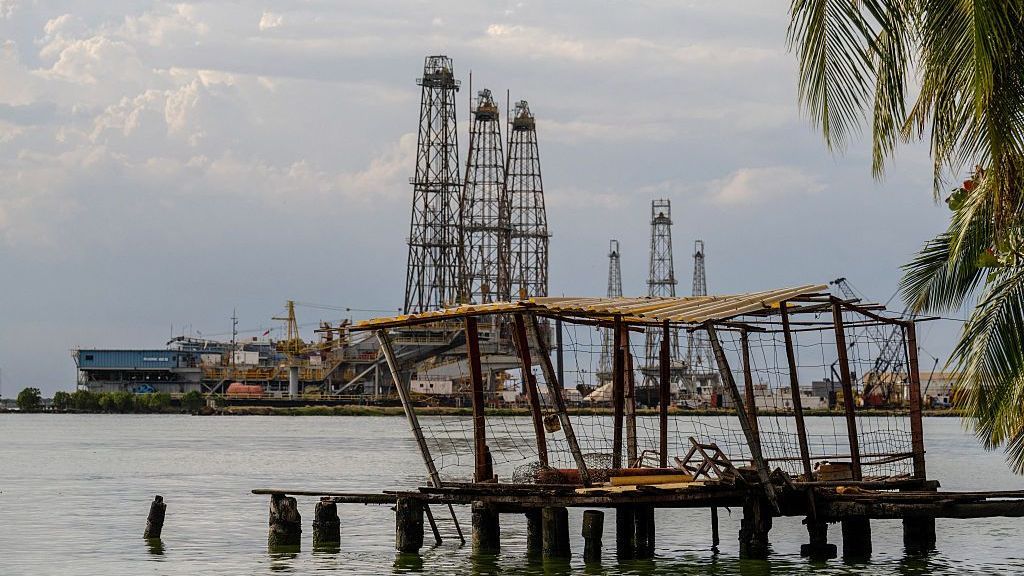
    The current crisis marks the latest chapter in a months-long conflict that has already reshaped global energy markets. The strait, through which roughly 25% of the world’s crude oil and 20% of global liquefied natural gas pass, was effectively shut down by Iran in February after the U.S. and Israel launched large-scale strikes on Iranian targets. Iran retaliated with missile and drone attacks on Israeli and U.S. military assets across the Gulf, and the IRGC seized two commercial vessels and fired on others that attempted to transit without Tehran’s approval. The disruption sent global oil prices soaring in the weeks that followed.

    The U.S. first imposed a full naval blockade of Iranian ports in April to pressure Tehran. By mid-May, U.S. military officials reported they had redirected 100 commercial vessels and disabled four Iranian-flagged ships under the blockade. The blockade was lifted in June as part of a ceasefire memorandum between the two sides aimed at de-escalation, but disputes over control of the strait quickly reignited. Last week, Trump formally notified Congress that the U.S. had resumed military action against Iran starting on July 7, complying with federal notification requirements for ongoing military engagements.

    The practical implications of Trump’s new announcement remain uncertain, and it carries both international and domestic political risks. Under international UN law, coastal states exercise full sovereignty over territorial waters extending 12 nautical miles from their coastline, and at its narrowest point, the Strait of Hormuz’s shipping lanes lie entirely within the territorial waters of Iran and Oman. Many U.S. allies are expected to push back against the requirement to pay a 20% cargo toll, and critics have already noted that the strait was fully open and unrestricted before the current conflict began.

    Domestically, the announcement creates political complications for Trump’s fellow Republicans ahead of upcoming midterm elections. Even though Trump is not on the ballot, the move is likely to drive renewed increases in global oil prices, which will impact U.S. consumers at the pump. Some lawmakers from both parties, including a number of Republicans, have already questioned the value of the earlier ceasefire, and many American voters are already concerned about rising energy costs. Some analysts have framed the announcement as a characteristic Trump negotiating tactic: a provocative move designed to force a reset in talks and draw greater international involvement into resolving the crisis.

  • Hours each day in an iron lung kept her breathing, her will to live kept her alive

    Hours each day in an iron lung kept her breathing, her will to live kept her alive

    Martha Lillard, the United States’ last remaining person who relied on an iron lung to breathe after contracting polio, died at her home in Oklahoma at the age of 78 on June 26. For nearly three-quarters of her life, the large metal breathing device defined her daily routine — but it never defined her spirit, her family says.

    Lillard was just 5 years old when she was diagnosed with paralytic polio in the mid-1950s, one year before the first widespread polio vaccine rolled out across the U.S. Waking up one morning unable to lift her head from her pillow, she already understood what her symptoms meant: widespread public fear of the incurable disease dominated conversations at the time, and the young girl immediately recognized the signs of the infection that had already left so many children dead or disabled.

    After her diagnosis, Lillard spent decades dependent on the iron lung, a negative-pressure respiratory device that works by adjusting air pressure inside a sealed metal cylinder to force the lungs to expand and contract, doing the work of weakened respiratory muscles automatically. While many children who relied on the machine feared it, Lillard never shared that anxiety, according to her younger sister Cindy McVey. Instead, the device felt like a recharge, leaving her feeling refreshed after daily sessions inside it.

    Against all odds, Lillard and her family refused to let her condition limit the life she built. Determined to let her live as independently as possible, her uncle and grandfather engineered a custom modification to the iron lung that let Lillard open and close the device on her own, granting her the ability to live alone that most other iron lung users never had. Loved ones also retrofitted a car to match her limited mobility: the steering wheel was repositioned to rest in her lap, and turn signals were moved to the floor, letting Lillard drive herself wherever she wanted to go.

    Over her decades of life, Lillard cultivated a rich set of passions. She became a skilled painter, creating detailed landscape works, and was an avid learner who constantly asked questions of her smart speaker to expand her knowledge. She also shared more than 20 years with her partner Baha Salh, who moved to the U.S. from Egypt after securing a visa earlier this year. The pair married in February, just four months before Lillard’s death.

    While her official cause of death is listed as post-polio syndrome and chronic pulmonary failure, McVey says long COVID-19 ultimately contributed to her sister’s passing. Even so, McVey says her sister remained resilient and resourceful throughout her entire life: “She was resilient, she would find a way, or make do.”

    Lillard’s story comes amid a renewed reckoning over polio and vaccine access in the U.S. After the polio vaccine was introduced in 1955, a nationwide mass vaccination campaign eliminated endemic polio in the U.S. by 1979, a major public health victory that ended the regular outbreaks that killed and paralyzed thousands of children annually. According to the World Health Organization, roughly 1 in 200 polio infections result in permanent paralysis, and 5 to 10 percent of paralyzed patients die when their breathing muscles become immobilized.

    Today, however, growing vaccine hesitancy across the U.S. has put that progress at risk. Earlier this year, Kirk Milhoan, chair of the Centers for Disease Control and Prevention’s Advisory Committee on Immunization Practices, drew controversy after suggesting that polio vaccination should be made optional, arguing that improved sanitation and lower current risk mean the tradeoff between vaccine risk and disease risk has shifted.

    That rhetoric and the trend of declining childhood vaccination leave McVey deeply worried. Speaking through tears, she warned that fading cultural memory of polio’s devastation has led generations to underestimate the danger of the disease. “Polio is terrible. The disease disfigures, disables and leaves people trapped. We had it under control here and now we have all these people who aren’t vaccinating their children,” she said. “They may think there’s problems with the vaccine, but there’s a whole lot more problems if they don’t vaccinate.”

    McVey also noted just how narrow the gap was between her sister’s fate and a polio-free life: Lillard was infected the year before the vaccine became widely available, and McVey had friends who participated in the vaccine trials that same year. “It was that close,” she said.

  • Ex-Canada MP arrested after police seize 439 guns and antique cannon from his home

    Ex-Canada MP arrested after police seize 439 guns and antique cannon from his home

    A former long-serving Canadian Member of Parliament and small-town mayor is facing a dozen criminal charges after Royal Canadian Mounted Police (RCMP) investigators seized nearly 450 firearms, an antique cannon, and more than C$300,000 in cash from his rural Manitoba property.

    The 78-year-old Inky Mark, who represented the Dauphin-Swan River-Neepawa region at both municipal and federal levels for more than 15 years, was taken into custody on July 7 during a search warrant execution as part of an ongoing cross-border firearms trafficking probe. Authorities confirmed Tuesday that investigators recovered 439 firearms from Mark’s home near Dauphin, with at least three confirmed to be tied to illegal trafficking. One weapon was also found to have its serial number intentionally altered, a key red flag for illegal gun circulation.

    Mark faces multiple charges including formal firearms trafficking, possession of unauthorized firearms-related devices, and unsafe storage of weapons. RCMP officials have emphasized that the illicit activities uncovered in the raid pose a direct threat to public safety across the region.

    The investigation traces back to March of this year, when RCMP received notice of pending firearms charges filed in the United States against a separate man from the Dauphin area. Follow-up inquiries connected that case to Mark, leading investigators to the cache of weapons that police say were never processed through legal transfer channels. Alongside the hundreds of guns, officers also found an antique cannon and the C$300,000 in cash (equivalent to roughly £158,000).

    While Mark has a documented history as a firearms collector, investigators have not yet confirmed a clear motive for the alleged trafficking activity. Manitoba RCMP Corporal Barry Kirby told reporters Monday: “We know he’s a firearm collector, but that’s really all that we know at this stage.”

    RCMP Assistant Commissioner Scott McMurchy, commanding officer for the Manitoba division, released a formal statement on the case stressing the severity of the charges. “The illegal trafficking of prohibited weapons is a serious offence that threatens public safety,” McMurchy said. “We thank the many RCMP officers who are working on this case for their tireless efforts in targeting individuals who are trafficking these dangerous and illegal weapons and bringing them to justice.”

    Officials noted that processing and cataloging the hundreds of seized items will take investigators several additional weeks, as they work to sort legally held property from illegally possessed firearms and confirm the full scope of the alleged trafficking network.

    Following his initial court appearance last week, Mark was released from custody on a series of undiclosed conditions. A veteran of Canadian federal politics, Mark was first elected mayor of Dauphin in 1994, holding that municipal seat until he lost re-election in 2010. He moved to federal politics in 1997, representing his rural Manitoba constituency until stepping down from the House of Commons in 2010. Over his political career, he was a member of the Reform Party of Canada, the Canadian Alliance, and the Conservative Party of Canada, before running unsuccessfully for re-election as an independent candidate in 2015.

    The arrest comes amid an ongoing national debate over gun policy in Canada. While Manitoba is bound by Canada’s strict federal gun control regulations, the provincial government has openly pushed back against additional federal firearms restrictions, and recreational shooting has long held deep cultural roots in rural regions of the province.

  • Trump watches IndyCar pit stop outside White House

    Trump watches IndyCar pit stop outside White House

    In a unique public event staged on the grounds just outside the White House, former President Donald Trump stood in as an on-site observer for a demonstration IndyCar pit stop, a showcase that served as an advance preview for an upcoming race. This preview event traced its origin back to an executive order Trump signed back in January, which authorized the organization and promotion of the open-wheel racing competition. The outdoor demonstration brought elements of professional motorsports directly to the nation’s most prominent political address, drawing on-site attention from reporters and attendees gathered for the unusual cross between presidential politics and professional auto racing. Pit stops are a critical make-or-break component of IndyCar competition, where teams work at high speed to change tires, refuel vehicles, and make adjustments to cut down on time lost in the pits, so staging the demonstration outside the White House offered a one-of-a-kind look at the sport for political and public audiences.