标签: North America

北美洲

  • Watch: Blanche grilled over handling of Epstein files and relationship with Trump

    Watch: Blanche grilled over handling of Epstein files and relationship with Trump

    A high-stakes Senate confirmation hearing for Todd Blanche’s permanent nomination to lead the United States Department of Justice turned tense this week, as lawmakers pressed the nominee aggressively on his past handling of documents tied to the Jeffrey Epstein case and his long-standing professional and personal connections to former President Donald Trump. BBC correspondent Tom Bateman was on the ground inside the hearing room to capture the tense exchanges, as members of both parties raised pointed questions about Blanche’s ability to lead an independent Justice Department if confirmed.

    The core of the most intense questioning centered on the Epstein files: a sprawling set of court and investigative documents related to the disgraced financier and convicted sex offender, whose 2019 death in jail while awaiting trial on new sex trafficking charges spawned widespread conspiracy theories and ongoing demands for full public disclosure of all related records. Lawmakers specifically asked Blanche to explain any past decisions he made that delayed or limited the release of these files, pressing him to commit to full transparency if he takes over the top DOJ role. Blanche pushed back against some of the criticism, defending his past actions and stating he would follow established legal and investigative protocols in handling any remaining Epstein-related materials, but his answers failed to satisfy several skeptical lawmakers on the panel.

    A second major line of attack focused on Blanche’s relationship with Trump, for whom he has previously served as legal counsel in multiple investigations and court proceedings. Lawmakers raised concerns that a personal and professional loyalty to the former president — who is currently the front-runner for the 2024 Republican presidential nomination and faces multiple ongoing criminal indictments — would compromise Blanche’s ability to oversee independent DOJ investigations that touch on Trump and his associates. Blanche reiterated that he would uphold the rule of law without political influence if confirmed, but many Democrats on the panel remained unconvinced, signaling potential opposition to his nomination moving forward.

    The hearing comes amid a period of intense partisan friction over the leadership of the Justice Department, with control of the Senate narrowly split and the White House pushing for swift confirmation of its pick. Observers note that the grilling Blanche faced this week signals that his path to confirmation will be far from smooth, as lawmakers on both sides continue to scrutinize his record and past associations ahead of a final committee vote.

  • Buffett calls Bill Gates relationship with Epstein ‘distasteful’

    Buffett calls Bill Gates relationship with Epstein ‘distasteful’

    One of the world’s most iconic billionaire investors, Warren Buffett, has publicly labeled Bill Gates’ past relationship with convicted sex offender Jeffrey Epstein as “distasteful”, while acknowledging that he too has made missteps throughout his life in befriending individuals who did not live up to his expectations.

    In a move that marks a major shift after two decades of consistent giving, Buffett’s conglomerate Berkshire Hathaway ended its annual donations to the Microsoft co-founder’s eponymous charitable organization this week. Instead, the firm has redirected the billionaire’s remaining pledged stock to a set of private foundations controlled directly by Buffett’s three children.

    Buffett confirmed in an interview with CNBC that his decision to pivot away from the Gates Foundation came in the wake of Gates’ high-profile testimony before the U.S. Congress regarding his ties to Epstein, who died by suicide in a New York federal prison in 2019 while awaiting trial on federal sex trafficking charges. Despite the change in giving strategy, Buffett emphasized that the decades-long friendship between him and Gates remains intact, describing their bond as a “wonderful friendship” built over more than 30 years of shared experiences.

    In a response to Buffett’s comments, Gates called the investor a “dear friend” and noted that his gratitude for Buffett’s years of support is “immeasurable”. Gates added that he values the time the pair have spent together and hopes their friendship continues for years to come.

    Gates’ appearance before the U.S. House Oversight Committee in June centered on answering lingering questions about his repeated meetings with Epstein between 2011 and Epstein’s arrest. During his testimony, Gates explained that he was first introduced to Epstein by a mutual acquaintance who framed the convicted financier as a potential source of billions in new funding for global health initiatives, the core mission of the Gates Foundation.

    Gates told lawmakers that he was aware Epstein had resolved prior legal issues in 2008, when Epstein pleaded guilty to state charges of soliciting a minor for prostitution and procuring an underage person for prostitution. However, Gates admitted he did not grasp the full scope and severity of Epstein’s crimes at the time of their meetings. “I should never have met with Epstein in the first place,” Gates stated in his testimony. “Based on what I know now, I understand that even if he had delivered the donors he promised, it would not have justified associating with him.”

    After reviewing the full transcript of Gates’ congressional testimony, Buffett offered context for his decision to end donations. He noted that while Gates’ association with Epstein was clearly wrong, he saw nothing in Gates’ actions that he could not relate to, drawing a parallel to his own past mistakes in hiring and personal relationships. “I’ve made mistakes in hiring all kinds of people, choosing friends and finding out later that one way or another they weren’t what I thought they were,” Buffett said. “So, I found nothing in there that was beyond what I could picture myself doing.” At 95 years old, Buffett added, “I don’t know whether I’ve done dumber things but I’ve done many dumb things in life.”

    Buffett also clarified that his decision to end donations came as no surprise to Gates. The two men met for a three-hour conversation roughly three weeks before the announcement to discuss the change of plans, and the pair left the meeting on good terms. Buffett recalled that he and Gates first formed their friendship in 1991, and that the pair have shared “an enormous number of good times together” over the past 34 years. “It has been a wonderful friendship,” Buffett reaffirmed.

    Buffett’s original pledge to donate the vast majority of his fortune to the Gates Foundation dates back to 2006, when he promised to give annual contributions to the then-Bill & Melinda Gates Foundation “throughout my lifetime.” To date, the investor has contributed more than $47 billion (£34.7 billion) to the foundation, making him the single largest donor in the organization’s history. Buffett noted that even without his future annual contributions, the Gates Foundation retains “very substantial resources” to continue its global charitable work; the organization disbursed $8.5 billion in grants and charitable support in 2025 alone.

    Beyond the fallout from the Epstein testimony, Buffett explained that his decision to shift giving to his children’s foundations reflects an evolution in his long-term planning. When he made the original 2006 pledge, Buffett did not believe his three children were prepared to manage large-scale philanthropic funding. Today, he says he is fully confident in their ability to steward the resources, and confirms their charitable priorities are fully aligned with his own core values.

  • ‘I must get out into the free world’, dissident who fled China on boat tells BBC

    ‘I must get out into the free world’, dissident who fled China on boat tells BBC

    After years of repeated detention and four foiled escape attempts that sent him back to Chinese custody each time, 68-year-old former police officer turned activist Dong Guangping has finally reached safety, completing a harrowing 40-hour open-sea journey from eastern China to resettle in Canada with his long-relocated family.

    Dong’s decades-long clash with Chinese authorities began in 1999, when he was dismissed from his 13-year career with the Chinese police force after adding his signature to a public petition marking the 10th anniversary of the 1989 Tiananmen Square pro-democracy protests. That first professional penalty was followed by multiple prison sentences: a three-year term starting in 2001 on charges of “inciting subversion of state power”, and another jail stint in 2014 for taking part in another commemoration of the 1989 events, according to human rights organization Amnesty International.

    Over the past eight years alone, Dong tried and failed to leave China four times. In 2015, he and his family reached Bangkok, where the United Nations granted them refugee status and approved their resettlement to Canada. But just days before their scheduled departure, Thai authorities deported Dong back to China, where he received a three-and-a-half-year prison sentence for “inciting subversion” and “illegal border crossing”. After his 2019 release, he tried to swim to the Taiwan-held island of Kinmen, only to be picked up by Chinese fishermen who returned him to authorities, who then imposed an exit ban on him. In 2020, he slipped into Vietnam and hid in Hanoi for two years before being deported back to China, where he served another year-long prison term, and was released again in 2023.

    Each failed attempt only hardened Dong’s resolve to reach the free world. For his fifth attempt, he planned a risky open-sea crossing: a 300-kilometer journey across the Yellow Sea, originally intended for Japan before poor weather forced a last-minute route change toward closer South Korean waters. With just a few hours of basic sailing practice under his belt, the 68-year-old set off from Weihai, Shandong province, in mid-May of this year aboard a 3.3-meter motorized rubber dinghy.

    What followed was an ordeal that tested every ounce of his endurance. Over two full days without sleep, Dong battled choppy, rocketing waves that left him dizzy and exhausted. Severe sunburn burned his exposed skin, his phone battery drained rapidly, and his portable charger died completely, leaving him dependent on his phone’s digital compass to avoid drifting back into Chinese territorial waters. At one point, he dozed off from exhaustion, waking just in time to avoid a catastrophic collision with a large cargo ship — a close call he later said would have ended his life if he had slept just 20 seconds longer.

    After 40 hours adrift, Dong spotted a South Korean fishing vessel close to 8:30 p.m. local time on May 27. He shouted for help, and the fishermen alerted authorities, who rescued him and brought him ashore in Taean County. He was held briefly for immigration processing before being transferred to a refugee center in Incheon, where he completed the political asylum application process for Canada.

    Speaking to BBC Chinese in a recent video interview from his new home in Toronto, Dong said escape was not just a matter of safety: “I can never survive in China. If I didn’t leave, I would never have peace for the rest of my life. I had to show the Chinese Communist Party I was capable of leaving. They cannot stop me, they cannot control me.”

    When the BBC requested comment on Dong’s case, a Chinese Foreign Ministry spokesperson stated that the Chinese government manages citizen entry and exit in accordance with national law, and requires all Chinese citizens to abide by the country’s Constitution and legal framework.

    Dong is not the first Chinese dissident to make a sea escape to South Korea: In 2023, fellow activist Kwon Pyong fled to the country on a jet ski, and after a period of detention on immigration charges, he resettled in the United States.

    Reflecting on the moment he received confirmation of his flight to Canada, Dong said he was overcome with emotion holding his airline ticket. Still, his new freedom carries a heavy regret: just days before he launched his risky escape, he celebrated his mother’s 95th birthday in China, but never told her of his plan to leave. “Not being able to fulfil my filial duties towards my mother will remain my greatest, greatest regret,” he said.

  • Idaho mother charged with children’s murder must stay in jail, judge rules

    Idaho mother charged with children’s murder must stay in jail, judge rules

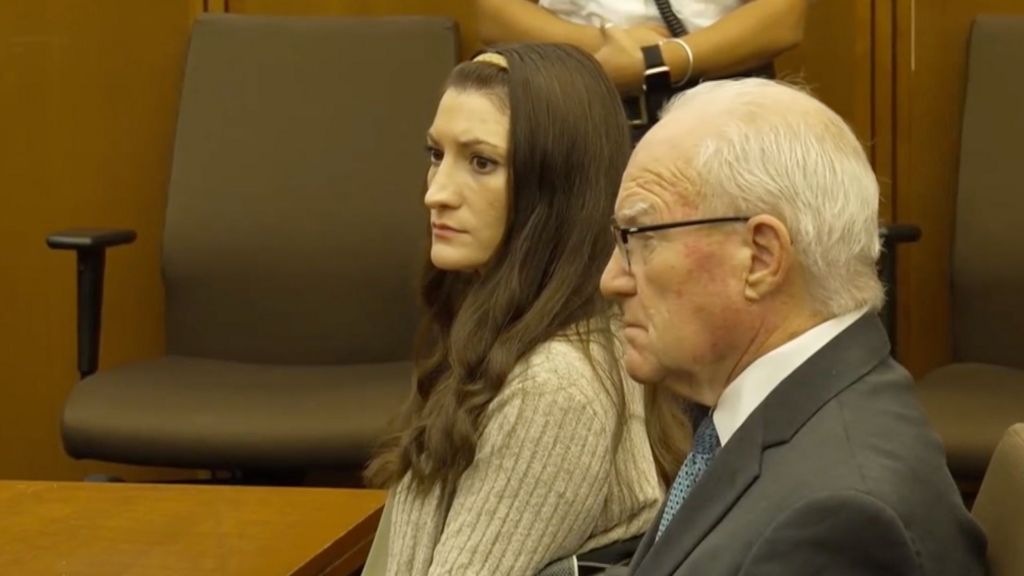
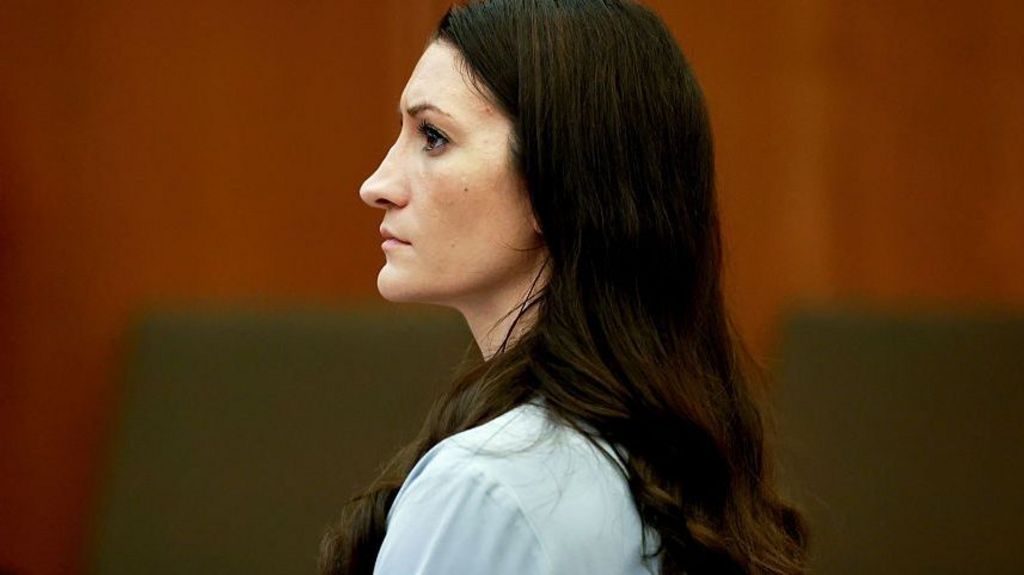
    A 23-year-old Idaho mother accused of murdering her 18-month-old twin sons will remain behind bars after a judge revoked her bail earlier this week, in a high-profile case that has intersected with national anti-vaccine rhetoric. Andrea Shaw, charged with two counts of second-degree murder in the May 2025 deaths of her toddlers Dallas and Tyson, has maintained that the children’s fatal health decline stemmed from routine childhood vaccinations. She has not yet entered a formal plea in the case.

    Shaw’s legal team had petitioned the court to cut her original $2 million bail to just $100,000, arguing that she needed to be released to care for her newborn child, born only days before her arrest in the case. Her attorney, Joseph Filicetti, also noted that Shaw had recently undergone a cesarean section and required recovery time while nursing her infant, framing her as a loving mother who posed no risk to the new baby. The BBC has reached out to Filicetti for additional comment beyond his statements to U.S. media outlets.

    Prosecutors in Payette County pushed back aggressively against the bail reduction request, urging the judge to revoke bond entirely. They argued that Shaw should not be granted any form of release that would put her in proximity to children, including her own newborn. “This is not a vaccine case,” one lead prosecutor stated bluntly. “This is a case where a mother unfortunately has killed her two children.” Prosecutors allege that Shaw suffocated the twins, who were found dead in their cribs at the family’s home.

    The judge ultimately sided with the prosecution, agreeing that Shaw poses a clear threat to her youngest child and revoking bond entirely.

    The case has drawn heightened attention due to Shaw’s ties to Children’s Health Defense, a prominent anti-vaccine organization founded by current U.S. Health Secretary Robert F. Kennedy Jr. Months after the twins’ deaths in 2025, Shaw and her husband gave an interview to the group laying out their claim that vaccines caused the children’s deaths. Shaw told the group that the toddlers became ill eight days after receiving routine vaccinations for hepatitis A, diphtheria, tetanus, pertussis and influenza. She said she sought medical care after they developed symptoms, and that clinicians told her the illness could be a vaccine reaction; the children were prescribed pain medication but died two days later.

    Shaw has claimed that law enforcement immediately pinned blame on her rather than accepting a vaccine-related cause, while investigators say her arrest followed a months-long, exhaustive investigation into the deaths. Full autopsy results from the investigation have not yet been made public.

    Shaw is also a named plaintiff in a lawsuit led by Children’s Health Defense against the American Academy of Pediatrics, challenging the organization’s long-standing childhood vaccination recommendations. Mainstream public health experts and practicing clinicians have repeatedly reaffirmed the well-documented safety of routine childhood vaccines. While minor side effects are possible after vaccination, severe adverse outcomes are extremely rare, and vaccines are credited with preventing millions of life-threatening illnesses globally each year.

  • Watch: Is Trump facing a popular backlash on immigration?

    Watch: Is Trump facing a popular backlash on immigration?

    A pair of fatal incidents involving U.S. Immigration and Customs Enforcement (ICE) agents that claimed the lives of two men have sparked growing scrutiny of former President Donald Trump’s immigration policies, with political analysts now weighing whether a widespread popular backlash is building against his stance on the issue. The BBC’s North America correspondent Sarah Smith has launched an on-the-ground investigation into how these two deaths are shifting public opinion and reshaping the political landscape around Trump’s approval ratings on immigration.

    The killings have reignited long-simmering public debate over the tactics used by ICE under the Trump administration, which prioritized aggressive immigration enforcement and expanded detention and deportation operations. Critics argue that the fatal encounters expose deep flaws in the hardline approach that Trump championed during his time in office, while supporters of the former president maintain that ICE agents were following established protocols and that the incidents are being exploited for political gain.

    Smith’s reporting examines the reaction from diverse communities across the country, from immigrant advocacy groups that have organized protests calling for greater oversight of ICE to conservative base voters who remain committed to Trump’s restrictive immigration agenda. The key question driving her analysis is whether these two high-profile deaths will cross a threshold for swing voters, eroding Trump’s support in key demographics and damaging his overall political standing ahead of potential future electoral contests.

    As the fallout from the incidents continues, political strategists are closely tracking shifts in polling to gauge the extent of any backlash. The incident has also pushed immigration back to the forefront of national political conversation, reminding observers of how the issue remains one of the most divisive and consequential in U.S. politics, capable of reshaping public approval of political leaders.

  • Watch: TikTok legend Gangster Granny on her love for Messi

    Watch: TikTok legend Gangster Granny on her love for Messi

    The internet has no shortage of unexpected viral stars, and few have captured global public attention quite like the cultural phenomenon known widely as Gangster Granny. This silver-haired digital icon, who built her massive following through bold, unapologetic content and a delightfully unconventional persona, has recently made headlines for an endearing new chapter of her online story: her open, heartfelt adoration for Argentine football superstar Lionel Messi.

    Footage of the beloved TikTok legend discussing her fandom has been spreading rapidly across social platforms, giving audiences a new look at the warm, enthusiastic side of the creator who built her brand on subverting stereotypes of older internet users. In the clip, she doesn’t hold back when sharing what draws her to the eight-time Ballon d’Or winner, highlighting his skill on the pitch, his sportsmanship, and the universal appeal that has made him a beloved figure across generations.

    What started as a casual confession of fandom has quickly turned into a viral moment of its own, with fans of both Gangster Granny and Messi sharing the clip and reacting to the unexpected cross-over pairing. For a creator who has always thrived on keeping her audience surprised and entertained, this public celebration of one of the world’s most famous athletes fits perfectly with the persona that has made her a household name on TikTok, where millions of followers tune in regularly for her unique take on life, culture, and everything in between.

  • Elderly US woman shocked to receive racy new car licence plate

    Elderly US woman shocked to receive racy new car licence plate

    A quirky administrative mix-up has turned a nearly 77-year-old Florida resident into the most talked-about resident of her retirement community, after state vehicle officials accidentally issued her a license plate with a hidden lewd acronym.

    Nancy Dello Stritto, a Pompano Beach local, says she was shocked when she finally looked closely at her replacement plate, which read SQZ A55 — a combination that spells out a crude phrase when read casually. “I went ballistic,” she recalled in an interview with CBS Miami. “I just don’t think a senior who’s almost 77 should be driving around with a plate that says that. How did this even get through the screening process to be issued?”

    Dello Stritto never asked for a custom plate; she was simply waiting for a standard replacement for her old plate when the new one arrived in the mail. She told reporters she did not notice anything off when she first pulled it out of the envelope, and only caught the suggestive wording later.

    Since word spread about the unusual plate, opinions among her inner circle and neighbors have been split. Some friends in her retirement community have urged her to swap it out immediately for a more appropriate combination, while her own sons and other family members have encouraged her to hang onto it.

    After weighing her options, the 76-year-old made a playful decision: she is keeping the plate, just to see how the situation plays out. “I’m resigned to it; maybe it was destined for it to be on my car,” Dello Stritto said. “I can handle it if I get a few honks here and there. Actually, being over 70, I might like a few honks.”

    The background of Florida’s license plate production adds context to the rare error: for close to a century, all state license plates have been manufactured at a state prison in North Florida, before being distributed through official state agencies. Local officials with Broward County confirm that any driver who receives a plate deemed offensive or inappropriate can request a free replacement, meaning Dello Stritto could swap it any time she chooses. For now, though, she is embracing her unexpected local fame.

  • Epstein ‘mistakes’ and Trump ties: Key takeaways from Todd Blanche’s confirmation hearing

    Epstein ‘mistakes’ and Trump ties: Key takeaways from Todd Blanche’s confirmation hearing

    Acting United States Attorney General Todd Blanche faced his first round of Senate confirmation questions this week, as he vies for a permanent appointment to the nation’s highest law enforcement role. The hearing came on the heels of a series of political upheavals: former AG Pam Bondi was dismissed by President Donald Trump amid widespread backlash over the Justice Department’s handling of the Jeffrey Epstein document release, and a federal judge had just voided a controversial tax settlement between Trump, his business empire and his family, and the Internal Revenue Service (IRS) a day before Blanche took the hot seat. Throughout the session, lawmakers from both parties pressed Blanche on three core contentious issues: his longstanding professional ties to Trump, the fate of the scrapped IRS settlement, and ongoing missteps in the Epstein files release. Below are the five most significant moments from the high-stakes hearing.

    First, Blanche addressed persistent questions over whether he would maintain independent control of the Justice Department, separate from the political interests of the president who appointed him. Ahead of the 2024 election, Blanche served as Trump’s personal defense attorney in three of the four major criminal cases the former and now current president faced, including leading the legal team during Trump’s high-profile New York hush-money criminal trial. Trump has openly pledged to exact “retribution” against his political opponents during his second term, and has repeatedly pressured the Justice Department to pursue prosecutions against high-profile critics, including former FBI Director James Comey and New York Attorney General Letitia James. When Louisiana Republican Senator John N. Kennedy, a generally loyal ally of the Trump administration, asked Blanche if he counted Trump as a personal friend, the acting AG pushed back. “I’m his lawyer — was his lawyer. And now I’m the deputy attorney general,” Blanche said. “I met him as his criminal defence attorney, I’m not sure there’s very many people who have ever had a criminal defence attorney who calls that person their friend.”

    Second, Blanche committed that a controversial provision of the now-voided IRS settlement would never go into effect. The struck-down deal included two contentious terms: full immunity from future IRS audits for Trump, and the creation of a $1.7 billion (£1.2 billion) “anti-weaponisation fund” designed to compensate individuals who claim they were unfairly targeted by government agencies. The proposal sparked bipartisan outrage on Capitol Hill, with lawmakers from both major parties demanding answers on whether the fund would move forward even after the judge’s ruling. Republican Senator Mike Lee pressed Blanche to confirm the fund would be scrapped entirely, asking: “You have no reason to believe that the so-called weaponisation fund will continue because of the settlement, agreement, is that correct?” Blanche responded clearly: “I am confident it will not.” Fellow Republican Senator Thom Tillis went further, demanding the administration issue formal written confirmation that the initiative was permanently abandoned.

    Third, Blanche publicly apologized to survivors of Jeffrey Epstein for redaction errors in the release of the late convicted sex offender’s case files, the most politically explosive issue facing the Justice Department since Trump returned to office. After massive public pressure, Congress ordered the Justice Department to release more than six million pages of internal documents from the federal investigation into Epstein’s crimes. But the slow pace of release and overly broad redactions have drawn fierce criticism from lawmakers and survivors alike, with a dozen survivors attending Wednesday’s hearing wearing shirts printed with images of the heavily redacted files to protest the department’s handling of the process. Senate Judiciary Committee Chairman Chuck Grassley, the panel’s top Republican, pressed Blanche on multiple failures: “problematic redactions”, “insufficient effort” on following unclosed investigative leads, refusal to meet with survivors, and the controversial recent transfer of Epstein’s accomplice Ghislaine Maxwell to a lower-security prison. Blanche argued that processing millions of documents in a compressed timeline was a “Herculean task”, noting that his team reviewed six million pages to apply what they deemed appropriate redactions. He did, however, acknowledge mistakes: “There were mistakes that were made, and so approximately 1% of the redactions had to be fixed. We had dozens of lawyers on call.” When Democratic Senator Richard Blumenthal asked if he would apologize directly to survivors for the department’s missteps, Blanche agreed. “I will absolutely say that any mistake that we made should not have been made,” he said. “And I very much … I very much apologise.”

    Fourth, Blanche broke with Trump on a key constitutional question, confirming that Trump is ineligible to run for a third presidential term in 2028, a position that contradicts open speculation from Trump and some of his allies. The 22nd Amendment to the U.S. Constitution explicitly bars any person from being elected president more than twice. When Democratic Senator Chris Coons of Delaware asked Blanche, a trained lawyer, to rule on the question of constitutional eligibility, Blanche gave a straightforward answer: “I don’t believe he is, no.” Trump has previously said he would “love” to seek a third term, though he has ruled out running for vice president as a constitutional loophole, and has publicly praised top potential 2028 Republican contenders Vice President JD Vance and Secretary of State Marco Rubio as suitable successors.

    Fifth, the hearing saw flashes of the aggressive courtroom style Blanche honed as Trump’s defense attorney, even as he adopted a generally more measured tone than his predecessor Bondi, who repeatedly clashed with lawmakers during her own congressional appearances. While Blanche mostly responded to sharp questioning with technical, lawyerly answers, he pushed back hard against two Democratic senators over their lines of questioning. When Rhode Island Senator Sheldon Whitehouse asked about FBI Director Kash Patel’s professional fitness for the role, Blanche retorted: “That’s an extraordinarily obnoxious question, Senator.” Later, he clashed with New Jersey Senator Cory Booker, who interrupted Blanche mid-answer during questioning about the department’s review of the proposed mega-merger between media giants Paramount and Warner Bros. Discovery. “You don’t even let me answer, man,” Blanche exclaimed, with the rest of their exchange remaining tense.

    Going into the next phase of the confirmation process, most Republican committee members appear ready to back Blanche’s nomination despite lingering criticism of his handling of the Epstein files. Tillis, who was seen as the most undecided Republican on the committee, signaled he would likely support Blanche after receiving confirmation the anti-weaponization fund would not move forward. The only remaining question mark is Texas Republican Senator John Cornyn, another skeptic who has not yet signaled his position. The Senate Judiciary Committee will hold a vote in the coming days to decide whether to advance Blanche’s nomination to the full Senate, where the entire chamber will cast a final vote on whether to confirm him as the permanent attorney general.

  • Americans react to making daylight saving time permanent

    Americans react to making daylight saving time permanent

    In a landmark vote that has split public opinion across the United States, the House of Representatives has approved the Sunshine Protection Act, legislation that would lock the nation into permanent daylight saving time. If enacted into law, the bill would end the longstanding, widely criticized practice of twice-yearly clock changes that has disrupted sleep patterns, economic activity, and public health for decades. The move comes after years of growing frustration from American voters, who have repeatedly called for an end to the seasonal clock shifting tradition that dates back nearly a century in the U.S. As the bill now moves to the Senate for consideration and awaits a potential signature from the White House, Americans across the country are sharing sharply divided reactions to the proposed policy shift. Proponents of the change, including business groups representing retail, tourism, and outdoor recreation industries, celebrate the decision, arguing that permanent daylight saving time will boost consumer spending, create more opportunities for outdoor leisure activities, and reduce energy consumption. Many ordinary Americans also welcome the end of clock changes, saying the twice-yearly shifts leave them groggy, disrupt their daily routines for weeks, and contribute to sleep deprivation that can harm work performance and personal health. However, opponents, including prominent sleep scientists, agricultural organizations, and many parents, have raised significant concerns about the policy. Critics note that permanent daylight saving time would leave northern parts of the country with darker morning commutes and school drop-offs for half the year, raising safety risks for children and workers. Sleep researchers also warn that permanent daylight saving time would shift human circadian rhythms out of alignment with natural solar cycles, leading to long-term negative impacts on public health, including higher rates of chronic conditions and increased risk of cardiovascular events. The legislative step marks the most significant progress ever made toward ending seasonal clock changes in the U.S., after decades of failed attempts at reform. While the House’s action is a major milestone, the bill still faces an uncertain path in the Senate, where previous versions of the legislation have stalled in recent years. As policymakers weigh the final decision, the debate over permanent daylight saving time continues to unfold in households, workplaces, and public forums across the country.

  • Train ‘encased in flames’ in Canada wildfire

    Train ‘encased in flames’ in Canada wildfire

    A shocking amateur video captured a harrowing moment this week, when a freight train and its crew became encircled by raging wildfire flames in rural northern Ontario, Canada. As the train pushed through a corridor of burning pine trees near the small community of Armstrong, one anxious crew member can be heard warning the situation was growing critical, saying “This could potentially overtake us here, this has gotten a little scary” as the team requested urgent emergency rescue. In a subsequent update, Canadian National Rail confirmed all crew members had been pulled to safety, though the company offered no additional details on the rescue operation, and has paused all rail traffic through the affected fire zone indefinitely.

    This near-disaster is just one symptom of a far broader national wildfire crisis unfolding across Canada this season. Official data from the Canadian Interagency Forest Fire Centre puts the total number of active blazes nationwide at 838, with more than 100 of those burning just in Ontario, where multiple northwestern communities are already under immediate evacuation threat.

    The scale of the fires has sent a thick plume of wildfire smoke drifting hundreds of miles south, turning skies an apocalyptic yellow across much of southern Ontario and triggering unprecedented air quality warnings. On Wednesday, Canada’s largest city Toronto woke to a thick haze that blotted out much of the sun, pushing the city to the top of IQAir’s ranking of the worst air quality among major global cities – outranking notoriously polluted centers including Kinshasa, Delhi, Dubai and Jerusalem. City officials responded by canceling all outdoor public viewing events for the Women’s World Cup semifinal between England and Argentina, and closing city-operated wading pools to prevent public exposure to toxic fumes. Toronto has also been grappling with a record-breaking extreme heat event this week, compounding public health risks for vulnerable residents.

    Environment Canada has issued detailed public guidance on smoke-related health risks, noting that most people will experience mild symptoms including eye, nose and throat irritation, headaches and mild coughing, but that vulnerable groups including children, the elderly and people with pre-existing respiratory or cardiac conditions face a higher risk of severe reactions including chest pain, persistent wheezing and intense coughing. The agency urged anyone experiencing severe symptoms to seek emergency medical care immediately, and advised most residents to stay indoors with windows closed as much as possible.

    Cross-border tensions are also rising as weather models forecast the smoke plume will continue drifting south into the United States over the coming days, raising concerns over air quality impacts for millions of Americans. The smoke will reach the Northeast as early as this weekend, prompting questions about how it will affect the Women’s World Cup final scheduled for Sunday in New Jersey. Already, 13 separate wildfires are burning in Minnesota, the U.S. state that shares a border with Ontario, sparked by a combination of record extreme heat, persistent drought and strong winds that have helped flames spread rapidly. Extreme heat warnings across Minnesota and neighboring Wisconsin are set to expire by Thursday night, but air quality issues are expected to linger for weeks.

    U.S. emergency officials have moved to reassure the public that this event will not reach the scale of the 2023 Canadian wildfire event, when massive smoke plumes from Quebec blazes blanketed the entire U.S. East Coast for days, bringing air quality in major cities to hazardous levels. “At this time, current forecasts do not indicate a repeat of 2023 conditions,” New York City Emergency Management said in a public statement Tuesday. As a precaution, the city has announced it will distribute free KN95 masks at all public library branches across the city to help residents protect themselves from smoke exposure, should levels rise.