标签: North America

北美洲

  • Largest US outbreak of explosive diarrhoea parasite is over, officials say

    Largest US outbreak of explosive diarrhoea parasite is over, officials say

    After months of widespread transmission that impacted dozens of U.S. states and left thousands of people ill, the largest recorded cyclospora outbreak in modern U.S. history has officially come to an end, U.S. Centers for Disease Control and Prevention (CDC) officials announced Friday.

    The parasitic intestinal infection, which causes severe, explosive diarrhea, has been linked to two deaths in Michigan and hospitalized 570 people since the outbreak began earlier this year. Both of the deceased individuals had serious pre-existing underlying health conditions that left them more vulnerable to complications from the infection and related dehydration, Michigan health authorities confirmed. While cyclospora infections are rarely fatal for otherwise healthy people, the outbreak’s scale and impact have drawn widespread public attention and public health intervention.

    Investigators have traced the majority of confirmed cases to contaminated lettuce imported from central Mexico by produce supplier Taylor Farms, which distributes fresh leafy greens to countless food retailers and restaurant chains across the United States. Following the link being established, Taylor Farms issued a voluntary nationwide recall of all lettuce sourced from its central Mexican growing operations, and major fast-food chain Taco Bell moved quickly to remove the supplier’s lettuce from all menu items to limit further exposure.

    CDC data shows that as of early September, nearly 20,000 confirmed cyclospora cases have been reported across all 49 U.S. states and the District of Columbia since May 1, with total hospitalizations topping 1,000. Of that total, more than 12,000 cases were tied to the multi-state outbreak linked to the Mexican lettuce. Public health experts emphasize that the true number of infections is almost certainly far higher than the confirmed count, as many mild cases go unreported by patients who do not seek medical care. It is also important to note that while the majority of cases were connected to the contaminated lettuce, thousands of reported illnesses have not yet been linked to that source.

    In its official advisory declaring the outbreak over, the CDC stated that new case counts have dropped significantly after the recall and menu changes. However, agency officials added that investigations into the full origin and spread of the parasite will continue to help prevent similar large-scale outbreaks in the future.

    This outbreak marks a stark increase in cyclospora cases compared to previous years. Prior to 2025, the worst year for cyclospora infections in the U.S. was 2019, when just 4,700 cases were recorded nationwide. Beyond U.S. borders, public health officials in the United Kingdom have also issued warnings to travelers after multiple returning UK residents contracted the parasite during trips to the U.S. this year.

    Cyclospora is a microscopic parasite that spreads exclusively through contaminated food or water. Infection, called cyclosporiasis, most commonly causes severe intestinal distress including the explosive diarrhea that has become synonymous with this outbreak, and can lead to dehydration if left untreated.

  • Firefighters say this antioxidant helped them – their union warns it could be risky

    Firefighters say this antioxidant helped them – their union warns it could be risky

    Against the backdrop of increasingly destructive wildfires raging across the American West, a growing divide has emerged over an untested alternative treatment that hundreds of firefighters have turned to ease smoke-related health symptoms: inhaled glutathione.

    For veteran Pasadena Fire Captain David Marquez, the solution came just days after he helped battle the devastating Eaton Fire, a blaze that etched its place as the second most destructive in California history, leaving 17 dead and more than 9,000 structures reduced to ash. Standing on the shoulder of a road outside Pasadena’s Rose Bowl Stadium, Marquez inhaled his first dose of the antioxidant, months after he and his crew had been reeling from persistent post-fire health issues. “We were having trouble sleeping, dealing with chronic coughs, headaches, crippling fatigue — it was just a really rough set of symptoms after the fire,” Marquez explained in recent testimony. The 25-year firefighting veteran said relief was almost immediate, even after what he calls the worst toxic exposure of his career. With crew members desperate for any reprieve from their debilitating symptoms, “we were willing to try pretty much anything,” he added.

    Marquez’s experience is far from unique. For years, public health researchers have confirmed that repeated inhalation of toxic wildfire smoke puts first responders like firefighters at drastically elevated risk of long-term illness, including multiple forms of cancer. Data from the U.S. National Institute for Occupational Health and Safety puts that risk in concrete terms: firefighters face a 14% higher chance of dying from cancer than the general American public. As awareness of these occupational hazards has grown over the past decade, so too has interest in unproven, sometimes risky alternative interventions that promise to mitigate damage after fire exposure.

    Glutathione, an antioxidant produced naturally in the human body, has been offered as an on-site treatment by volunteer groups at many of the largest U.S. wildfires in recent years, from last summer’s blazes near Spokane, Washington, to earlier outbreaks across Northern California. Anecdotal accounts from frontline clinicians and fire department crews have offered encouraging early signals: many users report rapid relief from common post-exposure symptoms, and some proponents claim it helps flush carcinogenic toxins absorbed through smoke inhalation out of the body. But to date, no large-scale, peer-reviewed clinical research has confirmed its safety or effectiveness for this use, and public health and firefighter advocates have raised serious alarms about supply contamination, unregulated dosing, and the risks of promoting an untested treatment to vulnerable workers.

    Last month, the International Association of Fire Fighters (IAFF), which represents more than 360,000 active and retired firefighters across the U.S. and Canada, issued a rare public warning about the growing unregulated use of inhaled glutathione. The organization highlighted two recent product recalls linked to contaminants at compounding pharmacies that produce the injectable and inhalable versions of the supplement. While the association stressed that past scares involving naturally occurring vitamins that ended up increasing cancer risk are not directly tied to glutathione, the case underscores the danger of rolling out untested treatments to at-risk workers.

    “We don’t know if glutathione actually delivers on the benefits its proponents claim,” said Sean DeCrane, assistant to the IAFF general president for health and safety. “We don’t know if the reported improvements are just a placebo effect, and we have no data on the long-term health impacts of regular inhaled use.” DeCrane criticized the aggressive promotion of glutathione to frontline crews, pointing to incidents in Spokane where fire chiefs included recommendations for crews to visit volunteer treatment tents during morning briefing sessions. “The total lack of rigorous research is what really raised red flags for our organization,” he said, adding that the IAFF has already heard from multiple members who reported feeling worse, not better, after receiving glutathione treatment. In many of those cases, DeCrane said, treating clinicians told users their worsening symptoms were just a sign that toxins were being flushed from their bodies.

    The current push to bring glutathione treatment to wildfire crews traces its origins back to 2017, when a group of naturopathic practitioners banded together in Santa Rosa, California, to offer support to crews battling the destructive Tubbs Fire. That initial effort grew into the Integrated Health Action Network (IHAN), previously known as the Integrative Healers Network, which now deploys volunteer clinicians to major wildfire events across the country to provide glutathione alongside other complementary treatments including acupuncture and massage therapy.

    In response to the IAFF’s warning, IHAN released a statement acknowledging the critical need for further formal research, and said the organization is eager to partner with academic researchers to generate rigorous data on glutathione’s effectiveness. Jen Riegle, a licensed naturopath and IHAN co-founder, noted that the group’s treatment has consistently led to what she calls “clinically meaningful improvements” in the most common post-fire symptoms: headaches, fatigue, and brain fog that leave crews unable to work effectively. Riegle stands by the claim that glutathione helps eliminate harmful contaminants from firefighters’ bodies, and acknowledged that mild short-term side effects are common immediately after treatment.

    Riegle said she hopes the anecdotal data her group has collected over nearly a decade of work will help secure funding and support for large-scale clinical trials to confirm the treatment’s value, with the goal of making it a standard long-term health intervention for firefighters. At the same time, she emphasized that the group’s current evidence is entirely anecdotal, and far from the conclusive data required for formal regulatory approval. “I want to be really clear that what we are collecting is program-level data from our treatment work,” she said. “It shouldn’t ever be misconstrued as clinical trial data, double-blind placebo-controlled data, or peer-reviewed research. It’s just a starting point to build support for future formal studies.” It is important to note that full clinical trials for new medical interventions typically take years of rigorous testing and evaluation before winning regulatory approval.

    The debate over glutathione burst into the public sphere last year, when California’s State Board of Pharmacy proposed new rules that would have severely restricted compounded production of the supplement. The proposal sparked a massive wave of pushback from firefighters across the state, who traveled to Sacramento to testify in person about the improvements they had experienced after using the treatment. The board ultimately abandoned the proposed restrictions. Marquez was among the uniformed firefighters who traveled to the capital to testify, and he said he is grateful that glutathione is now more widely available to crews, including at every fire station in his home city of Pasadena. He dismisses critics who argue that his reported improvement is nothing more than a placebo effect. “I don’t care if it’s a placebo — it worked,” he said. “Guys were saying they felt better, I felt better, and that made me want to keep accessing the treatment.”

    The debate over glutathione also highlights a longstanding gap between emerging understanding of occupational risks for firefighters and regulatory protection that matches that knowledge. As recently as last year, U.S. National Forest Service firefighters were banned from wearing protective face masks on the job over unfounded concerns that the gear would impair their ability to operate in rugged mountain terrain. Today, there is a growing consensus across the fire service that improved respiratory protection and routine decontamination are critical to reducing the elevated cancer risk that comes with the job.

    Dr. Coralynn Sack, an occupational pulmonologist at the University of Washington who specializes in the health impacts of air pollution, confirmed that wildfire smoke is a well-documented inhalational hazard that causes lasting damage to first responders. “There’s been a lot of broad interest in using antioxidant supplements to mitigate damage from air pollution overall, but studies have returned very mixed results — some have even found that antioxidant use leads to worse health outcomes,” Sack explained. While Sack said there is biological plausibility to the idea that glutathione could reduce smoke-related damage, she added that she is “very underwhelmed by the existing data” to support its use for firefighters. No peer-reviewed clinical trials of inhaled glutathione for firefighter smoke exposure have ever been completed, she noted. What’s more, Sack argued that the current debate over glutathione distracts from proven, evidence-based interventions that are already known to reduce risk, like widespread access to high-quality personal protective equipment.

    For Greg Fonts, a fire captain in West Sacramento and vice president of his local IAFF chapter, the growing conversation around glutathione is part of a much larger shift in fire service culture around occupational health. Gone are the days, he said, when firefighters would leave ash caked on their helmets and jackets to brag about the blazes they had fought, and write off cancer as an unavoidable part of the job. “When I joined the fire service in 2000, that was the prevailing attitude: cancer was just something that came with the work,” Fonts, who has used glutathione himself, explained. “The culture has changed drastically. Younger firefighters take their long-term health way more seriously now, and that’s a good thing.”

  • Arrest made in the murder of Tasia Fortune, black woman found hanged from tree

    Arrest made in the murder of Tasia Fortune, black woman found hanged from tree

    Nearly six weeks after the body of 23-year-old Tasia Fortune was discovered hanging from a tree on the property of an abandoned Jackson, Mississippi residence, local law enforcement has made the first arrest in a case that has stoked widespread community fear and drawn national attention over long-standing histories of racial terror in the American South.

    Jackson Police Chief RaShall Brackney confirmed the arrest during a public press briefing Friday, emphasizing that the development marks a critical milestone in the probe — not its end. “That arrest today is an important development in this investigation, but it is not the conclusion,” Brackney said, noting that the case remains open and active as investigators continue tracing leads. “Additional arrests will be pending as our investigators continue to follow the evidence,” she added, revealing that detectives have already interviewed 15 people connected to the case.

    Fortune’s body was first found by responding officers on August 3 along Road of Remembrance, in an overgrown lot tied to a vacant home. By the time authorities recovered her remains, Brackney said the body showed clear signs of advanced decomposition. For weeks after the discovery, investigators provided little public information about the case, only confirming earlier this month that they were now treating Fortune’s death as a suspected homicide. Just this past Thursday, the state medical examiner officially ruled her cause of death as a homicide, clearing the way for murder charges against the unnamed suspect taken into custody Friday.

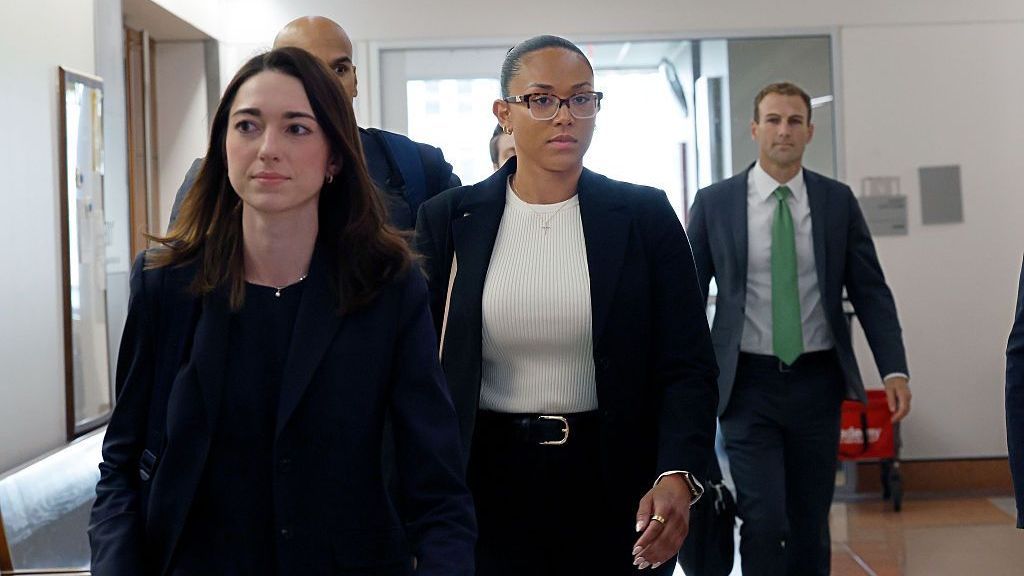
    For Fortune’s family, the arrest has brought a fragile moment of calm after more than a month of agonizing uncertainty. Christy Spivey, Fortune’s mother, told the BBC she broke down in tears when Jackson police called her Friday to share the news of the arrest. “I guess I do feel like a little sigh of relief. Like a little bit of peace just come over me,” Spivey said, though she added she remains cautious: “I just hope that they’ve got the right person.”

    In the weeks following her daughter’s death, Spivey said she has been unable to sleep soundly, wracked by questions about what happened. “I fall asleep, but I can’t stay asleep,” she explained. Her frustration has been echoed by many Jackson residents, who criticized local officials for weeks of limited communication and perceived slow progress on the case. Spivey herself told reporters earlier this week that she had repeatedly attempted to contact Jackson police over a two-week period, leaving multiple voicemails that went unanswered. After Spivey penned an open letter criticizing the investigation’s pace and lack of transparency that was read aloud at a public city council meeting Tuesday, Jackson police formally announced they were treating the death as a possible homicide — a move Spivey called surprising in its speed. “I’m kind of like in awe. Like, I can’t believe it. That was quick,” she said Friday.
    Brackney pushed back against claims of poor communication with the family Friday, saying investigators have maintained consistent contact with Spivey, Fortune’s stepfather, and her biological father throughout the probe.

    The case has struck a particular raw nerve in Jackson, a majority-Black city in a state where more than 500 anti-Black lynchings were documented between 1877 and 1950, one of the highest totals of any U.S. state. The gruesome discovery of Fortune’s body hanging from a tree, paired with the slow initial investigation, left the local community reeling in shock and anxiety. The case has also sparked national action, with more than 50 members of the U.S. Congress signing an open letter this week calling on the FBI and U.S. Department of Justice to launch independent investigations into a growing string of suspicious deaths of Black people found hanging across multiple U.S. states.

    In the letter, congressional members said they are “extremely alarmed by reports of black people found hanging from trees in numerous states”, framing the recent deaths as a potential pattern of modern-day lynchings. The letter notes that so far in 2026, at least 10 Black people have been found hanged in reported incidents across the country, and more than 70 such suspicious deaths have been documented between 2000 and 2025.

  • American Shelton to face Zverev in US Open final

    American Shelton to face Zverev in US Open final

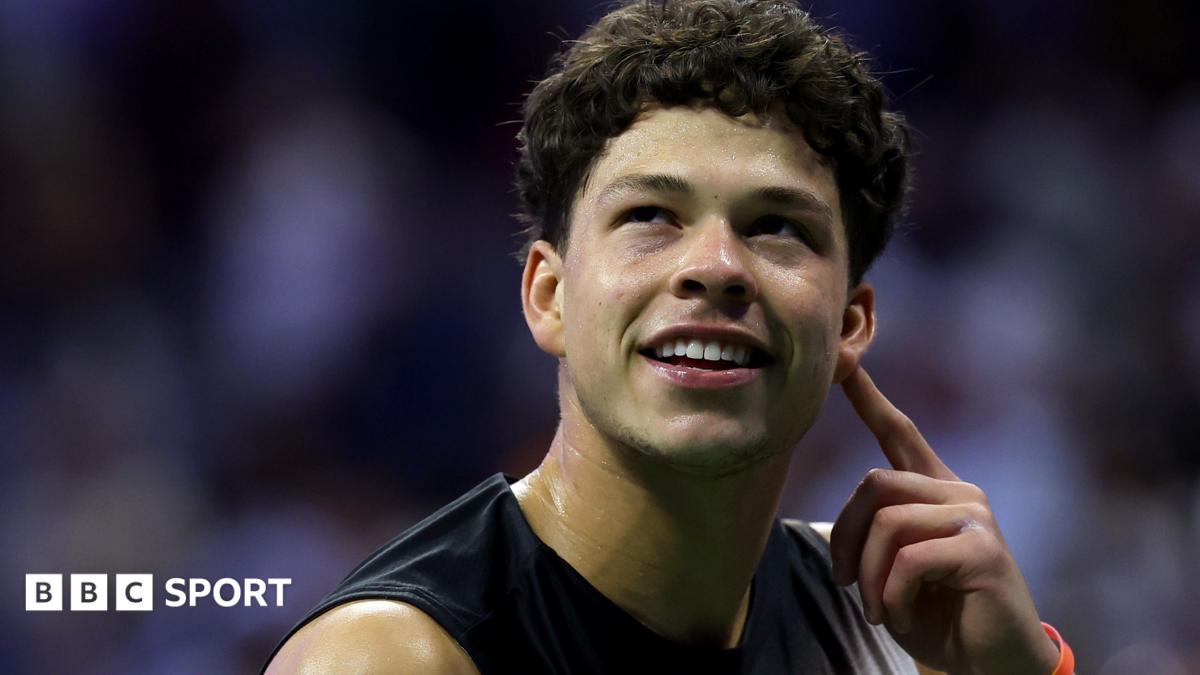
    The 2026 US Open delivered a historic semi-final night at Arthur Ashe Stadium, as 23-year-old American Ben Shelton fought back from an opening set deficit to defeat close friend and compatriot Frances Tiafoe in four dramatic sets, booking a spot in his first ever Grand Slam singles final. The all-American clash, which stretched to three hours and 17 minutes, ended with a 4-6 6-3 6-3 7-5 scoreline, capping an evening of high-octane tennis that lived up to the venue’s electric atmosphere.

    Both Shelton, the tournament’s eighth seed, and 11th seed Tiafoe entered the match chasing their first appearance in a major singles final, and they did not disappoint the sold-out, raucous crowd. The two players combined for 74 total winners, with Shelton leading the charge with 47 powerful winners and 20 booming aces. After dropping the first set, Shelton quickly found his rhythm, breaking Tiafoe early in the second set to seize momentum. He maintained his aggressive play through the third set, which featured a series of scintillating, extended rallies – including a 31-shot exchange that Tiafoe won, and a 28-shot rally that ended with a Shelton winner to secure a critical break. After a grueling 15-minute game gave Shelton a two-sets-to-one lead, a refreshed Tiafoe mounted an early fourth-set comeback but squandered two early break chances. At 6-5, Shelton earned three match points, and closed out the win when Tiafoe hit a double fault on the second match point.

    With the victory, Shelton enters the history books: he is the first Black American male player to reach the US Open singles final since Arthur Ashe himself in 1972, and the first Black man to reach any Grand Slam singles final since Jo-Wilfried Tsonga’s 2008 Australian Open final run. He is also vying to become the first American man to claim the US Open singles title since Andy Roddick’s 2003 victory – ending a 23-year major title drought for American men in singles. Only six American men have reached a Grand Slam final since Roddick’s win, most recently Taylor Fritz at the 2024 US Open.

    In an emotional on-court interview after the win, Shelton reflected on the personal and historic weight of the moment, paying tribute to his late grandmother, who passed away earlier this year. “It’s a lot of emotion. My mum and dad sacrificed a lot for me to be in this position today,” he said. “My dad lost his mum earlier this year. She’s the reason he was able to play tennis. Without her there’s no Ben Shelton standing here today. This one is for her.” He also honored the 25th anniversary of the 9/11 attacks, and called on the home crowd to support him in the final. Speaking of his friendship with Tiafoe, whom he described as a “big brother” to him, Shelton added that facing his close friend at their favorite tournament made the run even more special. “This is both of our favourite tournament, our favourite court in the world and to be able to light it up in front of you guys [the crowd] is the best feeling there is,” he said.

    Shelton will face world top seed Alexander Zverev of Germany in Sunday’s championship match, after Zverev defeated unseeded Russian Karen Khachanov in three straight sets to secure his spot. Zverev’s 6-3 7-6 (9-7) 7-6 (8-6) win marks his third consecutive Grand Slam final appearance, extending a sensational 2026 season that already includes a French Open title – his first major trophy – and a Wimbledon final finish against world No. 1 Jannik Sinner. Zverev has now reached the semi-finals of all four Grand Slams this year, and is chasing his second major title of the season.

    The German star got off to a slow start at this year’s US Open, being pushed to five-set thrillers in his opening two matches, but has not dropped a set since advancing to the third round. He faced scattered pressure from Khachanov, saving two set points in the third-set tie-break to close out the win. Zverev joked after the match that a lighthearted moment with his team helped turn his tournament around. “After the second round, at about 3am I was sitting with my team in the locker room and we were laughing at how bad I was playing,” he said. “That sense of humour helped me. I obviously have improved a bit otherwise I would not be in the US Open final.” Sunday’s final will be Zverev’s second US Open final appearance, 6 years after his five-set loss to Dominic Thiem in the 2020 championship match.

    While Shelton enters the final as the home crowd favorite, he faces a tough statistical hurdle: he has lost all five of his previous career matches against Zverev. Buoyed by a stunning upset victory over defending champion Carlos Alcaraz in the quarter-finals, and the full-throated support of the New York crowd, Shelton said he is ready to leave everything on the court to make history. “I’m going to need you guys on Sunday to bring the energy,” he told the crowd. “I’m going to leave it all on the court and I hope you guys come and back me. Let’s do this for the USA.”

  • CIA warned of threat of ‘explosive airplane’ years before 9/11, documents show

    CIA warned of threat of ‘explosive airplane’ years before 9/11, documents show

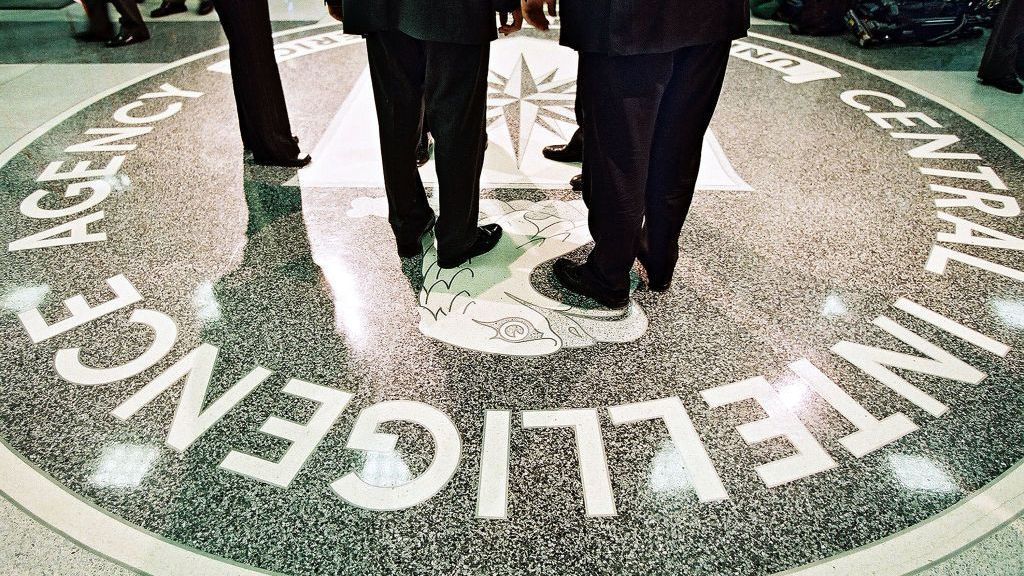
    To mark the 25th anniversary of the September 11 attacks that killed nearly 3,000 people and reshaped global counterterrorism policy, the Central Intelligence Agency has declassified and released 71 previously top-secret President’s Daily Briefs (PDBs) spanning from early 1998 through the day after the 2001 attacks. Of these documents, 69 have never been disclosed to the public before, offering a rare, unvarnished look at what U.S. presidents were told about rising al-Qaeda threats years before the hijacked plane attacks on the World Trade Center, Pentagon, and a rural Pennsylvania field.

    President’s Daily Briefs are the U.S. intelligence community’s most sensitive classified assessments, crafted exclusively to sit atop sitting presidents’ desks with the agency’s highest-confidence threat analysis. Typically, these documents remain sealed for 40 to 50 years after their creation, making the early release for the 25th anniversary a notable departure from standard classification protocol. Many of the released documents remain heavily redacted to protect ongoing intelligence methods and sources, but the unredacted portions paint a clear picture of mounting alarm across both the Bill Clinton and George W. Bush administrations over Osama bin Laden’s expanding network and its stated intent to strike inside the United States.

    The declassified records confirm that repeated, explicit warnings of a potential large-scale attack on U.S. soil were delivered to presidential leadership three full years before 9/11. In a September 10, 1998 briefing—just weeks after al-Qaeda suicide bombings of U.S. embassies in Kenya and Tanzania killed 224 people and triggered U.S. cruise missile retaliation against al-Qaeda and Taliban-linked targets in Afghanistan and Sudan—a CIA analyst directly warned that bin Laden’s network “may fly an explosive-packed airplane into a U.S. city.” The briefing also identified the U.S. homeland as bin Laden’s preferred strike zone, with Washington, D.C. flagged as a prime target.

    A subsequent briefing dated August 28, 1998, just 21 days after the East Africa embassy bombings and eight days after the U.S. retaliatory strikes, further warned that al-Qaeda’s core network remained fully operational despite the American attacks, and that bin Laden was actively “considering attacks in the U.S.” While the independent 9/11 Commission’s 2004 official investigation had previously noted that U.S. intelligence suspected al-Qaeda might use aircraft in an attack, the newly released briefs confirm for the first time that this specific warning was included in material delivered to President Clinton.

    The only post-attack briefing in the release was delivered to the White House at 4:00 a.m. on September 12, 2001, fewer than 20 hours after the first plane struck the North Tower of the World Trade Center. The assessment confirmed that “mounting evidence” pointed to al-Qaeda affiliates across Afghanistan and the Persian Gulf having advance knowledge that an attack was imminent. A partially redacted section of the brief adds that the full plot was “widely known” within global extremist circles. The document also notes that bin Laden may have relocated to Kabul from his base near Kandahar after clashing with Taliban leadership over the attack plan, while then-Taliban leader Mullah Omar evacuated his family from Kandahar immediately in the hours after the attacks. Less than a month after 9/11, the U.S. and its coalition partners invaded Afghanistan to dismantle al-Qaeda and remove the Taliban from power.

    CIA Director John Ratcliffe framed the release in an official statement released alongside the documents, noting that “Twenty-five years ago, the 9/11 attacks struck a blow to our nation, but they did not break us.” He added that “Generations of C.I.A. officers have since dedicated their careers to securing justice for our fallen Americans and ensuring Al Qaeda would never again harm our country.”

    The declassified material aligns with the 9/11 Commission’s final core finding: while U.S. intelligence repeatedly flagged the high risk of an al-Qaeda attack on U.S. soil across two presidential administrations, analysts lacked specific details on the exact timing, target locations, and full scale of the plot that would become the deadliest terrorist attack on U.S. soil in modern history.

  • ‘Never, ever forget’ – America marks 25th anniversary of 9/11 attacks

    ‘Never, ever forget’ – America marks 25th anniversary of 9/11 attacks

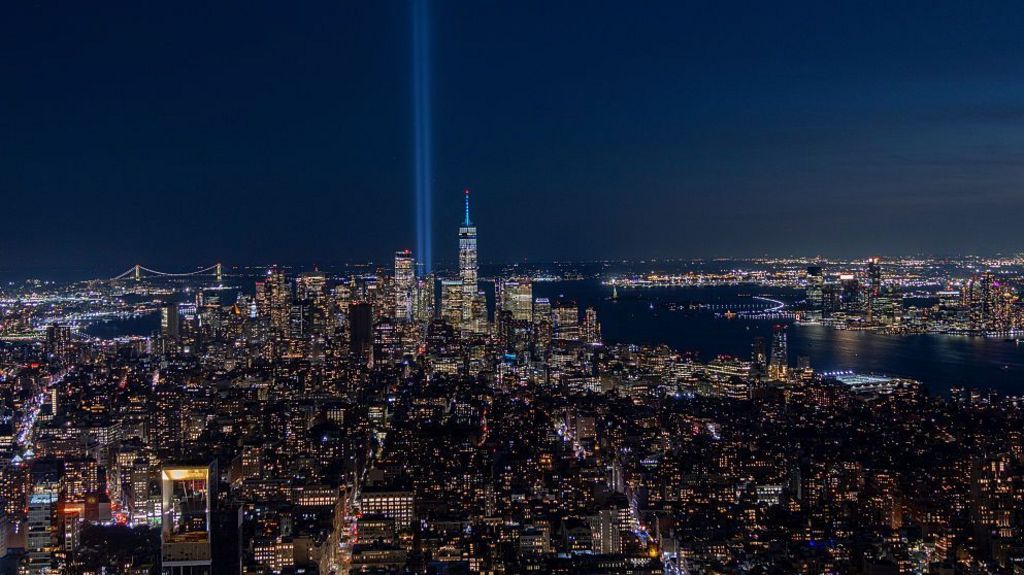
    A quarter of a century after the deadliest terrorist attack on U.S. soil, communities across the United States and around the world gathered Friday to honor the nearly 3,000 people killed in the September 11, 2001 attacks, reflecting on lingering grief, unfulfilled justice demands, and the long-term health toll that continues to claim lives decades later.

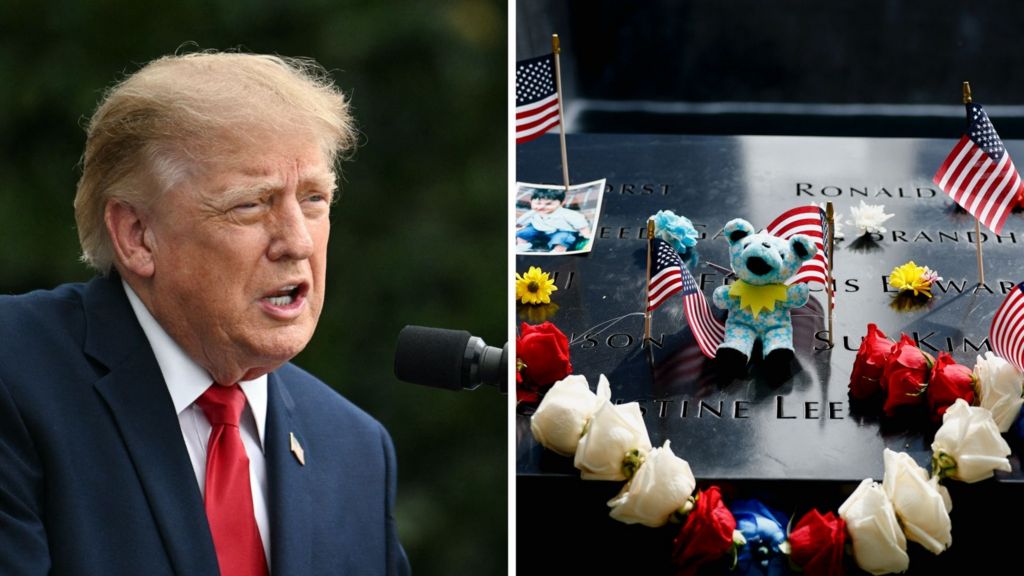
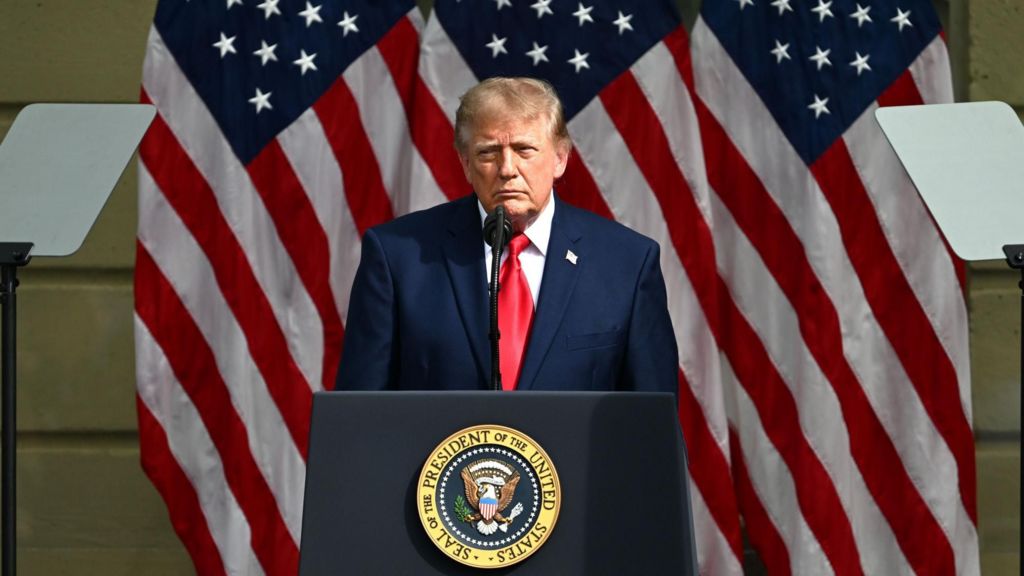
    Across three key attack sites, the nation’s highest political leaders joined survivors and bereaved families to mark the somber milestone. At the Pentagon, one of the four targets hit by hijacked planes that morning, sitting President Donald Trump led a formal commemoration alongside current cabinet members and Condoleezza Rice, who served as Secretary of State in the aftermath of the attacks. In his remarks, Trump tied the post-9/11 global fight against terrorism to his administration’s ongoing standoff with Iran, reaffirming a hardline pledge: “The Islamic Republic will never, ever have a nuclear weapon.” Echoing a core promise of every 9/11 commemoration, he added, “Today we renew the sacred oath that we first swore in their names a quarter of a century ago. We will never, ever forget. That’s why we fight today.”

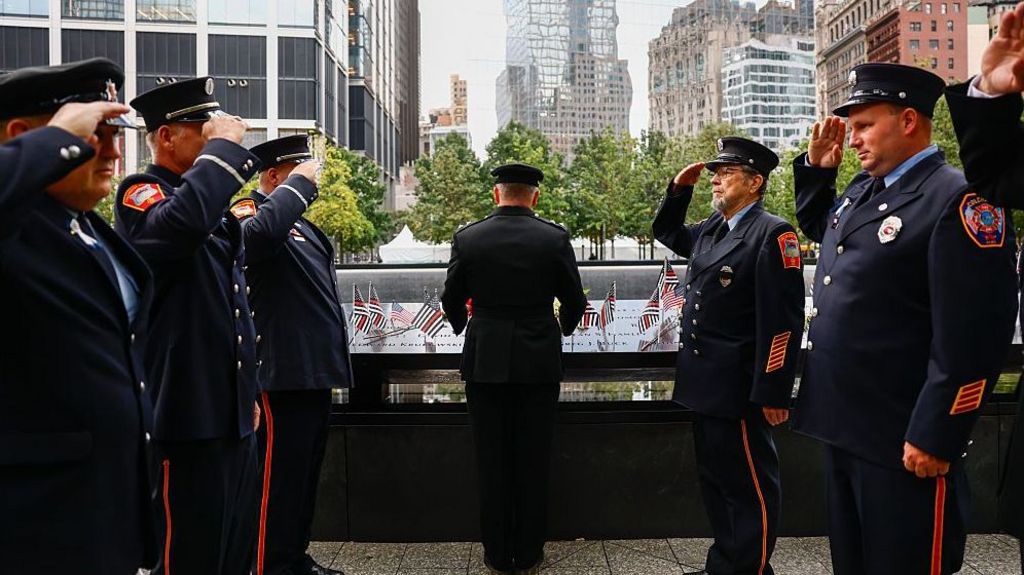
    At the ground zero memorial in lower Manhattan, built where the Twin Towers once stood, Vice President JD Vance joined an unprecedented gathering: all four living former U.S. presidents — George W. Bush, who held the presidency during the 2001 attacks, Bill Clinton, Barack Obama, and Joe Biden — alongside their respective first ladies. For nearly four hours, family members took turns reading the full roll of nearly 3,000 victims killed in the attacks, a ritual that has become the centerpiece of the annual memorial.

    In Shanksville, Pennsylvania, hundreds gathered at the Flight 93 National Memorial, where the fourth hijacked plane crashed after passengers revolted against the hijackers, preventing an attack on the U.S. Capitol that morning. A silent tribute was held at the site’s Wall of Names, honoring the 40 passengers and crew who died.

    For the first time in the 25 years of commemorations, this year’s memorial included a new, somber addition: a seventh bell toll, following the six traditional bells that mark the timelines of each plane crash and the collapse of the Twin Towers. The seventh bell pays tribute to the thousands of people who have since died from 9/11-related illnesses, most commonly cancers caused by exposure to toxic dust and smoke from the collapsing World Trade Center. U.S. health officials estimate that these secondary deaths have now outnumbered the nearly 3,000 people killed in the immediate attacks by more than three to one — a grim reminder of the attack’s long shadow that continues to affect communities.

    Survivors also shared their harrowing firsthand accounts of the morning to mark the milestone. Janice Brooks, who had moved to New York just two weeks before the attacks to start a new job on the 84th floor of the South Tower, described the chaos and terror that unfolded after the first plane hit the North Tower. As she began evacuating, the second hijacked plane slammed into her tower: “There was an almighty thud. I heard one of those horror film screams as a woman was hit by debris. When I looked up, there was a big gaping hole where my office should have been.” Today, Brooks joins thousands of survivors and family members who return to ground zero every year to honor those who did not escape.

    The 25th anniversary also brought renewed calls for accountability from family members of victims. Terry Strada, a 9/11 widow and national chair of 9/11 Families United, used her live-broadcast remarks to criticize the U.S. government’s failure to hold Saudi Arabia accountable for its alleged role in the attacks. “How can it be 25 years and still we have no justice for the role that Saudi Arabia played in your murder?” Strada asked, drawing loud applause from the gathered crowd. While a majority of the 9/11 hijackers were Saudi citizens and al-Qaeda leader Osama bin Laden — who planned the attacks — came from a prominent Saudi family, the 2004 9/11 Commission Report officially cleared the Saudi government of any involvement, a conclusion that many victim families continue to dispute to this day. Saudi officials have repeatedly denied any connection to the attacks.

    Beyond U.S. borders, memorial events were held in major cities across the globe to honor the hundreds of foreign nationals killed in the attacks, and to stand in solidarity with the United States. In London, the UK Foreign Secretary Ed Miliband and U.S. Ambassador Warren Stephens joined a formal tribute at Buckingham Palace, with additional commemoration events held at Lloyd’s of London. The Toronto Stock Exchange held its own memorial for colleagues lost in the attacks. In Milan, Italy, a group of Italian and American firefighters held a symbolic stair climb at the Galfa Tower, climbing 110 floors up and down to match the number of stories in each of the original Twin Towers, honoring the hundreds of first responders who died rushing into the burning towers to save others.

    Twenty-five years on, the commemorations remain anchored in the core promise that has defined the annual ritual: that the lives lost on September 11, 2001, will never be forgotten.

  • ‘We will never, ever forget’ – Americans remember 9/11 on 25th anniversary

    ‘We will never, ever forget’ – Americans remember 9/11 on 25th anniversary

    A quarter-century after one of the deadliest terrorist attacks on U.S. soil, Americans from across the country came together on Saturday to mark the 25th anniversary of the September 11 attacks, pausing to honor the nearly 3,000 lives lost and reaffirming the collective promise that those killed will never be forgotten.

    Commemorative events were held at the three primary sites forever altered by the 2001 attacks: Lower Manhattan’s National September 11 Memorial, the headquarters of the U.S. Department of Defense at the Pentagon just outside Washington, D.C., and the Flight 93 National Memorial in the rural hills near Shanksville, Pennsylvania. Family members of victims, current and former public officials, first responders, and ordinary citizens joined each gathering, sharing quiet moments of reflection, reading the names of those who perished, and laying wreaths to honor their memory.

    At the New York memorial, which is built around the footprints of the fallen Twin Towers of the World Trade Center, the sound of bagpipes echoed through lower Manhattan as relatives took turns calling out the names of loved ones. Many left flowers, handwritten notes, and small personal mementos at the bronze parapets that line the memorial pools, carrying on a tradition that has persisted for 25 years. At the Pentagon, service members and defense officials joined in a solemn remembrance ceremony, paying tribute to the 184 people killed when American Airlines Flight 77 crashed into the building. In Shanksville, attendees gathered at the crash site of United Airlines Flight 93, where passengers and crew fought back against hijackers, preventing the plane from reaching its intended target in Washington and costing all 40 on board their lives.

    Across all three events, speakers and attendees echoed a shared sentiment: that the memory of those lost on September 11, 2001, remains undimmed after 25 years, and the nation will forever hold their stories close. “We will never, ever forget,” was the refrain repeated by countless participants, tying together the grief, resilience, and national unity that has defined the annual remembrance for a generation.

  • Surrogate who refused abortion over heart defect takes custody battle to US Supreme Court

    Surrogate who refused abortion over heart defect takes custody battle to US Supreme Court

    A high-stakes legal battle over custody of a newborn with a life-threatening congenital heart defect has landed before the U.S. Supreme Court, after a gestational surrogate refused the intended parents’ request to terminate the pregnancy and carried the child to term against their wishes.

    McKenna West, the surrogate involved in the case, has filed an emergency appeal asking the nation’s highest court to overturn a lower California court ruling that granted full parental rights to Omar Ahmed and Nausheen Gilkar, the California couple who contracted her to carry their child. The conflict erupted after a 20-week prenatal scan revealed the fetus had hypoplastic left heart syndrome, a severe condition that leaves the left side of the heart underdeveloped and unable to effectively pump blood throughout the body. The U.S. Centers for Disease Control and Prevention notes that while multiple surgeries can extend survival, the condition is not curable and often leads to lifelong health complications.

    After receiving the diagnosis, Ahmed and Gilkar asked West to undergo an abortion. Rather than comply, West—who has received public backing from multiple Republican officials—relocated to Texas, a state where abortion access is heavily restricted, and gave birth to the baby last month. Following her move, Texas’ Republican Attorney General Ken Paxton stepped into the case, securing an emergency court order that required the infant to receive all medical treatment within Texas, and the newborn underwent surgery shortly after birth.

    In her Supreme Court filing, West stated she rejected the abortion request after reviewing potential treatment options for the child, saying she could not terminate what she calls “this precious baby.” She argues that the intended biological parents should not be granted custody because of their original request to terminate the pregnancy, claiming they would withhold the necessary ongoing medical care the child needs and potentially place him in hospice care without her intervention. West also says that without the Supreme Court’s involvement, she will be cut off entirely from updates on the child’s health status.

    The California couple has pushed back against West’s claims, with court records showing Gilkar telling a previous hearing that the child—who they have named Rumi—is “our child” and “the love of our lives.” They accuse West of traveling to Texas without any advance notice, cutting off their access to the infant’s medical records and blocking their ability to make decisions about his care. Lower courts have issued conflicting rulings: a California court already awarded full parental rights to Ahmed and Gilkar, while a Texas court issued a restraining order barring West from contacting or seeing the child. As of the latest update, attorneys for the couple confirmed Rumi remains in critical condition, with doctors monitoring him for potential post-surgery complications. The BBC has reached out to legal representatives for Ahmed and Gilkar to request additional comment on the appeal.

  • Gen Zs recall first learning of ‘deeply harrowing, terrifying’ 9/11

    Gen Zs recall first learning of ‘deeply harrowing, terrifying’ 9/11

    A quarter-century has passed since the horrific September 11, 2001, terrorist attacks that left nearly 3,000 people dead and reshaped the trajectory of American life forever. For most Americans who were alive at the time, the memories of that crisp autumn morning remain seared into their consciousness—they can recall exactly where they stood, what they saw, and how they felt as four hijacked planes crashed into the World Trade Center, the Pentagon, and a rural field in Pennsylvania. But for the youngest cohort of American adults, members of Generation Z born between 1997 and 2012, the attacks are not a first-hand memory, but a historical event learned about long after the smoke cleared. Their connection to 9/11 is built not on lived experience, but on the moments they first heard the story from families, teachers, and their own independent research.

    Avery Black, a 20-year-old journalism student at the University of South Carolina, told the BBC her first introduction to 9/11 came during elementary school lessons. After class, she rushed home to ask her mother about the event, and watched as her mother shared her own first-hand memory of the attacks before breaking down into tears, recounting the story of firefighters who rushed into the burning towers and never returned. Though Black was too young to fully grasp the magnitude of the tragedy as a child, two haunting details have stuck with her to this day: the iconic, devastating “falling man” photograph of a person plummeting upside down from the North Tower, and footage of then-President George W. Bush learning of the attacks while visiting a Florida elementary school.

    For 26-year-old Annie Erickson, who grew up in North Carolina, personal family stories shaped her understanding of 9/11 far more than classroom instruction. Her mother was raised in New York City, and lost a friend from her apartment building in the collapse of the twin towers. Erickson says what struck her most when learning about the attacks in school was that it was one of the only modern historical events where every teacher could share their own personal, lived memory of the day.

    Unlike many core historical events, there is no federal mandate requiring U.S. public schools to teach the history and impact of the 9/11 attacks, resulting in wildly inconsistent instruction across the country. A recent analysis from The Associated Press found that just 25 states require or expect public schools to include 9/11 in their curricula, 13 states leave instruction optional, and many states that require teaching do not provide specific curriculum guidance for educators.

    That inconsistency has left many Gen Z adults with gaps in their early knowledge of the attacks. Allegra Tashjian, now 28 and a PhD student who grew up in Wisconsin, first learned of 9/11 in first or second grade, when her teacher asked the class to name why the day was historically significant. After a classmate answered that it was the day planes crashed into the New York towers, Tashjian left class confused—she had never heard of the event at all. When she asked her mother about it that afternoon, her mother paused mid-laundry and said she had never heard of the attacks, choosing not to discuss the tragedy with her young daughter. It was only years later, when Tashjian was between 9 and 12 years old, that she gained a full understanding of the attacks through independent reading online.

    Across the board, Gen Z interviewees told the BBC that they only learned the full scope of the 9/11 attacks through their own independent research, after receiving fragmented, age-appropriate introductions from schools and families. Black, for example, did not learn the attacks were an act of terrorism until she sought out extra information on her own—an omission educators made because the concept of terrorism is difficult to explain to young children.

    Despite the lack of first-hand experience, interest in the history and legacy of 9/11 remains high among young American adults. David Schanzer, a professor at Duke University who teaches a popular course titled “9/11 & Its Aftermath,” wrote in a recent campus commentary that a decade ago, he expected student interest in the topic to fade over time, assuming he would eventually need to shift his teaching focus. Today, his course is consistently full, with dozens of students adding their names to the waitlist each semester. Schanzer argues that ongoing global instability has only made young people more curious about the attacks, which he calls the first global catastrophe of the 21st century—preceding the 2008 Great Recession and the COVID-19 pandemic. “If you want to understand what has gone wrong over the past couple of decades it makes sense to learn about 9/11,” he wrote.

    Still, many Gen Z adults approach conversations about 9/11 with dark humor or deflection, a trend that has not gone unnoticed by educators. Thomas Schwartz, a professor of history and political science at Vanderbilt University, noted that in a recent class discussion, his senior students—born in 2004 and 2005—acknowledged their generation’s tendency to joke about the attacks. He added that students from the Northeast, whose parents hold direct personal memories of the tragedy, tend to be more careful about deflection, out of respect for family sensitivities.

    Erickson explains this tendency as a common coping mechanism: many young people downplay large-scale tragedies either because they cannot fully wrap their minds about the scope of the loss, or they use humor to avoid confronting the deep, persistent anxieties that events like 9/11 raise about the modern world. Even as an adult, Tashjian says she still struggles to process the scale of death from the attacks, and relies on individual personal stories to grasp the human toll of the tragedy.

    Schanzer emphasizes that learning about 9/11 remains a critical part of understanding modern America for young people who never witnessed the event. “Like most significant historical events, one can’t fully understand our world today unless you understand why 9/11 occurred and how the United States responded to it,” he said. On the 25th anniversary of the attacks, as communities gather at memorials to lay flowers and honor the lost, a new generation is continuing to build its own relationship to a tragedy that continues to shape American life decades later.

  • In 9/11 remarks, Trump links war with Iran

    In 9/11 remarks, Trump links war with Iran

    On the anniversary of the September 11 attacks, U.S. President Donald Trump made a notable connection between the 2001 terrorist attacks and ongoing military tensions with Iran during a solemn commemoration held at the Pentagon. The event, which honors the nearly 3,000 lives lost and the first responders and service members who responded to the crisis, became a platform for the sitting president to frame current military engagement through the lens of post-9/11 national security.

    During his address, Trump opened with tributes to the men and women of the U.S. military, recognizing their decades-long commitment to protecting American soil from transnational terrorist threats after the 2001 attacks. He went on to link that decades-long mission to the existing conflict with Iran, arguing that the work the military began in the wake of 9/11 continues through engagements targeting what the administration has labeled as destabilizing activity by the Iranian government across the Middle East.

    The remarks came as the U.S. maintains a significant military presence in the Middle East, with longstanding tensions over Iran’s nuclear program and support for regional proxy groups. This connection drawn by Trump at a somber national remembrance event drew attention for how it framed a controversial ongoing military standoff within the narrative of the 9/11 attacks, one of the most impactful national tragedies in modern U.S. history.