标签: North America

北美洲

  • Suspect charged with attempted assassination of Trump at Washington dinner

    Suspect charged with attempted assassination of Trump at Washington dinner

    A 31-year-old California man has been formally charged by the U.S. Department of Justice over an alleged plot to assassinate former President and current sitting U.S. President Donald Trump, an incident that has prompted an official full review of White House security protocols just as King Charles III begins a high-profile state visit to the country.

    The suspect, Cole Tomas Allen, appeared before a federal court in Washington, D.C. on Monday to face three criminal counts: attempted assassination of the U.S. president, interstate transportation of a firearm to commit a felony, and discharging a firearm during a violent offense. Allen, who entered no plea during the initial hearing, appeared calm throughout the proceedings, responding politely to all of the judge’s questions with short, formal answers. Court records confirm Allen holds a master’s degree, and reporters in the courtroom noted he closely followed every step of the hearing, with four U.S. marshals positioned around him throughout the appearance. He is scheduled to return for a follow-up hearing on Thursday, and federal prosecutors have requested he remain in pre-trial detention, noting the attempt could be classified as an act of terrorism and that additional charges may be filed as the investigation progresses.

    According to official accountings of Saturday night’s incident at the Washington Hilton, the venue for the annual White House Correspondents’ Association dinner, Allen breached a security checkpoint one floor above the ballroom where Trump, Vice President JD Vance, multiple cabinet secretaries and senior White House officials had gathered. Prosecutors confirmed Allen was armed with a semi-automatic handgun, a loaded pump-action shotgun, and three bladed weapons when he rushed past security barriers. Acting Attorney General Todd Blanche told reporters Monday that during the confrontation, a Secret Service agent was struck in the chest, but was protected by a ballistic vest that stopped the bullet. The injured agent returned fire, striking Allen five times without causing life-threatening injury, and the suspect was taken into custody immediately. Blanche confirmed Allen discharged his shotgun at least once during the incident, though investigators have not yet confirmed whether the agent was hit by gunfire from Allen or by accidental crossfire from other responding law enforcement officers. The agent has since been released from hospital, and is being treated for a non-life-threatening knee injury sustained during the encounter.

    Court documents outline that Allen traveled cross-country from his Los Angeles-area home specifically to carry out the attack. He left his residence on April 21, took a train to Chicago, and arrived in Washington D.C. three days later, checking into the same Hilton hotel where the dinner was being held. Prosecutors say pre-attack writings Allen sent to his family confirm his intent was not only to kill Trump, but to target as many high-ranking administration officials as possible. Public records also show Allen donated $25 to a Democratic PAC supporting Kamala Harris’s 2024 presidential campaign, he previously studied at the prestigious California Institute of Technology, and was a member of a local Reformed church in Pasadena.

    This incident marks the third alleged assassination attempt against Trump in just two years, and it has triggered intense scrutiny of the security arrangements for the event. Questions are being raised about gaps in screening: multiple observers have asked why no attendee ID checks were conducted at the venue, why the entire presidential line of succession was gathered in a single location, and whether the security perimeter around the Washington Hilton was sufficiently robust. Notably, the same hotel was the site of John Hinckley Jr.’s 1981 assassination attempt on then-President Ronald Reagan. In a public statement, hotel management said it strictly followed all security directives issued by the Secret Service, which had lead responsibility for event security, and collaborated fully with local law enforcement and federal security teams.

    Defending the response, Blanche pushed back on criticism Monday, saying “law enforcement did not fail” in protecting the president. He emphasized that Allen was stopped one floor away from the dinner venue, with hundreds of armed federal agents already positioned between the suspect and Trump. Senior White House officials say Trump retains full confidence in the Secret Service, the Department of Homeland Security agency tasked with protecting sitting presidents and senior officials. White House Chief of Staff Susie Wiles has called a high-level meeting this week to review existing security protocols and practices for major public events with presidential attendance. White House Press Secretary Karoline Leavitt said Monday that Trump believes existing protocols worked as intended to contain the threat, and blamed the rising tide of political violence on inflammatory rhetoric from Democratic political leaders.

    The incident has not disrupted the planned state visit of King Charles III, which began Monday at the White House. Trump has publicly assured the British monarch that all necessary security measures are in place and he will be completely safe during his four-day trip. The annual White House Correspondents’ Association dinner, which was cut short by the security incident, will be rescheduled for a date within the next 30 days, with a completely overhauled security posture. FBI Director Kash Patel told Fox News Monday that investigators and security teams are already preparing for the rescheduled event, and that the agency will be “so ready” for Trump’s attendance. No new date has been announced, as event organizers note planning for the high-profile annual dinner typically takes months of preparation.

  • In pictures: King Charles and Queen Camilla begin US state visit

    In pictures: King Charles and Queen Camilla begin US state visit

    Nearly two decades after the late Queen Elizabeth II’s last state visit to the United States, Britain’s reigning monarch King Charles III and his wife Queen Camilla have touched down on American soil to launch a four-day diplomatic tour, a gathering timed to coincide with the U.S.’s upcoming 250th anniversary of its independence from British rule. The core mission of this landmark trip, the first state visit to the U.S. by King Charles since he ascended to the throne, is to honor and strengthen the centuries-long special relationship that binds the United Kingdom and the United States.

    Upon their aircraft’s landing at the Maryland airbase, a full red carpet welcome was laid out in line with diplomatic protocol. Dressed in formal ceremonial attire, the royal pair descended the aircraft steps to officially commence their official visit, greeted on the tarmac by two senior diplomatic representatives: White House Chief of Protocol Monica Crowley and the United Kingdom’s Ambassador to the U.S. Sir Christian Turner. Following the initial welcome, local children presented the King and Queen with bouquets of flowers, a warm traditional gesture that added a soft, approachable touch to the formal proceedings.

    After the couple processed through a full military guard of honor, a joint service military band performed both the U.S. and UK national anthems, a traditional ritual marking the formal start of a state visit. Following the opening welcoming ceremonies, the royal couple traveled directly to the White House, where they met with U.S. President Donald Trump and First Lady Melania Trump for a formal afternoon tea. During their time at the executive residence, the couple was also shown a one-of-a-kind beehive crafted in the shape of the White House. The unique beehive is part of an ongoing sustainable honey production initiative hosted on the White House grounds, a project that aligns with King Charles’s longstanding public advocacy for environmental conservation and sustainable farming practices.

  • Neighbours of White House correspondents’ dinner shooting suspect react

    Neighbours of White House correspondents’ dinner shooting suspect react

    After an incident linked to the White House correspondents’ dinner that involved a shooting suspect, attention has turned to the background of the individual accused in the case. The identified suspect, 31-year-old Cole Tomas Allen, hails from Torrance, California. Prior to the incident unfolding, public records and community accounts indicate that Allen held a position at a tutoring company that catered specifically to college-aged students, supporting young learners as they worked through their higher education coursework. As investigations move forward, neighbors of the suspect have begun sharing their observations and reactions to the shocking news that has put their community in the national spotlight, with many expressing surprise at the connection between the local resident and a high-profile incident tied to one of Washington D.C.’s most famous annual media events.

  • Canada’s Carney launches a sovereign wealth fund. What is it?

    Canada’s Carney launches a sovereign wealth fund. What is it?

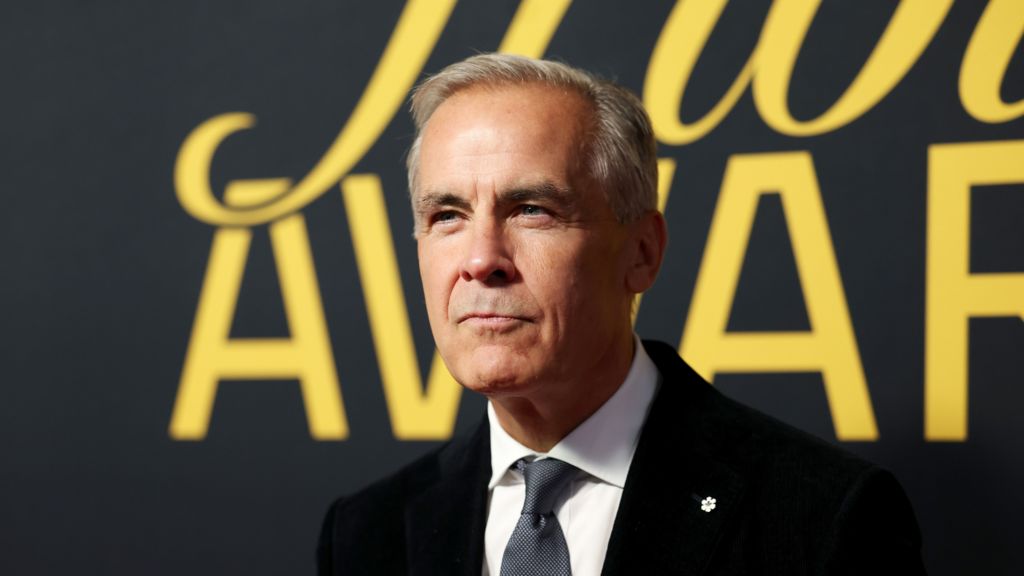
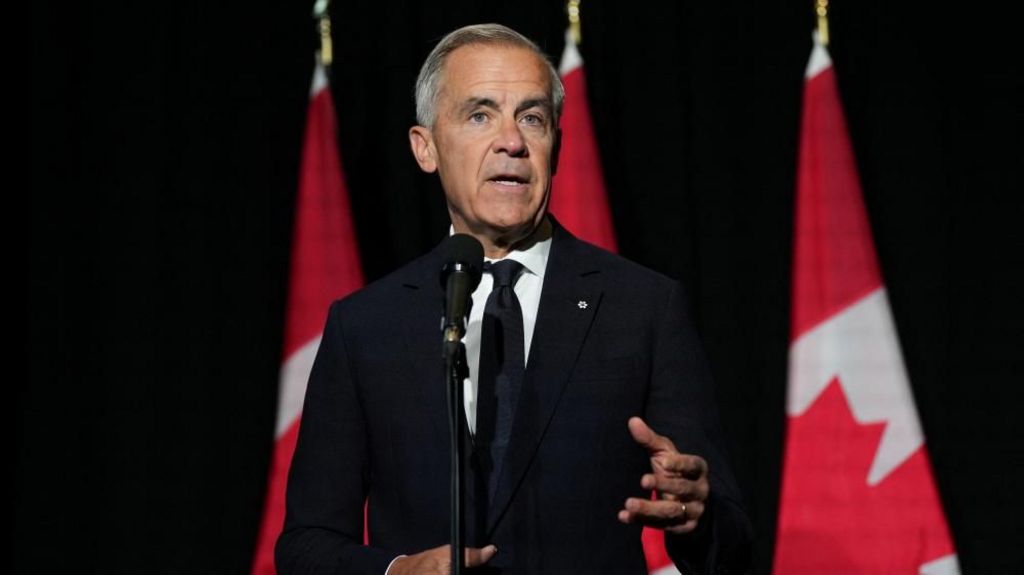
    OTTAWA – Canadian Prime Minister Mark Carney has announced the launch of the nation’s first-ever government-owned sovereign investment vehicle, the Canada Strong Fund, an initiative designed to inject capital into large-scale domestic development projects and shore up the country’s economy amid looming U.S. tariff pressures.

    Backed by an initial seed investment of C$25 billion (equal to roughly $18.4 billion USD or £13.5 billion GBP), the new fund will target projects across five high-priority sectors: energy, transportation infrastructure, mining, agriculture, and technology. In a departure from the structure of most established sovereign wealth funds globally, the Canada Strong Fund will also open direct investment opportunities to ordinary Canadian citizens who have disposable capital to contribute.

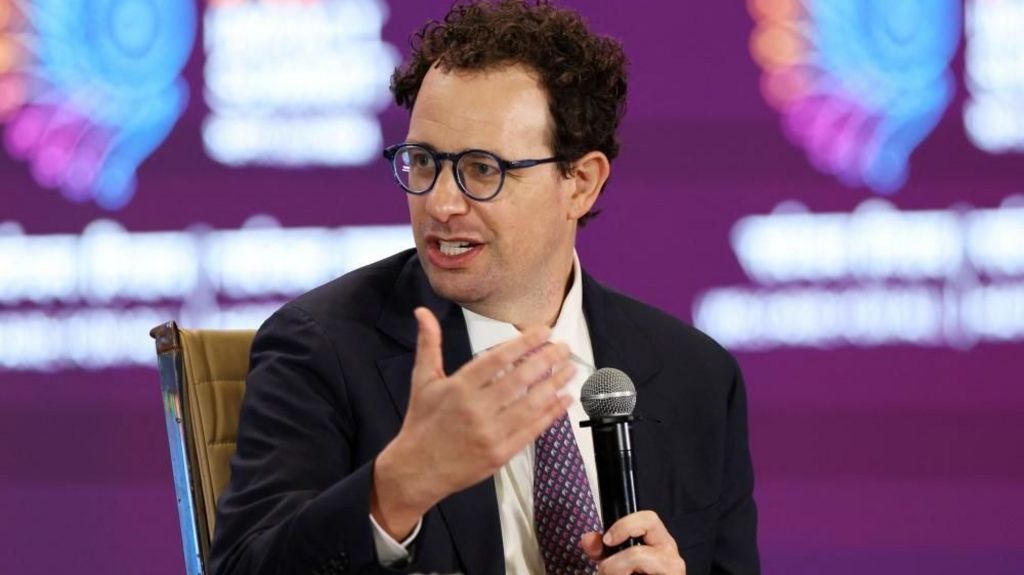
    Carney framed the launch as a long-overdue step to align Canada with other resource-rich nations that have built national wealth through dedicated sovereign investment vehicles. Speaking at the official announcement in Ottawa on Monday, he noted: “Many countries that are blessed with natural resources like Norway have sovereign wealth funds. Canada hasn’t had one, until now.” The prime minister also credited other nations for the decades-long foresight that allowed them to build their own successful funds, pointing to Norway’s $2.1 trillion fund, the largest of its kind globally according to 2025 Bloomberg data, as a prominent example.

    Unlike Norway’s fund, which was established in 1990 to invest surplus oil and gas revenues exclusively in international markets, the Canada Strong Fund differs in two fundamental ways, according to independent economic experts. University of Toronto economics professor Joseph Steinberg explained that Canada currently operates with significant national debt, meaning the initial capital for the fund will not come from surplus natural resource revenue – the standard funding model for most sovereign wealth funds – but from borrowed money. Additionally, while most global sovereign wealth funds invest the majority of their capital overseas, the Canada Strong Fund will allocate nearly all of its resources to domestic “nation-building projects”, partnering with private sector stakeholders to deliver upgrades to port infrastructure, expand natural resource development, and advance other domestic priorities. The option for direct individual Canadian investment is also a unique feature not seen in other sovereign wealth funds around the world.

    The new initiative has already drawn criticism from independent economic think tanks. The Montreal Economic Institute issued a statement on the same day of the announcement warning that the fund “risks costing taxpayers dearly while generating limited returns.” Other industry analysts have echoed this concern, noting that the fund’s focus on domestic projects and reliance on borrowed capital creates unusual market risk not present in most traditional sovereign wealth structures.

    The Carney administration has indicated that it will conduct open public and stakeholder consultations over the coming months to finalize the fund’s operational rules, governance structure, and investment eligibility criteria. The initiative forms a core plank of the government’s broader economic strategy to strengthen Canada’s economic resilience ahead of potential trade barriers from the United States, Canada’s largest trading partner.

    Globally, sovereign wealth funds with assets exceeding $1 trillion are currently operated by Norway, China, the United Arab Emirates, and Kuwait. The United States has also moved toward exploring the creation of its own sovereign wealth fund in recent months: shortly after taking office for his second term, former President Donald Trump signed an executive order last February directing the U.S. Treasury and Commerce departments to draft a framework for a U.S. fund within 90 days, with a stated goal of “help maximise the stewardship of our national wealth.”

  • Taylor Swift files to trademark voice and image after AI concerns

    Taylor Swift files to trademark voice and image after AI concerns

    As artificial intelligence tools become increasingly accessible and capable of replicating distinct human characteristics, high-profile public figures are moving quickly to secure legal protections against unauthorized deepfakes and AI impersonation. Global pop icon Taylor Swift is the latest celebrity to take decisive action, submitting three new trademark applications with United States regulators to shield her name, iconic appearance and recognizable voice from exploitative AI misuse.

    The filings, first uncovered and published by trademark attorney Josh Gerben on his professional blog, mark one of the most high-profile recent attempts by a public figure to leverage existing intellectual property law against the fast-growing problem of AI-generated impersonations. Two of the applications center on short audio clips that Swift recorded last autumn to promote her latest album *The Life of a Showgirl* for streaming platforms Spotify and Amazon Music. The clips feature Swift’s iconic opening lines: “Hey, it’s Taylor” and “Hey, it’s Taylor Swift”. The third application is tied to a widely used promotional photograph of Swift captured during her record-breaking Eras Tour, showing the singer on stage holding a pink acoustic guitar with a black strap, clad in a multi-colored iridescent bodysuit and silver boots. This same image was previously used for official marketing of the Disney+ Eras Tour concert film.

    The push for legal protection comes amid a rising tide of problematic AI-generated content targeting Swift and other A-list celebrities. In recent years, deepfake versions of the pop star have spread across the internet in a range of unauthorized forms, from non-consensual explicit imagery to manipulated political content – including a fake election advertisement that purported to show Swift urging voters to support former president Donald Trump. These high-profile incidents have underscored the urgent need for clear legal protections for public figures against AI exploitation.

    Swift’s action follows a similar move from Hollywood actor Matthew McConaughey, who became the first major celebrity to use trademark law to protect his voice and image from AI misuse earlier this 2025. Prior to this, most celebrities relied on personality rights laws to address unauthorized use of their likeness, but trademark registration offers an additional layer of legal protection that can cover more types of AI-generated reproductions.

    According to legal expert Gerben, these trademark filings offer Swift broader protection than just preventing direct copying of the exact photo and audio clips. Under U.S. trademark law, holders can challenge any use that is considered “confusingly similar” to the registered trademark. This means that even AI-generated imitations that do not directly reproduce the registered files could still be challenged legally.

    “By registering specific phrases tied to her voice, Swift could potentially challenge not only identical reproductions, but also imitations that are ‘confusingly similar,’ a key standard in trademark law,” Gerben explained. “Theoretically, if a lawsuit were to be filed over an AI using Swift’s voice, she could claim that any use of her voice that sounds like the registered trademark violates her trademark rights. Same with the image filing. If someone creates an AI-generated version of Taylor in a jumpsuit with a guitar, or something close to it, now Swift has a federal trademark claim.”

    As generative AI technology continues to advance and spread, intellectual property and entertainment legal experts expect more high-profile celebrities to follow this trend, turning to trademark law as a new tool to combat the growing threat of unauthorized AI deepfakes and impersonations.

  • White House to review Trump’s security after shooting at dinner event

    White House to review Trump’s security after shooting at dinner event

    A security breach at the annual White House Correspondents’ Dinner Saturday has triggered a full review of presidential protection protocols, after an armed suspect managed to approach a crowded ballroom housing former President Donald Trump, top U.S. officials and more than 2,000 attendees. A senior White House official confirmed to the BBC that senior leadership will convene a high-level meeting this week to examine the incident and refine security practices ahead of a packed schedule of high-stakes public events for the president this year.

    The suspect, 31-year-old Cole Tomas Allen, breached security perimeters and engaged in a brief shootout with law enforcement before being subdued by officers. A federal agent wearing a ballistic vest was shot during the exchange, but no fatalities or critical injuries to attendees were reported. The incident has sparked intense scrutiny of the U.S. Secret Service, the federal agency tasked with protecting the sitting president and other high-ranking government officials, after multiple security gaps were reported: attendees entering the Washington Hilton venue were not required to show valid photo identification, event tickets only listed table numbers without attendee names, and a single metal detector checkpoint was placed one level above the main ballroom entrances. Allen was stopped just near the top of the stairs leading directly to the ballroom doors.

    Despite widespread questions about the agency’s performance, President Trump has repeatedly voiced full confidence in the Secret Service’s actions. A senior White House official told the BBC that the president personally believes agents did an excellent job of neutralizing the threat and moving him and his inner circle to safety quickly. Even with that public backing, White House Chief of Staff Susie Wiles will lead the upcoming review meeting, which will include senior operations staff, Secret Service representatives, and officials from the Department of Homeland Security. The gathering will focus on dissecting which existing protocols successfully stopped the attack, while evaluating additional improvements to strengthen security for the large number of high-profile presidential events scheduled for the coming months.

    Among the upcoming major events are public gatherings tied to the 250th anniversary of the United States this July, a planned UFC fight hosted on the White House South Lawn, and official appearances tied to the 2026 World Cup. Separately, Senate Judiciary Committee Chair Chuck Grassley, who was in attendance at the dinner alongside Trump, Vice President JD Vance and House Speaker Mike Johnson, has announced plans to hold a separate closed-door briefing with Secret Service leadership to examine the incident and existing security protocols. Grassley, 92, is fourth in the presidential line of succession.

    In an on-site briefing roughly two hours after the shooting was contained, Trump acknowledged the inherent risks of open public events for sitting presidents. “I can’t imagine that there’s any profession that is more dangerous,” he said of the work of Secret Service agents, reiterating his support for the agency despite the coming review.

  • Melania Trump urges ABC to ‘take stand’ on Jimmy Kimmel after widow joke

    Melania Trump urges ABC to ‘take stand’ on Jimmy Kimmel after widow joke

    A fresh controversy has erupted around late-night comedian Jimmy Kimmel, after former first lady Melania Trump publicly lambasted a hateful joke he made ahead of the 2026 White House Correspondents’ Dinner – where a would-be attacker later opened fire in an incident authorities suspect targeted senior Trump administration figures.

    The incendiary quip, delivered during Kimmel’s pre-dinner monologue on ABC on Thursday, targeted the former first lady directly. “Our First Lady, Melania, is here. Look at Melania, so beautiful. Mrs Trump, you have a glow like an expectant widow,” Kimmel joked. Just two days after the segment aired, 31-year-old suspect Cole Tomas Allen was tackled by Secret Service agents near a staircase leading to the dinner ballroom, which was packed with hundreds of journalists, government officials and high-profile public figures. No attendees were harmed in the incident, and Allen is scheduled to make his first court appearance on Monday.

    In the wake of the shooting, a clip of Kimmel’s joke resurfaced online and ignited widespread backlash across social media platforms, with many critics arguing that the comedian’s harsh rhetoric crossed a line and emboldened political violence. On Monday, Melania Trump broke her silence on the incident with a scathing public post on X, denouncing Kimmel’s comment as dangerous and unfunny.

    The former first lady called Kimmel’s remark “hateful and violent”, describing the joke about herself and her family as corrosive commentary that amplifies the deep political polarization dividing the United States. “His monologue about my family isn’t comedy – his words are corrosive and deepens the political sickness within America,” she wrote. Melania Trump went on to call on network executives at ABC, Kimmel’s long-time broadcaster, to take disciplinary action against the host for what she labeled his “atrocious behavior”. She questioned why network leadership has repeatedly enabled Kimmel’s inflammatory rhetoric, writing: “How many times will ABC’s leadership enable Kimmel’s atrocious behavior at the expense of our community.” She added that commentators like Kimmel should not be given a national platform to “spread hate” into American households each night.

    This is not the first time Kimmel’s controversial political commentary has gotten him pulled from air. Last September, the host was temporarily suspended after drawing outrage for remarks he made following the fatal shooting of conservative influencer Charlie Kirk. During that monologue, Kimmel claimed that Trump’s Make America Great Again movement – commonly nicknamed “Maga” – was attempting to exploit Kirk’s murder for political gain. After a week off the air, Kimmel returned to the show and acknowledged that his comments had been poorly received. “I accept that some people felt my remarks about Kirk’s death had been ‘ill-timed or unclear or maybe both’,” he said at the time, adding “I get why you’re upset.”

    As of Monday, the BBC has reached out to ABC News for a response to Melania Trump’s latest demands, and the network has not yet issued a public comment on the controversy.

  • What to expect as Trump hosts the King

    What to expect as Trump hosts the King

    A high-stakes diplomatic meeting is set to unfold on United States soil, as former President Donald Trump welcomes King Charles III for a formal visit that unfolds against a backdrop of growing friction between Washington and London. The long-awaited royal trip arrives at a moment of deep division between the two long-standing allies, with the simmering crisis over Iran emerging as the core flashpoint that threatens to complicate discussions between the two leaders. For decades, the United States and the United Kingdom have maintained a so-called special relationship, built on shared security goals, economic ties and cultural alignment. But in recent weeks, disagreements over how to address escalating tensions around Iran have opened a rare and noticeable rift between the two governments, casting a shadow over this symbolic royal engagement. Analysts note that while the visit carries heavy ceremonial weight, behind the formal handshakes and state dinners, both sides will be navigating significant differences on Iran policy. Whether the meeting will ease the current strain or further highlight the divide between the two allies remains to be seen as the visit gets underway.

  • Why Elon Musk and Sam Altman are fighting over OpenAI

    Why Elon Musk and Sam Altman are fighting over OpenAI

    What began as a collaborative partnership to build one of the world’s most influential artificial intelligence laboratories has erupted into a high-stakes legal battle that could reshape the future of the rapidly growing AI industry. Elon Musk, one of the original co-founders of OpenAI alongside current CEO Sam Altman, has launched a lawsuit against the organization and its leadership, seeking damages that exceed $130 billion.

    The origins of OpenAI trace back to 2015, when the project launched as a non-profit research initiative focused on developing safe, beneficial artificial general intelligence for the public good. Musk was a key early backer and founding board member, bringing both financial capital and global visibility to the fledgling organization alongside Altman, who would eventually take over as chief executive to steer the company’s rapid growth. That growth accelerated dramatically following the 2022 launch of ChatGPT, OpenAI’s groundbreaking large language model that ignited a global AI boom and pushed the company’s valuation into the hundreds of billions of dollars. Along the way, OpenAI restructured its governance model to include a for-profit commercial arm to scale development and attract major investment, a shift that has become a core point of contention between Musk and current leadership.

    Musk’s legal action argues that the organization has strayed dramatically from its original non-profit mission, abandoning the commitments that drew him and other early supporters to the project. The nine-figure damages claim reflects the massive market value that OpenAI has accumulated since its public breakthrough with ChatGPT, and a ruling in Musk’s favor could force major changes to OpenAI’s corporate structure, its commercialization strategy, and even its control of core AI technologies that are now used by millions of people and businesses around the world.

    For the broader global tech ecosystem, this lawsuit carries far-reaching implications. It shines a bright spotlight on the tension between the original public-interest mandates of many AI research projects and the enormous commercial pressures that have come with the AI boom. It also sets up a public showdown between two of the most high-profile figures in technology, whose competing visions for the future of artificial intelligence could shape the direction of the industry for years to come.

  • Performer describes locking eyes with Trump as they ducked for cover during shooting

    Performer describes locking eyes with Trump as they ducked for cover during shooting

    The 2026 White House Correspondents’ Association annual dinner, a staple gathering for Washington’s political and media elite held at the Washington Hilton hotel, descended into chaos Saturday night when gunshots rang out, leaving attendees and the public shaken by a brazen attempted attack targeting former U.S. President Donald Trump. In the aftermath of the incident, the performer on stage at the time of the shooting has shared a gripping first-hand account of the split-second terror that unfolded just feet from the former president.

    Oz Pearlman, a well-known mentalist who was mid-act when the shots erupted, told the BBC that he was interacting directly with Trump, First Lady Melania Trump, and White House Press Secretary Karoline Leavitt when the attack began. At that exact moment, Pearlman was in the middle of a signature mind-reading trick: he had just written his guess for the name of Leavitt’s upcoming baby on a slip of paper, preparing to reveal it to the audience. In an instant, the festive atmosphere shattered at the sound of gunfire.

    “I went down very quickly. And then the Secret Service brought President Trump down: I would say very effectively – but quite violently,” Pearlman recalled. The performer, who ended up mere centimeters from Trump on the venue floor, described the surreal, terrifying moment the pair locked eyes as shots continued to ring out. “We were about half-a-metre apart… face-to-face looking at each other on the ground, when I’m hearing shots and thinking to myself, ‘We’re about to die,’” he said.

    Pearlman added that the initial rush of Secret Service agents initially led him to believe an explosive device was set to detonate, rather than an active shooter situation. “It didn’t feel like they were looking for a shooter. It felt like they were looking to stop something from happening,” he explained. Within just two seconds of taking cover, agents evacuated Trump from the venue, while Pearlman and other nearby attendees crawled to safety on their own.

    In a post-incident interview with CBS’s *60 Minutes* Sunday, Trump downplayed the danger he faced, saying he “wasn’t worried” during the ordeal. “I understand life. We live in a crazy world,” the former president commented. He confirmed that both he and the First Lady followed security instructions to take cover on the floor before being evacuated.

    Law enforcement officials have identified the suspect as 31-year-old Cole Tomas Allen, a California resident who was arrested immediately after the shooting. According to two sources familiar with the investigation who spoke to CBS, the BBC’s U.S. news partner, Allen told authorities after his detention that he specifically intended to target current and former officials from the Trump administration. The shooting exchange occurred on a floor directly above the dinner ballroom, where Trump and hundreds of other attendees were gathered. Allen is scheduled to be arraigned at a Washington, D.C. court hearing Monday, where formal charges will be filed against him.