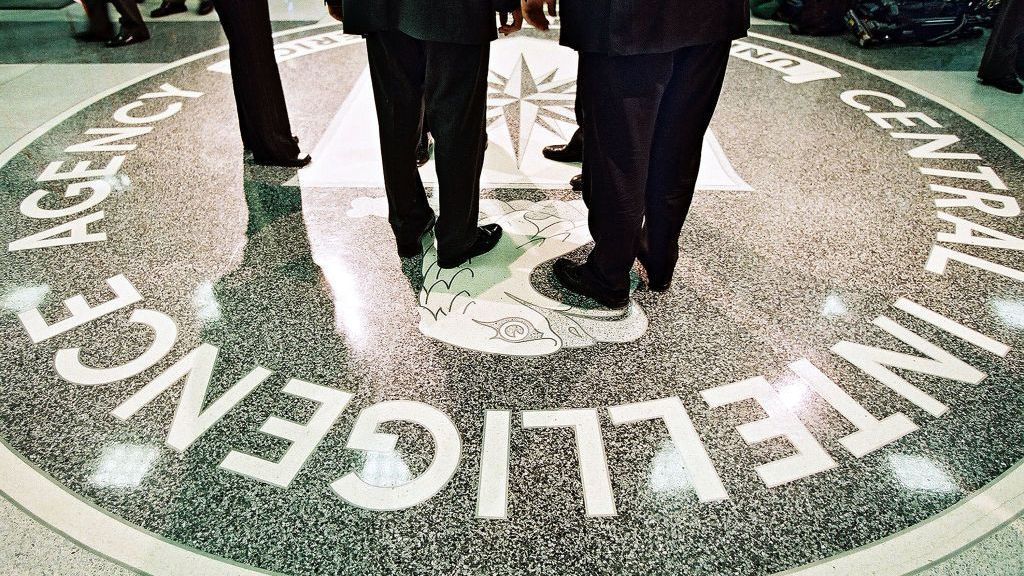
To mark the 25th anniversary of the September 11 attacks that killed nearly 3,000 people and reshaped global counterterrorism policy, the Central Intelligence Agency has declassified and released 71 previously top-secret President’s Daily Briefs (PDBs) spanning from early 1998 through the day after the 2001 attacks. Of these documents, 69 have never been disclosed to the public before, offering a rare, unvarnished look at what U.S. presidents were told about rising al-Qaeda threats years before the hijacked plane attacks on the World Trade Center, Pentagon, and a rural Pennsylvania field.
President’s Daily Briefs are the U.S. intelligence community’s most sensitive classified assessments, crafted exclusively to sit atop sitting presidents’ desks with the agency’s highest-confidence threat analysis. Typically, these documents remain sealed for 40 to 50 years after their creation, making the early release for the 25th anniversary a notable departure from standard classification protocol. Many of the released documents remain heavily redacted to protect ongoing intelligence methods and sources, but the unredacted portions paint a clear picture of mounting alarm across both the Bill Clinton and George W. Bush administrations over Osama bin Laden’s expanding network and its stated intent to strike inside the United States.
The declassified records confirm that repeated, explicit warnings of a potential large-scale attack on U.S. soil were delivered to presidential leadership three full years before 9/11. In a September 10, 1998 briefing—just weeks after al-Qaeda suicide bombings of U.S. embassies in Kenya and Tanzania killed 224 people and triggered U.S. cruise missile retaliation against al-Qaeda and Taliban-linked targets in Afghanistan and Sudan—a CIA analyst directly warned that bin Laden’s network “may fly an explosive-packed airplane into a U.S. city.” The briefing also identified the U.S. homeland as bin Laden’s preferred strike zone, with Washington, D.C. flagged as a prime target.
A subsequent briefing dated August 28, 1998, just 21 days after the East Africa embassy bombings and eight days after the U.S. retaliatory strikes, further warned that al-Qaeda’s core network remained fully operational despite the American attacks, and that bin Laden was actively “considering attacks in the U.S.” While the independent 9/11 Commission’s 2004 official investigation had previously noted that U.S. intelligence suspected al-Qaeda might use aircraft in an attack, the newly released briefs confirm for the first time that this specific warning was included in material delivered to President Clinton.
The only post-attack briefing in the release was delivered to the White House at 4:00 a.m. on September 12, 2001, fewer than 20 hours after the first plane struck the North Tower of the World Trade Center. The assessment confirmed that “mounting evidence” pointed to al-Qaeda affiliates across Afghanistan and the Persian Gulf having advance knowledge that an attack was imminent. A partially redacted section of the brief adds that the full plot was “widely known” within global extremist circles. The document also notes that bin Laden may have relocated to Kabul from his base near Kandahar after clashing with Taliban leadership over the attack plan, while then-Taliban leader Mullah Omar evacuated his family from Kandahar immediately in the hours after the attacks. Less than a month after 9/11, the U.S. and its coalition partners invaded Afghanistan to dismantle al-Qaeda and remove the Taliban from power.
CIA Director John Ratcliffe framed the release in an official statement released alongside the documents, noting that “Twenty-five years ago, the 9/11 attacks struck a blow to our nation, but they did not break us.” He added that “Generations of C.I.A. officers have since dedicated their careers to securing justice for our fallen Americans and ensuring Al Qaeda would never again harm our country.”
The declassified material aligns with the 9/11 Commission’s final core finding: while U.S. intelligence repeatedly flagged the high risk of an al-Qaeda attack on U.S. soil across two presidential administrations, analysts lacked specific details on the exact timing, target locations, and full scale of the plot that would become the deadliest terrorist attack on U.S. soil in modern history.