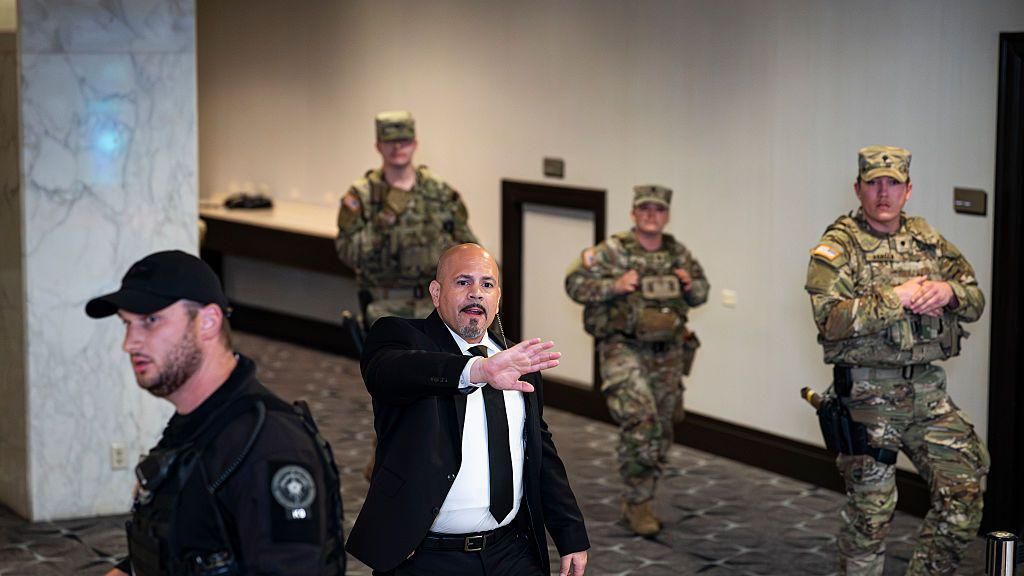
A security breach at the annual White House Correspondents’ Dinner Saturday has triggered a full review of presidential protection protocols, after an armed suspect managed to approach a crowded ballroom housing former President Donald Trump, top U.S. officials and more than 2,000 attendees. A senior White House official confirmed to the BBC that senior leadership will convene a high-level meeting this week to examine the incident and refine security practices ahead of a packed schedule of high-stakes public events for the president this year.
The suspect, 31-year-old Cole Tomas Allen, breached security perimeters and engaged in a brief shootout with law enforcement before being subdued by officers. A federal agent wearing a ballistic vest was shot during the exchange, but no fatalities or critical injuries to attendees were reported. The incident has sparked intense scrutiny of the U.S. Secret Service, the federal agency tasked with protecting the sitting president and other high-ranking government officials, after multiple security gaps were reported: attendees entering the Washington Hilton venue were not required to show valid photo identification, event tickets only listed table numbers without attendee names, and a single metal detector checkpoint was placed one level above the main ballroom entrances. Allen was stopped just near the top of the stairs leading directly to the ballroom doors.
Despite widespread questions about the agency’s performance, President Trump has repeatedly voiced full confidence in the Secret Service’s actions. A senior White House official told the BBC that the president personally believes agents did an excellent job of neutralizing the threat and moving him and his inner circle to safety quickly. Even with that public backing, White House Chief of Staff Susie Wiles will lead the upcoming review meeting, which will include senior operations staff, Secret Service representatives, and officials from the Department of Homeland Security. The gathering will focus on dissecting which existing protocols successfully stopped the attack, while evaluating additional improvements to strengthen security for the large number of high-profile presidential events scheduled for the coming months.
Among the upcoming major events are public gatherings tied to the 250th anniversary of the United States this July, a planned UFC fight hosted on the White House South Lawn, and official appearances tied to the 2026 World Cup. Separately, Senate Judiciary Committee Chair Chuck Grassley, who was in attendance at the dinner alongside Trump, Vice President JD Vance and House Speaker Mike Johnson, has announced plans to hold a separate closed-door briefing with Secret Service leadership to examine the incident and existing security protocols. Grassley, 92, is fourth in the presidential line of succession.
In an on-site briefing roughly two hours after the shooting was contained, Trump acknowledged the inherent risks of open public events for sitting presidents. “I can’t imagine that there’s any profession that is more dangerous,” he said of the work of Secret Service agents, reiterating his support for the agency despite the coming review.