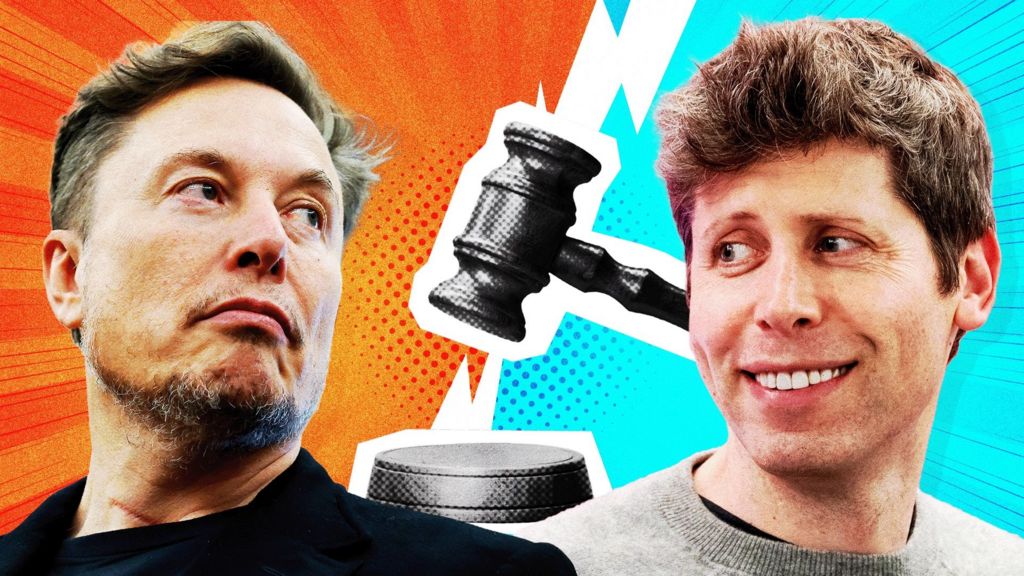
What began as a collaborative partnership to build one of the world’s most influential artificial intelligence laboratories has erupted into a high-stakes legal battle that could reshape the future of the rapidly growing AI industry. Elon Musk, one of the original co-founders of OpenAI alongside current CEO Sam Altman, has launched a lawsuit against the organization and its leadership, seeking damages that exceed $130 billion.
The origins of OpenAI trace back to 2015, when the project launched as a non-profit research initiative focused on developing safe, beneficial artificial general intelligence for the public good. Musk was a key early backer and founding board member, bringing both financial capital and global visibility to the fledgling organization alongside Altman, who would eventually take over as chief executive to steer the company’s rapid growth. That growth accelerated dramatically following the 2022 launch of ChatGPT, OpenAI’s groundbreaking large language model that ignited a global AI boom and pushed the company’s valuation into the hundreds of billions of dollars. Along the way, OpenAI restructured its governance model to include a for-profit commercial arm to scale development and attract major investment, a shift that has become a core point of contention between Musk and current leadership.
Musk’s legal action argues that the organization has strayed dramatically from its original non-profit mission, abandoning the commitments that drew him and other early supporters to the project. The nine-figure damages claim reflects the massive market value that OpenAI has accumulated since its public breakthrough with ChatGPT, and a ruling in Musk’s favor could force major changes to OpenAI’s corporate structure, its commercialization strategy, and even its control of core AI technologies that are now used by millions of people and businesses around the world.
For the broader global tech ecosystem, this lawsuit carries far-reaching implications. It shines a bright spotlight on the tension between the original public-interest mandates of many AI research projects and the enormous commercial pressures that have come with the AI boom. It also sets up a public showdown between two of the most high-profile figures in technology, whose competing visions for the future of artificial intelligence could shape the direction of the industry for years to come.