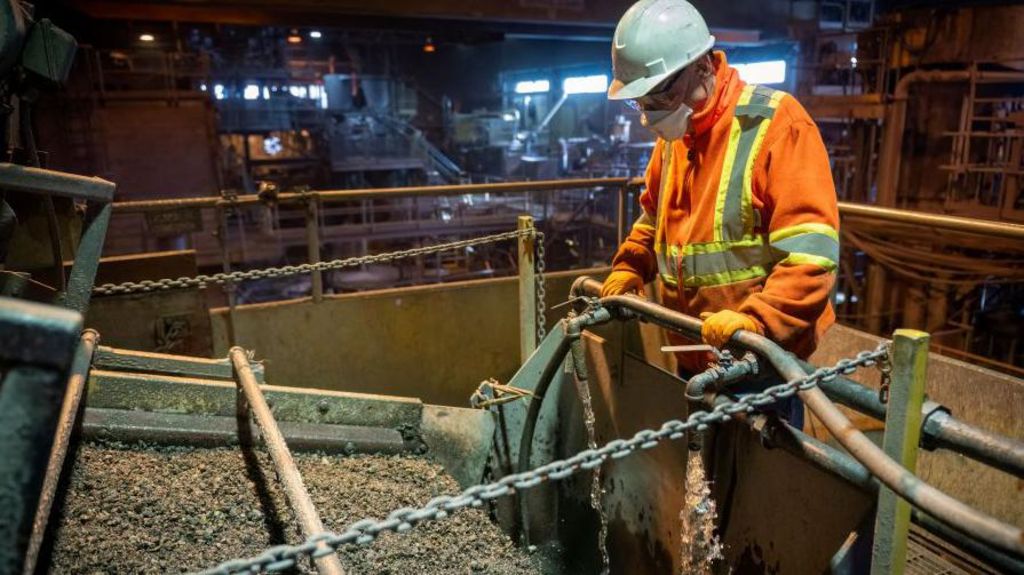
OTTAWA – Canadian Prime Minister Mark Carney has announced the launch of the nation’s first-ever government-owned sovereign investment vehicle, the Canada Strong Fund, an initiative designed to inject capital into large-scale domestic development projects and shore up the country’s economy amid looming U.S. tariff pressures.
Backed by an initial seed investment of C$25 billion (equal to roughly $18.4 billion USD or £13.5 billion GBP), the new fund will target projects across five high-priority sectors: energy, transportation infrastructure, mining, agriculture, and technology. In a departure from the structure of most established sovereign wealth funds globally, the Canada Strong Fund will also open direct investment opportunities to ordinary Canadian citizens who have disposable capital to contribute.
Carney framed the launch as a long-overdue step to align Canada with other resource-rich nations that have built national wealth through dedicated sovereign investment vehicles. Speaking at the official announcement in Ottawa on Monday, he noted: “Many countries that are blessed with natural resources like Norway have sovereign wealth funds. Canada hasn’t had one, until now.” The prime minister also credited other nations for the decades-long foresight that allowed them to build their own successful funds, pointing to Norway’s $2.1 trillion fund, the largest of its kind globally according to 2025 Bloomberg data, as a prominent example.
Unlike Norway’s fund, which was established in 1990 to invest surplus oil and gas revenues exclusively in international markets, the Canada Strong Fund differs in two fundamental ways, according to independent economic experts. University of Toronto economics professor Joseph Steinberg explained that Canada currently operates with significant national debt, meaning the initial capital for the fund will not come from surplus natural resource revenue – the standard funding model for most sovereign wealth funds – but from borrowed money. Additionally, while most global sovereign wealth funds invest the majority of their capital overseas, the Canada Strong Fund will allocate nearly all of its resources to domestic “nation-building projects”, partnering with private sector stakeholders to deliver upgrades to port infrastructure, expand natural resource development, and advance other domestic priorities. The option for direct individual Canadian investment is also a unique feature not seen in other sovereign wealth funds around the world.
The new initiative has already drawn criticism from independent economic think tanks. The Montreal Economic Institute issued a statement on the same day of the announcement warning that the fund “risks costing taxpayers dearly while generating limited returns.” Other industry analysts have echoed this concern, noting that the fund’s focus on domestic projects and reliance on borrowed capital creates unusual market risk not present in most traditional sovereign wealth structures.
The Carney administration has indicated that it will conduct open public and stakeholder consultations over the coming months to finalize the fund’s operational rules, governance structure, and investment eligibility criteria. The initiative forms a core plank of the government’s broader economic strategy to strengthen Canada’s economic resilience ahead of potential trade barriers from the United States, Canada’s largest trading partner.
Globally, sovereign wealth funds with assets exceeding $1 trillion are currently operated by Norway, China, the United Arab Emirates, and Kuwait. The United States has also moved toward exploring the creation of its own sovereign wealth fund in recent months: shortly after taking office for his second term, former President Donald Trump signed an executive order last February directing the U.S. Treasury and Commerce departments to draft a framework for a U.S. fund within 90 days, with a stated goal of “help maximise the stewardship of our national wealth.”