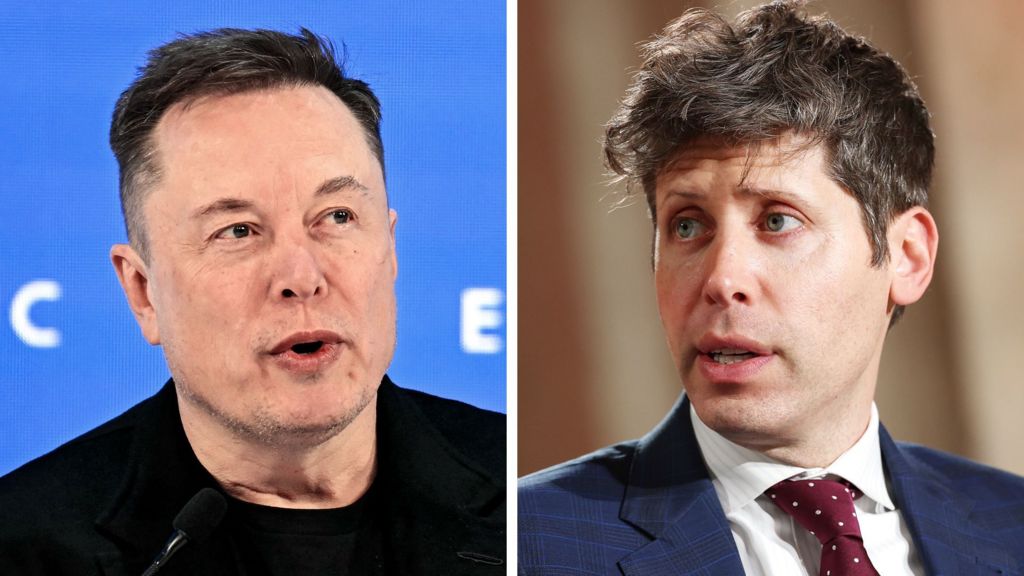
Two of the technology industry’s most recognizable and influential figures are currently facing off in a landmark legal battle whose outcome could reshape the future of OpenAI—one of the most valuable startups on the planet, creator of the globally used ChatGPT. The case has already put both Elon Musk, one of OpenAI’s original co-founders, and Sam Altman, OpenAI’s current chief executive, on the line professionally and reputationally, with closing arguments now complete and the jury having retired to deliberate. Musk’s core allegation is that Altman betrayed an original agreement to keep OpenAI as a non-profit entity and effectively “stole” the organization, costing him a massive potential fortune, a claim that Altman has repeatedly and categorically denied. Over three weeks of proceedings in a California federal courtroom, journalists from across the globe have packed the benches to follow every development, with evidence ranging from incendiary private text messages to claims of free Tesla vehicles offered as quid pro quo for favorable treatment. Presiding over the proceedings is a firm, no-nonsense judge who will ultimately have final say over the ruling after reviewing the jury’s recommendation. For those unable to follow every twist of the high-profile case, here are five of the most notable insights that have emerged from the trial.
First, the vast majority of high-profile witnesses have contradicted Musk’s core claim. Musk’s entire lawsuit hinges on the assertion that Altman deceived him by abandoning the original commitment to keep OpenAI a non-profit. What has become clear over the trial, however, is that this is far from a simple he-said-she-said dispute between two billionaires. A long roster of witnesses—many of whom are among the biggest names in global tech—have testified that they never saw or heard any evidence confirming the binding non-profit commitment Musk alleges. These witnesses include OpenAI co-founder Ilya Sutskever, former OpenAI board member Tasha McCauley, and Microsoft CEO Satya Nadella, whose company invested billions of dollars in OpenAI after completing extensive due diligence. Nadella and Microsoft are named as co-defendants in the case, accused of aiding Altman’s alleged scheme, making the uniform pushback against Musk’s claims from the stand all the more notable.
Second, questions about Sam Altman’s personal trustworthiness have remained a central point of scrutiny throughout the proceedings, even with his army of high-profile supporters. In the lead-up to the trial, a bombshell investigative profile in The New Yorker by Pulitzer Prize-winning reporter Ronan Farrow painted Altman as a compulsive liar, focusing heavily on his turbulent career including his dramatic temporary ousting from OpenAI in 2023. Musk’s legal team leaned heavily into this narrative during cross-examination, opening their questioning of Altman with a blunt query: “Are you completely trustworthy?” After Altman initially responded “I believe so,” his cross-examiner pressed him on the ambiguous answer, forcing Altman to revise his response to a direct yes. Even with that correction, Altman’s character remained under intense scrutiny for the entirety of the trial. Former OpenAI board members and executives shared first-hand accounts of alleged lack of candor from Altman, and the court also learned of extensive hidden private investments Altman holds in startups that have struck commercial deals with OpenAI. One particularly controversial example is a power purchase agreement with Helion Energy, a nuclear fusion startup that has yet to deliver any operational power to the grid; Altman until recently served as Helion’s board chairman and holds a stake in the company valued at more than $1.5 billion.
Third, the trial has been defined by memorable, out-of-the-spotlight personalities that have shaped its day-to-day drama. Presiding Judge Gonzalez Rogers has emerged as a clear commanding presence in the courtroom, enforcing a strict daily schedule with just two 20-minute breaks and no lunch break to keep all participants focused. She has repeatedly and publicly called out anyone who violates court rules, from spectators who attempt to photograph the high-profile defendants to lawyers who push questioning into topics she has already ruled off-limits. Despite her strict approach, she has shown moments of dry wit: when the court experienced early technical audio issues, she joked to the room, “What can I tell you? We are funded by the federal government.” Since cameras and live streaming were not permitted in the courtroom, the public’s understanding of the trial’s atmosphere has come largely from the work of courtroom sketch artist Vicki Behringer, who has carefully captured each day’s proceedings in vivid watercolor.
Fourth, the trial has laid bare the deeply personal decay of what was once a close, admiring relationship between Musk and Altman, as well as unusual personal ties to OpenAI’s board. Musk was once Altman’s professional hero, but the relationship between the two men has deteriorated dramatically, a rift that was put on full display during testimony. When Musk took the stand as the first witness, he was largely confident and combative, but became visibly flustered when questioned about his relationship with Shivon Zilis, a Neuralink executive and former OpenAI board member. Musk confirmed to the court that Zilis is the mother of four of his children, and the pair live together. Zilis testified that Musk offered her his sperm when she expressed a desire to have children, an unusual interaction that she did not disclose to her OpenAI colleagues until a media report was imminent. Zilis left the OpenAI board shortly after Musk launched xAI, his own artificial intelligence startup competing directly with OpenAI, writing in a private text, “When the father of your babies starts a competitive effort and will recruit out of OpenAI, there is nothing to be done.”
Fifth and finally, the trial has pulled back the curtain on how power and influence operate behind closed doors in Silicon Valley, exposing unseemly backroom deals and personal power struggles that rarely see the light of day. The proceedings have revealed alleged practices that have long been rumored but never confirmed in a public court: Musk is accused of offering free Teslas to co-founders as a way to lowball their equity stakes, while Altman stands accused of making off-the-books side payments to secure key strategic loyalty. Musk’s legal team has attempted to frame Altman as a leader who leveraged his early connection to Musk to build his own personal power and influence, while Altman has countered that Musk once suggested OpenAI should eventually be controlled by Musk’s children. Private text messages introduced as evidence have laid bare the raw chaos of internal power struggles, including Altman’s frantic response to his 2023 ousting, where he asked a former colleague “still don’t want me?” The colleague responded in a text dismissing the interim CEO Altman was replaced with, Twitch co-founder Emmett Shear, as a “rando Twitch guy.” These casual, unguarded messages and the everyday sight of these billionaire icons grabbing lattes outside the courtroom have made these larger-than-life figures feel surprisingly ordinary—yet it is critical to remember that the two men still control artificial intelligence technology that shapes the daily lives of billions of people around the globe, and the dispute at hand is worth billions of dollars. Now, the decision moves first to the jury, before ultimately landing back with Judge Gonzalez Rogers to determine the final outcome.