标签: Europe

欧洲

  • Row escalates in Ukraine over army chief’s future

    Row escalates in Ukraine over army chief’s future

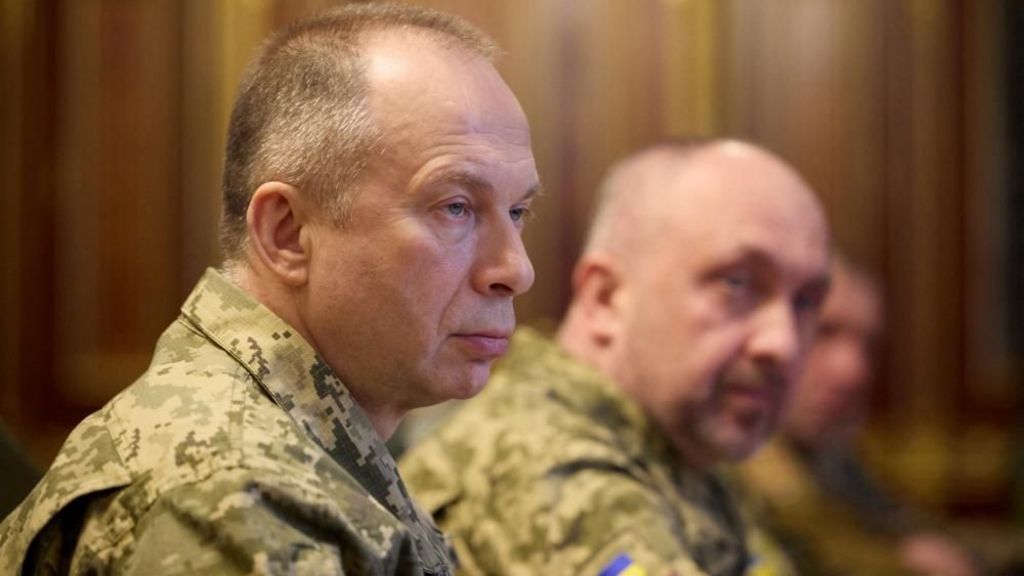
    Kyiv, Ukraine — Just one week after Ukrainian President Volodymyr Zelensky’s decision to dismiss popular Defence Minister Mykhailo Fedorov sparked a domestic political crisis, the country has been thrown into further upheaval, as swirling rumours surrounding the future of Commander-in-Chief Oleksandr Syrsky have dominated public discourse and protesters issued an ultimatum for dramatic leadership changes by the end of this week.

    Organisers of daily demonstrations backing the ousted defence minister have issued a clear, hardline threat: unless Syrsky is removed from his post and Fedorov is reinstated as Defence Minister by Friday, July 24, they will launch an open-ended, nationwide protest that will span every major Ukrainian city. No demonstrations are scheduled ahead of the deadline, leaving the nation on edge as it waits for a resolution to the growing internal rift. Dmytro Koziatynsky, an army veteran representing the protest organisers, outlined the demand in a public post on social media, amplifying pressure on Zelensky’s administration amid already tense public discourse.

    Over the weekend, Kyiv was abuzz with unconfirmed reports of closed-door meetings between Zelensky, senior cabinet ministers and top military generals, as the president works through potential adjustments to Ukraine’s defence leadership structure. Amid the flood of speculative reports, Ukraine’s General Staff was forced to publicly issue a denial, pushing back against claims that Syrsky was either on the brink of dismissal or had already been removed from his command. Additional unconfirmed reporting has also suggested that Fedorov has rejected a proposed offer to return to government in a different cabinet role.

    In a public appeal to the nation on Tuesday, Kyrylo Budanov, head of the presidential office, urged Ukrainians to set aside their anger and remain calm. “The situation surrounding the latest internal changes has caused strong emotions,” Budanov acknowledged in a social media statement, speaking as angry chants from protesters in Kyiv’s Ivana Franka Square — located just steps from the presidential palace — could be heard echoing through the city centre. “I understand people who express their position… The position of society has been heard.”

    Budanov, a former head of Ukrainian military intelligence, also warned demonstrators against turning public anger inward, noting that Russia is closely watching every internal Ukrainian division and waiting for the country to fracture from within. “The enemy is closely monitoring our every internal dispute and is waiting for us to start fighting among ourselves,” he said. “The work is underway. There will be results.”

    After days of remaining out of the public eye amid growing criticism, 60-year-old Syrsky broke his silence on Monday, publishing a lengthy op-ed in the Ukrainian outlet Militarny to defend his professional record and push back against claims of a bitter public rift with the 35-year-old Fedorov. Contradicting Zelensky’s recent claim that the two men could not even bear to share a room for official meetings, Syrsky said he was caught off guard by reports of a personal conflict. “I perceived our relationship as a working one,” he wrote. “If I offended anyone, Mykhailo Albertovych [Fedorov], I’m sorry.”

    The commander-in-chief pushed back against the simple, slogan-driven demands carried on protest signs across Kyiv, arguing that the complex issues of military contracting, weapons procurement and troop mobilization are far more nuanced than the public discourse suggests. “Decisions on which people’s lives depend are not made with slogans,” he said. “Real work, not the public drama surrounding it, wins the war.” In a thinly veiled rebuke of Fedorov’s high-profile public briefings, Syrsky added: “Presentations should not turn into self-representations. Behind each slide there should be a document, a budget and a procedure. Otherwise, instead of a decision the army gets disappointment.”

    Despite Syrsky’s defense, public opinion in Ukraine has largely aligned with Fedorov, particularly among younger Ukrainians, who broadly view the former defence minister as the driving force behind military innovation that has improved Ukraine’s ability to repel Russia’s larger invading force. Many critics also frame Syrsky as a representative of outdated, Soviet-era military doctrine that is ill-suited to the modern, drone-centric battlefield that defines the current war.

    “Right now, the war is changing, so we need new ideas and a new structure,” Tetiana Makarenko, a 44-year-old law firm employee, told reporters at a weekend protest. “It’s often said that a small Soviet army can’t defeat a big Soviet army. It’s time to change the mindset and start the new type of war.” During Fedorov’s six-month tenure leading the defence ministry, Ukraine has notched a series of significant military gains, a run of success that many Ukrainians have credited to his leadership. “We had this feeling because we saw the changing situation,” Makarenko said. “We had the feeling that we can do this.”

    Syrsky also pushed back against claims that he has resisted embracing modern drone technology, noting he oversaw the creation of a separate branch of the Ukrainian military dedicated to unmanned systems. Even so, he argued that shifting an entire million-strong military to prioritize drones exclusively cannot be accomplished in just two months, and that traditional military capabilities remain critical to Ukraine’s war effort. “I cannot transform a million-strong army to drones in two months and say: now we fight like this,” he explained. “I am not at war with the defence ministry, I am at war with Russia,” he added.

    As Syrsky defends his position, speculation is growing about potential candidates to replace him if Zelensky opts for a shake-up. All of the leading names are younger generation officers with distinguished combat records: Mykhailo Drapaty, commander of the Joint Forces; Andriy Bileksky, commander of the Third Army Corps; Oleh Apostol, commander of the Airborne Assault Forces; and Ihor Obolensky, commander of the National Guard Corps. The youngest contender, 35-year-old Brigadier General Denys Prokopenko, commander of the National Guard, gained international fame for leading the Azov Regiment’s legendary defense of Mariupol during the 2022 Russian siege. Prokopenko was held as a Russian prisoner of war after the city fell, but returned to Ukraine in a July 2023 prisoner exchange and resumed his command despite Russian objections. While Prokopenko remains politically controversial due to longstanding allegations of far-right ties to the Azov Regiment, he retains strong popular support among many Ukrainians for his combat leadership.

    Zelensky has confirmed that he is still finalizing plans for adjustments to Ukraine’s defence leadership, thanking all parties for their “openness, honesty and substantive contributions” to the discussions. With Russia expected to launch a new campaign of strikes against Ukraine’s critical energy infrastructure ahead of the autumn cold, Zelensky has stressed that Ukraine must be fully prepared and as strong as possible when August begins.

    For now, the daily protests have paused ahead of the July 24 deadline, leaving the nation holding its breath as Zelensky weighs what many see as a fateful set of decisions that could shape the trajectory of Ukraine’s war effort against Russia.

  • LIV Golf suffers setback with Asian Tour joining new alliance with European and PGA tours

    LIV Golf suffers setback with Asian Tour joining new alliance with European and PGA tours

    The landscape of global professional golf shifted dramatically on Tuesday, as the PGA Tour, DP World Tour (the commercial brand of the European Tour) and Asian Tour unveiled a new multi-year strategic alliance that immediately casts fresh uncertainty over the future of Saudi-backed rival LIV Golf. The partnership, which took effect immediately and runs through 2029, marks a significant realignment of the sport’s governing structure, and directly disrupts the business ties the Asian Tour has maintained with LIV since the breakaway league launched in 2022.

    Under the terms of the new alliance, the PGA Tour and DP World Tour will work alongside the Asian Tour to expand commercial opportunities and playing pathways for golfers across the region. A core component of the deal restores the co-sanctioning relationship between the European circuit and Asian Tour that was halted in 2022 – the partnership will see at least two co-hosted events held annually over the next three years, with additional provisions being finalized to grant Asian Tour players access to DP World Tour and Challenge Tour competitions, and create a clear progression route for top Asian players to compete on global elite circuits. This three-tour partnership also builds on the existing alliance between the PGA Tour and DP World Tour, which has been in negotiation for a renewed long-term deal, and follows the PGA Tour’s recent expanded involvement with the Australian Open as the sport moves to elevate leading national open championships.

    Industry observers have widely framed the announcement as a major setback for LIV Golf, which poured $300 million into the Asian Tour in 2021 to launch its International Series – a slate of events offering purses up to $2 million that have been dominated by LIV contracted players including Peter Uihlein, Carlos Ortiz and David Puig. The new alliance pulls the Asian Tour back into the fold of the established global golf structure, ending the independent partnership that LIV has relied on to expand its footprint in Asia.

    Tuesday’s news is just the latest in a string of challenges for the breakaway league. Just one day prior, reports emerged that Canadian tech firm Mobii Systems Group has filed a $925,100 breach of contract lawsuit against LIV at the U.S. District Court in Miami. The company, which provided LIV’s signature “Any Shot, Any Time” broadcast technology, alleges the league has failed to pay outstanding service fees, and is also seeking $209,531 in lost revenue for the remaining six events on LIV’s 2026 schedule. Court documents include a May 25 email from LIV Golf Senior Vice President of Technology Nick Connor, which confirmed the league would discontinue use of Mobii’s technology after the May 31 South Korea event, as it undertakes a broad review of its operating model amid financial uncertainty.

    That financial uncertainty stems from a recent announcement from the Public Investment Fund of Saudi Arabia, LIV’s primary financial backer, which confirmed it will end funding for the league after the 2026 season. LIV CEO Scott O’Neil has since been engaged in an ongoing search for new external investors to keep the league operational through 2027 and beyond.

    Leaders of the three allied tours have framed the new partnership as a unifying step for the future of global professional golf. Cho Minn Thant, Commissioner and CEO of the Asian Tour, emphasized the benefits of the alignment for the region’s golf ecosystem. “We feel the time is now right to collaborate with the DP World Tour and PGA Tour to enhance the Asian Tour for our members, fans and partners,” he said. “Bringing the three tours together under one partnership will increase the bandwidth of the professional game in Asia. Not only will co-sanctioning events see our members competing regularly on the global stage, but we are excited to welcome players from the other Tours to our pinnacle events.”

    Christian Hardy, Senior Vice President of International for the PGA Tour, echoed that sentiment, noting the alliance represents a shared commitment to growing the sport. “Through our strategic alliance with the DP World Tour, we have worked to build a more connected global golf ecosystem, and we are excited to welcome the Asian Tour into that effort,” Hardy said. “Together, we are creating new opportunities for players, enhancing key national opens around the world and continuing to evolve and strengthen pathways to identify and develop the next generation of elite talent.”

  • German railway to ban consuming alcohol at all its stations, with some exemptions

    German railway to ban consuming alcohol at all its stations, with some exemptions

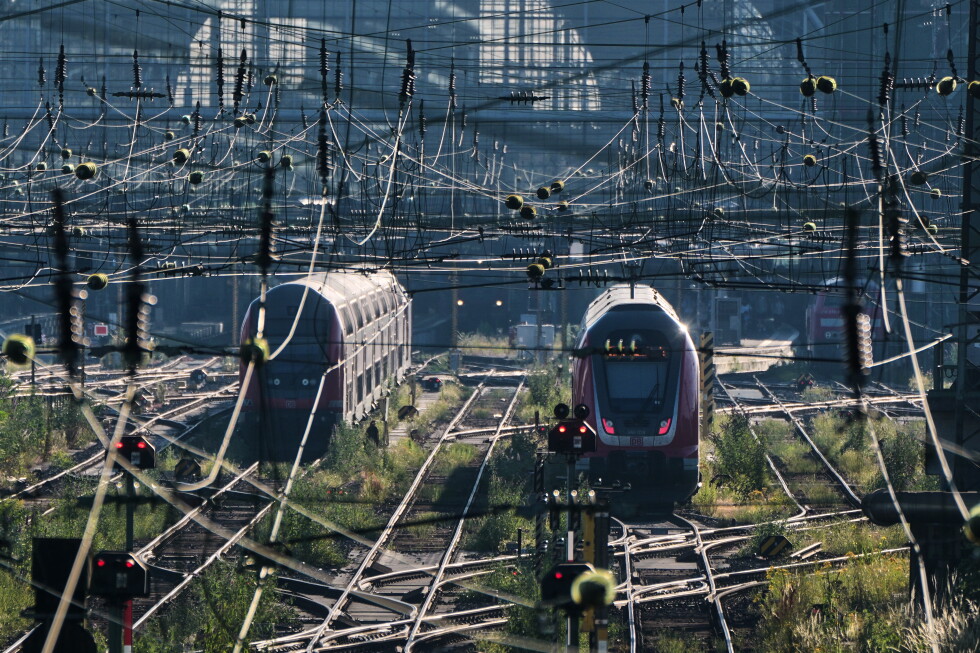
    BERLIN, Aug — Germany’s state-owned national railway operator Deutsche Bahn announced Tuesday a sweeping new policy that will prohibit public alcohol consumption at all stations across the country, a move designed to address rising safety concerns and improve facility cleanliness for both staff and passengers. The policy includes targeted exemptions for on-site hospitality businesses, and will not extend to alcohol consumption or service aboard moving trains.

    The alcohol restriction will be rolled out in a phased rollout, with the goal of full implementation at all 5,400 Deutsche Bahn-managed stations nationwide by October 15. Thirty major stations across Germany, including high-traffic hubs in Cologne, Hamburg and Munich, have already enacted the ban. Next month, on September 1, Berlin’s central station and Gesundbrunnen station, along with several other regional hubs, will adopt the measure ahead of the full national expansion.

    In an official statement, Deutsche Bahn Chief Executive Evelyn Palla explained the driving force behind the new rule, noting that company data and on-the-ground observations have consistently linked excessive alcohol consumption at stations to increased rates of violent incidents against staff and other travelers. “We have observed too often that violence increases where too much alcohol flows,” Palla said.

    Palla specifically referenced a high-profile brutal attack that occurred just one week prior, in which an allegedly intoxicated passenger assaulted a security officer during a routine ticket check. During the altercation, the employee was shoved and fell out of the open door of a moving train, sustaining serious injuries. The unprovoked attack amplified longstanding calls from rail worker unions for stricter policies to curb alcohol-related violence on Deutsche Bahn property.

    Violations of the new alcohol ban will carry immediate penalties: rule-breakers caught consuming alcohol in prohibited public areas of stations will be removed from the premises, and repeat offenders may face permanent bans from all Deutsche Bahn station properties.

    Notably, the policy carves out key exceptions that avoid disrupting station-based hospitality. Licensed bars, restaurants and caterers located within stations are exempt from the ban, allowing patrons to consume alcohol purchased at these on-site businesses. Travelers will also still be permitted to carry unopened, sealed containers of alcohol in their luggage, personal bags or shopping purchases while in stations. Additionally, the ban does not apply to trains themselves; alcoholic beverages will continue to be sold in dining cars on most long-distance rail services across Germany.

    As the most populous country in the European Union, Germany hosts the largest railway network on the continent, according to Deutsche Bahn’s infrastructure division. The network spans approximately 33,400 kilometers (20,750 miles) and supports an average of 50,000 train journeys per day, serving millions of passengers and commuters across the country daily.

  • This year’s supersized World Cup had some things go wrong. There was also a lot that went right

    This year’s supersized World Cup had some things go wrong. There was also a lot that went right

    The 2026 FIFA World Cup, an unprecedented logistical feat bringing 48 teams, 104 matches, and 16 stadiums across three North American nations – the United States, Canada, and Mexico – was always set to face high stakes and endless potential pitfalls, from on-field controversies to off-stage organizational chaos. But when the final whistle blew on the tournament’s six-week run, the event outperformed nearly all low expectations, emerging as a largely successful showcase of global soccer that kept most of the drama where it belongs: on the pitch.

    After Spain claimed the trophy with a tense 1-0 extra-time victory over Argentina in the final, FIFA President Gianni Infantino heaped glowing praise on the co-host nations, highlighting the tournament’s landmark achievements in audience and attendance. “We have had a record number of spectators in the stadiums, almost 7 million,” Infantino noted, adding that official final figures are still forthcoming, and global broadcast viewership from home viewers is projected to top 6 billion people.

    Broadcast ratings delivered strong results across North America despite an early exit for the U.S. men’s national team, which fell to Belgium in the round of 16. Fox Sports, which aired all 104 matches in English, retained consistent viewership even after the hosts’ elimination, while Spanish-language broadcaster Telemundo saw historic engagement: preliminary data puts the final’s Spanish-language audience at 22.6 million, on pace to make it the most-watched World Cup final in Spanish-language U.S. media history. The U.S.-Belgium knockout match alone drew more than 45 million total viewers across both networks, with 33.1 million tuning in to Fox and 12 million to Telemundo. Even non-native Spanish speakers frequently turned to Telemundo’s coverage for its energetic commentary and fan-focused presentation. After a small number of early logistical bumps, stadiums across all three co-hosts drew near-capacity crowds for nearly every match, even with premium ticket prices that had sparked concerns about low turnout.

    Organizers also caught a lucky break with summer weather, a long-cited risk for a Northern Hemisphere summer tournament. While summer heat across North America is already intense, amplified by broader climate change trends, only a handful of matches faced dangerous sweltering conditions. The most notable example was Paraguay’s knockout clash with France in Philadelphia on July 4, where temperatures hovered near 100 degrees Fahrenheit (38 degrees Celsius) throughout the match. For the final held in the New Jersey metro area, organizers dodged a major disruption when hazy smoke from ongoing Canadian wildfires, which had blanketed much of the U.S. Northeast in recent weeks, cleared just before kickoff thanks to timely thunderstorms that pushed the smog out of the region.

    The tournament’s most ambitious shift – expanding the field from 32 to 48 teams, a change many critics argued would dilute the quality of competition – also defied pessimism to deliver exciting, competitive matches and memorable underdog stories. Cape Verde, a minnow in global soccer, held eventual champion Spain to a surprising draw in its opening group match, advanced to the round of 32, and pushed Argentina to a 3-2 extra-time thriller that went down as one of the tournament’s most iconic matches. Congo also advanced out of the group stage and pushed powerhouse England to a tight contest before exiting, while Curaçao retained a shot at qualifying for the knockout round heading into its final group match. After the Cinderella runs of lower-ranked underdogs, the tournament’s final four featured the world’s top four ranked teams: England, Argentina, Spain, and France, delivering the high-stakes heavyweight matchups fans had hoped for.

    Even with the overall success, the 2026 tournament was not without its share of political controversies, a consistent undercurrent for major global soccer events. Iran’s participation, which took place amid ongoing conflict in the Middle East, emerged as the most high-profile point of tension. The Iranian team was forced to relocate its pre-tournament base camp from Arizona to Mexico, after the U.S. denied visas to multiple members of the country’s official delegation, leaving the team overshadowed by travel disputes and administrative barriers. Controversy also swirled around the decision to reverse American striker Folarin Balogun’s one-game red card suspension ahead of the U.S.’s round of 16 match against Belgium, which sparked scrutiny of the relationship between former U.S. President Donald Trump and Infantino. Travel restrictions also barred fans from several sanctioned countries from entering the U.S. to attend matches, though there were no verified reports of the aggressive immigration enforcement near stadiums that multiple human rights groups had warned of ahead of the tournament.

    While Infantino has a clear incentive to frame the expanded 48-team tournament as a success, on-the-ground results back up his positive framing. The FIFA chief doubled down on his praise, saying, “I think we have to invent a new vocabulary, new words to define the success of this World Cup.” For soccer fans across North America and the globe, the 2026 co-hosted World Cup exceeded most expectations, proving that an expanded, three-nation tournament can deliver both competitive excitement and strong organizational results.

  • Missing the World Cup? Relief is on the way next summer with the Women’s World Cup in Brazil

    Missing the World Cup? Relief is on the way next summer with the Women’s World Cup in Brazil

    Fresh off the conclusion of the men’s FIFA World Cup, all attention in global soccer has shifted to the upcoming 2025 Women’s World Cup, which is scheduled to kick off next summer across Brazil. As the reigning champions of the competition, Spain enters the tournament as the team to beat. The Spanish side claimed their first-ever Women’s World Cup title in 2023 with a tense 1-0 victory over England in the Sydney final, and currently hold the number one spot in the global FIFA women’s rankings. That championship squad was stacked with elite talent, including two consecutive Ballon d’Or winners Aitana Bonmati and Alexia Putellas, plus dynamic young forward Salma Paralluelo. Even Spain’s men’s World Cup-winning star Rodri heaped praise on Bonmati during a post-tournament television interview, admitting “I’m trying to see if I can get to her level.”

    For the United States, the 2023 campaign ended in disappointment when the team was knocked out in the round of 16 by Sweden, ending their quest for a third consecutive title. Despite the early exit, the U.S. remains a global powerhouse, holding four Women’s World Cup titles – more than any other nation – and currently sits second in the world rankings. This October, the U.S. will host Spain for two friendly matches, a critical preparation step ahead of CONCACAF qualifying kicking off in late November in Texas. These high-profile tune-up matches are expected to give fans and analysts an early look at how both squads will shape up when they compete for the trophy in Brazil. “We know Spain is an amazing team, and I think we’re just really looking forward to having this prep. Especially before qualifying,” said U.S. rookie midfielder Lily Yohannes. “It will be a really great opportunity for us. Playing these players, I played against them in the Champions League, and I know how great they are.”

    Qualification for the 2025 tournament is already well underway, with 14 nations having secured their spots in the 32-team field, including defending champion Spain, 2003 and 2011 winner Germany, Japan, China, France, Argentina, and Australia. Host Brazil receives an automatic qualification, despite having never lifted the Women’s World Cup trophy in the tournament’s history.

    This tournament marks a milestone for gender equity in Brazilian soccer, according to Aline Pellegrino, a former Brazil national team defender and current executive director of legacy and stakeholder affairs for the 2025 Women’s World Cup. “Some time ago the opportunities for men and women were not equal. But that’s changing. This World Cup has tremendous potential to make that change truly happen,” Pellegrino said. She added that local organizing committees, FIFA, and Brazil’s federal government have been working closely to deliver a seamless tournament and sell out stadiums, building on the positive momentum from friendly matches between Brazil and the U.S. held earlier this year. All eight host cities for 2025 previously welcomed the men’s World Cup in 2014: Rio de Janeiro, Sao Paulo, Belo Horizonte, Brasilia, Fortaleza, Porto Alegre, Recife and Salvador. Brazil also hosted the 2016 Summer Olympics, giving the country extensive experience in hosting major international soccer events.

    One of the biggest storylines heading into the tournament for the host nation surrounds the status of iconic veteran captain Marta, Brazil’s all-time leading goalscorer with 122 international goals. The 38-year-old initially retired from international soccer after Brazil’s narrow 1-0 loss to the U.S. in the 2024 Paris Olympic gold medal match, but reversed her decision months later to compete in the Copa America Femenina. By the time the 2025 World Cup kicks off, Marta will be 41 years old, with fans across the globe waiting to see if she will lead her nation out on home soil one last time.

    When the U.S. traveled to Brazil for two friendly matches in June 2025, the teams split the series: Brazil earned a 2-1 win in Sao Paulo, before the U.S. responded with a 1-0 victory in Fortaleza. U.S. head coach Emma Hayes noted after the series that the tense, hostile away environment was valuable preparation, saying her squad needed to lean into the “moments of chaos” that come with high-stakes international competition.

    The 2025 Brazil Women’s World Cup will also mark the final edition of the tournament with a 32-team field. Starting in 2029, the competition will expand to 48 teams, matching the current format of the men’s World Cup. Looking further ahead, the 2031 Women’s World Cup is widely expected to be jointly hosted by the United States, Mexico, Costa Rica and Jamaica, with a formal hosting announcement expected this coming November.

  • Descendant of Nazi opponent tries to remove far-right party’s wreath at Hitler plot memorial event

    Descendant of Nazi opponent tries to remove far-right party’s wreath at Hitler plot memorial event

    On Monday, an 82nd anniversary commemoration of the 1944 failed assassination plot against Adolf Hitler turned contentious in Berlin, as a descendant of one of the Nazi regime’s executed resistance activists attempted to remove a floral tribute laid by Germany’s far-right Alternative for Germany (AfD) party at the historic execution site.

    Tobias Korenke, great-nephew of Dietrich Bonhoeffer—an influential Protestant pastor and theologian who was linked to the plot and executed by the Nazis in 1945—took direct action against the wreath placed by AfD’s federal parliamentary group, according to reporting from Germany’s national news agency dpa. The confrontation quickly drew intervention from on-site security personnel, and the wreath sustained damage during the brief physical scuffle.

    In comments following the incident, Korenke made clear the depth of opposition to the far-right party’s participation in the memorial. “Many descendants, myself included, feel really great anger when we see AfD laying wreaths here,” he said. “We will not accept this.”

    The confrontation comes as AfD holds growing political influence in modern Germany: the party secured second place in the country’s 2021 national parliamentary election, and currently stands as the largest opposition bloc in the federal legislature. Ahead of regional elections set for September, the party is aiming to win its first ever state governorship, a milestone that would shift the country’s political landscape dramatically. AfD has repeatedly pushed back against widespread accusations that it holds extremist ideological positions.

    Per dpa’s reporting, AfD confirmed it had provided the wreath for the official memorial event, though it remained unclear whether any of the party’s representatives were in attendance at the time of the scuffle. AfD legislator Götz Frömming argued that the party has a formal right to participate, noting it is automatically invited to such official events as a seated party in the national parliament.

    The July 20, 1944 plot, led by Col. Claus von Stauffenberg, saw the resistance fighter smuggle a briefcase packed with explosives into a military conference with Hitler at the Nazi dictator’s headquarters in what was then East Prussia. The assassination attempt failed only by chance: an attendee unknowingly moved the briefcase to the opposite side of a heavy table leg, which deflected most of the blast and saved Hitler from fatal injury. When word spread that Hitler survived the explosion, the coordinated plot collapsed rapidly. Von Stauffenberg and most of his core co-conspirators were executed by firing squad just hours after the attempt. Bonhoeffer, who had long opposed the Nazi regime and collaborated with the resistance network, was put to death months later in 1945.

    The memorial event proceeded as planned after the scuffle, featuring a keynote address from German Education Minister Karin Prien. Perspectives among descendants of the plotters remained divided on AfD’s right to participate: Karl von Stauffenberg, grandson of the plot’s leader, confirmed to Welt television that he believed AfD was seeking to exploit his grandfather’s anti-Nazi legacy for political gain. Even so, he argued that the party should not be barred from laying a wreath, framing the allowance as a core principle of democratic governance. “We are democrats … we must see that we also allow people who think differently to speak,” he said.

  • UK leader Burnham gathers his Cabinet after sweeping away Starmer supporters

    UK leader Burnham gathers his Cabinet after sweeping away Starmer supporters

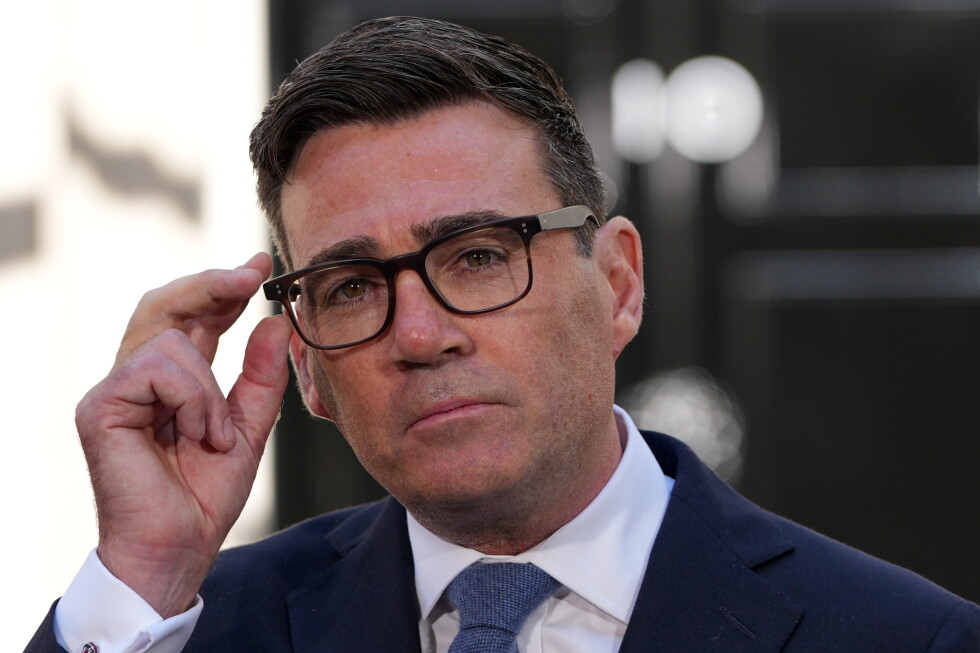
    LONDON – Just one day after formally entering 10 Downing Street as the United Kingdom’s newest prime minister, Andy Burnham will convene his first full Cabinet meeting on Tuesday, capping a swift reshuffle that cleared most of former leader Keir Starmer’s closest allies from senior government roles.

    The former Greater Manchester mayor, who replaced Starmer as head of the ruling Labour Party on Monday, took office as Britain’s seventh prime minister since 2016, marking another period of political upheaval for a nation that has seen constant leadership turnover in less than a decade. Starmer stepped down just two years after securing a landslide general election majority, pushed out by his own party following a string of policy missteps and abrupt policy reversals that eroded his support among lawmakers and the public.

    In one of his first policy moves to deliver on his campaign pledge of giving UK households financial “breathing space” amid ongoing cost-of-living pressures, Burnham announced an energy bill tax cut set to take effect on October 1. The measure will save the average household roughly £45 ($60) per year, with funding redirected from a scrapped digital ID card plan initiated under Starmer’s administration.

    Outlining his policy agenda in his first address to the nation as prime minister, Burnham pledged to prioritize four core goals: easing persistent cost-of-living strains, decentralizing centralized political power away from Whitehall, revitalizing Britain’s domestic industrial base, and eliminating street homelessness across the country – a sweeping set of promises widely regarded as a formidable policy challenge.

    To advance his agenda, Burnham moved quickly to reshape the government in his own political image. Outgoing Chancellor of the Exchequer Rachel Reeves, a key Starmer ally, was replaced by John Healey, a former defense secretary who resigned from the previous Shadow Cabinet in June over what he called the Treasury’s refusal to allocate sufficient funding to the military amid growing global security threats. In comments after his resignation earlier this year, Healey described the Treasury as “a dead hand on dynamic government” that was “in denial” about the need for increased investment. Healey has long called for raising UK defense spending from the planned 2.6% of GDP next year to 3% by 2030, a target he will now be responsible for funding as chancellor.

    Wes Streeting, whose May resignation as Starmer’s health secretary helped precipitate the leadership challenge that ousted the former prime minister, will take over Healey’s former defense portfolio. Other key Cabinet appointments include Ed Miliband as foreign secretary, Angela Rayner as housing secretary, and Jonathan Reynolds as business secretary with an expanded remit covering innovation and science. Louise Haigh, a long-time Burnham ally who helped organize his leadership bid, will serve as First Secretary of State and Chancellor of the Duchy of Lancaster, a role that makes her de facto deputy prime minister. Incumbent Home Secretary Shabana Mahmood, who has overseen controversial immigration reduction rules, will retain her position in the new government.

    Among the senior Starmer-era officials removed from government are former Deputy Prime Minister David Lammy, former Business Secretary Peter Kyle, and former Chief Secretary to the Treasury Darren Jones.

    The start of Burnham’s premiership coincided with a reminder of the rising international tensions facing the UK: on the same day Burnham took office, a Russian warship conducted live-fire weapons exercises in the English Channel. Britain’s Ministry of Defense confirmed the Russian frigate Neustrashimy carried out the drills in international waters approximately 46 miles (74 kilometers) south of Plymouth in southwest England, and was continuously shadowed by a Royal Navy vessel.

    “The Royal Navy monitored that exercise throughout, continues to track the vessel’s activity closely, and stands ready to protect U.K. national security,” a Ministry of Defense spokesperson said.

  • Man stabs tourists near the Acropolis in Athens, Greece

    Man stabs tourists near the Acropolis in Athens, Greece

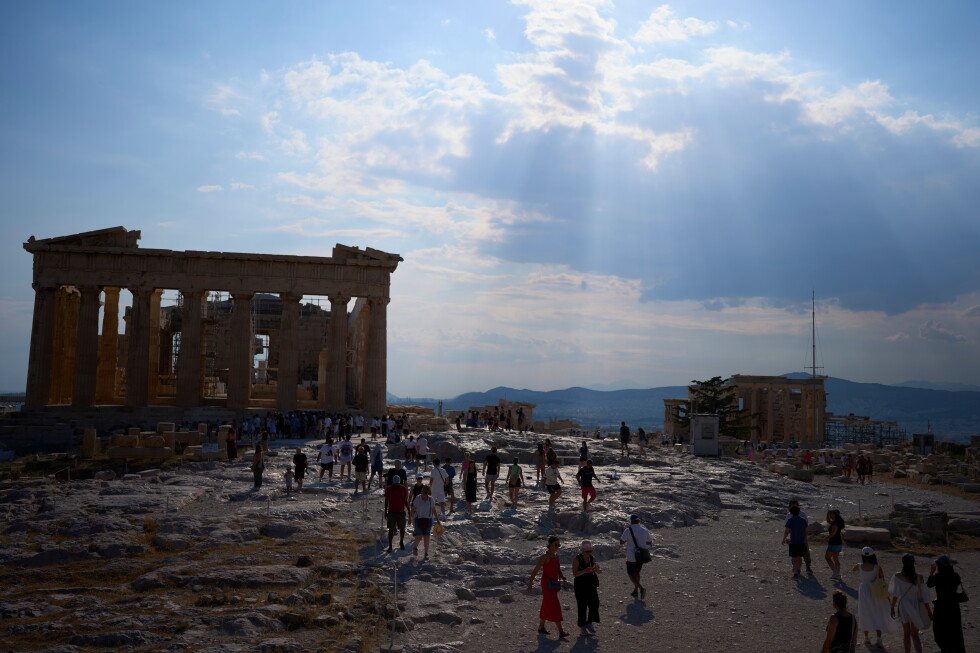
    Athens, Greece – Authorities have confirmed that a knife attack near the iconic Acropolis, Greece’s most visited cultural landmark, left two tourists wounded on Tuesday morning. The assault unfolded close to the main entrance of the Acropolis Museum, which sits at the base of the historic Acropolis hill, targeting a male and a female tourist who hold dual Greek-American citizenship.

    Local law enforcement reported that the female victim sustained minor cuts to her leg, while her male companion suffered more severe damage to his arm that required urgent hospital care. Emergency responders quickly transported both victims to a nearby medical facility for treatment, and the attacker was taken into custody at the scene within minutes of the incident.

    As of initial investigations, officials have not released confirmed details about the attacker’s identity or full background. However, preliminary assessments indicate the individual has been struggling with unaddressed mental health issues. Greece maintains a reputation as a relatively safe destination for both locals and international travelers, with violent random street attacks remaining uncommon across the country.

    The most recent high-profile violent incident in the capital prior to this attack dates back to April, when an 89-year-old man was arrested following a shooting that left four people injured at a central Athens social security office and adjacent courthouse. Investigators noted at the time that the attack was motivated by personal grievances over social security benefits.

    The Acropolis hill, home to the 2,500-year-old Parthenon temple and a collection of other ancient archaeological monuments, draws millions of international travelers to Athens every year. In 2023 alone, the site recorded approximately 4.6 million visitor arrivals, underscoring its status as a cornerstone of Greece’s tourism industry.

  • Blacksmith to join Danish Viking anchor project

    Blacksmith to join Danish Viking anchor project

    For nearly 15 years, Rowan Taylor has honed his craft as a blacksmith based in Ellesmere, Shropshire, and this summer he is set to embark on what he describes as the professional opportunity of a lifetime. Taylor and two colleagues from the UK’s National School of Blacksmithing (NSB) have been invited to join an international experimental archaeology initiative in Aggersborg, Denmark, tasked with forging a fully functional, historically accurate 8th-century-style anchor for a reconstructed Viking longship named Huld.

    The project, led by world-renowned bloomery iron specialist Jens Olesen, was first conceptualized during informal discussions at the close of Denmark’s annual historic market season, when Olesen and organizers from the Aggersborg Viking Craft Meeting began brainstorming an ambitious large-scale forging project that would strictly adhere to authentic Viking-era materials and methods. Olesen, who had previously collaborated with Taylor on archaeological projects in Ireland, said he immediately thought of the British blacksmith when the anchor project moved forward. Taylor, who has spent years researching ancient Viking anchor design and forging techniques, admitted he jumped at the offer the second it was extended: “I nearly bit Jens’ hand off” to secure the role, he told the BBC.

    What sets this project apart from museum replicas is its uncompromising commitment to historical accuracy: rather than relying on modern steel or 19th-century Victorian wrought iron, the team will work exclusively with bloomery iron, the exact low-carbon ferrous material Viking smiths used to craft tools and hardware more than 1,200 years ago. When complete, the anchor will measure 70 centimeters tall and weigh approximately 10 kilograms, making it one of the largest single objects forged from bloomery iron produced since the early 1800s, according to Taylor.

    Beyond creating a decorative display piece, the team aims to produce a fully operational anchor that will be permanently installed on the Huld, a reconstructed Viking vessel that sails from Aggersborg. For Taylor, the project is a rare chance to test years of academic observations and archaeological research in a real-world setting, rather than leaving the findings locked in academic papers or displayed as static museum pieces. “Just having this anchor on a boat will allow us to test its capability… we can then compare whatever data comes out of that to the archaeological record and ongoing research,” he explained. He added that he hopes to confirm his theories about traditional Viking joinery techniques, proving they are not just historically plausible but structurally sound for everyday use.

    Taylor, who works as a course tutor at the NSB based at Holme Lacy College near Hereford, is bringing two additional members of the school’s team along for the project: fellow tutor Mischa Kunkel and technician Ernestas Jakubauskas. While the Aggersborg Anchor Project remains an independent initiative, Taylor credits the UK’s world-leading blacksmith training programs for giving his team the specialized skills needed to take on the unique challenge. “The UK probably has the best blacksmith training in the world,” he noted, explaining why he believes the international team reached out to UK craftspeople for the work.

    With preparations complete, Taylor said he has spent weeks counting down the days until he departs for Denmark, describing the assignment as a long-awaited “dream work trip” that aligns perfectly with his years of research into ancient Norse craft traditions. The finished anchor is expected to be installed on the Huld later this year, where it will contribute to ongoing global research into Viking maritime technology.

  • Powerball ticket sales begin Tuesday in the United Kingdom

    Powerball ticket sales begin Tuesday in the United Kingdom

    Starting Tuesday, a new chapter in global lottery history will begin, as Powerball ticket sales launch across the United Kingdom for the very first time. This groundbreaking expansion means that lottery players across the Atlantic will now get a shot at the same enormous multi-million-dollar jackpots that American players have chased for decades — and they will face the same famously slim odds of taking home the top prize. The expansion, first unveiled back in April, is the result of a landmark partnership between the U.S.-based Multi-State Lottery Association, which runs Powerball, and U.K. lottery operator Allwyn UK. This milestone marks the first occasion that a lottery operating outside the United States will add to the cumulative Powerball jackpot, breaking new ground for one of America’s most well-known gambling games. For U.K. participants, the partnership opens the door to compete for far larger jackpots than any currently offered by domestic or European lotteries. The first Powerball drawing to include U.K.-purchased tickets will take place on Wednesday night, putting the new cross-border arrangement to its first test. To put the size of Powerball jackpots in context, the largest payout in the game’s history hit just over $2 billion — equivalent to roughly 1.5 billion pounds — won by a single ticket holder in California back in 2022. By comparison, the continent’s top pan-European lottery EuroMillions, which is also operated in the U.K. by Allwyn, has only awarded a maximum of 250 million euros (around $285 million) across three winning tickets held by players from France, Ireland and Austria over the full course of 2025. The chances of matching all numbers to claim the Powerball jackpot remain extraordinarily low, at just 1 in 292.2 million. Lottery officials have confirmed that these odds do not change for U.K. players, remaining identical to those that U.S. participants face when they buy a ticket. American lottery leaders say the expansion to the U.K. will deliver clear benefits to the game overall: a larger, global player base will allow jackpots to grow at a much faster pace, which in turn is expected to boost overall ticket sales as more participants are lured by the prospect of ever-larger grand prizes. There are a number of key differences between how Powerball works in the U.K. versus the United States, however. A single Powerball ticket is priced at $2 globally, but any tickets bought in the United Kingdom will only contribute to the game’s main jackpot, rather than the pool for lower-tier prizes. U.K. players will operate under an entirely separate structure for smaller secondary prizes. Additionally, advertised estimated jackpot amounts will differ between the two countries. This gap comes from two key factors: currency exchange rate fluctuations, and the fact that the U.S. publishes pre-tax jackpot figures to players, while the U.K. advertises final after-tax amounts. Another structural difference is in how jackpots are paid out. U.K. Powerball jackpot winners will receive their payout in annual installments spread over 30 years. In the U.S., by contrast, winners can choose between the 30-year annuity structure or an immediate one-time lump-sum cash payment — a choice that the vast majority of American jackpot winners opt for. Currently, Powerball is offered to players across 45 U.S. states, as well as Washington D.C., Puerto Rico, and the U.S. Virgin Islands. The rules of the game itself will not change with the U.K. expansion: players still select five white ball numbers from a range of 1 to 69, plus one red Powerball number from 1 to 26. Regular draw schedules also remain unchanged, with drawings held every Monday, Wednesday, and Saturday.