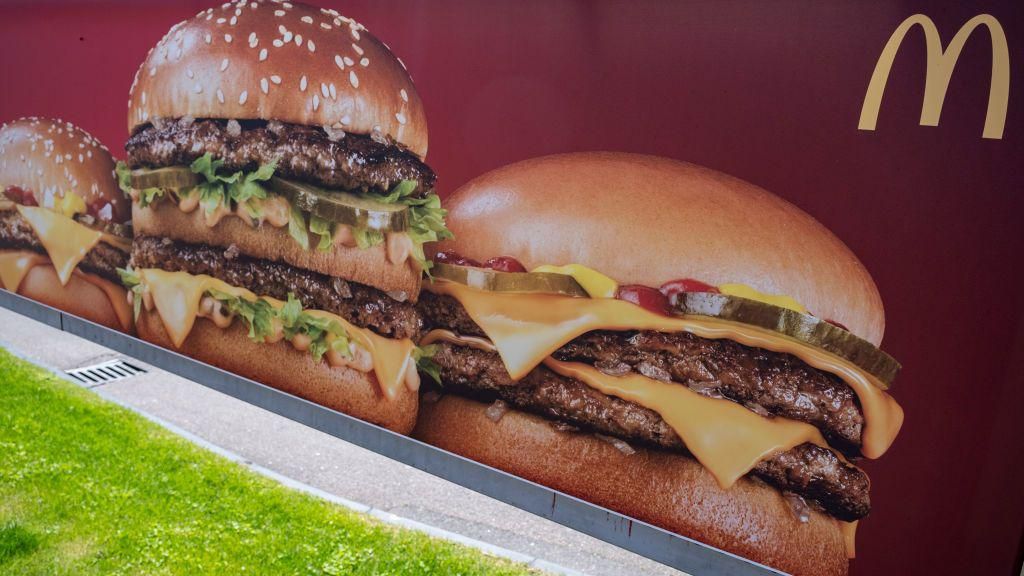
A years-long intellectual property battle between Irish fast-food chain Supermac’s and global fast-food giant McDonald’s has reached a new ruling, with European regulators siding with McDonald’s to block the Irish firm’s bid for an EU-wide trademark. The dispute, which has stretched on for nearly a decade, centers on overlapping branding language that both firms claim rights to, particularly the ‘Mac’ suffix and the iconic Big Mac designation.
Founded by Pat McDonagh in Galway, Ireland in 1978, Supermac’s first launched its application to register its brand name as a formal trademark across the entire European Union back in May 2016. McDonald’s immediately filed an opposition to the request, arguing that it had held a registered Big Mac trademark for meat sandwiches across the EU since December 1998, giving it senior intellectual property rights to the contested branding language.
After an initial ruling last year went against Supermac’s, finding that granting the EU trademark would carry a high risk of consumer confusion, the Irish chain appealed the decision. During the June 2026 appeal hearing, Supermac’s legal team pushed back against McDonald’s claims, noting that the two brands had operated peacefully alongside one another in Ireland for nearly 40 years with no documented cases of consumer confusion. The chain also argued that there was no reasonable basis for consumers to mix up Supermac’s as a restaurant chain with McDonald’s Big Mac burger product.
Supermac’s legal team emphasized that an adverse ruling would require accepting that consumers would travel to a Supermac’s location expecting to buy a Big Mac, an outcome that is fundamentally incompatible with McDonald’s own argument that the Big Mac is universally recognized as its signature product.
McDonald’s rejected the Irish chain’s coexistence argument, countering that the only question for regulators was whether a trademark conflict existed across the entire EU, not just within Ireland. The global giant told the European Union Intellectual Property Office (EUIPO) that consumers cannot always clearly distinguish between Big Mac as a food product designation and Supermac’s as a restaurant brand name, noting that the line between product trademarks and restaurant branding is often blurred in the mind of the general public.
In its final ruling on the appeal, EUIPO’s Board of Appeal upheld the earlier decision to reject Supermac’s trademark application. The regulator found that Supermac’s branding and signage carried too much visual and semantic similarity to McDonald’s existing Big Mac trademark, creating a meaningful likelihood of confusion among consumers in English- and German-speaking EU member states.
EUIPO noted that the Big Mac trademark enjoys exceptionally high public awareness across the EU, built through decades of intensive use and widespread market recognition, which gives it an enhanced level of distinctiveness. The regulator explained that the greater a trademark’s distinctiveness, the higher the risk of consumer confusion from similar overlapping branding. It added that the public could reasonably perceive Supermac’s name as a sub-brand or variant line of meat sandwiches connected to McDonald’s existing Big Mac trademark, so the risk of confusion cannot be fully ruled out.
The ruling also clarified that because the Big Mac trademark holds protection across the entire European Union, evidence of peaceful coexistence in a single member state (Ireland) is not sufficient to dismiss the risk of confusion across the broader EU market. Notably, the latest ruling does not disrupt Supermac’s existing retail operations within Ireland, where it has operated for decades.
This is not the first ruling in the long-running legal battle between the two chains. In 2024, the European Court of Justice sided with Supermac’s in a separate challenge, ruling that McDonald’s did not hold exclusive rights to the Big Mac label for chicken burger products sold across the EU, a decision that stripped the US giant of some of its trademark protections for the iconic brand name.