BUENOS AIRES, Argentina – It has been nearly four decades since a sitting pope last set foot in Argentina, and the recent announcement of Pope Leo XIV’s November trip to the South American nation has been greeted by many of the country’s Catholics as a source of divine comfort at a moment of crippling economic uncertainty. Millions of Argentines have already been pushed into unsustainable debt by years of financial turmoil, a crisis exacerbated by the austerity policies pushed by libertarian President Javier Milei since he took office in December 2023.
The Argentine Catholic Church has sounded repeated alarms over the rapid erosion of living standards for the country’s most marginalized communities, a direct outcome of Milei’s sharp government spending cuts. While the president’s policies have delivered tangible macroeconomic progress – bringing sky-high inflation down and shrinking the nation’s fiscal deficit – those gains have come at a steep social cost. Wages and pension payments have failed to keep pace with soaring prices, while basic costs from public transit and utility bills to rent and groceries have jumped sharply. For millions of households, taking on high-interest debt has become the only way to cover daily survival needs.
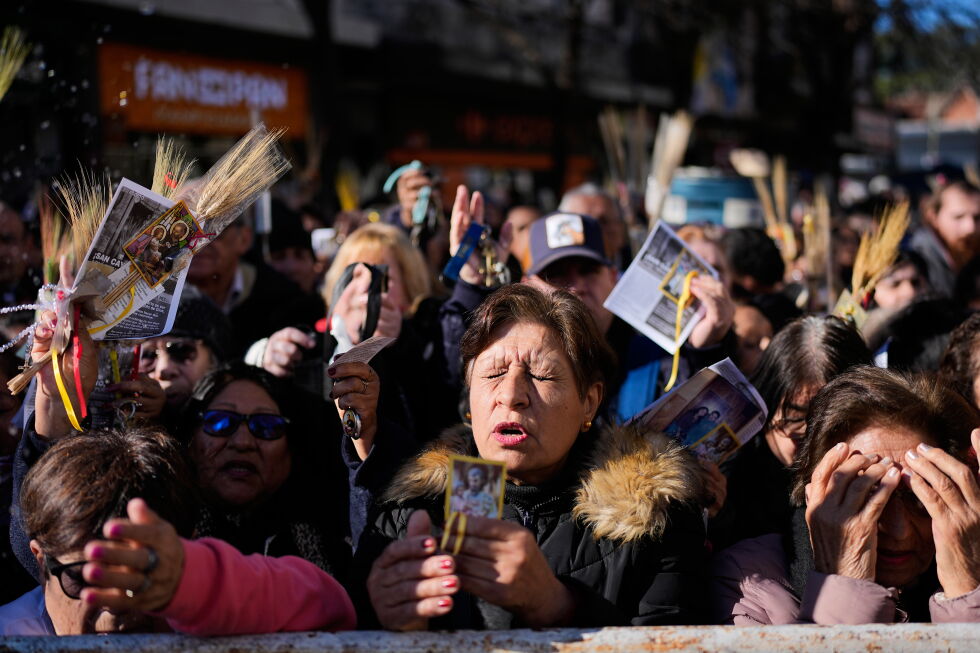
For faithful Catholics gathered at Buenos Aires’ iconic Parish of Saint Cajetan, the patron saint of work, the pope’s visit carries more than symbolic weight. “I hope the Pope comes to help the poor like me,” shared 70-year-old retiree María Ruíz Díaz, who made her annual pilgrimage to the parish on August 7 as she has done for years. Dozens of devotees waited patiently to enter the sanctuary, with many echoing her hope that the papal visit will draw global attention to Argentina’s crisis and shift public conversation. Sixty-year-old Santiago Olave put it simply: “The country is going through a difficult time; there are many brothers and sisters in need. The Pope can open hearts and minds.”
Milei has remained unapologetic in defending his austerity agenda, pushing back against growing criticism from church leaders and civil society groups. “I am not going to engage in populism,” he stated this week. “I am going to die with my boots on, doing what is right and doing what is proper. If you want populism, you have other alternatives.”
To coincide with the announcement of the papal visit, leaders at the Parish of Saint Cajetan installed a new cardboard display next to the venerated image of the patron saint. The cutout depicts Pope Leo XIV standing alongside a group that reflects Argentina’s current crisis: an elderly retiree, a disabled woman in a wheelchair, an unhoused man and a public school teacher. Underneath the image reads the inscription: “Saint Cajetan, here are your people.”
The figures represent the groups hit hardest by Milei’s budget cuts to public health, education and social support programs for vulnerable populations. Leading a public Mass on Friday, Archbishop of Buenos Aires Jorge García Cuerva used the moment to explicitly push back against the government’s policy framework. “Saint Cajetan, here are your people, who refuse to accept that work is a commodity and that one must have two or more jobs to make ends meet, or fall into the trap of loans that indebt and suffocate so many families,” he told the assembled congregation. Echoing the church’s longstanding commitment to social justice, he added: “With Pope Leo XIV, we say that economic freedom cannot be absolute and must always be measured in terms of the common good and the dignity of each person.”
Vatican officials have confirmed preliminary details of the papal tour, which will bring Pope Leo XIV to three South American nations: Argentina, Uruguay and Peru, from November 8 to 11. A full schedule of public and private activities has not yet been released to the public. During his time in Argentina, the pope will visit the national shrine of Our Lady of Lujan, the patron saint of Argentina, located in a western suburb of Buenos Aires, before traveling to the central province of Cordoba.
The last pope to visit Argentina was John Paul II, who traveled to the country in April 1987. Notably, former Pope Francis, who was born in Buenos Aires, never returned to his native country after being elected to the papacy in 2013. This upcoming tour carries extra personal significance for Pope Leo XIV: the first U.S-born pope holds deep, longstanding ties to the region, having spent decades working as a missionary and church leader in Peru, where he served as bishop of Chiclayo from 2015 to 2023 and holds formal citizenship.