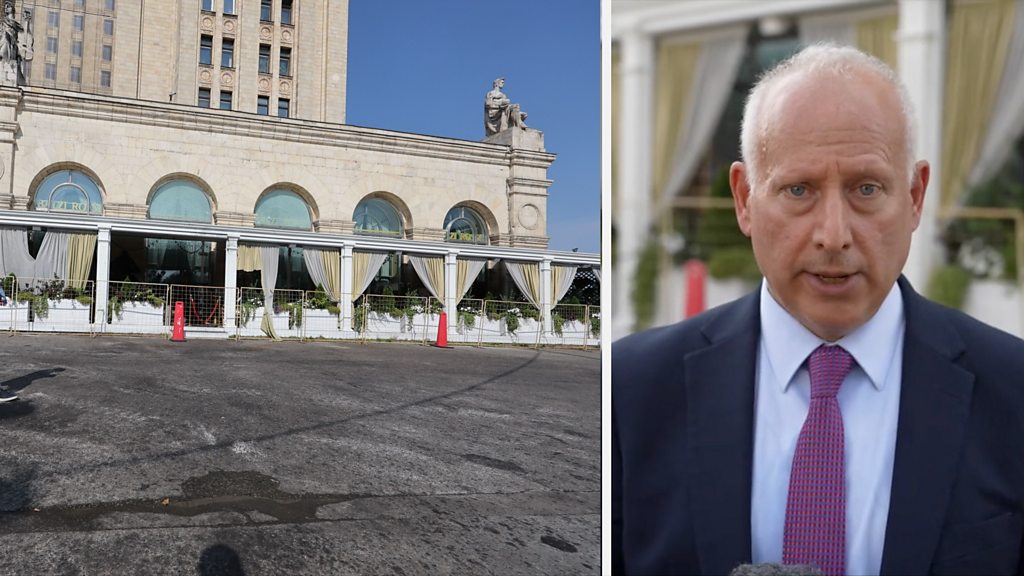
A shocking act of violence has shaken the Russian capital, after an explosive device detonated inside a popular Italian restaurant in central Moscow. According to preliminary reports released by Russian state and independent media outlets, the blast has claimed three lives and left 21 other people with injuries ranging from minor to critical. Emergency services quickly rushed to the scene of the incident, cordoning off the area to launch forensic investigations into the origin of the explosive and the circumstances surrounding the attack. Local health authorities have confirmed that medical teams are working around the clock to treat the wounded, with several casualties still in intensive care as of the latest updates. The attack has sparked immediate concern across the country, as law enforcement agencies launch a manhunt for those responsible for the bombing, while communities in Moscow grapple with the aftermath of this deadly incident.
标签: Europe
欧洲
-
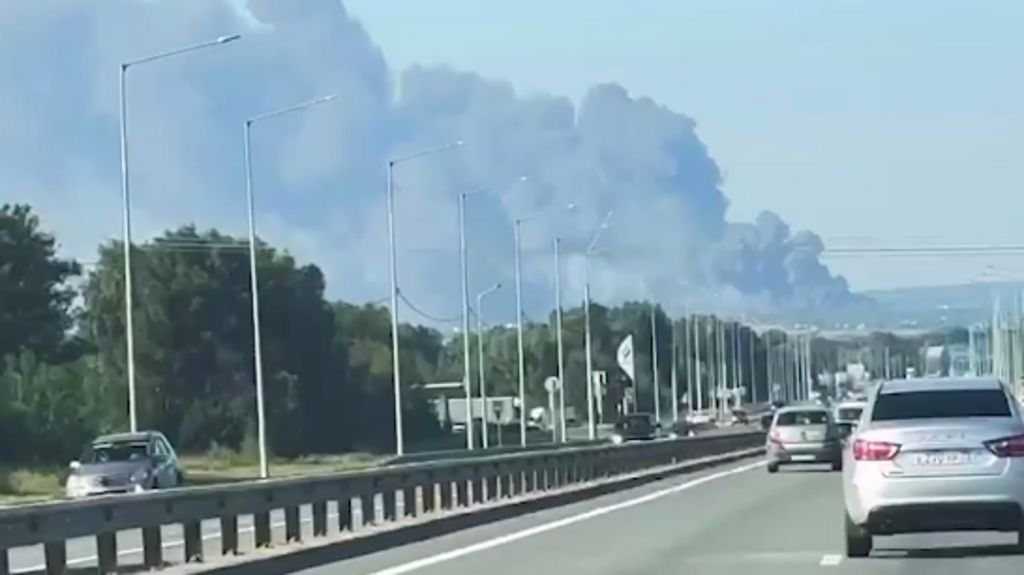
Ukraine says major Russian oil refinery and airfield hit, as Moscow reports eight deaths
After months of largely static ground fighting and no visible progress in international mediation efforts, both Ukraine and Russia have sharply ramped up long-range cross-border strikes targeting key energy, logistics and military infrastructure, marking a new escalation of the three-and-a-half-year conflict.
In overnight strikes carried out deep into Russian territory, Ukraine targeted multiple high-value sites hundreds of kilometers from its own border. Ukrainian President Volodymyr Zelenskyy confirmed that the attacks hit two key facilities in Russia’s Saratov Region, roughly 600 kilometers northeast of the Ukrainian border: the Engels-2 air base, a central hub for Russia’s strategic long-range aviation fleet, and a major crude oil refinery. Additional strikes were carried out against an oil storage depot in Russia’s Kaluga Region and a drone launch facility in Bryansk Region, which shares a border with northern Ukraine.
Zelenskyy framed these deep strikes as “our long-range sanctions” in a social media post Sunday, noting that the targeted facilities directly contribute to funding and executing Russia’s full-scale invasion of Ukraine. “These are strategic facilities that enable the Russian war machine,” he stated. The Ukrainian military confirmed that the attack on Engels airfield sparked a large blaze at the base, which regularly deploys Tu-95MC and Tu-160 strategic bombers to launch cruise missile strikes against Ukrainian cities and infrastructure.
Russian regional officials acknowledged the damage from the strikes, with Saratov Governor Roman Busargin confirming that drone attacks damaged civilian infrastructure in both Saratov and Engels and killed two people. Across other Russian regions, the death toll from Sunday’s coordinated strikes continued to climb: three people were killed in a drone strike on a civilian vehicle in the Udmurtia Republic, another three died in strikes in the border Belgorod Region, and Russian authorities reported a total of eight fatalities across all overnight attacks. Russian air defense forces also claimed to have intercepted and shot down 635 Ukrainian drones launched across multiple regions in the attack wave.
A separate strike hit a logistics warehouse owned by Wildberries, Russia’s largest domestic e-commerce retailer, in the Samara Region. Samara Governor Vyacheslav Fedorishchev labeled the attack “another terrorist act” by Ukraine, though no casualties were reported in this strike. In recent weeks, Ukraine has repeatedly targeted Wildberries distribution hubs across Russia, justifying the attacks by claiming the retailer supplies drone components, navigation equipment and other military-grade gear to Russian forces. Often called “Russia’s Amazon,” Wildberries employs roughly 48,000 people nationwide, and repeated strikes on its logistics network have created significant disruptions for hundreds of small and medium-sized Russian businesses that rely on the platform to reach customers.
Russia quickly retaliated for the Ukrainian strikes with its own overnight attacks on Ukrainian infrastructure. Moscow confirmed that its forces targeted two Ukrainian Black Sea ports and struck two commercial cargo vessels operating in the waterway. Later Sunday, a Russian strike on a Nova Poshta postal terminal near the northeastern Ukrainian city of Kharkiv killed one Ukrainian civilian, Ukrainian officials confirmed.
Russia has mirrored Ukraine’s strategy of targeting commercial logistics infrastructure in recent weeks, launching repeated strikes on warehouses operated by Ukraine’s leading postal service Nova Poshta and top domestic e-commerce retailer Rozetka. Overnight, Russian drones hit Rozetka’s largest warehouse facility, the company confirmed Sunday. No injuries were reported in the attack, which comes as part of a sustained Russian campaign against Ukrainian logistics and retail networks.
The escalation of cross-border strikes comes as the main front line stretching across eastern and southern Ukraine remains largely stagnant, and US-led international mediation efforts to negotiate a end to the conflict have failed to produce any breakthrough. Russian President Vladimir Putin launched the full-scale invasion of Ukraine in February 2022, and the conflict has entered its fifth year of continuous fighting with little prospect of a near-term diplomatic resolution.
-

Ukrainian drones kill 5 in Russia and set fire to Wildberries warehouse
A new wave of tit-for-tat drone assaults between Russia and Ukraine has left multiple civilians dead on both sides, with Kyiv extending its aerial campaign targeting Russian commercial and industrial infrastructure deep inside Russian territory, local officials confirmed over the weekend.
At the center of Kyiv’s latest strikes is Russia’s largest e-commerce platform Wildberries, often dubbed the domestic equivalent of Amazon. This attack marks at least the latest hit to the retailer’s facilities in less than two weeks, part of a coordinated Ukrainian strategy to disrupt Moscow’s war economy and bring the costs of the Kremlin’s full-scale invasion of Ukraine home to the Russian public. Since the first strikes against Wildberries depots in Elektrostal (east of Moscow) and the Tambov region on July 18, Ukraine has targeted more than a dozen of the company’s warehouses across western, southern Russia and Russian-occupied Crimea, leaving at least nine people dead and dozens injured to date.
The most recent Wildberries strike hit a depot in Russia’s Samara region, located roughly 500 miles from the Russia-Ukraine border. Samara Governor Vyacheslav Fedorishchev reported that the strike sparked a large fire but resulted in no casualties.
Across other regions of Russia, the overnight drone attacks left a devastating civilian toll. In the Saratov region, east of Samara, two civilians were killed when a drone hit a residential building in Engels, Governor Roman Busargin announced. The strike also damaged civilian infrastructure in both Engels and the regional capital Saratov—two locations that have emerged as frequent Ukrainian strike targets in recent years, due to their hosting of a key military airbase (in Engels) and a large-scale oil refinery (in Saratov).
Further north in Russia’s Bashkortostan republic, air defense systems repelled a mass drone attack on industrial facilities in the city of Ufa, Governor Radiy Khabirov stated. While Khabirov did not disclose details on the specific facilities targeted, he confirmed that emergency crews were working to extinguish a post-strike fire.
In the Udmurt Republic, located northwest of Bashkortostan, three additional civilians were killed and two more wounded in a drone strike, according to acting regional head Olga Abramova. Abramova added that Russian air defenses downed two of the attacking drones and foiled another attempted incursion, noting that a civilian car was damaged in the attack, though she did not specify if the damage came from downed drone debris.
Overall, local Russian officials confirmed that the latest round of Ukrainian drone strikes across multiple Russian regions left at least five civilians dead.
In response to the Ukrainian attacks, Moscow claimed its air defense systems shot down 635 Ukrainian drones overnight across occupied Crimea, the Black Sea and the Azov Sea. The Russian Defense Ministry did not provide details on how many drones Ukraine launched total, or how many successfully reached their intended targets.
Russia launched its own large-scale drone assault on Ukraine the same night, according to Ukraine’s Air Force. Ukrainian officials reported that Russia launched 133 drones, 24 of which evaded air defenses to strike targets across the country.
Separate Russian strikes on Ukrainian territory on Sunday left two more civilians dead. In the southern Ukrainian city of Zaporizhzhia, one civilian was killed when a Russian guided bomb hit a residential building, local administration head Ivan Fedorov confirmed. In northeastern Ukraine’s Kharkiv region, a second civilian died in a strike that ignited a fire at a postal terminal on the city’s outskirts, regional governor Oleh Syniehubov reported.
-

2,000km, eight countries, 29 days – the fastest runner to cross the Alps
One of the world’s most punishing endurance challenges has a new record holder: New Zealand ultra-runner Sophie Woods has conquered the 2,000-kilometer Via Alpina route across eight European countries in just 29 days, cutting six full days off the previous fastest mark set earlier this year.
The iconic trail stretches the entire length of the Alps, starting in Italy and winding through Slovenia, Austria, Germany, Liechtenstein, Switzerland and France before reaching the finish line on Monaco’s Mediterranean coast. For context, the total elevation gain along the route equals climbing Mount Everest 12 times over. Only a small handful of runners have ever attempted the route under formal timing, given its extreme technical difficulty and physical demand.
Woods launched her attempt on July 4, but from the start, her journey was beset by unforeseen challenges. This summer, a series of record-breaking heatwaves and extreme weather have swept across southern Europe, sparking widespread wildfires that have forced hundreds of thousands of evacuations across France, Spain and Portugal. On Italy’s hottest weekend, nearly all major cities were placed on the highest red heat alert. These conditions forced Woods and her support crew to detour around active fire zones, adding an extra 5 kilometers and 200 meters of dangerous, unplanned climbing to her already grueling route. On top of wildfires and extreme heat, the team also fought through severe storms, a biting horsefly swarm, and constant physical discomfort.
The 42-year-old runner shared that the first two weeks of the attempt were brutal. “The first week was horrendous – everything was swollen, everything was sore. I was sure I was going to pull 15 million muscles,” she told BBC Sport in a post-run interview. By the third week, however, her body adapted, and she found a steady rhythm. “It was like I was eating mountains for breakfast,” she joked.
To sustain 15 to 18 hours of nonstop running each day, Woods relied on a practical diet of McDonald’s meals, pasta, and energy gels, with constant support from her husband George, friend Zoe, and their dog Nila along the route. In the final push to the finish, she pushed through on just 90 minutes to two and a half hours of sleep per night to secure the sub-30 day completion she had targeted from the start.
The previous record for the fastest Via Alpina crossing was set by British runner Jake Catterall, who finished the route in 35 days in 2024. Reflecting on her achievement after crossing the finish line Saturday night, Woods said she was both overjoyed and completely exhausted. “I am ecstatic but knackered,” she said. “There were a few points where I felt like I don’t know how I’m going to get to the finish of this. I never wanted to stop but the enormity of the task was overwhelming at times.”
Woods added that her grit for long, punishing mountain efforts is what set her apart, even if she is not the fastest sprinter on the ultra circuit. “I might not be the fastest person out there but I know how to do big, long days in the mountains and just keep moving when everything hurts,” she said.
Woods’ record-breaking run caps a standout year for women in ultra-running, coming just months after Rachel Entrekin set a new course record at the grueling Cocodona 250 race back in May. For Woods personally, the challenge came after a difficult multi-year fertility journey that included IVF treatment. She explained that after that experience, she wanted to push her boundaries and build a life that felt fully her own, setting her sights on the Via Alpina record from the moment she signed up for the attempt. “I didn’t want to be running for more than 30 days – 30 days is enough,” she said. “I knew that I was strong and capable. But this has taken it over and beyond that.”
She summed up the core of ultra-endurance running as equal parts preparation and mental toughness: “Ultra-running is about preparation, mental strength and being able to continue to persevere when things go wrong. I think women are really good at adapting and continuing.”
Now that she has secured her place in endurance running history, Woods says she is ready for a much-deserved break. “I intend to spend quite a lot of time on the couch and watch Netflix – and eat some vegetables,” she joked.
-

Ceuta grapples with aftermath of border surge after most migrants leave the Spanish territory
CEUTA, Spain — By the end of last weekend, the Spanish North African exclave of Ceuta had begun to return to a superficial sense of normalcy. Storefronts that had closed amid the unprecedented border crisis had reopened their doors, and open-air terraces, restaurants and cafes across the city — home to just 84,000 permanent residents — were once again filled with locals and casual visitors. Yet the chaos that unfolded earlier that week remained the focal point of every conversation, leaving deep, unresolved rifts across the multi-cultural community.
Earlier that week, an estimated 60,000 migrants, the majority of whom were young men, crossed into Ceuta from Morocco in a sudden mass border breach. Many swam across the coastal waters, climbed over border barriers, and pushed through frontier checkpoints to enter the tiny territory. By Sunday, most of these migrants had voluntarily returned to Morocco, while a smaller contingent remained in Ceuta, attempting to integrate into daily life undetected. As the city cleared out, Spanish Civil Guard vessels continued to comb the coastal waters near the breached urban beach, searching for the bodies of migrants who did not survive the crossing.
Spanish authorities confirmed that at least 72 people lost their lives in the surge: some drowned in the choppy coastal waters, while others were killed in a deadly stampede as crowds pushed across a concrete breakwater barrier. This sudden humanitarian catastrophe has reignited fierce, long-simmering debates over immigration policy across Europe, drawing political actors from across the ideological spectrum to Ceuta in the wake of the crisis.
Many local residents, including Ceuta native Mohamad Abdelkader Driss, a 44-year-old fried fish restaurant waiter, place blame for the crisis squarely on political leadership, not the migrants themselves. “If you open the border, of course everyone comes in, but the young men aren’t to blame. The authorities are responsible,” Driss explained. Migrants who returned to Morocco after the surge also reported that the border was effectively open, with Moroccan authorities taking little to no action to stop thousands of people from crossing into Ceuta over the two-day surge on Thursday and Friday. At the peak of the crisis, the influx of migrants swelled Ceuta’s total population by more than 70%, a staggering strain on the small city’s infrastructure. Driss added that despite the unprecedented disruption, the migrants who entered behaved far more calmly than many residents feared, noting “It could have been much worse.”
The crisis quickly drew far-right anti-immigration political figures and high-profile right-wing influencers to Ceuta over the weekend, a move that sparked immediate counter-protests from the city’s large Muslim community, many of whom are of Moroccan descent. On Saturday evening, far-right Member of the European Parliament Alvise Pérez delivered a public call for all remaining migrants to be expelled, speaking to a small group of supporters before he was confronted by an angry crowd of counter-protesters. Pérez was forced to take shelter in a local bar, where residents banged on the windows in protest, until police could escort him out of the area.
Noor Ahmed, a 20-year-old university student and lifelong Ceuta resident who joined the counter-protests, denounced far-right figures like Pérez as opportunists seeking to exploit a humanitarian crisis for political gain. “They just want to take advantage of the humanitarian crisis Ceuta is currently experiencing,” Ahmed said.
Vox Party leader Santiago Abascal, the head of Spain’s largest far-right political party, visited Ceuta on Sunday, doubling down on harsh criticism of the Spanish central government. Abascal framed the migrant surge as “an invasion” and accused the sitting government of failing to protect Spain’s territorial borders. “The frontiers of Ceuta and Melilla are the walls of our home and homeland, and they are not being protected by a corrupt and traitorous government,” Abascal said.
Beyond the high-profile political clashes, the crisis has put Ceuta’s long-held reputation as a haven of cross-cultural tolerance under unprecedented strain. For decades, the city has prided itself on the peaceful coexistence of its four major religious and cultural communities: Christians, Muslims, Jews, and Hindus. But the events of the week have sown doubt among some long-term residents.
Eva Barrientos, a logistics worker and Ceuta resident who attended Saturday’s far-right gathering, said she believed another mass surge would happen in the near future, and questioned the national loyalty of Ceuta’s foreign-born residents. “In Ceuta, we have always lived together. We have four cultures living very well, without any problems,” she said. “But the only thing we are realizing now is that there is an enemy within.” Barrientos accused many foreign-born residents of holding greater loyalty to Morocco than to Spain, their country of residence.
The international community has begun to weigh in on the crisis as well. Pope Leo XIV, who has made immigration reform a central priority of his papacy and highlighted the issue during a recent visit to Spain’s Canary Islands — one of Europe’s busiest entry points for migrant arrivals — released a statement Sunday addressing the situation. “I am following with concern the alarming situation in Ceuta, asking God … that solutions of peace, stability and justice may be found,” the Pope said.
In the wake of the crisis, Spanish authorities have begun installing a new sea barrier along Ceuta’s border with Morocco to prevent future mass breaches, even as local residents remain divided over what caused the surge, who bears responsibility, and how the city should move forward from the event that upended its quiet, multi-cultural way of life.
-

Of thee I sing: A guide to US patriotic songs, from ‘The Liberty Song’ to Jay-Z and Kanye West
From the fiery colonial protests against British rule to the post-9/11 cultural reckoning with national identity, American patriotic music has never been a monolith. Instead, it stands as a dynamic, evolving reflection of what it means to love one’s country – a spectrum of expressions that range from defiant celebration to critical hopefulness.
For centuries, this body of work has carried two core truths about American national identity. First, love of country can take multiple, even conflicting forms: while anthems like *The Star-Spangled Banner* honor resilience through crisis and *God Bless America* invokes divine favor for the nation, songs from Woody Guthrie’s *This Land Is Your Land* to Curtis Mayfield’s *This Is My Country* anchor patriotism in a long tradition of social protest. These works embrace the idea that progress toward a “more perfect union” can only happen when a nation openly acknowledges its flaws. Second, patriotic music chronicles America’s journey toward cultural independence: well into the 19th century, most American patriotic lyrics were adapted to popular existing melodies imported from Britain, a practice that modern musicologists compare to setting new lyrics to a well-known Beatles track today, to make new messages instantly accessible to widespread audiences.
To understand this rich, varied tradition, experts at the Library of Congress highlight a selection of the most influential patriotic songs spanning the nation’s history, from the colonial era to the 21st century.
## The Early Revolutionary Era: Forging a National Sound
One of the earliest surviving patriotic anthems, *The Liberty Song* emerged in the late 1760s, written with lyrics by Pennsylvania-Delaware statesman John Dickinson – a figure most often remembered for his controversial refusal to sign the Declaration of Independence, believing a break from Britain was premature. Adapted from the melody of the British Royal Navy march *Heart of Oak*, Dickinson’s lyrics were a bold assertion of colonial rights and a warning against outside oppression, capturing growing fears of disenfranchisement with the iconic lines: “In freedom we’re born, and in freedom we’ll live/Our purses are ready/Steady, Friends, steady.”Like *The Liberty Song*, *Yankee Doodle* began as a foreign work, originating as a British marching song performed by British troops occupying Boston to mock colonial revolutionaries. By the end of the Revolutionary War, however, American rebels reclaimed the tune, turning it into a rallying cry to accompany the retreat of British forces. Fully Americanized today, it serves as Connecticut’s state song and gained wider pop culture fame as the title of the Oscar-winning World War II-era film starring James Cagney.
## 19th Century: Growing into a Distinct National Identity
Written between 1831 and 1832, *My Country ‘Tis of Thee* saw theology student Samuel Francis Smith set a new hymn of freedom to the melody of Britain’s *God Save the King*. Smith’s work, which condemned tyranny and celebrated American liberty, has occupied a central place in moments of both protest and national unity: Rev. Martin Luther King Jr. quoted its lyrics during his iconic “I Have a Dream” speech, while Aretha Franklin performed it at Barack Obama’s first inauguration. It also holds a poignant place in Civil War history: eyewitness accounts record that after Abraham Lincoln issued the Emancipation Proclamation, a gathering of formerly enslaved Black people in South Carolina spontaneously sang the anthem upon hearing the news of their freedom.Julia Ward Howe, a prominent 19th-century abolitionist, adapted her *Battle Hymn of the Republic* (1861–1862) from the melody of *John Brown’s Body*, a popular Union camp tune she heard during a public review of Union troops. Howe, whose husband supported the martyred anti-slavery activist John Brown, would later recall that the lyrics came to her in a morning twilight half-waking state: “I awoke in the gray of the morning twilight; and as I lay waiting for the dawn, the long lines of the desired poem began to twine themselves in my mind.” The song has remained a staple of American public life, performed at events ranging from the 1971 Super Bowl to former President Jimmy Carter’s 2024 funeral.
## 20th Century: Expanding the Definition of Patriotism
Written by immigrant songwriter Irving Berlin in 1918 for a World War I revue and revised in 1938 amid rising global fears of a second world war, *God Bless America* marked a clear break from earlier patriotic works. As Library of Congress folklorist Stephen Winick notes, the song is a deeply personal statement of allegiance (“Land that I love”) rather than a call to collective force – a framing that drew contemporary criticism. “He got mail from people basically saying, ‘How is it that you, this Russian Jew, has any right to ask God to bless America?’” Winick says.Woody Guthrie’s 1940 standard *This Land Is Your Land* was written explicitly as a response to Berlin’s work, which Guthrie argued failed to capture the full breadth of America’s natural beauty and working-class experience. Blending poetic imagery of “diamond deserts” and “wheat fields waving” with quiet social critique, Guthrie’s work embodies the protest patriotism tradition – one version of the lyrics includes a wry rebuke of the seemingly sacred American right to private property, noting: “As I went walking I saw a sign there/And on the sign it said “No Trespassing./But on the other side it didn’t say nothing.”
Rock and roll pioneer Chuck Berry wrote *Back in the U.S.A.* in 1959 after feeling homesick during a tour of Australia. Berry’s tribute to the open road, skyscrapers, and small-town diners stretching from California to Delaware has been covered by icons from Bruce Springsteen to Linda Ronstadt, but critics have long noted its subtle undercurrent of critique. Music writer Dave Marsh once observed that Berry’s line about searching for a local eatery carried unspoken weight: in the 1950s, many public establishments refused service to Black Americans, and Berry intentionally wove that contradiction into his seemingly celebratory anthem. “Berry never lets you be sure that he’s coming to grips with the contradictory mess we’ve made of things,” Marsh wrote.
Two distinct versions of *This Is My Country* written decades apart reflect shifting conversations about American identity. The first, a brisk 1940 march by Don Raye and Al Jacobs, was written as war broke out across Europe, and emphasized unity across regional divides with the lyrics: “What diff’rence if I hail from North or South/Or from the East or West?/My heart is filled with love for all of these.” It has since become a staple of public events, from Disney theme park fireworks shows to military recordings. By contrast, Curtis Mayfield’s 1968 soul version, recorded with his group the Impressions amid the civil rights movement, is an unflinching assertion of Black patriotism forged through centuries of oppression: “I’ve paid 300 years or more/Of slave driving, sweat, and welts on my back/This is my country.”
Bruce Robinson’s 1996 narrative folk classic *Travelin’ Soldier*, revised in 1999, tells the quiet, devastating story of a lonely Vietnam War soldier corresponding with a young woman back home. The song, which ends with the soldier’s death and the woman’s grief, offers a moving meditation on the human cost of military sacrifice. It became a breakout hit for The Chicks (formerly the Dixie Chicks) in 2002–2003, a moment when the nation was locked in bitter debate over patriotism in the wake of 9/11 and the impending Iraq War, and was revived again by artist Cody Johnson in 2024.
## 21st Century: Competing Visions of National Pride
The post-9/11 era sparked a new wave of patriotic music across genres, particularly in country and rock. Zac Brown Band’s *Chicken Fried*, originally recorded in 2003 and released in 2005, is an ode to simple American pleasures from cold beer to well-worn jeans that became an unexpected anthem thanks to its often-overlooked a cappella closing verse: “I thank God for my life / And for the stars and stripes / May freedom forever fly, let it ring.”Even songs sharing the same title reflect the stark diversity of 21st-century patriotic expression. Toby Keith’s 2011 *Made in America* almost did not get released: Keith feared he had already recorded too many patriotic songs, until a conversation with co-writer Bobby Pinson and actor-singer Scott Reeves convinced him to move forward. The track is a celebration of traditional American values, centered on an elderly farmer who chooses to “spend a little more in the store for a tag in the back that says ‘USA’” out of loyalty to domestic goods. The same year, Jay-Z and Kanye West released their own *Made in America* (originally titled *Sweet Baby Jesus*), a protest-inflected rap track that echoes Martin Luther King Jr.’s framing of the American Dream as an unfulfilled promissory note: “Built a republic that still stands/I’m tryna lead a nation, to leave to my little man’s/Or my daughter, so I’m boiling this water/The scales was lopsided, I’m just restoring order.”
Across centuries and styles, American patriotic music remains a living conversation – one that continues to ask what it really means to love the country you call home.
Contributed by AP Music Writer Maria Sherman
-
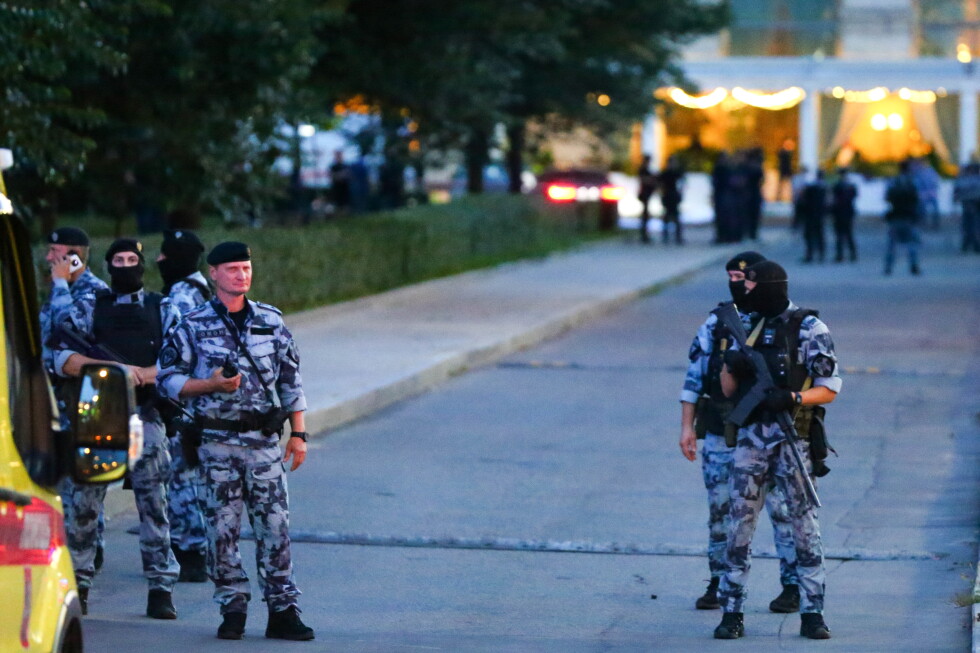
Moscow mayor calls Saturday’s deadly bomb attack on restaurant a ‘terrorist act’
A deadly explosion that tore through a popular restaurant in central Moscow Saturday evening has been labeled a brutal terrorist attack by the city’s top official, as Russian law enforcement and counterterrorism agencies continue their probe into the incident with no suspects or groups stepping forward to claim credit.
Moscow Mayor Sergei Sobyanin confirmed the attack in a social media post Sunday, acknowledging the loss of innocent life and confirming that injured survivors were receiving targeted medical care at city-run hospitals across the capital. “Yesterday, a brutal terrorist act was committed in Moscow that claimed human lives. The victims are currently in the city’s hospitals, where they are receiving all necessary care,” Sobyanin wrote, stopping short of assigning blame for the coordinated attack.
Per Russian state media, which cited official local sources, three people were confirmed dead in the blast: a working security guard at the restaurant, one civilian guest, and the female attacker who carried the explosive device. The National Anti-Terrorism Committee, in statements carried by Russia’s official state news agency RIA Novosti, added that at least 21 other people sustained injuries of varying degrees when the device detonated at the venue on Kudrinskaya Square, a busy public space in the heart of the city.
The Moscow Investigative Committee confirmed Saturday evening that it had launched a full official investigation into the circumstances of the attack. As of early Sunday afternoon, Russian federal and local authorities had not released any new updates on the progress of the probe, and no individual or extremist organization had issued any public statement claiming responsibility for the bombing.
-

Runner on smashing Alps ultramarathon record by 6 days
In an extraordinary display of human endurance and mental fortitude, British ultra-runner Sophie Woods has etched her name into the history books of long-distance trail running by obliterating the existing record for the iconic Via Alpina ultramarathon by a staggering six days.
Stretching across more than 2,600 kilometers through the heart of the European Alps, the route cuts through eight different countries, presenting runners with some of the most punishing and unpredictable terrain on the planet. Over the course of her journey, Woods faced a relentless barrage of extreme weather challenges that would have stopped most athletes in their tracks. Severe storm systems rolled through mountain passes, bringing lashing rain, high winds, and reduced visibility that turned narrow alpine trails into dangerous slippery tracks. When the skies cleared, she was forced to confront sweltering heat that pushed temperatures as high as 37 degrees Celsius, testing her body’s ability to regulate temperature and maintain hydration over thousands of meters of elevation gain.
Beyond temperature extremes, Woods also had to navigate rapidly changing environmental hazards, dodging widespread flood zones in low-lying valleys and shifting wildfire smoke and burn areas that emerged across parts of the alpine region during her run. The multi-country route exposed her to a wide range of trail conditions and regional climate variations, requiring constant adaptability and quick decision-making to stay on course and safe.
Her achievement has sent shockwaves through the global ultra-running community, where the Via Alpina record is widely regarded as one of the most challenging markers of elite long-distance performance. The six-day margin of improvement over the previous record is far larger than most experts predicted possible, highlighting both Woods’ exceptional preparation and her extraordinary resilience in the face of unforeseen challenges.
-
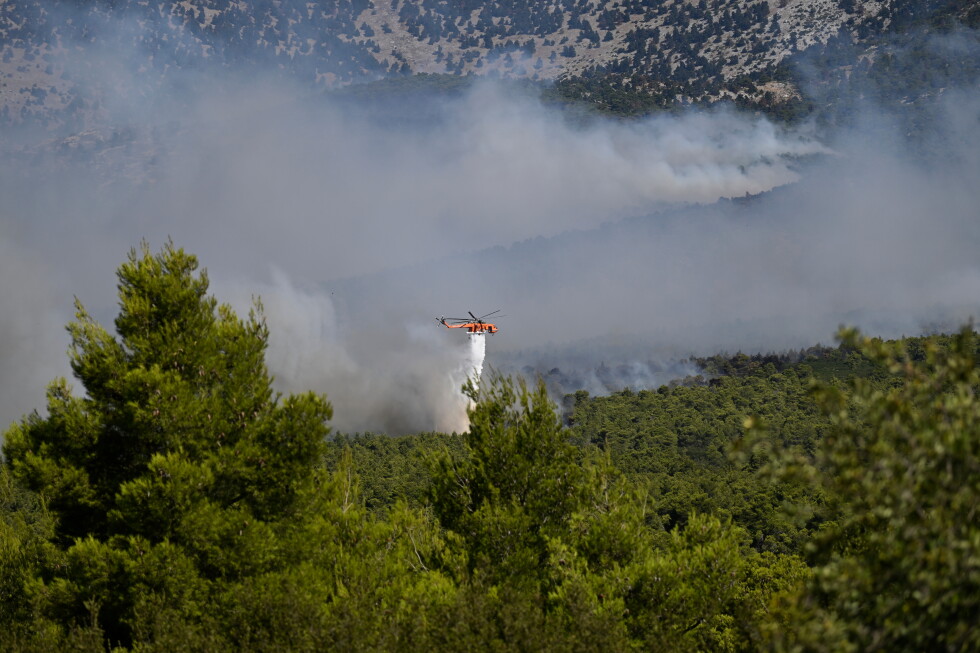
Europe’s wildfire crisis fractures as Greece evacuates and France guards megafire scar
By the end of a scorching European summer, a continent-wide wildfire crisis was splitting into starkly divergent situations across the region on Sunday, with gale-force winds pushing flames closer to the Greek capital of Athens and triggering new evacuation orders, while France maintained a tense watch over a massive, still-active blaze that already carved a destruction zone four times the size of Paris, and major wildfires in Spain finally halted their spread.
Greece remained the epicenter of immediate, life-threatening risk on Sunday. Violent gale-force winds pushed growing fire lines deeper into western Attica, the administrative region that encompasses Athens, putting coastal villages and an industrial zone outside the city of Megara in grave danger. The same powerful gusts that amplified fire spread also grounded firefighting aircraft, preventing crews from scooping water from nearby seas to douse the flames.
As of Sunday, Greek authorities had ordered fresh mandatory evacuations for three additional communities: Kandili, Agia Skepi and Toutouli, with officials flagging particular concern for Porto Germeno, a popular seaside community on the Gulf of Corinth. Nearly 500 firefighters and 23 aircraft were deployed to contain the blaze, which ignited Friday near Agios Vasileios before sweeping toward coastal areas and pushing into the forested Geraneia Mountains west of Athens.
For coastal communities cut off by fast-moving flames and smoke, evacuation by sea became a last-resort escape route. By Saturday, rescuers had pulled 254 people from the sea near Agios Vasileios and an additional 12 from Porto Germeno. Wildfire meteorologist Theodore Giannaros estimated Saturday the blaze had already scorched between 40 and 50 square kilometers of land, though Greek officials had not released an official confirmed estimate as of Sunday.
Local resident Minas Tzortzanis, a farmer in the area, described the irreversible damage to the once-lush landscape. “A pristine forest, a paradise, was surrendered to the hands of the fire,” he said Saturday. “There are no words to explain what has happened. Destruction. Total destruction.”
The unfolding disaster carries grim historical weight for Greece: in 2018, a similarly wind-fueled wildfire trapped residents in the seaside Athens suburb of Mati, killing 104 people in what remains the deadliest wildfire Europe has seen this century.
Hundreds of kilometers to the west, where emergency conditions had begun to ease, little relief was available for thousands displaced by France’s largest wildfire on record. The Gironde megafire, which forced the evacuation of 224,000 people — what officials say is likely the largest peacetime evacuation in French history — has already scorched 420 square kilometers of dense forest, an area four times the size of the city of Paris. While the fire’s forward spread has been contained, active hotspots still burn deep within the destruction zone, and thousands of evacuated residents remain unable to return to their homes.
Nearly 3,000 firefighters are still deployed across two major French blazes: the Gironde megafire in the southwest, and a second large wildfire in Provence that stopped spreading but has not been fully contained. The Gironde region remains under France’s highest red wildfire alert, with persistent dry conditions, record-high temperatures near Bordeaux and expected afternoon winds continuing to raise the risk of the fire breaking through containment lines.
To reinforce overstretched crews, additional firefighters from Ukraine, Lithuania and French Polynesia were scheduled to arrive in the region over Sunday and Monday.
In southeastern France’s Var department, hundreds of kilometers from Gironde, nearly 1,500 firefighters continued to battle a separate blaze that tore through 18 square kilometers of the Gros Bessillon hills in just over 24 hours. Authorities reported the fire had been stabilized by Sunday morning, meaning its perimeter did not expand overnight, but it had not yet been declared fully contained.
Firefighting aircraft supported ground crews working to hold the fire back from small villages scattered across the vineyards, olive groves and wooded hills that give the region its nickname of Green Provence. Roughly 2,500 residents have been evacuated as the fire advanced, marking the fourth major wildfire to hit central Var since July 19. Earlier that week, a smaller blaze near Brignoles forced Hollywood actor George Clooney, his family and 700 other local residents to evacuate before it could be brought under control.
French Prime Minister Sébastien Lecornu noted that most wildfires across the country were currently under control, but warned that conditions could shift rapidly at any time. He also announced that a national coordinator based out of the prime minister’s office would oversee long-term reconstruction efforts for communities and ecosystems damaged by the blazes. Since the start of 2022, more than 1,170 square kilometers of French land has burned in wildfires.
The ongoing wildfire crisis across Europe is unfolding against a well-documented climate backdrop: the European Union’s Copernicus Climate Change Service confirms Europe has warmed more than twice as fast as the global average since the 1980s, making it the world’s fastest-warming continent. Higher average temperatures and prolonged drought have left forests and scrubland far drier and more flammable, allowing wildfires to spread faster and burn with far greater intensity than in decades past.
In a rapid analysis released Thursday while French blazes were still actively spreading, a team of scientists from World Weather Attribution found that human-caused climate change has doubled the likelihood of the extreme fire weather conditions that fueled the Gironde megafire.
Taken together, wildfires in France and Spain alone have displaced roughly 330,000 people from their homes and summer vacation sites, emptied entire communities at the peak of tourist season, and stretched firefighting resources and emergency services thin as crews responded to multiple simultaneous disasters across the continent.
-

Island residents fear delays to emergencies amid changes to fire service
Off Ireland’s northwest coast, the remote inhabited island of Arranmore is facing a growing conflict over emergency services, as locals push back against Donegal County Council’s plan to phase out the island’s last retained paid firefighters and transition to an all-volunteer fire brigade once the current personnel retire.
For decades, Arranmore’s fire service has operated under a hybrid model: two full-time paid retained firefighters backed by a team of local volunteers. But that structure is set to change, with the council moving to an entirely volunteer-led service to fill upcoming vacancies created by retirement. For island residents, the shift raises urgent questions about the reliability of emergency response during a high-risk season for wildfires.
Longtime local firefighter Finbar Gallagher, one of the most vocal critics of the plan, explained that the island’s unique geography and seasonal population swings make an all-volunteer force unworkable. Arranmore is particularly prone to fast-spreading gorse fires during the warm summer months, when the island’s permanent population of roughly 500 swells to as many as 900 people as tourists descend on its Atlantic coastlines. Gallagher noted that many current volunteers already split their time across multiple critical emergency services, serving on both the RNLI lifeboat crew and local ambulance service in addition to fire brigade duties.
“The days of relying solely on volunteers for an essential service like fire response are gone,” Gallagher told BBC Radio Foyle. “Every community on the mainland has access to retained paid firefighters, and there’s no logical reason why Arranmore should be different. The additional cost to the council is negligible, especially when weighed against the risk to human life.”
Residents have already launched a formal petition demanding the council reverse its decision and commit to hiring six full-time retained firefighters for the island. Siobhan Cox, a member of the community committee organizing the petition, said locals are united in their deep concern over the proposed changes. She pointed to a recent gorse fire that was extinguished in just 10 minutes by the existing on-island crew – a response time that would be impossible if the island had to wait for reinforcements from the mainland.
Cox explained that rough Atlantic seas regularly suspend ferry services to Arranmore, meaning mainland fire crews could face delays of up to an hour or be unable to reach the island at all during an emergency. That window, she said, is more than enough for a small gorse fire to spread to residential areas and cause catastrophic damage. Beyond emergency response, Cox added that creating new paid positions would also support long-term efforts to attract young people to move to the island, boosting its declining permanent population. She also noted that the Aran Islands, another inhabited Irish island group, currently receive funding for 12 retained firefighter positions, making the council’s refusal to approve six posts for Arranmore even more confusing.
For its part, Donegal County Council has defended its plan, arguing that current volunteer recruitment efforts meet and exceed the requirements laid out in national government policy for fire services on inhabited offshore islands. The council noted that five new local residents have already expressed interest in joining the volunteer brigade to fill the gaps left by upcoming and recent retirements. It added that the island’s fire equipment has essentially the same functional capability as that used by mainland retained brigades, with only minor differences in water capacity and ladder size.
But community leaders remain unconvinced, accusing the council of ignoring their concerns and attempting to sweep the issue under the rug. As the peak summer wildfire season gets underway, the fight over Arranmore’s fire service highlights the ongoing challenges facing remote island communities in Ireland, as local authorities balance budget constraints with the need for reliable, accessible emergency services for year-round and seasonal residents alike.