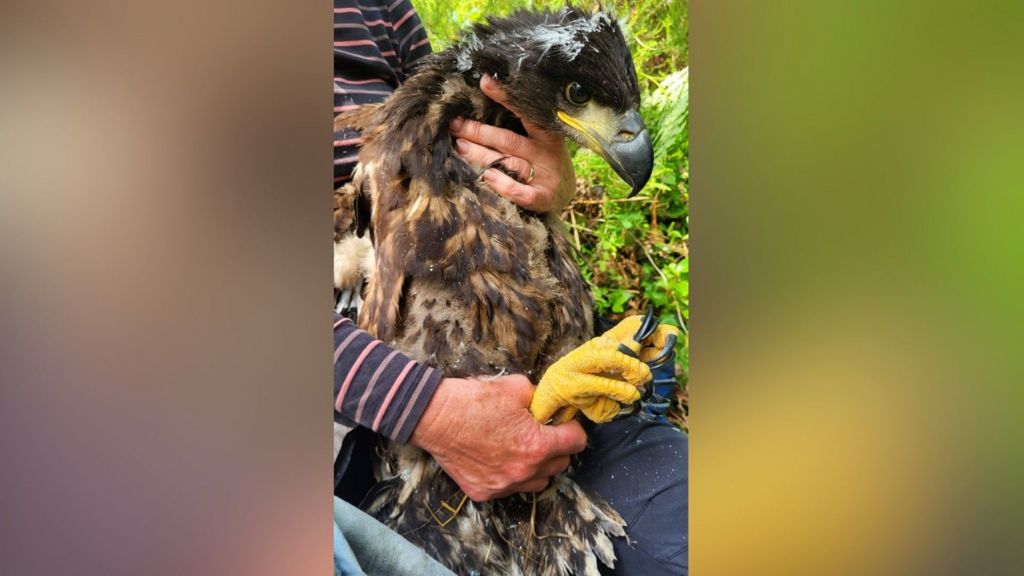
More than a century after white-tailed eagles vanished from Ireland, a landmark conservation initiative is bearing remarkable new fruit — and one young feathered adventurer has captured the public’s imagination with an unprecedented cross-country journey.
Aspen, a juvenile white-tailed eagle hatched in 2024 at Glengarriff Nature Reserve in County Cork as part of Ireland’s ongoing white-tailed eagle reintroduction programme, embarked on a cross-island odyssey that began on March 22. Over the course of just seven weeks, a satellite tracker fitted to the bird recorded its extraordinary route: spanning all four of Ireland’s provinces — Leinster, Ulster, Connaught, and finally back to its native Munster — and touching 26 of the island’s counties along the way. In Northern Ireland alone, Aspen visited Armagh, Down, Tyrone, Londonderry, and Fermanagh, making her journey one of the most widely documented young eagle movements in recent Irish conservation history.
This ambitious trek is no surprise to the ecologists who have monitored Aspen since the day she hatched. Clare Heardman, a National Parks and Wildlife Service (NPWS) ecologist who has tracked the reintroduction programme since its launch in 2007 and currently monitors roughly 90 tagged eagles, shares a unique bond with the young bird. “I helped tag her when she was eight weeks old, then she fledged when I was 13 weeks,” Heardman explained. “On her first solo flight, she already did a massive loop of Munster — that isn’t unheard of for young eagles, but it proved right away that travelling is in her personality.”
Aspen’s name comes from an unusual aspen tree growing near her birth nest, a rarity among the untagged, unnamed eagles monitored by the programme. What makes her extra special for Heardman is her lineage: her mother is a Norwegian eagle brought into the programme as part of reintroduction efforts, while her father is the first generation of Irish-born eagles produced by the scheme — a milestone that marks the programme’s long-term success. Since the map of Aspen’s cross-country journey was shared on social media, the public has embraced the young eagle just as much as the conservation team, with Heardman noting “her route touched so many counties, it helped people across the island relate to her.”
White-tailed eagles, also called sea eagles for their coastal habitat and nicknamed “flying barn doors” for their massive 2.5-meter wingspan, were driven to extinction across Ireland and the United Kingdom by the early 20th century. Decades of deliberate reintroduction work, using founder birds sourced from healthy Norwegian populations, have reversed that decline. In 2024, a breeding pair in County Fermanagh made history as the first white-tailed eagles to successfully raise chicks in Northern Ireland in more than 150 years, and established mating populations have now been confirmed across Kerry, Cork, Clare, Galway, and Donegal.
Dr. Eimear Rooney, a member of the Northern Ireland Raptor Study Group which monitors birds of prey across Northern Ireland, explained that Aspen’s long wander is typical for young white-tailed eagles. “This time of year, it is common for sub-adult white-tailed eagles to go wandering. They catch thermal hot air currents, and with their size, they can cover hundreds of miles in a very short space of time,” Rooney said. The tracker’s data also reflects the species’ feeding habits: Aspen often stayed close to coastlines and wetlands, where the birds hunt for fish and marine prey, while her inland forays into higher ground like the hills of Donegal were likely driven by her scavenging instinct, as the eagles feed on carrion when it is available.
While Aspen’s journey is a heartwarming win for conservation, Rooney also highlighted the ongoing risks facing young eagles during their nomadic adolescent years. White-tailed eagles do not reach breeding age until they are four or five years old, and the sub-adult stage is the most dangerous period of their lives. “The people tracking these birds during this part of their lives are biting their nails constantly,” Rooney said. Major threats include accidental poisoning from carcasses laced with toxins — two eagles were confirmed killed by poisoning in County Antrim in 2023 — collisions with wind turbines (three eagles died from turbine strikes in South Donegal alone that same year, per NPWS data), severe storms, and exposure to avian influenza.
For now, Aspen has returned to her native Munster, but where she will settle long-term remains an open question. “Just because it was hatched in Cork doesn’t mean it’ll stay in Cork,” Rooney noted. “A very common path we see these birds follow takes them to the Antrim Hills, Rathlin Island, onto the Mull of Kintyre, then they’ll spend some time in Scotland before coming back. The point is, you can never be too sure where they’ll end up.”