标签: Europe

欧洲

  • Woman isolating on British island in South Pacific after hantavirus contact

    Woman isolating on British island in South Pacific after hantavirus contact

    A global public health scare linked to a hantavirus outbreak on a Dutch-flagged cruise ship has reached one of the world’s most remote inhabited communities, after an exposed asymptomatic woman traveled to the British Overseas Territory of Pitcairn Islands and entered isolation. The small South Pacific archipelago, home to just 50 permanent residents descended from 18th-century HMS Bounty mutineers, has activated coordinated public health protocols with UK authorities to contain any potential spread.

    The outbreak originated on the MV Hondius, a expedition cruise ship that departed Ushuaia, Argentina on April 1 carrying 147 passengers and crew from 23 nations. To date, the outbreak has claimed three lives: a 70-year-old Dutch man who died on board on April 11, his 69-year-old wife who died in a Johannesburg clinic two days after disembarking in St. Helena, and a German woman who died on the vessel on May 2. The World Health Organization (WHO) has confirmed nine positive cases, with two more suspected infections, and the two deceased women have been officially confirmed as hantavirus cases.

    After the last passengers were evacuated from the MV Hondius on May 9, WHO Director-General Tedros Adhanom Ghebreyesus told reporters Tuesday that there was no evidence of widespread community transmission at that time, but emphasized that the situation remained fluid and additional confirmed cases could still emerge. The ship sailed from Tenerife, Spain on Monday and is scheduled to dock in its home port of Rotterdam, the Netherlands on May 17. Hantaviruses are primarily carried by rodent populations, but the Andes strain linked to this outbreak — which passengers are believed to have contracted in South America — can spread between humans. Symptoms of infection range from fever, severe muscle pain and extreme fatigue to gastrointestinal distress and life-threatening respiratory difficulty.

    The woman currently in isolation on Pitcairn, who has not been identified publicly, traveled to the territory after disembarking the MV Hondius. She flew from San Francisco on May 7, transiting through Tahiti and Mangareva in French Polynesia before reaching Pitcairn, the only permanently inhabited island of the four-island British territory. French Polynesian authorities confirmed that the woman passed through their borders without notifying local or national public health officials. Following an emergency meeting Sunday, officials ruled that the woman will not be permitted to re-enter French Polynesian territory for the duration of her risk period, noting that even though she is currently asymptomatic and not believed to be contagious, the ban remains in place to protect local public health. Authorities added that other passengers on the woman’s San Francisco-to-Tahiti flight are not classified as close contacts, and the risk of infection among that group is assessed as very low.

    Local Pitcairn government spokespersons told the BBC that the woman had contact with a person confirmed to have been exposed to hantavirus, but has not developed any symptoms to date. Officials stressed she is not classified as a suspected case, and the overall public health risk to Pitcairn’s small community remains low. She is currently adhering to a 45-day isolation period, the standard mandated by the UK Health Security Agency (UKHSA) for close contacts of confirmed hantavirus cases.

    The UK Foreign Office confirmed it is aware of the woman’s presence on Pitcairn, and is coordinating closely with local Pitcairn authorities and UKHSA to mitigate risks to both the woman and the island’s permanent residents. Pitcairn’s government said in a statement that the safety and well-being of their small community remains their top priority as the situation develops. It remains unclear when UK and local officials were first notified of the woman’s travel to the territory. This is not the only remote British Overseas Territory to respond to a potential case from the MV Hondius outbreak: earlier this month, British army medics parachuted into the remote South Atlantic island of Tristan da Cunha to assist a British resident who disembarked there with suspected hantavirus on April 14.

  • The European Commission seeks to ban gay ‘conversion therapy’

    The European Commission seeks to ban gay ‘conversion therapy’

    BRUSSELS – Days ahead of the capital’s annual Brussels Pride celebration of LGBTQ+ rights and culture, the European Commission announced Wednesday it will formally request all 27 European Union member states enact legal bans on discredited gay ‘conversion therapy’ practices, responding to a mass public campaign that has drawn support from more than a million EU residents.

    The policy push delivers on a long-standing commitment LGBTQ+ protections that Commission President Ursula von der Leyen made when she took office in 2019. In her statement Wednesday, von der Leyen emphasized that so-called conversion practices, which aim to change a person’s sexual orientation or gender identity, have ‘no place in our Union.’

    Data from the EU’s Agency for Fundamental Rights collected in 2024 underscores the urgency of this action: one in every four LGBTQ+ EU residents surveyed reported they had been subjected to the thoroughly discredited practice. The highest rates of documented conversion therapy attempts were recorded in Greece, Cyprus, the Czech Republic, Estonia, and Slovakia. Currently, only 10 of the bloc’s 27 member states have implemented full or partial prohibitions on the practice, according to regional advocacy group ILGA-Europe (the International Lesbian, Gay, Bisexual, Trans and Intersex Association Europe).

    Malta made history as the first EU country to ban all attempts to alter the sexual orientation of LGBTQ+ people back in 2016. Following Malta’s lead, France enacted its own ban, imposing criminal penalties including jail time and monetary fines for anyone who performs conversion therapy targeting the LGBTQ+ community.

    European Commissioner for Equality Hadja Lahbib called out the harmful foundation of the practice, noting that conversion practices are rooted in a dangerous falsehood: the claim that LGBTQ+ people need to be ‘fixed’ because there is something inherently wrong with their identity. ‘There is, of course, nothing to fix, there is nothing to cure, and there is no one to change,’ Lahbib stated. ‘You cannot torture away a person’s identity, and you cannot legislate it away. And yet these practices continue, unfortunately.’

    The commission’s announcement comes just three days before Brussels’ 30th annual Brussels Pride parade, which organizers expect will draw tens of thousands of marchers to the streets of the EU’s institutional capital to celebrate LGBTQ+ culture and demand expanded equal rights protections across the bloc.

  • More than 1,000 passengers held on cruise after gastrointestinal illness outbreak

    More than 1,000 passengers held on cruise after gastrointestinal illness outbreak

    A major public health precaution has been enacted at the port of Bordeaux, France, where more than 1,000 passengers on the UK-operated Ambition cruise ship are currently barred from disembarking following a widespread outbreak of gastrointestinal sickness that has infected 49 people onboard.

    Local Bordeaux health authorities confirmed that three affected passengers have already been isolated in their private cabins to slow transmission, while all other guests have been restricted to the vessel while testing proceeds. Officials have explicitly ruled out any connection between this outbreak and a separate, recent hantavirus event on a different cruise ship, quelling early public speculation about overlapping health risks.

    In an unexpected development, cruise operator Ambassador Cruise Line confirmed that a 92-year-old male passenger passed away on the vessel this past Sunday. The company emphasized that the deceased man never showed any symptoms of the gastrointestinal illness, and his exact cause of death remains pending a formal coroner’s investigation. Ambassador Cruise Line has extended full support to the passenger’s traveling companions and family, and offered sincere condolences for their loss.

    As of 11:00 BST Wednesday, the operator updated case counts to confirm 48 passengers and one crew member were showing symptoms aligned with acute gastrointestinal illness. In total, the Ambition carries 1,187 guests and 514 crew members across its current voyage. The cruise departed from Belfast on May 8, making a scheduled stop in Liverpool the following day, with the operator confirming that case numbers began rising shortly after passengers boarded during the Liverpool stop.

    Gastrointestinal illness, which typically causes severe diarrhea and vomiting, is most often triggered in adults by norovirus infection or foodborne illness. After initial reports of sick passengers emerged, Ambassador Cruise Line rolled out enhanced sanitation and prevention protocols across the entire vessel that align with standard global public health guidelines. These new measures include intensified cleaning and disinfection of all high-touch public spaces, ongoing public health guidance for guests emphasizing frequent hand hygiene, and clear instructions for anyone experiencing symptoms to report immediately to the onboard medical team.

    The Ambition was mid-way through a scheduled stop in southwestern France when the outbreak was reported, and the operator proactively notified French regional health authorities of the situation as soon as cases began to rise. The Nouvelle-Aquitaine regional health agency dispatched a specialized medical team to the vessel to conduct on-site assessments, and clinical samples have been sent for laboratory testing at Bordeaux University Hospital.

    Authorities have suspended all disembarkation as a precautionary measure, noting that gastroenteritis-type illnesses are highly contagious, and the restriction will remain in place until all test results are finalized. Test processing is expected to take a minimum of six hours to complete.

    In a closing statement, Ambassador Cruise Line reaffirmed that the health, safety and well-being of all guests and crew members remains the company’s top priority. The operator added that it sincerely appreciates the patience, understanding and cooperation of everyone onboard while these necessary public health precautions remain in effect.

  • Turkey removes a restriction on direct trade with Armenia to improve ties

    Turkey removes a restriction on direct trade with Armenia to improve ties

    Decades of frozen relations between longstanding regional rivals Turkey and Armenia have taken a major step toward normalization, as Ankara announced it is removing a long-held restriction on direct bilateral trade this Wednesday. The diplomatic move is being widely framed as a symbolic gesture of goodwill to advance ongoing efforts to repair ties between the two neighboring countries.

    Turkey and Armenia have not maintained formal diplomatic relations since the 1990s, when Ankara closed the shared Turkey-Armenia border in 1993. The closure came as a show of solidarity with Turkey’s close strategic ally Azerbaijan, which was engaged in armed conflict with Armenia over the disputed Nagorno-Karabakh region, a territory recognized under international law as part of Azerbaijan.

    Tensions have run high between the two nations for more than a century, compounded by deep-seated historic grievances beyond the Nagorno-Karabakh dispute. The divergent narratives around the 1915 mass deaths of an estimated 1.5 million Armenians under Ottoman Turkey remain a major sticking point: while most international historians classify the events as a genocide, the Turkish government rejects the label, acknowledging widespread casualties but disputing the death toll and framing the deaths as a consequence of early 20th-century civil unrest.
    More recently, Turkey again threw its full support behind Azerbaijan in the 2020 six-week armed conflict over Nagorno-Karabakh, providing Baku with key military hardware including combat drones. That conflict ended with Azerbaijan retaking control of large swathes of the disputed territory that had been held by ethnic Armenian forces backed by Yerevan.

    It was not until late 2021 that the two countries made a formal breakthrough, when they reached an agreement to launch a structured dialogue to improve bilateral relations, appointing special envoys tasked with negotiating reconciliation and the eventual full opening of the closed border. Over the course of two years of gradual talks, the process has already delivered tangible incremental progress: direct commercial flights between the two nations have resumed, and some visa requirements for travelers have been relaxed.

    Announcing the latest policy change via a post on social platform X, Turkish Foreign Ministry spokesman Oncu Keceli confirmed that ongoing technical and administrative work to fully open the shared border is still progressing. Under the new policy adjustment, goods shipped between Turkey and Armenia via third countries will now be permitted to explicitly list Turkey or Armenia as their official point of origin or final destination on trade documents, ending a decades-long restriction that banned this direct labeling.

    Writing in his statement, Keceli emphasized Turkey’s commitment to regional stability, noting: “In the light of the historic opportunity seized to strengthen lasting peace and prosperity in the South Caucasus, Türkiye will continue to contribute to the development of economic relations in the region and to further advancing cooperation for the benefit of all countries and peoples of the region.”

    The diplomatic shift has already been met with a positive response from Armenia. Armenian Foreign Ministry spokeswoman Ani Badalyan called the move a meaningful milestone on the path to full bilateral normalization, saying in her own X post: “We would like to emphasize that this is an important step toward the establishment of full and normalized relations between our two countries, which could logically continue through the opening of the Armenia-Turkey border and the establishment of diplomatic relations.”

    Analysts note the move comes amid a shifting geopolitical landscape in the South Caucasus, as Armenia deepens its engagement with European institutions and moves away from its traditional alignment with Russia, making progress on the Turkey-Armenia reconciliation track all the more significant for regional security.

  • Shrinking Milka chocolate bar tricked consumers, says German court

    Shrinking Milka chocolate bar tricked consumers, says German court

    A regional court in Bremen, Germany has delivered a landmark ruling against global food conglomerate Mondelēz International, finding that the company’s shrinkflation adjustment to its iconic Milka Alpenmilch chocolate bar deceived consumers and violated national competition law. The case, which marks one of the highest-profile legal challenges to the widespread corporate practice of reducing product content while retaining identical packaging, centers on Mondelēz’s decision to cut the net weight of the classic Milka Alpine Milk bar from 100 grams to 90 grams between 2024 and 2025.

    The lawsuit was brought by the Hamburg Consumer Protection Office (VZHH), which argued that keeping the bar’s instantly recognizable purple packaging unchanged despite a 10% reduction in product size amounted to intentional misleading of long-time customers. The Bremen regional court backed the consumer protection body’s claim in its ruling, noting that while retaining similar packaging is not inherently unlawful, the mismatch between consumers’ long-held visual expectations of the product’s size and its actual reduced content created deceptive ambiguity. The court emphasized that resolving this misleading impression would have required a clear, prominently displayed notice of the weight change directly on the front of the packaging, rather than small text buried among other product information.

    In the years following post-pandemic supply chain disruptions and poor cocoa harvests in major West African producing regions, global confectionery manufacturers have increasingly turned to shrinkflation to offset skyrocketing input costs. The practice—reducing product size or weight to keep sticker prices consistent, or in some cases implementing simultaneous price increases alongside smaller portions—has drawn widespread criticism from consumer advocacy groups across Europe, who frame it as a deceptive tactic to hide inflation from shoppers. Last year, German consumers voted the adjusted Milka Alpenmilch bar the unwelcome title of “rip-off packaging 2025” for its unchanged packaging that hid the reduced weight. The criticism has been compounded by the fact that the product’s retail price also rose from €1.49 to €1.99 by early 2025, even as the bar shrank by 10 grams to just 90g.

    In response to the ruling, a Mondelēz spokesperson told the BBC that the company is “taking the decision of the court seriously” and will conduct a detailed review of the verdict before deciding its next steps. During the three-week trial, company representatives defended the weight adjustment, arguing that they had notified German consumers of the change via their official website and social media channels, and that the weight change was clearly printed on the packaging. Mondelēz also noted that fluctuating chocolate bar weights have long been common across the industry, with historic weights ranging between 81g and 100g for different products. The current ruling is not yet legally final: Mondelēz has 30 days to file an appeal against the decision. The court also highlighted the importance of the ruling, noting that without an explicit finding against the practice, Mondelēz and other manufacturers could repeat the same deceptive strategy.

    Milka is not the only high-profile chocolate brand facing backlash over shrinkflation in Germany. Iconic German manufacturer Ritter Sport has also drawn criticism for adjusting the weight of three of its most popular varieties from 100g to 75g as of May 2026, while retaining its famous square packaging shape. Though Ritter Sport updated its packaging labeling and marketed the thinner bars as a new product line that “consumers prefer” at the same price point, the adjusted varieties still appear on the VZHH’s list of problematic “rip-off packaging.” That list grew by 77 new products in 2025 alone, spanning far beyond confectionery.

    Shrinkflation has impacted a wide range of everyday consumer goods across Europe, from toothpaste and rolled oats to instant coffee. However, UK consumer advocacy group Which? notes that chocolate has seen particularly steep inflation, with prices rising 14.6% in the 12 months leading up to August 2025, driven largely by the global cocoa price surge linked to poor harvests in West Africa.

  • Alternative shows counter Eurovision amid larger protest over Israel’s participation

    Alternative shows counter Eurovision amid larger protest over Israel’s participation

    The 70th iteration of Europe’s iconic annual Eurovision Song Contest, held this year in Vienna, has become the center of a growing global controversy, as widespread anger over Israel’s devastating military campaign in Gaza has sparked mass boycotts, alternative performances, and loud demands for Israel’s expulsion from the competition.

    On a Tuesday evening in an ornate Brussels concert venue, Palestinian singer-songwriter Bashar Murad took the stage before hundreds of attendees to deliver a haunting, bilingual rendition of Nina Simone’s civil rights anthem *I Wish I Knew How It Would Feel to Be Free*, blending English and Arabic lyrics. When the final note faded, the crowd erupted into thunderous applause, capping off a performance that anchored one of the largest alternative pro-Palestinian events organized to counter the official contest. This Brussels gathering, titled *United for Palestine*, brought together European artists and Palestinian creators to protest Israel’s spot in the 35-nation lineup, and it is one of dozens of parallel events taking place across the continent this week.

    The controversy has already split participating countries: five nations — Spain, Ireland, the Netherlands, Slovenia, and Iceland — have formally withdrawn from the kitschy, widely beloved pop extravaganza, declining to send competitors or broadcast the final. Despite the rising pressure, the Geneva-based European Broadcasting Union (EBU), which administers the contest, has refused to remove Israel from the roster, a decision that has amplified outrage across activist circles and political bodies. Ahead of this year’s event, the EBU did tighten contest voting rules to address persistent allegations of Israeli government interference to boost its competitor, but stopped short of the full expulsion demanded by critics.

    The debate over Israel’s participation stretches back decades. Murad, who nearly became Iceland’s 2024 Eurovision competitor, has a personal connection to the fight for Palestinian inclusion: in 2005, his father, a founding member of the iconic Palestinian musical collective Sabreen, joined a petition to the EBU to grant Palestine official entry to the contest, a request that was ultimately denied. Israel, by contrast, has been a participating member since 1973, has claimed four contest victories, and the event holds deep cultural resonance for the Israeli public.

    But as the death toll from Israel’s military operations in Gaza, the West Bank, Lebanon, and Iran has mounted, public fury has spread across Europe. Mass pro-Palestinian protests have been held from Rome to Madrid, and senior European Union officials are currently considering new sanctions against Israel over the humanitarian crisis in Gaza. Amnesty International’s Secretary General Agnès Callamard has joined the calls for expulsion, drawing a parallel to the EBU’s 2022 decision to ban Russia following its full-scale invasion of Ukraine. “Songs and sequins must not be allowed to drown out or distract from Israel’s atrocities or Palestinian suffering,” Callamard stated.

    In response to the EBU’s refusal to remove Israel, grassroots activists and public broadcasters have stepped up to organize alternative programming across the continent. SOS Belgium, one of the organizers of the Brussels alternative concert, told reporters that parallel events are also running in Austria, Germany, Slovenia, Italy, and Spain. In Spain, public broadcaster RTVE, which has aired Eurovision for decades, will not broadcast the 2025 final; instead, it will air *La Casa de la Música*, a special 70th anniversary tribute to the broadcaster’s musical legacy that features 20 performers, including the winners of Spain’s national selection contest Benidorm Fest, who would have normally competed at Eurovision.

    On Tuesday, the first set of finalists was confirmed, with Israel and fan-favorite Finland securing spots in the grand final, which will be held this weekend. The official contest, which carries this year’s motto “United by Music,” drew 162 million global viewers in 2025 and retains a massive, dedicated fanbase that far outpaces the audience of any alternative event.

    Still, Murad and other organizers of the alternative gatherings say their goal is not to compete with Eurovision directly, but to push the contest to live up to its stated founding mission of uniting people across borders through music. “The purpose of these alternative programs that are happening is to remind Eurovision what it’s actually about and to try to hopefully bring it back, to correct its course, and make it actually live up to the things that it claims to be about,” Murad said. “A lot of people in the world feel that the competition has lost its meaning.” “It’s always amazing to be in the same room with people who believe in the same things as you and people who believe that we can’t just let the show go on,” he added.

  • Eurovision boss: ‘We’re watching the voting very carefully’

    Eurovision boss: ‘We’re watching the voting very carefully’

    The 2025 Eurovision Song Contest, currently underway in Vienna, Austria, has found itself at the center of fresh controversy around Israeli participation and voting integrity, prompting organizers to implement sweeping reforms to competition rules and issue a formal reprimand to Israeli public broadcaster Kan.

    Tensions around Israeli voting practices first emerged following the 2024 contest, when Israel finished as the public vote winner despite earning only 60 points from the competition’s professional national juries, which score entries based on artistic and compositional merit. Roughly 83% of Israel’s total points came from public votes that year, a stark contrast to overall winner Austria, which drew just 41% of its score from public voting.

    Independent media investigations later revealed that an Israeli government advertising agency had funded a coordinated online campaign that instructed social media users how to cast the maximum allowed 20 votes for the Israeli entry, a move that violated Eurovision guidelines around disproportionate state-backed promotion. While the European Broadcasting Union (EBU), Eurovision’s governing body, found no conclusive evidence of actionable voting irregularities after the 2024 event, it moved quickly to overhaul voting procedures ahead of the 2025 contest.

    Key reforms approved in November 2024 include cutting the maximum allowed number of votes per user in half to 10, banning disproportionate promotional campaigns led by third parties including national governments, and mandating that online voters submit verifiable credit card details to confirm votes originate from the voter’s claimed country of residence. The reforms also restored jury voting to semi-final rounds, a step taken after six national juries were caught colluding to trade votes at the 2022 Turin contest.

    Despite these new guardrails, controversy has flared again this year. Earlier this month, Israeli contestant Noam Bettan—currently one of the favorites to win the grand final with his romantic ballad *Michelle*—released social media videos instructing fans to “vote 10 times for Israel”, a move that directly violated the competition’s spirit and promotional rules. In response, the EBU issued a formal warning to Kan and ordered the offending posts be removed immediately.

    In an exclusive interview with the BBC, current Eurovision Contest Director Martin Green, who took on the role in 2024 after leading creative and ceremonial teams for the 2012 London Olympics and 2022 Birmingham Commonwealth Games, acknowledged that concerns over unfair promotion were valid. “I agree that some of the promotion by some of the broadcasters was a little disproportionate,” he told the BBC, adding that organizers are monitoring all voting patterns “very, very carefully” this year to head off any potential misconduct.

    Green emphasized that the EBU prefers to resolve violations through dialogue rather than immediate harsh sanctions, when asked whether Israel faced potential disqualification for further breaches. “We’re a long way from any of that. If there is a problem, we start a conversation and we try and resolve it amicably, without reaching for sanctions,” he explained. “We hope, in a way, that you teach the world that you can solve [conflict] by being collegiate right now.”

    On Tuesday, Israel secured one of the 10 grand final spots from the first semi-final, though semi-final voting breakdowns will not be released publicly until after the final concludes to avoid biasing voters. Beyond voting rules, Green’s tenure has also been marked by widespread protests over Israel’s continued participation, with many contestants, fans and activists objecting to the country’s military offensive in Gaza. Last November, after a proposal to suspend Israel from the contest failed to pass, five national broadcasters—including those from Spain, Ireland and the Netherlands, all vocal critics of Israeli military policy—announced they would boycott the 2026 contest.

    Speaking ahead of this year’s first semi-final, Green expressed openness to reconciliation with the boycotting broadcasters. “We’ve got 35 members of our family here, and that’s enough to have a big party. But, you know, five [are absent] and we miss them,” he said. “When this show is over, I know we’ll pick up the dialogue and we’ll see what comes.”

    Despite ongoing tensions, Green said he has full confidence in the integrity of the newly revised voting system. “We are very consistent. We have one of the best voting systems for the public in the world. It is fair, it is true, it is secure. People can try and do what they like. They’re not going to [influence] anything,” he added.

  • Russian drone attacks kill nine in Ukraine after ceasefire expires

    Russian drone attacks kill nine in Ukraine after ceasefire expires

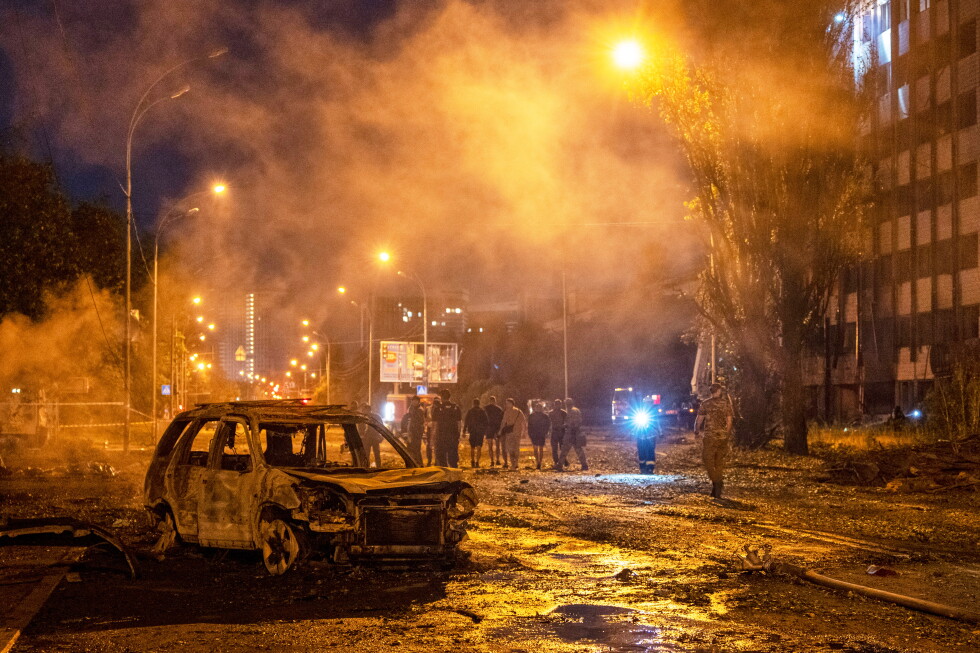
    Just 48 hours after a three-day US-mediated ceasefire between Russia and Ukraine expired, large-scale cross-border drone attacks have resumed across both territories, leaving multiple civilian casualties and widespread infrastructural damage. According to local Ukrainian officials, the latest wave of Russian drone assaults across 14 of Ukraine’s administrative regions has left nine people dead and at least 28 injured.

    The hardest-hit area was Ukraine’s central Dnipropetrovsk region, which bore the brunt of Tuesday’s sustained attacks. Regional governor Oleksandr Hanzha confirmed that 30 separate strikes hit three districts across the region over the course of the day, killing eight people: two in Kryvyi Rih, President Volodymyr Zelensky’s hometown, and six in the Synelnykove district, located just southeast of the regional capital Dnipro. More than two dozen residential homes were damaged in the assault, and emergency crews including firefighters were deployed to tackle large blazes sparked by the strikes. One additional fatality was recorded in the eastern Donetsk region, where active frontline combat has been ongoing for months.

    In the northeastern Kharkiv region, five people were injured and multiple residential buildings were damaged. Strikes were also reported across southern Ukraine in Odesa, Kherson and Zaporizhzhia, as well as in the central Ukrainian region of Poltava. On Wednesday morning, Zelensky confirmed the scale of the assault in a Telegram post, noting that attacks continued overnight after Tuesday’s initial wave. He warned that more than 100 Russian drones remained active over Ukrainian airspace, and that additional waves of attacks were expected throughout the day. Zelensky accused Russia of deliberately targeting civilian infrastructure, specifically calling out targeted strikes on Ukrainian railway networks.

    Ukraine’s Air Force released its official operational update Wednesday, reporting that Russia launched 139 drones into Ukrainian territory over the preceding 24 hours. Ukrainian air defense systems successfully intercepted and shot down 111 of these drones, but 20 direct hits were still recorded across 13 separate locations.

    In a reciprocal development, Russian officials reported a wave of Ukrainian drone strikes across Russian territory and the Crimean peninsula overnight. The Russian Ministry of Defense stated that air defense systems intercepted 286 Ukrainian drones across 14 Russian regions and Crimea, which Russia illegally annexed from Ukraine in 2014.

    No casualties were reported in the Ukrainian strikes, but multiple industrial facilities sustained damage. In Russia’s southern Astrakhan region, falling drone debris ignited a blaze at a regional gas processing plant in the capital city. Astrakhan Governor Igor Babushkin confirmed that there is no current threat of widespread air pollution from the fire. Additional damage was recorded at two other industrial sites: one in Russia’s southern Krasnodar region, and a second in Yaroslavl, a city northeast of Moscow.

    This escalation of aerial attacks comes immediately after the expiration of a three-day US-brokered ceasefire that ended late Monday. Both sides reported multiple violations of the truce, most of which occurred along the sprawling 1,000-kilometer front line dividing Russian and Ukrainian-controlled territory. There were no large-scale aerial attacks recorded during the ceasefire period.

    Over recent months, Ukraine has ramped up its cross-border drone strikes against Russian energy and industrial infrastructure. Ukrainian officials have justified these attacks, arguing that these facilities support Russia’s military and war-fighting capacity, making them legitimate military targets. This latest exchange of mass drone attacks marks a sharp resumption of hostilities after the brief three-day truce, raising fears of a further intensification of the full-scale Russian invasion that began in February 2022.

  • Russia presses its barrages of Ukraine as Trump talks of possible peace and Kyiv is emboldened

    Russia presses its barrages of Ukraine as Trump talks of possible peace and Kyiv is emboldened

    In a fresh wave of brutal attacks on Ukraine, Russian forces launched over 100 drones across multiple Ukrainian regions on Wednesday, Ukrainian President Volodymyr Zelenskyy confirmed. The assault came just hours after an earlier barrage on civilian areas claimed the lives of at least eight people, marking another escalation in Moscow’s unrelenting campaign against its neighbor.

    Zelenskyy took to social media platform X to condemn the strikes, emphasizing that Russian forces are deliberately targeting critical civilian and infrastructure sites across the country. According to the Ukrainian leader, overnight attacks hit residential neighborhoods and railway networks in central Ukraine’s Dnipro region and northeastern Kharkiv, port facilities in the southern Odesa region, and energy installations in the central Poltava region. He added that attacks spanned 14 Ukrainian regions throughout Tuesday, underscoring the broad scope of Moscow’s current offensive.

    In his statement, Zelenskyy made a direct appeal to the international community, warning that waning global media attention on the conflict — a shift largely driven by world focus turning to escalating tensions in Iran — only emboldens Russia to intensify its aggression. “It is important to support Ukraine and not remain silent about Russia’s war. Every time the war disappears from the top of the news, it encourages Russia to become even more savage,” he said.

    The latest attacks come against a backdrop of surprising claims from both former U.S. President Donald Trump and Russian President Vladimir Putin that the nearly three-year-long conflict could be nearing an end. Speaking to reporters ahead of his departure from the White House for a Beijing summit Tuesday, Trump stated he believes Moscow and Kyiv will soon reach a negotiated settlement to end the fighting. “The end of the war in Ukraine I really think is getting very close,” Trump said. “Believe it or not, it’s getting closer.”

    Putin echoed this sentiment in a speech over the weekend, claiming his full-scale invasion of Ukraine was possibly “coming to an end.” Neither leader has provided any evidence to back up these assertions, nor has either elaborated on what factors have led them to suggest peace is on the horizon for Europe’s largest and longest conflict since World War II.

    Previous U.S.-led diplomatic efforts to broker a ceasefire and peace deal over the past year have stalled completely, failing to make progress on core sticking points that have divided the two sides since the invasion began. Key unresolved issues include Russia’s refusal to withdraw from illegally occupied Ukrainian territory and international efforts to create permanent security guarantees to deter future Russian aggression. Meanwhile, some European governments — which have spent years isolating Putin and enforcing sweeping economic sanctions on Russia in response to the invasion — are now debating whether to open direct diplomatic talks with the Kremlin.

    Despite the claims of an imminent end to the war, recent military momentum has shifted in Ukraine’s favor, according to independent defense analysts. Ukraine has built up its domestic drone manufacturing sector over the course of the conflict, and it now even shares its battlefield-proven counterattack expertise with other allied nations, after spending the early months of the war pleading for international military support.

    Ukrainian long-range drone and missile strikes have repeatedly disrupted Russian energy infrastructure and military manufacturing deep inside Russian territory, with three Russian regions confirming Ukrainian strikes on Wednesday. The Russian Defense Ministry claimed its air defense systems intercepted and destroyed 286 Ukrainian drones across western Russia, the illegally annexed Crimean Peninsula, and the Azov and Black Seas.

    Along the 780-mile front line stretching across eastern and southern Ukraine, Russia’s much larger and better-equipped army has seen its advance slow steadily every month since October 2024, according to the Washington-based Institute for the Study of War (ISW). The think tank reported that Russia’s much-vaunted 2025 spring offensive has faltered badly, with Russian forces recording a net loss of captured territory in the past month — the first time this has happened since 2024.

    “Not only are Ukrainian defensive lines holding, but Ukrainian forces have managed to contest the tactical initiative in several areas of the front line even as Russia continues to lose disproportionate amounts of manpower to achieve minimal gains,” the ISW said in a Tuesday analysis.

  • Cristiano Ronaldo enters sixth World Cup looking to show he can still thrive despite Saudi move

    Cristiano Ronaldo enters sixth World Cup looking to show he can still thrive despite Saudi move

    MADRID — When Cristiano Ronaldo shocked global football by leaving Europe for a high-profile move to Saudi Arabia’s Al Nassr in late 2022, the decision was met with widespread skepticism. Critics argued that a drop in competition level would erode the 41-year-old’s form, leaving him ill-prepared for what he confirms will be his sixth and final appearance at the FIFA World Cup — his first World Cup campaign after relocating to the Middle East. Now, three years into his time in the Saudi Pro League, Ronaldo and his camp have put those doubts to rest, with consistent goalscoring form for both club and country proving his enduring quality.