The 2026 Eurovision Song Contest, hosted this year in Vienna, Austria, has already delivered dramatic twists, political tension, and standout musical performances, as 10 acts locked in their spots for Saturday’s grand final during the first semi-final held Tuesday.
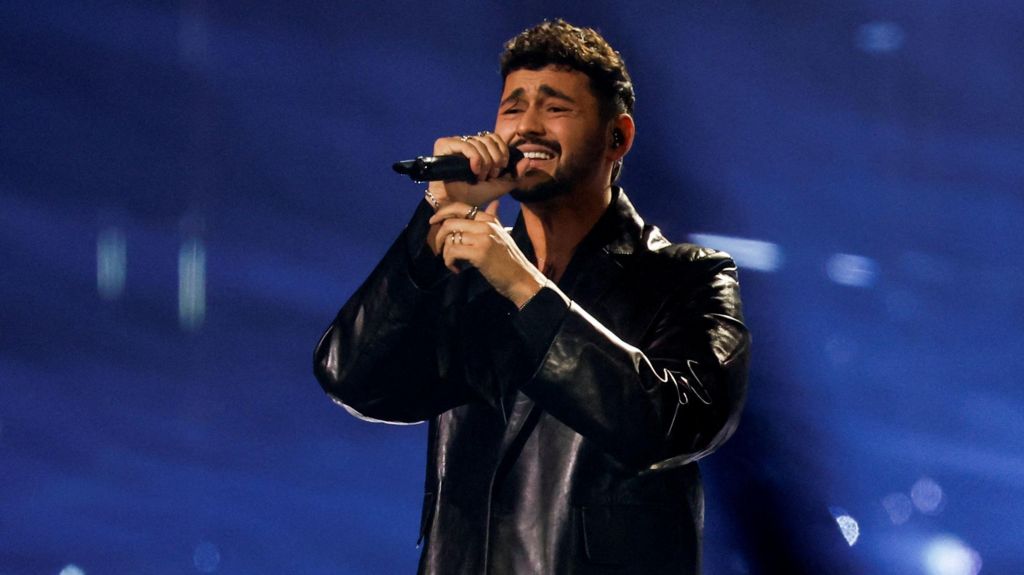
Against a backdrop of years-long controversy tied to Israel’s military operations in Gaza that has roiled the competition, 28-year-old Israeli contestant Noam Bettan secured his place in the final with his tender, romance-driven pop track *Michelle*. The controversy over Israel’s participation has been particularly sharp this year: five nations have already announced a full boycott of the 2026 event, including seven-time Eurovision champion Ireland.
Bettan’s semi-final appearance was met with a deeply divided reaction from the arena audience. While some attendees booed and shouted anti-Israeli slogans, other supporters chanted the singer’s name in solidarity. Ahead of his performance, Bettan told the *Jerusalem Post* he intended to stay focused on his craft, dismissing all political criticism as nothing more than irrelevant “background noise.” Host broadcaster ORF had previously confirmed it would not censor audience protests or negative reactions toward any contestant, a policy that meant the boos were clearly audible for viewers watching the live broadcast.
In a joint statement released after the semi-final, ORF and contest organizers the European Broadcasting Union (EBU) detailed the disruptions: several protesters positioned themselves near on-stage microphones to amplify their anti-Israel messages, both as Bettan prepared to perform and during his song. “They were later removed by security for continuing to disturb the audience,” the statement read, adding that three additional protesters were also ejected from the Wiener Stadhalle arena for continued disruptive behavior. After his qualification was announced, Bettan publicly thanked the audience that supported his advancement.
This year’s semi-final also marked a historic milestone for Eurovision, opening with a heartfelt 70th-anniversary tribute short film. The film followed Toni, a young Austrian boy who developed a lifelong love for the contest as he grew up, watching the competition through decades of shifting cultural trends and evolving personal relationships. The film featured cameos from some of Eurovision’s most iconic winners, including Abba, Sandie Shaw, Conchita Wurst, and 2024 champion Nemo, and closed with adult Toni taking the stage to perform *L’amour Est Bleu*, the classic 1967 entry from Vicky Leandros — the first year Austria hosted the contest. Leandros herself then joined Toni on stage, accompanied by a 70-voice choir, for a moving opening to the night of competition.
Once the tribute concluded, the 16 competing acts took the stage in sequence. Moldovan contender Satoshi opened the competitive portion of the night with high-energy party anthem *Viva, Moldova!*, making a memorable entrance in a football shirt printed with 373 — the country’s international dialing code. Next up was Sweden’s Felicia, who performed her infectious dance track *My System* — a playful metaphor for falling in love framed as a fatal infection — while performing behind an artful face mask. Croatian all-female folk outfit Lelek shifted the tone with *Andromeda*, a harmonically rich track exploring the history of gender suppression during the Ottoman Empire. Greek contestant Akylas delivered one of the night’s most elaborate staging concepts for his track *Ferto*, weaving in references to ancient Greek sculpture, traditional knitting culture, and 2005 Eurovision winner Helena Paparizou, Greece’s only champion to date. The track draws sharp contrasts between the materialistic culture of today’s social media generation and the severe hardship Greek families endured during the 2009–2018 Greek financial crisis.
The current bookmakers’ favorite to take home the 2026 Eurovision trophy is Finnish duo Pete Parkonnen and Linda Lampenius, whose fiery, emotional love song *Liekinheitin* (Flamethrower) delivered a showstopping performance Tuesday. The pair made Eurovision history during their set: Lampenius, a world-class classical violinist, received special permission to perform with a rare 19th-century Gagliano violin, marking just the second time a live acoustic instrument has been allowed on the Eurovision stage since a rule change in 1998. The performance was so intense that Lampenius actually snapped the bow hair on her violin mid-set, adding an unplanned moment of drama.
Other standout moments of the semi-final included Italy’s Sal Da Vinci’s lush disco tribute to his wife on *Per Sempre Si*, and Lithuanian contestant Lion Ceccah’s visually striking performance of man-vs-machine anthem *Sólo quiero más*, which saw Ceccah cover his entire body in metallic silver paint. Closing out the competitive performances was Serbia’s all-female metal band Lavina, who brought a dark, hard-edged energy to the semi-final with their track *Kraj Mene*, a far cry from the electro-pop that dominated most of the night’s line-up.
In a surprise twist, former Culture Club frontman and British music icon Boy George failed to qualify for the final, after appearing as a guest performer on San Marino’s entry. San Marino was among the five countries eliminated from the first semi-final, alongside Estonia, Georgia, Montenegro, and Portugal. The elimination stung for some fans, as it cut short the return of three veteran Eurovision acts: Estonia’s fan-favorite Vanilla Ninja, San Marino’s long-time contestant Senhit, and Georgia’s Bzikebi, the 2008 Junior Eurovision champions.
Along with Bettan and the Finnish duo, the 10 acts advancing to Saturday’s grand final are: Belgium’s Essyla with *Dancing on the Ice*, Croatia’s Lelek with *Andromeda*, Greece’s Akylas with *Ferto*, Lithuania’s Lion Ceccah with *Sólo quiero más*, Moldova’s Satoshi with *Viva, Moldova!*, Poland’s Alicja with *Pray*, Serbia’s Lavina with *Kraj Mene*, and Sweden’s Felicia with *My System*.
Tuesday’s vote count was conducted under new competition rules, implemented after widespread allegations of voting irregularities during the 2025 contest. The overhauled system caps public votes at 10 per voter, down from 20 in previous years, and requires voters to enter credit card details to cast votes online. Organizers say the credit card requirement will verify that votes originate from the country they are submitted from, cutting down on cross-border voting fraud. While votes were counted, audiences were treated to an acrobatic performance honoring Vienna’s Wurstelprater, one of the oldest operating amusement parks in the world, plus a surprise cameo from Eurovision superfan and Hollywood star Will Ferrell, and a novelty comedy number leaning into the running joke between Austria and Australia, centered mostly on playful gags about kangaroos.
The second semi-final is set to take place on Thursday, where high-profile contenders from Denmark and France will make their first 2026 contest appearances. The night will also mark the highly anticipated debut of Australian pop superstar Delta Goodrem, one of the biggest names on this year’s line-up, alongside the United Kingdom’s entry, from experimental artist Look Mum No Computer.