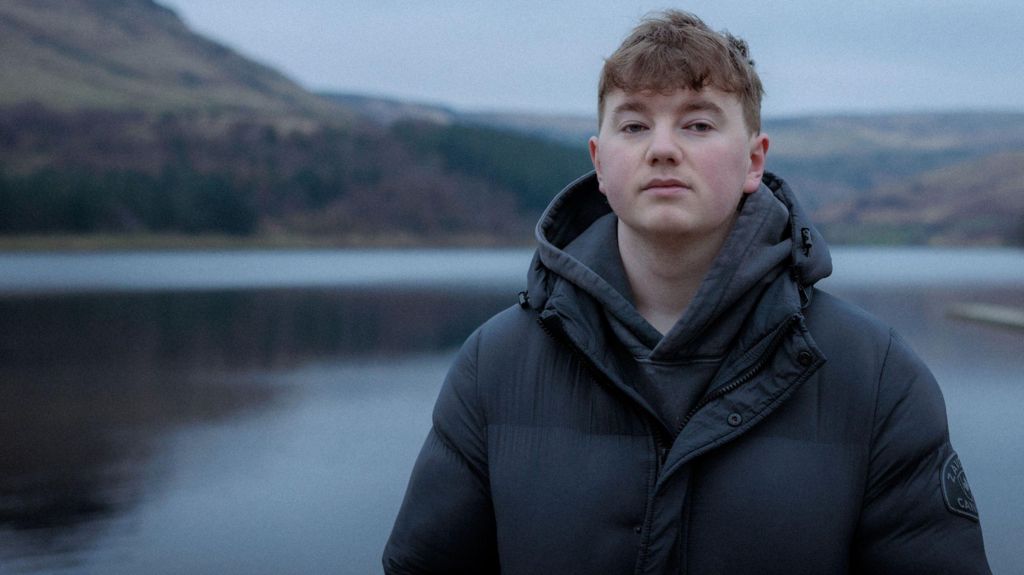
More than two and a half years after his dramatic escape from a nomadic life in the Pyrenees Mountains, 20-year-old Alex Batty, who vanished as an 11-year-old boy while on a family holiday in Spain, is preparing to share his full, unfiltered story for the first time in a new BBC documentary titled *Kidnapped by My Mum*. The long-awaited program, set to air May 13 on BBC Three and BBC iPlayer, retraces every step of Batty’s six years in hiding, his daring escape, and the slow process of rebuilding his life back in his hometown of Oldham, Greater Manchester.
The case that captivated the UK began in September 2017, when 11-year-old Alex traveled to Marbella, Spain, for a pre-planned week-long holiday with his mother Melanie Batty and grandfather David Batty. The pair were not Alex’s legal guardians; he was set to return home to his grandmother Susan Caruana, his official custodian, after the trip. But the three never came back. Alex was last spotted at Malaga Port on October 8, 2017, the day their return to the UK was scheduled, sparking an international missing person investigation that would stretch on for six years with no breakthrough.
Police quickly classified the disappearance as a potential child abduction. What unfolded behind the scenes, as Alex now reveals, was a life rooted in his mother’s deep embrace of extreme conspiracy theories and the sovereign citizen movement, a fringe ideology that claims national governments are illegitimate and that followers can reject laws they disagree with. Melanie threw away Alex’s passport shortly after they left the UK, and the trio spent the next six years living an itinerant lifestyle, moving between remote communes, caravans, and off-grid communities across Spain and France. After years of roaming the Iberian Peninsula, they settled in a spiritual commune tucked in the valleys of the Pyrenees, in southwestern France, far from any populated area.
By December 2023, Alex had grown exhausted of the isolated, constantly shifting life. He made the risky decision to escape. For four days, he traveled by night to avoid detection, slept in hiding during the day, and foraged for food in fields and gardens along the route. It was 3 a.m. on a rainy night when a local delivery driver named Fabien Accidini spotted Alex walking along an unlit mountain road. The teenager had only 100 euros, a skateboard, and no mobile phone, and was heading for Toulouse to reach help. He was reunited with his grandmother in Oldham within days.
In 2025, Greater Manchester Police officially called off the criminal investigation into Alex’s alleged abduction. A department spokesperson confirmed the case was closed because Alex and his family did not support pursuing prosecution, and there was “no realistic chance of securing a conviction” anyway. Alex repeatedly told investigators he had no interest in pressing charges against his mother and grandfather, who were never taken into custody or charged. Det Supt Matt Walker noted at the time that closing the case was the right step to give Alex and his family the closure they wanted.
Now, starting a new life as a father to a baby girl, Alex is opening up about the complicated reality of his experience. In the documentary, he retraces the entire route he took across Spain and France with his mother and grandfather, unpacking not just how he was hidden from authorities for six years, but the ideological framework that kept him isolated. Back in the UK, investigating detectives reflect on the years of unsuccessful searches, and Caruana shares the agony of spending six years not knowing if her grandson was alive or dead. Most notably, Alex confronts the nuanced, difficult question of how he feels about his mother, who still has not commented on the documentary, while David Batty did not respond to the BBC’s request for comment. In a preview for the program, Alex summed up the deeply personal nature of the story: “For me it’s not a story, for me it’s my life.”