标签: Europe

欧洲

  • Middle East crises divide Europe with rising fuel costs and tensions over Israel policy

    Middle East crises divide Europe with rising fuel costs and tensions over Israel policy

    Top diplomatic leaders from across the European Union have convened in Luxembourg this week, with a newly shifted political landscape in Hungary raising hopes for unblocking stalled policy action on a range of pressing global and regional crises. The gathering comes on the heels of a landmark Hungarian election that ousted long-serving Prime Minister Viktor Orbán, a habitual obstructionist of coordinated EU action on issues from Ukraine support to Middle East sanctions, whose departure has already been cited as a potential catalyst for forward movement on long-blocked initiatives.

    On the agenda for the two-day meeting are a broad slate of urgent challenges: continuing military and diplomatic support for Ukraine in its defensive war against Russian invasion, countering ongoing Russian hybrid aggression across the bloc, and mitigating economic turbulence and energy market volatility amplified by the ongoing conflict in the Middle East involving Iran. But the most significant and divisive issue dominating early discussions is the bloc’s future policy toward Israel, as widespread unrest and escalating violence across Gaza, the occupied West Bank, and the Israeli-Lebanese border pushes member states to debate new pressure tactics against Prime Minister Benjamin Netanyahu’s government.

    The EU’s longstanding 2000 Association Agreement, which governs bilateral trade and cooperation with Israel, sits at the center of this debate. Three member states — Spain, Slovenia, and Ireland — have tabled a formal proposal to suspend the agreement in its entirety. Spanish Foreign Minister José Albares acknowledged that a full suspension is unlikely to secure the unanimous support required for EU policy action, but noted that a targeted partial suspension focused exclusively on trade provisions could command enough backing to move forward.

    “The European Union has to say today very clearly to Israel that a change is needed,” Albares told reporters ahead of the meeting. EU investigators have already documented clear indications that Israel has breached terms of the association agreement during its military campaign in Gaza, adding legal weight to calls for a policy shift.
    Irish Foreign Minister Helen McEntee argued that a suite of recent Israeli actions — including the expansion of illegal settlements in the occupied West Bank, the passage of legislation introducing the death penalty for some Palestinians, and escalating cross-border clashes with Hezbollah in Lebanon — leave the bloc with no choice but to ramp up pressure. “We need to act. We need to make sure that our fundamental values are protected. And we need to make sure that any agreement that we have with any other country that country is fulfilling and upholding their obligations,” McEntee said.
    Swedish Foreign Minister Maria Malmer Stenergard added that France and Sweden have put forward a separate, more targeted plan to restrict trade with entities operating out of Israeli settlements in the West Bank. The gathering also hosted Lebanese Prime Minister Nawaf Salam, who addressed delegates on the fragile ongoing ceasefire along the Lebanese-Israeli border, international efforts to disarm the Hezbollah militant group, and the urgent need for additional EU economic and security assistance for his conflict-battered nation. “Lebanon today needs its European partners more than ever,” Salam posted on social media platform X ahead of his address.
    EU foreign policy chief Kaja Kallas highlighted that Orbán’s recent election defeat at the hands of pro-European opposition leader Péter Magyar has cleared the way for progress on dozens of issues blocked by Hungarian vetoes in recent years. “A lot of issues … have been blocked” by Hungary, she told reporters. “We are reopening the discussions and hope that we get a positive result.”
    Beyond the Middle East, diplomats also focused heavily on the ongoing conflict involving Iran, where a temporary ceasefire between Tehran and Washington is set to expire just days after the Luxembourg meeting began. Kallas called for an immediate extension of the truce “until there is a diplomatic solution,” noting that “the ceasefire is very fragile, but diplomacy should have a chance.” German Foreign Minister Johann Wadephul urged Iranian leaders to accept ongoing diplomatic outreach, calling on Tehran to send negotiators to upcoming talks in Islamabad with U.S. Vice President JD Vance. “Iran should now take this outstretched hand in the interest of its own people,” Wadephul said.
    The ongoing conflict has disrupted global oil and gas markets, sending energy prices soaring and creating significant economic anxiety across the EU, which relies heavily on imported energy. While foreign ministers debated geopolitical strategy in Luxembourg, EU transportation ministers held a parallel video conference to address growing energy security concerns, after the head of the International Energy Agency warned that the bloc currently faces less than six weeks of remaining jet fuel supply.
    The current conflict, which has pitted Israel and the United States against Iran and allied militant groups across the region, has already claimed at least 3,375 lives in Iran, more than 2,290 in Lebanon, 23 in Israel, and more than a dozen across Gulf Arab states. Fifteen Israeli soldiers deployed in Lebanon and 13 U.S. service members operating across the region have also been killed in the fighting. The Luxembourg meeting follows a day after a major Palestinian peace conference in Brussels, which gathered representatives from 60 nations alongside Palestinian Prime Minister Mohamed Mustafa and Bulgarian diplomat Nikolay Mladenov, who leads the U.S.-backed Board of Peace established during the Trump administration. While most EU institutions are headquartered in Brussels, key bodies including the European Court of Justice remain based in Luxembourg, making the capital a regular host for high-level EU diplomatic gatherings.

  • Unprecedented ruling finds Hungary’s anti-LGBTQ laws in breach of EU values

    Unprecedented ruling finds Hungary’s anti-LGBTQ laws in breach of EU values

    Nine days after Hungarian voters ended 16 years of unbroken rule by Prime Minister Viktor Orbán’s nationalist government, the European Union’s highest judicial body delivered a landmark ruling that the Orbán administration’s 2021 anti-LGBTQ laws violate core European Union regulations and founding values of equality and minority protection.

    Orbán’s Fidesz party, which held a two-thirds parliamentary supermajority for most of its time in power, first enacted the original law in 2021, framing the ban on so-called “promotion of homosexuality and gender transition” to minors as a necessary child protection measure. Last year, the outgoing government passed a follow-up amendment that expanded restrictions to ban all public events hosted by LGBTQ community groups, including Budapest’s long-running annual Pride march. Despite the official ban, organizers moved forward with the 2025 march, leading Hungarian prosecutors to file criminal charges against opposition-aligned Budapest Mayor Gergely Karácsony.

    In its ruling, the European Court of Justice (ECJ) found that the law violated EU regulations on multiple fronts, and made an unprecedented determination that the legislation breached the core founding values outlined in Article 2 of the EU Treaty. The court concluded that the law interferes with fundamental EU rights including non-discrimination based on sex and sexual orientation, respect for private and family life, and freedom of expression and information. Beyond procedural violations, the ruling noted that the law deliberately stigmatized and marginalized transgender and non-heterosexual Hungarians, drawing an unfair and harmful parallel between LGBTQ identity and pedophilia. The court stressed that the law ran “contrary to the very identity of the Union as a common legal order in a society in which pluralism prevails.”

    Legal experts described the ruling as a historic turning point for minority rights across the bloc. John Morijn, a professor of law and international relations politics at the University of Groningen in the Netherlands, noted that the decision carries symbolic weight that extends far beyond Hungary’s borders, establishing that the fundamental rights of marginalized social groups are not open to political negotiation. “You cannot equate what is totally natural – that 10% of the population loves the same sex – with egregious crime,” Morijn told the BBC, adding that the ruling sets a new precedent for holding EU member states accountable for violating both the letter and spirit of EU law, particularly the core values of pluralism, equality, and rule of law enshrined in Article 2. This precedent, Morijn explained, opens the door for the European Commission to take similar legal action against other member states that roll back minority rights.

    The ruling places immediate pressure on Hungary’s new governing majority, led by Péter Magyar’s Tisza Party, which defeated Fidesz in the April 12 general election. While Magyar has not released a detailed public position on the specific anti-LGBTQ laws, his election victory speech laid out a vision for a Hungary “where no-one is stigmatised for thinking differently than the majority, or loving differently than the majority.” Magyar has run on a strongly pro-European platform, promising to repair Hungary’s strained relations with Brussels, reverse Orbán’s authoritarian policies, and unlock more than €10 billion in blocked EU cohesion funding that was frozen over concerns about rule of law backsliding under the previous government. With Tisza holding a two-thirds supermajority of 141 seats in the 199-seat National Assembly, the new government has the parliamentary power to repeal the contested legislation immediately.

    European Commission officials have confirmed that repealing the anti-LGBTQ law will be a top priority in discussions with the new Hungarian administration. “It’s up to the… Hungarian government to abide by the ruling and once that is done the issue is solved,” said commission spokeswoman Paula Pinho.

    LGBTQ rights advocates have called for swift action from both Magyar’s government and the European Commission. Katja Štefanec Gärtner, policy advisor at pan-European LGBTQ rights group Ilga-Europe, argued that the landmark ECJ ruling removes any justification for delaying repeal. “If Péter Magyar truly aims to be pro-EU, he must place this at the top of his agenda for his first 100 days in office,” Štefanec Gärtner said.

  • Macron to press Lebanon ceasefire and sovereignty in Paris talks

    Macron to press Lebanon ceasefire and sovereignty in Paris talks

    Diplomatic activity across the Middle East is accelerating this week, with a key meeting between French President Emmanuel Macron and Lebanese Prime Minister Nawaf Salam set for Tuesday in Paris, focused on shoring up the fragile ceasefire between Israel and Hezbollah. Macron’s office confirmed that the top agenda items for the Elysee Palace talks include reaffirming France’s unwavering backing for the truce and upholding Lebanon’s full territorial sovereignty. Additional discussions will cover urgent humanitarian aid for thousands of displaced Lebanese civilians, as well as progress on the economic and financial reforms that Macron’s team says are critical to rebuilding Lebanon’s infrastructure, reinforcing its national independence and reviving its stagnant economy.

  • Zelensky says failure of US envoys to visit Kyiv is ‘disrespectful’

    Zelensky says failure of US envoys to visit Kyiv is ‘disrespectful’

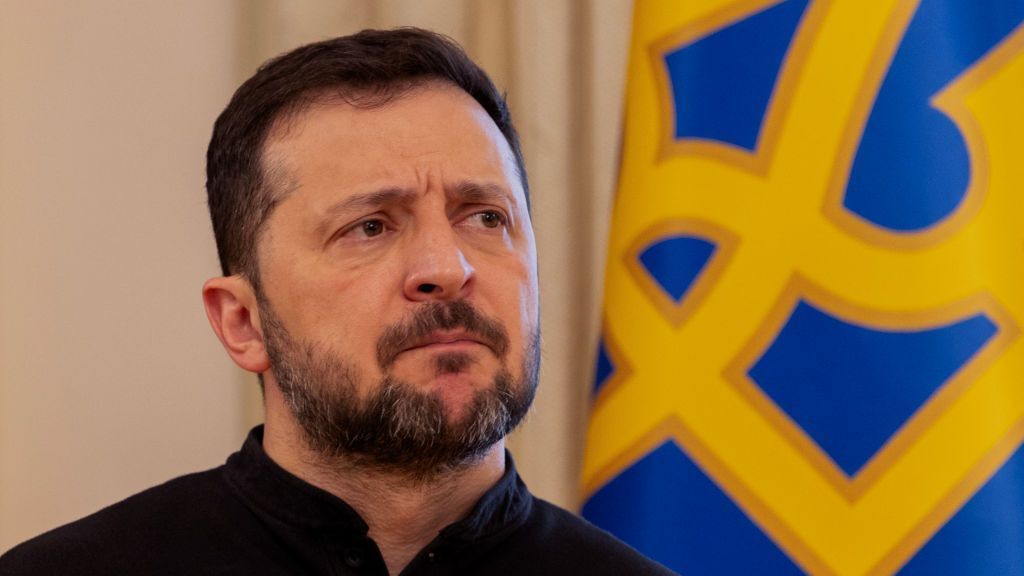
    Nearly four and a half years after Russia launched its full-scale invasion of Ukraine, peace negotiations to end the devastating conflict remain stuck in a deadlock, and a new diplomatic controversy has added friction to the process. Ukrainian President Volodymyr Zelensky has publicly criticized two senior U.S. negotiators — special envoy Steve Witkoff and presidential son-in-law Jared Kushner — for repeatedly traveling to Moscow for talks without ever making an official visit to Kyiv, calling the pattern of engagement deeply disrespectful.

    The two U.S. representatives first traveled to the Russian capital in late 2025, when ceasefire negotiations gained new momentum after months of stalled discussion, and returned for a second round of talks in January 2026. Witkoff, a former real estate developer and close ally of U.S. President Donald Trump, has now made eight trips to Moscow and held multiple face-to-face meetings with Russian President Vladimir Putin. Despite this extensive engagement with Moscow, neither Witkoff nor Kushner has ever traveled to Kyiv in an official negotiating capacity.

    In an interview with a Ukrainian media outlet, Zelensky emphasized that the unilateral focus on Moscow cannot be justified, even amid Ukraine’s challenging wartime logistics. “It’s disrespectful [for them] to come to Moscow and not Kyiv, it’s just disrespectful,” Zelensky said. The Ukrainian leader added that Kyiv is flexible on meeting locations, noting, “If they don’t want to, we can meet in other countries.”

    Earlier this April, Zelensky confirmed that the two envoys had been expected to visit Ukraine, but the planned trip was scrapped after the U.S. and Israel launched military strikes against Iran, shifting the entirety of Washington’s diplomatic and military focus to the Middle East. Currently, Witkoff and Kushner are part of a U.S. delegation traveling to Pakistan for ceasefire negotiations with Iran, a reality Zelensky acknowledged. Even so, he reaffirmed Kyiv’s commitment to maintaining close cooperation with Washington on ending the war.

    Ceasefire talks gained significant momentum in autumn 2025, after details emerged of a draft peace deal worked out behind closed doors by Russian and U.S. officials that included multiple provisions unfavorable to Ukraine. Kyiv pushed aggressively to be included in formal negotiations, leading to a series of multilateral meetings that culminated in a trilateral Russia-U.S.-Ukraine summit in mid-February 2026. By the end of that summit, both Moscow and Kyiv announced they had reached preliminary agreement on core military issues, including the demarcation of the current front line and frameworks for monitoring a potential ceasefire.

    However, several critical sticking points remain unresolved, keeping the talks at an impasse. Key unresolved issues include Kyiv’s demand that Russia repatriate the thousands of Ukrainian children forcibly deported to Russia since the start of the invasion, and Russia’s non-negotiable demand for a full regime change in Kyiv. The most contentious issue, though, remains the status of Ukraine’s eastern Donbas region, where Russia claims sovereignty over large swathes of Ukrainian territory that it currently occupies. Kyiv has repeatedly rejected any territorial concessions to end the war, and neither side has shown willingness to back down from their core positions on the Donbas.

    “We are looking for a compromise between two completely polar positions,” Kyrylo Budanov, Zelensky’s chief of staff, told reporters in February. “We have not yet found it.” Budanov added that the two sides face a stark choice: “Either we find a solution and end this war, or we all equally take responsibility for admitting that we didn’t find a solution and continue to kill one another — something we do quite efficiently and professionally.”

    Over more than four years of full-scale war, constant violence has become an everyday reality for millions of Ukrainians. Russia currently controls large portions of eastern and southern Ukraine, and daily artillery and infantry clashes continue along the thousand-kilometer front line stretching from the northeastern Luhansk region to the southern Kherson region. Ukrainian cities face regular large-scale aerial attacks, with Russia launching waves of drones and missiles that kill civilian bystanders and destroy critical civilian infrastructure.

    Just last week, for example, Russia launched a massive multi-wave attack involving more than 700 drones and missiles across Ukraine that killed at least 18 civilians, according to Ukrainian officials. In response, Ukraine has ramped up its own long-range drone attacks on Russian energy and industrial infrastructure deep inside Russian territory, targeting ports, military depots, factories, and oil export terminals. Calculations from Reuters show that as of early April 2026, at least 20 percent of Russia’s total oil export capacity has been taken offline by these attacks.

    Paradoxically, the global energy market disruption sparked by the U.S.-Iran conflict has delivered unexpected financial gains for Russia, boosting the country’s oil export revenue in recent months despite the export infrastructure damage. Even so, long-term economic indicators show Russia’s gross domestic product continues to contract amid sustained international sanctions and wartime economic pressures.

  • Hungary’s anti-LGBTQ+ legislation violates EU law, court finds

    Hungary’s anti-LGBTQ+ legislation violates EU law, court finds

    On Tuesday, the European Union’s highest judicial body delivered a landmark ruling against Hungary, concluding that a 2021 national law restricting LGBTQ+ content access for minors directly contradicts EU legislation and violates the bloc’s core founding treaty commitments to human rights and equal treatment.

    The challenged legislation was pushed through by the outgoing nationalist-populist administration of long-serving Prime Minister Viktor Orbán. In its official judgment, the European Court of Justice (ECJ), based in Luxembourg, emphasized that the law unfairly stigmatizes and pushes LGBTQ+ people to the margins of Hungarian society, failing to meet the EU’s strict requirement to bar discrimination on the grounds of sex and sexual orientation.

    Hungary’s 2021 statute banned public display of content depicting homosexuality or gender transition to underage people, while also introducing harsher legal punishments for pedophilia-related offenses. The Orbán government defended the policy, framing it as a necessary measure to shield children from what it labeled “sexual propaganda”. This stance was extended in subsequent actions: a later law and constitutional change effectively outlawed Budapest’s annual Pride parade, a major public gathering for the Hungarian LGBTQ+ community.

    Critics of the policy have long drawn parallels between the Hungarian legislation and Russia’s 2013 anti-LGBTQ+ “gay propaganda” law, arguing that the Hungarian rule deliberately conflates same-sex relationships with child sexual abuse. Despite the ban on the event last year, more than 100,000 Hungarians joined the Budapest Pride march in an open act of civil disobedience against the Orbán government’s policy.

    Tuesday’s ruling marks a historic first for EU judicial oversight: it is the first time the court has found a 27-nation EU member state in breach of Article 2 of the Treaty on European Union, the foundational document that enshrines the bloc’s core values of respect for human dignity, individual freedom, democratic governance, equality, rule of law, and protection of human rights for marginalized minority groups. The ECJ additionally determined that the Hungarian law also runs afoul of EU internal market regulations for digital and media services, as well as bloc-wide data protection standards.

    The ruling comes just weeks after Orbán, who led Hungary for 16 consecutive years, suffered a landslide defeat in the April 12 national parliamentary election. His party was ousted by the center-right Tisza party, led by newcomer Péter Magyar, who has pledged to reset Hungary’s often strained relationship with the European Union through a more collaborative approach. Magyar’s new government is set to take office in mid-May.

    While Magyar maintained a cautious stance on the culture-war LGBTQ+ rights debates championed by Orbán throughout his election campaign, he signaled a shift in tone during his post-election victory address. He told supporters that under his leadership, Hungary would become a nation “where no one is stigmatized for loving someone differently than the majority.”

  • Fired former UK official says he felt political pressure to approve Mandelson as US ambassador

    Fired former UK official says he felt political pressure to approve Mandelson as US ambassador

    The escalating political scandal over former UK prime minister Keir Starmer’s appointment of Peter Mandelson as ambassador to the United States has entered a new phase, with the top former civil servant who oversaw the approval process telling lawmakers that his team was pushed to rush the selection despite formal security red flags.

    In testimony delivered Tuesday to the House of Commons Foreign Affairs Committee, Olly Robbins, the former head of the UK Foreign Office who was fired by Starmer last week over the affair, clarified critical details: the initial security concerns that triggered vetting warnings were not connected to Mandelson’s long-documented friendship with convicted sex offender Jeffrey Epstein, who died in prison in 2019. When pressed by parliamentarians, Robbins declined to specify what issue led the government’s official vetting body to flag Mandelson as a risk.

    Robbins told the committee that the UK’s vetting agency had classified Mandelson as a “borderline case” that leaned toward a recommendation against granting him high-level security clearance. Despite this formal assessment, the Foreign Office ultimately approved the clearance, a decision that has now cost Robbins his position.

    Widening his account of the internal pressure that preceded the approval, Robbins said an “atmosphere of pressure” originated directly from Starmer’s Downing Street office, with a “very, very strong expectation” that Mandelson needed to be installed in the Washington post as quickly as possible. He added that there was a “generally dismissive attitude” toward the security vetting process among political officials back in January 2025, just before Mandelson traveled to the U.S. to take up the role.

    Starmer has already publicly acknowledged he made a misjudgment in appointing Mandelson, but has pushed back against growing opposition calls to step down from the premiership. He claims that he was never informed by Foreign Office officials of the failed security vetting assessment, saying he only learned of the red flags last week. He has called the failure to disclose this information “frankly staggering”, placing full blame for the affair on career civil servants rather than his own political leadership.

    Mandelson’s appointment was terminated by Starmer back in September 2025, nine months after he took up the ambassador post, when new details about his long-running ties to Epstein came to light. In response to the unfolding crisis, Starmer has ordered an official review to assess what security risks may have emerged from Mandelson’s nine months of access to top-secret UK government information while serving in Washington.

    Critics argue the entire affair is just the latest example of poor decision-making from Starmer, who led the centre-left Labour Party to a landslide general election victory in July 2024, but has been plagued by repeated missteps in office. Records show Starmer went ahead with the appointment even after his own internal staff warned him that Mandelson’s friendship with Epstein created major “reputational risk” for the government. Additional concerns were also raised about Mandelson’s past business ties to both Russia and China, but political leaders ultimately pushed forward with the selection, citing his experience as a former European Union trade chief and his deep network of connections among global political and business elites as valuable assets for working with U.S. President Donald Trump’s administration.

    The scandal has deepened unease within the parliamentary Labour Party, where lawmakers already faced anxiety over the party’s poor standing in national opinion polls. Starmer previously defused one wave of internal pressure back in February 2025, when multiple backbench Labour MPs called on him to resign over the unfolding controversy.

    Separately, Mandelson is currently the subject of an active criminal investigation by UK police over suspected misconduct in public office. The probe was launched after the U.S. Department of Justice released a large trove of Epstein-related documents in January 2025, which included emails suggesting Mandelson passed sensitive, market-moving UK government information to Epstein back in 2009 in the wake of the global financial crisis. British law enforcement arrested Mandelson in February 2025 as part of the inquiry; he has repeatedly denied any wrongdoing, has not been formally charged with any criminal offense, and faces no allegations of sexual misconduct connected to the Epstein case.

  • Wrist test ‘crucial’ for Alcaraz French Open hopes

    Wrist test ‘crucial’ for Alcaraz French Open hopes

    Two-time defending French Open men’s singles champion Carlos Alcaraz has opened up about the severity of his right wrist injury, confirming that the results of an upcoming medical scan will decide whether he can defend his title at the 2025 Roland Garros tournament, which kicks off on May 24. The world’s second-ranked men’s tennis player was forced to withdraw from back-to-back clay-court tournaments in the past week after picking up the injury during his opening-round win at the Barcelona Open. He subsequently pulled out of the Madrid Open, which is scheduled to begin play on Tuesday.

    In a candid interview with Spanish public broadcaster TVE, the 22-year-old seven-time Grand Slam winner revealed the injury is more severe than his medical team initially anticipated. “We’ve been doing everything in our power to set this up for a good outcome,” Alcaraz said. “I’m staying patient, we’re just taking things day by day right now. We have a series of tests coming up over the next few days, and once we have those results, we’ll know the state of the injury and what our next move will be.”

    Alcaraz’s recent drop in ranking adds an extra layer of stakes to his recovery: Italian star Jannik Sinner reclaimed the world No. 1 ranking earlier this month after defeating Alcaraz in the Monte Carlo Masters final. Alcaraz, who enjoyed a historic clay-court season in 2024 that included titles at Monte Carlo, Rome and Roland Garros, stands to lose a significant number of ranking points from his 2024 clay run, opening the door for Sinner to extend his lead at the top of the ATP rankings if Alcaraz is unable to compete in Paris.

    For Alcaraz, however, long-term career health takes priority over short-term results. The young star said he would rather delay his return to competition than rush back and risk aggravating the injury. “I’d much rather come back a little later when I’m 100% match fit than jump back in too early, rushed and not feeling right,” he explained. “God willing, I’ve got a very long career ahead of me, and pushing too hard to play this Roland Garros could do serious damage that hurts my performance in future tournaments. Injuries are just part of professional sport, you have to accept when things don’t go your way. If I want to avoid this becoming a long-term problem, I need to recover properly first.”

    Alcaraz has built an extraordinary record at the French Open over the past three years, reaching at least the semi-finals of the clay-court Grand Slam every event since 2023 and claiming back-to-back titles in 2023 and 2024. All eyes in the tennis world will now be on his upcoming test results to see whether he will get the chance to go for a third consecutive Roland Garros crown next month.

  • No cuddles, but lots of care: How a Paris-area wildlife hospital keeps rescued animals wild

    No cuddles, but lots of care: How a Paris-area wildlife hospital keeps rescued animals wild

    Nestled in Maisons-Alfort, a southeastern suburb of Paris, France, a one-of-a-kind wildlife hospital operates under a simple but strict rule: no affectionate cuddling, but unwavering, expert care for every wild patient that passes through its doors. Every year, the facility takes in thousands of injured, ill, and orphaned wild animals, most of whom have been harmed directly or indirectly by human activity and the relentless spread of urbanization. Its ultimate mission is to heal these creatures and return them to their natural wild habitats.

    Last week, local residents who keep hunting dogs discovered a tiny female fox cub alone in an outskirt garden, with no sign of her mother anywhere nearby. Estimated to be just two weeks old — far too young to fend for herself in the wild — the cub was quickly transported to the hospital for care. After a thorough examination by veterinarian Julie Piazza, the cub was found to be in generally good condition, with only a small wound likely caused by a bite from either another wild animal or one of the residents’ hunting dogs. Currently, a team of dedicated volunteers provides 24-hour care for the cub, feeding her specially formulated artificial milk that matches the nutrient composition of a wild fox mother’s milk. Piazza noted that the cub currently has a slightly swollen abdomen after adjusting to her new diet, a common condition for very young animals that have experienced a disruption to their regular feeding routine.

    Animal caretaker Valentin Delon explained that the facility’s no-cuddling policy is not a lack of compassion, but a critical measure to protect the animals’ future. “Any kind of imprinting that makes animals dependent on human caregivers long-term has to be completely avoided,” Delon said. “So we don’t hold them, we don’t interact with them more than necessary, and we maintain a careful distance for their own good. If they become attached to humans, they’ll never be able to survive once released back into the wild.”

    Once the cub gains enough weight and matures, she will not be released directly into the wild. Instead, she will first move to a specialized outdoor rehabilitation enclosure, where she will socialize with other young foxes. Staff will use a gradual release process: the enclosure door will be left open so the fox can come and go freely while still having access to food, before portions are slowly reduced to encourage her to hunt and forage on her own.

    Over the 12 months prior to this report, the Wildlife Veterinary Hospital of Maisons-Alfort admitted more than 10,400 wild animals, covering a huge range of native species: from songbirds and waterfowl to European mammals including foxes, roe deer, and hedgehogs. Run by the nonprofit organization Faune Alfort, it is the only facility in the greater Paris region that provides medical care and rehabilitation for a full spectrum of wild species, with approximately 86% of its patients being birds. From swans with broken wings and injured hedgehogs to orphaned ducklings often found abandoned on urban balconies and injured city pigeons, every animal receives the same level of skilled care, regardless of how common or rare it is.

    Elisa Mora, head of communications for Faune Alfort, told reporters that the facility saw a record 200 admissions in a single day last summer. Between April and September, wild animals enter their breeding season, bringing a surge of orphaned or injured juvenile animals to the hospital. “All wild animals face growing pressure from human activity, but juveniles are far more vulnerable than adults,” Mora explained. For animals whose injuries are too severe to heal, or who can never adapt to survival in the wild, humane euthanasia is the only option.

    Funded almost entirely by individual donations and charitable grants, the hospital depends heavily on its network of volunteers to handle daily feeding, cleaning, and basic care. The organization traces its roots back to 1987, when veterinarian Jean-François Courreau founded Faune Alfort after seeing veterinary students eager to develop better care protocols for wild animals. Six years later, the organization opened its dedicated hospital on the campus of the National Veterinary School of Alfort, an institution founded in the 18th century.

    “It’s impossible to stand by and watch an animal in distress when you have the training to help,” Courreau said. “Before this center existed, people who found an injured wild animal would think ‘there’s nothing I can do, this animal will die.’ When they know they can bring it here to get care, it’s a huge relief for them too.”

    Data from the hospital confirms that 60% to 80% of all admitted animals are harmed by human activity: common causes include vehicle collisions, entanglement in barbed wire fencing, and accidental injury from gardening or agricultural machinery. As urbanization continues to encroach on native wildlife habitats across France, the role of this unique wildlife hospital has grown more critical than ever.

  • Late Queen Elizabeth II’s legacy still looms over British monarchy 100 years after her birth

    Late Queen Elizabeth II’s legacy still looms over British monarchy 100 years after her birth

    LONDON — As the United Kingdom prepares to mark what would have been the 100th birthday of Queen Elizabeth II on Tuesday, the late monarch’s enduring hold on British public affection remains clearly visible, even as debate simmers over her complicated legacy.

    Near Buckingham Palace, the Cool Britannia gift shop tells a clear story of public preference: four years after her passing, mugs, tea towels, key chains and other souvenirs bearing the face of Britain’s longest-reigning monarch sell out rapidly, while merchandise featuring her son, current King Charles III, moves far more slowly. Store manager Ismail Ibrahim confirms that on any given day, Elizabeth II-themed products outsell those of the reigning king by a wide margin. Even two years after her death in September 2022, when most living Britons never knew any other monarch, a reference to “the queen” still brings Elizabeth to mind far more often than King Charles’ wife, Queen Camilla.

    Elizabeth’s 70-year on the throne shaped the modern British monarchy, transforming her from a glamorous young sovereign who lifted national morale in the grim post-WWII era into a beloved matriarch figure who united the country through the COVID-19 pandemic. But time has also brought growing scrutiny of her legacy. While she is widely celebrated as a symbol of unbroken tradition and national continuity through the end of the British Empire, shifting economic tides and large-scale migration that reshaped Britain’s national identity, one cloud lingers: the prolonged delay in addressing the Jeffrey Epstein scandal linked to her second son, the former Prince Andrew, with critics questioning why the issue was allowed to remain unresolved for years.

    “Despite her absence, Elizabeth II remains this key presence whenever we think about the monarchy,” Ed Owens, author of *After Elizabeth: Can the Monarchy Save Itself?*, told the Associated Press. “She’s certainly the most significant figure in the history of the institution in the last 100 years and, I think, therefore deserves probably the attention that’s going to be focused on her in connection with what would have been her 100th birthday.”

    Official centenary celebrations include a Buckingham Palace reception hosted by King Charles, where he will honor other centenarians who share Elizabeth’s birth date. A commemorative memorial garden will also be dedicated in London’s Regent’s Park, and an exhibition showcasing the queen’s iconic wardrobe is already open to the public.

    What many have forgotten is that Elizabeth Alexandra Mary Windsor was never born to be queen. Born on April 21, 1926, in a private London Mayfair townhouse rather than a royal palace, she was the eldest daughter of King George V’s second child, Albert. For the first decade of her life, she was expected to live a quiet, comfortable life as a minor royal: focused on horses, dogs, country estate living and a suitable marriage, far from the spotlight of the crown. That all changed when her uncle, King Edward VIII, abdicated the throne to marry Wallis Simpson, an American divorcée. Elizabeth’s father became King George VI, suddenly catapulting the young princess into position as heir to the British throne. She would officially become queen on February 6, 1952, the day her father died, receiving the news at age 25 while on tour in Kenya before rushing back to London to assume her new role.

    For seven decades, Elizabeth carried out her royal duties with meticulous consistency. She presided over the annual State Opening of Parliament, robed in ermine and wearing the imperial crown; hosted state banquets for global leaders at Buckingham Palace; and made thousands of public appearances across the United Kingdom, famously wearing vividly colored tailored outfits to ensure she was visible to crowds. She also served as a global ambassador for the United Kingdom, undertaking more than 200 overseas visits to strengthen ties with former colonies including India and Tanzania, post-war former enemies Germany and Japan, and long-standing allies such as the United States.

    Late in her reign, she unexpectedly gained new fame as a global internet icon, thanks to a skit alongside James Bond’s Daniel Craig that seemingly saw her parachute into the 2012 London Olympic Opening Ceremony, and a later viral tea party sketch with beloved children’s character Paddington Bear for her Platinum Jubilee celebrations marking 70 years on the throne.

    “In a world of relentless change, she moved with the times — applauding the nation’s successes and consoling Britons during difficult times, while remaining above the fray of politics,” Robert Hardman, author of *Elizabeth II: In private. In public. The Inside Story*, told the AP.

    That decades-long record of steady public service makes the delayed response to the Andrew Epstein scandal all the more notable. Despite repeated warnings about Andrew’s boorish conduct, questionable business arrangements and connections to convicted sex offender Jeffrey Epstein, Andrew served for 10 years as the UK’s international trade envoy and retained his full royal title until 2022, when King Charles finally stripped him of his royal patronages and title, leaving him known publicly by his civilian name Andrew Mountbatten-Windsor.

    “He was problematic and that gave her cause for worry,” Hardman said. “But I do think people let him have an easy ride because they thought if they came down hard on him, they might somehow upset the queen. Now that’s partly attributable to her, but partly attributable to others.”

    Even with that controversy, Hardman argues that Elizabeth’s far-reaching achievements as queen far outweigh any missteps. She took the throne as a 25-year-old mother of two, when intercontinental jet travel was nonexistent and human spaceflight had not yet been achieved, and remained a constant, authoritative presence in British public life through seven decades of massive social, technological and political change. “She just reigned through this vast span of the ages and was as authoritative and loved and respected at the end as she was at the beginning,” Hardman said. “And she was working till the very end, ‘til her last day.”

    As historians continue to debate her mixed legacy, ordinary visitors to the UK are forming their own nuanced views. Sylvie Deneux and her daughter Clara, traveling from their home in Lille, France, stopped at the Cool Britannia gift shop during their London trip, and praised Elizabeth as an icon of elegance. When asked about the Andrew scandal, Deneux acknowledged that failing to act sooner was a misstep, but offered sympathy for the late queen, noting the decision was as much a mother’s choice as a monarch’s. “Can we blame her?” Deneux asked. “I’m not sure.”

  • Slovaks to vote in a July referendum on lifelong payments for Prime Minister Fico and others

    Slovaks to vote in a July referendum on lifelong payments for Prime Minister Fico and others

    BRATISLAVA, Slovakia — Slovak President Peter Pellegrini announced Monday that the nation will hold a nationwide referendum this coming July 4 to let voters decide on two high-stakes, widely debated issues tied to Prime Minister Robert Fico’s populist government: ending the controversial lifelong benefit payments granted to Fico and other senior former leaders, and reinstating the dissolved special prosecutor’s office that targeted large-scale corruption and organized crime.

    The referendum move comes after a grassroots petition drive organized by the Democrats, a pro-Western opposition party that currently holds no seats in parliament, crossed the legal required threshold of 350,000 valid citizen signatures. While public pressure has mounted for a vote on snap parliamentary elections amid widespread discontent with Fico’s administration, Pellegrini confirmed that question will not appear on the ballot. He cited a 2021 binding ruling from Slovakia’s Constitutional Court, the nation’s highest legal body, which deemed a public vote on early elections unconstitutional.

    The lifelong payment policy at the center of the referendum was expanded in 2024, just after an assassination attempt left Fico gravely wounded during a pre-election campaign event. The shocking attack on the prime minister sent ripples across the small Central European nation and the entire European continent. Previously, this lifelong benefit — which grants eligible recipients a monthly payment equal to the full salary of a sitting member of parliament — was only available to former presidents. The revised rules extended the perk to any prime minister or parliamentary speaker who has served at least two full terms in office, framed by the government as a measure to enhance long-term security for former top officeholders.

    The second referendum question addresses the fate of the special prosecutor’s office, which Fico’s ruling coalition shut down through legislative action in 2024. The independent body was tasked with prosecuting high-level corruption, transnational organized crime and violent extremism, and its elimination drew fierce condemnation from both domestic critics and international observers. Thousands of Slovak citizens gathered in repeated street protests to oppose the closure, which came as multiple individuals with close ties to Fico’s ruling party were facing active corruption prosecutions from the office.

    Fico, who returned to the prime ministership in 2023, has emerged as one of Slovakia’s most polarizing modern political figures. His government’s pro-Russian stance on the ongoing war in Ukraine and a series of domestic policy shifts that critics say erode democratic checks and balances have already sparked mass, sustained protests across the country. This referendum marks the latest flashpoint in the growing tension between the populist government and its opponents.

    It is worth noting that only one referendum has ever succeeded in Slovakia’s post-independence history: the 2003 vote that approved the country’s accession to the European Union. Every other public referendum held in the nation has failed to meet the required voter turnout threshold, a hurdle that could still block the results of this year’s vote from taking effect even if a majority of participating voters back the opposition’s proposed changes.