标签: Europe

欧洲

  • Hungary’s Magyar announces ministers after landslide election win

    Hungary’s Magyar announces ministers after landslide election win

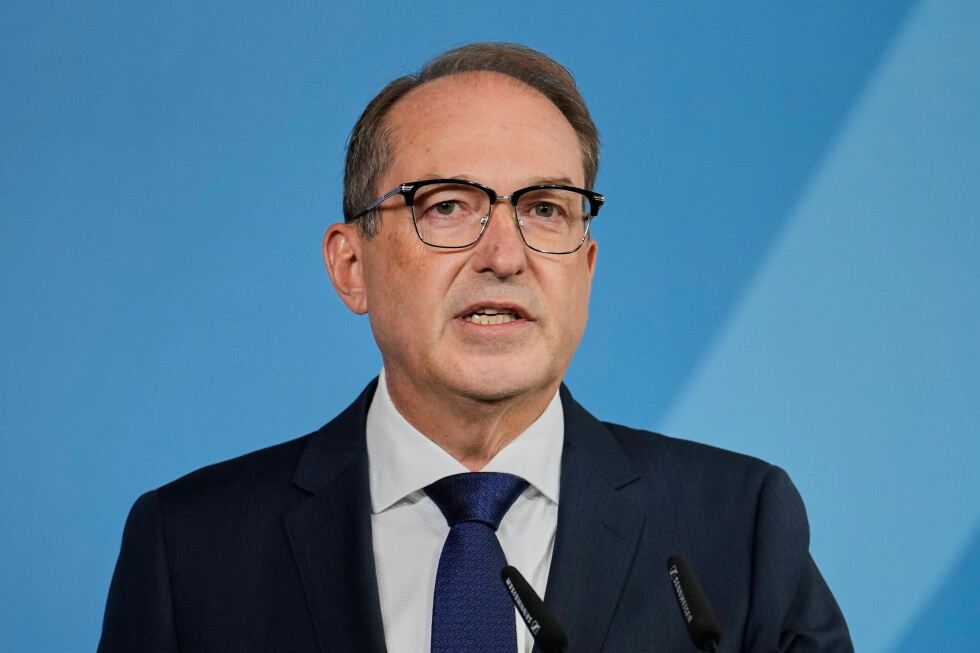
    BUDAPEST, Hungary — Fresh off a defining electoral upset that ended 16 years of populist rule in Hungary, prime minister-in-waiting Péter Magyar has released the first slate of cabinet nominees for his incoming administration, marking the first formal step toward building his new government following an opening meeting of his party’s parliamentary bloc.

    Magyar and his center-right Tisza party secured a historic landslide victory on April 12, ousting long-serving Prime Minister Viktor Orbán and capturing a supermajority two-thirds of seats in Hungary’s national parliament. The lopsided win grants Tisza the legislative power to roll back decades of controversial policies enacted by Orbán’s administration. Out of the 199 total parliamentary seats, Tisza walked away with 141 — the largest governing majority Hungary has seen since the end of Communist rule. Orbán’s far-right, euroskeptic Fidesz party, which held 135 seats before the vote, will now hold just 52 seats in the new legislature.

    Since his victory, Magyar has campaigned on a platform of systemic overhaul, promising to restore democratic institutions and the rule of law, which critics argue eroded significantly during Orbán’s tenure. He has also pledged to launch accountability investigations into figures he accuses of overseeing and profiting from the widespread public corruption that flourished under the previous government.

    Speaking at a press briefing in Budapest on Monday, Magyar laid out plans to restructure the national government, expanding the number of cabinet ministries from the current 12 to 16. Under his plan, separate portfolios for health, environmental protection, and education — which were merged into larger departments under Orbán’s administration — will be reestablished as standalone ministries.

    Among the first nominees announced, Magyar named Anita Orbán (no relation to outgoing Prime Minister Viktor Orbán) as his pick for foreign minister, István Kapitány for the role of economy and energy minister, and András Kármán to lead the finance portfolio. Magyar emphasized that his administration will work every day to honor the mandate Hungarian voters gave the party, saying it will be “a government that will be worthy of the Hungarian people’s trust.”

    The incoming prime minister confirmed that the inaugural session of the new parliament will convene on either May 9 or 10. Immediately following the opening session, the legislature will vote to confirm the new prime minister, with full confirmation of all cabinet appointments expected in the days after that vote.

  • EU says Serbia could lose access to a billion euros over democratic backsliding

    EU says Serbia could lose access to a billion euros over democratic backsliding

    BRUSSELS – The European Union has issued a stark ultimatum to Serbia: reverse eroding democratic standards or risk losing access to nearly €1.5 billion ($1.8 billion) in pre-accession development funding, EU Enlargement Commissioner Marta Kos confirmed to EU legislators Monday.

    Kos emphasized that the European Commission is increasingly alarmed by multiple troubling developments in Serbia, which has been working toward EU accession for years. The bloc’s concerns span systemic issues, including newly enacted laws that weaken judicial independence, heavy-handed crackdowns on public protest movements, and repeated interference with independent media outlets. These issues have raised serious questions about whether Serbia continues to meet the eligibility requirements for disbursements from EU pre-accession financial instruments, Kos added.

    International election monitors have already documented widespread irregularities and instances of voter intimidation during last month’s local elections held across 10 Serbian municipalities, adding to international scrutiny of Belgrade’s democratic commitments.

    Under the EU’s pre-accession assistance framework, candidate countries gain access to large-scale growth-focused funding on the condition that they implement targeted democratic and institutional reforms. To date, Serbia has received roughly €110 million ($130 million) from the allocation, leaving the remaining €1.5 billion in funding now hanging in the balance, Kos said.

    This warning comes amid a broader EU push to deepen integration with Western Balkan nations, a strategy accelerated after Russia launched its full-scale invasion of Ukraine in February 2022. The bloc has grown increasingly concerned that Moscow could seek to expand its influence and destabilize the Western Balkans, a region still grappling with political and economic fallout from the violent conflicts of the 1990s.

    Serbian populist President Aleksandar Vucic has repeatedly stated his government’s official goal of securing EU membership, but his administration has maintained close political and economic ties to Moscow. Last year, Vucic openly defied EU diplomatic warnings by attending Russia’s annual Victory Day parade in Moscow alongside Russian President Vladimir Putin, a move that deepened distrust between Belgrade and Brussels.

    To address growing concerns over judicial reforms, experts from the Venice Commission – Europe’s leading constitutional and democratic oversight body – traveled to Serbia last month. The delegation held meetings with senior political leaders, judicial heads, and legal officials to review concerns raised by the speaker of Serbia’s national parliament. The Commission is set to release an urgent formal opinion on its findings in the coming weeks.

    Kos made clear that Brussels’ demands are non-negotiable: Serbia must fully bring its national judicial legislation into line with the Venice Commission’s upcoming recommendations, and take concrete steps to restore full independence to the country’s media sector. “Serbia has to deliver,” Kos told lawmakers.

  • Tour de France Femmes UK stage routes revealed

    Tour de France Femmes UK stage routes revealed

    For the first time in history, the women’s edition of the Tour de France will bring its world-class racing to British roads, with organisers pulling back the curtain on the full route details for the event’s opening three stages of the 2027 race.

    This historic occasion marks a milestone for global cycling: 2027 will be the first time that both the men’s and women’s Grand Departs (opening stages) of the Tour de France are hosted outside France in the same nation, building on the UK’s long history of welcoming the world’s most prestigious cycling race. The men’s race has previously held its opening stages in Britain four times, most recently in 2014 when an estimated 4.8 million fans lined the roads to cheer on riders.

    The three newly revealed stages for the 2027 Tour de France Femmes Avec Swift bring a mix of sprint opportunities, high-altitude drama, and a groundbreaking first for the women’s event. The opening 85.7km stage will kick off in Leeds and finish with a likely sprint finish in Manchester, setting the tone for a race that will push even the most elite riders to their limits. The most anticipated test comes in the second stage: a gruelling 154km route from Manchester to Sheffield that packs nearly 3,000 metres of climbing, including the iconic Winnats Pass in the Peak District. Race organiser ASO calls this leg “one of the hardest Grand Depart stages we’ve ever seen before”, a description echoed by rising British cycling star Cat Ferguson. The third and final opening stage will be an approximately 18km team time trial finishing at London’s Mall, a first for any edition of the women’s Tour de France; full route details for the time trial are set to be announced this coming October.

    For Ferguson, a 19-year-old rider with Movistar who was born in the Yorkshire town of Skipton, the opportunity to race on home roads feels like a full-circle moment. As a young child, she watched the 2014 men’s Grand Depart in Yorkshire from the side of local roads, and now she is gearing up to compete in the 2027 edition. “I trained on those roads and I know they’re going to be super brutal stages. Stage two in particular – always up and down. It’s really going to be one [stage] that can change the Tour. The GC [general classification] leaders can lose a lot,” Ferguson explained.

    The 2027 event will see the opening three stages of both the men’s and women’s races held across the UK, with the men’s race kicking off on 2 July and the women’s race starting on 30 July. Men’s route details for stages starting in Edinburgh, Keswick and Welshpool were first unveiled back in January 2026. UK government’s Department for Culture, Media and Sport (DCMS) has billed the combined event as “the most accessible major sporting spectacle ever held in Britain”: organisers estimate the combined Grand Departs will pass within an hour’s drive of 60% of the UK population, with free public access to spectating along more than 900km of public roads.

    Tour de France Femmes race director Marion Rousse highlighted the broader significance of the UK hosting the women’s race, saying: “The United Kingdom has already shown its passion for the Tour, and these stages will once again showcase the energy of the crowds, the beauty of the landscapes and the growing importance of women’s cycling on the world stage.” The official route announcement included a focus on growing grassroots participation, with seven young girls joining race leaders and professional riders as part of the JOY programme, an initiative designed to reduce physical inactivity and improve mental wellbeing among girls in the UK.

    The 2027 event comes as the UK is poised to reap the benefits of a previous golden age of British cycling sparked by the 2014 Tour Grand Depart. After British riders Bradley Wiggins claimed the 2012 Tour title and Chris Froome won in 2013, the 2014 event cemented the UK’s status as a global cycling powerhouse. Today, that legacy has grown: the UCI World Tour now counts a combined record 49 British male and female riders, with many ranked among the top contenders to win the sport’s biggest events. The combined six stages of the men’s and women’s races in 2027 draw a global audience of over one billion viewing hours across 190 countries, making it an unprecedented moment for UK cycling.

    Even with this momentum, the event faces notable challenges. British Cycling, the national governing body for the sport, has seen declining membership numbers in recent years, and only stepped in to rescue the men’s and women’s Tours of Britain from collapse in 2024. Hosting major pro cycling races on closed public roads in the UK is far more expensive than it is on the European continent, driven largely by exorbitant policing costs for high-speed events that require a full race cavalcade of 40 cars and dozens of motorbikes. While no official cost figures have been released, unofficial estimates place the total cost of hosting all six 2027 stages at over £50 million, with the majority of funding coming from central government and local councils.

  • Migrants rush to apply under Spain’s new mass legalization program

    Migrants rush to apply under Spain’s new mass legalization program

    MADRID – Starting Monday, undocumented migrants living across Spain gained the opportunity to formalize their residency, after the Spanish government rolled out one of the most ambitious mass legalization initiatives in recent European history. The program, which could regularize the status of between 500,000 and 840,000 unauthorized foreign residents already living and working in the country, marks a sharp break from restrictive migration policies adopted by many other European governments in recent years.

    First announced back in January and finalized earlier this month, the amnesty scheme offers eligible applicants a one-year renewable residence permit. To qualify, migrants must prove they have resided in Spain for a minimum of five months and hold a clean criminal record. The application window closes at the end of June, a tight timeline that has sparked questions about whether authorities can process the expected volume of submissions in time.

    To accommodate applicants, the government has expanded access across multiple public service points: more than 370 post offices nationwide are accepting in-person submissions, alongside 60 social security offices and a small network of dedicated migration centers. Online applications launched earlier, on Friday, to streamline the process for tech-accessible applicants.

    Early reports from application sites in major urban centers including Madrid and Barcelona confirm the process proceeded without major incidents, though many migrants reported extended wait times even for those who booked scheduled appointments in advance.

    Nubia Rivas, a 47-year-old migrant from Venezuela who submitted her application at a central Madrid post office, noted that while the process moved slowly, it remained steady and straightforward. “It’s pretty simple since I made an appointment online and I was given one for this morning,” Rivas explained. “The process here is a little slow, but it’s fluid.”

    Johana Moreno, another Venezuelan migrant who applied alongside her husband at the same Madrid location, shared her optimism about what legal status would mean for her future. Once a professional archivist in her home country, Moreno now works as a house cleaner to support herself in Spain. “It’s what we want,” she said of the regularization effort. “To be well, to work, to contribute, all those things. To pay our taxes. We know that we’ll have rights, but also we’ll have obligations.”

    Spanish Prime Minister Pedro Sanchez, leader of the country’s progressive government, has framed the initiative as both a matter of fundamental justice and an economic necessity. Sanchez argues that migrants already integrated into Spanish communities and workforce should be permitted to participate in society on equal footing, contribute to public finances through taxes, and access the same rights as documented residents.

    With one of the fastest aging populations in the European Union, Spain’s government says the program directly addresses a critical labor shortage that threatens the country’s ongoing economic growth. Undocumented migrants already fill critical roles across Spain’s core economic sectors, including commercial agriculture, tourism, and domestic and hospitality services, accounting for a large share of the workforce in these industries.

    This departure from Europe’s broader restrictive migration trend has won the backing of both Spanish business associations and major trade unions. The contrast with other European nations, where many governments have prioritized curbing new migrant arrivals and ramping up deportations of undocumented residents, could position Spain as a test case for a more permissive approach to integrated unauthorized migrant populations.

    Currently, foreign-born residents account for roughly one in five people living in Spain, a share that has grown dramatically over the past two decades as migration flows from Latin America and North Africa have increased. Most of the migrants eligible for the current amnesty come from Venezuela, Colombia, and Morocco, having fled political instability, widespread violence, and deep poverty in their home countries.

    This legalization effort is not without precedent in Spanish policy: the country has launched six previous amnesty programs for undocumented migrants between 1986 and 2005, with some of those initiatives even implemented by past conservative governments.

    For many migrants, the program represents a lifelong chance to escape the uncertainty of undocumented life. Mourad El-Shaky, a 25-year-old Moroccan migrant who waited four hours outside Barcelona’s city hall last Friday to collect required paperwork for his application, described what legal status would change. El-Shaky made the dangerous journey to Spain via Turkey, traveling overland west despite the short maritime distance between Morocco and Spain. “Without papers (work and residency permits), your hands are tied,” he said. “You’re like a bird that can’t fly, with broken wings. This legalization will solve many things.”

  • Switzerland great Marcel Hug claims his ninth Boston Marathon wheelchair title and fourth straight

    Switzerland great Marcel Hug claims his ninth Boston Marathon wheelchair title and fourth straight

    On a crisp, sunlit Monday morning at the 130th running of the Boston Marathon, Swiss wheelchair racer Marcel Hug delivered yet another masterclass in endurance and competitive dominance, securing his ninth career title in the event and extending his consecutive winning streak to four straight victories.

    Starting temperatures hovering in the low 40s Fahrenheit created ideal racing conditions for the elite wheelchair field, and Hug wasted no time stamping his authority on the 26.2-mile course. Within just three miles of the starting gun, he had broken away from the pack, opening a 13-second gap over British veteran David Weir. By the race’s halfway mark, that advantage had ballooned to 55 seconds, leaving his closest competitors struggling to match his blistering pace.

    When he crossed the finish line, Hug’s unofficial time clocked in at 1 hour, 16 minutes and 6 seconds — a result that cements his standing as one of the most decorated athletes in Boston Marathon history. With nine titles to his name, he now sits alone in second place on the all-time men’s wheelchair leaderboard, trailing only South African icon Ernst van Dyk, who set the current record of 10 titles over a 13-year stretch between 2001 and 2014.

    American top contender Daniel Romanchuk crossed second with a time of 1:22:44, while Jetze Plat of the Netherlands rounded out the top three with a finish time of 1:24:13. In the women’s wheelchair division, Britain’s Eden Rainbow-Cooper claimed the top spot on the podium.

    Hug’s historic win in Boston extends an extraordinary run of form for the Swiss athlete that dates back to his 2022 victory at the Berlin Marathon. Across seven World Marathon Major events since that win, Hug has finished outside the top spot just once: he took second place at the 2024 New York City Marathon earlier this year, a rare blemish on an otherwise perfect stretch of elite competition.

  • Here’s what to know about Timmy, the humpback whale that’s sick and stranded in the Baltic Sea

    Here’s what to know about Timmy, the humpback whale that’s sick and stranded in the Baltic Sea

    BERLIN – A global audience has watched the likely final days of a lost humpback whale, nicknamed Timmy by local media, via continuous livestream after repeated attempts to guide it back to open ocean have failed, leaving the disoriented marine mammal growing increasingly frail and ill in the shallow Baltic Sea off Germany’s northern coast.

    The endangered animal, which naturally inhabits the nutrient-rich waters of the Atlantic Ocean, was first spotted wandering the Baltic on March 3. To date, researchers have not reached a consensus on what drove the 12 to 15-meter, 12-metric ton whale hundreds of kilometers off its intended migration path. The most common working theory among marine specialists is that Timmy lost its bearings while chasing a school of herring or veered off course during its annual seasonal migration.

    Since its initial sighting near the eastern German town of Wismar, Timmy has repeatedly become stuck in shallow coastal waters, showing clear signs of severe distress. For days, the giant mammal has barely moved, breathing in irregular patterns that have alarmed observers. The Baltic Sea’s far lower salt concentration compared to the whale’s natural Atlantic habitat has also caused a painful, progressive skin condition, which rescue teams have attempted to treat by applying multiple kilograms of medicinal zinc ointment. Compounding its dangerous disorientation, every time Timmy does move, it consistently swims further inland, farther from the open North Sea passage that would lead it home.

    Timmy’s plight has gripped the German public, sparking round-the-clock media coverage and fierce public debate over how to respond to the stranded whale. Local news outlets have streamed footage of the animal 24/7 to meet overwhelming public demand, while major national online publications send push notifications for even the smallest updates on Timmy’s changing condition. Environmental activists have organized peaceful protests on Wismar’s beaches calling for urgent action to save the mammal, and social media influencers have clashed over whether continued interventions do more harm than good, with some arguing the whale should be allowed to die peacefully in its current location rather than endure further stress from rescue attempts.

    Public curiosity grew so intense that local law enforcement was forced to establish a 500-meter exclusion zone around the whale’s location to prevent overcrowding that would add to the animal’s stress. Even with this restriction in place, a 67-year-old woman made headlines over the weekend when she jumped from a private boat in an attempt to get closer to Timmy before authorities intercepted her.

    Early rescue attempts, which mobilized police boats, inflatable craft and even heavy excavators, managed to temporarily refloat the whale after it became stranded on sandbars. But each time, the disoriented mammal failed to find the route to the North Sea and eventually returned to shallow coastal waters off Wismar.

    Rescue teams later developed a complex, large-scale intervention plan: inflatable air cushions would lift the whale onto a reinforced tarp, which would then be secured to two large pontoons and towed out to open ocean by a tugboat. German state officials approved the privately funded initiative, but the plan was thrown off schedule when the whale began moving again as high tide rose on Monday. Vessels were immediately deployed to guide Timmy toward the exit route, but many involved in the operation have already abandoned all hope of a successful rescue.

    Opinions among marine experts remain deeply divided over the ethics and effectiveness of continued intervention. Thilo Maack, a marine biologist with the environmental organization Greenpeace, told the Associated Press that repeated attempts to move and guide the whale are only causing it additional, severe stress that accelerates its decline. “I believe the whale will die very soon now. And I would also like to raise the question: What is actually so bad about that?” Maack said. “Yes, animals live, animals die. This animal is really, really very, very, very sick. And it has decided to seek rest.”

  • Elon Musk summoned by French prosecutors amid ongoing X probe

    Elon Musk summoned by French prosecutors amid ongoing X probe

    A high-stakes legal and regulatory clash over Elon Musk’s social media platform X has entered a new phase, with French authorities calling both the tech billionaire and X’s former CEO Linda Yaccarino to appear for a voluntary interview in Paris this Monday. As the investigation into alleged criminal activity on the platform stretches into its second year, uncertainty lingers over whether Musk will comply with the summons, following a well-documented pattern of him declining to appear for official questioning in the past.

    The probe first launched in January 2025, after French prosecutors received multiple formal reports flagging harmful content circulating on X’s recommendation algorithm. Just one month later, in February 2026, cybercrime units from the Paris prosecutor’s office executed raids on X’s French offices as the scope of the inquiry expanded. The investigation now encompasses serious new allegations tied to Grok, X’s controversial in-house AI chatbot. Prosecutors suspect Grok has been leveraged to generate non-consensual sexual deepfake imagery, including manipulated content targeting women and reportedly even underage individuals.

    The list of suspected offences being probed extends far beyond deepfake misuse. French investigators are also examining claims that X facilitated complicity in the possession and organized distribution of child sexual abuse material (CSAM), violated personal image rights through non-consensual explicit synthetic content, and carried out fraudulent large-scale data extraction via an organized criminal network.

    This latest summons follows a reported diplomatic rift between French and U.S. justice authorities. The Wall Street Journal revealed over the weekend that the U.S. Department of Justice sent an official letter to French prosecutors declining to assist with the X investigation, and accusing French officials of misusing the U.S. legal system to advance their inquiry. Musk quickly weighed in on the report via a post on his own platform, writing simply, “indeed, this needs to stop.”

    Musk and X’s leadership have repeatedly framed the entire investigation as a politically motivated attack rather than a legitimate legal inquiry. Following the February office raids, X issued a formal statement denying all wrongdoing, dismissing the allegations as entirely baseless. The company argued that the raids amounted to a “staged” action that distorted French law, bypassed standard due process, and threatened protections for free speech. “X is committed to defending its fundamental rights and the rights of its users,” the company added in that statement.

    Yaccarino, who led X through the period when the alleged offences occurred, has echoed this hardline stance. She previously took to X to accuse French prosecutors of waging “a political vendetta against Americans.” Now, she joins Musk in being called to appear for voluntary questioning this month.

    A history of non-compliance has fueled speculation that Musk may skip the scheduled Monday interview, which was initially set by prosecutors back in February. In September 2024, the billionaire failed to appear for a court-ordered questioning as part of a U.S. Securities and Exchange Commission investigation into his 2022 takeover of the platform, then known as Twitter.

    The French investigation has already triggered a wave of additional legal and regulatory action against X and its parent AI firm xAI across the globe, including multiple probes launched by regulators in the United Kingdom and throughout the European Union. As of Monday morning, neither the Paris prosecutor’s office nor the U.S. Department of Justice has issued an updated comment on the case in response to requests from the BBC.

  • Tired of political turmoil, Bulgarians give ex-president a convincing mandate for change

    Tired of political turmoil, Bulgarians give ex-president a convincing mandate for change

    SOFIA, Bulgaria — In a result that reshapes Bulgaria’s turbulent political landscape, the nation’s central electoral commission confirmed Monday that former president Rumen Radev’s center-left Progressive Bulgaria coalition has won a decisive majority in the country’s latest parliamentary election, bringing a close to five years of fragmented governance and unstable short-lived governments.

    With 96% of all ballots processed by Monday morning, early official data put the Radev-led coalition at 44.7% of the popular vote — a lead of more than 20 percentage points over its nearest competitors. Former prime minister Boyko Borissov’s long-dominant center-right GERB party captured 13.4% of the vote, while the pro-Western We Continue the Change-led reformist bloc followed closely at 12.9%, with the two rival groups running nearly neck-and-neck for second place. Latest projections indicate only two additional political parties will cross the electoral threshold to claim seats in the 240-seat national legislature, streamlining the chamber after years of splintered representation.

    Shortly after results were published, Borissov publicly conceded defeat and extended formal congratulations to the winning coalition. Radev, for his part, framed his coalition’s victory as a defining turning point for the Balkan nation. Addressing reporters, he called the outcome “unequivocal,” describing it as “a victory of hope over distrust, a victory of freedom over fear.” He reaffirmed that Bulgaria will remain committed to its integration trajectory with the European Union, while adding a note of pragmatic critique: “But believe me, a strong Bulgaria and a strong Europe need critical thinking and pragmatism. Europe has fallen victim to its own ambition to be a moral leader in a world without rules.”

    The 62-year-old former fighter pilot, who holds a master’s degree in Strategic Studies from the U.S. Air War College and previously served as commander of the Bulgarian Air Force, resigned from his largely ceremonial presidential post in January, several months ahead of the end of his second term, to launch a bid for the far more powerful position of prime minister.

    Throughout his two terms as president, Radev gained widespread recognition for his open sympathy toward Moscow, repeatedly opposing European Union-led initiatives to supply military aid to Ukraine following Russia’s full-scale invasion. He has long argued that military support for Kyiv risks dragging Bulgaria directly into the conflict, and has repeatedly called for the resumption of diplomatic negotiations with Russia to end the war. His coalition of supporters draws two distinct camps: one faction that backs him as an anti-corruption outsider committed to rooting out entrenched graft, and another that aligns closely with his Euroskeptic, Russia-leaning policy stances.

    Bulgaria, a NATO and EU member state of 6.5 million people, has faced long-standing international criticism for its failure to tackle systemic corruption and address persistent gaps in the rule of law. Since 2021, repeated elections have produced only fragmented parliaments and weak coalition governments, none of which have lasted longer than 12 months before collapsing amid street protests or parliamentary power struggles. The previous conservative administration fell in December after mass nationwide anti-corruption protests drew hundreds of thousands of predominantly young Bulgarians to the capital’s streets. Radev capitalized on this public anger, positioning himself as a staunch opponent of the entrenched oligarchic networks that have long been accused of colluding with top political figures. During his campaign, he made a core promise to “remove the corrupt, oligarchic model of governance from political power.”

    After years of repeated election cycles and constant political upheaval, ordinary Sofia residents expressed mixed reactions to the landslide result. Nikoleta Dimitrova, a 37-year-old shop assistant working in the capital, said she welcomed the shift and hoped for lasting institutional reform. “Above all, we expect a more stable judicial system, and for trust in institutions to truly be restored. Until now, they have been heavily influenced by various figures, many of whom, as we can see from the current results, have now left the government,” she explained. Others remained more skeptical, however. Cveta Gerogieva, a 55-year-old accountant, cautioned that long-term stability remains far from guaranteed. “I hope that we will really live a better life, but I am not sure that there will be stability for a long period. Probably we will vote again,” she said.

  • Billion-dollar attack: France boasts a rich scoring depth other World Cup teams only dream of

    Billion-dollar attack: France boasts a rich scoring depth other World Cup teams only dream of

    As the upcoming FIFA World Cup approaches, the French men’s national team is entering the global tournament with one of the most stacked and valuable attacking groups in modern soccer history. Two independent leading football valuation bodies, Transfermarkt and the CIES Football Observatory, have calculated that the combined market value of France’s 10 forward candidates for Deschamps’ squad totals 855 million euros, equal to just over $1 billion. That staggering figure has put Les Bleus in a rare position: head coach Didier Deschamps does not face a crisis of who to select for his roster — he faces the far more pleasant challenge of which world-class talent to cut from his starting 11 for their opening group stage match against Senegal on June 16.

    Leading this extraordinary cohort of attackers is 27-year-old Kylian Mbappé, the two-time World Cup final top scorer and Real Madrid superstar, whose individual market value tops the group at 200 million euros ($236 million). Currently in another dominant club season, Mbappé is just one goal away from equaling Olivier Giroud’s record of 56 career goals for France, which would make him the nation’s all-time leading international scorer. His proven big-game pedigree and consistent prolific finishing make him the undisputed anchor of France’s attacking threat.

    Behind Mbappé, a mix of established stars and exciting emerging talent gives Deschamps endless tactical options. Bayern Munich’s Michael Olise ranks second in squad value at 140 million euros, coming off a scintillating season for the Bundesliga champions that has seen him net 18 goals and register 25 assists across 44 competitions. Paris Saint-Germain’s rising 20-year-old Désiré Doué comes in third at 115 million euros, outvaluing 28-year-old Ballon d’Or winner Ousmane Dembélé, who is valued at 100 million euros and brings blistering pace and clinical finishing to any attacking line. Bradley Barcola, Doué’s in-form PSG teammate who impressed against Chelsea in this season’s Champions League, is valued at 70 million euros, followed by 21-year-old playmaker Rayan Cherki at 65 million euros.

    Cherki, who first made headlines as a 16-year-old scoring a brace in a French Cup fixture for Lyon, has seen his stock skyrocket after a mid-season transfer to Manchester City for an initial 36 million euros, a fee that already looks like a major bargain. He turned heads again with a superb solo goal in a top-of-the-table Premier League clash against Arsenal, and his instinctive, creative playmaking has drawn praise even from City manager Pep Guardiola, who worked alongside legends of passing like Lionel Messi and Andres Iniesta during his time at Barcelona. A strong World Cup performance could send Cherki’s market value soaring even higher.

    The list of talented options continues with 25-year-old Maghnes Akliouche, who scored in both legs of Monaco’s tight Champions League playoff against PSG and whose galloping runs from deep are notoriously difficult for defenders to track. His 50 million euro valuation matches that of Inter Milan’s Marcus Thuram, who has hit top form as Inter closes in on the Serie A title, adding strong aerial ability to France’s attacking diversity. That same physical, aerial threat is offered by Crystal Palace’s Jean-Philippe Mateta, a consistent Premier League goalscorer who has two strikes in three appearances for Les Bleus and is valued at 35 million euros, with a move to a top European club expected this summer.

    Rounding out the group is Randal Kolo Muani, who is currently on loan at Tottenham Hotspur from PSG. Although he has struggled for form in North London this season, the forward still holds a 30 million euro valuation, and he remains a familiar name to World Cup viewers after coming seconds away from writing his name into tournament history: in the 2022 World Cup final against Argentina, he missed a point-blank chance in the final moments of extra time, before France lost the title on penalties despite a Mbappé hat-trick.

    For French soccer fans and neutrals alike, the sheer quality and depth of this $1 billion attacking group makes Les Bleus one of the most exciting teams to watch ahead of the tournament, with Deschamps holding all the cards as he prepares to build his starting lineup around the world’s most valuable forward line.

  • EU hosts Palestinian leader in conference about security and peace in Gaza and the West Bank

    EU hosts Palestinian leader in conference about security and peace in Gaza and the West Bank

    BRUSSELS – As global diplomatic focus remains glued to escalating crises in Iran and Lebanon, more than 60 countries have dispatched senior representatives to the Belgian capital for a high-stakes meeting focused on rebuilding stability, advancing security, and securing a durable long-term peace across Israel, the West Bank, and Gaza. The conference, co-hosted by Belgian Foreign Minister Maxime Prévot and European Union High Representative for Foreign Affairs Kaja Kallas, convenes amid growing pessimism over the viability of the decades-old two-state solution, one of the most widely backed frameworks for regional peace.

    Opening the meeting on Monday, Prévot acknowledged the steadily shrinking window for a two-state outcome, marked by persistent Israeli attacks in the occupied West Bank and ongoing widespread destruction across war-battered Gaza. “We observe without naivety that the two-state solution is being made more difficult by the day,” Prévot told attendees. “But Belgium and many European and Arab partners continue to believe that this remains the only realistic path to a lasting peace, for Israelis, for Palestinians and for the stability of the entire region.”

    The European Union, a bloc of 27 member states, stands as the largest single donor to the Palestinian Authority, which has been led by 90-year-old President Mahmoud Abbas from its Ramallah headquarters for 20 years. Unlike previous United States-led initiatives, the EU has declined to join the Board of Peace established by former U.S. President Donald Trump, opting instead to anchor its diplomatic approach in United Nations multilateralism and established international legal norms. Even so, the bloc has made clear it is eager to avoid being sidelined from diplomatic efforts in a volatile region that shares a direct maritime border with Europe across the Mediterranean.

    Growing public outrage across Europe over the catastrophic humanitarian situation in Gaza has pushed a majority of EU leaders to publicly condemn Israel’s conduct of its war against Hamas and ramp up pressure on Prime Minister Benjamin Netanyahu’s government. A recent political shift, which saw the ouster of longtime Hungarian Prime Minister Viktor Orbán – a staunch Netanyahu ally – has cleared the way for a possible shift in EU policy, with growing momentum within the bloc for tougher measures. These potential actions include targeted sanctions against extremist Israeli settlers in the West Bank and even the temporary suspension of some formal ties with Israel.

    Palestinian residents of the West Bank have reported that Israeli authorities have exploited the distraction of regional tensions following the Iran conflict to tighten their control over the occupied territory. Settler violence against Palestinian communities has surged in recent weeks, and the Israeli military has enacted sweeping new wartime movement restrictions on civilian residents, citing ongoing security needs.

    Speaking at the Brussels conference on Monday, Palestinian Prime Minister Mohamed Mustafa laid out his administration’s vision for post-war Gaza, calling for a unified governing structure for the territory. “Gaza requires ‘one state, one government, one law and one goal,’” Mustafa said. He emphasized that a unified security framework under the legitimate Palestinian Authority must guide coordination between any future international stabilization force, Palestinian security institutions, and global partners. “Security must not be fragmented,” he added. Mustafa also put forward two core demands for a lasting peace: the gradual, controlled disarmament of all armed groups operating in Palestinian territory, and a full unconditional withdrawal of Israeli military forces from the Gaza Strip following any ceasefire.