标签: Europe

欧洲

  • Most serious cyberattacks against the UK now from Russia, Iran and China, cyber chief will say

    Most serious cyberattacks against the UK now from Russia, Iran and China, cyber chief will say

    At the annual CyberUK conference hosted in Glasgow, Scotland, the leader of the United Kingdom’s top cyber defense body will deliver a stark wake-up call this Wednesday: the gravest cyber threats facing the nation today are not the work of criminal gangs, but of hostile state actors based in Russia, Iran, and China. Richard Horne, chief executive of the National Cyber Security Centre (NCSC) — a division of the UK’s signals intelligence agency GCHQ — will frame this growing threat against a backdrop of unprecedented geopolitical upheaval, arguing the world is now experiencing the most dramatic geopolitical shift seen in modern history. Previews of Horne’s speech, shared with journalists ahead of the event, emphasize that British private and public sector organizations cannot afford to delay upgrading their cyber defenses, as large-scale state-sponsored attacks could target the UK rapidly if the nation becomes entangled in a major international conflict.

    Horne’s warning aligns with a growing chorus of alarm across Europe, where Nordic and Central European nations have repeatedly flagged state-linked hacking campaigns targeting critical national infrastructure in recent months. Per Horne’s prepared remarks, the NCSC currently responds to roughly four nationally significant cyber incidents every week. While criminal activity, most notably ransomware attacks, remains the most common cyber challenge for UK entities, the most destructive and high-stakes threats stem from operations backed directly or indirectly by foreign governments.

    This characterization of an increasingly dangerous global security landscape echoes recent remarks from other top UK intelligence leaders. Back in December, Blaise Metreweli, head of the UK Secret Intelligence Service (MI6), noted that the international order is far more contested and dangerous than it has been in decades, with the UK now operating in a gray zone that falls somewhere between formal peace and open war. “Let’s be clear, cyberspace is part of that contest,” Horne will reiterate in his Glasgow address.

    Horne will outline distinct threat profiles for each of the three major hostile state actors: China’s intelligence and military apparatuses have demonstrated a staggering, eye-watering level of technical sophistication in their global cyber operations; Iran, he will add, is highly likely using cyber tools to repress British dissidents and activists within the UK itself, targeting individuals the Iranian regime views as threats to its rule. For Russia, Horne will note that the Kremlin has refined and tested its cyber tactics through its full-scale invasion of Ukraine, and is now deploying those battle-hardened techniques far beyond the Ukrainian battlefield, carrying out sustained hybrid cyber operations targeting the UK and the wider European continent.

    A core message of Horne’s speech is a call to action for British organizations: corporate and institutional leaders must study how cyber operations have been deployed in active conflict to build their own defensive resilience. Unlike ransomware attacks, which often can be resolved (at great cost) through payment of a ransom, large-scale state-sponsored cyberattacks in a conflict scenario leave no such exit. No amount of money will buy back access to hijacked systems or stolen data, Horne will stress, meaning every organization must map the full scope of its vulnerability and harden defenses before a crisis hits.

    Recent cyber incidents across Northern Europe back up the urgency of this warning. Last Friday, Swedish authorities confirmed that a pro-Russian hacking group with ties to Russian intelligence services was responsible for a cyberattack on a Swedish heating plant carried out last year. Carl-Oskar Bohlin, Sweden’s civil defense minister, drew a direct line between that incident and a coordinated series of attacks in Poland last December, which hit combined heat and power plants supplying nearly 500,000 customers alongside multiple wind and solar farms. Polish investigators later concluded the hackers behind that assault were directly linked to Russian intelligence services.

    Those attacks are not isolated. Norwegian authorities have tied an April 2025 hack that disrupted water flow from a Norwegian dam to Russian actors, while Danish officials confirmed a 2024 cyberattack on a Danish water utility that left hundreds of homes without water was also linked to the Kremlin. The Associated Press has tracked more than 155 disruptive incidents — including arson, sabotage, espionage, and cyberattacks — linked to Russia or its proxies by Western officials since Moscow launched its full-scale invasion of Ukraine in February 2022. Beyond critical infrastructure attacks, European officials have also linked Russian actors to a hack of German air traffic control systems, repeated attempts to compromise Signal and WhatsApp accounts belonging to European officials and journalists, and campaigns to exploit router security vulnerabilities to steal sensitive user data on behalf of Russian military intelligence.

  • A new ‘Rafa’ rises in Spain as Rafael Jódar storms into top 50 before Madrid Open debut

    A new ‘Rafa’ rises in Spain as Rafael Jódar storms into top 50 before Madrid Open debut

    Even at just 22 years old and already established as one of the world’s top tennis talents, Carlos Alcaraz is paving the way for a new wave of elite Spanish men’s tennis prospects — and two rising stars are ready to seize their moment at the 2024 Madrid Open after Alcaraz was forced to withdraw due to a wrist injury.

    Nineteen-year-old Rafael “Rafa” Jódar, a prospect sharing a first name and nickname with Spanish tennis legend Rafael Nadal, has captured global tennis attention over the past 12 months with one of the fastest ranking climbs the ATP Tour has seen in recent years. Just one year ago, Jódar sat outside the ATP’s top 600. By March 2024, he had cracked the top 100, and the latest ATP rankings released ahead of the Madrid Open pushed him all the way to world No. 42, booking him a spot in his first ever main draw at the Madrid-based ATP Masters 1000 event.

    Jódar’s rapid ascent hit new milestones earlier this spring: he notched three straight-set wins to advance to the Barcelona Open semifinals, took home his first career ATP tour-level trophy at the Morocco Open earlier this May, and booked a spot in Spain’s 2024 Davis Cup training squad. A former US Open junior boys’ singles champion, Jódar spent 2023 competing collegiately at the University of Virginia before making the decision to turn professional. For the Madrid native, this week’s tournament carries extra personal meaning: he attended the event as a young spectator growing up, and will make his Madrid main draw debut against Netherlands’ Jesper de Jong, ranked world No. 109.

    Speaking ahead of his debut, Jódar emphasized his calm approach to the sudden attention and pressure that has come with his breakout run. “I try to handle the pressure as I have done since I was little. I’ve always been a very calm person both on and off the court. I know there’ll be moments when things don’t go as well as they have in recent tournaments. In those moments, you prove whether you’re mentally strong. Those moments will also make me stronger,” he said. Rather than setting rigid long-term ranking targets, Jódar said he plans to focus on gaining experience in his first full season on tour: “I’ve never set myself a goal. I have to take it tournament by tournament, it’s my first year on tour. I think I’m still a young player and I’m discovering a lot at these tournaments. I need to gain experience, compete against these kinds of players. I don’t set targets for the future, just take it tournament by tournament and do my best.”

    Joining Jódar as a hometown fan favorite in Madrid is 20-year-old Martin Landaluce, another top Spanish prospect who recently earned his own place in the ATP top 100, entering the tournament ranked world No. 99. Like Jódar, Landaluce is a former US Open junior boys’ singles champion, and he trains at the Rafa Nadal Academy. Landaluce notched his best ever ATP Masters 1000 result earlier this spring, reaching the Miami Open quarterfinals before falling to Czech player Jiri Lehecka. Both Jódar and Landaluce competed at the 2023 Next Gen ATP Finals, the annual showcase for the tour’s top players under 20 years old; Jódar defeated Landaluce in their head-to-head matchup, though neither advanced past the round-robin stage.

    Reflecting on his breakthrough into the top 100, Landaluce said the milestone has only motivated him to reach higher. “It’s very special to see myself there (in the top 100). It’s something we’ve all wanted to achieve since we were young. I’ve never set a specific ranking goal, but now that I’m in this position, I believe I can go further, and that’s what I intend to do,” he said.

    Alcaraz, the seven-time Grand Slam champion and world No. 2 who was forced to pull out of Madrid to recover from his wrist injury, has already thrown his full support behind the two rising stars, saying the pair will push each other to new heights in the coming years. “The two of them will mutually help each other to keep improving and reach the top. They have a great future,” Alcaraz told the ATP Tour. He praised Jódar specifically for his rapid adjustment to the top level of tour tennis, calling him “an outstanding player” who “has broken into the tour really quickly.” Alcaraz also spoke highly of Landaluce after recently practicing with him, describing the 20-year-old as “an incredible player.”

    Jódar and Landaluce are far from the only Spanish men ranked inside the ATP top 100 ahead of the Madrid Open. They join Alejandro Davidovich Fokina (No. 24), Jaume Munar (No. 38), Roberto Bautista Agut (No. 93) and Pablo Carreño Busta (No. 94) in the top tier of men’s tennis, signaling a continued era of depth for Spanish men’s tennis.

  • Torture and beating photos seized during Lyons gang raids in Spain

    Torture and beating photos seized during Lyons gang raids in Spain

    A years-long joint transnational law enforcement operation targeting a notorious Scottish organized crime syndicate has uncovered shocking evidence of violent abuse, in a major breakthrough that has taken down the group’s operating network across Spain. Over 100 photographs depicting brutal torture and beatings were seized from a Fuengirola apartment on the Costa del Sol, a property linked to the Lyons criminal gang, during a wave of raids carried out last month by Spain’s Guardia Civil.

    The disturbing images, which were found hidden inside a piece of furniture, show victims with severe injuries including broken limbs, traumatic head wounds, and a graphic depiction of a mutilated arm. Investigative teams from both Scotland and Spain are now working urgently to identify the people pictured in the photos, a process that has yet to confirm where the alleged violent crimes were committed. Currently, detectives say it is more probable that the abuses occurred outside of Spain, and the evidence has been shared via Interpol with Police Scotland to advance cross-border inquiries. While it remains a remote possibility that the photos were sourced from the internet to intimidate the gang’s rivals, law enforcement officials are treating the images as evidence of actual violent crimes.

    The raids in Spain that uncovered the photos capped a three-year joint investigation between the Guardia Civil and Police Scotland, part of a broader international law enforcement initiative dubbed Operation Armorum. Seven suspected gang members were arrested or turned themselves in to Spanish authorities following 19 separate search warrants executed across private properties in Barcelona, Malaga, Fuengirola, and Mijas. As of the latest update, 24 foreign nationals are now under investigation for varying levels of involvement in the syndicate’s activities. Two of the seven detained in Spain have been remanded in pre-trial custody, while the remaining five have been released on bail with strict conditions: they have surrendered their passports and are barred from leaving the country.

    Beyond the torture photos, law enforcement seized a large cache of criminal assets during the raids, including electronic devices, a substantial amount of untraceable cash, corporate documents, luxury high-end watches, and cryptocurrency wallets linked to the syndicate. Turkish law enforcement has also joined the operation, locating and freezing high-value assets tied to the gang in their jurisdiction. To date, Operation Armorum has resulted in 15 arrests across multiple countries around the globe.

    The operation has also led to the capture of the syndicate’s alleged top leader, 45-year-old Steven Lyons. After Lyons was deported from Bali to the Netherlands, a European Arrest Warrant issued by the lead investigating judge in Malaga led to his detention in Amsterdam on March 28. Lyons had entered Indonesia from Singapore just days before his arrest, and he now faces extradition proceedings to face charges in Spain. His wife, Amanda Lyons, was arrested separately in Dubai and is also awaiting extradition to Spain.

    Spain’s Guardia Civil, one of the country’s two national law enforcement agencies, a paramilitary force tasked with combating serious organized crime and high-level security threats, confirmed that the gang’s entire operating network in Spain has been fully dismantled. An additional 20 suspects remain under active investigation in connection with the syndicate’s activities, and multiple international arrest warrants have been issued as the investigation continues to unfold.

  • Ukraine completes Druzhba pipeline repairs, hoping to unlock blocked EU loan

    Ukraine completes Druzhba pipeline repairs, hoping to unlock blocked EU loan

    KYIV, Ukraine – After two months of halted oil transit following a Russian drone strike, Ukraine has wrapped up full repairs on the damaged section of the key Druzhba oil pipeline, with operations set to resume imminently, President Volodymyr Zelenskyy announced Tuesday. The completion of repair work has cleared the last major hurdle to unlocking a massive €90 billion ($106 billion) EU financial support package for Kyiv, which has been stuck in political deadlock for months over disputes linked to the pipeline outage.

    In a social media post on X, Zelenskyy confirmed that Ukrainian technical teams have established all core conditions needed to restart the pipeline system and associated equipment, though he cautioned that there is no absolute security guarantee against repeated Russian targeting of critical energy infrastructure. “Russia has repeatedly targeted our energy networks to inflict harm on both Ukraine and our European neighbors, and we cannot rule out further attacks,” Zelenskyy noted.

    The Druzhba pipeline, which carries Russian crude oil to landlocked Central European clients including Hungary and Slovakia, has been out of operation since Russian drone strikes damaged a segment crossing Ukrainian territory in late 2024. The outage quickly sparked a political row: Budapest and Bratislava accused Kyiv of intentionally blocking oil deliveries to pressure their governments, while the two countries held up approval of the EU’s multi-year aid package for Ukraine in retaliation.

    The €90 billion loan package is designed to cover Ukraine’s urgent military, humanitarian and economic needs through 2026, backing the country’s ongoing defense against Russia’s full-scale invasion that launched in February 2022. Months of negotiations failed to break the deadlock until recent political shifts in Hungary, where long-serving Prime Minister Viktor Orbán – who had positioned himself as Moscow’s closest ally within the bloc and repeatedly blocked EU aid initiatives – was unseated by centrist challenger Péter Magyar in a landslide election earlier this month. Orbán had previously agreed to a compromise that allowed the aid package to move forward without requiring Hungary to participate in any financial obligations, but he reversed that position amid campaigning, tying his opposition to the pipeline dispute.

    Top EU officials say they are now cautiously optimistic that the full package will receive final approval when EU envoys convene for a scheduled meeting on Wednesday. Speaking to reporters in Luxembourg following a meeting of EU foreign ministers, EU High Representative for Foreign Affairs Kaja Kallas acknowledged the approval process has been fraught with unforeseen delays, but signaled that a breakthrough is imminent. “We expect an agreement within the next 24 hours, so I don’t want to jinx it,” Kallas said.

    European Council President Antonio Costa, who is set to chair a summit of EU 27 leaders starting Thursday, publicly thanked Zelenskyy for fulfilling the agreed upon terms to get the pipeline back online. “This is an important step forward for both European energy security and Ukraine’s ability to defend its sovereignty,” Costa’s social media statement read.

    The EU’s aid package was originally structured to use billions in frozen Russian sovereign assets held across European jurisdictions as collateral for the loan, but that plan hit a wall when Belgium – where the vast majority of those immobilized assets are stored – rejected the proposal. After months of negotiations, EU leaders reached a revised compromise in December 2024: the bloc would borrow the full €90 billion on international capital markets, with Hungary, Slovakia and the Czech Republic opting out of any potential financial liability for the loan. Orbán’s last-minute reversal on that compromise over the pipeline dispute extended the deadlock for another six weeks, until the completion of Hungary’s national election and Ukraine’s pipeline repairs removed the final barriers.

    The Russian invasion of Ukraine has entered its third year, leaving tens of thousands dead, displacing millions of people, and reducing dozens of Ukrainian cities and towns to rubble. The €90 billion package represents one of the largest single commitments of Western support for Kyiv to date, with the funds earmarked for both frontline military capabilities and core government functions including infrastructure repair and public services.

  • US women to face China, Italy and the Czech Republic in September FIBA World Cup group play

    US women to face China, Italy and the Czech Republic in September FIBA World Cup group play

    As the countdown to September’s 2026 FIBA Women’s Basketball World Cup ticks down, the four-time defending champion United States has learned its path to history: the powerhouse U.S. squad will square off against China, Italy and the Czech Republic in Group D as it chases an unprecedented fifth consecutive World Cup crown.

    Hosted in Berlin from September 4 to 13, this year’s tournament will force the WNBA to pause its regular season for nearly three weeks to allow top American players to compete for their national team, a scheduling adjustment that underscores the global event’s growing prestige. The U.S. women’s program has dominated this competition for nearly 15 years, claiming gold at every World Cup since 2010; their last missed top spot came in 2006, when they walked away with bronze. Most recently, the U.S. defeated China to claim gold at the 2022 tournament hosted in Australia, a rematch that fans could see in this year’s group stage play.

    This year’s tournament marks a historic milestone for women’s basketball: following the runaway success of the 2022 Australia World Cup, organizers have expanded the competing field to 16 teams for the first time since 2018, up from the 12-team format that was used for many years. FIBA Secretary General Andreas Zagklis explained that the expansion is a direct reflection of the rapid growth of the women’s game across the globe. “We just finished qualifiers with 24 teams that had never happened before. We had played before with 16 teams,” Zagklis said. “Women’s basketball has grown a lot and 12 teams didn’t fit the quality we had. Sixteen represents what we believe is today’s standards for our women’s game.”

    The U.S. roster this year is shaping up to be an exciting blend of veteran stardom and emerging young talent. Superstars A’ja Wilson and Breanna Stewart are expected to anchor the squad, while three of the most hyped young players in the women’s game — Caitlin Clark, Paige Bueckers and Angel Reese — are already proven competitors at the international level. The trio helped lead the U.S. to victory at the World Cup qualifying tournament held in Puerto Rico last month, confirming their ability to perform on the global stage.

    Tournament play will follow a clear path to the final: the top team from each of the four groups will earn an automatic spot in the quarterfinals, while the second and third-place finishers from each pool will compete in knockout matches to claim the remaining four quarterfinal berths.

    The full group draw features a range of compelling storylines across all pools. Host nation Germany, which is competing in its first Women’s World Cup since 1998, highlights Group A alongside Spain, Japan and Mali. Group B is headlined by France, which fell to the U.S. in the gold medal match at the 2024 Paris Olympics, and also includes Nigeria, South Korea and Hungary. 2022 host Australia leads Group C, where it will face Belgium, Puerto Rico and Turkey.

  • Takeaways from former top UK official’s testimony on the Mandelson appointment scandal

    Takeaways from former top UK official’s testimony on the Mandelson appointment scandal

    LONDON – A weeks-long political crisis engulfing British Prime Minister Keir Starmer reached a new boiling point this week, after a recently fired top civil servant laid bare explosive behind-the-scenes details of how scandal-plagued politician Peter Mandelson — a known associate of disgraced financier Jeffrey Epstein — secured the post of UK Ambassador to the United States despite failing official national security vetting.

    Last week, Starmer terminated the employment of Olly Robbins, the former permanent secretary of the UK Foreign, Commonwealth & Development Office, over Robbins’ central role in approving Mandelson’s nomination even after being notified of formal security concerns. Appearing before Parliament’s Foreign Affairs Committee on Tuesday, Robbins mounted his public defense, claiming his department had followed all official procedural protocols. But his testimony did little to resolve months of lingering questions about Starmer’s judgment, and instead triggered a fresh wave of cross-party opposition demands for the prime minister to step down.

    This latest controversy comes after Starmer already forced Mandelson to resign from the ambassador post last year, when newly unsealed documents confirmed Mandelson’s ties to Epstein were far closer and more sustained than he had previously disclosed to Downing Street. Even so, the political fallout has continued to build, and Robbins’ opening remarks before the committee delivered new, damaging revelations that cut to the core of Downing Street’s role in rushing the appointment through.

    Robbins told the committee that Starmer’s Downing Street office applied intense, sustained political pressure to cut short the vetting process and install Mandelson in the Washington post as quickly as possible. “There was a very, very strong expectation from Downing Street that Mandelson needed to be in post and in America as quickly as humanly possible,” he told lawmakers. According to Robbins’ account, Mandelson’s appointment was publicly announced in December 2024, and he had already assumed his role, received U.S. government approval for the nomination, and gained access to classified diplomatic briefings more than two full weeks before Robbins took over his role at the Foreign Office — and while the full security vetting process was still incomplete. Most critically, Robbins said Downing Street adopted a deliberately dismissive stance on the vetting process, only caring about how quickly the appointment could be finalized, not whether it was safe to proceed. “There was never any interest, as far as I can recall, in whether, but only an interest in when,” he said.

    The testimony directly contradicts Starmer’s public account of the scandal. The prime minister has claimed he was “furious” to learn last week that the UK’s official national vetting unit had advised against granting Mandelson security clearance, and has argued he fired Robbins for deliberately withholding this critical information from his office.

    But Robbins pushed back against that narrative on Tuesday, telling lawmakers that strict Foreign Office confidentiality rules barred him from sharing the vetting panel’s negative recommendation with the prime minister. He added that the extreme secrecy surrounding the vetting process meant he was never even allowed to view the full panel’s report on Mandelson. UK government protocol requires vetting officials to mark their recommendations on a color-coded form — green for approval, yellow for conditional approval, red for denial — but it remains unclear exactly what risks the panel flagged, or what exact rating the panel assigned to Mandelson. Robbins confirmed he was only briefed verbally that Mandelson was considered a “borderline case” and that the panel was “leaning towards recommending that clearance be denied.” Despite that warning, senior Foreign Office officials ultimately ruled that any identified risks could be sufficiently mitigated to allow the appointment to move forward.

    In one notable clarification that defies widespread public assumptions, Robbins confirmed explicitly that the security concerns flagged during the official vetting process were unrelated to Mandelson’s long-documented ties to Epstein, the convicted sex offender who died in prison in 2019 while awaiting trial on federal sex trafficking charges. The public furor over the appointment first erupted earlier this year, when newly released files from Washington showed Mandelson shared market-sensitive information with Epstein in 2008, when he was serving as UK Business Secretary under the last Labour government.

    While the official vetting concerns did not center on the Epstein ties, a separate civil service due diligence report, released to Parliament last month, did flag broad reputational risks of appointing Mandelson to the sensitive Washington post. That report outlined multiple red flags beyond the Epstein relationship, including questionable business ties to both Russia and China, and the fact that Mandelson was forced to resign from two previous Labour governments over separate ethics and financial scandals. After those details emerged, Starmer apologized publicly, and blamed Mandelson for lying about the true extent of his connections to Epstein.

    Robbins’ testimony has thrown fresh fuel on the fire of the scandal, piling unprecedented new pressure on a already beleaguered Starmer, as opposition leaders reiterate their demands for his resignation. Kemi Badenoch, leader of the opposition Conservative Party, called Robbins’ evidence “devastating to Keir Starmer.” She argued it is “inconceivable” that no senior member of Starmer’s Downing Street staff knew Mandelson had failed the vetting process, and accused the prime minister of deliberately misleading Parliament. “It is clear that No. 10 not only made the appointment before vetting was completed, but that Mandelson was already acting as the ambassador before the vetting, even seeing highly-classified documents. … It is now absolutely clear that ‘full due process’ was not followed,” Badenoch said.

    Public opinion polling has recorded a steady drop in support for Starmer and the Labour Party in recent months, and polling analysts say the latest revelations are likely to cement negative public views of the prime minister’s leadership. Keiran Pedley, politics director at leading polling firm Ipsos, noted that recent attention on Starmer’s response to the Iran-Israel conflict had temporarily quieted discussions about his leadership future, but that the new disclosures from Robbins have revived those questions. The upcoming local elections across England, Scotland and Wales are widely expected to serve as a public referendum on Starmer’s leadership, with pollsters forecasting poor results for Labour that could amplify internal and external pressure for the prime minister to step down.

  • Robot chases wild boars off the streets of Warsaw

    Robot chases wild boars off the streets of Warsaw

    The capital city of Poland, Warsaw, is facing an unprecedented urban wildlife challenge, as the number of wild boars wandering its public streets has skyrocketed over the past four years. Official estimates put the current urban wild boar population at more than 3,000 individuals, marking a dramatic twenty-fold increase compared to figures recorded in 2020. This rapid population growth has pushed local authorities to explore innovative, non-lethal methods to manage the conflict between humans and wildlife, and one of the most unique approaches currently being tested is the use of specialized robots to herd wild boars away from populated residential and commercial areas. Urban wild boars have become a growing nuisance for Warsaw residents in recent years: the animals often dig through garbage bins, damage public and private green spaces, and pose potential traffic safety risks when they wander onto busy roads. Traditional population control methods, such as culling, have faced widespread pushback from animal welfare advocates and city residents, prompting officials to test technological alternatives that can safely move the animals out of urban centers and into surrounding natural habitats. The robotic deterrent system is designed to gently harass and guide wild boars away from developed areas without causing harm to the animals, offering a middle ground between public safety concerns and animal protection principles. As urban wildlife populations continue to grow across many European capitals, Warsaw’s experiment with robotic wildlife management is being closely watched as a potential model for other cities grappling with similar human-wildlife coexistence challenges.

  • Spain approves a plan to ease its housing crisis

    Spain approves a plan to ease its housing crisis

    MADRID (AP) — Facing growing public anger over skyrocketing housing costs that have become one of Prime Minister Pedro Sánchez’s biggest political liabilities ahead of next year’s national elections, Spain’s central government greenlit a far-reaching €7 billion ($8.23 billion) strategy on Tuesday to address the country’s deepening housing insecurity.

    Even as Spain has posted strong macroeconomic growth in recent years, swelling rental and purchase prices have pushed access to stable, affordable housing out of reach for millions of ordinary Spaniards, whose wages have failed to keep pace with the rate of housing inflation. Industry analysts point to two key structural factors worsening the supply crunch: the persistent demand for short-term vacation rentals driven by Spain’s massive tourism sector, and rapid urban population growth fueled by immigration that has stretched available housing stock in major cities far too thin.

    The newly approved plan marks a major increase in public investment, tripling the government’s total spending on public housing development over the next four years. A core guardrail included in the policy blocks the common past practice of reclassifying subsidized public housing units for private ownership after just a few years, locking these affordable units into the public stock permanently. The plan also allocates targeted financial support for young renters and first-time home buyers struggling to enter the market.

    Raluca Budian, associate director of the Observatory for Decent Housing at Madrid-based Esade business school, called the plan an important milestone for the country. “It is a significant step forward. For the first time in decades, there is a serious budgetary commitment,” Budian noted.

    According to government breakdowns of the budget, 40% of the total €7 billion will go toward expanding the country’s extremely limited public housing supply, which currently lags far behind the European average. Thirty percent of the funds are earmarked for residential property renovations: this includes grants to upgrade existing homes to improve energy efficiency, and incentives for new housing construction in the parts of Spain that have faced decades of rural depopulation. The remaining 30% of the budget is dedicated to direct rental and down-payment subsidies, with a specific focus on supporting young people, who are disproportionately impacted by the housing crisis.

    Housing consistently ranks as the top concern for Spanish voters in public opinion polling from state survey firm CIS, and Housing Minister Isabel Rodríguez framed the reform as a direct response to public demand. “The public is demanding an agreement to address the main problem currently affecting them,” Rodríguez said Tuesday.

    Official data from the European Union’s statistics agency Eurostat shows housing costs in Spain rose nearly 13% year-on-year at the end of 2024, outpacing most other EU member states. When it comes to public rental housing, Spain ranks among the lowest of all Organization for Economic Co-operation and Development (OECD) countries, with public rental housing making up less than 2% of the country’s total housing supply. The OECD average across all member states sits at 7%, with far higher shares in peer Western European nations: 14% in France, 16% in the United Kingdom, and 34% in the Netherlands.

    The legacy of past policy failures has contributed heavily to Spain’s current shortage. For decades, public funds were used to build housing that was later sold off to private owners, permanently removing those units from the national affordable housing stock. The new policy’s rule blocking future reclassification directly addresses this longstanding loophole.

    Associated Press journalist Joseph Wilson contributed reporting from Barcelona.

  • Ukraine family get cancer and bomb news on same day

    Ukraine family get cancer and bomb news on same day

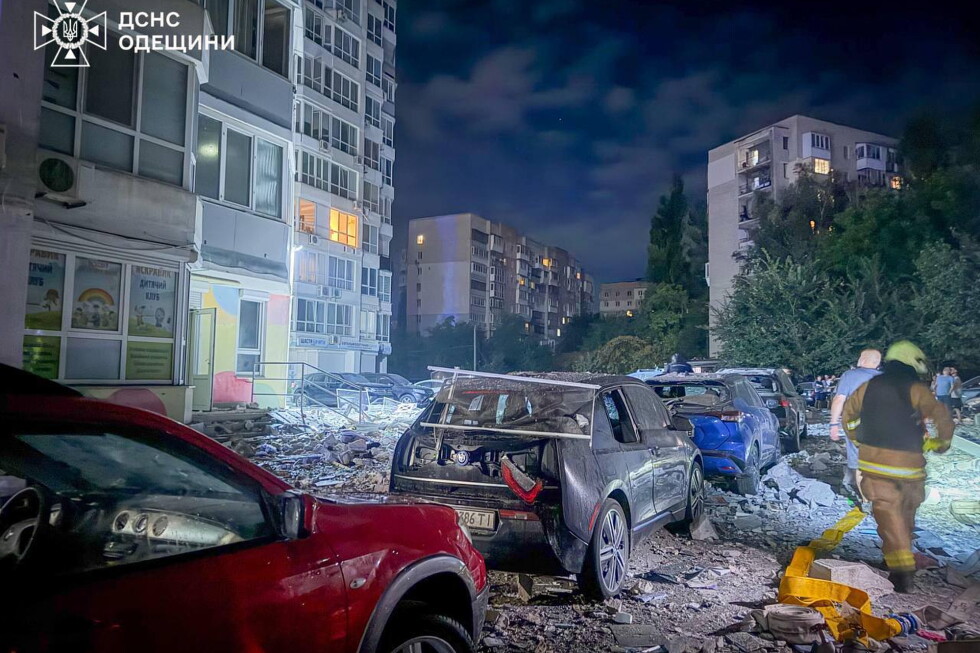
    For a Ukrainian refugee family rebuilding their lives in Penrith, Cumbria, February 13 will forever stand as a day marked by unthinkable dual tragedy. On that same Friday, Stepan and Alina Kozariichuk received two shattering pieces of news: their 11-month-old infant son Bohdan was diagnosed with advanced bilateral retinoblastoma, a rare form of eye cancer, and Alina’s father’s home back in Ukraine’s Odesa region had been reduced to rubble by a Russian drone strike.

    The couple, who fled the ongoing war in Ukraine to build a safer life in northern England, first noticed troubling symptoms in their son when he was around six months old. Bohdan began squinting frequently and struggled to grasp the toys placed in front of him, prompting the pair to seek urgent medical assessment. After a series of tests, clinicians confirmed the devastating diagnosis: cancer had already affected both of the baby’s eyes, reaching an advanced stage that would demand months of intensive, complex care. The treatment plan includes multiple rounds of chemotherapy, alongside targeted cryotherapy and laser therapy, requiring the young family to travel regularly between Penrith, Newcastle for chemotherapy sessions, and Birmingham for specialized ongoing care.

    Compounding this already devastating health crisis was the second blow delivered the same day. Word reached the Kozariichuks from contacts back in Odesa that two Russian drones had directly struck Alina’s father’s property. While the grandfather and his wife escaped the attack without physical injury, their home and personal vehicle were completely destroyed, leaving them with little of what they had built over decades. Alina described the 13th of February as the worst single day of the couple’s lives, telling BBC Radio Cumbria through a translator that “it was very hard” to process overlapping losses on that scale.

    For the Kozariichuks, the journey to this point has already been marked by profound grief and longing for the child they now fight for. Alina shared that the couple endured two heartbreaking miscarriages before welcoming Bohdan, making their baby a deeply wanted and cherished member of the family. In the wake of their dual crisis, the couple says they have grieved together, but Bohdan’s unshakable joy has given them the strength to keep going. Despite the exhaustion of constant chemotherapy and endless hospital appointments, the 11-month-old still smiles freely, plays with his favorite toy drum, watches cartoons, and reaches for his toys just as any other baby his age would.

    Calling Bohdan their “little hero”, the couple said in a public statement that “his strength gives us strength.” Even when the weight of their challenges leaves them overwhelmed, a single smile from their son is enough to lift their spirits. “We have cried together, but when we see a smile on our baby’s face we smile and joke together, hoping there will be better times,” Alina said. Like many Ukrainian refugees who have built new lives abroad, the family holds onto one core hope: that when the war in Ukraine finally comes to an end, they will be able to return to their home country and rebuild together.

  • Soccer fan Orbán’s election loss could prompt rethink of Hungary’s sports ambitions

    Soccer fan Orbán’s election loss could prompt rethink of Hungary’s sports ambitions

    For years, Hungarian authoritarian populist leader Viktor Orbán—an avid lifelong soccer fan and a self-identified sports enthusiast who built a large part of his national legacy around hosting elite global sporting events—has been sidelined by a stunning heavy defeat in the country’s recent general election. His unexpected exit from power hands the spotlight to incoming Prime Minister Péter Magyar ahead of next month’s UEFA Champions League final, the crown jewel of European club soccer, set to take place in Budapest’s state-of-the-art Puskás Aréna on May 31. This political transition has sparked new uncertainty around the future of Orbán’s ambitious pipeline of elite sports initiatives, from upcoming track and swimming championships to a long-planned 2036 Olympic bid, and forces international sports governing bodies to adapt to a new government with sharply different priorities.

    Orbán, a former lower-league Hungarian soccer player who has held a permanent spot in the VIP boxes at Champions League finals and FIFA World Cups for decades, poured billions in public funds into constructing a network of new, world-class stadiums across Hungary over his 12 years in power. The Puskás Aréna, which will host this year’s Champions League final, was always meant to be the crowning glory of his sports-focused statecraft. “That was supposed to be the icing on the cake for Orbán and his regime. He’s been working very hard to get that final to Budapest and to Hungary,” explained Győző Molnár, a professor of sport sociology at the University of Worcester. If Magyar, leader of the victorious Tisza party, takes the high-profile official spot at the final originally reserved for Orbán, Molnár added, it will serve as a clear public signal of a full regime change in the country.

    For Orbán, elite international sporting events were never just about athletics: they served as a strategic counter to widespread criticism from the European Union over his government’s democratic backsliding, anti-LGBTQ+ policies, and opposition to EU support for war-torn Ukraine. By hosting major global tournaments, Orbán could frame international sports bodies’ willingness to partner with Hungary as a quiet endorsement of his rule, regardless of EU pushback. “These aren’t just sporting events for him. They were Orbán’s answer to, for instance, EU criticisms” that allowed him to argue “UEFA still trusts us with the biggest match,” Molnár noted. Still, not all of Orbán’s soccer ambitions panned out: despite tax breaks that encouraged allies to invest heavily in domestic Hungarian soccer clubs, the country’s national team has not qualified for a FIFA World Cup since 1986, a far cry from the legendary “Mighty Magyars” sides that finished as World Cup runners-up in 1938 and 1954.

    Beyond the Champions League final, Orbán’s administration locked in a full slate of upcoming elite events: the inaugural track and field Ultimate Championships, which boasts the sport’s richest ever prize purse, is set for September in Budapest, with the 2025 World Swimming Championships—Hungary’s third in a decade—following the next year. Budapest has also been preparing a bid for the 2036 Summer Olympics, and over the past decade, multiple global sports governing bodies, including World Aquatics, have relocated their headquarters from Switzerland to Budapest, incentivized by generous packages including 15 years of free office space, legal immunity for official acts, and full tax benefits.

    Since the election upset, however, questions have grown over whether the new Hungarian government will maintain Orbán’s focus on large-scale prestige sports projects. While Magyar has rejected opposition claims that he will cut overall sports funding, his Tisza party’s election platform marked a clear break from past policy, criticizing the Orbán administration for pouring public funds into overpriced stadiums and vanity projects while grassroots school and local sports programs have declined. Magyar has also pledged to end what he calls the systemic politicization of sports that flourished under Orbán, noting that “politics has become entrenched in the sports associations and the soccer clubs to a degree that we didn’t even see during socialism.”

    So far, no scheduled events have been canceled, but long-term policy priorities are expected to shift. The new government will likely be focused heavily on addressing ongoing cost of living crises, a pressing concern across much of Europe in the current volatile global economic climate. Complicating the 2036 Olympic bid further is the political landscape in Budapest: the city’s mayor is a liberal opponent of Orbán who has no close alignment with Magyar’s party, and plans to revisit the bid next year after an earlier Orbán-backed 2024 bid was withdrawn. The International Olympic Committee has declined to comment on domestic political developments or the status of the bid.

    International sports governing bodies have begun navigating the transition, with most reaffirming their commitment to upcoming events. World Athletics, which is preparing for September’s Ultimate Championships, stated that it continues to work closely with Hungarian partners to deliver a successful tournament. World Aquatics, which is scheduled to complete its relocation to Budapest by 2028, said it has a longstanding positive relationship with Hungary and “has no doubt that this relationship will continue to thrive under the new leadership of Péter Magyar, whom we congratulate on his recent victory as Prime Minister of Hungary.” UEFA, for its part, has said that planning for the Champions League final continues as scheduled, and declined to comment on whether it will extend invitations to both Orbán and Magyar for the match.