标签: Europe

欧洲

  • Iran’s exiled crown prince Reza Pahlavi splattered with red liquid in Berlin

    Iran’s exiled crown prince Reza Pahlavi splattered with red liquid in Berlin

    BERLIN — A high-profile incident involving Iran’s exiled crown prince Reza Pahlavi has put a spotlight on ongoing tensions surrounding Iran’s political future and international diplomacy, after the 65-year-old opposition figure was doused with red liquid outside Berlin’s federal press conference building Thursday.

    The attack occurred moments after Pahlavi wrapped up a press briefing where he delivered sharp criticism of the recently negotiated ceasefire between the United States and Iran. Witnesses report the liquid covered the back of Pahlavi’s blazer and neck, but German law enforcement confirmed the former royal was uninjured in the incident. After the attack, Pahlavi waved to gathered supporters before departing the scene in a private vehicle. Investigators have identified the substance as tomato juice, according to preliminary police statements.

    The unnamed perpetrator was taken into custody immediately following the altercation; German privacy regulations prevent the release of the suspect’s identity at this time.

    Pahlavi, the son of Iran’s ousted former shah who was forced from power in the 1979 Islamic Revolution, has lived in exile for nearly five decades. In recent years, he has positioned himself as a leading opposition figure vying for a political role should Iran’s current Shiite theocracy collapse, and he has openly backed U.S.-Israeli military intervention across the Middle East. It remains unclear how much popular support he retains within Iran’s borders decades after his exile.

    Thursday’s appearance marked a high-profile public outing for Pahlavi in the German capital, though the exiled prince was not scheduled to meet with any sitting German government officials during his visit. During his briefing, Pahlavi pushed back against the core logic of the US-Iran ceasefire, arguing that the agreement relies on an unfounded assumption that the Iranian government will moderate its behavior.

    “I don’t see that happening,” Pahlavi said. “I’m not saying that diplomacy should not be given a chance, but I think diplomacy has been given enough chance.”

    He also called on European powers to step up support for pro-democracy activists inside Iran, claiming that Iranian authorities have executed 19 political prisoners over the past two weeks and sentenced an additional 20 people to death. “Will the free world do something, or watch the slaughter in silence?” he asked attendees.

    Concurrent with Pahlavi’s press briefing, hundreds of his supporters gathered for a demonstration near Germany’s federal parliament building, according to reporting from German national news agency dpa.

    More than an hour after the attack, German Chancellor Friedrich Merz issued an official statement breaking with Pahlavi’s position and backing the ceasefire extension. “This presents an important opportunity to resume diplomatic negotiations with the aim of making peace and averting further escalation of the war,” Merz’s statement read, adding that “Tehran should seize this opportunity.”

    This report included contributions from Ciobanu, reporting out of Warsaw, Poland.

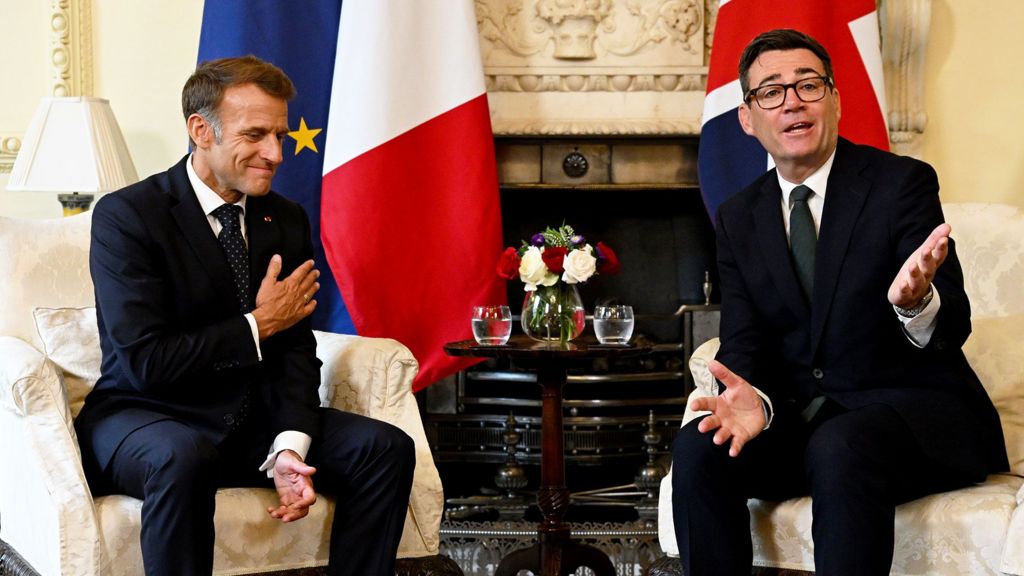
  • Britain and France will sign a 3-year deal to curb small-boat Channel crossings

    Britain and France will sign a 3-year deal to curb small-boat Channel crossings

    PARIS — In a landmark step to address the long-standing challenge of irregular migration across the English Channel, the United Kingdom and France are scheduled to formalize a new multi-million pound agreement on Thursday, which ramps up joint enforcement and surveillance measures along France’s northern coastline to cut down on small boat crossings.

    The three-year accord will be signed during a joint site visit by UK Home Secretary Shabana Mahmood and French Interior Minister Laurent Nunez, marking a deepening of bilateral cooperation on one of the most contentious migration issues in Western Europe. The framework of the deal sets out a clear funding structure and measurable performance benchmarks that tie additional financing to tangible progress in stopping crossing attempts.

    Under the terms of the agreement, the UK will commit an initial 500 million pounds (equivalent to $675 million) to bolster counter-migration operations in northern France. A further 160 million pounds ($216 million) in additional funding will be disbursed only if the new tactics deliver successful results, the UK Home Office confirmed. If intervention efforts fail to meet agreed targets, this supplementary funding will be terminated after the first year of implementation.

    France’s Interior Ministry outlined sweeping planned increases to on-the-ground enforcement capacity: the total number of deployed security officers will rise from the current 907 to 1,392 by the 2026-2029 period. France will also fund the creation of a dedicated new police unit focused explicitly on dismantling irregular smuggling networks that facilitate Channel crossings.

    A core component of the new deal is targeting the increasingly common smuggling practice of so-called “taxi boats” — small, usually inflatable motorized vessels operated by smuggling rings. Unlike craft carried into the water by migrants themselves, these “taxi boats” depart empty from hidden, isolated coastal spots before picking up groups of migrants at pre-arranged beach meeting points along France’s long northern shoreline. New surveillance technology will be deployed specifically to disrupt these coordinated departures.

    Surveillance capabilities will be significantly expanded across the region, with the deployment of more drones, helicopter patrols and electronic monitoring systems to detect and intercept crossing attempts before they can depart French territory. UK Prime Minister Keir Starmer emphasized that existing bilateral cooperation has already delivered meaningful results. “Cooperation between our two countries has already stopped tens of thousands of crossings,” Starmer said, adding that “this historic agreement means we can go further — ramping up intelligence, surveillance and boots on the ground to protect Britain’s borders.”

    Early data from the French Interior Ministry shows that intervention efforts are already moving in the right direction: total migrant arrivals in the UK so far this year have dropped by more than 50% compared to the same period in 2025. Last year alone, joint police operations led to the arrest of 480 people suspected of involvement in people-smuggling networks.

    Most of the new resources allocated under the agreement will be deployed ahead of early summer, the annual peak period for crossing attempts when milder weather makes the dangerous journey more likely to be attempted by smugglers and migrants.

    The announcement of the new deal comes in the wake of a recent fatal incident that underscored the deadly risks of irregular Channel crossings. Earlier this month, four migrants — two men and two women — died while attempting to board an inflatable boat off northern France’s coast. British law enforcement arrested a Sudanese national on Friday on suspicion of endangering life in connection with the tragedy.

    This new agreement is the latest update to bilateral migration cooperation, building on the 2018 Sandhurst Treaty that was most recently renewed in 2023. Both governments have framed the accord as a pragmatic, results-focused approach to tackling a shared challenge that has strained bilateral relations and posed major humanitarian and security risks for years.

  • No Fifa plans for Iran-Italy swap at World Cup

    No Fifa plans for Iran-Italy swap at World Cup

    The 2026 FIFA World Cup, co-hosted by the United States, Canada and Mexico, has been drawn into an unexpected political and sporting dispute after a senior U.S. diplomatic figure proposed swapping Iran’s qualifying spot for four-time champion Italy, a proposal that governing body FIFA has quickly rejected, multiple sources confirm.

    The suggestion to replace Iran with the Azzurri came from Paolo Zampolli, special envoy to former U.S. president Donald Trump. Zampolli, an Italian-born diplomat, confirmed to the *Financial Times* that he had pitched the idea to both Trump and FIFA president Gianni Infantino. As a native Italian, he framed the swap as a fan’s dream, noting that Italy — currently ranked 12th globally by FIFA, making it the highest-ranked nation outside the 2026 tournament field — has the historic pedigree to deserve a spot, with four World Cup titles to its name. The *FT* also reported the proposal was partly intended to repair bilateral tensions between the U.S. and Italy, which emerged after Italian Prime Minister Giorgia Meloni criticized Trump over his remarks about Pope Leo XIV.

    Uncertainty around Iran’s participation has lingered for months, fueled by ongoing geopolitical conflict between Iran, the U.S. and Israel. Just last March, Iran signaled it might withdraw from the tournament over safety concerns following U.S. and Israeli airstrikes, and the Iranian Football Federation had entered negotiations with FIFA to relocate its scheduled group stage matches from the U.S. to Mexico. However, that uncertainty has been repeatedly dismissed by top FIFA officials. Infantino explicitly stated last week that “the Iranian team is coming, for sure”, adding that “sports should be outside of politics” in remarks made in Washington. He emphasized that Iran earned its place through qualification, the team’s players want to compete to represent their people, and that Iran fields a strong squad that deserves its spot. In a March visit to Iran’s team camp in Turkey, Infantino already confirmed Iran’s U.S. group matches would go forward as planned, and Iranian government spokesperson Fatemeh Mohajerani reaffirmed this month that the country is “fully prepared” to participate in the tournament, Al Jazeera reported. This is not the first time Zampolli has pushed for this type of swap: he made an identical request to FIFA ahead of the 2022 Qatar World Cup during his tenure as a U.N. ambassador.

    For Italy, the rejection closes another door to what would be a dramatic late comeback to the tournament. Italy has now failed to qualify for three consecutive World Cups, after dropping a qualification play-off match to Bosnia and Herzegovina last month that solidified its exclusion from the 48-team 2026 field.

    FIFA’s regulations explicitly grant the governing body full discretionary power to replace a qualifying team if a member association withdraws or is excluded from the tournament. Despite this rule, FIFA has repeatedly reaffirmed its commitment to keeping Iran in the competition, and has made clear no replacement will be pursued at this stage.

    Iran is scheduled to play group stage matches against New Zealand on June 15 in Los Angeles, Belgium on June 21 also in Los Angeles, and Egypt on June 26 in Seattle. The 2026 World Cup kicks off across the three host nations on June 11. The White House World Cup Taskforce has not yet issued a comment on Zampolli’s proposal. Donald Trump has previously taken a mixed public stance on Iran’s participation: he has said Iran would be “welcome” at the tournament, while also suggesting they should not participate “for their own life and safety”.

  • BBC visits migrant camp in northern France as new deal announced

    BBC visits migrant camp in northern France as new deal announced

    In a recent on-the-ground reporting trip, a BBC reporting team has gained access to a migrant camp located in northern France, a visit that comes as British and French authorities formally unveil a new proposed three-year bilateral agreement focused on curbing dangerous small-boat crossings of the English Channel.

    The migration crisis along this busy shipping lane has persisted for years, with thousands of migrants attempting the perilous 21-mile crossing from northern French ports each year, seeking to reach the United Kingdom. Many of these migrants gather in informal camps dotted along the French coastline near Calais and Dunkirk, waiting for opportunities to board small, overcrowded vessels that are often unseaworthy, leading to frequent fatalities.

    The newly outlined deal, negotiated between London and Paris, marks a fresh attempt to address the root causes of the unauthorized crossings. Over the proposed three-year term, the agreement is expected to expand joint patrol operations, increase information sharing between British and French law enforcement, and boost support for migrant processing and camp management on the French side of the border. It represents the latest iteration of cross-border cooperation on a file that has strained bilateral relations repeatedly in recent years, with successive British governments pushing for stronger French action to stop departures before they begin.

    During the visit to the camp, BBC journalists documented the living conditions for the hundreds of migrants currently staying in the facility, many of whom have fled conflict, persecution, and poverty in their home countries across the Middle East, Africa, and South Asia. The on-site reporting offers a rare firsthand look at the daily realities facing migrants as they wait, even as policymakers on both sides of the Channel work to implement new measures to stem the flow of crossings. The deal still requires final formal approval from both British and French legislative bodies before it can go into full effect, with negotiations expected to wrap up in the coming weeks.

  • Turkish parliament passes bill to restrict social media access for under-15s

    Turkish parliament passes bill to restrict social media access for under-15s

    Late Wednesday, Turkish lawmakers passed a controversial new bill that would enforce sweeping restrictions on social media access for children younger than 15, marking the latest entry in a growing global policy push to shield minors from documented harms of unregulated online engagement. The vote came just seven days after a horrific gun attack at a southern Turkish middle school in Kahramanmaras, where a 14-year-old male perpetrator killed nine students and one teacher before dying himself. Turkish law enforcement is currently examining the shooter’s past online activity to identify potential motives for the violence, adding urgent political momentum to the regulatory proposal.

    According to Turkey’s state-run Anadolu News Agency, the new legislation mandates that all major social media platforms operating within the country implement mandatory age-verification systems to stop underage users from creating new accounts, build integrated parental control tools for guardians to monitor and manage minor access, and respond quickly to takedown requests for content classified as harmful to young people. The rules also extend to online game companies, which are required to appoint a local in-country representative to ensure compliance with Turkish regulatory standards. Platforms that fail to meet these requirements face stiff penalties, including cuts to internet bandwidth and substantial fines issued by Turkey’s national communications watchdog.

    The bill now moves to the desk of Turkish President Recep Tayyip Erdogan, who has 15 days to sign the legislation into effect. Erdogan has already publicly voiced strong support for tighter online protections in the aftermath of the Kahramanmaras attack, arguing in a televised address just days before the vote that unmoderated digital platforms are eroding youth well-being. “We are living in a period where some digital sharing applications are corrupting our children’s minds and social media platforms have, to put it bluntly, become cesspools,” he told the public.

    Not all political factions in Turkey back the new restrictions, however. The country’s main opposition bloc, the Republican People’s Party (CHP), has issued sharp criticism of the policy, arguing that effective youth protection requires rights-centered policy frameworks rather than blanket access bans. The proposal also fits into a wider pattern of Turkish government regulation of online platforms that has drawn scrutiny in recent years. As social media has emerged as a key space for organizing anti-government dissent, the administration has implemented repeated access restrictions, including broad blackouts during 2023 mass protests supporting jailed Istanbul opposition mayor Ekrem Imamoglu.

    Turkey’s new rule is far from an isolated policy. Around the world, governments are rolling out or considering similar age limits for social media use amid growing public concern over the impacts of unregulated content on adolescent development. Australia first implemented a ban on social media access for users under 16 in December 2023, where platforms moved to revoke access for roughly 4.7 million accounts confirmed to belong to underage users. Just last month, Indonesia enacted its own regulation barring minors under 16 from accessing digital platforms that could expose young people to cyberbullying, pornography, online scams, and problematic screen addiction. Several other European nations, including Spain, France, and the United Kingdom, are currently drafting or evaluating their own regulatory measures to limit underage exposure to harmful social media content.

  • Two trains collide head-on in Denmark, leaving four critically hurt

    Two trains collide head-on in Denmark, leaving four critically hurt

    A devastating head-on collision between two trains has rocked northeastern Denmark, leaving multiple people severely injured and triggering urgent questions about regional rail network safety. The crash unfolded shortly after 6:30 a.m. local time Thursday on a track connecting the small towns of Hillerød and Kagerup, located approximately 40 kilometers northwest of Copenhagen, Denmark’s capital.

    Emergency response teams rushed to the wooded accident site immediately after receiving the alert. According to Tim Ole Simonsen, a representative of the Greater Copenhagen Fire Department, all injured passengers and crew were evacuated from the scene within hours, transported to area medical facilities via both ambulance and medical air transport. As of initial official updates, four people are being treated for critical injuries, while an additional 11 people sustained harm serious enough to require inpatient hospital care.

    Photos broadcast by Danish national public broadcaster DR show the two yellow and grey commuter trains, their front carriages heavily damaged, positioned facing one another on the open line near a level crossing. Trine Egetved, mayor of the Gribskov Municipality where the crash occurred, told local media she was deeply shaken by the unexpected tragedy. The critically injured patients were transferred to Copenhagen’s National Hospital, Denmark’s leading tertiary medical center, for specialized care, Egetved confirmed.

    In a public post shared on Facebook, Egetved noted that the affected regional line is a core transit route for hundreds of local residents, daily commuters heading to work, and students traveling between communities. Speaking to DR, the mayor expressed shock that such a severe head-on collision could occur in Denmark, saying, “We must ensure it never happens again.”

    Train collisions are extremely rare in Denmark, which maintains a generally high standard for rail safety. However, early preliminary analysis from industry experts has pointed to a potential safety gap on the line. One anonymous expert suggested the crash may have occurred after one of the train operators overrode a stop signal as the train departed a local station, accidentally entering the wrong track in the path of the oncoming service. Preliminary checks also indicate that the Gribskov line has not been retrofitted with modern automated collision prevention safety systems that automatically stop trains if a signal is violated, a detail that is expected to feature heavily in the official investigation.

  • Inter Milan has been routed and defeated in Europe yet remains a force at home in Italy

    Inter Milan has been routed and defeated in Europe yet remains a force at home in Italy

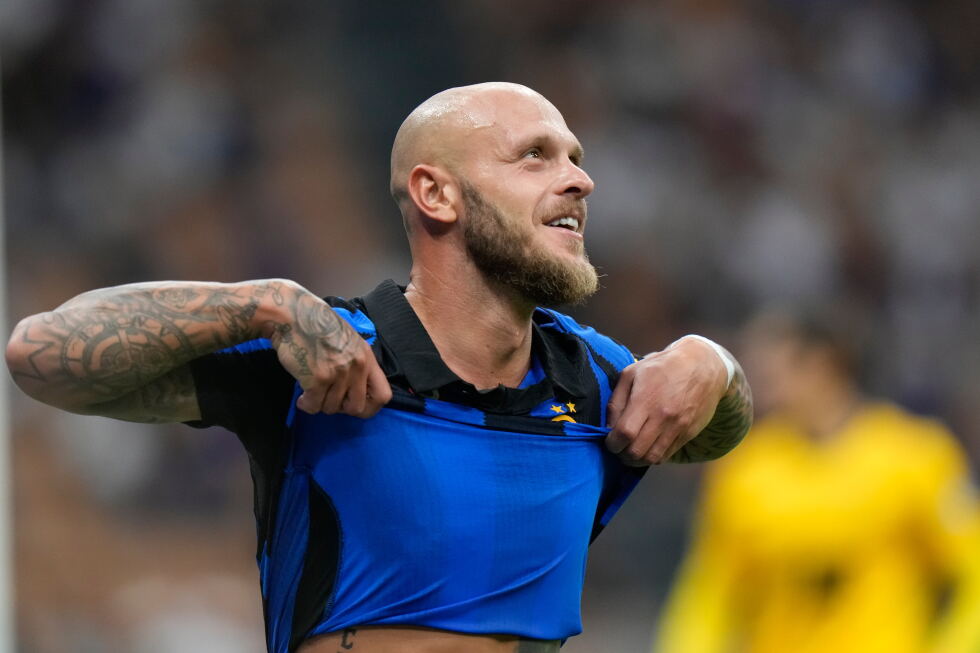
    ROME – In what has shaped up to be one of the most surprising domestic turnarounds in top-tier Italian soccer this campaign, Inter Milan has positioned itself on the cusp of a long-awaited Serie A championship, even as its recent European performances have been marked by devastating high-profile defeats. The 2024-25 season marks Cristian Chivu’s debut at the helm of the Nerazzurri, and the rookie head coach has already guided the club to not just a near-certain title push but also a spot in the Italian Cup final, putting an unprecedented domestic double within Inter’s reach with just four matches remaining on the league calendar.

    If Inter secures three points against Torino this coming weekend, and neither second-place Napoli nor city rival AC Milan claim a victory in their own fixtures, the club will lift the Scudetto weeks before the regular season concludes. This dominant domestic run stands in stark contrast to Inter’s fortunes in continental competition this year: the club was knocked out of the 2024-25 Champions League by unfancied Norwegian side Bodø/Glimt, a result that echoed the humiliating 5-0 defeat to Paris Saint-Germain in the 2023-24 Champions League final.

    Should Inter go on to claim both the Serie A trophy and the Italian Cup, it will mark the first time the club has earned a domestic double since 2010, when legendary manager José Mourinho led Inter to a historic treble that also included the Champions League title. Fittingly, Chivu was a member of that 2010 squad, and the former defender has rapidly emerged as one of the most promising new coaching talents in Italian soccer, just one year after steering Parma to a successful relegation escape last season.

    When pressed about comparisons between his current run and Mourinho’s iconic 2010 treble campaign, Chivu struck a humble tone. “I’m just Cristian. My only responsibility is to these players,” he said. “I’m just trying to do my job in the best manner possible for those who believed in me, for these wonderful players, and I hope to achieve some of our objectives.”

    Chivu’s side booked its Italian Cup final spot after a dramatic 3-2 comeback win over Como in the semi-finals, where Inter overturned a two-goal deficit to secure victory. The club will face Lazio in the title decider on May 15.

    Beyond Inter’s title push, this weekend’s Serie A fixture list holds extra intrigue: a crucial clash between second-place AC Milan and fourth-place Juventus carries far more than just stakes for Champions League qualifying spots. The match will also pit two of the top United States men’s national team players plying their trade in Italy against each other. AC Milan winger Christian Pulisic has endured a notable goal drought stretching back to December across both club and international play, while Weston McKennie has become a core fixture for Juventus following Luciano Spalletti’s appointment as head coach last October. After Sunday’s meeting, the pair will not reunite until the U.S. gathers for training camp ahead of the 2026 FIFA World Cup, which the United States will co-host.

    In pre-match notes for Inter’s weekend trip to Torino, second-choice goalkeeper Josep Martínez has drawn attention for an unorthodox technique he used to great effect during the semi-final win over Como: Martínez pulled off multiple stunning saves using a butterfly positioning method borrowed from ice hockey goaltenders. By dropping to his knees and extending his arms wide to cover more of the goal frame, the backup keeper made high-pressure reflex saves look routine. Despite the standout performance, starting keeper Yann Sommer is still expected to get the nod between the posts for Sunday’s pivotal title clash against Torino.

    Inter will still be without one key contributor, however: captain and Serie A top scorer Lautaro Martínez remains sidelined with a lingering muscle injury, a major absences for Chivu’s side as they close out the season.

    Off the pitch, authorities in Milan are continuing an investigation into an alleged prostitution ring linked to more than 70 active professional soccer players. Four people have been arrested on charges of operating the illegal escort service, though no players have yet been formally named as targets of the investigation.

  • Man dies after being hit by bus at Dublin Airport

    Man dies after being hit by bus at Dublin Airport

    A tragic traffic incident has claimed the life of a man in his 60s after he was struck by a bus on the grounds of Dublin Airport, Irish authorities confirmed Thursday.

    The collision occurred just after midnight on Corballis Road, a key route located within the airport’s boundary, according to official updates. Members of Gardaí, the Republic of Ireland’s national police service, responded to the emergency alongside local first responders and medical teams. Upon arrival at the scene, emergency personnel pronounced the man dead.

    In the wake of the incident, law enforcement has implemented a partial closure of the main access road leading into Dublin Airport, one of the busiest travel hubs in the country. Official traffic management plans have activated detour routes for drivers heading to and from the airport, and Gardaí have issued a public advisory urging motorists to allocate additional travel time when planning journeys through the area to avoid unexpected delays.

    As investigations into the circumstances of the collision get underway, Gardaí are calling on members of the public who may have witnessed the incident, or who hold relevant dashcam footage or other information related to the event, to reach out to official lines to assist with the inquiry. No further details about the identity of the victim, the bus driver, or the specific context of the collision have been released to the public as of yet.

  • Russian oil to Slovakia resumes flowing through pipeline that crosses Ukraine

    Russian oil to Slovakia resumes flowing through pipeline that crosses Ukraine

    BRATISLAVA, SLOVAKIA – Three months after Russian oil deliveries through the key Druzhba pipeline were unexpectedly halted, supplies have finally resumed flowing to Slovakia, the country’s economy chief confirmed Thursday. The resumption of oil transit, which got underway at 2 a.m. local time, brings an end to a tense standoff that has rippled across European Union politics and strained ties between Kyiv and two of its neighboring EU states. The disruption, which began back in January, put Hungary and Slovakia at sharp odds with Ukraine, worsening an already fraught geopolitical environment on the continent. Unlike the vast majority of European Union member states that have drastically cut their reliance on Russian fossil fuels since Russia’s full-scale invasion of Ukraine, both Central European nations have retained deep dependence on Russian crude for their domestic energy systems. When the cross-border pipeline crossing Ukrainian territory was shut down, the two governments quickly placed blame on Kyiv, accusing Ukrainian authorities of dragging their feet on repairs to the damaged section of infrastructure. The halt in deliveries triggered tangible political fallout across the bloc: Hungary moved to block a large-scale EU financial aid package designed to support Ukraine’s war effort, while Slovakia publicly refused to back a new round of proposed European sanctions targeting Moscow until pipeline operations returned to normal. After weeks of diplomatic wrangling and technical work, the flow of oil is once again moving along the strategic route, bringing a temporary resolution to a dispute that threatened to undermine EU unity on policy toward Russia.

  • ‘The Devil Wears Prada 2′ puts a spotlight on Italy’s fashion capital

    ‘The Devil Wears Prada 2′ puts a spotlight on Italy’s fashion capital

    MILAN (AP) — As ‘The Devil Wears Prada 2’ prepares for its Italian premiere in the country’s iconic fashion capital on Thursday, the luxury Italian brand Prada takes pride of place in the film’s title, while the global fashion industry steps into the broader spotlight and Milan itself claims a key supporting role. Though the motion picture draws its name from the legendary fashion house that has become inseparable from Milan’s identity, the story does not center on the century-old brand itself. To pay homage to the franchise’s deep ties to the label, both lead star Meryl Streep and Vogue editor-in-chief Anna Wintour donned Prada designs for a recent Vogue cover celebrating the new film, which follows the story of a notoriously demanding high-fashion editor.