标签: Europe

欧洲

  • London judge sentences Palestine Action activists for raid at Israeli defense factory

    London judge sentences Palestine Action activists for raid at Israeli defense factory

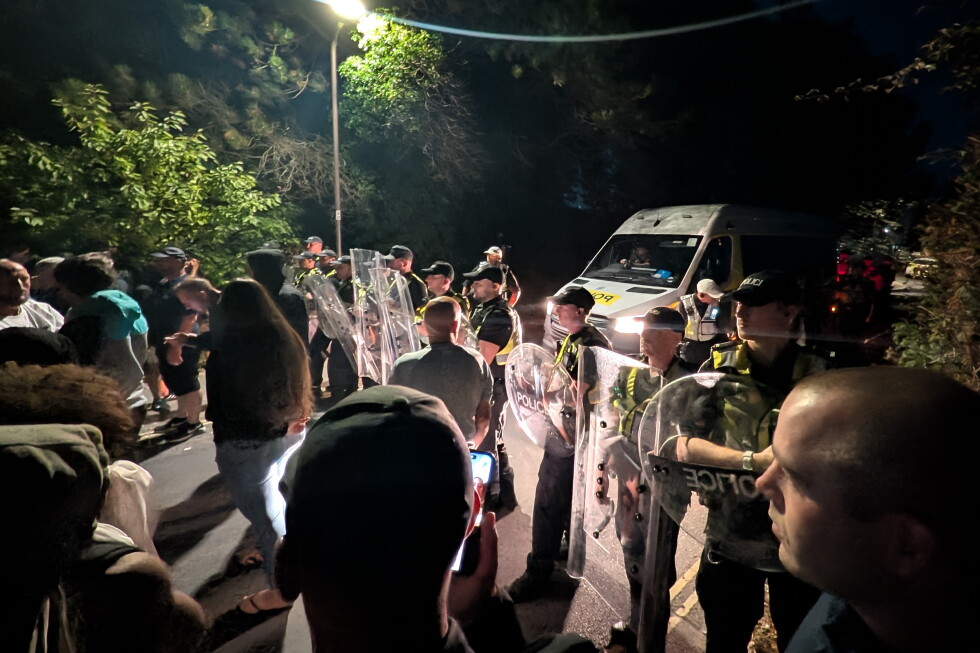
    On a Friday ruling at Woolwich Crown Court, a London judge imposed multi-year prison sentences on four Palestine Action activists, convicting their 2024 raid on a British-based Israeli defense factory as a terror-connected act, amid widespread debate over protest rights and counter-terrorism policy in the United Kingdom.

    The targeted facility, operated by Israeli defense contractor Elbit Systems, is located in Bristol. On August 6, 2024, the activists carried out a coordinated break-in: 30-year-old Charlotte Head drove a van through the factory’s perimeter gates, and all four activists, clad in matching red jumpsuits, used sledgehammers and crowbars to destroy production equipment. Their stated goal was to halt manufacturing of drones that they argued would be used to kill Palestinian civilians in the Gaza Strip.

    The break-in caused an estimated £1.2 million ($1.6 million) in property damage, and escalated into a violent confrontation with on-site security and responding law enforcement. During the clash, 23-year-old defendant Samuel Corner struck responding police Sergeant Kate Evans twice in the back with a 3.2-kilogram sledgehammer, fracturing her spine. Corner was separately convicted of inflicting grievous bodily harm for the attack. In testimony to the court, Evans said she continues to suffer long-term physical and psychological harm from the incident, including persistent sleep disturbance, recurring panic attacks and distressing nightmares. She also told the court she has received abusive online messages accusing her of collaborating with what the senders called the “Zionist occupation of Britain.”

    In his ruling, Justice Jeremy Johnson found that the offense extended far beyond standard criminal damage, because the activists’ actions were intended to force Elbit Systems to cease operations in the U.K. and compel the British government to end arms production ties with Israel. Johnson ruled that this intent gave the crime a clear “terrorist connection.”

    “Each defendant agreed to take part in high-level actions, and did so with the shared aim of shutting down Elbit and ending what they regarded as British complicity in Israeli war crimes,” Johnson stated. “The action was designed to influence the U.K. government and also to intimidate a section of the public, and was for the purpose of advancing an ideological or political cause.”

    The sentencing handed down reflected the judge’s terror ruling: Corner received a sentence of seven years and eight months, Head and 30-year-old Leona Kamio each got five years, and 21-year-old Fatema Rajwani was sentenced to four years and eight months. The terror conviction also means all four activists must serve at least two-thirds of their sentences before becoming eligible for parole, and will require formal Parole Board approval to be released.

    The 2024 Bristol raid was a key event cited by the British government when it proscribed Palestine Action as a designated terrorist organization last year. Official Home Office data shows the ban led to more than 1,600 arrests of pro-Palestine protesters between July and September 2024 alone. While London’s High Court has since ruled the original proscription decision was unlawful, the ban remains in effect pending an appeal ruling scheduled for Monday. Even as Friday’s sentencing proceeded inside the Woolwich Crown Court, more than 100 pro-Palestine protesters were arrested outside the southeast London courthouse by law enforcement.

    The four activists were originally convicted of criminal damage during a May 2025 retrial. The case originated from an earlier trial where jurors acquitted six other defendants on charges of aggravated burglary and violent disorder, but could not reach a consensus on criminal damage counts. Two additional co-defendants were ultimately acquitted during the retrial.

    Human rights organizations have sharply criticized the ruling, warning it sets a dangerous precedent for the criminalization of political protest in the U.K. Amnesty International’s UK chief executive Kerry Moscogiuri called the sentencing “a new low” in what the group describes as a broader national crackdown on peaceful protest activity. “It is completely disproportionate to treat protest-related offending as terrorism,” Moscogiuri said in a post-sentencing statement.

  • EU agrees to launch membership talks with Ukraine next week even as war with Russia drags on

    EU agrees to launch membership talks with Ukraine next week even as war with Russia drags on

    BRUSSELS – In a landmark decision with far-reaching geopolitical consequences for a war-ravaged Eastern Europe, the 27 member states of the European Union formally agreed Friday to launch full membership accession negotiations with Ukraine and neighboring Moldova, with the official opening ceremony scheduled to take place next Monday at an intergovernmental conference in Luxembourg.

    This move marks one of the most significant strategic choices the bloc has made in years, framing the future of the European continent amid Russia’s ongoing full-scale invasion of Ukraine. For Kyiv, which submitted its EU accession application barely five days after Russian forces crossed its border in February 2022, membership in the world’s largest single trading bloc is viewed as a critical cornerstone of long-term security and stability following the end of the current conflict. While Kyiv has also prioritized NATO membership for collective defense, that path remains blocked: the former Trump administration has repeatedly ruled out Ukrainian membership in the military alliance, other Western powers oppose accession while active hostilities continue, and Moscow cites NATO expansion as a core justification for its 2022 invasion. Notably, Russia has not publicly opposed Ukraine’s EU membership bid, unlike its fierce pushback against NATO integration.

    Moldova, like Ukraine, has long sought to escape Moscow’s sphere of influence, and Friday’s agreement brings the small Eastern European nation onto the same integration path as its larger neighbor.

    EU leadership praised the two countries for their progress on reform, even amid unprecedented wartime and political pressure. “This is a recognition of the determination, courage and hard work shown by both countries in advancing reforms, even in the face of immense challenges,” EU Council President António Costa and European Commission President Ursula von der Leyen said in a joint statement. The pair framed the decision as a strategic investment that will strengthen “peace, security and prosperity across our continent,” adding that it sends a clear message “that the EU’s offer of peace, stability and opportunity is unmatchable.”

    The accession process is a years-long, rigorous path that requires candidate countries to negotiate alignment with 35 distinct EU policy chapters, covering everything from agricultural regulation to internal trade standards. The opening conference on Monday will kick off negotiations on the first cluster of chapters, focused on the core founding values and principles that underpin the EU bloc. Every step of the process – from opening each individual chapter to closing it ahead of full accession – requires unanimous approval from all 27 existing EU members. For years, Hungary maintained a hardline blockade on opening negotiations, but the recent formation of a new government in Budapest has softened the country’s opposition, clearing the way for Friday’s unanimous agreement.

    While the EU has praised Ukraine for pushing through ambitious reforms even amid active war, deep concerns remain among member states about persistent corruption gaps and shortcomings in judicial standards. The path to full membership remains uncertain, with multiple European capitals pushing for alternative interim arrangements to bring Ukraine closer to the bloc faster without granting full membership rights immediately. Last month, German Chancellor Friedrich Merz called on EU partners to consider a new model of associate membership for Ukraine, a proposal designed to reinvigorate efforts to reach a resolution to the conflict more than two and a half years after Russia’s full-scale invasion. Under Merz’s framework, Ukraine would participate in EU meetings and hold non-voting observer positions in both the European Commission and European Parliament, stopping short of full membership. France and the Netherlands have also floated similar incremental models to accelerate integration while bypassing the full accession process’ slower timelines.

    Friday’s decision comes as the EU grapples with shifting global diplomatic dynamics: U.S.-mediated peace talks between Kyiv and Moscow remain stalled, with U.S. foreign policy attention increasingly diverted to escalating tensions related to the Iran conflict. Some European capitals are now weighing whether the bloc should pursue its own direct negotiations with Russian President Vladimir Putin to move the peace process forward, though no consensus on that step has yet emerged.

  • Pope Leo XIV’s flight home from Spain was grounded so the king came to his aid

    Pope Leo XIV’s flight home from Spain was grounded so the king came to his aid

    After a busy seven-day apostolic visit across Spain that carried a strong message on migration policy and marked a historic milestone for Barcelona’s iconic Sagrada Familia, Pope Leo XIV’s journey back to Rome hit an unforeseen snag Friday at Tenerife North–Ciudad de La Laguna Airport in Spain’s Canary Islands. The Iberia Airlines charter jet scheduled to carry the pontiff and his delegation home developed a critical mechanical issue that grounded the aircraft, leaving the Vatican team stranded before a last-minute act of generosity from Spain’s monarch resolved the crisis.

    The problem emerged after Pope Leo had already boarded the plane: the aircraft’s engine failed to start, and initial attempts by the ground crew to repair the fault were unsuccessful. All passengers were required to exit the aircraft, and an investigation into the root cause of the malfunction was launched immediately. With the Canary Islands located off the northwest coast of Africa, far closer to the African continent than to mainland Spain, sourcing a replacement aircraft locally was not feasible. In response to the emergency, King Felipe VI extended an offer of his personal private jet, a Falcon, to transport the pope back to the Vatican.

    The Spanish king accompanied Pope Leo to the aircraft on the airport tarmac, where the pontiff and his core delegation boarded the jet. The plane departed more than three hours behind the original scheduled departure time, marking an unusual end to a visit that had otherwise proceeded without a hitch. The remaining passengers, including approximately 70 Vatican correspondents and support staff, were set to be picked up by a backup Iberia jet dispatched from Madrid, the airline confirmed.

    The unplanned aircraft swap is an extremely rare event in modern papal travel. Veteran Vatican journalists who cover papal visits could only recall a handful of similar disruptions during the decades-long pontificate of St. John Paul II. In 1986, a snowstorm closed Rome’s airports en route back from India, forcing John Paul II to divert to Naples before completing the journey by special train. Two years later, severe weather forced an unscheduled landing in South Africa during a trip to Lesotho – a country the pontiff was visiting as part of a tour that intentionally excluded apartheid-era South Africa over its policy of racial segregation.

    Papal air travel follows longstanding standard protocols: typically, Italy’s national carrier ITA Airways transports the pope to his destination, and the host country’s national carrier handles the return flight. For particularly long journeys or trips to nations without the capacity to host large papal charter flights, ITA Airways often handles the full round-trip. Papal charters are structured with the pope, his delegation, and security detail in the forward section of the aircraft, while traveling journalists occupy standard economy seating.

    Earlier in the visit, Iberia had publicly celebrated its role as the host carrier, releasing official video footage of Pope Leo sitting in the cockpit of the jet during his flights between Madrid, Barcelona, and the Canary Islands. In the clips, the pontiff is seen smiling and waving to Spanish military escort pilots – a traditional honor provided by the host nation for visiting top dignitaries.

    During the week-long visit, Pope Leo prioritized advocacy on migration issues, delivering multiple sharp speeches calling out global indifference to the plight of migrants crossing dangerous Atlantic routes to reach the Canary Islands. He also made history by inaugurating the completed final tower of the Sagrada Familia, Antoni Gaudí’s unfinished architectural masterpiece that has been under construction for more than 140 years.

  • French town buries murdered child as questions mount over police failings

    French town buries murdered child as questions mount over police failings

    Two weeks after 11-year-old Lyhanna was killed in southwestern France, the young girl was laid to rest on Wednesday, a tragedy that has roiled the nation in anger over catastrophic systemic failures that allowed her suspected killer to remain free despite multiple red flags. Hundreds of local residents joined Lyhanna’s family for the funeral service in the small town of Fleurance, located roughly 30 miles west of Toulouse. Following the ceremony, she was interred at the town’s municipal cemetery. In a show of collective solidarity across the wider Gers region, mayors ordered flags lowered to half-mast outside town halls and called on local communities to gather in remembrance and support for the victim’s family. The murder sparked a national wave of revulsion once details of systemic missteps came to light: the prime suspect, 41-year-old Jérôme Barella, had been reported to French law enforcement nine months earlier for repeated sexual abuse allegations against a 10-year-old child, yet investigators never once summoned him for questioning. Further records show that U.S. authorities had previously alerted French police to suspicious online activity by Barella that indicated he may have been accessing child sexual abuse material. According to reporting from French newspaper Le Monde, this alert was only uncovered after a post-arrest search of Barella’s records last week. The French National Office for Minors (OFMIN) confirmed the alert was received in 2023 and was classified as a “low priority” signal, noting the office processes roughly 300,000 such notifications annually. The scandal has expanded beyond Jérôme Barella, with new sexual abuse allegations now levied against his father and brother as well. This week, Jérôme’s 44-year-old brother Yannick was taken into custody after he presented himself to police to file a defamation complaint. He was subsequently placed under formal investigation for rape, based on claims from two accusers: one who was a minor at the time of the alleged assault, and a second who is Yannick’s former partner. Yannick has denied all allegations against him. The family’s 71-year-old patriarch, Joël Barella, is also now under formal investigation after prosecutors in Béziers reopened a 2019 sexual abuse case accusing him of assaulting his partner’s granddaughter. A second granddaughter has since come forward with additional abuse allegations in national media, and Joël has repeatedly denied all claims. Investigative records confirm Jérôme Barella, whose daughter was a close friend of Lyhanna, was seen driving the 11-year-old away from her school on the Friday she disappeared. He was taken into custody three days later, and Lyhanna’s remains were discovered on a nearby farm eight days ago. What began as a horrific local murder has rapidly escalated into a national political scandal, as the French public has confronted the full scope of official failures that allowed Barella to remain at liberty. Court records show Barella had already been linked to three separate open sexual abuse cases when he was reported for the alleged rape of 10-year-old Rosa in August 2023. A medical examination confirmed the credibility of Rosa’s claims, yet justice officials and gendarmes moved so slowly that Barella was never contacted over the nine months between the report and Lyhanna’s killing. The case has erupted at a moment of growing public anxiety across France over systemic failures in how the justice system handles sexual violence against women and children. In recent weeks, Paris City Hall has faced widespread accusations of negligence over a string of sexual abuse charges against school employee. Just this week, iconic French singer Patrick Bruel was placed under formal investigation for rape and sexual assault, charges he has repeatedly denied. In response to mounting pressure for his resignation over the Lyhanna case, Justice Minister Gérald Darmanin has refused to step down. A public opinion poll released Friday found that two-thirds of French respondents support Darmanin remaining in his post. Darmanin has pushed back against claims that the failures stem from chronic underfunding or understaffing in the justice system — a common criticism from activists. Instead, he has framed the blunder as a failure of priority-setting, arguing the obvious severity of the allegations against Barella should have elevated the case much earlier. Prime Minister Sébastien Lecornu has already announced plans to strengthen France’s legal framework for sexual violence crimes, proposing longer prison sentences for child rapists and mandatory statutory deadlines for the completion of investigations into child sexual abuse claims. But advocacy groups and labor unions say incremental changes are not enough. They are calling for a sweeping new standalone law addressing sexual violence against women and children, paired with a dedicated €2.7 billion ($3.1 billion) budget to implement systemic reforms. Activists have pledged to hold weekly peaceful protests outside court buildings across France every Monday to demand action. “This isn’t hysteria — this is a call for structural change,” said Sophie Binet, general secretary of the powerful CGT labor union, which has backed the reform movement.

  • Discovery of €1.2m jewellery prompts fresh probe into former Spanish PM

    Discovery of €1.2m jewellery prompts fresh probe into former Spanish PM

    In an unprecedented development for modern Spanish politics, former Socialist Prime Minister José Luis Rodríguez Zapatero has been formally placed under investigation for tax fraud and smuggling, following the recovery of €1.2 million worth of luxury watches and jewelry from his office during a recent search linked to a separate corruption probe.

    Zapatero, who held the nation’s top office from 2004 to 2011 and remains a powerful, influential figure within the ruling Spanish Socialist Workers’ Party (PSOE) led by his close ally current Prime Minister Pedro Sánchez, was already under investigation for alleged influence peddling connected to the 2021 €53 million government bailout of struggling Spanish airline Plus Ultra. The bailout was approved as part of a national state fund created to support strategically important businesses impacted by the global COVID-19 pandemic.

    As part of that ongoing influence peddling inquiry, Spanish National Police executed a raid on Zapatero’s private office last month. During the search, investigators uncovered a cache of high-end gold jewelry including necklaces, bracelets, rings and earrings studded with sapphires and emeralds, sourced from Zambia and Thailand according to Spanish media reports. The total estimated value of the seized items comes to roughly €1.2 million, equivalent to £1.02 million.

    Investigators have confirmed that their new probe centers on suspicions that Zapatero cannot provide valid documentation proving he paid required customs duties for the luxury goods. Close associates of the former prime minister have told reporters the collection of jewelry is inherited family property, and Zapatero’s official spokesperson Luis Arroyo has stated that the former leader “will provide full explanations before the judge” regarding the seized items. Zapatero has been formally summoned to give testimony before a court later this month.

    This new investigation marks a historic moment in recent Spanish politics: it is the first time any former Spanish prime minister has been subjected to a formal criminal probe. The development is also the latest in a string of damaging corruption scandals to hit the ruling PSOE. Last month, police also raided the party’s central Madrid headquarters, seizing a range of relevant documents, and carried out coordinated searches at the private residences of senior party officials and a prominent Spanish business leader. Multiple close associates of Sánchez, including the prime minister’s wife and brother, currently face separate corruption-related charges, all of which they have vigorously denied. Zapatero has also repeatedly denied any wrongdoing in the ongoing Plus Ultra influence peddling case, stating he never accepted any improper payments in exchange for intervening to secure the airline bailout.

  • Keir Starmer says he’s staying put after defense secretary’s departure hammers his authority

    Keir Starmer says he’s staying put after defense secretary’s departure hammers his authority

    LONDON — British Prime Minister Keir Starmer is facing the most severe threat to his premiership to date after the abrupt resignation of his most trusted senior cabinet member, Defense Secretary John Healey, has left his already fragile administration reeling and pushed growing internal unrest within the ruling Labour Party to a breaking point.

    Healey, a widely respected loyalist who had stood by Starmer through months of political turbulence, stepped down from his post Thursday, publicly breaking with the government over its failure to commit to accelerated military spending amid growing global security threats. In his resignation statement, Healey warned that current planned defense investment levels are insufficient to guarantee Britain’s national security at a moment of intensifying global risk. Just hours after Healey’s departure, junior defense official Al Carns also resigned, echoing criticism that the government’s long-awaited Defense Investment Plan lacks the transformative change the British military requires.

    The resignation hits Starmer particularly hard, as foreign and defense policy had remained the lone area where the embattled prime minister had retained consistent public and cross-party praise since he took office following a landslide general election victory in July 2024. During his short tenure, Starmer positioned Britain as a leading European security leader: he deepened military and diplomatic support for Ukraine, partnered with French President Emmanuel Macron to build a multinational “coalition of the willing” to secure Ukraine’s borders in the event of a future ceasefire, and joined Paris to launch a joint maritime security task force to protect commercial shipping through the Strait of Hormuz. He also took a firm public stance aligning with pressure from former U.S. President Donald Trump, urging European NATO members to increase their own defense spending commitments to match the changing security landscape.

    “Starmer has been consistently staunch about warning of the security risk from Russia,” explained Olivia O’Sullivan, head of the U.K. in the World program at the London-based think tank Chatham House. “He’s been given quite a bit of credit by the public for having to deal with Trump and doing so with a level of steadiness and calm. And he has been, in line with previous U.K. governments, a close and consistent ally of Ukraine.”

    The core dispute that triggered Healey’s resignation centers on funding for the government’s 10-year Defense Investment Plan, which outlines a target to raise British military spending to 3.5% of gross domestic product by 2035. For years, the British military has pushed to reverse decades of underinvestment and capability decline, as Russia has grown increasingly militarily assertive following its 2022 full-scale invasion of Ukraine, regularly conducting overt and covert probes of NATO’s northern and eastern European defenses. Healey argued that accelerating spending to hit a 3% of GDP target by 2030 was non-negotiable, citing official British intelligence assessments that warn Russia could be prepared to launch an attack on a NATO member state as early as that year. He warned that a slower, lower-spending path “could make the country less safe.”

    Treasury Chancellor Rachel Reeves rejected Healey’s demand, refusing to revise the government’s existing timeline, prompting his resignation. The debate over defense spending divides political and policy observers in the U.K.: critics argue that military funding is often an open-ended demand, pointing to long-running issues with procurement delays and massive budget overruns on major defense projects. For his part, resigning junior minister Al Carns argued that the problem extends beyond total spending levels, telling the BBC that the government’s plan is not “transformative enough.” “I want to see a higher percentage for uncrewed systems, AI, data — data is the new gunpowder — and we’ve got to move that forward if we are going to win the next war,” he said.

    Healey’s exit marks the latest in a string of high-profile departures that have gutted Starmer’s cabinet in recent weeks. Last month alone, the prime minister lost multiple junior ministers followed by Health Secretary Wes Streeting, who resigned explicitly to position himself for a potential leadership challenge if a contest is called. The most prominent potential challenger, Greater Manchester Mayor Andy Burnham, is widely expected to trigger a leadership race if he wins a special parliamentary election scheduled for this Thursday.

    Unlike previous resignations from figures with openly stated leadership ambitions, Healey’s departure from a minister long seen as a loyal team player with no personal designs on the top job signals that Starmer’s credibility is eroding even among his closest allies. “[It] suggests that Starmer’s credibility, even with his inner circle of ministers, is perhaps draining away,” O’Sullivan noted.

    Undeterred by the growing rebellion, Starmer struck a defiant tone during a public interview Friday, vowing to hold onto power and fight any challenge to his leadership. “It’s my job to make hard-edged decisions,” he said, emphasizing that “defense is my number one priority. And I have taken the difficult decisions to make sure that we are safe as a country.”

    “I’m not going to go away. I don’t think we should plunge the country into the chaos of a leadership election,” Starmer added. “I don’t think it should happen, but if it does, then I will fight.”

  • NATO weighs options to defend Europe as the US plans for conflict elsewhere

    NATO weighs options to defend Europe as the US plans for conflict elsewhere

    BRUSSELS — NATO’s top military leader is developing backup defense strategies for Europe in the event of a Russian attack, following a major announcement from the United States that it will reduce the number of aircraft and warships it makes available to the alliance during security crises. The alliance’s longstanding core deployment framework, known as the NATO Force Model, has served as the primary plan for coordinating military assets from 32 member states across peacetime, crisis, and full conflict, outlining what resources commanders can draw on in phases during the first six months of any armed confrontation. But last month, the Pentagon notified its NATO partners that it would scale back its European theater commitments to reorient its military posture toward growing strategic threats in the Indo-Pacific, primarily from China.

    This announcement capped more than a year of anxious waiting among European allies and Canada, after the Trump administration first flagged that Europe would no longer be counted as the United States’ top security priority. While allies have known for months that defense cuts were coming, they have remained in the dark about the scale, speed, and specific scope of the reductions. U.S. General Alex Grynkewich, NATO’s Supreme Allied Commander, emphasized in comments at the ILA Berlin Air Show Thursday that the U.S. still remains committed to providing limited, but strategically critical, capabilities to the alliance.

    “Our priority right now is focusing on capabilities that we can acquire rapidly, deploy quickly, scale at pace, and sustain over extended periods of time – that applies to long-range fires systems as well as unmanned aerial systems,” Grynkewich said. “These types of assets will help us offset near-term defense risks if we are called on to deter aggression and defend alliance territory.”

    Following a June 2-3 meeting of alliance defense leaders to assess capability gaps created by the U.S. drawdown, Grynkewich called on European NATO members and Canada to fill these gaps by contributing additional manned combat aircraft, unmanned drones, and naval vessels to the alliance’s crisis stockpile, saying the contributions are needed “now and in the immediate near term.” While the exact details of the U.S. cuts remain classified, independent media reports in Germany and the United States indicate the drawdown will remove an entire aircraft carrier strike group, including its accompanying warships and air wing, plus a nuclear-powered submarine from the European theater. The cuts are also expected to eliminate access to dozens of fighter jets and multiple aerial refueling tankers, assets that are already in critically short supply across European armed forces, leaving alliance leaders uncertain where they can source these capabilities on short notice. The White House has demanded that allies present detailed backfill plans ahead of the NATO summit scheduled for July 7-8 in Turkey, where President Donald Trump will meet with alliance heads of state and government.

    In a separate development announced Friday, NATO military headquarters confirmed it will implement additional cuts to its Kosovo peacekeeping force, withdrawing an unspecified number of troops and pieces of equipment. The Kosovo Force, better known as KFOR, has been deployed to the region since 1999, with a mandate to maintain peace between Kosovo and neighboring Serbia. At the height of its deployment, KFOR numbered 50,000 troops, but it has been gradually scaled back over decades as regional tensions cooled. A 1,000-strong reinforcement was deployed to the region in 2023, however, after a new wave of violent ethnic unrest broke out.

    Grynkewich noted that current security conditions in Kosovo allow NATO to further adjust the force’s size and operational posture. His office declined to specify which units would be withdrawn, or whether any U.S. troops would be part of the drawdown. “This adjustment is not about raw troop numbers, it is about optimizing the force to better guarantee safety and security for all people living in Kosovo and across the wider Balkan region,” a spokesman for Grynkewich explained. Currently, the U.S. deploys 590 troops to KFOR, making it the second-largest contributing nation after Italy, which has 907 personnel in the theater. The U.S. also stations a fleet of Black Hawk helicopters at Camp Bondsteel, the large U.S. military base that has operated in Kosovo since the 1999 intervention.

    For all the ongoing adjustments to NATO’s defense posture, Grynkewich stressed that there is no immediate threat of a Russian attack on alliance territory. Current intelligence assessments and observations of Russian force movements indicate “Russia is not seeking a direct armed conflict with NATO,” he said. Russia remains heavily committed to its full-scale invasion of Ukraine and continues to face significant challenges recruiting enough troops to sustain its current operations. Even so, European governments and intelligence services have warned that Russian President Vladimir Putin could have the capacity to launch an attack on other parts of Europe within three to five years, particularly if he succeeds in securing his territorial aims in Ukraine.

    Associated Press correspondents Kirsten Grieshaber in Berlin and Zana Cimili in Pristina, Kosovo contributed reporting to this article.

  • David Hockney, artist renowned for his pool scenes, has died at 88

    David Hockney, artist renowned for his pool scenes, has died at 88

    LONDON – Iconic 20th-century artist David Hockney, best known for his luminous paintings of sun-drenched California swimming pools that defined mid-century modern art, passed away Thursday at the age of 88, just weeks shy of his 89th birthday, his publicist Erica Bolton confirmed.

    Born in the industrial northern English city of Bradford in 1937, Hockney spent his formative years in the region’s textile manufacturing hub before earning a spot at London’s Royal College of Art. Even before graduating, his bold, distinctive style caught the attention of the art world, and leading dealer John Kasmin signed him to his roster in 1961. By his late 20s, Hockney had become a defining figure in the swinging art scenes of 1960s Britain and the United States, recognizable by his signature round glasses and bleached-blond hair.

    After first visiting the U.S. in 1963, Hockney fell in love with Southern California’s bright, clear light and settled there for much of his life, turning sun-baked suburban landscapes and shimmering swimming pools into his most iconic motifs. He once told the Los Angeles Times in 1979, “London has lots of dreary parts but I never find anything dreary in Los Angeles.” His signature works rendered dreamlike worlds of patterned light bouncing off water and glass, with simplified human forms rendered in matte acrylic that felt both fresh and timeless.

    As an openly gay artist working at a time when same-sex relationships were still criminalized across much of Britain, Hockney broke new ground by centering tender, celebratory depictions of gay intimacy in his work. Early pieces including *We Two Boys Together Clinging* and *Two Men in a Shower* normalized queer relationships at a time when they were rarely depicted in mainstream art, with friends and lovers often serving as his models.

    Drawing from a vast range of influences spanning Renaissance portraiture, J.M.W. Turner’s Romantic landscapes, Pablo Picasso’s cubist experiments, and 20th-century American pop art, Hockney developed a style that defied easy categorization. Though he incorporated pop art’s focus on everyday modern life — even including a British Typhoo Tea box label in his 1961 work *Tea Painting in an Illusionistic Style* — he long rejected being labeled a pop artist, telling the *New York Times* in 1964, “I’m just an ordinary artist,” while noting he always considered himself rooted in the English artistic tradition. He compared his move to chase California’s light to earlier generations of English artists who traveled to Italy for inspiration, drawing a throughline between historic artistic practice and his own modern work.

    Over a seven-decade career, Hockney never limited himself to a single medium. Beyond painting and drawing, he designed costumes and sets for opera and theater, including a celebrated 1987 production of *Tristan und Isolde* at the Los Angeles Opera. He pioneered the use of photo collage, assembling hundreds of individual snapshots into sprawling composite works like *Pearblossom Highway, 11-18th April, 1986*, which blurred the line between photography and painting. His insights from photographic experimentation even led him to publish the 2001 scholarly book *Secret Knowledge: Rediscovering the Lost Techniques of the Old Masters*, which argued that Renaissance and Old Master artists had used optical tools and lenses to refine their work far more widely than art historians had previously acknowledged. Late in his career, he embraced digital technology, making the iPad his primary drawing tool, creating vibrant, spontaneous landscapes that reached new audiences.

    Later in life, Hockney returned to his European roots, drawing new inspiration from the rolling wooded hills of his native Yorkshire and the rural landscapes of Normandy, France, where he relocated in 2019. During the 2020 COVID-19 lockdown, he created a series of joyous iPad drawings of Normandy’s spring landscapes, paired with the hopeful message: “Do remember they can’t cancel the spring.” The phrase became a global rallying cry, and was featured prominently at a major retrospective of his work that opened at Paris’ Fondation Louis Vuitton in 2025.

    Hockney’s work earned both critical acclaim and enormous commercial success, with his pieces selling for record-breaking prices at auction. In 2018, his 1972 masterpiece *Portrait of an Artist (Pool with Two Figures)* sold at Christie’s for $90.3 million, at the time the highest price ever paid for a work by a living artist. Four years earlier, his 1966 pool painting *The Splash* fetched $30 million at Sotheby’s. Beyond auction houses, his work entered public life: he painted a permanent mural on the bottom of the swimming pool at Los Angeles’ historic Hollywood Roosevelt Hotel, and designed the Queen’s Window, a stained-glass window at Westminster Abbey honoring Queen Elizabeth II’s long reign, completed in 2018.

    Art world figures have long praised Hockney’s enduring ability to bring joy to audiences worldwide. Art historian Simon Schama wrote in an essay for the 2025 Paris retrospective, “His work is admired — loved is not too strong a word — by the millions who, worldwide, flock to see it because it presupposes an expectation of pleasure.” Curator Norman Rosenthal, who organized the 2025 exhibition, called Hockney “the Picasso of our times,” noting, “David Hockney is also an incredibly popular artist whose work changes how we see things.”

    Hockney often said his commitment to daily work was what kept him vital. After a minor stroke in 2012, and experiencing increasing hearing loss in later life — which he said actually improved his ability to perceive visual space — he continued creating every day. “It’s my work that keeps me young,” he told the *Sun* newspaper in 2017. “I’ve been a professional painter for 60 years. Sixty years of getting up every day and doing exactly what I want to do.” He also once told the Associated Press, “You are a rich man if you do the things you want to do” — a philosophy he embodied throughout his decades-long career.

  • Sardinian beach bans umbrellas for 10 to 65-year-olds

    Sardinian beach bans umbrellas for 10 to 65-year-olds

    Nestled along the sun-drenched southeastern coast of Sardinia, one of Italy’s most beloved Mediterranean islands, Punta Molentis Beach has long been celebrated as a hidden gem — a quiet, ecologically rich stretch of sand framed by delicate coastal dunes and crystalline Tyrrhenian Sea waters. But just under a year after a devastating wildfire tore through the area, incinerating the beach car park, damaging fragile dune ecosystems and forcing hundreds of sun-seekers to escape by boat, local authorities have implemented sweeping new access restrictions designed to prevent further environmental harm and support the area’s recovery.

    The disaster, which unfolded in late July 2025, saw flames advance all the way to the shoreline, with thick black smoke pouring out over the open sea. Dozens of vehicles parked in the beach’s main car park were completely destroyed by the blaze, leaving local officials scrambling to address the severe damage done to Punta Molentis’ already fragile ecosystem.

    In the wake of the fire, the municipal government of Villasimius, the local town that administers the beach, approved the new set of regulations that will remain in force through October 31. The most notable change is a hard cap on daily visitor numbers: no more than 150 people will be allowed on the beach at any one time, and vehicle access is limited to just 70 cars per day. All visitors must make advance reservations to enter, and entry fees have also been introduced: travelers arriving by land will pay €10 (approximately £8.60) per person, while those coming by private watercraft will be charged €5 per person.

    Arguably the most controversial new rule is a near-total ban on personal parasols and beach umbrellas. The restriction carves out exceptions for only two groups: visitors aged 65 and older, and families traveling with children under the age of 10.

    Local officials have defended the measures, framing them as a necessary step to protect the irreplaceable coastal environment. “The ecosystem of Punta Molentis is one of the most valuable in our territory but also one of the most fragile,” the official municipal notice reads. The policy statement adds that limiting human activity is critical to safeguarding the natural heritage site for future generations to enjoy. This crackdown on overcrowding is not an isolated move for Sardinia, whose iconic postcard-perfect beaches have struggled with unsustainable tourism volumes for years; a growing number of popular coastal spots across the island have introduced similar access limits this summer.

    Despite the official justification, the new rules have sparked pushback from both locals and frequent visitors. Critics have taken to social media to question the fairness and practicality of the umbrella restriction, with one local resident commenting on the Villasimius municipal government’s official social media page that visitors may soon have to “rent” a child or senior citizen to gain access to basic sun protection. Other critics argue that the restrictions do not go far enough, claiming that the only way to allow the fire-damaged ecosystem to fully recover is to close the beach to all visitors for multiple years, rather than just implementing incremental limits.

    As one of Sardinia’s most sought-after summer travel destinations, Punta Molentis’ new rules highlight a growing tension across popular European coastal destinations: balancing the economic benefits of mass tourism with the urgent need to protect vulnerable natural environments that draw visitors in the first place.

  • Dzeko’s last dance could be Bosnia’s new beginning

    Dzeko’s last dance could be Bosnia’s new beginning

    For 40-year-old football legend Edin Dzeko, a career brimming with silverware—including two Premier League titles won with Manchester City, plus honours earned across stints with Inter Milan and Wolfsburg—may end up being remembered most for a quiet, iconic moment of grit: immediately after Bosnia-Herzegovina knocked Italy out on penalties to secure only the second World Cup qualification in the nation’s history, Dzeko celebrated gently, his arm strapped in a sling from injury.

    That image, observers say, encapsulates everything Dzeko has stood for across nearly two decades carrying the hopes of a nation still healing from the devastating scars of the 1990s Bosnian War. “His career is connected to the country’s own image—resilience, persistence and proving people wrong,” explains Bosnian journalist Sasa Ibrulj. Drawn into an even 2026 World Cup group alongside Canada, Switzerland and Qatar, Dzeko’s final tournament as a player is poised to open an exciting new chapter for Bosnian football.

    Dzeko’s own story of survival begins amid the chaos of war. When the Bosnian War broke out in 1992, he was just six years old. Around 80,000 Bosnian Muslims lost their lives in the conflict, and the Srebrenica Genocide—perpetrated by Bosnian Serb forces—stands as the worst mass killing in Europe since the Holocaust. Dzeko’s family stayed in Sarajevo through the nearly four-year siege, where Serbian snipers targeted civilian residents including children. After their family home was destroyed, Dzeko moved in with his grandparents, cramming 15 family members into a 35-square-meter apartment. “It was very hard. We were stressed every day in case somebody we knew died,” Dzeko recalled in a past interview with The Guardian. As a young boy, he often played football on a local pitch—one day his mother forced him to stay home, a decision that saved his life: a shell struck the pitch that same day, killing several children playing there.

    After the war ended, Dzeko launched his professional career at local Sarajevo club Zeljeznicar, where he was underestimated early on. His lanky frame earned him the local nickname “Kloc”, meaning “lamp-post”, and club executives jumped at the chance to sell him to Czech side Teplice for just €25,000. What followed was a historic top-flight career: Dzeko became the first player in history to score at least 50 goals in the Premier League, Bundesliga, and Serie A. Even as he rose to global superstardom, he never turned his back on his roots. He has donated repeatedly to fund renovations at Zeljeznicar, and became Bosnia’s first UNICEF ambassador in 2009. “People remember that he did not come from privilege or from a powerful football system,” Ibrulj says. “What makes him different is that people in Bosnia have never experienced him as distant or untouchable.” Mirza Trbonja, a close friend of Dzeko’s, told AFP that the star never turns down autographs or photos: “When he comes, you need a lasso to catch 10 minutes with him. When someone asks him for a photo or autograph, he never refuses.”

    Dzeko made his senior international debut in 2007, and today holds Bosnia’s all-time records for caps (148) and goals (73). After devastating play-off defeats to Portugal for the 2010 World Cup and Euro 2012, Dzeko led Bosnia to qualification for their first major international tournament as an independent nation, the 2014 World Cup in Brazil. That tournament marked the high point for Bosnia’s “golden generation”, with more play-off heartbreak following for Euro 2016, 2020, and 2024. Twelve years after that first historic qualification, Bosnia finally exorcised their play-off demons: after overturning deficits against both Wales and Italy to win both knockout ties on penalties, the nation secured its return to the world’s biggest football stage.

    Ibrulj notes that the 2026 qualification carries even more emotional weight than the 2014 breakthrough. “2014 felt historic because it was the first generation that truly gave Bosnia international sporting legitimacy after independence,” he says. “This second qualification feels even heavier emotionally. Bosnia spent more than a decade failing to return, and over those years there was disappointment, pessimism, and a growing feeling that the country had missed its moment. For many younger supporters, this is the first team that feels like their team in the same way older generations emotionally belonged to the side of Dzeko, Miralem Pjanic and Emir Spahic.”

    For Bosnian musician Alen Dokic, who released an official 2026 World Cup song under his alias Doppelganger, the qualification is a perfect example of “Bosanski Inat” — a deeply rooted cultural spirit of defiance and overcoming hardship. “Never forget, never forgive – this is one of the mottos that reminds us who we are, what we have been through, and how resilient we Bosnians are,” Dokic says. Dokic, born in Rome to Bosnian parents, is part of a global Bosnian diaspora that numbers as many as two million people, a connection that is reflected in head coach Sergej Barbarez’s 2026 World Cup squad: 17 of the 26 squad members were born outside of Bosnia-Herzegovina, raised across the globe but united by their choice to represent their ancestral nation.

    “It’s a unique dynamic of players growing up all over the world but coming back to represent Bosnia,” says former Bosnia goalkeeper Asmir Begovic. One shining example is 21-year-old Esmir Bajraktarevic, who scored the decisive penalty against Italy that booked Bosnia’s spot at the tournament. Bajraktarevic was born and raised in Wisconsin, after his parents fled the Srebrenica genocide. “That common interest, common goal, the passion of representing Bosnia plays a big role. What the country has been through, there’s still lingering effects from the conflict and the past. When everyone comes together in Bosnia, it’s a pretty unique feeling and really special. For a country so small to compete at this stage is a really big thing,” he says.

    In the hours after the play-off win over Italy, thousands of Bosnian fans flooded the streets of Sarajevo, celebrating long into dawn. Ibrulj explains that these moments of shared national joy carry unique weight for a country still fractured by political division, economic instability, and the unhealed shadow of war. Even with limited investment in sporting infrastructure for a population of just three million, the future of Bosnia’s national team looks bright — and it feels only fitting that Dzeko, the man who has been a constant through decades of change, will captain the side as they enter this new era.

    “In a country where people often struggle to trust institutions, figures like that become larger than sport itself. For younger players he became a constant. Coaches changed, federations changed, generations came and went, but Dzeko remained there,” Ibrulj says. When a video of Italian players reportedly celebrating getting to face Bosnia instead of Wales in the play-off final went viral before the decider, Dzeko once again showed the quiet leadership that has defined his career: he urged Bosnian fans to respect the Italian national anthem ahead of kickoff, reminding supporters that Italy was the first national team to visit Bosnia after the war.

    “He is someone who has big pressure and expectation on him. He galvanises everybody. When I played with him he certainly wasn’t the most vocal of leaders but he definitely led by example and I think a lot of people fed off that,” Begovic says. Far from being at the tournament to simply make up the numbers, Dzeko has already proven he still has a critical role to play: he scored a late equaliser against Wales to force the penalty shootout, then set up Bosnia’s equaliser against Italy to send that tie to penalties as well. The 40-year-old says even he never expected to still be playing at the top level at his age: “I didn’t think I would be playing at 40 – 10 years ago I would’ve said ‘no’, but I’m listening to my body and doing a lot of work before and after training to help my body. I am so happy I can do it [go to the World Cup]. It is so amazing for the young players. They don’t know it yet, but it will change their lives for sure.”

    Bosnia’s 2026 World Cup campaign kicks off this Friday against co-hosts Canada, kicking off what is already the most emotional chapter in the nation’s modern football history.