标签: Europe

欧洲

  • EU hits AliExpress with a record 550 million-euro fine over unsafe and counterfeit goods

    EU hits AliExpress with a record 550 million-euro fine over unsafe and counterfeit goods

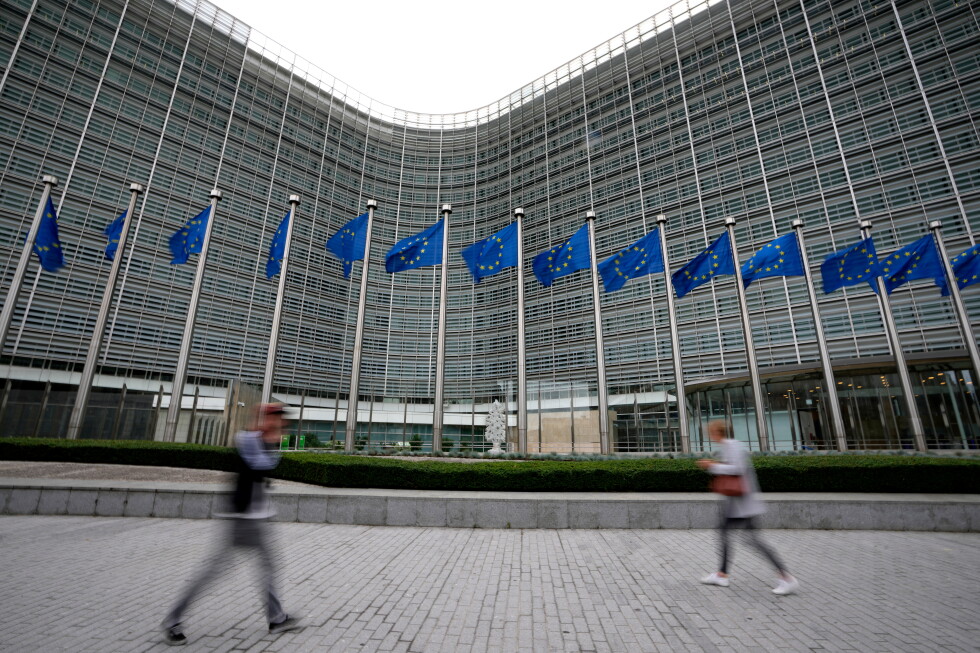
    BRUSSELS – In a landmark enforcement of the European Union’s landmark Digital Services Act (DSA), the European Commission announced Monday that it has issued a €550 million ($629 million) fine to Chinese e-commerce giant AliExpress, marking the largest penalty ever handed down for violations of the bloc’s sweeping digital regulation. The penalty comes on the heels of similar enforcement actions against other major platforms, setting a clear precedent for the EU’s aggressive crackdown on non-compliance by global online marketplaces operating in its single market.

    This latest fine follows a €200 million penalty issued to another China-based online retailer, Temu, just months prior, and a $120 million penalty imposed last year on X, the social media platform owned by Elon Musk, for failing to meet DSA obligations. For AliExpress, the penalty also arrives less than three weeks after its parent company, Chinese tech conglomerate Alibaba, agreed to pay $600 million to settle a long-running dispute with U.S. authorities over claims the firm facilitated the import and sale of illegal pharmaceuticals, controlled substances, regulated chemicals and pill-manufacturing equipment into the United States.

    European officials emphasized that the fine stems from AliExpress’s persistent failure to systematically curb the trade of dangerous and illicit goods on its platform, including counterfeit apparel, children’s toys that fail EU safety standards, toxic cosmetics, and a range of other prohibited products that put consumers at risk. Henna Virkkunen, the European Commission’s Executive Vice-President responsible for tech sovereignty, security and democracy, stated in an official release that the proliferation of these harmful goods is not an inevitable side effect of online commerce, but a direct result of AliExpress falling short of its mandatory obligations under the DSA.

    “Scale is not an excuse; risks must be identified and addressed systematically to ensure consumers can safely shop online,” Virkkunen said. “Today, we are holding AliExpress to this standard and request it to take urgent corrective action.”

    The commission’s investigation found that up until the bloc’s preliminary ruling in June 2024, AliExpress had not implemented sufficient safeguards to root out illegal and unsafe listings across its platform. While the company offered formal commitments to upgrade its compliance systems following the preliminary finding, the commission still moved forward with the full penalty to reflect the severity of the earlier non-compliance. AliExpress now faces an October 20 deadline to submit a detailed, actionable remediation plan outlining concrete steps it will take to address gaps in its systemic risk assessment and mitigation processes.

    Enshrined into EU law in 2022 and fully enforceable for major platforms since early 2024, the DSA is a landmark regulatory framework designed to protect digital users by forcing large online platforms to crack down on illegal and harmful content—ranging from dangerous counterfeit goods to incitement of violence and genocide—while upholding European citizens’ fundamental rights to privacy and free speech. The regulation requires very large online platforms, defined as those with more than 45 million monthly active users in the EU, to conduct regular mandatory risk assessments and implement targeted mitigation measures to address systemic harms tied to their services.

    In a written response emailed to the Associated Press following the announcement, AliExpress pushed back against the penalty, arguing it has made substantial proactive investments to align its operations with DSA requirements since the regulation entered into force. The company said it “has been, and continues to be, firmly committed to meeting our obligations and we have invested substantial resources in risk assessment and mitigation, product safety and consumer protection.”

    AliExpress rejected the fine as disproportionate, claiming it does not fairly reflect the compliance framework the company has already built, nor the significant upgrades it has already rolled out to strengthen safety protocols. “We are carefully reviewing the decision and considering all available options,” the company added, leaving the door open to an appeal of the penalty.

  • Spain’s on-field World Cup celebrations marred by scuffles with Argentina players

    Spain’s on-field World Cup celebrations marred by scuffles with Argentina players

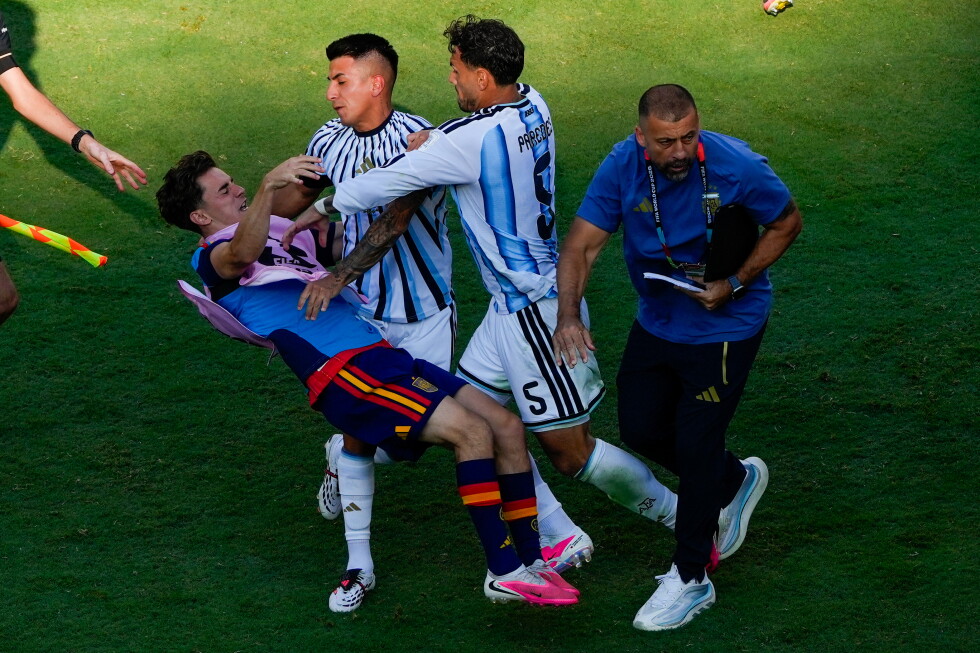
    EAST RUTHERFORD, N.J. – What was supposed to be a crowning celebration of Spain’s World Cup final victory over Argentina quickly devolved into ugly chaos, as a brief on-pitch clash between players erupted just moments after the final whistle blew to end the match.

    Repeated broadcast footage of the incident confirms that multiple athletes were caught up in the sudden scuffle. Among the key participants was Argentina’s starting defender Leandro Paredes, who was captured on camera appearing to shove Spain’s Eric Garcia directly in the throat area. When Spanish substitute Gavi moved in to separate the two players and defuse the tension, Paredes pushed the young midfielder hard enough to send him tumbling to the turf.

    The outburst did not last long, however. Teammates from both sides alongside Argentina’s senior head coach Lionel Scaloni sprinted across the pitch to intervene, stepping between the opposing players and working quickly to calm tempers and deescalate the confrontation before it could escalate further.

    As of Monday morning, it remains uncertain whether any of the players involved in the post-match altercation will face disciplinary action from global soccer’s governing body. FIFA has not yet issued an official statement on the incident, and did not immediately respond to requests for comment from reporters seeking clarification on potential penalties.

    Sunday’s tightly contested final required an extra 30 minutes of play for a winner to be decided, with Spain securing a 1-0 victory after Argentina was forced to play down a man for the closing stretch of regulation. Midfielder Enzo Fernandez was ejected from the match after picking up a second yellow card, leaving his team shorthanded for the final minutes and all of extra time.

    In an additional show of disappointment after the final result, the entire Argentina squad turned their backs to the trophy podium during Spain’s trophy lift, standing instead to face their own traveling fans in the stands.

  • Man charged over incident where car rams into crowd

    Man charged over incident where car rams into crowd

    A violent incident that left three teenagers injured and sparked widespread social media circulation of footage has led to a dangerous driving charge against a 29-year-old man in coastal County Dublin, Republic of Ireland. The event unfolded on Saturday afternoon along Harbour Road in the seaside town of Skerries, according to official court proceedings and Irish law enforcement details.

    Video recordings of the incident, which quickly spread across major social media platforms after being uploaded by witnesses, capture chaotic scenes of public fighting in the area before a car is seen accelerating directly toward a gathered group of people. Within hours of the incident being reported, Irish national broadcaster RTÉ confirmed that three local teenagers — two girls and one boy — had been transported to nearby Dublin hospitals for treatment. All three were described as having non-life threatening injuries, a detail that has eased community concerns over fatalities.

    Following a day-long investigation by Garda, the Republic of Ireland’s national police service, suspect Sean McGlone, a resident of Beechwood Drive in Drogheda, was taken into custody at his private residence at approximately 18:00 local time on Sunday. Law enforcement officials initially detained him on suspicion of dangerous driving causing endangerment, before formal charges were filed during processing at a local Garda station.

    McGlone made his first court appearance on Monday at Balbriggan District Court, where his defense team submitted an application for pretrial bail. Representing the Garda, the investigating officer did not oppose the bail request, provided a series of strict restrictive conditions were enforced by the court.

    Presiding Judge Stephanie Coggons approved the bail application, granting McGlone release on his own personal bond of €5,000, with a required cash lodgement of €1,000 ahead of his release. The 29-year-old, who works as a van driver professionally, is required to comply with multiple ongoing conditions for the duration of his pretrial release: he must check in with local law enforcement three times each week, he is strictly barred from entering the Balbriggan and Skerries areas entirely, he is prohibited from making any contact with witnesses connected to the case, he is forbidden from consuming alcohol, and he must maintain good behavior throughout the legal process.

    Local residents have reported heightened tension in Skerries in the days since the incident, particularly as footage of the event circulated widely among local social media groups, though no additional unrest has been reported as of Monday’s court proceedings.

  • Spain’s World Cup champions head home for a royal welcome and a parade through Madrid

    Spain’s World Cup champions head home for a royal welcome and a parade through Madrid

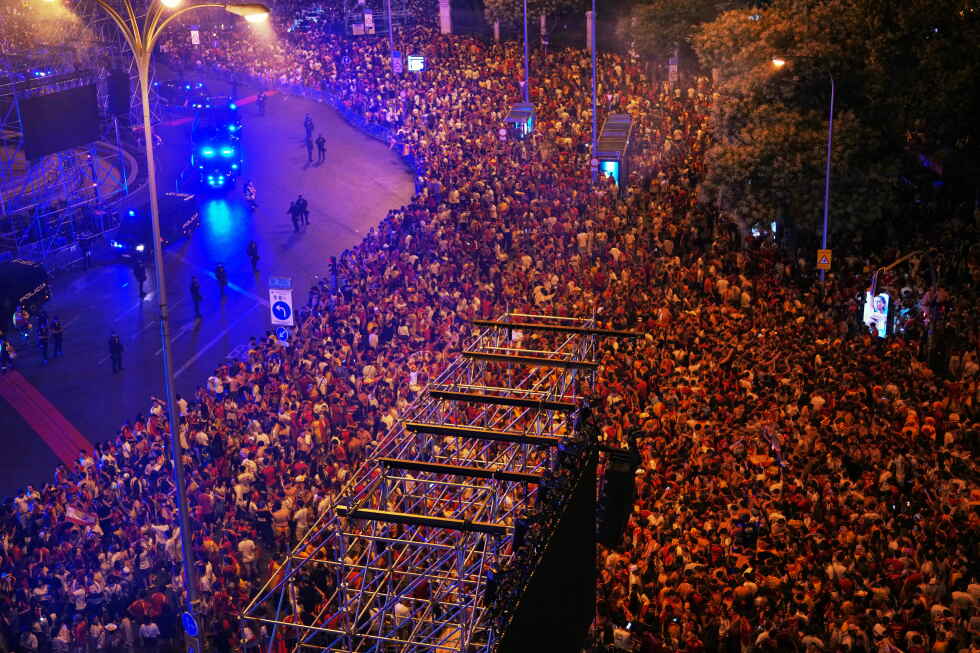
    MADRID — Fresh off a historic World Cup win that cemented Spain’s status as the first nation to hold both men’s and women’s senior World Cup trophies simultaneously, the country’s champion men’s squad is scheduled to arrive back on Spanish soil Monday afternoon. The 11-time title-winning side will first attend official welcomes at the Royal Palace of Spain and by Prime Minister Pedro Sánchez, before departing for an open-top bus parade through downtown Madrid scheduled for the evening.

    Massive crowds of elated fans are projected to line the parade route, which runs from the vicinity of Moncloa Palace, the prime minister’s official residence, to Cibeles Square, a landmark that has long served as the traditional gathering spot for Spanish national teams and their supporters to mark major tournament victories. A formal celebratory ceremony featuring the full squad will be held at the square following the parade.

    Spain claimed the World Cup crown with a 1-0 victory over defending champion Argentina in the final held Sunday in East Rutherford, New Jersey. This historic win marks only the second men’s World Cup title for Spain, following the team’s breakthrough victory at the 2010 tournament hosted in South Africa. Within moments of the final whistle blowing, celebrations erupted across the Spanish capital, as thousands of fans flooded out of bars, restaurants and homes onto Madrid’s streets. Many supporters wrapped themselves in Spanish national flags or wore the team’s iconic red and navy kits, packing major public spaces including Puerta del Sol to sing, dance, set off celebratory flares and honk car horns in a raucous display of national pride. Celebrations continued well into the early hours of Monday for many fans across the country.

    For a generation of young Spanish soccer supporters, this victory marks the first time they have ever seen the men’s national team lift the sport’s biggest prize, adding extra weight to the historic moment. Speaking early Monday, 19-year-old fan Victor Álvarez captured the widespread excitement, saying, “I’m very happy. I’ve slept three or four hours, but for the team, I’ll do whatever it takes.”

    Even before the team’s official arrival, hundreds of dedicated fans had already gathered in the arrivals hall of Madrid’s Barajas Airport, decked out in team gear and waving flags to greet the champions. By late Monday morning, groups of supporters had already begun staking out prime viewing spots along the parade route near Cibeles Square, coming prepared with sun protection to endure forecasted high temperatures that were expected to hit 35 degrees Celsius (95 Fahrenheit) through the afternoon.

    This historic win comes on the heels of Spain’s 2023 Women’s World Cup victory, making Spain the first country in soccer history to hold both the men’s and women’s world titles at the same time — a milestone that has amplified the country’s nationwide celebration.

    However, the collective joy has been tempered by a tragic incident connected to the celebrations. Local authorities confirmed that a 13-year-old boy died in Salamanca, a city located northwest of Madrid, after a fountain he and his friends had climbed onto to watch celebrations collapsed. The tragedy has cast a shadow over what is otherwise a landmark moment for Spanish soccer.

  • Ryanair profits drop as Iran war puts off passengers and lifts fuel costs

    Ryanair profits drop as Iran war puts off passengers and lifts fuel costs

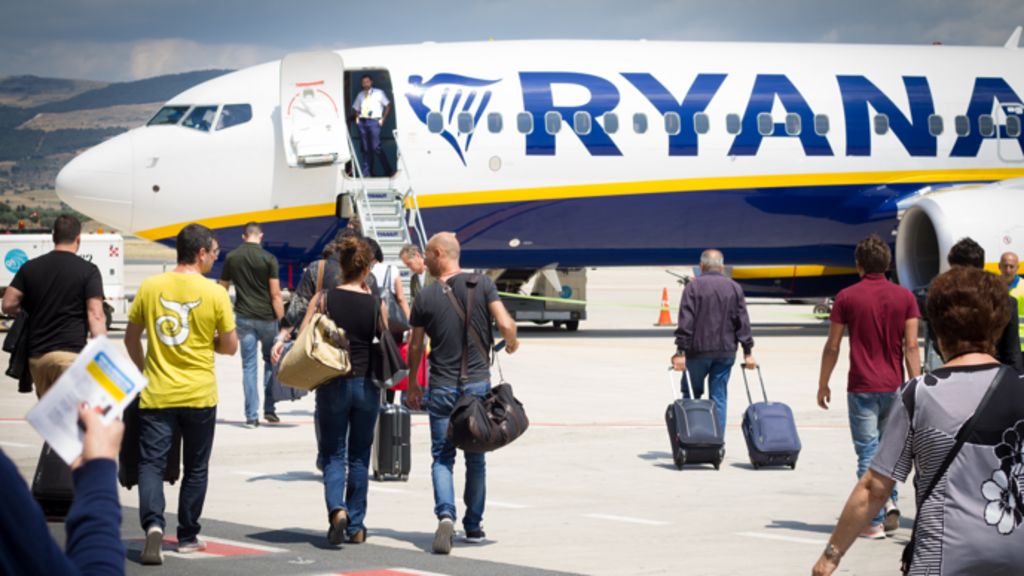
    Europe’s largest low-cost carrier Ryanair has reported a sharp 34% year-on-year drop in pre-tax profits for the first quarter of its financial year (April to June), as the resurgent conflict in the Middle East sends jet fuel costs soaring and sparks widespread consumer hesitation to book air travel in advance. The Irish airline posted pre-tax profits of €593 million (£503 million) for the three-month period, with overall revenue seeing almost no growth, edging up just 1% to €4.4 billion, as the carrier was forced to slash ticket prices to stimulate flagging demand amid geopolitical uncertainty.

  • Boy, 13, dies during World Cup celebrations in Spain

    Boy, 13, dies during World Cup celebrations in Spain

    Hours after Spain secured its historic second FIFA World Cup title with a 1-0 extra-time victory over Argentina on Sunday, what should have been a night of nationwide joy turned into an unthinkable tragedy in the northwestern Spanish region of Salamanca. A partial collapse of the iconic Árbol Gordo fountain in Ciudad Rodrigo, where crowds of young fans had gathered to celebrate the national team’s win, left one 13-year-old boy dead and two additional young people injured. Emergency services confirmed the incident unfolded around 00:30 local time, shortly after the final whistle of the championship match. According to local media reports, the structural failure occurred after dozens of fans climbed onto the aged fountain to get better views of celebrations and capture celebratory content for social media, putting excess weight on the weakened structure that caused a section of the stone monument to give way. The emergency coordination system for Castilla y León, the autonomous community that contains Ciudad Rodrigo, confirmed it received multiple urgent calls from witnesses immediately after the collapse. First responders, including local police, the Spanish Civil Guard, regional fire brigades and emergency medical teams, were dispatched to the scene within minutes, with a mobile intensive care unit and a basic life support ambulance sent to treat the injured. Despite rapid medical intervention, the 13-year-old victim was pronounced dead at a local health center. Regional authorities have ordered the Civil Guard to launch a full investigation into the incident to determine liability and identify any pre-existing structural weaknesses that contributed to the collapse. Psychological support services have also been activated to support the boy’s grieving family, as well as other witnesses who were present at the time of the collapse. One injured child was transported to a local hospital with a suspected fractured leg bone, while the second injured person was treated for minor injuries at the scene. Ciudad Rodrigo’s town hall confirmed the devastating turn of events in an official social media post shortly after the incident, writing: ‘What was supposed to be a celebration for the victory of the Spanish National Football Team’s World Cup has turned into a tragedy.’ The local municipal council extended its deepest condolences to the victim’s family and friends in an official statement, adding that it ‘hopes for a speedy recovery of the others who have been affected by the incident.’ Thousands of miles away from the Ciudad Rodrigo tragedy, crowds of elated Spanish fans flooded city streets across the country to celebrate the long-awaited win: photos captured in Los Palacios, Seville, more than 400 kilometers south of Salamanca, showed packed streets full of singing, cheering revellers hours after the final. Sunday’s win marks the first World Cup title for Spain in 16 years, following their historic championship win in 2010. Forward Ferran Torres scored the match-winning goal in extra time, securing the narrow win over two-time defending champions Argentina. This tragedy is not the only fatal incident tied to 2026 World Cup final celebrations: earlier this month, three people died from suffocation in a crowd crush during watch party celebrations in Mexico City, while a 30-year-old man died from an epileptic crisis triggered by overcrowding and excitement during the same event.

  • ‘King of the North’ Andy Burnham went from Manchester mayor to Britain’s new leader

    ‘King of the North’ Andy Burnham went from Manchester mayor to Britain’s new leader

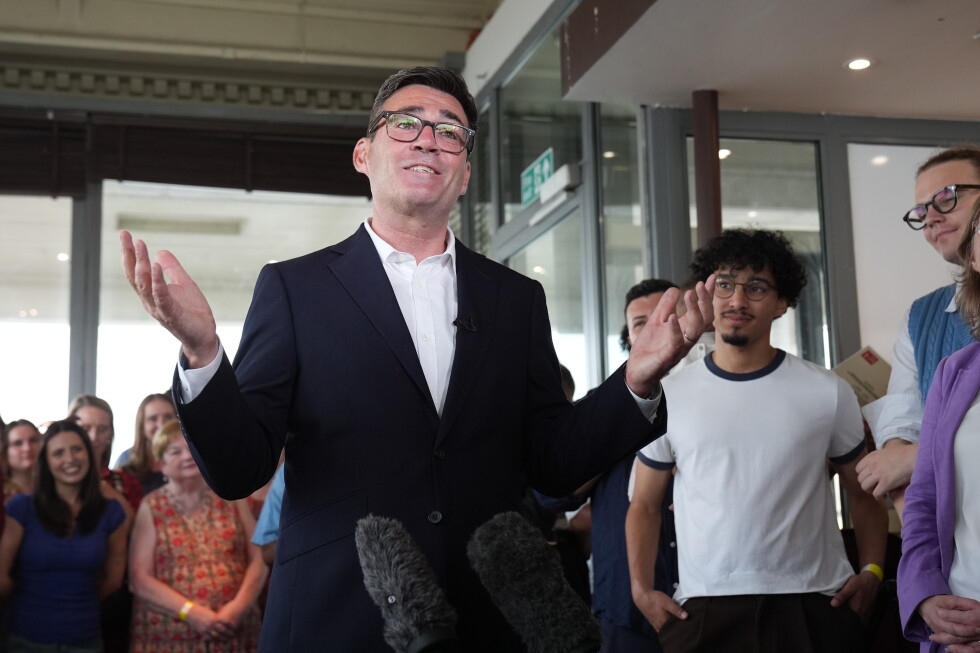
    LONDON — After a decades-long political journey marked by setbacks, detours, and unexpected twists, 56-year-old Andy Burnham is set to be sworn in as the United Kingdom’s 59th prime minister on Monday, catapulted into Downing Street following the sudden resignation of Keir Starmer after just two years in office.

    Ten years ago, Burnham walked away from a 20-year climb up Labour’s London-based party hierarchy to pursue a new role leading the northern English region of Greater Manchester as its mayor. Just one month ago, he reclaimed a seat in Parliament via a high-stakes special election, clearing the final hurdle to take the top job — a turn of events that has left the country with big questions about how the largely regionally focused leader will tackle national office.

    ### The Making of a Northern-Bred Progressive
    Born in Liverpool and raised in a tight-knit working-class Catholic community in a commuter village between Liverpool and Manchester, Burnham’s political values were shaped early on by his family upbringing and the centre-left Labour Party. His father worked as a British Telecom engineer, and his mother as a receptionist; he and his brothers were the first generation of their family to attend university. Despite his own self-doubt that a working-class boy “did not belong” at the elite institution, he was persuaded to apply to the University of Cambridge, where he earned an English degree and met his wife, Marie-France van Heel, a Dutch marketing executive. The couple married in 2000 and share three children.

    After graduating, Burnham cut his teeth as a trade magazine journalist before moving into political advisory work for Labour figures. Elected to Parliament for the Manchester-area constituency of Leigh in 2001, he rose steadily through the ranks under prime ministers Tony Blair and Gordon Brown, holding three senior Cabinet positions between 2007 and 2010: chief secretary to the Treasury, culture secretary, and health secretary. A defining turning point in his career came in 2009, when he was confronted by angry bereaved families at a commemoration for the 1989 Hillsborough Stadium disaster, which killed 97 Liverpool football fans. For decades, police had pushed a false narrative blaming unruly fans for the tragedy. Burnham stepped forward as a vocal advocate for the families, helping secure a new public inquest, a formal official apology, and landmark legislation imposing a legal duty of candor that requires public officials to disclose the full truth about tragedies, regardless of reputational damage.

    ### Building a Legacy as the ‘King of the North’
    Following Labour’s national defeat in 2010, Burnham made two unsuccessful bids for the party leadership, in 2010 and 2015. At a low point for Labour nationally in 2017, he stepped down from Parliament to run for Greater Manchester mayor, a role that would ultimately let him showcase his political strengths and build a national profile.

    As mayor, Burnham pioneered an approach dubbed “Manchesterism”: a brand of pragmatic, business-friendly socialism that combines private and public investment to upgrade transport, housing, and core infrastructure in the post-industrial region. Once the birthplace of the Industrial Revolution, Greater Manchester had suffered decades of economic decline after manufacturing collapsed; during Burnham’s tenure, the region experienced a sustained boom, with new skyscrapers rising on abandoned industrial lots. He earned widespread praise for bringing the region’s fragmented public transport system under public control and expanding access and reliability.

    Burnham also cultivated a relatable public persona, swapping formal suits for jeans and graphic tees, openly sharing his love for iconic northern British bands like Oasis, The Smiths, and New Order, and spending free time playing football or spinning 1990s tracks in public DJ sets. His national profile surged during the COVID-19 pandemic, when he publicly blasted then-Conservative Prime Minister Boris Johnson for a “London-centric” pandemic response that disproportionately harmed northern cities. The confrontation earned him the nickname “King of the North,” a *Game of Thrones*-inspired moniker that cemented his reputation as a champion for regional equity and signaled his long-held national political ambition.

    When Starmer was forced to resign by Labour lawmakers alarmed by the party’s plummeting approval ratings, Burnham saw his opening. To meet the requirement of holding a parliamentary seat to become prime minister and party leader, a sitting Labour legislator agreed to step down, triggering a special election in the Manchester-area seat of Makerfield. Burnham won by a landslide over the Reform UK candidate, proving his electoral appeal, and ran unopposed in the leadership contest to replace Starmer. He will formally take office after a required audience with King Charles III.

    ### High Expectations, Unanswered Questions
    Burnham enters office carrying the soaring expectations of a Labour base hungry for change after years of political turbulence. “A whole range of people across the Labour movement and in the country have projected onto Andy Burnham their hopes and their fantasies about how the country should be run and what Labour should stand for and what Andy Burnham stands for,” explained Joshi Herrmann, founder of the Manchester-based news outlet The Mill. “He has got lots of people’s hopes up.”

    In his first public remarks since securing the leadership, Burnham has pledged to deliver “a new politics based on unity and hope” and build “an economy that works for everybody, no matter where they live.” A core policy priority is devolving more power to regional leaders, a plan that includes moving a portion of the prime minister’s official office to a “No. 10 North” based in Manchester. He has spoken poignantly of his father, who lives with Alzheimer’s and cannot comprehend that his son has become prime minister: “The way I look at it, it’s his achievement as well. A whole family achievement, although he doesn’t know it.”

    Supporters point to Burnham’s unique political strengths: a rare ability to connect with working-class voters, genuine empathy, and a deep commitment to reducing economic inequality. “He has got a set of principles about trying to make the country fairer, trying to bring people out of poverty, that he really does believe in,” Herrmann noted. Manchester music entrepreneur Sacha Lord, who served as Burnham’s nighttime economy advisor during his mayoral tenure, said the new prime minister hides a steely resolve behind his affable public persona. “He’s not scared of locking horns with people. Everybody thinks Andy’s this nice, cheeky-chappy guy. But trust me, when he wants something … he tends to get it.”

    Still, critics warn that Burnham leaves many key policy pledges undefined, most notably how he will fund his proposed infrastructure and social programs. He inherits the same intractable challenges that derailed Starmer’s premiership: a stagnant national economy, overstretched public services, and a persistent cost-of-living crisis that has squeezed household budgets across the UK. He also has little experience at the national level on high-stakes foreign policy issues, from the ongoing war in Ukraine to managing the UK’s critical relationship with U.S. President Donald Trump. For Burnham, the decades-long climb to the top is over — now the race to prove he can handle the weight of the office has just begun.

  • Ukraine fires 400 drones toward Moscow as Zelenskyy grapples with protests

    Ukraine fires 400 drones toward Moscow as Zelenskyy grapples with protests

    A sharp escalation in cross-border hostilities has rocked the Russia-Ukraine conflict this week, after Ukraine launched one of its largest drone attacks on Moscow in recent months just hours after Russia pummeled Ukrainian population centers with a wave of ballistic missiles, deepening a cycle of retaliatory violence that pushes any diplomatic resolution further out of reach more than four years into Russia’s full-scale invasion.

    Moscow Mayor Sergei Sobyanan confirmed Monday that more than 400 Ukrainian drones were launched at the Russian capital between late Sunday and early Monday. According to official Russian statements, the vast majority of incoming unmanned aerial vehicles were shot down far from central Moscow, with 85 intercepted within Moscow’s immediate perimeter. Andrei Vorobyov, governor of the Moscow Oblast surrounding the capital, reported 10 civilian injuries and damage to multiple residential buildings and critical civilian infrastructure sites.

    Yevgeniya Khrustaleva, head of Domodedovo District south of Moscow, confirmed the attack sparked a large blaze at the Yuzhnye Vrata industrial park, located roughly 18 miles from the city center. Unconfirmed reporting from independent Russian outlet Astra also claimed a fire broke out at an oil depot in Podolsk, 12 miles south of Moscow, but the claim has not been verified by official Russian sources.

    This major drone attack underscores how far Ukraine’s long-range drone technology has advanced since the full-scale invasion began, creating a persistent security challenge for Russia: the country’s expansive territory makes comprehensive air defense coverage nearly impossible to maintain. Ukrainian forces have increasingly targeted Russian energy infrastructure in these strikes, leading to localized fuel shortages and undermining public confidence in the Kremlin’s ability to secure the home front. The scale of Monday’s attack is among the largest; in May, Russian defense officials reported downing 1,054 Ukrainian drones in a single 24-hour period.

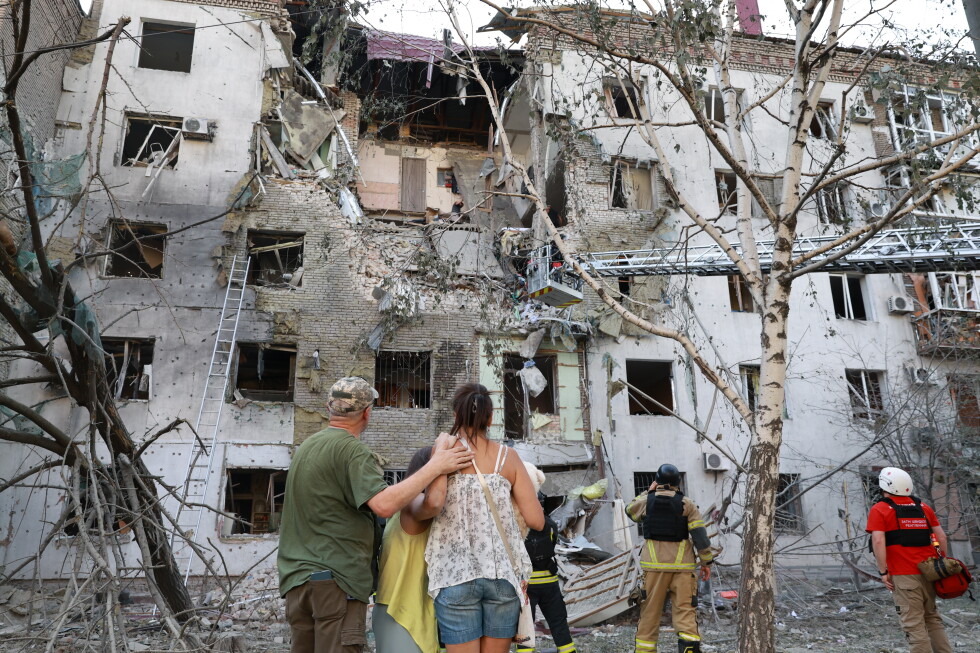
    The tit-for-tat strike came on the heels of a major Russian bombardment that used large numbers of ballistic missiles against Ukrainian cities. Ukrainian officials confirmed that Sunday’s Russian attack killed at least six civilians and wounded dozens more. Russia’s Defense Ministry claimed the overnight strike targeted fuel storage facilities in the southern Ukrainian port of Odesa, while Ukraine’s Air Force reported that Russia launched two ballistic missiles and 94 long-range drones in the overnight assault. Ukrainian air defenses intercepted or jammed 81 of the drones, but nine remaining drones and one Russian missile caused damage across nine separate Ukrainian locations.

    A Washington-based think tank, the Institute for the Study of War, noted Sunday that Russian forces have fired more ballistic missiles into Ukraine in July than the country is estimated to produce in a single month. The organization concluded that Russia is drawing down its stored stockpiles of ballistic missiles to ramp up strikes, as these weapons have a far higher penetration rate than slower drones or cruise missiles, allowing them to exploit gaps in Ukraine’s layered air defense network. Russia has significantly stepped up ballistic missile use in recent weeks to capitalize on these defensive gaps, as Kyiv continues to appeal to Western allies for more advanced interceptor systems capable of countering the hard-to-stop weapons.

    Beyond the frontline escalation, Ukrainian President Volodymyr Zelenskyy is working to navigate a growing domestic political crisis sparked by a major government reshuffle last week that laid bare deep divisions between military establishment leaders and younger reformist factions over the strategy for continuing the war. Zelenskyy announced last week that he would replace 35-year-old former Defense Minister Mykhailo Fedorov, while retaining 60-year-old Soviet-trained General Oleksandr Syrskyi as the head of Ukraine’s armed forces. The decision sparked days of public street protests, with demonstrators rallying in support of Fedorov and calling for the removal of Syrskyi. Zelenskyy has said he will hold “key negotiations” on Monday to shore up public and political unity, as he works to convince Ukrainians that the cabinet shake-up will not undermine the country’s military campaign against Russian forces.

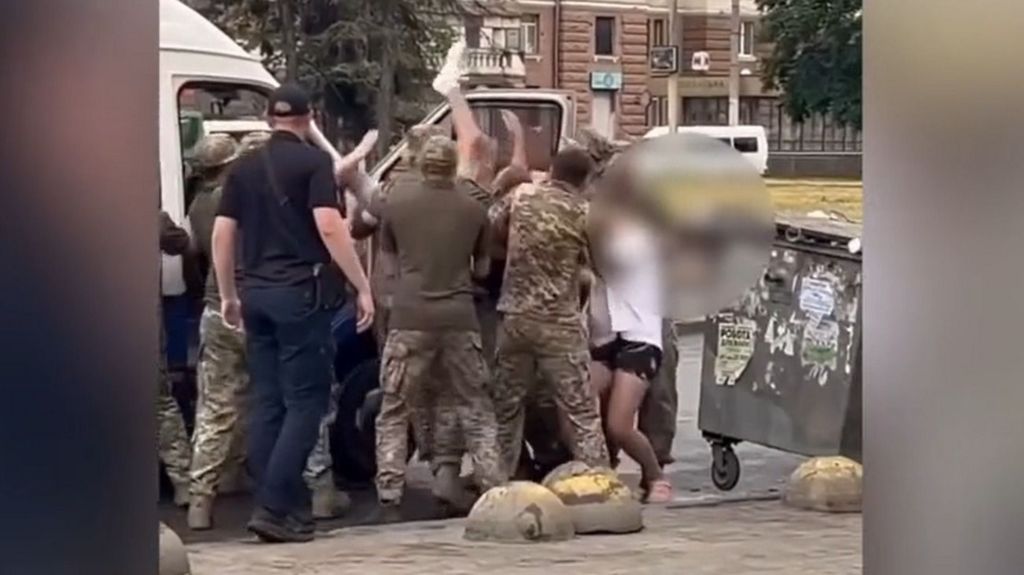
  • Why are Ukraine’s military recruiters facing violence in their own country?

    Why are Ukraine’s military recruiters facing violence in their own country?

    Ukraine is confronting a disturbing wave of violence targeting one of its most critical frontline institutions: military recruitment personnel. New data published by the National Police Service of Ukraine reveals that more than 600 physical assaults against recruitment officers have been documented since the start of the current conscription drive, with law enforcement officials issuing a stark warning that the aggression against these public servants is becoming steadily more dangerous and widespread.

    What began as isolated instances of public pushback against mandatory military service has evolved into a systemic pattern of violence that is raising urgent questions about domestic social cohesion amid the ongoing war with Russia. Recruitment officers, who are tasked with enforcing conscription laws to replenish Ukrainian frontline forces, now face routine threats and unprovoked attacks as they carry out their official duties across the country.

    The escalating violence reflects deep-seated public tensions around conscription policies. Many Ukrainians facing conscription have expressed frustration over what they claim are inconsistent enforcement of mobilization rules, lack of transparency around deployment timelines, and reports of improper selection of recruits that has seen vulnerable or ineligible individuals called up while others avoid service. These grievances have boiled over into open aggression against the officers tasked with implementing mobilization, who have become the public face of unpopular conscription policies.

    Law enforcement officials have emphasized that the rising intensity of these attacks poses a dual threat: it endangers the lives of public servants and undermines Ukraine’s ability to maintain the force levels needed to defend its territory against Russian invasion. The situation has prompted growing discussions among policymakers about potential reforms to conscription procedures to address public grievances and reduce the risk of further violence against recruitment personnel.

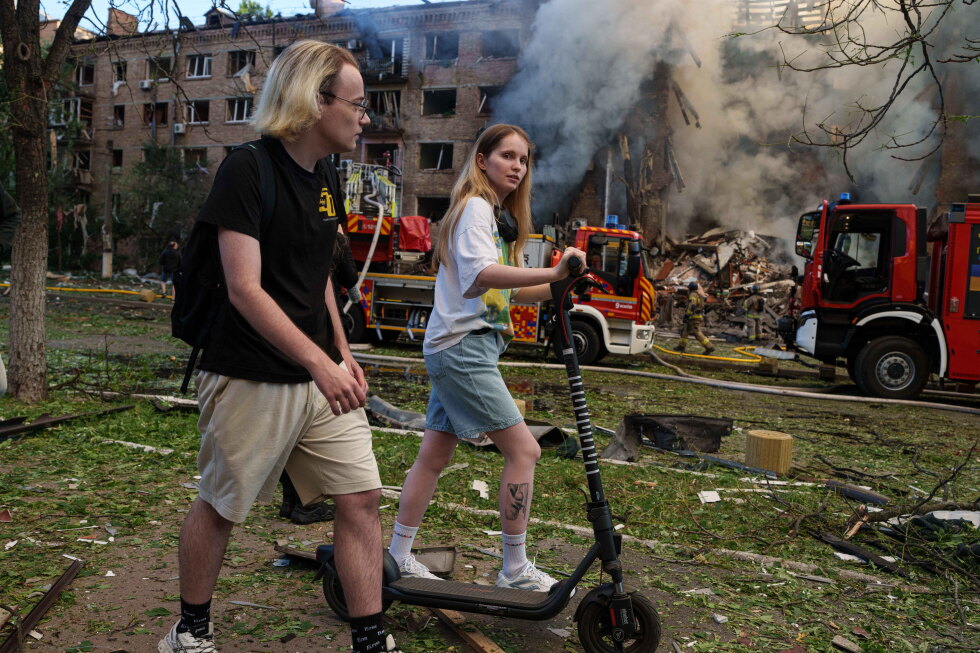
  • In one of Kyiv’s most frequently bombed neighborhoods, residents choose to stay

    In one of Kyiv’s most frequently bombed neighborhoods, residents choose to stay

    In Kyiv’s historic Lukianivka district, a neighborhood scarred by repeated Russian missile attacks, residents have turned stubborn perseverance into a daily way of life. Facing near-constant bombardment that has left craters pockmarking the urban landscape and iconic landmarks reduced to charred ruins, the people of this heavily targeted area have refused to surrender their home.

    Local real estate agent Dmytro Zhekov does not hide the danger when marketing properties to prospective tenants in one of the Ukrainian capital’s most frequently hit districts. He leads with transparency, warning every curious renter upfront that the neighborhood sits firmly in a high-risk strike zone, while also highlighting its unique advantages: affordable monthly rents, unbeatable proximity to Kyiv’s city center, a well-connected metro link, and a rich tapestry of historic sites. “From the beginning I tell them, ‘This is a place in the danger zone. It gets hit regularly. If you are all right with that, then we can see it,’” Zhekov explains.

    The neighborhood’s repeated targeting stems from its long-standing connection to arms manufacturing: the Soviet-era Artem weapons plant, located in the district, has become one of Russia’s top priority targets in Kyiv, its roof blackened by wave after wave of strikes. Directly across the street, Lukianivka metro station — the neighborhood’s namesake — has been struck no fewer than eight times, doubling as a civilian air raid shelter between attacks. For locals, the question is no longer if another strike will hit, but when. Still, they have chosen to rebuild, reopen businesses, and carry on with daily life rather than flee.

    Steeped in centuries of history, Lukianivka’s main thoroughfare Dehtiarivska Street follows the ancient path of Via Regia, the medieval trade route that brought merchants pouring into Kyiv for hundreds of years. It later evolved into a working-class district packed with factories, public markets, and the historic Lukianivka prison, which once held former Ukrainian Prime Minister Yulia Tymoshenko in a case widely seen as political retribution. In 1997, Ukraine’s first McDonald’s opened its doors here, becoming an enduring symbol of the nation’s post-independence rebirth. Today, even that restaurant bears the marks of war: a plastic sign outside remains permanently warped by the heat of a recent Russian strike. “It’s part of our history now,” says local historian Kyrylo Stepanets.

    One of the neighborhood’s most beloved community hubs, the iconic Lukianivka Market that had served local residents since the late 19th century, was completely destroyed in a Russian strike on May 24. What remains is a charred, twisted maze of destroyed kiosks, frozen in the moment of the blast — blackened loaves of bread still sit on the shelves of what was once a neighborhood bakery. For long-time residents, the market lives on in childhood memories, of parents and grandparents leading them through crowded aisles to buy fresh fruit, flowers, and daily necessities.

    Alyona Lukianets, 32, spent 11 years building her small produce business at the market. When the strike hit, she returned to find her stall turned to ash. Just weeks later, she was back at work, assembling a new makeshift stall from wooden pallets and tarpaulin just outside the market’s ruins. Every morning, she still arranges baskets of fresh berries and vegetables with the same careful attention she used before the war, even as the acrid smell of burnt destruction lingers in the air from the destroyed market behind her. “I don’t know what it will take for us to leave this place,” Lukianets says. “We are unmovable.”

    The Artem weapons plant that draws so much Russian fire has not pushed residents to flee, even those who relocated here after being displaced by the war elsewhere. Julia Sosnovska, who was forced out of her home when Russia seized the southern port city of Mariupol, chose Lukianivka for its low rental costs — studio apartments start at less than $200 a month, with one- and two-bedroom units available for roughly $270 and $310 respectively — despite the fact her apartment overlooks the plant directly.

    Founded in the late 19th century as an industrial machinery facility, Artem grew into one of the Soviet Union’s leading arms manufacturers before becoming a key part of Ukraine’s domestic defense industry after the country gained independence. It expanded production in 2014, when Russian-backed separatists seized territory in eastern Ukraine. Following Russia’s full-scale invasion in 2022, the plant became a top target for Russian missile strikes, as Moscow claims it still produces weapons for Ukraine’s military. Ukrainian officials cannot comment on the facility’s operations due to wartime security restrictions, and residents note that relocating production would do little to make the neighborhood safer: Russian missiles have struck every district of Kyiv, meaning no corner of the capital is truly immune.

    When the latest Russian missile barrage hit on a Sunday morning, Sosnovska was jolted awake by a blinding flash outside her bedroom window, followed by the crash of flying shards of glass. Her dog Perry, who she had finally been allowed to adopt after a May strike destroyed part of the building, bolted from the bed in panic. Clutching the trembling dog, her identity documents, and her laptop, Sosnovska joined neighbors sheltering in the basement parking garage as more explosions shook the area. By dawn, all her apartment windows had been blown out and her car was damaged, but she counts herself lucky. “Glass is the least you can lose in these attacks,” she says. When asked why she stays, she shrugs: “Where else would I go? You never know which place will be next.”

    That same defiant resolve runs through every corner of the neighborhood. Vitalii Zhdaniuk opened a barber school in Lukianivka because of his love for the area. The building’s walls are pocked with shrapnel holes, and a chunk of brick thrown from a neighboring auto shop during a 2023 strike still remains embedded in one exterior wall. “No matter how many missiles fly here,” he says, “I’ll stay.”

    Even the district’s vibrant cultural life has adapted to war, refusing to be silenced. Tucked behind Lukianivka metro station, Mala Opera — a small theater that has long been a staple of Kyiv’s cultural scene — now stages all its productions in the theater’s basement, leaving the grand upper auditorium empty. When the full-scale invasion began, the theater’s director Mykhailo Miskun made a deliberate choice: the company would only stage comedies, to give war-weary audiences a much-needed break from the stress of conflict. His latest production centers on love, sex, and feuding neighbors, lighthearted themes designed to help attendees forget the war for a few hours.

    The company has adapted its process, holding rehearsals online and gathering in smaller, safer spaces to work. After one recent strike, the troupe briefly debated relocating elsewhere, but ultimately chose to stay. “despite everything,” Miskun says. Outside, theatergoers line up to descend the stairs into the basement, where the evening’s performance is about to begin.

    As Miskun puts it: “We live. We create. We give birth. Just like any part of Ukraine, Lukianivka is also being restored and continues to live.”