标签: Asia

亚洲

  • Japan’s SoftBank racks up huge profit gains with lift from lucrative AI investments

    Japan’s SoftBank racks up huge profit gains with lift from lucrative AI investments

    TOKYO — Japanese technology investment giant SoftBank Group Corp. has delivered a blockbuster set of full-year financial results, with fiscal year profits ending in March surging nearly fivefold compared to the prior 12-month period, fueled by outsized returns from its early bets on artificial intelligence. The Tokyo-headquartered firm announced Wednesday that it notched a net annual profit of 5 trillion Japanese yen, equivalent to roughly $32 billion. That figure marked a staggering leap from the 1.15 trillion yen profit it recorded in the preceding fiscal year.

    Revenue for the reporting period also showed steady growth, climbing almost 8% year-over-year to hit 7.8 trillion yen ($50 billion), up from 7.2 trillion yen in the prior year, according to the company’s official earnings statement.

    The clear standout contributor to SoftBank’s stellar results was its AI-focused portfolio, with its stake in leading AI developer OpenAI standing out as the most lucrative holding. SoftBank has poured $34.6 billion into OpenAI, and the value of that investment has generated $45 billion in gains to date. Beyond OpenAI, SoftBank holds major positions in other high-profile global technology and AI players, including U.S. semiconductor giant Nvidia, German digital infrastructure provider Deutsche Telekom, and British chip design firm Arm. The company also pioneered development of the commercial humanoid robot Pepper, one of its early forays into consumer-facing robotics technology.

    SoftBank’s bottom line got an extra boost from the initial public offering of PayPay, Japan’s dominant mobile QR code payment service that has revolutionized cashless transactions across the country. The firm’s overall performance was balanced by mixed outcomes across its broader portfolio: gains from its holdings in semiconductor manufacturer Intel Corp. offset downward valuation adjustments to its stake in Chinese e-commerce leader Alibaba Group.

    This pattern of mixed returns across diverse holdings is characteristic of SoftBank’s unique business model. Decades ago, the company became one of the first Japanese firms to prioritize aggressive early-stage technology investment, and today it manages a vast global network of portfolio companies through its series of Vision Fund investment vehicles.

    Founded more than 40 years ago by iconic chief executive and chairman Masayoshi Son, a University of California graduate and billionaire who is widely recognized as a trailblazer for Japan’s modern technology industry, SoftBank has continued to expand its footprint beyond traditional venture investment. In recent months, the firm has launched a new domestic battery business in Japan, with plans to build next-generation energy infrastructure to meet the rising power demand expected from the rapid growth of AI computing. It has also partnered with Japanese industrial firm Toppan, which operates across printing, communications, security and packaging sectors, to develop a lightweight, long-lasting composite material for aircraft wings that is on track to enter commercial use within three years.

    In line with its longstanding policy, SoftBank did not release forward-looking earnings guidance for the coming fiscal year.

  • US heading for ‘checkmate’ and ‘total defeat’ in Iran war, says neocon Robert Kagan

    US heading for ‘checkmate’ and ‘total defeat’ in Iran war, says neocon Robert Kagan

    A towering figure in American neoconservative thought and a decades-long pro-Israel hardliner has delivered a devastating assessment of U.S. policy toward Iran, warning that Washington is on track to suffer an irreversible “total defeat” that will reshape global power dynamics for generations. Robert Kagan, a co-founder of the influential neoconservative think tank Project for the New American Century, laid out his bleak prognosis in a recent essay for *The Atlantic*, arguing that the damage accumulated over years of confrontation with Tehran cannot be undone.

    Kagan’s warning carries unique weight because of his central role in shaping modern American interventionist foreign policy. In 1997, he helped launch the Project for the New American Century, a movement that pushed successive U.S. administrations to project American military power across the globe to advance U.S. strategic interests. This ideological framework ultimately culminated in the 2003 U.S. invasion of Iraq, and deeply shaped the foreign policy agenda of President George W. Bush’s administration. Kagan remains deeply embedded in the U.S. foreign policy establishment: his wife, Victoria Nuland, served as a top foreign policy advisor to iconic neoconservative Vice President Dick Cheney. For decades, Kagan has been one of the most vocal advocates of aggressive U.S. global intervention, making his unsparing criticism of current Iran policy all the more striking.

    At the core of Kagan’s analysis is a dramatic shift in control over the Strait of Hormuz, the strategic chokepoint through which nearly 20% of the world’s daily oil supplies pass. Kagan argues that Tehran’s growing influence over the strait has fundamentally upended the regional balance of power. “With control of the strait, Iran emerges as the key player in the region and one of the key players in the world,” he wrote. “Defeat for the United States, therefore, is not only possible but likely.”

    Beyond shifting regional power, Kagan says the long-running confrontation with Iran has strengthened global rivals of the U.S., including China and Russia, while severely eroding American credibility and standing across the globe. “Far from demonstrating American prowess, as supporters of the war have repeatedly claimed, the conflict has revealed an America that is unreliable and incapable of finishing what it started,” he argued. “That is going to set off a chain reaction around the world as friends and foes adjust to America’s failure.”

    Kagan warned that former U.S. President Donald Trump had extremely limited options to reassert American control over the Strait of Hormuz, noting that Washington had effectively exhausted all meaningful leverage over Tehran. He compared the magnitude of the current strategic setback to the darkest moments in modern American military history, including the 1941 Japanese attack on Pearl Harbor and the final collapse of the U.S. war effort in Vietnam. Unlike those crises, however, Kagan argued that the U.S. may not be able to rebuild and recover from the consequences of an Iranian defeat this time.

    Tehran’s ability to withstand relentless U.S. pressure leaves Washington with almost no viable paths forward that would not trigger catastrophic damage to Gulf state economies and the broader global energy system, Kagan added. “If this isn’t checkmate, it’s close,” he said.

    He also stressed that Tehran has no incentive to give up its control over the strait, which serves as one of its most powerful strategic leverage points against the West. “Iran cannot afford to let the strait go, no matter how good a deal it thought it could get. For one thing, how reliable is any deal with Trump?” he asked.

    In a separate interview with PBS, Kagan extended his warning to Israel, Washington’s closest regional ally, arguing that the confrontation with Iran could backfire spectacularly for the Jewish state. “This war has the potential of ending in a very disastrous way for Israel precisely because the leverage in the region and the influence in the region is going to shift away from the United States and Israel and toward Iran and its supporters,” he explained.

  • Trump-Xi summit to weigh US energy sales amid Hormuz crisis

    Trump-Xi summit to weigh US energy sales amid Hormuz crisis

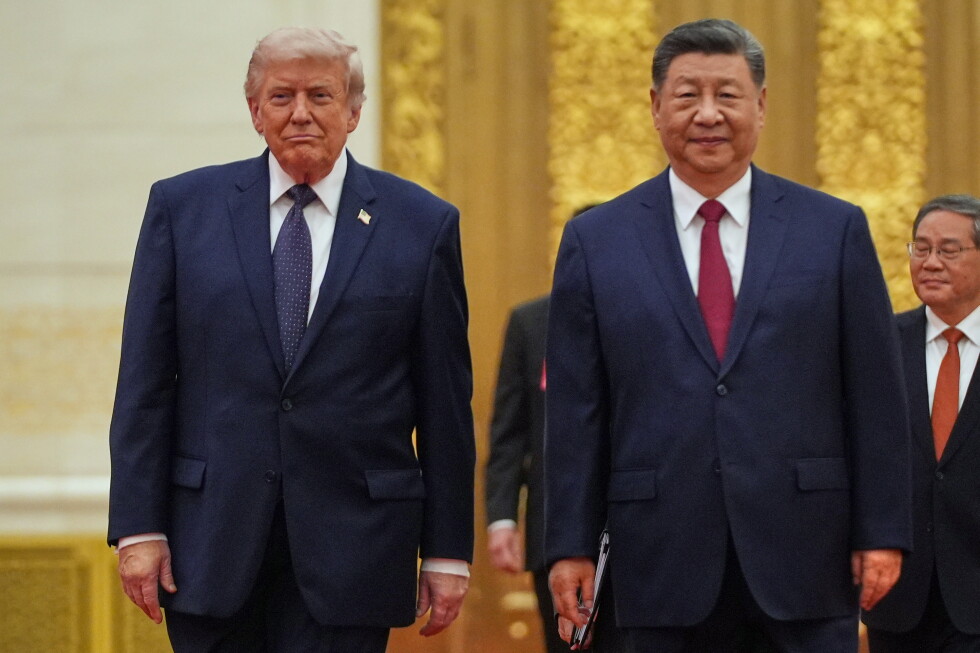
    As U.S. President Donald Trump prepares for a three-day summit with Chinese President Xi Jinping in Beijing starting Wednesday, energy trade cooperation has emerged as a central negotiating priority, with Washington pushing Beijing to commit to restarting routine purchases of American crude oil and liquefied natural gas (LNG).

    U.S. diplomatic and trade officials have confirmed that a broad energy purchase agreement is currently under active discussion, a negotiation shaped by ongoing conflict in Iran and recent blockades of the Strait of Hormuz, which have forced China to reassess the vulnerability of its critical energy supply lines that rely heavily on Middle Eastern exports.

    Two-way energy trade between the two powers has been largely frozen since the escalation of a tit-for-tat tariff war launched by the Trump administration in April 2025, after hitting $8.4 billion in total U.S. energy exports to China in 2024. Breakdown of 2024 trade data shows China imported 193,000 barrels of U.S. crude oil per day that year, totaling roughly $6 billion in value. But all imports of U.S. crude have ceased since May 2025, following the imposition of a 20% import tariff that made American shipments uncompetitive. China has offset this gap by ramping up crude imports from other major producers including Canada and Brazil.

    The trajectory of U.S. LNG imports to China has followed a similar downward trajectory amid rising trade tensions. In 2021, China imported 7.04 million tons of U.S. LNG, but that figure dropped to 4.15 million tons by 2024, as Chinese buyers shifted to cheaper, more cost-effective long-term contracts with Russian and Qatari suppliers compared to volatile U.S. spot cargoes. After China imposed a 25% tariff on U.S. LNG in 2025 as part of its retaliatory trade measures, annual imports plummeted to just 26,000 tons for the year.

    Not all U.S. energy product exports to China have suffered the same decline, however. Shipments of U.S. ethane and propane, both key feedstocks for plastic manufacturing, have remained largely resilient to bilateral political tensions. As of 2025, the U.S. remained China’s sole supplier of ethane and retained its position as Beijing’s largest source of propane imports.

    Washington has employed a mixed carrot-and-stick strategy to pressure China into restarting large-scale energy purchases. On the coercive side, the U.S. Treasury Department imposed sanctions in April on independent Chinese “teapot” refiners and dozens of vessels linked to Iran’s informal oil shipping network, while also threatening to impose secondary sanctions on Chinese financial institutions that facilitate transactions for Iranian crude imports. U.S. Trade Representative Jamieson Greer reiterated this position in a May 6 statement, arguing that purchases of Iranian oil fund Tehran’s activities Washington labels as terrorist, and warned that China’s non-compliance with U.S. sanctions would be a core topic of the bilateral summit.

    On the diplomatic side, President Trump has framed expanded energy trade as a mutually beneficial opportunity for both sides. During a May 5 White House media briefing, Trump described President Xi as a “tremendous guy” and emphasized that he maintains a positive working relationship with his Chinese counterpart. “We’ve offered that if he wants to send the ships to the U.S., I made a statement: send your ships to Texas. It’s not that much further. Send your ships to Louisiana. Send your ships to Alaska. Alaska is actually very close to a lot of the Asian countries; people don’t realize it,” Trump said.

    Trump added that the U.S. has already finalized large energy supply deals with South Korea and Japan, both of which have faced major supply disruptions following the closure of Hormuz shipping lanes. He also noted that while 60% of China’s total crude oil imports pass through the Strait of Hormuz, President Xi has remained respectful in discussions about the disruptions caused by the Iran war.

    Beijing has so far offered no formal public response to Washington’s proposal. When asked directly about Trump’s call for China to shift purchases from Iranian to American crude during a regular Foreign Ministry briefing, spokesperson Lin Jian declined to comment directly and directed inquiries to China’s competent trade authorities.

    Among Chinese policy commentators and analysts, opinions on the proposal are deeply divided. One camp argues that the ongoing supply disruptions in the Middle East make a strong case for China to expand its energy supply diversification, including a resumption of U.S. energy imports.

    A Hunan-based columnist writing under the pen name Xu Sanlang noted that China halted most U.S. energy imports as a retaliatory measure after Trump’s return to the White House in early 2025, with the last U.S. crude purchase completed in February 2025 and LNG imports ending that December. Citing Chinese customs data, Xu pointed out that U.S. crude made up just 1.8% of China’s total $325 billion in 2024 crude imports, falling to near zero in 2025. However, ship tracking data from analytics firm Kpler shows nearly 600,000 barrels per day of U.S. crude were loaded onto tankers bound for China in April 2026, a shift driven directly by Iran’s closure of the Strait of Hormuz and recent strikes on energy infrastructure across Saudi Arabia, the United Arab Emirates and Qatar.

    “Faced with this situation, the most rational response is to diversify procurement sources,” Xu wrote. “Although the U.S. is China’s trade rival, it does have sufficient energy supplies. China’s purchases of US energy were previously interrupted by a tariff war in 2025, but the situation has since changed. Supply security is more important than anything else.”

    Xu added that longstanding U.S. demands for China to expand purchases of American agricultural goods, aircraft and energy could be ignored by Beijing during the height of the 2025 trade war, but current Middle East conflicts and global supply chain volatility have made Washington’s request far more palatable for Chinese leaders. Resuming U.S. energy purchases would both advance China’s own energy security goals and grant Trump a diplomatic win during his Beijing visit, he argued, creating a “kill two birds with one stone” outcome that supports energy security while creating favorable conditions for broader bilateral negotiations.

    Critics of the proposal, however, argue that Beijing should not deepen its energy reliance on Washington, pointing to what they frame as the U.S.’s illegal use of coercive power to control oil exports from U.S. adversaries including Iran and Venezuela.

    A Henan-based political commentator pointed to Trump’s recent claim that the U.S. is now receiving “hundreds of millions of barrels of oil” from Venezuela for refining in Houston, noting that just four months prior, U.S. military forces raided Caracas and detained former Venezuelan President Nicolas Maduro and his wife. The commentator added that the U.S. Treasury Department revoked oil major Chevron’s original operating license in Venezuela on March 1, before issuing a new broad license that allows U.S. firms to do business directly with the state-owned Petróleos de Venezuela. “This is not normal international trade. This is naked plunder,” he wrote.

    The critic further argued that the U.S. is intentionally tightening pressure on Iran, disrupting Hormuz shipping lanes, and then pushing third countries to buy Venezuelan crude refined on U.S. soil. As global oil prices rise, the Venezuelan crude held under U.S. control grows more valuable, turning the entire arrangement into a form of coercion rather than fair cooperation, he added.

    Other critics point to China’s existing stable overland energy supply networks that eliminate the maritime risks of Hormuz disruptions. A Hebei-based commentator noted that China has spent two decades building cross-border pipelines to bring oil and gas from Central Asia, which has operated consistently without disruption. The Central Asia-China Gas Pipeline delivered 4.67 million tons of natural gas to China in January and February 2026, averaging 79,200 tons per day. The pipeline runs from Turkmenistan through Uzbekistan and Kazakhstan before entering China at the Xinjiang border, making it an entirely overland route that avoids disputed international waters. In 2025, China imported $8.41 billion worth of natural gas from Turkmenistan, making it China’s second-largest gas supplier after Russia, which supplied $9.41 billion that year. “Together with LNG imports from Australia, Qatar, Russia and other suppliers, China has effectively built a diversified energy network,” the commentator wrote. “No matter how strong a maritime power is, it cannot cut off the steel pipelines running through the heart of Central Asia.”

    Some analysts have also suggested that China could increase heavy crude imports from Canada as an alternative to U.S. or U.S.-controlled Venezuelan crude, even with a $10 per barrel price premium over Venezuelan shipments.

  • Gulf investments and economic interests motivate Beijing to help Trump end war

    Gulf investments and economic interests motivate Beijing to help Trump end war

    As U.S. President Donald Trump prepares to land in Beijing for a high-stakes two-day summit with Chinese President Xi Jinping this Thursday, trade and economic agreements between the world’s two largest economies top the official agenda — but the lingering conflict between the U.S.-led coalition and Iran will hang over every closed-door discussion, shaping the trajectory of bilateral relations amid shifting global power dynamics.

    Analysts point out that China’s ongoing military and technical support to Iran amid its war with the U.S. and Israel has delivered tangible strategic benefits, but the regional conflict has also created unforeseen strains on Beijing’s ties with wealthy Gulf Arab states and exposed vulnerabilities in China’s export-driven economic model.

    For Beijing, the U.S.’s failed campaign to neutralize Iran has been a quiet strategic win, says Wang Yiwei, an international relations scholar at Renmin University of China. “Iran’s brave response to U.S. attacks taught Trump a lesson,” Wang told Middle East Eye. “Trump cannot blackmail China — let alone Iran — with his so-called ‘art of the deal.’”

    Long framed as peer competitors, the U.S. and China remain locked in systemic rivalry spanning cutting-edge artificial intelligence development, access to critical mineral supplies, and competing claims over the Taiwan Strait. Far from remaining a passive bystander, China has played an active role in arming Iran throughout the escalating conflict, multiple media outlets have confirmed.

    Middle East Eye was the first outlet to reveal that China supplied advanced air defense systems to Iran after the 2025 June war between Iran and Israel that ended with U.S. strikes on Iranian nuclear infrastructure. MEE further reported that Beijing delivered kamikaze drones to Iran on the eve of the 2026 U.S. escalation. The New York Times later corroborated that shipments of Chinese man-portable air defense systems to Iran took place in April, while the Financial Times has confirmed that Iran used sophisticated Chinese satellite intelligence to target U.S. military installations across the Persian Gulf.

    A number of geopolitical analysts have drawn a parallel between the U.S.’s stalled campaign against Iran and the 1956 Suez Crisis, framing the conflict as a “Suez moment” that could mark the beginning of the end of long-standing U.S. regional dominance in the Middle East, just as the 1956 conflict accelerated the collapse of British imperial influence in the region.

    Despite a sustained U.S. blockade of Iranian ports, former senior U.S. official Amos Hochstein acknowledged earlier this month that Iran will retain permanent control over the strategic Strait of Hormuz, the chokepoint through which 20% of the world’s daily oil shipments pass. To date, the U.S. has failed to seize Iran’s stockpile of enriched uranium or eliminate the country’s large arsenal of ballistic missiles, leaving core U.S. war objectives unmet.

    Jake Werner, director of the East Asia program at the U.S.-based Quincy Institute, told MEE that a successful U.S. overthrow of the Iranian government earlier this year would have sparked panic in Beijing. But even amid this strategic windfall, Beijing remains deliberate and cautious. “They see a very powerful country, the U.S., bogged down, and they don’t want to provoke it unnecessarily,” Werner explained.

    The Iran war has already delivered tactical gains for China closer to its own backyard: to bolster its military operations in the Middle East, Washington has been forced to temporarily reposition key military assets away from the Indo-Pacific, easing pressure on China’s regional interests. Even so, both Beijing and Washington share overlapping core interests in securing a ceasefire in the region, notes Ahmed Aboudouh, associate fellow at Chatham House and head of the China Studies unit at the Emirates Policy Center.

    “China and the U.S. are aligned in opposing Iran having nuclear weapons and seeing the Strait of Hormuz reopened to commercial shipping,” Aboudouh told MEE.

    Pakistan, one of China’s closest security and economic partners, has already stepped into a mediating role between Washington and Tehran. Just two days after U.S. Treasury Secretary Scott Bessent called on China to take a more active diplomatic role to reopen the Strait of Hormuz, Iranian Foreign Minister Abbas Araghchi traveled to Beijing to hold talks with China’s top diplomat Wang Yi.

    Aboudouh notes the timing of the visit was no coincidence. “The Chinese want to show the Americans they have leverage over Iran. But they genuinely want this war to end,” he said.

    Trump has downplayed the prospects of a ceasefire, telling reporters Monday that the proposed truce is on “life support” as he rejected an Iranian peace proposal. A day later, he pushed back on the idea that the U.S. needs Chinese assistance to end the conflict. “I don’t think we need any help with Iran. We’ll win it one way or the other, peacefully or otherwise,” Trump said.

    Jesse Marks, CEO of Middle East and Asia-focused consulting firm Rihla Research and Advisory, predicts that Xi will not offer Trump a full exit from the quagmire of the Iran war, but could assist with the technical implementation of a revised nuclear deal. “If there is a clear deal on the table where China can play a role it sees as productive, and where it can deliver without getting entangled deeply, then Beijing is likely to play that role,” Marks said. “China has already explored helping remove the existing enriched uranium from Iran as part of a negotiated deal.”

    Beijing has clear domestic and economic motivations to bring the conflict to a swift end. The war has sent shockwaves through Asian economies, which are overwhelmingly dependent on Gulf oil and gas exports. Over the weekend, Indian Prime Minister Narendra Modi even called on Indian citizens to cut consumption of petrol and diesel and suspend gold purchases to offset market volatility.

    Werner notes that the conflict has severely disrupted China’s large-scale investments across the Gulf Cooperation Council (GCC). “U.S. allies in the region – Japan, South Korea and India – are likely to face economic pressure before China does because of the Hormuz closure,” he said. “Beijing likes to see those countries’ bilateral ties to the U.S. weakened, but they aren’t happy about the economic damage because they are deeply integrated into those economies. China’s entire growth model is rooted in global trade and exports.”

    Before the outbreak of full-scale war, China absorbed roughly 90% of Iran’s oil exports, a relationship that has drawn intense scrutiny from U.S. officials. Earlier this month, Beijing ordered its domestic firms to refuse to comply with U.S. sanctions targeting five major oil refiners that process Iranian crude.

    Even so, China’s economic stakes in Iran pale in comparison to its billions in investments across the oil-rich Gulf. In 2025, Saudi Arabia ranked as the third-largest recipient of Chinese construction contracts under China’s signature Belt and Road Initiative, totaling roughly $20 billion in activity. China is also the fourth-largest source of foreign direct investment for the United Arab Emirates, with Chinese firms pouring billions into Abu Dhabi’s Khalifa Industrial Zone. State-owned Chinese shipping giant Cosco has even made Abu Dhabi’s Khalifa Port its regional hub for the entire Middle East.

    “China has poured billions of dollars into the GCC, a lot more money than it has invested in Iran,” Werner said. “Those investments are not looking so great now. The war has upended China’s investments in the Gulf.”

    Aboudouh adds that Beijing’s top regional priority is preventing GCC states from being drawn directly into the conflict, a key point of divergence with the U.S., which has actively lobbied Gulf nations to join the anti-Iran coalition. China hopes to build on the 2021 China-brokered normalization deal between Iran and Saudi Arabia, which Aboudouh says Beijing views as a replicable model for broader regional peace once hostilities end. “They see that as a model that can be replicated at a larger scale when the missiles and drones stop flying,” he said.

  • Some Japanese snack packages are turning black-and-white as Iran war depletes ink supply

    Some Japanese snack packages are turning black-and-white as Iran war depletes ink supply

    TOKYO — A major Japanese snack manufacturer is making a drastic visual change to its product packaging, a visible ripple effect of geopolitical unrest in the Middle East that is disrupting global supply chains. Tokyo-based Calbee Inc., the producer of best-selling potato chips, cereals, and shrimp chips, has announced it will shift 14 of its core products to simple black-and-white packaging starting May 25, a shift driven by shortages of raw materials for colored ink linked to the ongoing war in Iran.

    Calbee confirmed in an official statement that the product itself — the flavor, quality, and formulation that has made its lines like lightly salted “usu shio” potato chips and “kappa ebisen” shrimp chips household staples across Japan and export markets including the U.S., China, and Australia — remains unchanged. The drastic packaging adjustment is purely a proactive measure to preserve consistent product availability for consumers.

    The supply disruption traces back to the effective closure of the Strait of Hormuz, a critical global shipping chokepoint, amid the Iran conflict. The unrest has already pushed up global prices for energy and raw materials and triggered widespread supply crunches across multiple industries. Japan, which relies on 100% imported oil to meet its energy needs, is particularly exposed to these shifts. Naphtha, a petroleum-derived product critical to manufacturing everything from plastics to colored printing ink, is among the commodities facing tight supplies.

    While Japanese officials have moved to calm public anxiety by pointing to the nation’s ample strategic oil reserves, Calbee’s packaging change serves as a stark, public reminder of the ongoing supply chain disruptions. Previously, the iconic usu shio potato chip line featured a bright orange bag accented with yellow graphics of potato slices and the brand’s friendly potato mascot in a signature hat. The reworked packaging will swap all vibrant colors for simple monochrome text.

    Founded in 1949, Calbee employs more than 5,000 workers across its group operations and had only announced an ambitious corporate growth strategy back in March. The company says it remains unclear how long the monochrome packaging adjustment will need to stay in place, as the timeline for resolving the geopolitical tensions disrupting supply remains uncertain.

    “Calbee will continue to respond flexibly and promptly to changes in its operating environment, including geopolitical risks, and remains committed to maintaining a stable supply of safe, high-quality products,” the company said in its statement. “We ask for your understanding from consumers for this temporary change.”

  • ‘Make a choice’: Huckabee warns Gulf to choose between Iran and Israel

    ‘Make a choice’: Huckabee warns Gulf to choose between Iran and Israel

    Forty days into the ongoing US-Israeli military campaign against Iran, which has seen Tehran retaliate by striking and disabling US-aligned infrastructure across the Middle East, United States Ambassador to Israel Mike Huckabee has issued an ultimatum to Arab Gulf states: align openly with Israel and the US, or side with Iran amid the escalating regional standoff.

    In an interview with Israeli broadcaster Hila Korach on Tuesday, Huckabee argued that recent military developments have clarified the choice facing Gulf leadership. “The Gulf states now understood they will have to make a choice. Is it more likely they will be attacked by Iran or Israel?” he told Korach. He went on to frame the split in clear terms for regional governments, adding: “They see that Israel helped us and Iran attacked us. Israel is not trying to take over your land and is not sending missiles to you.”

    A longtime avowed Zionist and Baptist minister, Huckabee expressed confidence that the current crisis will push more Arab nations to follow the path of the UAE and normalize relations with Israel under the Trump administration’s Abraham Accords framework. His prediction comes even as widespread public outrage has exploded across the Arab world over Israel’s military campaign in Gaza, and growing dissatisfaction with the close US-Israel alliance has spread among the American public.

    During the conversation held in Tel Aviv, Huckabee also made history as the first senior official to publicly confirm that Israel has deployed Iron Dome air defense batteries to the UAE, along with Israeli military personnel to operate the systems. The deployment comes as the UAE has faced some of the heaviest Iranian attacks of the entire conflict. Axios first reported the Iron Dome deployment last month, and The Financial Times later added that Israel had also deployed its advanced Iron Beam laser defense system to the Gulf state to counter Iranian drones and ballistic missiles. “How come? Because there’s an extraordinary relationship between the UAE and Israel based on the Abraham Accords,” Huckabee said of the security assistance.

    UAE infrastructure has borne the brunt of Iranian retaliation: Emirati authorities confirm Iran has launched roughly 550 ballistic and cruise missiles, plus more than 2,200 drones, at targets across the country. While the vast majority of these projectiles have been intercepted, the sustained attacks have undermined the UAE’s reputation as a stable luxury tourism and global financial hub. The assaults have also caused lasting tangible damage to critical energy infrastructure: the Abu Dhabi National Oil Company announced Tuesday that the country’s primary natural gas processing plant, Habshan, will not return to full operational capacity until 2027, after being targeted twice by Iranian strikes. The facility currently operates at just 60% of its normal output.

    The broader regional alignment has remained fractured throughout the conflict. While Gulf states publicly opposed the launch of the US-led war on Iran, most have stood with Washington after hostilities began, as the US remains their primary international security partner. Saudi Arabia has supported the campaign by granting the US expanded access to military bases, overflight rights, and logistical support, even as it has backed parallel mediation efforts led by its close ally Pakistan to de-escalate tensions.

    The UAE, by contrast, has adopted one of the most hawkish positions against Iran among Gulf nations. Abu Dhabi has lobbied both publicly and behind closed doors for the US to continue its air campaign against Iran, and has worked to block Pakistani-mediated talks between Washington and Tehran that could end the conflict.

    New reporting from The Wall Street Journal this week added a new layer to the UAE’s involvement: the outlet reported that the UAE launched its own unilateral strike on Iran’s Lavan Island in the Persian Gulf in early April, around the same time the Trump administration announced a temporary ceasefire after five weeks of sustained US air operations. The UAE has not officially acknowledged the strike to date. According to the report, the attack sparked a large blaze at the key energy facility on the island and took most of its operational capacity offline for months, representing a major escalation just as the US moved to pause offensive operations. Iran labeled the incident an “enemy attack” and responded with a massive wave of missile and drone strikes targeting both the UAE and neighboring Kuwait.

    This report was originally produced by Middle East Eye, an outlet that provides independent, in-depth coverage of the Middle East, North Africa, and surrounding regions.

  • With Healy retired, Molineux to captain Australia at the T20 Women’s World Cup

    With Healy retired, Molineux to captain Australia at the T20 Women’s World Cup

    MELBOURNE, Australia – Cricket Australia has pulled back the curtain on its first women’s World Cup squad following the retirement of legendary wicketkeeper-batter Alyssa Healy, marking a new era for the world’s top-ranked women’s T20 side heading into the 2025 ICC Women’s T20 World Cup hosted by England and Wales.

    The announcement, made Wednesday, confirmed long-serving spin all-rounder Sophie Molineux will step into the captaincy role, the first permanent skipper to take the reins after Healy stepped away from international cricket earlier this year. Healy, one of the most influential players in Australian women’s cricket history, first signaled her retirement plans in January, confirming she would end her career after Australia’s home ODI series against India. She wrapped up her 14-year ODI tenure in March with a career-defining 158 runs, leading the Aussies to a comfortable victory over India in her final outing.

    Joining Molineux in the leadership group are vice-captains Ashleigh Gardner and Tahlia McGrath. Gardner’s appointment comes after she was passed over for the top captaincy role earlier this year, ending speculation about her position in the squad’s leadership hierarchy ahead of the global tournament.

    The 12-team T20 World Cup is set to run from June 12 to July 5, with 33 matches to be contested across seven host venues, culminating in a title decider at cricket’s iconic Lord’s Cricket Ground in London. Australia will kick off its title defense campaign on June 13 against South Africa at Manchester’s Old Trafford. Australia enters the tournament as one of the clear favorites, having claimed three consecutive T20 World Cup titles and six overall trophies, most recently beating South Africa by 19 runs on home soil for the 2023 crown. Current defending champions New Zealand, who upset South Africa by 32 runs in the 2024 tournament held in the United Arab Emirates, will also be among the top contenders for the trophy.

    One of the most eye-catching selection calls was the inclusion of left-arm fast bowler Lucy Hamilton, who earned a spot in the 15-player squad at the expense of established right-arm quick Darcie Brown. Brown, a key contributor to Australia’s recent success, has claimed 34 wickets across 41 T20 international matches, making her omission a surprise to many cricket observers. Two other familiar faces, power-hitter Grace Harris and all-rounder Annabel Sutherland, marked their return to the national squad after periods out of selection consideration. Tahlia Wilson has been named as the travelling reserve for the tour.

    Shawn Flegler, chair of Australia’s national selection panel, defended the selection decisions in comments after the squad announcement, noting that Molineux has stepped seamlessly into the leadership role following Healy’s retirement.

    “Putting together a World Cup squad is never a straightforward process, but we are extremely confident in the balance and stability we have built across this group,” Flegler said. “This is an experienced core of players, and we firmly believe this group has what it takes to bring the World Cup trophy home.”

    Flegler acknowledged that Brown was “unlucky to miss out” on selection, explaining that the call came down to the expected playing conditions in England and Wales. “With at least six right-arm fast bowling options already in the mix, and our assessment that raw pace will be less of an advantage on these surfaces, we opted to bring in Lucy Hamilton, who offers a unique point of difference as a left-arm quick,” Flegler added.

    Full 2025 Australia Women’s T20 World Cup squad: Nicola Carey, Ashleigh Gardner (vice-captain), Kim Garth, Lucy Hamilton, Grace Harris, Alana King, Phoebe Litchfield, Tahlia McGrath (vice-captain), Sophie Molineux (captain), Beth Mooney, Ellyse Perry, Megan Schutt, Annabel Sutherland, Georgia Voll, Georgia Wareham; Tahlia Wilson (travelling reserve)

  • US confirms Israel sent Iron Dome batteries to UAE

    US confirms Israel sent Iron Dome batteries to UAE

    On Tuesday, United States Ambassador to Israel Mike Huckabee made the first on-the-record confirmation of a critical regional military deployment: Israel has transferred Iron Dome air defense batteries, alongside specialized Israeli military personnel to operate the systems, to the United Arab Emirates (UAE) amid the ongoing war between the US, Israel and Iran.

    Huckabee, speaking at a public event in Tel Aviv, framed the deployment as a tangible product of the normalized diplomatic ties forged between the two countries through the 2020 Abraham Accords. “Israel just sent them – [the UAE] – Iron Dome batteries and personnel to help them operate them. How come? Because there’s an extraordinary relationship between the UAE and Israel based on the Abraham Accords,” he stated. This official confirmation comes more than a month after U.S.-based outlet Axios first reported the transfer of Iron Dome systems, with the Financial Times following up to reveal Israel also deployed its cutting-edge Iron Beam laser defense system to the UAE to counter Iranian drone and missile threats.

    The deployment comes against a backdrop of steeply escalated hostilities that erupted after the U.S. and Israel launched a large-scale bombing campaign against Iran in February. In direct retaliation, Tehran launched a massive wave of drone and missile strikes targeting American and Israeli assets across the Middle East, with the UAE emerging as one of Iran’s primary targets. Emirati authorities have confirmed that Iran fired approximately 550 ballistic and cruise missiles and over 2,200 drones at UAE territory. Though the vast majority of these projectiles were intercepted by defensive systems, the attacks have still caused profound disruption to the Gulf nation’s economy and global reputation. Long seen as a stable luxury tourism destination and regional financial hub, the UAE’s status as a safe haven has taken a noticeable hit from the persistent strikes.

    Critical energy infrastructure has also sustained significant material damage. On Tuesday, Abu Dhabi National Oil Company (ADNOC) announced that the Habshan natural gas processing facility, the UAE’s primary gas plant, will not return to full operational capacity until 2027, after being targeted twice by Iranian strikes. The facility is currently operating at just 60% of its normal output, creating ripple effects for regional energy markets.

    Regional powers have taken diverging stances on the conflict. While Gulf Arab states publicly opposed the U.S.-led war on Iran before its launch, most have aligned with Washington once hostilities began, given the U.S.’s longstanding role as their primary security partner. Saudi Arabia, for example, has granted the U.S. expanded military access, base access, and overflight permissions to support the war effort, while still backing mediation efforts led by its close ally Pakistan to bring the conflict to a negotiated end.

    In sharp contrast, the UAE has adopted a notably more hawkish stance in the conflict. Abu Dhabi has lobbied both publicly and behind closed doors for the U.S. to maintain its offensive strikes against Iran, and has actively attempted to block Pakistani-led mediation efforts that aim to bring Washington and Tehran to the negotiating table.

    New reporting from The Wall Street Journal this week added another layer of complexity to the UAE’s role, revealing that Abu Dhabi launched its own unilateral strike on Iran’s Lavan Island in the Persian Gulf in early April, timed around the same moment U.S. President Donald Trump announced a ceasefire following five weeks of intensive American air campaign. The UAE has never publicly acknowledged carrying out this operation. According to the reporting, the strike sparked a large fire that disabled most of the oil facility’s operational capacity for months, representing a major escalation at a moment of supposed de-escalation. Iran publicly labeled the incident an “enemy attack” and responded with another heavy barrage of missile and drone strikes targeting both the UAE and neighboring Kuwait.

  • In diplomacy, pomp and protocol matter, especially when Trump goes to China

    In diplomacy, pomp and protocol matter, especially when Trump goes to China

    As U.S. former President Donald Trump prepares to touch down in Beijing this Wednesday, global diplomatic observers are fixing their attention not on pre-summit policy leaks or meeting agendas, but on the small, symbolic details of his official reception: which ranking Chinese official will greet him on the tarmac, what ceremonial anthems will be played, and whether young Chinese and American attendees will line the route waving national flags and floral arrangements. In China’s long-standing tradition of hierarchical diplomatic practice, ceremonial protocol carries far more than aesthetic weight—it serves as a deliberate tactical signal of how Beijing views the current state of bilateral ties.

    Analysts broadly agree that this year’s welcome for Trump will be warm, flattering and carefully calibrated to appeal to the former president’s well-documented preference for grand pageantry, but it will not match the extraordinary “state visit plus” extravaganza Beijing rolled out for Trump’s first trip to China in 2017. That 2017 event remains unprecedented: it is the only “state visit plus” China has ever extended to a foreign head of state, packed with one-of-a-kind gestures that included a private after-hours tour of Beijing’s Forbidden City Palace Museum, an intimate dinner hosted by President Xi Jinping and his wife Peng Liyuan, and a traditional opera performance in a royal theater that had sat unused for a century. Trump himself has frequently reminisced about the 2017 welcome, praising Xi’s hospitality and highlighting the precision of the honor guard he inspected.

    A lot has changed for U.S.-China relations in the nine years since that first visit. What began as a framework defined by broad engagement has shifted into an era of systemic competition, with ties hitting new lows during the height of the U.S.-China trade war and the global COVID-19 pandemic. That shifting context is reflected directly in the scaled-back nature of Trump’s 2025 itinerary. The visit was originally scheduled for the end of March, but it was delayed by the outbreak of the U.S.-Israeli led war in Iran, which has blocked the Strait of Hormuz and sent shockwaves through global energy markets. When Trump finally arrives, his stay will be far shorter than it was in 2017, and first lady Melania Trump will not accompany him. According to Danny Russel, a former senior U.S. diplomat specializing in East Asian affairs, the compressed itinerary has been stripped down to core essential meetings, lasting barely one full day.

    That said, analysts emphasize that China still plans to roll out a full red-carpet welcome for Trump, as the U.S. retains a unique position in Beijing’s foreign policy priorities. Just as in 2017, Trump can expect a gold-edged red carpet stretching down the stairs from Air Force One, a 21-gun ceremonial salute, and an inspection of a neatly ranked Chinese People’s Liberation Army honor guard. A formal welcome ceremony will be held with President Xi Jinping in attendance, and the rank of other Chinese officials present will itself be a signal of bilateral priorities.

    Beijing has also planned a special, symbolic gesture for this visit that marks a warm welcome, while still falling short of the 2017 “state visit plus” standard. Xi will personally accompany Trump on a private tour of Beijing’s Temple of Heaven, the 600-year-old former imperial ceremonial site where Chinese emperors once prayed for abundant harvests. To accommodate the visit, the entire Temple of Heaven Park will be closed to the public for Wednesday and Thursday, with core attractions including the iconic circular Hall of Prayer for Good Harvests and the Echo Wall closing a day early for pre-visit preparations. This full closure marks a departure from recent practice: earlier this year, when the prime ministers of Britain and Spain visited Beijing’s major historical sites, no full park closure was implemented, and Xi did not personally accompany either leader on their tours.

    Russel notes that the pageantry is no accident: it is an open secret across global diplomatic circles that Trump responds far more positively to flattering spectacle than dry policy negotiations. “The pomp and pageantry is designed both to flatter Trump and to pacify him, making him more amenable to Chinese asks and reducing the risk of an embarrassing public confrontation,” he explained.

    Beyond flattery, the scaled-back nature of this year’s reception carries its own message. Rush Doshi, C.V. Starr Senior Fellow for Asia Studies at the Council on Foreign Relations and an assistant professor of security studies at Georgetown University who previously served on former President Joe Biden’s National Security Council and helped plan Biden’s 2022 and 2023 summits with Xi, argues that the more muted welcome reflects three key shifts in Beijing’s perspective. “That reflects greater Chinese confidence in their position, greater skepticism of Trump, and the awkwardness of the current relationship,” he said.

    The ongoing Iran war has further shifted the bargaining dynamic ahead of the summit, analysts add. The conflict has disrupted global energy supplies and roiled international markets, putting Beijing in a stronger negotiating position as China’s control over key global supply chains and its expanding economic clout give it added leverage. This has already pushed the Trump administration to adopt a far more pragmatic policy approach toward China than many initially expected, experts note.

    For Doshi and other China-watchers, every detail of this week’s reception will act as a window into the future of bilateral ties. “China uses diplomatic protocol as a method of signaling favor or disfavor. That is why we should pay close attention to how President Trump is received,” Doshi said.

  • As Trump heads to China, past US flubs on US policy toward Taiwan can be a warning

    As Trump heads to China, past US flubs on US policy toward Taiwan can be a warning

    For close to 50 years, every sitting U.S. president has been forced to navigate an extraordinarily delicate diplomatic verbal minefield when addressing U.S. policy toward Taiwan and China. Even the smallest misstatement or off-script comment can send immediate shockwaves through global geopolitics, triggering widespread alarm across major capitals.\n\nUnder the long-standing U.S. \”One China\” policy, Washington formally acknowledges Beijing’s position that Taiwan is part of China, while maintaining only unofficial, people-to-people and security ties with the self-governing island democracy. The framework has intentionally been crafted to remain vague, a diplomatic approach widely referred to as \”strategic ambiguity.\” Under this doctrine, the U.S. pledges to ensure Taiwan retains the necessary capabilities to defend itself against any forced unification attempt by Beijing, but deliberately refuses to explicitly state how far it would go militarily to counter a Chinese attack. As far back as 1995, former Assistant U.S. Defense Secretary Joseph Nye summed up the approach for Chinese officials asking about U.S. responses to a Taiwan crisis: \”We don’t know, and you don’t know.\”\n\n\”The whole idea is that you stick rigidly to the carefully crafted language that’s been built up over decades, you don’t deviate from it at all,\” explained Mike McCurry, former White House press secretary during the Bill Clinton administration. \”Because there are so many stakeholders on all sides listening and paying extremely close attention to every word.\”\n\nCarefully calibrated to preserve Taiwan’s security and de facto autonomy without making explicit irreversible security commitments, while also avoiding unnecessary provocation of Beijing, this long-standing policy is poised to return to the center of global attention ahead of former President Donald Trump’s visit to China this week. A review of modern diplomatic history makes clear that past U.S. leaders have repeatedly stumbled over the wording of the policy, requiring rushed, high-stakes diplomatic damage control to reset expectations.\n\n\”The entire thing relies on the precision of the language,\” said John Kirby, who has served as a spokesperson for the State Department, the Pentagon, and the White House across multiple Democratic administrations. \”You have to be extraordinarily precise when talking about Taiwan because, quite frankly, the stakes could not be higher.\”\n\n### A History of Missteps: When Presidents Strayed From Script\nPresident Joe Biden has repeatedly overstepped the long-standing parameters of the policy, four separate times publicly suggesting the U.S. would intervene militarily if China invaded Taiwan, each time forcing White House officials to quickly step in to clarify that decades of U.S. policy had not changed.\n\nDuring an August 2021 interview with ABC News, Biden was discussing U.S. commitments to mutual defense for NATO allies when he added, \”Same with Taiwan.\” The White House was immediately forced to issue a correction reaffirming that U.S. policy toward Taiwan remained unchanged. That October, during a CNN town hall, Biden again stated the U.S. was committed to defending Taiwan if China launched an attack, prompting an identical walkback from White House staff.\n\nIn May 2022, during a press conference held in Tokyo, Biden answered \”yes\” when asked if he would commit U.S. military forces to defend Taiwan, adding \”That’s the commitment we made.\” The comment forced Defense Secretary Lloyd Austin to publicly reaffirm Washington’s long-standing commitment to the \”One China\” framework just days later. Biden made a similar comment during a September 2022 interview with CBS’ *60 Minutes*, leading to another round of official clarifications from the White House.\n\nThe Trump administration also faced its own share of verbal and protocol blunders during its first term. Then-President-elect Trump broke with decades of precedent in 2016 when he took a direct phone call from Taiwanese President Tsai Ing-wen – a move no U.S. president-elect or president had made since Washington formally cut official diplomatic ties with Taiwan in 1979. Trump later dismissed the backlash to the call, posting on social media: \”Interesting how the U.S. sells Taiwan billions of dollars of military equipment but I should not accept a congratulatory call.\”\n\nThe following year, the Trump White House made another high-profile misstep when a statement about a meeting between Trump and Chinese President Xi Jinping in Germany incorrectly referred to Xi as the president of the Republic of China – the formal name for Taiwan – rather than the People’s Republic of China. The official White House transcript was quickly altered after the error was spotted to correct the wording.\n\nMiles Yu, who served as principal China policy advisor to former Secretary of State Mike Pompeo during the first Trump administration and now leads the China Center at the conservative Hudson Institute, argued that the frequent missteps are inevitable because the framework itself is a \”conceptual trap\” set by Beijing. \”You cannot explain something that’s unexplainable,\” Yu said, noting that he has pushed for the U.S. to abandon ambiguity and explicitly state its commitment to defending Taiwan. He added that the \”One China\” principle, as Beijing frames it to assert Taiwan is an inalienable part of Chinese territory, is \”completely of Chinese making.\”\n\nYu argued that even under the policy of strategic ambiguity, there has never been any real uncertainty about U.S. intentions among China’s top leadership. \”No one inside the Chinese high command has ever believed there is any ambiguity as to America’s resolve to defend Taiwan,\” he said. Instead, he pointed to repeated U.S. military mobilizations in the Taiwan Strait over decades of heightened tensions as clear evidence that Washington has long planned to defend Taiwan in proportion to any threat from Beijing. Today, Trump’s team says U.S. policy has not changed, but rejects the need for the traditional careful verbal gymnastics, pointing to Trump’s approval of multiple major arms sales packages to Taiwan during his time in office.\n\n### The Policy Has Always Been Hard to Articulate\nThe origins of the modern U.S. framework date back to the end of the Chinese Civil War in 1949, when Washington initially recognized Chiang Kai-shek’s Nationalist government as the legitimate ruler of all China, even after that government retreated from the mainland to Taiwan. It was not until 1979, when President Jimmy Carter normalized diplomatic relations with Beijing, that the U.S. formally adopted the \”One China\” policy, after months of closed-door negotiations between the two countries. Even so, Carter later acknowledged that the agreement did nothing to block a future president or Congress from committing U.S. military forces to defend Taiwan if needed.\n\nSubsequent presidents have repeatedly stumbled over the wording of the policy. During a 1998 roundtable in Shanghai, President Bill Clinton committed to the widely accepted \”Three No’s\” pledge: the U.S. does not support Taiwan independence, does not support a \”two Chinas\” or \”one Taiwan one China\” framework, and does not support Taiwan’s membership in international organizations that require statehood for membership. But just one year later, Clinton made off-script comments seeming to suggest he could pursue a military intervention in Taiwan similar to past U.S. military actions abroad.\n\nIn 2001, during an interview with The Associated Press, President George W. Bush was asked whether the U.S. would use military force to counter a Chinese attack on Taiwan, and responded simply \”It’s certainly an option.\” He later was forced to clarify the comment to CNN, saying it did not represent a toughening of U.S. policy, repeating his commitment to do \”what it takes to help Taiwan defend itself.\” Five years later, during a state visit to Washington by then-Chinese President Hu Jintao, a White House announcer mistakenly announced that the national anthem of the Republic of China would be played, instead of the People’s Republic of China, though the error was corrected before the anthem was played.\n\n### Staying On Message Requires Discipline\nA small number of presidents have managed to stick to the carefully crafted script over the years. In 1989, during a state banquet in Beijing, President George H.W. Bush stated that while the U.S. adheres to \”the bedrock principle that there is but one China, we have found ways to address Taiwan constructively without rancor.\” In 2014, during a joint press conference with Xi Jinping in Beijing, President Barack Obama struck a careful balance, saying \”We encourage further progress by both sides of the Taiwan Strait towards building ties, reducing tensions and promoting stability on the basis of dignity and respect.\”\n\nEven so, getting the wording right remains one of the hardest tasks in modern U.S. diplomacy. \”Anybody who has been at the State Department, the Pentagon or even the White House podium can tell you: When the issue of Taiwan came up, you went to your notes,\” Kirby said. \”You didn’t freelance it.\” Kirby admitted that even he once made a mistake when he got overconfident and spoke off-script, mischaracterizing the policy and causing what he called a \”little kerfuffle.\” Any major misstatement, Kirby explained, almost immediately draws pushback from senior U.S. policy officials, who demand an immediate correction: \”You’ll be highly encouraged to make a statement correcting it right away.\”