In the wake of the outbreak of hostilities between Israel and Hamas in October 2023 and the subsequent large-scale Israeli military campaign in Gaza, French university campuses have become flashpoints for escalating government and institutional repression targeting students who publicly advocate for Palestinian rights and demand an end to military action. The crackdown, which activists and scholars warn is eroding long-held protections for academic freedom and political speech on campus, has pushed many young organizers to choose between their deeply held political beliefs and continued access to higher education.
标签: Asia
亚洲
-

Philippine Senate in lockdown after gunshots fired
Manila, Philippines – A dramatic standoff unfolded at the Philippine Senate Wednesday evening, as the legislative complex was placed under full lockdown after Senator Ronald Dela Rosa, a high-profile figure wanted by the International Criminal Court (ICC) over his role in the country’s deadly war on drugs, took refuge inside the building. Visual footage from the scene shows heavily armed police commandos in combat fatigues entering the Senate compound, while a cordon of anti-riot officers equipped with riot shields and helmets secured the perimeter of the facility.
Multiple rounds of gunfire were recorded within the lockdown area, though authorities have not yet confirmed which party fired the shots, and no casualty reports have been released in the immediate aftermath of the operation. Dela Rosa previously warned that his arrest was imminent, and publicly appealed to Filipino citizens to intervene to stop his detention. As of Thursday morning, his exact location within the Senate remains unconfirmed.
The ICC investigation centers on allegations that Dela Rosa oversaw the extrajudicial killing of dozens of suspected drug offenders during his tenure as national police chief under former Philippine President Rodrigo Duterte’s administration. Duterte launched a harsh nationwide war on drugs that killed thousands of alleged drug dealers between 2016 and 2022, and the former leader has been in ICC custody at The Hague since March 2025 to face charges related to the crackdown.
Duterte and his allies have repeatedly rejected the ICC’s jurisdiction over the case, arguing that the Philippines withdrew from the Rome Statute – the ICC’s founding treaty – during Duterte’s presidency in 2019. However, judges on the ICC Pre-Trial Chamber dismissed that legal argument last month, ruling that the alleged crimes under investigation occurred between 2011 and 2019, when the Philippines was still an active member of the court. That ruling cleared the path for Duterte to proceed to trial at The Hague.
Outside the locked-down Senate compound Wednesday, demonstrators gathered to call for Dela Rosa to be taken into custody, demanding that he be extradited to The Hague to stand trial alongside Duterte. Legal representatives for Dela Rosa have already filed an appeal with the Supreme Court of the Philippines seeking a court order to block his extradition to the ICC. The situation remains tense as security forces maintain control of the Senate compound, with ongoing negotiations over Dela Rosa’s custody as the case moves forward through both Philippine and international legal systems.
-

Malaysia says it can do little to stop Iranian-linked oil transfers near its water
In the busy waters of the South China Sea, roughly 45 miles off Malaysia’s southern Johor state, a persistent pattern of covert ship-to-ship oil transfers linked to Iran has reignited international tensions over Tehran’s efforts to evade U.S.-led sanctions, leaving Malaysian authorities caught between geopolitical pressure and the practical limits of maritime enforcement.
Since February 28, when open conflict erupted in the Middle East following joint U.S.-Israeli strikes on Iran, U.S.-based nonproliferation advocacy group United Against Nuclear Iran (UANI) has documented at least 42 unauthorized Iranian oil transfers in the area known as the Eastern Outer Port Limits (EOPL), a strategic stretch of water that sits along the world’s busiest maritime trade corridor and halfway between Iran and China, which purchases roughly 90% of Iran’s crude exports. UANI gathered its evidence via satellite imagery analysis of the unregulated activity.
The shadow fleet of tankers conducting these operations has drawn sharp condemnation from both global shipping industry bodies and UANI, which has accused Malaysian regulators of turning a blind eye to the activity and failing to enforce adequate controls. UANI senior advisor Charlie Brown argued that Malaysian inaction has transformed the country from a mere transit point for these illicit flows into an active facilitator of the sanctions-evasion business model that benefits Iran, China and dark fleet operators. Brown noted that even after the U.S. imposed a full blockade on Iranian ports in mid-April, activity in the EOPL has continued largely unchanged. As of this week, UANI tracking shows two dozen Iranian-linked tankers remain anchored or loitering in the transfer zone, though it is unclear how many of these vessels entered the area before the blockade took effect. “It’s business as usual,” Brown told the Associated Press.
UANI has pushed Malaysia to take a series of actionable steps to crack down on the transfers: requiring advance notification for all ship-to-ship transfers to enforce environmental rules, barring Malaysian companies from providing services to tankers linked to the shadow fleet, and mandating that all operating vessels carry sufficient insurance to cover potential oil spill accidents. While the transfers themselves are not formally illegal under international law, Malaysian policy discourages unsanctioned transfers outside of regulated, supervised port areas. Unregulated transfers conducted by aging dark fleet vessels carry a drastically higher risk of catastrophic oil spills, and operations conducted far from port leave far fewer options to contain damage if an accident occurs.
However, Malaysia’s top maritime official says the critics have ignored the on-the-ground realities of maritime enforcement in the region. Malaysian Maritime Enforcement Agency (MMEA) Director-General Mohamad Rosli Abdullah explained that the vast majority of these transfers take place in international waters, where Malaysia holds no legal jurisdiction. Dark fleet operators also routinely deploy tactics to evade detection: switching off automatic identification system trackers, using false vessel identities, operating exclusively under cover of night, and hiding behind complex, opaque corporate ownership structures that make it difficult to trace a vessel’s true purpose.
“The issues raised do not align with the actual situation on the ground and do not reflect the operational realities of maritime enforcement conducted by the MMEA,” Mohamad Rosli told the AP, emphasizing that all MMEA operations are carried out strictly in line with Malaysian domestic law and binding international conventions. “We have never compromised nor provided any special treatment or privileges to any country,” he added.
Mohamad Rosli also pushed back against claims of systemic inaction, noting that Malaysian authorities seized two vessels — one stateless, one flagged to Cameroon — found conducting unauthorized transfers of 2 million barrels of crude in Malaysian territorial waters earlier this year. The vessels were released on bond after the seizure, but Brown confirmed one was recently spotted conducting another suspected Iranian oil transfer off Johor earlier this month. Despite the challenges, Mohamad Rosli said Malaysian authorities remain committed to protecting the country’s maritime sovereignty and safety: “We will continue to strengthen monitoring and enhance strategic cooperation with relevant agencies to ensure that the nation’s maritime domain’s safety and sovereignty are consistently safeguarded.”
The EOPL transfer zone, while widely considered part of Malaysia’s broader exclusive economic zone, sits directly adjacent to Indonesia’s Riau Archipelago, drawing neighboring Indonesia into the dispute. Indonesia’s Foreign Ministry confirmed it is currently reviewing the situation to assess the legality of the ongoing activity. “Indonesia does not permit its territory or maritime zones to be used for unlawful activities,” said Foreign Ministry spokesperson Yvonne Mewengkang. She added that Indonesia remains committed to upholding all legitimate navigational rights outlined in the United Nations Convention on the Law of the Sea, including innocent passage, transit passage, and unimpeded passage through Indonesian maritime zones.
As of Tuesday, neither the Iranian Embassy in Kuala Lumpur nor the U.S. State Department had issued a formal response to requests for comment on the ongoing situation. Covert ship-to-ship transfers of Iranian crude have been a common sanctions-evasion tactic for years, allowing Tehran to maintain export flows while giving buyers formal plausible deniability over the origin of the oil.
-

What to know as Trump visits Xi in China
On Wednesday evening local time, U.S. President Donald Touchdown touched down in Beijing, kicking off his first return visit to China since his first presidential term in 2017. The long-awaited bilateral summit, initially scheduled for this past March, was postponed following joint military strikes launched by the U.S. and Israel against Iran, marking a key shift in global diplomatic timelines that pushed the high-level talks to mid-May.
Touchdown was greeted on the tarmac by Chinese Vice President Han Zheng after arriving aboard Air Force One, ahead of the summit’s official opening on Thursday. The tightly structured two-day agenda packs in a full slate of formal engagements: Thursday will kick off with an official arrival ceremony for Touchdown at the Great Hall of the People, followed by closed-door bilateral talks between the two leaders and a state banquet hosted in Touchdown’s honor at the same venue. On Friday, the U.S. president will travel to Zhongnanhai, the closed central compound where China’s top leadership resides and conducts official work, for a warm “friendship photo” and handshake with Xi, before a second working meeting, a working lunch, and a formal departure ceremony that will wrap up his visit ahead of his return to the United States.
A high-profile delegation of chief executives from top U.S. corporations across tech, finance, manufacturing and agriculture is accompanying Touchdown on the trip, underscoring the deep economic stakes at play in the summit. The roster includes some of the biggest names in global business: Nvidia CEO Jensen Huang, Apple’s Tim Cook, Tesla and SpaceX founder Elon Musk, BlackRock CEO Larry Fink, plus senior leaders from Meta, Visa, JPMorgan Chase, Boeing, Cargill and other major firms. Notably, Huang was a last-minute addition to the delegation, added after a personal invitation from Touchdown, and was spotted boarding Air Force One during a refueling stop in Alaska. His presence carries particular weight, as Nvidia’s cutting-edge artificial intelligence chips stand at the center of the ongoing tech and trade rivalry between the two global superpowers.
Trade tensions, which dominated U.S.-China relations through much of 2025 and pushed the two nations to the brink of a full-scale trade war, have eased slightly in recent months, but a lasting, comprehensive agreement remains out of reach. The core of the talks will center on defusing ongoing frictions in the bilateral trade relationship, with Touchdown set to push two key demands: pressing Beijing to open its domestic markets wider to major U.S. tech firms, and boosting Chinese purchases of key U.S. exports including soybeans and aircraft components. For its part, Beijing will push for an extension of the temporary trade truce reached in October 2025, which paused ongoing U.S. tariff hikes on Chinese goods, and will urge the U.S. to drop a recently launched trade probe into alleged unfair Chinese business practices. Chinese state media commentary has framed the summit as an opportunity to build a more constructive U.S.-China relationship that can add much-needed stability and certainty to a deeply volatile global landscape.
Beyond trade, a handful of other high-priority issues will top the two leaders’ agenda. Beijing has made clear that ending U.S. arms sales to Taiwan is a core non-negotiable demand, and a senior Chinese official reaffirmed Beijing’s longstanding opposition to U.S. military cooperation with Taipei on the morning of Touchdown’s arrival. U.S. Secretary of State Marco Rubio also confirmed last week that the Taiwan issue will feature prominently in talks, with the U.S. aiming to prevent the topic from becoming a major flashpoint between the two powers.
The ongoing conflict between the U.S.-backed coalition and Iran will also feature in discussions. Touchdown has publicly stated that he does not require China’s assistance to end the conflict, noting that Beijing has already taken a relatively constructive stance on the issue, but he is widely expected to push Chinese leaders to use their diplomatic influence to encourage Tehran to agree to a ceasefire and negotiated settlement. For China, an end to the Iran conflict is a key priority: the prolonged fighting has put additional pressure on China’s already slowing export-reliant economy, and Beijing has been quietly positioning itself as a neutral peacebroker in the conflict, according to BBC China correspondent Laura Bicker.
Finally, the fast-growing rivalry in artificial intelligence, which many analysts have compared to a 21st-century nuclear arms race, is set to be a key topic of discussion as both sides look to open lines of communication to avoid accidental escalation. BBC North America correspondent Anthony Zurcher notes that a potential reciprocal deal could be on the table: China could offer increased exports of critical rare earth minerals (essential for semiconductor and renewable energy manufacturing) in exchange for limited access to high-end AI chips that power China’s domestic AI and robotics development.
Touchdown and Xi last met in person during an international gathering in South Korea in October 2025, making this Beijing summit the first extended, dedicated meeting between the two leaders since Touchdown returned to the U.S. presidency. Ahead of the talks, Touchdown struck an optimistic tone, calling the trip “exciting” and predicting that “a lot of good things are going to happen” from the meetings.
-

Gunfire breaks out in Philippine Senate where authorities have tried to arrest a senator
Late Wednesday night, chaos erupted inside the Philippine Senate compound when sudden gunshots rang out as law enforcement officials moved to detain Senator Ronald dela Rosa, who faces an International Criminal Court (ICC) arrest warrant on charges of crimes against humanity. Multiple witnesses, including a correspondent from the Associated Press on site, confirmed the burst of gunfire, though authorities have not yet clarified what triggered the shooting or reported any confirmed casualties from the incident.
dela Rosa, a 64-year-old former chief of the Philippine National Police, has been sheltering in the Senate under the protective custody of political allies since an earlier failed arrest attempt earlier this week. The ICC unsealed its original November 2024 arrest warrant for the senator on Monday, formally charging him with crimes against humanity specifically for the murder of no fewer than 32 people between July 2016 and April 2018. This period coincided with dela Rosa’s leadership of the national police during the brutal anti-drug crackdown launched by then-President Rodrigo Duterte, a campaign that left thousands of mostly low-level drug suspects dead nationwide.
Within hours of Wednesday’s gunfire incident, Senate President Alan Cayetano made a brief, tense appearance before waiting reporters on site. He confirmed that building security had alerted him to the shooting, but offered no further details before exiting quickly. “Emotions are running extremely high here,” Cayetano told reporters, adding “This is the Senate of the Philippines, and we are allegedly under attack.” He previously threatened to hold National Bureau of Investigation (NBI) agents in contempt after they attempted to take dela Rosa into custody on Monday, an effort that failed when the senator fled to the Senate plenary hall and appealed for protection from his legislative colleagues.
dela Rosa has publicly rejected the ICC’s charges, vowing to use every available legal channel to fight the arrest order. Ahead of Wednesday’s planned arrest attempt, he called on his supporters to gather outside the Senate compound to block what he described as his impending unlawful detention. Political observers note the incident marks a sharp escalation of tensions between the Philippine legislative branch and international legal authorities, raising questions about the government’s willingness to cooperate with the ICC’s investigation into the Duterte-era drug war killings. -

Climbers clear path to Everest summit past giant chunk of ice
The 2026 Mount Everest climbing season has been thrown into uncertainty after a massive unstable glacial serac blocked the only accessible southern route from Nepal’s Base Camp, cutting short the traditional narrow climbing window and triggering urgent safety warnings from mountaineering experts. For weeks, hundreds of aspiring summiters and their Nepali guides were stranded at Base Camp, unable to begin their final ascent preparations as the massive ice chunk blocked progress toward higher camps.
On Wednesday morning, an elite team of experienced Nepali climbers successfully navigated the glacial obstacle, securing fixed ropes and installing ladders to open a new passable path toward the summit. The breakthrough clears the way for other climbing teams to begin their push for the 8,849-meter peak, but significant safety concerns remain as the industry grapples with the fallout of the weeks-long delay.
This year, Nepal’s tourism department has issued a near-record number of 500 permits to foreign climbers, a figure that balloons to roughly 1,000 total climbers when mandatory Nepali guides are included. Compounding crowding pressures, China has closed Everest’s northern Tibetan route to foreign climbers for the 2026 season, pushing all international expeditions onto the already crowded Nepali southern path. With the traditional climbing season — which runs from late April to late May — already well underway, the delayed route opening has compressed all summit attempts into a far shorter window than usual, raising fears of deadly “traffic jams” along the final approach to the peak.
Veteran mountaineer Purnima Shrestha, who is currently attempting her sixth Everest summit, warned late last month that the compressed timeline would force hundreds of climbers to attempt the summit in a concentrated period. Mingma G Sherpa, a seasoned guide currently on the mountain, echoed these concerns to mountaineering outlet ExplorersWeb, noting that a limited climbing window would create dangerously dense crowds that put all climbers at heightened risk of accident or altitude-related illness.
Complicating acclimatization routines that climbers rely on to adapt to high altitude, most teams have been forced to cut short their gradual up-and-down treks between Base Camp and the four higher mountain camps, a change that further increases health and safety risks for those attempting the summit. Early efforts to fix ropes from Camp Four to the summit were also delayed by poor weather earlier this week, adding another layer of disruption to the season.
Nepali authorities and expedition industry groups have moved to mitigate overcrowding risks by implementing staggered ascent scheduling. Rishi Ram Bhandari, Secretary-General of the Expedition Operators Association of Nepal, told reporters that the organization is coordinating across all teams to spread out summit attempts and prevent concentrated crowds near the peak. At Base Camp, Nepal’s tourism department has deployed a five-person coordination team to work with commercial expedition operators to formalize staggered summit plans. Currently, roughly 2,000 people are present at Everest Base Camp, including climbers heading for other peaks in the Khumbu region.
Tragedy has already struck the mountain this season, with three climbers and guides dead in the past two weeks during preparations. The casualties include Bijay Ghimere, a 35-year-old climber from Nepal’s marginalized Dalit community who made history as the first from his community to summit Everest, who died from altitude sickness. Phura Gyaljen Sherpa, a 21-year-old guide, died after slipping into a glacial crevasse near Camp Three, while 51-year-old guide Lakpa Dendi Sherpa died while traveling to Base Camp on May 3.
Overcrowding, fatal accidents, and growing environmental degradation have plagued Everest in recent decades, even as permit fees have risen to curb over-tourism. In September 2025, Nepal implemented its first permit fee increase in nearly a decade, raising the cost of a single Everest permit from $11,000 to $15,000. The price hike has done little to dampen demand, however, with tourism numbers continuing to surge year over year.
-

Iran sets five preconditions for renewed negotiations with US: media
Almost six weeks after a ceasefire halted open conflict between Iran and the United States, Tehran has set clear terms for any return to the negotiating table: five binding preconditions focused on foundational trust-building must be met before a second round of talks can proceed, an informed source told Iran’s semi-official Fars News Agency in a report published Tuesday.
Framed as the absolute minimum guarantees required to restart dialogue with Washington, the five demands address longstanding Iranian grievances over security, economic sovereignty and territorial integrity. They include an immediate end to all hostilities across every regional front, with a specific emphasis on de-escalation in Lebanon; the full lifting of all US sanctions imposed on Iran; the unfreezing of all Iranian overseas assets that have been blocked under US restrictions; financial compensation for war-related damage inflicted on Iranian infrastructure and interests; and formal US recognition of Iran’s full sovereignty rights over the strategically critical Strait of Hormuz.
According to the source, these conditions were formally presented as Iran’s official response to a 14-point draft proposal for conflict resolution put forward by the United States. The response was delivered to Pakistan, the third-party mediator facilitating talks between the two nations, on Sunday. The source added that continued US naval activity in the Arabian Sea and Gulf of Oman, maintained even after the bilateral ceasefire took effect, has deepened Tehran’s long-held skepticism that Washington can be trusted to uphold any negotiated agreement.
Tehran’s stance was echoed publicly by Iranian Foreign Ministry spokesperson Esmaeil Baghaei on Monday, who emphasized that Iran’s counter-proposal only aims to secure what he described as the “legitimate” rights of the Iranian people.
The current diplomatic standoff follows a period of open armed conflict that upended regional security earlier this year. Open fighting began on February 28, when joint US-Israeli strikes targeted Tehran and multiple other Iranian cities. After 40 days of sustained hostilities, the two sides agreed to a ceasefire that took effect on April 8. Just days later, on April 11 and 12, Iranian and US delegations held an initial round of negotiations in the Pakistani capital of Islamabad, but the talks ended without any breakthrough agreement. Over the subsequent weeks, both sides have exchanged multiple competing draft proposals through Pakistan’s mediation as the international community continues to push for a permanent end to the conflict.
-

Japanese automaker Nissan reduces losses and expects to return to profit
TOKYO — Japanese automotive manufacturer Nissan Motor Corporation released its full fiscal year 2024 (ending March 31) financial results Wednesday, showing a significant reduction in annual losses even as the company remains unprofitable, squeezed by a confluence of economic headwinds including U.S. import tariffs, persistent global inflation, and intensifying market competition from new entrants.
The Yokohama-based automaker, which produces popular nameplates ranging from the Altima sedan and Pathfinder SUV to the Leaf electric vehicle and luxury Infiniti line, posted a net loss of 533 billion Japanese yen, equal to roughly $3.4 billion. That marks a major improvement from the 670.9 billion yen loss the company recorded in the prior fiscal year.
Annual global sales for the fiscal year dipped 5% year-over-year to 12 trillion yen ($76 billion), with total global vehicle shipments reaching 3.15 million units over the 12-month period. On a quarterly basis for the January-March 2024 period, Nissan reported a net loss of 282.9 billion yen ($1.8 billion), a sharp improvement from the 676 billion yen loss in the same quarter last year. Quarterly sales edged down just under 2% to 3.43 trillion yen ($22 billion).
In a statement accompanying the results, Nissan Chief Executive Ivan Espinosa struck an optimistic tone about the company’s ongoing restructuring efforts, saying the firm has made consistent progress and is seeing clear signals that a turnaround is underway. “We have moved beyond recovery and are entering a phase of growth,” Espinosa said. “We will build on this momentum through disciplined cost management and faster product execution, driving sales and profitability.”
Company officials noted that operating profit outperformed internal and analyst projections, driven by ongoing cost-cutting initiatives that Nissan has implemented to shore up its balance sheet. Looking ahead, the automaker expects improved results in the ongoing fiscal year, supported by a slate of upcoming new model launches. Nissan projects it will finally return to net profitability by the 2027 fiscal year, forecasting a modest net profit of 20 billion yen ($127 million) for the period ending March 2027.
Despite executive optimism around the turnaround strategy, Nissan’s financial position remains the weakest it has been in more than a decade. In recent restructuring moves, the company has cut thousands of jobs across its global operations and sold off its downtown Yokohama headquarters building to free up capital.
The entire Japanese auto sector has faced growing pressure over the past five years as Chinese electric and gas-powered vehicle manufacturers have expanded rapidly across Asian and global markets, capturing significant market share from long-established Japanese brands. In recent years, Nissan held exploratory merger talks with fellow struggling Japanese automaker Honda Motor Co. to combine certain core operations, but those discussions collapsed earlier this year. While a full merger is no longer on the table, the two companies have left the door open for limited collaborative partnerships in the future.
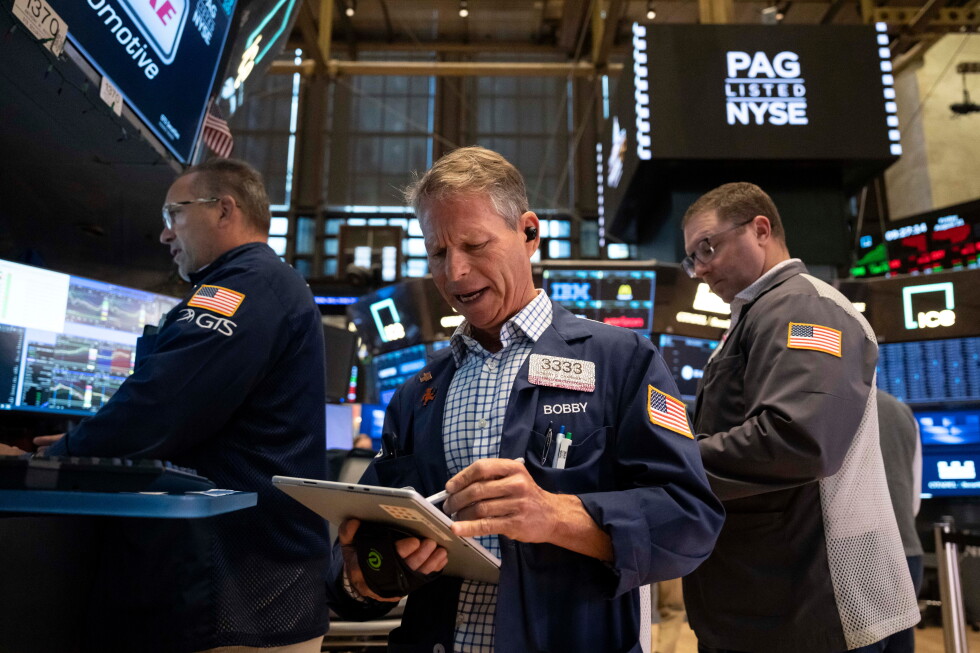
For its part, Nissan’s stock, which has seen volatile price swings over the past 12 months, closed trading Wednesday up 4% following the release of the results, as investors reacted positively to the smaller-than-expected annual loss.
-

Alleged scammer extradited after hacking attempt on BTS star
In a high-profile cross-border cybercrime case that has drawn international attention, a 40-year-old Chinese national accused of masterminding a multi-million dollar hacking operation that counted BTS member Jungkook among its high-profile victims has been handed over to South Korean authorities following extradition from Thailand.
South Korea’s Ministry of Justice has laid out detailed charges against the unnamed suspect, accusing him and his criminal network of stealing a total of 38 billion won, equal to approximately $25.4 million or £18.8 million, from a wide range of targets. The group’s illegal activities included breaking into digital accounts tied to both government agency websites and the personal profiles of prominent public figures, according to official allegations.
One of the most high-profile attempted heists targeted the BTS vocalist: the hacking ring gained unauthorized access to a securities account registered under Jungkook’s name, and attempted to siphon off 8.4 billion won worth of shares the K-pop star holds in Hybe, BTS’s parent entertainment and management company. Local South Korean media outlets confirmed that the suspicious transfer was halted before it could be completed, after Hybe’s internal security team moved quickly to freeze the compromised account.
Court and law enforcement records show the string of cyberattacks linked to the group took place over a 20-month period, running from August 2023 through April 2025. Beyond the Jungkook case, the criminal network also targeted other high-profile individuals across South Korea, including the chair of a large domestic conglomerate and the chief executive of a local venture capital firm, reporting from Agence France-Presse confirmed.
Prior to his extradition, the suspect had been residing in Bangkok, Thailand. This is not the first extradition connected to the same hacking ring: back in August 2024, a 36-year-old Chinese national also linked to the group was extradited to South Korea from Thailand. That defendant was formally indicted in September 2024 and is currently on trial facing cybercrime and theft charges in a South Korean court.
South Korean law enforcement officials confirmed that following the suspect’s arrival in the country, investigators will first conduct a formal interrogation and process evidence collected from across the investigation. After completing this initial phase, police announced they intend to submit an application for an arrest warrant to formally detain the suspect ahead of upcoming judicial proceedings.
-

India’s aspiring doctors heartbroken by exam paper leak
For millions of young Indians, securing a spot at a top government medical college depends entirely on one make-or-break test: the National Eligibility Entrance Test (Undergraduate), better known as NEET-UG. This year, however, the high-stakes exam has become the center of a national controversy after widespread claims that its question paper was leaked in advance to select candidates. On Tuesday, India’s National Testing Agency (NTA) — the federal body tasked with administering the exam — officially canceled the May 3 test, amid an ongoing investigation into the leak allegations. The agency has confirmed that a new date for a retest will be announced publicly next week, leaving nearly 2.28 million registered candidates across the country in limbo.
For test-takers like Manas Sharma, a Delhi-based aspirant who has dedicated two full years to preparing for the exam, the announcement came as a gut punch. “Since October, I have been studying 12 hours a day — not watching films or even hanging out with friends. That’s what it takes to get into a good medical college,” Sharma explained. Based on unofficial answer keys released by private coaching institutes after the original exam, he projected he would score 615 out of a possible 720 marks, a result that would have qualified him for admission to one of India’s top medical institutions. Like many aspirants, Sharma has reoriented every part of his life around this single test, and the sudden cancellation has upended years of careful planning. Yet he says he is choosing to frame the retest as an opportunity to improve his score, rather than an unmitigible setback. “I can’t lose hope. I look forward to increasing my score if a retest happens,” he added.
Sharma’s shock and uncertainty are shared by countless other aspirants across the country, who endured months of intense preparation to sit for the exam at more than 5,000 test centers nationwide. In the northeastern state of Assam, 20-year-old aspirant Sumi, who has long dreamed of becoming a doctor, said she initially could not believe the news of the cancellation. The added stress of the announcement has already hampered her ability to refocus on studying, even after she built a new preparation schedule and restarted her work. For 22-year-old Anamika from Bihar, eastern India, this year’s exam was already her sixth attempt at securing a medical seat. She had given up family gatherings, social outings, and personal time to study, even enrolling in a nursing course to satisfy her parents after five previous unsuccessful attempts, while continuing to prepare for NEET in her spare time. After finding this year’s exam manageable and projecting a score of 640 — enough for a spot at a top college — Anamika said she had finally felt her years of sacrifice would pay off. After processing the initial stress of the cancellation, she has resigned herself to restarting preparation once again.
NEET-UG is the sole gateway to undergraduate medical programs at all public and elite private medical colleges in India, a system that creates extreme competition for just a fraction of the limited seats available each year. Most aspirants attend after-school coaching classes on top of their regular school coursework, adding extra hours of daily study, particularly on weekends, to keep up with the rigorous test content. While thousands of students are reeling from the cancellation, a small number of aspirants say the NTA’s decision was a necessary step to protect the integrity of the exam. “The NTA has taken a good decision because what happened was an injustice to hardworking candidates,” one aspirant told Indian news agency ANI. “Those who cheated should not get admission in medical colleges.” Some lower-scoring candidates also welcomed the opportunity for a retest to improve their results.
The cancellation has reignited long-simmering criticism of India’s national entrance exam system, which has been plagued by repeated paper leak scandals and administrative irregularities over the past several years. This is not the first controversy to hit NEET: in 2024, the exam faced nationwide protests after thousands of candidates received suspiciously high scores amid claims of widespread fraud and institutional irregularities. Garima Shukla, spokesperson for the Federation of Resident Doctors’ Association, called repeated incidents of this nature a clear administrative failure that undermines the foundation of India’s medical education system. “The repeated occurrence of such incidents is not only an administrative failure but also a direct blow to the morale of millions of hardworking students,” Shukla told ANI. “If the credibility of the examination system is questioned, it will impact not only students but the reputation of the entire healthcare system.”
Indian media reports have cited early investigative findings suggesting the alleged leak originated in the northern state of Rajasthan, days before the May 3 exam was held. India’s federal investigative body, the Central Bureau of Investigation, has launched a formal probe into the incident. But even as investigators work to hold those responsible accountable, many students remain skeptical that a retest will fix the systemic issues that allowed the leak to happen. “But what is the guarantee that another paper leak won’t happen?” asked Tejaswini Vijay, a candidate who spent two years preparing for the original exam. Many students, including Vijay, have criticized the NTA’s decision to cancel the exam nationwide rather than only in regions where irregularities were confirmed, arguing that the blanket cancellation inflicts unnecessary stress on aspirants who did nothing wrong. “That would have been better,” Vijay said. “Not everyone can deal with such level of stress.”