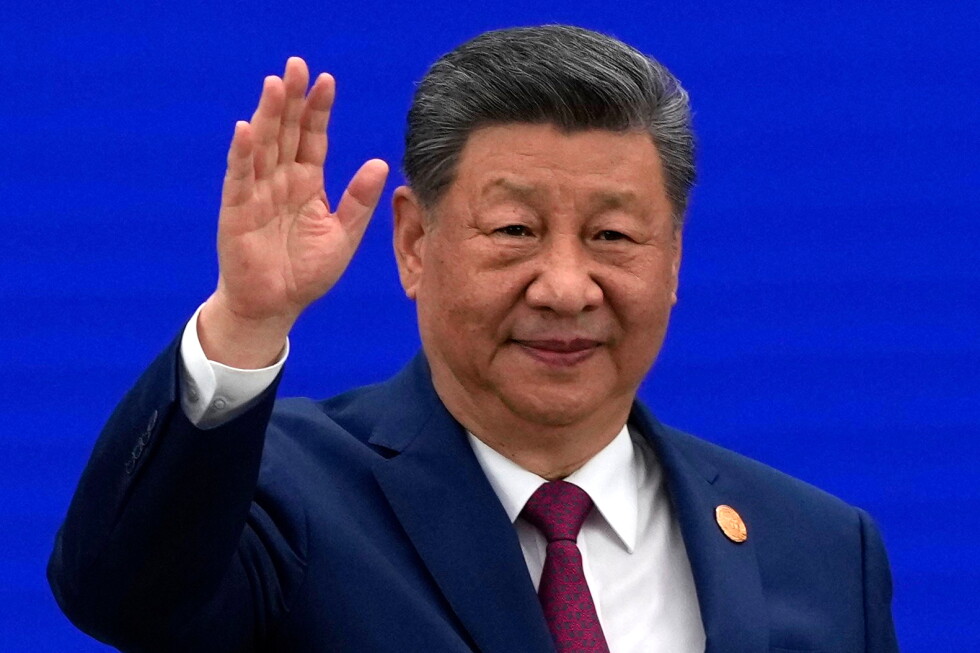
Against a backdrop of escalating technological competition between the world’s two largest economies, Chinese President Xi Jinping delivered a landmark call for inclusive global partnership in artificial innovation and governance during his keynote address Friday at the annual World Artificial Intelligence Conference held in Shanghai.
Xi emphasized that the advancement of AI is a shared global mission, not a project to be controlled or dominated by a single nation. His remarks came in direct response to a series of U.S.-led export restrictions that have cut China off from access to cutting-edge global AI semiconductor and technology frameworks, a policy that has pushed China to accelerate domestic AI research and deepened the ongoing bilateral tech rivalry.
“The development of artificial intelligence should not be a solo performance by any single country but rather a symphony of global cooperation,” Xi told attendees of the high-profile gathering, which included the heads of state of Kazakhstan, Cambodia and Thailand, as well as United Nations Secretary-General António Guterres.
In a reiteration of a long-standing Chinese policy position, Xi called on the international community to jointly push back against the overextension of national security frameworks in the AI sector. “We should together oppose the practice of overstretching the concept of national security in the field of artificial intelligence, and of placing one’s own security above that of other countries,” he said.
To back its commitment to inclusive AI development, China announced a series of concrete cooperation initiatives targeting developing and emerging economies. Over the coming five years, Xi confirmed China will offer 5,000 specialized AI training opportunities to professionals from developing nations. The country will also expand institutional AI cooperation with major regional blocs, including the Association of Southeast Asian Nations, the League of Arab States, the African Union, the Community of Latin American and Caribbean States, the Shanghai Cooperation Organization, and the BRICS grouping of major emerging economies. Additionally, 30 partner countries will gain access to a Chinese-developed AI-powered meteorological early warning system designed to boost disaster preparedness in vulnerable regions.
The conference came one day after a historic intergovernmental agreement established a new global cooperative body for AI: 29 countries including Pakistan, Russia, and Kazakhstan signed on to launch the World Artificial Intelligence Cooperation Organization, which will be headquartered in Shanghai, per Chinese state media, with a core mandate of advancing inclusive global AI governance.
This year’s conference drew more than 1,100 participating companies and 1,400 international and domestic guests, showcasing the rapid expansion of China’s domestic AI ecosystem. Leading Chinese technology giant Huawei is set to demonstrate its flagship high-performance AI computing platform, the Atlas 950 SuperPoD, during the event.
Industry analysts have noted a marked shift in China’s position in global AI development in recent years. Long framed as a follower chasing U.S. technological leadership, China has now emerged as a genuine AI innovator, backed by national strategic planning that prioritizes AI advancement as a core frontier technology in its 2030 long-term development plan. Chinese open-source AI models such as DeepSeek have grown in global popularity, particularly across the developing world, as a lower-cost alternative to the largely closed-source proprietary AI models developed by U.S. tech firms.