标签: Asia

亚洲

  • In diplomacy, pomp and protocol matter, especially when Trump goes to China

    In diplomacy, pomp and protocol matter, especially when Trump goes to China

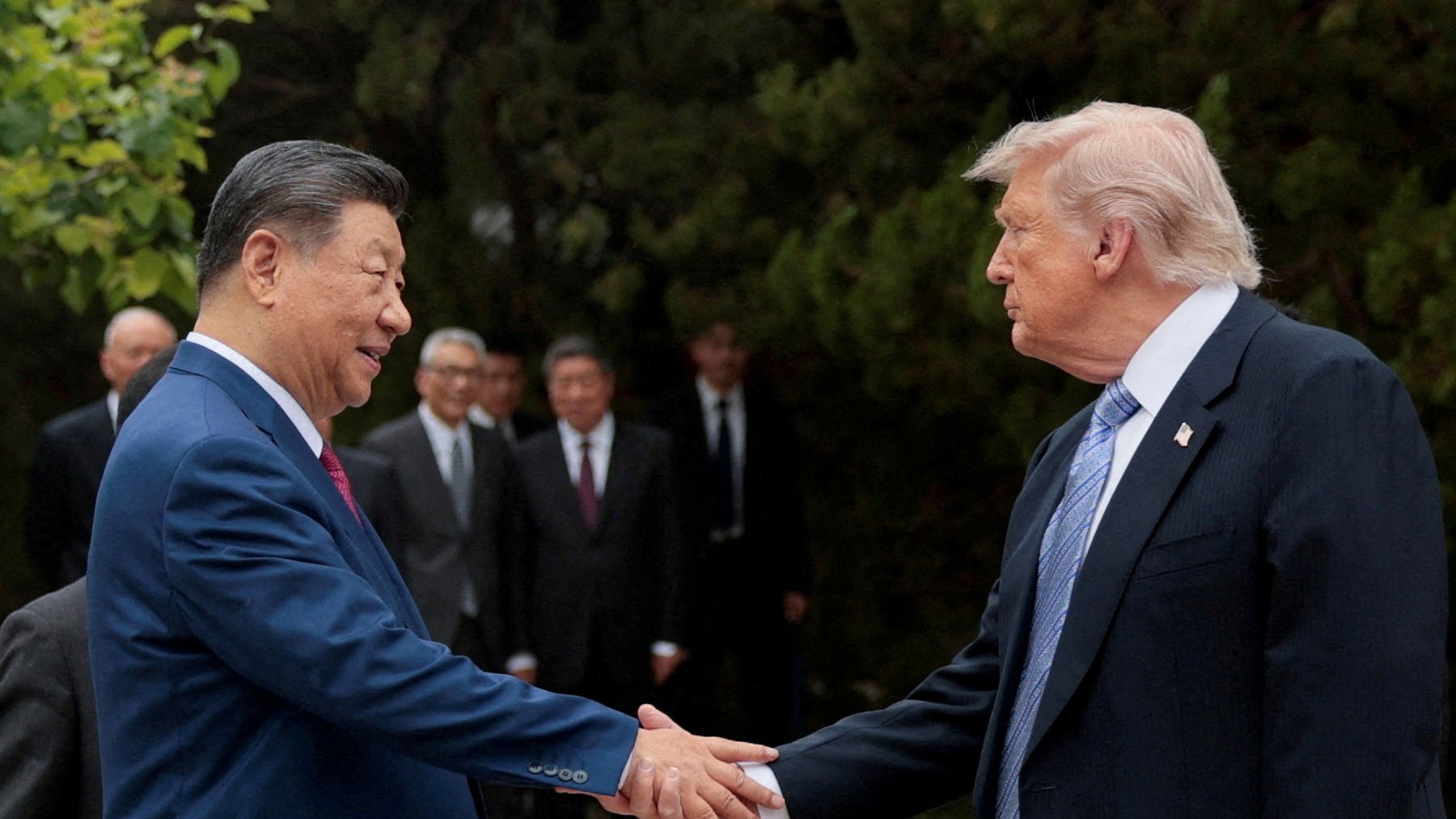
    As U.S. former President Donald Trump prepares to touch down in Beijing this Wednesday, global diplomatic observers are fixing their attention not on pre-summit policy leaks or meeting agendas, but on the small, symbolic details of his official reception: which ranking Chinese official will greet him on the tarmac, what ceremonial anthems will be played, and whether young Chinese and American attendees will line the route waving national flags and floral arrangements. In China’s long-standing tradition of hierarchical diplomatic practice, ceremonial protocol carries far more than aesthetic weight—it serves as a deliberate tactical signal of how Beijing views the current state of bilateral ties.

    Analysts broadly agree that this year’s welcome for Trump will be warm, flattering and carefully calibrated to appeal to the former president’s well-documented preference for grand pageantry, but it will not match the extraordinary “state visit plus” extravaganza Beijing rolled out for Trump’s first trip to China in 2017. That 2017 event remains unprecedented: it is the only “state visit plus” China has ever extended to a foreign head of state, packed with one-of-a-kind gestures that included a private after-hours tour of Beijing’s Forbidden City Palace Museum, an intimate dinner hosted by President Xi Jinping and his wife Peng Liyuan, and a traditional opera performance in a royal theater that had sat unused for a century. Trump himself has frequently reminisced about the 2017 welcome, praising Xi’s hospitality and highlighting the precision of the honor guard he inspected.

    A lot has changed for U.S.-China relations in the nine years since that first visit. What began as a framework defined by broad engagement has shifted into an era of systemic competition, with ties hitting new lows during the height of the U.S.-China trade war and the global COVID-19 pandemic. That shifting context is reflected directly in the scaled-back nature of Trump’s 2025 itinerary. The visit was originally scheduled for the end of March, but it was delayed by the outbreak of the U.S.-Israeli led war in Iran, which has blocked the Strait of Hormuz and sent shockwaves through global energy markets. When Trump finally arrives, his stay will be far shorter than it was in 2017, and first lady Melania Trump will not accompany him. According to Danny Russel, a former senior U.S. diplomat specializing in East Asian affairs, the compressed itinerary has been stripped down to core essential meetings, lasting barely one full day.

    That said, analysts emphasize that China still plans to roll out a full red-carpet welcome for Trump, as the U.S. retains a unique position in Beijing’s foreign policy priorities. Just as in 2017, Trump can expect a gold-edged red carpet stretching down the stairs from Air Force One, a 21-gun ceremonial salute, and an inspection of a neatly ranked Chinese People’s Liberation Army honor guard. A formal welcome ceremony will be held with President Xi Jinping in attendance, and the rank of other Chinese officials present will itself be a signal of bilateral priorities.

    Beijing has also planned a special, symbolic gesture for this visit that marks a warm welcome, while still falling short of the 2017 “state visit plus” standard. Xi will personally accompany Trump on a private tour of Beijing’s Temple of Heaven, the 600-year-old former imperial ceremonial site where Chinese emperors once prayed for abundant harvests. To accommodate the visit, the entire Temple of Heaven Park will be closed to the public for Wednesday and Thursday, with core attractions including the iconic circular Hall of Prayer for Good Harvests and the Echo Wall closing a day early for pre-visit preparations. This full closure marks a departure from recent practice: earlier this year, when the prime ministers of Britain and Spain visited Beijing’s major historical sites, no full park closure was implemented, and Xi did not personally accompany either leader on their tours.

    Russel notes that the pageantry is no accident: it is an open secret across global diplomatic circles that Trump responds far more positively to flattering spectacle than dry policy negotiations. “The pomp and pageantry is designed both to flatter Trump and to pacify him, making him more amenable to Chinese asks and reducing the risk of an embarrassing public confrontation,” he explained.

    Beyond flattery, the scaled-back nature of this year’s reception carries its own message. Rush Doshi, C.V. Starr Senior Fellow for Asia Studies at the Council on Foreign Relations and an assistant professor of security studies at Georgetown University who previously served on former President Joe Biden’s National Security Council and helped plan Biden’s 2022 and 2023 summits with Xi, argues that the more muted welcome reflects three key shifts in Beijing’s perspective. “That reflects greater Chinese confidence in their position, greater skepticism of Trump, and the awkwardness of the current relationship,” he said.

    The ongoing Iran war has further shifted the bargaining dynamic ahead of the summit, analysts add. The conflict has disrupted global energy supplies and roiled international markets, putting Beijing in a stronger negotiating position as China’s control over key global supply chains and its expanding economic clout give it added leverage. This has already pushed the Trump administration to adopt a far more pragmatic policy approach toward China than many initially expected, experts note.

    For Doshi and other China-watchers, every detail of this week’s reception will act as a window into the future of bilateral ties. “China uses diplomatic protocol as a method of signaling favor or disfavor. That is why we should pay close attention to how President Trump is received,” Doshi said.

  • As Trump heads to China, past US flubs on US policy toward Taiwan can be a warning

    As Trump heads to China, past US flubs on US policy toward Taiwan can be a warning

    For close to 50 years, every sitting U.S. president has been forced to navigate an extraordinarily delicate diplomatic verbal minefield when addressing U.S. policy toward Taiwan and China. Even the smallest misstatement or off-script comment can send immediate shockwaves through global geopolitics, triggering widespread alarm across major capitals.\n\nUnder the long-standing U.S. \”One China\” policy, Washington formally acknowledges Beijing’s position that Taiwan is part of China, while maintaining only unofficial, people-to-people and security ties with the self-governing island democracy. The framework has intentionally been crafted to remain vague, a diplomatic approach widely referred to as \”strategic ambiguity.\” Under this doctrine, the U.S. pledges to ensure Taiwan retains the necessary capabilities to defend itself against any forced unification attempt by Beijing, but deliberately refuses to explicitly state how far it would go militarily to counter a Chinese attack. As far back as 1995, former Assistant U.S. Defense Secretary Joseph Nye summed up the approach for Chinese officials asking about U.S. responses to a Taiwan crisis: \”We don’t know, and you don’t know.\”\n\n\”The whole idea is that you stick rigidly to the carefully crafted language that’s been built up over decades, you don’t deviate from it at all,\” explained Mike McCurry, former White House press secretary during the Bill Clinton administration. \”Because there are so many stakeholders on all sides listening and paying extremely close attention to every word.\”\n\nCarefully calibrated to preserve Taiwan’s security and de facto autonomy without making explicit irreversible security commitments, while also avoiding unnecessary provocation of Beijing, this long-standing policy is poised to return to the center of global attention ahead of former President Donald Trump’s visit to China this week. A review of modern diplomatic history makes clear that past U.S. leaders have repeatedly stumbled over the wording of the policy, requiring rushed, high-stakes diplomatic damage control to reset expectations.\n\n\”The entire thing relies on the precision of the language,\” said John Kirby, who has served as a spokesperson for the State Department, the Pentagon, and the White House across multiple Democratic administrations. \”You have to be extraordinarily precise when talking about Taiwan because, quite frankly, the stakes could not be higher.\”\n\n### A History of Missteps: When Presidents Strayed From Script\nPresident Joe Biden has repeatedly overstepped the long-standing parameters of the policy, four separate times publicly suggesting the U.S. would intervene militarily if China invaded Taiwan, each time forcing White House officials to quickly step in to clarify that decades of U.S. policy had not changed.\n\nDuring an August 2021 interview with ABC News, Biden was discussing U.S. commitments to mutual defense for NATO allies when he added, \”Same with Taiwan.\” The White House was immediately forced to issue a correction reaffirming that U.S. policy toward Taiwan remained unchanged. That October, during a CNN town hall, Biden again stated the U.S. was committed to defending Taiwan if China launched an attack, prompting an identical walkback from White House staff.\n\nIn May 2022, during a press conference held in Tokyo, Biden answered \”yes\” when asked if he would commit U.S. military forces to defend Taiwan, adding \”That’s the commitment we made.\” The comment forced Defense Secretary Lloyd Austin to publicly reaffirm Washington’s long-standing commitment to the \”One China\” framework just days later. Biden made a similar comment during a September 2022 interview with CBS’ *60 Minutes*, leading to another round of official clarifications from the White House.\n\nThe Trump administration also faced its own share of verbal and protocol blunders during its first term. Then-President-elect Trump broke with decades of precedent in 2016 when he took a direct phone call from Taiwanese President Tsai Ing-wen – a move no U.S. president-elect or president had made since Washington formally cut official diplomatic ties with Taiwan in 1979. Trump later dismissed the backlash to the call, posting on social media: \”Interesting how the U.S. sells Taiwan billions of dollars of military equipment but I should not accept a congratulatory call.\”\n\nThe following year, the Trump White House made another high-profile misstep when a statement about a meeting between Trump and Chinese President Xi Jinping in Germany incorrectly referred to Xi as the president of the Republic of China – the formal name for Taiwan – rather than the People’s Republic of China. The official White House transcript was quickly altered after the error was spotted to correct the wording.\n\nMiles Yu, who served as principal China policy advisor to former Secretary of State Mike Pompeo during the first Trump administration and now leads the China Center at the conservative Hudson Institute, argued that the frequent missteps are inevitable because the framework itself is a \”conceptual trap\” set by Beijing. \”You cannot explain something that’s unexplainable,\” Yu said, noting that he has pushed for the U.S. to abandon ambiguity and explicitly state its commitment to defending Taiwan. He added that the \”One China\” principle, as Beijing frames it to assert Taiwan is an inalienable part of Chinese territory, is \”completely of Chinese making.\”\n\nYu argued that even under the policy of strategic ambiguity, there has never been any real uncertainty about U.S. intentions among China’s top leadership. \”No one inside the Chinese high command has ever believed there is any ambiguity as to America’s resolve to defend Taiwan,\” he said. Instead, he pointed to repeated U.S. military mobilizations in the Taiwan Strait over decades of heightened tensions as clear evidence that Washington has long planned to defend Taiwan in proportion to any threat from Beijing. Today, Trump’s team says U.S. policy has not changed, but rejects the need for the traditional careful verbal gymnastics, pointing to Trump’s approval of multiple major arms sales packages to Taiwan during his time in office.\n\n### The Policy Has Always Been Hard to Articulate\nThe origins of the modern U.S. framework date back to the end of the Chinese Civil War in 1949, when Washington initially recognized Chiang Kai-shek’s Nationalist government as the legitimate ruler of all China, even after that government retreated from the mainland to Taiwan. It was not until 1979, when President Jimmy Carter normalized diplomatic relations with Beijing, that the U.S. formally adopted the \”One China\” policy, after months of closed-door negotiations between the two countries. Even so, Carter later acknowledged that the agreement did nothing to block a future president or Congress from committing U.S. military forces to defend Taiwan if needed.\n\nSubsequent presidents have repeatedly stumbled over the wording of the policy. During a 1998 roundtable in Shanghai, President Bill Clinton committed to the widely accepted \”Three No’s\” pledge: the U.S. does not support Taiwan independence, does not support a \”two Chinas\” or \”one Taiwan one China\” framework, and does not support Taiwan’s membership in international organizations that require statehood for membership. But just one year later, Clinton made off-script comments seeming to suggest he could pursue a military intervention in Taiwan similar to past U.S. military actions abroad.\n\nIn 2001, during an interview with The Associated Press, President George W. Bush was asked whether the U.S. would use military force to counter a Chinese attack on Taiwan, and responded simply \”It’s certainly an option.\” He later was forced to clarify the comment to CNN, saying it did not represent a toughening of U.S. policy, repeating his commitment to do \”what it takes to help Taiwan defend itself.\” Five years later, during a state visit to Washington by then-Chinese President Hu Jintao, a White House announcer mistakenly announced that the national anthem of the Republic of China would be played, instead of the People’s Republic of China, though the error was corrected before the anthem was played.\n\n### Staying On Message Requires Discipline\nA small number of presidents have managed to stick to the carefully crafted script over the years. In 1989, during a state banquet in Beijing, President George H.W. Bush stated that while the U.S. adheres to \”the bedrock principle that there is but one China, we have found ways to address Taiwan constructively without rancor.\” In 2014, during a joint press conference with Xi Jinping in Beijing, President Barack Obama struck a careful balance, saying \”We encourage further progress by both sides of the Taiwan Strait towards building ties, reducing tensions and promoting stability on the basis of dignity and respect.\”\n\nEven so, getting the wording right remains one of the hardest tasks in modern U.S. diplomacy. \”Anybody who has been at the State Department, the Pentagon or even the White House podium can tell you: When the issue of Taiwan came up, you went to your notes,\” Kirby said. \”You didn’t freelance it.\” Kirby admitted that even he once made a mistake when he got overconfident and spoke off-script, mischaracterizing the policy and causing what he called a \”little kerfuffle.\” Any major misstatement, Kirby explained, almost immediately draws pushback from senior U.S. policy officials, who demand an immediate correction: \”You’ll be highly encouraged to make a statement correcting it right away.\”

  • Trump set to meet with Xi in Beijing as war and inflation weigh on his presidency

    Trump set to meet with Xi in Beijing as war and inflation weigh on his presidency

    WASHINGTON and BEIJING – As global anxieties over armed conflict, trade frictions, and accelerating artificial intelligence development reach a fever pitch, former U.S. President Donald Trump has departed the White House en route to Beijing, where he will meet Wednesday with Chinese President Xi Jinping for what is shaping up to be one of the most consequential bilateral summits in recent years.

    Speaking to reporters ahead of his departure Tuesday, Trump framed the U.S.-China dynamic as a meeting of the world’s two preeminent global powers, noting, “We’re the two superpowers. We’re the strongest nation on Earth in terms of military. China’s considered second.” Despite this public projection of U.S. strength, the trip unfolds at a precarious moment for Trump’s domestic standing, with his approval ratings dragged down by fallout from the U.S.-Israeli war against Iran, which has sent U.S. inflation soaring.

    Against this backdrop, Trump is prioritizing trade negotiations, aiming to secure tangible wins through new agreements that would expand Chinese purchases of American agricultural products and civilian aircraft. His administration is also pushing to launch a new bilateral “Board of Trade” mechanism designed to resolve ongoing economic disputes, a step that grows out of the 12-month trade truce reached last October. That truce ended a tense year-long trade war sparked by Trump’s unilateral tariff hikes on Chinese goods, which China countered by leveraging its global dominance of rare earth mineral supplies.

    Even as trade sits atop the agenda, the Iran conflict continues to overshadow all other U.S. policy priorities. The war has forced the effective closure of the Strait of Hormuz, a critical global chokepoint for energy shipments, stranding countless oil and liquefied natural gas tankers and pushing energy prices to multi-year highs that threaten to derail fragile global economic growth. Though Iran’s foreign minister Abbas Araghchi held talks in Beijing just last week, Trump played down the need for Chinese mediation, telling reporters, “We have a lot of things to discuss. I wouldn’t say Iran is one of them, to be honest with you, because we have Iran very much under control.”

    Two other high-stakes issues will also feature heavily in the closed-door talks: the status of Taiwan and global nuclear arms control. The Chinese government has repeatedly voiced strong objection to planned U.S. arms sales to Taiwan, the self-governing island that Beijing claims as an inalienable part of its sovereign territory. The $11 billion weapons package, authorized by the Trump administration in December but not yet implemented, will be on the agenda, according to Trump himself. Trump has long signaled ambivalence about U.S. commitments to Taiwan, a stance that has sparked widespread speculation that he may be open to rolling back American support for the island democracy. At the same time, Taiwan’s position as the world’s leading producer of advanced semiconductors has made it central to the global AI race, with the U.S. importing more chips and related goods from Taiwan than from mainland China so far this year. Like his predecessor, Trump has pushed policy initiatives to reshore more advanced chip manufacturing to the U.S.

    Despite the many sticking points between the two sides, Trump struck an optimistic tone ahead of the meeting, declaring that the U.S.-China relationship will remain strong for decades to come. He also confirmed that Xi has agreed to a reciprocal visit to the U.S. before the end of the year, joking that he only regretted that a new White House ballroom currently under construction would not be completed in time for the high-profile visit. Trump departed Washington on Air Force One accompanied by a delegation of senior aides, family members, and leading tech industry figures, including Nvidia CEO Jensen Huang and Tesla and SpaceX CEO Elon Musk. Following his Wednesday evening arrival in Beijing, Trump will attend a formal state banquet Thursday before holding a working lunch with Xi on Friday and returning to the U.S.

    Analysts note that China enters the talks from a far stronger negotiating position than during previous summits with the Trump administration. “Even if they don’t get much on any of their core goals, as long as there’s not a blow-up in the meeting and President Trump doesn’t go away and look to re-escalate, China basically comes out stronger,” explained Scott Kennedy, senior adviser on Chinese business and economics at the Center for Strategic and International Studies, a Washington-based think tank. Key Chinese priorities for the summit include rolling back U.S. restrictions on Chinese access to advanced semiconductors and reducing remaining bilateral tariffs, Kennedy added.

    On the global security front, a senior anonymous Trump administration official confirmed that Trump will also propose a new three-way nuclear arms control pact that would include the U.S., China, and Russia, placing binding caps on each country’s deployed nuclear arsenal. China has long rejected participation in such agreements, pointing out that its current stockpile of roughly 600 operational nuclear warheads — per Pentagon estimates — is far smaller than the more than 5,000 warheads each held by the U.S. and Russia. The last remaining bilateral arms control pact between Washington and Moscow, New START, expired in February, ending more than 50 years of binding caps on the world’s two largest nuclear arsenals. As the treaty approached expiration, Trump rejected a Russian proposal to extend the bilateral agreement for one additional year, instead calling for “a new, improved, and modernized” deal that includes Beijing. Pentagon projections estimate China’s nuclear arsenal will grow to more than 1,000 operational warheads by 2030.

  • New York Times article details brutal rape of Palestinians. Israel calls it ‘blood libel’

    New York Times article details brutal rape of Palestinians. Israel calls it ‘blood libel’

    A bombshell opinion piece from veteran Pulitzer Prize-winning New York Times columnist Nicholas Kristof has upended global discourse around the Israel-Palestine conflict, laying bare harrowing firsthand testimonies of widespread sexual violence perpetrated by Israeli soldiers and settlers against Palestinian detainees. The publication has triggered an immediate, fierce backlash from the Israeli government, which has labeled the reporting a baseless “blood libel” and accused the outlet of advancing an anti-Israel agenda.

    In his landmark column published Monday, Kristof details graphic accounts of abuse: one Palestinian journalist, 46-year-old Sami al-Sai, described being assaulted by both male and female Israeli soldiers who sexually violated him with rubber batons, grabbed his genitals with brutal force until he screamed in agony, and filmed the attack. Other survivors shared equally chilling testimonies: one woman recalled being repeatedly stripped and beaten by multiple groups of soldiers, saying she lost consciousness so often she cannot confirm whether she was also raped, a common gap in documentation given the deep stigma around sexual violence in conservative Palestinian society.

    Kristof emphasizes that while few victims agreed to be named out of fear and cultural taboo, their overlapping accounts form a clear pattern of systematic abuse. He notes that decades of state-sponsored dehumanization of Palestinians has created conditions where such violence can thrive, and that the true scale of abuse is almost certainly far higher than documented, as many survivors never come forward. This stigma is particularly acute for male survivors, who face additional pressure to stay silent to protect their family’s reputation.

    Crucially, this reporting is not entirely new. A full month before Kristof’s column, the West Bank Protection Consortium published a report documenting at least 16 separate cases of sexual crimes committed by Israeli soldiers and settlers amid forcible displacement in the West Bank. Earlier this year, United Nations Special Rapporteur on Palestinian human rights Francesca Albanese told the UN Human Rights Council that Israel’s prison system has become a “laboratory of calculated cruelty,” where inmates are raped with objects including bottles, metal rods and knives. What makes Kristof’s work unprecedented is that it is the first in-depth look at this issue published by a major legacy Western media outlet like the New York Times, which has a long history of sidelining and questioning Palestinian narratives of abuse.

    The Israeli government moved swiftly to condemn the publication. In a series of posts on X, the Israeli Foreign Ministry called the column one of the worst modern examples of blood libel, accusing Kristof of inverting reality by framing Israel as a perpetrator of violence when, the ministry claims, Hamas committed widespread sexual violence against Israeli citizens during the October 7, 2023 attacks. The ministry added that the publication is a deliberate part of an organized anti-Israel campaign, and vowed to “fight these lies with the truth.” The government also pointed to a recent report on alleged Hamas sexual violence that the New York Times declined to publish, which was instead picked up by CNN and endorsed by former U.S. Secretary of State Hillary Clinton. The ministry argued that this rejection, paired with Kristof’s publication, exposes the outlet’s clear anti-Israel bias.

    Critics have also raised questions about why the investigation was run in the Times’ opinion section rather than its hard news section, which adheres to different editorial standards. Kristof pushed back on this criticism, noting that opinion journalism centered on original on-the-ground reporting has long been his practice as a columnist. Even so, the placement failed to satisfy many of Kristof’s more than 1.2 million followers on X, regardless of their stance on the conflict.

    A further controversy emerged when former Israeli news personality David Shuster claimed on X that the New York Times was internally debating removing the column over its “problematic” content. The paper’s public relations team quickly refuted the claim, issuing a firm statement defending both the reporting and Kristof’s decades-long track record covering sexual violence as a two-time Pulitzer Prize winner.

    In his own social media responses to critics, Kristof challenged opponents to allow independent monitoring of Palestinian detention facilities, writing: “For skeptics, why not agree on Red Cross and lawyer visits for the 9,000 Palestinian ‘security’ prisoners? If you think these abuse allegations are false, such monitoring visits would be protective. So why not?” The Israeli government has refused to grant the International Committee of the Red Cross access to Palestinian detainees for years.

    Kristof also argued that the United States is complicit in these abuses, noting that American tax dollars fund and subsidize the Israeli security establishment. He called on the U.S. government to condition military aid to Israel on an end to the abuse of detainees, and urged U.S. Ambassador to Israel Mike Huckabee, an avowed Zionist, to meet with survivors and ensure that those who spoke out for the column do not face retaliation for their courage.

    Notably, Kristof did include mention of allegations of sexual violence by Hamas during the October 7 attacks at the opening of his column, a context the Israeli Foreign Ministry omitted from its condemnation. The organization that first brought those Hamas allegations to global media later withdrew its claims, casting significant uncertainty over their veracity.

  • Ein Hod: The ethnically cleansed Palestinian village that became an Israeli artists’ colony

    Ein Hod: The ethnically cleansed Palestinian village that became an Israeli artists’ colony

    Nestled along the sun-dappled slopes of Mount Carmel, with sweeping views of the blue Mediterranean stretching out below, the quiet Israeli artists’ village of Ein Hod draws visitors with its winding cobblestone paths, weathered cactus hedges, and dozens of sunlit art galleries tucked into centuries-old stone structures. But for Palestinian artist Yara Mahajneh, the picturesque facade of this community hid a jarring, unspoken reality when she arrived one evening to set up her graduate exhibition at the village’s Janco Dada Museum: gated entrances, uniformed guards, and restricted access that cut off the original inhabitants of this land from the homes their ancestors built.

    “What kind of protection does a peaceful, liberal artists’ village need?” Mahajneh asked in reflection on that night. For Mahajneh, the question cut deeper than just unexpected security. It opened up a long-buried history that she had never been taught during her four years studying fine art at the University of Haifa: Ein Hod was once Ein Hawd, a thriving Palestinian village that was emptied of its residents during the 1948 Nakba, then repurposed as a cultural hub for Israeli artists. Throughout her degree, she learned European and Israeli art history, but the story of the village just kilometers from campus, and the legacy of Palestinian art itself, was never part of the curriculum.

    The documented history of Ein Hawd stretches back more than 800 years, tied to the Abu al-Hija clan, whose ancestral roots in the area trace back to fighters who arrived with Salah al-Din al-Ayyubi during the Crusader period. By 1948, the village was home to roughly 800 to 850 residents, who built a livelihood around Mediterranean agriculture: growing wheat, barley, olives, and carob, raising sheep, and producing charcoal for trade, according to Sameer Abu al-Hija, a Palestinian historian and direct descendant of the village’s displaced population.

    That self-sufficient community came to an abrupt end in July 1948, weeks after Israeli forces seized the northern port city of Haifa and a string of nearby Palestinian villages. Palestinian historian Mustafa Kabha explains that the fall of Haifa shattered morale across the southern Haifa district, triggering a wave of displacement that swept through Ein Hawd. For residents, reports of massacres at Tantura and Deir Yassin stoked urgent fear for the safety of women, children, and elderly residents. After two fierce battles against heavily armed Zionist forces, the village fell, and its population was forced into exile.

    Some families fled to Wadi Ara and Jenin, while others sheltered in nearby Daliyat al-Karmel. A small number of residents later attempted to return, but were blocked from reoccupying their original village lands. They built makeshift homes first from brush, then from tin and mud, and eventually from concrete, on a small plot of hillside land adjacent to the original village — a makeshift community that exists to this day. Unlike hundreds of other Palestinian villages destroyed during the Nakba, Ein Hawd’s stone structures were left standing; they were just emptied of their people.

    In the early 1950s, after a short period housing North African Jewish immigrants, the abandoned village was spotted by iconic Israeli artist Marcel Janco, who recognized its preserved stone homes and dramatic coastal landscape as an ideal setting for an artists’ retreat. The site was rebranded as Ein Hod, and slowly transformed into the arts colony that exists today. Over decades, former family bedrooms were converted into exhibition spaces, living rooms became performance venues, and the village’s original mosque was repurposed into a restaurant and bar. Today, tourists wander the same narrow lanes that once echoed with the voices of Abu al-Hija villagers, browsing galleries and cafes built inside the stolen homes.

    For Kabha, this transformation lays bare a profound injustice at the heart of the site: “They are using one of the highest forms of human expression and documentation on the remains of other people.”

    That layered contradiction came into sharp focus for Mahajneh when she was invited to exhibit her graduation project, *Katibet Mheileh*, an exploration of intergenerational trauma among Palestinian women, inside the Janco Dada Museum located in the heart of the former village. At first, she saw the invitation as a career-making opportunity for a young emerging artist. But as she began installing her work, the setting forced her to confront an unignorable question: why exhibit this exploration of Palestinian memory in a space that was built on the erasure of Palestinian memory?

    In her performance, participating women stood silent with personal objects bound to their bodies, while recorded fragments of memory echoed through the gallery: “The house was demolished. Iron my shirt.” For Mahajneh, the irony became unavoidable: her exploration of Palestinian displacement was being hosted in a displaced Palestinian village, where the descendants of the original inhabitants still lived uphill, barred from entering the land their families built. “At some point, I felt that we also became objects in the gallery,” she said. “We were serving a purpose inside this space.”

    For Sameer Abu al-Hija, the injustice is not an abstract political question — it is a daily, personal reality. “There are people here who pass their father’s house every morning on the way to work,” he said. “But they still cannot enter it.”

    The story of Ein Hawd raises far broader questions about who controls the narrative of Palestinian history, Kabha argues. The erasure of the village is not just physical: after 1948, hundreds of destroyed and depopulated Palestinian villages were written out of official Israeli curricula, public memory, and mainstream narratives. Even in spaces that frame themselves as progressive and inclusive, like Haifa University’s art department, that erasure persists, says Mahajneh. For Palestinians living inside Israel, this systemic erasure leaves generations disconnected from the land and history that is rightfully theirs.

    Today, Ein Hawd’s physical legacy remains intact: the stone houses, the old mosque, the cactus fences, and the village paths all still stand. But they exist within an official narrative that erases the people who built them. For older generations of displaced residents, there has long been a fear that the narrative of erasure will succeed — that as the elders pass, the young will forget their connection to the land. But for Abu al-Hija, a recent moment put those fears to rest: when his seven-year-old grandson asked him to take a trip to the original village, to see the home his family built, it proved that the memory of Ein Hawd cannot be erased. That, he says, is his answer to the old prediction that the young would forget: “The young did not forget.”

  • Palestine Action defence barrister wins UK contempt of court challenge

    Palestine Action defence barrister wins UK contempt of court challenge

    In a landmark ruling with few parallels in modern English legal history, a prominent human rights barrister who represented Palestine Action activists has successfully overturned a contempt of court proceeding brought against him over his conduct during a high-profile trial of climate and pro-Palestinian protesters.

    Rajiv Menon KC, a legal professional with 30 years of courtroom experience, stood accused of violating judicial directions issued by presiding Justice Johnson during the first trial of six Palestine Action defendants at Woolwich Crown Court. The defendants in that case were charged with causing criminal damage to equipment at an Israeli arms manufacturer, Elbit Systems, which operates a facility outside Bristol, and faced additional charges of aggravated burglary. After the first trial resulted in all defendants being acquitted of aggravated burglary, a retrial was ordered, and four of the six activists were ultimately convicted of criminal damage last week.

    The contempt case against Menon stemmed from a direct clash over the long-standing legal principle of jury equity, also known as jury nullification — the right of juries to acquit defendants based on conscience, even if evidence technically supports a conviction. Ahead of closing statements, Justice Johnson issued a strict order barring defense lawyers from two key actions: they could not ask jurors to disregard the court’s formal rulings or existing law, and they could not remind jurors of their inherent right to issue acquittals based on personal conscience.

    In his closing argument defending defendant Charlotte Head, who was tried in both proceedings, Menon deviated from the judge’s order by reading aloud the text of a commemorative plaque at London’s Old Bailey. The plaque honors Bushell’s Case of 1670, the historic legal ruling that first cemented juries’ right to deliver verdicts aligned with their own convictions rather than judicial direction. Menon also argued to the jury that the defendants had been improperly restricted from introducing evidence about Elbit Systems’ role in supplying arms for Israel’s military campaign in Gaza, claiming it would be absurd to ask jurors to ignore this broader political and humanitarian context that motivated the activists’ actions. He further noted that a trial judge had no authority to order jurors to return a guilty verdict.

    In response, Justice Johnson ruled that Menon’s speech had directly undermined his direction to jurors to set aside their views on the Gaza war and the broader Middle East conflict, and referred the contempt matter to the High Court’s Administrative Court for action. Menon’s legal team launched an immediate appeal, arguing that the High Court had no legal jurisdiction to hear the case unless the country’s top law officer, the Attorney General, formally intervened in the matter.

    On Monday, the UK Court of Appeal upheld Menon’s challenge, ruling that Justice Johnson had acted improperly in initiating the contempt proceedings on his own. The court found that the trial judge should have either resolved the issue on the spot during the trial or referred the matter directly to Attorney General Lord Hermer for review.

    Following the ruling, Jenny Wiltshire, Menon’s solicitor from the law firm Hickman & Rose, told reporters that her client “is delighted that the Court of Appeal has found in his favour”, adding that he “hopes that this is now an end to the matter”. Under the terms of the Court of Appeal’s ruling, the case is sent back to the original trial judge, and the contempt proceedings will be formally dismissed unless the judge chooses to refer the matter to Lord Hermer for further action. Legal observers note that the proceeding against Menon was unprecedented: no other lead defense barrister has faced contempt action in modern English legal history for conduct during closing arguments in a criminal trial, making the appellate ruling a critical win for defense advocacy rights in high-profile political cases.

  • Air India crisis deepens ahead of final Ahmedabad crash report

    Air India crisis deepens ahead of final Ahmedabad crash report

    Almost a year after the tragic crash of Air India flight AI-171, which crashed seconds after departing Ahmedabad for London in June 2025 and claimed 260 lives, India’s official accident investigation body is preparing to release its long-awaited final report within the next four weeks. As the aviation industry and global public wait for the crash’s official findings, the flag carrier is already grappling with a cascading series of crises that have thrown its years-long ambitious turnaround plan into serious doubt.

    The most immediate blow came last month, when chief executive Campbell Wilson stepped down mid-term, just as the carrier announced annual losses reaching $2.4 billion for the fiscal year ending March 2026. Wilson’s exit has left a critical leadership gap at a moment when the airline desperately needs steady direction to navigate its mounting challenges. Wilson was brought in after the Tata Group, one of India’s largest conglomerates, acquired the loss-making state-owned carrier in 2022, with a 5-year roadmap to overhaul operations and restore profitability. Today, Air India stands as the largest money-losing business in the Tata Group portfolio, and the Tata board has openly expressed growing concern over its performance. Last week, the board held a closed-door meeting to review aggressive cost-cutting strategies and warned employees that difficult adjustments lie ahead. Compounding this uncertainty, the April visit of senior Singapore Airlines leadership to Tata’s Mumbai headquarters has fueled widespread speculation that Singapore Airlines, which holds a 25.1% stake in Air India, is preparing to deepen its involvement in the struggling carrier. Air India declined to respond to detailed questions from the BBC regarding the ongoing crisis.

    Aviation industry insiders warn that the carrier’s problems run far deeper than just the sudden CEO departure. Jitendra Bhargava, a former Air India executive director, told reporters that the Tata Group fundamentally underestimated the scale of structural and cultural issues it inherited when it took over the legacy carrier. Bhargava added that Wilson faced major delays building a cohesive leadership team to execute the privatization overhaul, leaving a growing gap between the carrier’s 5-year recovery plan and on-the-ground implementation. Over the past year, a string of high-profile operational and safety missteps have further eroded public trust in the airline. In March 2026, a Delhi-to-Vancouver flight was forced to turn back after eight hours of flying, after the carrier failed to secure required regulatory approval to enter Canadian airspace. Alok Anand, a aviation consultant at Acumen Aviation and former maintenance head of India’s first low-cost carrier Air Deccan, called the incident deeply alarming, noting that such a major error points to a systemic breakdown in internal processes. A 2025 annual audit by India’s civil aviation regulator also uncovered 51 separate safety violations across Air India’s operations, seven of which were classified as the highest-severity level.

    Beyond internal structural and safety issues, a series of external headwinds have further pummeled the carrier’s financial performance. Global supply chain bottlenecks have delayed deliveries of dozens of new aircraft that Air India counted on to replace its aging fleet, throwing its fleet renewal schedule completely off track. Since 2024, the airline has cut a number of high-priority long-haul routes, including Delhi-Washington and Mumbai-San Francisco, shrinking its global network and further eroding revenue. A more than 10% depreciation of the Indian rupee against the U.S. dollar has also drastically increased operating costs, aviation analyst Mahantesh Sabarad explained, noting that most of Indian airlines’ core costs, including jet fuel, are pegged to the dollar. The ongoing Middle East conflict, which weakened the market position of major Gulf carriers, actually created a rare opening for Air India to capture more international market share—but the airline was unable to capitalize due to its ongoing aircraft availability shortfall.

    Looking ahead, industry analysts disagree on how the crisis will unfold. Sabarad argues that the carrier’s majority and minority shareholders, the Tata Group and Singapore Airlines respectively, will need to inject substantial new capital to cover the carrier’s growing losses. He compared the current $2.4 billion shortfall to the major financial challenge Tata Steel faced after acquiring the UK’s Corus Steel nearly 20 years ago, noting that the Tata Group has a proven track record of turning around large struggling assets, but will need to pursue creative new financing strategies to stabilize Air India. Anand, however, warned that the worst financial pain may still be ahead, noting that this year’s losses include one-time charges for fleet refurbishment and penalties for returning older leased aircraft, and that the ongoing impact of high fuel prices, currency depreciation and network cuts will hit the carrier’s bottom line even harder in coming quarters. As the carrier waits for the AAIB’s final crash report, experts also warn that the investigation’s findings could have lasting reputational damage. While Sabarad noted that most liability from the crash is covered by insurance, eliminating the risk of unexpected new financial hits, any negative findings linking the crash to Air India’s operational or safety practices would deal a major blow to the carrier’s already battered brand, one that will take years of sustained effort to repair.

  • A decade on, Trump returns to a stronger and more assertive China

    A decade on, Trump returns to a stronger and more assertive China

    Eight years after Donald Trump’s 2017 state visit to Beijing, the U.S. president is back at the Chinese capital this week for high-stakes talks with Chinese leader Xi Jinping, arriving to a changed China that stands far more confident and globally assertive than it did during his first trip. Back in 2017, Beijing rolled out an unprecedented honor for Trump, hosting a formal dinner inside the Forbidden City — a gesture no sitting U.S. president had received before. This year’s reception promises equal grandeur, with a scheduled stop at Zhongnanhai, the closed compound that houses China’s top political leadership. But while the hospitality is warm, the summit agenda remains fraught: alongside longstanding sticking points of trade, technology competition and the Taiwan issue, rising tensions over Iran have added a new layer of geopolitical friction to the talks.

    To understand the scale of China’s transformation since Trump’s last visit, one need only look beyond Beijing’s historic central districts to the megacity of Chongqing, tucked into the mountainous southwest of the country. Where Trump’s 2017 visit saw Beijing pour extensive diplomatic effort into proving it stood as a geopolitical equal to the U.S., that effort is no longer necessary today, according to Ali Wyne, senior research and advocacy adviser for US-China relations at the International Crisis Group. Washington now openly recognizes China as a “near-peer” competitor, Wyne notes — arguably the most formidable rival the United States has faced in its entire history.

    Chongqing, once a gritty, overlooked manufacturing hub, has been remade by billions in state investment into a symbol of China’s new economic and global ambitions. Its dramatic, vertically stacked skyline, where subways cut through residential skyscrapers and winding roads cling to steep hillsides above the Yangtze River, has earned it the viral nickname of the world’s “cyberpunk capital,” drawing two million international visitors annually after China expanded visa-free travel to boost its soft power. It is also at the forefront of Xi Jinping’s push to develop “new productive forces,” with massive state investment pouring into renewable energy, robotics, artificial intelligence and electric vehicle manufacturing. Chongqing now leads China in automobile production, underpinning China’s status as the world’s largest car exporter, and is positioning itself to become the Silicon Valley of western China. This year alone, China plans to invest roughly $400 billion in the robotics sector, where it already operates more industrial robots than any other country.

    Yet behind Chongqing’s futuristic skyline and viral social media trends such as the “Chongqing train eating” challenge that draws tourists and locals alike to snap viral photos, the city also exposes the challenges China currently faces. Years of large-scale urban construction have left the local government, which serves a population of more than 30 million, heavily indebted, alongside broader national headwinds: a sluggish property sector, falling home prices, rising youth unemployment and persistently low domestic consumption. U.S. tariffs first implemented under Trump’s first term and economic spillover from the ongoing Iran conflict have only amplified these pressures. In older working-class neighborhoods of Chongqing, many daily-wage workers and small vendors still struggle to make ends meet, and ordinary residents expressed a range of views on the approaching summit and the U.S. president.

    Many ordinary Chinese credit Trump’s “America First” agenda and divisive trade policies with weakening U.S. global standing and accelerating China’s rise, even as they criticize his unilateral approach. “He doesn’t care about the consequences at all. He should know that we share the same world — it is a global village. He should not always put America first,” one unnamed tourist told reporters. Still, for many young Chinese people, the U.S. remains a symbol of opportunity and creative freedom, even as strained bilateral relations have made studying abroad a more uncertain dream. That uncertainty, however, has also pushed Chinese engineers and innovators to accelerate domestic technological development, visible in Chongqing’s new innovation hubs, where school children now interact with domestically developed humanoid and aquatic robots.

    One major sticking point in this week’s talks is expected to be access to advanced semiconductors, the core component powering AI and robotics innovation. While the previous Biden administration imposed tight restrictions on sales of cutting-edge chips to China to slow the country’s technological progress, President Trump has relaxed some of those rules, allowing U.S. chip giant Nvidia to sell certain mid-tier advanced chips to China, while keeping bans on the most high-end models. For global analysts, the growing competition over AI also creates a shared risk: both powers must set aside great power rivalry to address common threats, from cyberattacks on critical infrastructure to the risk of malicious actors misusing AI to access sensitive nuclear or medical systems.

    Trade remains the most closely watched issue on the summit agenda. Since 2017, China has deliberately reduced its reliance on the U.S. market, reorienting its trade toward Southeast Asia and the European Union; U.S.-bound Chinese exports have dropped by roughly 20%, pushing the U.S. to third place among China’s largest trade partners. When Trump began threatening new tariffs ahead of the 2024 election, Beijing prepared for the outcome, and did not back down when the tariffs took effect last year. Today, Beijing is far more economically resilient, with new trade routes such as the China-Europe rail link through Central Asia helping domestic manufacturers like Chongqing’s electric vehicle makers reach new global customers. The Iran crisis has also boosted demand for EVs as global gasoline prices rise, strengthening the sector’s outlook. “I’m quite optimistic about the future development of Chongqing’s EV industry,” says Lucia Chen, an EV sales executive at a local Chongqing firm. “My family and friends have all made the switch from fuel cars to EV. Because of the Iran war, petrol prices have risen a lot and many buyers are considering an EV for the first time.”

    Beyond trade and technology, Trump is also arriving in Beijing seeking China’s diplomatic help to de-escalate the ongoing Iran conflict, a shift that underscores Beijing’s growing central role in global geopolitics. For Trump, a successful summit would be marked by a tangible win, such as an agreement for China to increase purchases of American goods. For Xi, any outcome that delivers a smooth, orderly visit is already a win: it reinforces his core message that China remains open to business and open to the world, after years of isolation during the COVID-19 pandemic.

    Today, as Beijing rolls out the red carpet for Trump, the contrast between the two leaders could not be clearer: Xi is positioning China as a beacon of global stability, against a backdrop of the unpredictable, mercurial Trump whose foreign policy has scrambled traditional global alliances. Since Trump returned to the White House, his on-again off-again approach to trade and diplomacy has left U.S. allies reeling, while Beijing has steadily built ties with Western leaders from across the globe. To be sure, challenges remain beneath the polished image China presents to visiting leaders: strict state control over media and public discourse, pervasive surveillance, and zero tolerance for political dissent. Still, Chongqing’s transformation offers a clear preview of the future China is working to build: a future where it stands as a fully equal global power to the United States, leading in key emerging technologies and projecting growing influence across every region of the world. Whether that transformation is seen as a success story or a cautionary sign, it is impossible to ignore: the China that greets Donald Trump in 2025 is vastly different from the one he visited in 2017.

  • Trump Justice Department subpoenas news outlets over war coverage

    Trump Justice Department subpoenas news outlets over war coverage

    A sweeping escalation of tensions between the former president and the American press has emerged, with multiple leading U.S. news organizations confirming they have been subpoenaed by the Department of Justice at the explicit urging of former President Donald Trump, who has waged a relentless campaign against critical coverage of his Iran conflict.

    The Wall Street Journal, one of the nation’s most prominent business and general-interest news publications, broke the story Monday, confirming it received a grand jury subpoena dated March 4 seeking internal reporter records. The demand comes as Trump pressures Attorney General Todd Blanche—his former personal attorney, who now leads the DOJ—to launch investigations into leaks of sensitive information related to the ongoing Iran war.

    Citing an anonymous senior administration official, the Journal reported that Blanche personally pledged to secure subpoenas specifically targeting the work records of reporters who have reported on sensitive national security topics tied to the conflict. In one high-level meeting, the outlet added, Trump handed Blanche a thick stack of news articles that the president and other top officials claimed undermined U.S. national security. Scrawled on a sticky note attached to the stack was a single word: “treason.”

    Trump’s aggression toward press coverage of the Iran war is not a new development. The president and his top cabinet members, including Pentagon Secretary Pete Hegseth, have repeatedly publicly condemned media coverage of the conflict and threatened journalists who publish classified information—a routine practice for national security reporting that is protected under longstanding press freedom precedents.

    As early as March of this year, Trump raised the prospect of bringing treason charges against journalists he accused of spreading what he called “false information” about the Iran war. The following month, he doubled down, stating explicitly that he would push to imprison reporters who covered the downing of a U.S. fighter jet by Iranian forces and the subsequent rescue operation for the plane’s crew.

    The subpoena issued to the Wall Street Journal specifically ties back to a February 23 report that revealed Chairman of the Joint Chiefs of Staff General Dan Caine and other senior Pentagon leaders had privately warned Trump about the severe risks of a prolonged military campaign against Iran. Multiple other major outlets, including Axios and The Washington Post, published matching reports on the same day. Five days after that reporting, on February 28, Trump officially launched the full-scale military offensive against Iran.

    In an official statement Monday, Ashok Sinha, chief communications officer for Dow Jones, the Wall Street Journal’s parent company, denounced the action as a direct attack on constitutionally protected journalistic work. “The government’s subpoenas to The Wall Street Journal and our reporters represent an attack on constitutionally protected newsgathering,” Sinha said. “We will vigorously oppose this effort to stifle and intimidate essential reporting.”

    CNN corroborated the Journal’s reporting Monday, adding that multiple other news outlets beyond the Journal have also received similar subpoenas over the past several months. However, the network noted that many of these targeted organizations have opted not to comment publicly on the orders to date, a choice that has drawn sharp criticism from press freedom advocates and independent journalists.

    Scott Stedman, an investigative journalist with independent outlet The Newsground, slammed the leadership of silent targeted organizations for what he called cowardice in the face of an open assault on press liberty. “The president uses the DOJ to target your news organization with subpoenas because he wants to out your sources and you don’t even have the guts to say anything,” Stedman wrote.

  • Mossad chief opposes Netanyahu’s successor pick: Israeli press review

    Mossad chief opposes Netanyahu’s successor pick: Israeli press review

    A series of contentious developments emerged from Israel this week, spanning intelligence leadership, national aviation infrastructure, international cultural participation, and occupied territory policy, drawing sharp criticism and urgent warnings from across sectors.

    First, outgoing Mossad Director David Barnea has delivered a formal rebuke of Prime Minister Benjamin Netanyahu’s pick to replace him, Roman Gofman, arguing the nominee is categorically unfit to lead the country’s premier intelligence agency. In a four-page legal brief submitted to Israel’s Supreme Court ahead of a Tuesday hearing on the legality of Gofman’s appointment, Barnea laid out damning claims about Gofman’s ethical conduct. The nomination, announced last month, immediately ignited public backlash, as Gofman – currently Netanyahu’s military secretary – stands accused of exploiting a 17-year-old Israeli citizen for an intelligence operation. After the teenager was arrested by hostile forces during the mission, Gofman allegedly abandoned and disowned the operative. Citing this incident, Barnea wrote that Gofman “does not meet the standards of integrity required for this role” and warned his leadership would put all Mossad personnel at grave risk. Barnea emphasized that the role of Mossad chief demands uncompromising personal ethics, and Gofman’s history of poor judgment reveals a persistent character flaw that could cause irreversible damage to the agency. “Within an organization that operates outside regular legal constraints and public oversight – a structure unique among Western intelligence services – such a flaw poses unacceptable risk,” Barnea added.

    Separately, a senior Israeli aviation official has issued a stark warning that the country’s primary international gateway, Ben Gurion Airport, has been effectively converted into an auxiliary American military base since the outbreak of the war with Iran, with severe consequences for civilian travel and the national economy. In a formal letter addressed to Transport Minister Miri Regev, Israel Civil Aviation Authority Director-General Shmuel Zakay warned that the facility now operates largely as a military airfield, with only minimal civilian air activity remaining. Zakay warned that unless the overcrowding from U.S. military deployments is addressed immediately, Israeli travelers will face sustained, sharp increases in flight costs. He added that Israel’s defense establishment has consistently failed to grasp the severity of the crisis, noting that “under the current circumstances, the State of Israel has no international airport capable of operating efficiently.” Business daily Calcalist, which first reported the letter, noted the problem is compounded by war-driven spikes in aviation fuel costs, and the fact that Israeli commercial carriers have been forced to park dozens of civilian aircraft at foreign airports to free up space for U.S. military jets, adding millions in extra operational costs. Last month, Calcalist reported that offsite aircraft parking alone has cost Israeli airlines more than 60 million shekels in recent months. Only after weeks of pressure from the Transport Ministry did U.S. and Israeli officials agree to reposition just 12 U.S. military aircraft out of Ben Gurion. Data from Israeli business publication TheMarker underscores the scale of the crisis: just 24 airlines currently operate regular service to Israel, with three domestic carriers accounting for 89% of all airport traffic in April 2024. Total passenger volume plummeted 74% compared to the same period last year.

    In a separate development related to international cultural participation, the European Broadcasting Union (EBU) has held internal discussions about reassigning Israel from the main Eurovision Song Contest to the newly launched Eurovision Asia competition, Israeli news outlet Ynet reported Monday. According to sources familiar with the talks, the EBU has already surveyed current and prospective participating countries in the upcoming Asian contest to gauge how they would react to Israel’s inclusion in the lineup. The proposal has already faced “partial opposition” from a number of Asian participating nations, including several Muslim-majority countries that are set to take part in the inaugural event. Eurovision Asia will hold its first edition in Bangkok this November, with 10 competing countries confirmed so far – including Malaysia and Bangladesh, both of which have no diplomatic relations with Israel. Ynet reports that Israeli officials have not yet been formally notified of the proposal, which would ultimately require Israel’s consent to move forward. A source close to the discussions told Ynet that “Israel is geographically located in Asia, which is why the issue was examined,” adding that “no final decisions have been made yet, but this option is actively on the table.” Israel’s participation in the 2024 main Eurovision contest has already sparked massive global controversy over Israel’s military campaign in Gaza, with five participating countries – the Netherlands, Spain, Slovenia, Ireland and Iceland – announcing full boycotts of this year’s event in protest.

    Finally, the Israeli parliament has advanced controversial legislation that would create a new state-run antiquities authority with full jurisdiction over all archaeological and heritage sites across the occupied West Bank. Israeli newspaper Haaretz reported Tuesday that the bill passed its preliminary parliamentary vote and will now move to the Knesset committee stage for further debate and amendments. If passed, the new body would take full control of all heritage, archaeology and antiquity matters from the Israeli army’s Civil Administration, which currently manages the sector in the occupied territory. The authority would gain powers to approve and conduct excavations, manage heritage sites, oversee all archaeological work, and enforce relevant laws across the entire West Bank – including Areas A and B, which are nominally under the administrative control of the Palestinian Authority. The legislation frames its purpose as streamlining management, reducing unregulated looting and damage to archaeological sites, and establishing direct state responsibility for heritage sites in what Israel refers to as Judea and Samaria. However, Emek Shaveh, an Israeli non-governmental organization that advocates for fair cultural heritage rights, has harshly condemned the bill, arguing it does nothing to protect antiquities and instead weaponizes cultural heritage as a tool of policy against the Palestinian population to advance Israel’s de facto annexation of the West Bank. In testimony to the Knesset earlier this year, the group warned the law puts Palestinian communities located near archaeological sites at direct risk of displacement and seizure, and that expanded state oversight of heritage sites “opens the door wide to the advancement of racist and destructive policies.” Emek Shaveh also emphasized that the legislation violates international law, existing diplomatic agreements Israel is a signatory to, and global professional ethical standards for archaeological management.