标签: Asia

亚洲

  • Journalists scramble as gunshots sound in Philippine senate

    Journalists scramble as gunshots sound in Philippine senate

    Chaos unfolded unexpectedly at the heart of the Philippine legislative branch on [relevant date] when multiple bursts of gunfire echoed through the Senate complex, triggering an immediate panic that sent working journalists scrambling for safety. Reporters who were on-site covering routine Senate business were caught off guard by the sudden sound of shots, with many abandoning recording equipment and rushing to secure shelter in locked offices and barricaded hallways as the complex went into lockdown. In the immediate aftermath of the incident, senior government and Senate officials have remained tight-lipped, releasing no official information confirming the identity of the person or persons who fired the weapons, the motive behind the incident, or whether any casualties have been reported. Local law enforcement units quickly deployed to the Senate grounds, establishing a security cordon around the building and launching an urgent investigation to piece together the details of what occurred. The incident has already sparked urgent questions about the state of security at high-level government facilities in the Philippines, as lawmakers and public figures call for a full review of access protocols and safety measures to prevent similar scares in the future. As of this update, the situation remains partially unresolved, with official updates still pending from relevant authorities.

  • Microsoft Israel chief leaves after inquiry into use of tech to spy on Palestinians

    Microsoft Israel chief leaves after inquiry into use of tech to spy on Palestinians

    A leadership shakeup at Microsoft’s Israeli subsidiary has followed the conclusion of a high-stakes internal investigation into how the country’s military intelligence agency leveraged the tech giant’s cloud infrastructure for mass surveillance of Palestinian civilians. Alon Haimovich, who served four years as general manager of Microsoft Israel, is leaving his position, and oversight of the local subsidiary will be temporarily transferred to Microsoft France, Israeli financial publication Globes first reported Tuesday. Multiple senior managers in the subsidiary’s governance team have also exited the company amid findings that they violated Microsoft’s global code of ethics, according to the report.

    The investigation was launched by Microsoft’s global leadership last year after independent reporting revealed that Israel’s elite Unit 8200 intelligence agency had been using the company’s Azure cloud platform to store and analyze millions of intercepted Palestinian phone calls collected from Gaza and the occupied West Bank. The surveillance system was built to process up to one million civilian communications every hour, raising immediate questions about compliance with Microsoft’s terms of service, which explicitly ban the use of company technology for mass civilian surveillance.

    Internal documents reviewed by The Guardian indicate Haimovich was a key figure in deepening ties between Microsoft Israel and Unit 8200, following a 2021 high-level meeting between Microsoft CEO Satya Nadella and the spy agency’s then-commander. Under Haimovich’s leadership, the subsidiary oversaw construction of a segregated, secured section within Azure specifically built to store Unit 8200’s sensitive intelligence archives. Once the isolated cloud space was finalized, the agency transferred its massive collection of intercepted daily Palestinian communications into Microsoft’s global cloud infrastructure.

    When the inquiry team traveled to Microsoft Israel’s Tel Aviv-area offices to conduct interviews, Haimovich was called in for questioning, Globes added. The recently concluded internal probe found that Unit 8200 had violated Microsoft’s terms of service, prompting the company to immediately cut off the agency’s access to the cloud services and products that supported the surveillance operation, multiple sources confirmed to The Guardian. While the full public findings of the investigation have not been released, the inquiry’s conclusions directly led to Haimovich’s departure.

    In an internal email to Microsoft Israel staff announcing his exit last week, Haimovich framed his tenure as a success, noting that he had helped position the Israeli market as “one of Microsoft’s fastest-growing markets worldwide.” Microsoft has maintained that top global executives, including Nadella, had no prior knowledge that Unit 8200 was using Azure for the mass surveillance program. Last year, company vice chair and president Brad Smith stated publicly, “We do not provide technology to facilitate mass surveillance of civilians.”

    The Palestinian Boycott, Divestment and Sanctions (BDS) movement has condemned Microsoft’s role in the surveillance program, calling the company “perhaps the most complicit tech company in Israel’s illegal apartheid regime and ongoing genocide against 2.3 million Palestinians in Gaza.” The leadership shakeup marks one of the most high-profile consequences of a growing global reckoning over international tech firms’ cooperation with Israeli government and military activities in occupied Palestinian territories.

  • Why Trump will ‘limp’ into China and likely leave empty-handed

    Why Trump will ‘limp’ into China and likely leave empty-handed

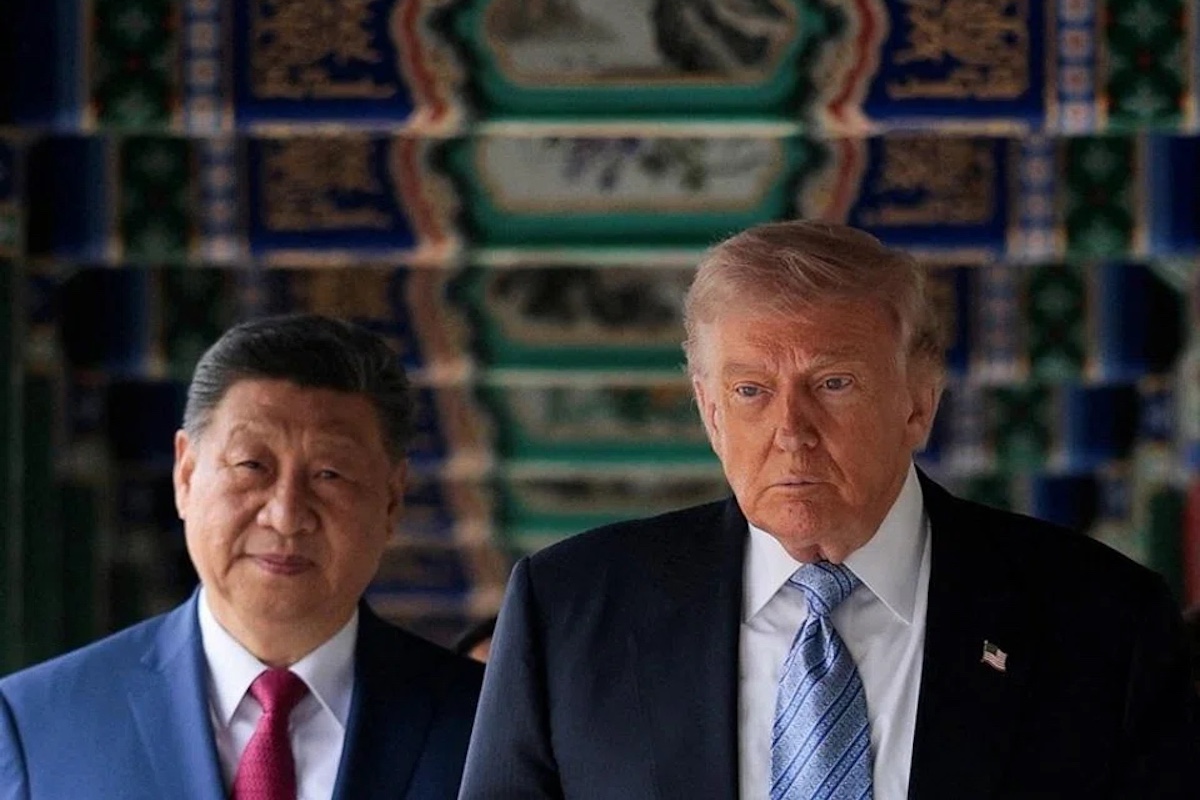
    As U.S. President Donald Trump prepares to arrive in Beijing for high-stakes talks with Chinese leader Xi Jinping, the global economic and geopolitical balance between the world’s two largest powers has shifted dramatically—far faster than anyone in Washington predicted 15 months ago, when the second Trump administration took office.

    When Trump’s second term began, his top advisors projected unbridled confidence that sweeping new tariffs on Chinese goods would force Beijing to make sweeping concessions, rewriting the terms of the $53 trillion U.S.-China economic relationship to overwhelmingly benefit Washington. Today, that narrative has flipped almost entirely: in the assessment of Chinese analysts and global economists alike, Xi now holds nearly all the leverage as the two leaders meet.

    China’s state-run Global Times has framed the moment bluntly, describing the U.S. as a “giant with a limp” heading into the summit. The label comes as Washington grapples with overlapping crises: an escalating conflict with Iran that has pushed oil prices above $100 per barrel, fractured alliances strained by Trump’s tariff policies, and a series of international court rulings that have eroded U.S. global leverage. Chinese state media has emphasized that it is Trump traveling to Beijing in search of a trade agreement, not the reverse, arguing Washington needs a deal far more urgently than Beijing does. Compounding this, any path to reopening the strategic Strait of Hormuz, disrupted by the Iran conflict, may hinge on Beijing using its longstanding diplomatic influence in Tehran—turning the tables on the leverage Trump once expected to wield over China.

    The shifting dynamic is on clear display in U.S. domestic economic data. April 2026 saw U.S. year-on-year inflation hit 3.8%, a three-year high, driven largely by energy price spikes stemming from the U.S.-Israeli strike on Iran. This inflation surge has dragged down Trump’s approval ratings and erased any chance the Federal Reserve will cut interest rates this year, a step Trump has repeatedly demanded. Even more consequential, analysts argue, is that Trump’s aggressive trade and technology policies have inadvertently accelerated China’s rise as a global leader in trade and high-value innovation.

    More than a decade after Xi launched a national strategy to revitalize China’s economic standing, and 11 years after the introduction of the “Made in China 2025” industrial upgrading initiative, the strategy is delivering tangible results. One prominent example is electric vehicle giant BYD, which has surged past Tesla in global sales and upended the long-dominant European auto industry. Other Chinese tech firms, from AI startup DeepSeek to telecom leader Huawei, have developed successful workarounds to U.S. export controls, proving that Washington’s decoupling efforts have only incentivized faster domestic innovation and self-reliance in China’s high-tech sector.

    Trump’s repeated attacks on the independence of the Federal Reserve, meanwhile, have undermined global trust in the U.S. dollar just as U.S. national debt approaches the $40 trillion mark. This erosion of confidence has given new momentum to Xi’s long-running campaign to internationalize the yuan, a goal that has gained unexpected traction amid Trump’s post-inauguration policy volatility. From broad-based tariffs to aggressive military adventurism in Venezuela and Iran, to unfettered fiscal expansion and attacks on independent U.S. institutions, every major policy move of Trump’s second term has weakened global trust in U.S. assets.

    As Middle Eastern Gulf states grow increasingly skeptical of U.S. security guarantees amid ongoing wartime disruptions to energy trade, Beijing sees a historic opening to build a yuan-denominated energy settlement framework once hostilities end. This could pave the way for the long-discussed “petroyuan” that Chinese leaders have long envisioned, though economists caution full global adoption of the yuan as a primary energy currency remains decades away.

    Union Bancaire Privee economist Carlos Casanova notes that while the trajectory of yuan internationalization is clear, broad adoption is unlikely in the near term. Gulf monarchies still rely on U.S. security guarantees and maintain deep financial ties to U.S. capital markets. For the yuan to become a dominant global energy currency, Casanova explains, Beijing would need to complete a demanding three-part agenda: deepen existing divides between the United Arab Emirates and Saudi Arabia, build up Iran’s military capacity to challenge U.S. regional security dominance (a step that would be destabilizing even for China), and fully liberalize China’s capital account while growing global demand for yuan-denominated assets. “Even under favorable conditions, this would likely take decades,” Casanova said.

    Still, Trump’s confrontational approach to the BRICS bloc—Brazil, Russia, India, China, South Africa—has only accelerated moves away from the dollar. After BRICS leaders moved forward with plans to develop a dollar alternative, Trump threatened to impose 100% tariffs on all BRICS imports, a move that reinforced global fatigue with Washington’s unilateral bullying. The policy chaos created by the Trump administration is already doing more to advance the BRICS’ de-dollarization agenda than the bloc could have achieved on its own.

    Even close U.S. allies are growing wary of Washington’s economic trajectory. During recent meetings between U.S. Treasury Secretary Scott Bessent and Japanese officials in Tokyo, the public agenda focused on the weak yen and Japan’s support for the U.S. in the Iran conflict. Behind closed doors, analysts say Japanese Prime Minister Sanae Takaichi almost certainly sought assurances about the safety of Japan’s $1.2 trillion holdings of U.S. Treasuries—the largest foreign stockpile of U.S. government debt in the world.

    Those concerns are not unfounded. Recent U.S. data shows annual tax revenues fell 17% year-on-year in April, typically the peak month for tax collections. Nearly 17 months into the second Trump administration, policies from tariffs to inflated energy costs have left U.S. households under severe financial strain. A recent Gallup poll found 47% of Americans rate current economic conditions as “poor,” a seven-point increase since March, while 73% say conditions are worsening. A separate Fox News poll found 70% of respondents believe the economy is deteriorating, matching the record high set in 2023.

    A core flaw of Trump’s China strategy, analysts argue, is that it has failed to improve U.S. competitiveness at home. Tariffs, a blunt policy tool, have acted more as a political gimmick than a roadmap to revitalize U.S. innovation, strengthen human capital, and preserve the dollar and U.S. Treasuries as the foundation of the global financial system. In fact, Enodo Economics analyst Diana Choyleva notes that U.S. efforts to block China’s technological progress have had the opposite effect, speeding China’s shift up the global value chain toward greater self-reliance and innovation.

    Trump’s tariffs have also benefited China in unintended ways, by straining relations between Washington and key U.S. allies across the Indo-Pacific, including Japan, South Korea, Taiwan and Southeast Asian nations. Growing distrust between Washington and these regional democracies has increased China’s diplomatic influence in the region, allowing Xi to position China as a more reliable steward of global free trade than Trump. The Chinese government continues to benefit from Trump’s first-term decision to withdraw from the U.S.-led Trans-Pacific Partnership, and the second Trump administration’s continued focus on narrow bilateral trade deals rather than building a multilateral bloc to counter Chinese influence.

    Far from curbing China’s trade ambitions, Trump’s tariffs have coincided with China posting a record annual trade surplus of $1.2 trillion in 2025. While the Xi administration has invested trillions over the past decade to dominate future-focused industries including electric vehicles, renewable energy, aerospace, artificial intelligence, biotechnology, green infrastructure and robotics, the Trump administration has laid out no comparable plan to boost U.S. competitiveness in semiconductors, infrastructure or climate action. In fact, Trump has rolled back support for clean energy sectors, dismissing electric vehicles, solar and wind power as “woke” policies while prioritizing fossil fuel development.

    To date, Trump’s economic strategy has relied almost entirely on tax cuts, expansionary fiscal policy and repeated demands for lower Federal Reserve interest rates to support growth. A recent Supreme Court ruling striking down Trump’s unilateral tariff authority has added new stress to U.S. government finances, pushing the national debt to over 100% of GDP. “Tariffs had been functioning as a shadow tax that helped fund spending without explicitly raising taxes,” explained Mark Malek, chief investment officer at Siebert Financial. “Remove that and the deficit widens, borrowing rises, and historically that is the type of development that leans on the bond market and pressures yields higher.”

    Given this shift in leverage, Xi is unlikely to grant Trump the sweeping “grand bargain” trade deal he is seeking ahead of 2026 U.S. midterm elections. Most economists predict Beijing will offer only small, symbolic concessions—such as new agreements to purchase Boeing aircraft and U.S. soybeans—with a commitment to continue talks later this year.

    Fidelity Investments economist Peiqian Liu notes this Beijing meeting is just the first of several planned encounters between the two leaders in 2026, with the APEC Summit scheduled for Shenzhen in November, the G20 meeting in Miami in December, and a potential reciprocal visit by Xi to the U.S. later this year, possibly before the midterm elections. “Given the array of issues pending discussion, including trade, technology, supply chain controls, and chokepoints — as well as other geopolitical issues such as Taiwan and Iran — we expect the leader-to-leader conversation to be more high-level and broad-based,” Liu said.

    The ongoing Iran crisis has created an awkward backdrop for the summit. “It’s awkward that, as the leaders meet, the U.S. Navy is blockading the Strait of Hormuz and intercepting tankers bound for China, Iran’s largest crude buyer,” noted Rush Doshi, an analyst at the Council on Foreign Relations. “Meanwhile, Beijing is providing political and possibly intelligence support to Tehran and could be seeking to renew flows of drone parts, air defense equipment, and missiles. Neither side is likely to make progress on this issue, but the fact that the summit appears ready to proceed despite this unusual situation is proof both leaders want the optics of stability even if its foundations are shaky.”

    It is important to note that China still faces significant domestic economic headwinds: the ongoing property sector crisis continues to erode business and household confidence, local government finances are severely strained, and youth unemployment remains stubbornly high. Even so, China’s export sector has held up remarkably well amid global economic weakness: April 2026 saw year-on-year export growth of 14.1%, with passenger vehicle exports surging nearly 85% from a year earlier.

    Ultimately, the Beijing summit will underscore a core reality: Trump’s campaign to halt China’s economic rise has backfired dramatically, leaving Washington empty-handed in its quest to rewrite the U.S.-China trade relationship. While a public show of dialogue between Trump and Xi will be a welcome signal for global markets—any step that eases tensions between the two largest economies is an unqualified positive for the global economy—the idea that Trump will leave Beijing having imposed his will on China reads more as a political fantasy than a plausible outcome.

  • YouTuber Tyler Oliveira deported from Israel over ‘antisemitic content’

    YouTuber Tyler Oliveira deported from Israel over ‘antisemitic content’

    A prominent right-wing American YouTube creator has been barred from Israel and expelled back to the United States amid formal accusations of spreading antisemitic content, according to a public statement the influencer posted to the social platform X on Tuesday.

    In his announcement, Oliveira shared an image of the official deportation document issued to him by Israeli border authorities, which formally cites “prevention of illegal immigration” as the legal basis for his expulsion from the country. But Israeli officials have openly cited another motivation for the move: Diaspora Affairs Minister Amichai Chikli confirmed in an interview with Israeli outlet Channel 14 that the expulsion was a direct response to the hate speech Oliveira amplified in his online videos.

    “The party is over. Whoever comes here with the goal of sowing hatred can go back where they came from,” Chikli stated in the interview. “The rule is clear, whoever incites against us simply won’t be here.”

    Oliveira has built a large online following through a gonzo, on-the-ground style of independent journalism that centers largely on conservative and right-wing political issues, with a heavy focus on global and domestic immigration policy. His recent work has included on-the-ground investigations into alleged fraud claims involving Somali diaspora communities in Minnesota, as well as reporting he claims exposes widespread abuse of U.S. visa rules by Indian migrant workers. He also went viral in global conservative circles for a video covering a traditional cow dung-throwing festival in a rural Indian village, a segment that ultimately earned him fierce pushback from India’s domestic far-right movement.

    While much of Oliveira’s early content earned him praise among segments of the American right, multiple videos he published focusing on Jewish communities in New York and New Jersey later sparked widespread condemnation from Jewish advocacy groups, who accused the creator of using coded language to spread antisemitic rhetoric. In the contested videos, Oliveira publicly criticized the high birth rates of Orthodox Jewish communities, repeating conspiracy claims that Orthodox Jews exploit local public resources and intentionally segregate themselves from broader society.

    Oliveira has forcefully rejected claims that his coverage amounts to unfair targeting of Jewish communities, noting that he has published investigative content focused on a wide range of religious and demographic groups across the globe. Just last weekend, the creator appeared on a popular podcast hosted by veteran conservative commentator Tucker Carlson, where he pushed back against his critics by highlighting what he frames as hypocrisy in the accusations against him. During the interview, Oliveira also claimed that a number of Israeli residents had reached out to him privately to voice support for his criticism of Orthodox Jewish communities in the country.

    This report was originally published by Middle East Eye, a media outlet that provides independent, on-the-ground coverage of the Middle East, North Africa and surrounding regions.

  • US and China seek to repair damage from tariff war that sent trade into a freefall

    US and China seek to repair damage from tariff war that sent trade into a freefall

    After a year of heightened 2025 trade conflict that laid bare the deep mutual economic vulnerability of the world’s two largest economies, U.S. President Donald Trump and Chinese President Xi Jinping are convening in Beijing for a high-stakes summit aimed at patching over some of the most costly damage from a decade of escalating trade tensions. A 10-year standoff between Washington and Beijing has gutted the once-booming bilateral trade that defined the early 21st century, forcing companies across both nations to restructure global supply chains, seek alternative markets, and adapt to a new era of fractured commercial ties. Many U.S. corporations have relocated manufacturing capacity out of mainland China to lower-wage markets such as Vietnam and India, while Chinese exporters have scrambled to cultivate new consumer bases across Europe and Southeast Asia to offset lost American sales. Yet despite years of decoupling efforts, both sides are increasingly acknowledging that complete economic separation is unfeasible. Former U.S. Commerce Secretary Wilbur Ross, who served in Trump’s first administration, noted: “The idea of somehow China being totally independent of us and us being totally independent of China, I think, is a fiction.”

    This week’s leadership summit is focused on stabilizing the bilateral economic relationship, with observers not expecting sweeping, transformative policy announcements. The most widely anticipated outcome is an extension of the temporary trade truce reached between the two powers last October. Additional expected measures include a Chinese pledge to increase purchases of U.S. agricultural goods including soybeans and beef, as well as new orders for American-built Boeing commercial aircraft. U.S. officials have also previewed plans to establish a new bilateral Board of Trade to manage ongoing commercial disputes.

    Stakeholders on both sides are watching the talks closely. For American farmers, who were locked out of the Chinese soybean market for most of 2025, and U.S. manufacturers dependent on Chinese rare earth minerals for products ranging from consumer smartphones to military fighter jets, even modest progress would bring significant relief. On the Chinese side, factory owners are hoping the summit will unlock incremental improvements to commercial ties, even if a return to the record trade volumes of 15 years ago remains out of reach. Michael Lu, founder and chief executive of Dongguan-based gift box manufacturer Brothersbox, noted that the U.S. long served as a far more stable market than many emerging alternative outlets, making even partial easing of tensions a welcome shift.

    ### The Collapse of Once-Thriving Bilateral Trade
    Before Trump first imposed sweeping tariffs on Chinese imports in 2018, the average U.S. duty on Chinese goods stood at just 3.1%, according to data from Chad Bown of the Peterson Institute for International Economics. Even after pulling back from the triple-digit peak tariffs hit briefly in 2025, average U.S. tariffs on Chinese goods still remain near 48% today. In 2016, China was the United States’ largest single trading partner, with bilateral trade accounting for more than 13% of total U.S. global commerce. By 2025, that share had been cut in half to just 6.4%, pushing China behind neighboring trade partners Mexico and Canada to drop to third place.

    The pre-2018 U.S.-China trade boom was long marked by a massive structural imbalance, with China exporting far more to the U.S. than it imported in return. The U.S. bilateral goods and services trade deficit with China peaked at $377 billion in 2018, but fell to $168 billion last year — the lowest level recorded since 2004. Even as its exports to the U.S. declined, however, China expanded sales to other global markets, particularly Southeast Asia and Europe, allowing the country to post a record annual global trade surplus of $1.2 trillion in 2025.

    ### Chinese Firms Adapt With Creative Workarounds
    Many trade analysts note that official U.S. government data likely overstates the actual decline in Chinese goods reaching the American market. To avoid steep U.S. tariffs, a large number of Chinese manufacturers have shifted final assembly operations to Southeast Asian nations including Vietnam and Thailand, then transship finished products to the U.S. under those countries’ tariff quotas. The Trump administration has pledged to crack down on this practice, which it labels tariff evasion. As Chinese exports to the U.S. dropped in 2025, U.S. imports from Southeast Asia surged: rising 42% from Vietnam, 44% from Thailand, and 24% from Indonesia. Zongyuan Zoe Liu, senior fellow for China studies at the Council on Foreign Relations, argued: “It would be wrong to think that China is no longer relevant for the U.S. market. Chinese goods are still coming into the U.S.”

    Velong Enterprises, a Guangdong-founded manufacturer of kitchen gadgets and grilling tools that supplies Walmart and other major U.S. retailers, began diversifying its supply chain shortly after Trump’s first term began, adding new production capacity in Cambodia and India to serve American customers. “Most serious manufacturers did not simply ‘leave China,’” said Velong founder and CEO Jacob Rothman. “Instead, they built multi-country supply chains centered on China.”

    ### Small U.S. Businesses Bear the Brunt of Erratic Tariff Policy
    The prolonged trade war has hit small and medium-sized U.S. businesses particularly hard, due to volatile, unpredictable tariff adjustments that make long-term cost planning nearly impossible. Appu Jacob Varghese, owner of Zion Foodtrucks, a small food truck manufacturer based outside Colorado Springs, relies on imported Chinese equipment for the custom vehicles he builds. “Last year, a lot of my hair turned white,” Varghese said. His business was upended by erratic tariff changes that shifted week to week, at one point spiking to 145% on key Chinese components. Because Zion Foodtrucks signs fixed-price contracts with customers and delivers new vehicles within six weeks, Varghese was unable to pass sudden cost increases on to buyers, forcing him to absorb hundreds of thousands of dollars in unexpected expenses. He has since shifted half of his cooking equipment sourcing to Vietnam and Thailand, and fire-suppression gear to U.S. and Israeli suppliers. While he speaks highly of his former Chinese suppliers, he says he will never return to heavy dependence on them: “Given the testy relations between Washington and Beijing, it’s too risky.”

    ### A Broad Shift in Sourcing Strategies
    Large U.S. multinationals have also joined the push to reduce reliance on Chinese manufacturing. Apple has shifted a portion of its iPhone production to India, while athletic apparel giant Nike has expanded manufacturing capacity across Vietnam. Sarah Tan, a Singapore-based economist covering China for Moody’s Analytics, explained: “Trade tensions can flare up quite quickly, and that makes the U.S. firms hesitant to rely too heavily on Chinese supply.” InStyler, a Los Angeles-based hair appliance manufacturer that once sourced all of its products from China, is moving some high-end production to South Korea and France, with plans to add capacity in Italy, Vietnam and Mexico. While CEO Dan Fugardi said the shift is partially driven by demand for European-made cachet among luxury hotel clients, reducing Chinese dependence “doubles as an insurance plan so that we’re not caught with our pants down” if tensions escalate again.

    ### Tit-for-Tat Escalation Goes Beyond Traditional Tariffs
    The trade standoff has long expanded beyond traditional import taxes, escalating into targeted measures targeting key strategic sectors on both sides. The U.S. has blocked exports of cutting-edge advanced semiconductors to Chinese firms, while China has retaliated by periodically cutting off exports of rare earth minerals critical to electronics manufacturing. Last year, Beijing also restricted exports of tungsten, a high-strength metal used in defense, aerospace, and medical device manufacturing — a sector where China controls roughly 80% of global supply. China also halted all purchases of U.S. soybeans for most of 2025, a deliberate blow to Trump’s political base in rural America. Even after purchases resumed following October trade talks, U.S. soybean exports to China fell 75% for the full year.

    The years of escalating conflict have made clear just how much damage each power can inflict on the other. Now, leaders on both sides are hoping the Beijing summit will de-escalate tensions and lay the groundwork for a more stable commercial framework. “We are the No. 1 trading player. They are next in line,” Ross said. “We have to coexist in some way. The question is, what will be the rules of the road, and who will benefit the most from those rules.”

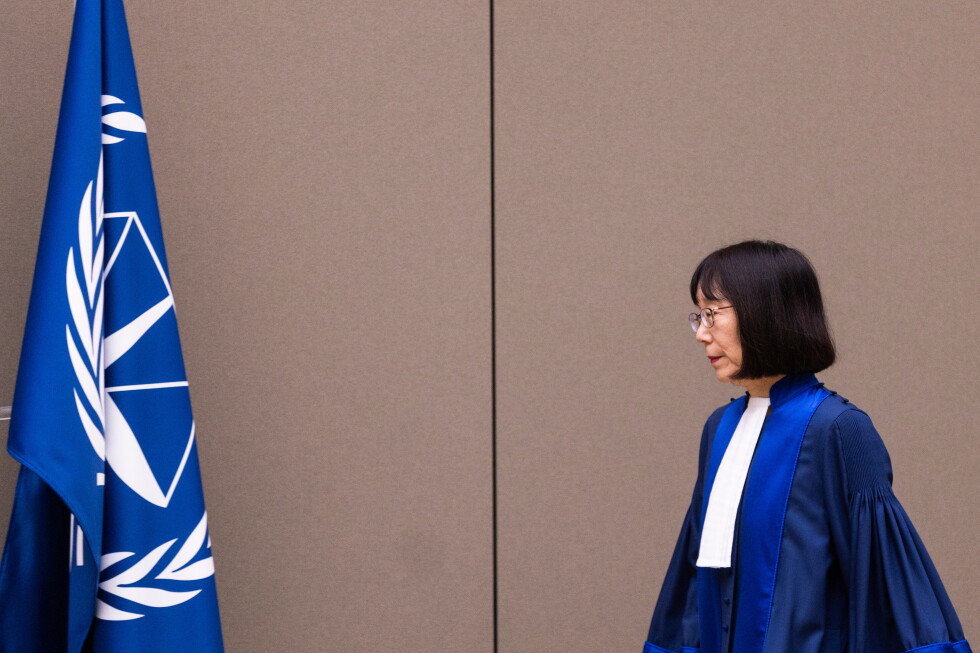
  • A look at the International Criminal Court, which brought charges against a Philippine senator

    A look at the International Criminal Court, which brought charges against a Philippine senator

    A tense confrontation broke out Wednesday inside the Philippine Senate building in Manila after law enforcement attempted to execute an arrest warrant for a sitting Philippine senator, who faces a murder charge classified as a crime against humanity from the International Criminal Court (ICC). Shots were fired during the operation, leaving the complex locked down in an extended standoff as of Wednesday’s initial reports.

    The clash unfolded just 48 hours after the Netherlands-based global tribunal unsealed an arrest warrant first issued in November for Ronald Marapon dela Rosa, 64, who served as chief of the Philippine national police during the tenure of former president Rodrigo Duterte. Dela Rosa was one of the primary architects of Duterte’s nationwide anti-drug crackdown, a campaign that resulted in the deaths of thousands of mostly low-level drug suspects between 2016 and the present. The warrant accuses dela Rosa of direct responsibility for the murder of at least 32 people between July 2016 and April 2018, the period when he oversaw the national police force.

    In public comments following the unsealing of the warrant, dela Rosa has stated he will vigorously challenge the ICC’s authority and pursue all available legal channels to avoid extradition. The ICC has not yet released an official statement in response to the violent standoff in the Philippine capital.

    This latest development builds on years of legal tension between the Philippines and the ICC. In 2019, the country formally withdrew from the court’s Rome Statute, a move that came after then-ICC prosecutor Fatou Bensouda announced a preliminary investigation into widespread extrajudicial killings tied to the anti-drug campaign. Current President Ferdinand Marcos Jr., who took office in 2022, has not reversed the withdrawal, but his administration has previously stated it would honor Interpol red notices — global requests to locate and temporarily arrest suspects — if the ICC issued one for former officials linked to the drug war. It remains unclear whether a red notice has been officially issued for dela Rosa as of Wednesday.

    Duterte himself was taken into custody last year and transferred to The Hague to face his own charges of crimes against humanity connected to the deadly crackdown, and he remains in detention awaiting trial. Last year, ICC judges rejected a bid from Duterte’s legal team to dismiss the case over the Philippines’ 2019 withdrawal. In their ruling, the judges noted that nations cannot misuse their right to leave the Rome Statute to shield individuals from prosecution for crimes already under active investigation by the court.

    Established in 2002, the ICC was created to hold national leaders and senior public officials accountable for genocide, war crimes, and crimes against humanity, acting as a court of last resort that only intervenes when a domestic legal system is unable or unwilling to prosecute alleged perpetrators. The court currently counts 125 member states, but three major global powers — the United States, Russia, and China — have never joined. Ukraine became the newest member of the court in January 2025. The institution employs more than 900 people and operates on a 2025 budget of just over 196 million euros, equal to roughly $229 million.

    Both the U.S. and Russia have openly opposed the ICC’s authority in recent years. During his second term, former U.S. President Donald Trump imposed economic sanctions on ICC chief prosecutor Karim Khan, several sitting ICC judges, and Khan’s two deputy prosecutors. Trump has repeatedly accused the court of carrying out “illegitimate and baseless actions” that unfairly target U.S. and Israeli officials. During his first term, Trump also sanctioned Khan’s predecessor, Fatou Bensouda, a move that was later reversed by the Biden administration. For its part, Russia has rejected the court’s jurisdiction and issued its own arrest warrant for Khan and the judge who signed the 2023 warrant for Russian President Vladimir Putin over allegations of war crimes in Ukraine. Since the warrant was issued, Putin has traveled to multiple non-member states including China and North Korea, as well as Mongolia, an ICC member state, without facing arrest.

  • Israel killing at least one Palestinian child a week in West Bank, Unicef says

    Israel killing at least one Palestinian child a week in West Bank, Unicef says

    On Tuesday, a spokesperson for the United Nations Children’s Fund (UNICEF) issued a stark, alarming report on the mounting humanitarian crisis facing Palestinian children in the Israeli-occupied West Bank, revealing that since the start of 2025, Israeli security forces have killed an average of no fewer than one Palestinian child every week.

    James Elder, the UNICEF spokesperson speaking on the crisis, confirmed that at least 70 Palestinian children have been killed since January 2025, with hundreds more left with life-altering injuries. He emphasized that children are paying what he called an “intolerable price” for the rapid escalation of Israeli military operations and repeated violent attacks carried out by Israeli settlers against Palestinian communities. To date, 850 children have been wounded in violence in the territory, and the vast majority of these injuries are the result of live ammunition fire, according to UNICEF data.

    In a breakdown of the threats facing children, Elder noted that the rising civilian casualties are unfolding alongside a historic surge in violent attacks by Israeli settlers against Palestinian communities. Documented assaults targeting children alone include a range of brutal acts: pepper spray attacks, severe beatings, stabbings and shootings. Beyond direct violence, children also face a growing risk of arbitrary arrest and prolonged detention by Israeli forces. Current data shows at least 347 Palestinian children are currently held in Israeli military detention, all detained on alleged security-related offenses.

    According to international children’s rights organization Save the Children, Palestinian children remain the only group of children globally that are systematically prosecuted through Israeli military court systems, rather than civilian juvenile justice frameworks. Of the 347 detained children, more than half – 180 – are being held under administrative detention, a long-controversial Israeli policy that permits the imprisonment of Palestinians without formal charge or public trial, with detention terms that can be renewed indefinitely.

    Multiple testimonies collected by leading international and local human rights groups, corroborated by independent media reporting, detail consistent patterns of inhumane treatment against detained Palestinian children. Accounts from released detainees document widespread abuse including intentional starvation, physical beatings, sexual violence and other cruel, inhumane or degrading treatment. This systemic risk of detention was expanded further in late 2024, when the Israeli parliament passed a controversial piece of legislation that legally permits the detention of children as young as 12 years old.

    Elder stressed that the violent attacks and human rights violations targeting children are not random, isolated incidents. Instead, he argued, they form part of a deliberate, wider pattern of violations that target not just individual children, but their basic human rights, their homes, their schools and the critical infrastructure that their communities rely on to function. Over recent years, Israeli movement restrictions have progressively cut off Palestinian communities in the West Bank from access to basic necessities including clean water, education, safe shelter and emergency healthcare, while severely limiting freedom of movement across the territory.

    “What is unfolding is not only an escalation in violence against Palestinian children; it is the steady dismantling of the conditions children need to survive and grow,” Elder told reporters. Education, he added, has become a specific target of sustained assault, turning what should be a routine daily trip to school for thousands of West Bank children into a dangerous journey marked by constant fear.

    In 2025 alone, UNICEF has documented 99 separate incidents that have disrupted access to education across the West Bank. These incidents include the killing, detention and wounding of student and education staff, the forced demolition of school buildings, the repurposing of educational facilities for Israeli military use, and widespread restrictions that bar children from reaching their places of study. “Schools, which should be places of safety and stability, are increasingly becoming sites of fear,” Elder said. “Attacks on schools and the denial of children’s access to education are grave violations against children with long-term consequences for their safety, wellbeing, and future.”

    Beyond violence and restricted access to services, Elder also drew attention to the rapidly accelerating rate of forced displacement of Palestinian communities in the West Bank. Between January and April 2025 alone, more than 2,500 Palestinians have been forcibly expelled from their homes, over 1,100 of whom are children. This four-month total already exceeds the full-year displacement figures recorded for all of 2024. Critical Palestinian water infrastructure, including community sanitation systems and agricultural irrigation networks, has also been repeatedly targeted for destruction by Israeli forces and settlers.

    “This has serious implications for both the Palestinian economy and children’s health, hygiene, and dignity,” Elder said. “Taken together, these patterns reveal an overarching reality: children are being targeted both through direct violence, and through the dismantling of essential systems and services. Their suffering cannot be normalised.”

    This report was originally brought to audiences by Middle East Eye, a media outlet that provides independent, in-depth coverage of the Middle East, North Africa and surrounding regions.

  • Indonesian prosecutors seek 18 years in prison for Gojek founder over alleged corruption

    Indonesian prosecutors seek 18 years in prison for Gojek founder over alleged corruption

    JAKARTA, Indonesia – In a high-profile trial that has gripped national public attention, Indonesian prosecutors formally called Wednesday for an 18-year prison sentence for Nadiem Anwar Makarim, the former Indonesian education minister and co-founder of Southeast Asian tech giant Gojek, over allegations of corruption tied to a pandemic-era school laptop procurement program.

    The case revolves around the national government’s 2020–2022 initiative to source Google Chromebook laptops for students moving to remote learning during COVID-19, a program prosecutors say caused roughly $125 million in total losses to Indonesian state coffers. Prosecutors submitted additional demands to the Jakarta Corruption Court: a 1 billion rupiah fine (equivalent to approximately $57,180), and an order for the seizure of Makarim’s personal assets if he fails to return 809 billion rupiah ($48.2 million) directly linked to the procurement scheme, plus 4.8 trillion rupiah ($275.4 million) in assets the prosecution has labeled unexplained wealth. If Makarim does not meet the restitution requirements within one month of a final guilty verdict, the proposal would add an extra nine years to his prison term.

    Makarim, 40, first rose to prominence as the entrepreneur who revolutionized Indonesia’s gig economy by transforming the traditional informal motorcycle taxi (locally called ojek) sector into the regulated ride-hailing platform Gojek, which later merged to become GoTo Group. He was tapped to serve as Indonesia’s education minister from 2019 to 2024, and was arrested in September 2024 following a months-long investigation into the Chromebook procurement. Earlier this week, judges granted a request to move him from pre-trial detention to house arrest to allow for recovery after a recent surgery.

    Prosecutors allege Makarim abused his cabinet position to personally enrich himself through the procurement program, claiming he pressured Google to make a $787 million investment in Gojek’s parent company PT Aplikasi Karya Anak Bangsa (PT AKAB) in exchange for awarding the government laptop contract to Chromebook. The prosecution pushed back on testimony from three former Google executives, who previously told the court the tech giant’s investment in GoTo was entirely independent of the Indonesian government’s procurement decision. Prosecutors argued to the three-judge panel that the two deals were undeniably linked, framing Google’s investment as a mutually beneficial arrangement that directly shaped the official Chromebook procurement policy.

    The trial has drawn consistent public interest, with hundreds of former and current ojek motorcycle taxi drivers regularly packing court hearings to show solidarity with the founder who lifted millions of informal drivers out of poverty through Gojek’s platform.

    A verdict from the judge panel is expected in the coming weeks. If convicted, Makarim will receive one of the harshest corruption sentences handed down in modern Indonesian history. The former minister has repeatedly denied all allegations of wrongdoing, and condemned the prosecution’s sentencing request as excessive and unwarranted.

    Speaking to reporters after Wednesday’s hearing, Makarim emphasized that the wealth cited by prosecutors stems from his legitimate stake in Gojek, a company he built that created hundreds of thousands of jobs across Indonesia. He noted the total proposed sentence could reach 27 to 28 years with the additional penalty for non-payment of restitution — a term far longer than those given to many convicted violent offenders. He added there is “no administrative violation and no element of corruption” in his actions, and pointed out that the restitution demand far exceeds his actual total net worth.

    Makarim has long maintained that all procurement decisions for the Chromebook program were made by career technical officials, not by him as minister. His legal team has also highlighted that Makarim fully divested his shares in PT AKAB before taking public office, and that his personal wealth actually declined over the course of his tenure as education minister.

  • Trump and Xi: a path to US-China rivalry without war

    Trump and Xi: a path to US-China rivalry without war

    Ahead of U.S. President Donald Trump’s scheduled visit to Beijing this week, international relations scholars have laid out a pragmatic framework for preventing the world’s most impactful bilateral great power rivalry from spiraling into catastrophic conflict. While the summit may produce incremental steps to ease surface-level tensions between the two nations, analysts Kai He and Huiyunanga Feng emphasize a core, unchanging reality: the structural rivalry between Washington and Beijing is unavoidable, and no side can achieve a decisive, lasting victory. The central challenge facing both leaders, they argue, is not eliminating competition altogether, but safeguarding this dynamic relationship from devolving into open conflict — a outcome that is not inevitable, but becomes far more likely without intentional, coordinated guardrails. To keep competition peaceful, the scholars outline three core actionable priorities that both governments must embrace. First, they must uphold credible military deterrence without crossing into deliberate provocation. Second, they should channel competitive energy into institutional engagement and the provision of global public goods, rather than military posturing. Third, they must prevent ideological friction from turning every policy disagreement into an unwinnable zero-sum confrontation. The first core step is establishing deliberate mutual restraint, backed by clear political reassurance, rather than one-sided concessions. Both nations will continue to build military capabilities and balance one another’s influence globally, but the greatest risk stems from repeated misinterpretation: each side frames its own military moves as defensive deterrence, while the other reads the same actions as deliberate provocation. No region embodies this danger more acutely than the long-running impasse over Taiwan. For Beijing, Taiwan is an non-negotiable core sovereignty issue that tests national resolve. For Washington, the island is tied to its credibility as an Indo-Pacific security guarantor, regional stability, and deterrence of any coercive unification process. Both sides claim to defend the existing status quo, both accuse the other of eroding that balance, and both have taken actions that have eroded overall stability in the strait. Instead of demanding unilateral concessions from either side, He and Feng argue for coordinated mutual restraint paired with clearer communication. For example, China could reduce the scale and frequency of coercive military operations near Taiwan, including combat aircraft sorties, naval patrols and drone operations near the island’s air defense identification zone. In exchange, the United States could avoid taking steps that blur the line between longstanding policy of strategic ambiguity and explicit support for Taiwanese formal independence. Contrary to common assumptions, the scholars note that mutual trust is not a prerequisite for stability — clarity and intentional restraint are. To embed this restraint, both sides need a formal, sustained framework for deterrence management that includes ongoing efforts to clarify mutually accepted red lines, reduce misperceptions of each other’s strategic intentions and resolve, and prevent competitive signaling from spiraling into unintended confrontation. During the Cold War, Washington and Moscow eventually learned that an unregulated arms race posed too great a risk to sustain, and built systems to manage competition. He and Feng stress that Washington and Beijing have not yet reached this level of strategic maturity, and must prioritize building these guardrails urgently. The second core priority is channeling rivalry into safer, even productive arenas, rather than forcing confrontation on military or high-stakes geopolitical terrain. Rivalry does not have to be entirely destructive: when guided into institutional competition, it can even deliver collective benefits for the broader global community. Today, this dynamic is already emerging: the U.S. competes through frameworks like the Quad and AUKUS, while China advances its interests through blocs including BRICS and the Shanghai Cooperation Organization. Both sides work to shape the rules, membership and agendas of global and regional institutions to expand their own influence and limit the other’s. While this dynamic is often framed as a new Cold War, institutional competition is inherently one of the safest forms of great power rivalry. Competition pushes institutions to adapt rather than stagnate, encourages new models of regional cooperation, and incentivizes both powers to deliver global public goods — including infrastructure investment, development financing, technological innovation and climate action — to win support from third countries. The competition surrounding global infrastructure financing offers a clear example: China has expanded its global influence through the Belt and Road Initiative and the Asian Infrastructure Investment Bank, while the U.S. and its allies have launched rival infrastructure initiatives to counter that growth. This competition has ultimately benefited developing nations, expanding the range of financing and development options available to them. This dynamic also explains why a sweeping push for full economic decoupling would be a dangerous mistake, the scholars argue. While targeted restrictions in sensitive strategic sectors may be unavoidable, a full break in economic ties would eliminate one of the most critical existing guardrails in the bilateral relationship. As long as the two economies remain deeply intertwined, both sides retain strong incentives to prioritize stability and avoid open conflict. The third core priority is lowering the ideological temperature that has amplified friction across all areas of the relationship. The U.S. and China do not only clash over material interests: they hold fundamentally different political and historical narratives that shape how they interpret every interaction. U.S. policymakers often frame the rivalry as a defense of the liberal international order against authoritarian revisionism, while Chinese leaders frame it as a struggle against foreign containment, historical humiliation and unacceptable interference in their domestic affairs. These are not just rhetorical differences: they shape what each side views as threatening, acceptable, or non-negotiable, and have turned the relationship into an increasingly emotionally and politically charged confrontation. Ideological competition is safest when it remains indirect, He and Feng argue. Neither side is going to convert the other to its political system, and neither will win broad global support through lectures on ideological superiority. A far more effective strategy is competing by example: for the U.S., this means demonstrating that democratic governance can still deliver effective policy, social cohesion and long-term economic vitality. For China, this means proving that its governance model can deliver sustained growth, social stability and productive international cooperation. Both sides must also recognize that ideological overreach carries severe risks. The more Washington frames the rivalry as a global struggle between democracy and autocracy, the more Beijing will view any compromise as an act of capitulation. Similarly, the more Beijing wraps its foreign policy in narratives of anti-hegemony struggle, the more Washington will interpret U.S. restraint as a sign of weakness. Sustained diplomatic engagement remains critical for this reason: if the two powers stop talking, ideological competition will harden and become far more dangerous. The greatest long-term risk in U.S.-China rivalry, the scholars conclude, is that both sides will eventually come to view restraint as weakness, compromise as surrender, and peaceful coexistence as impossible. Once that tipping point is reached, catastrophic conflict becomes far more likely. The most realistic and important goal for bilateral relations right now is not warm friendship, or even full reconciliation. Instead, it is a harder, more modest objective: sustained, managed competition without war. This analysis comes from Kai He, Professor of International Relations at Griffith University, and Huiyun Feng, Professor in the School of Government and International Relations at Griffith University, republished from The Conversation under a Creative Commons license.

  • Criminalising protest: Pro-Palestine students in France face increased repression

    Criminalising protest: Pro-Palestine students in France face increased repression

    In the wake of the outbreak of hostilities between Israel and Hamas in October 2023 and the subsequent large-scale Israeli military campaign in Gaza, French university campuses have become flashpoints for escalating government and institutional repression targeting students who publicly advocate for Palestinian rights and demand an end to military action. The crackdown, which activists and scholars warn is eroding long-held protections for academic freedom and political speech on campus, has pushed many young organizers to choose between their deeply held political beliefs and continued access to higher education.