标签: Asia

亚洲

  • The Flying Kiwis: No longer flightless, spreading football fandom at the World Cup

    The Flying Kiwis: No longer flightless, spreading football fandom at the World Cup

    WELLINGTON, New Zealand – When the New Zealand men’s national soccer team steps onto the field at the upcoming FIFA World Cup, one small, passionate contingent will stand out among the crowds, ready to cheer their side on with unapologetic, signature Kiwi spirit. Known as the Flying Kiwis, this ragtag, globally dispersed group of supporters has turned a lifelong love for the underdog national side into a movement that transcends sports, built on grassroots camaraderie and a deliberate, playful irony: the kiwi, the flightless native bird that gives all New Zealanders their nickname, can’t actually fly.

    The story of the Flying Kiwis begins back in 2009, during a do-or-die World Cup qualifying series against Bahrain for a spot in the 2010 South Africa tournament. After the first away leg finished in a goalless draw, New Zealand needed a victory on home soil to secure their place at the World Cup. It was in this high-stakes moment that Matt Fejos, then a university student who describes himself as not being a die-hard football fan at the time, decided to create something special for the side.

    Charging an entire block of tickets to his $1,000-limit credit card, Fejos gathered 32 of his friends, sourced custom banners, printed branded coveralls emblazoned with the new name “Flying Kiwis,” and packed out a section of the stadium waving New Zealand flags. That match, which ultimately secured New Zealand’s World Cup spot, became a foundational moment for football fandom in the country, Fejos says, and a memory that sticks with everyone who was there that day.

    From that small, spontaneous beginning, the group has grown far beyond that original group of university friends. As the original members scattered across the globe for work and life, they drew new supporters into the Flying Kiwis fold, building a network of fans that follows the All Whites – as the New Zealand men’s team is known – to matches both at home and in every corner of the world. For Fejos, who spent a decade living in the United Kingdom, a 2017 Confederations Cup trip to Russia drove home the deeper meaning of the group beyond matchday support. There, local Russian fans organized a friendly match between traveling Flying Kiwis and local supporters, an experience that showed Fejos how the group acts as informal ambassadors for their small island nation.

    “You’re doing it for your team, but actually in far away places you might be the first New Zealanders they’ve ever met, so you’re kind of representing your country,” Fejos explained. “To connect with the world through the global language of football is a beautiful thing and a beautiful way to travel.”

    Unlike large football-mad nations where generations of soccer fandom are woven into national culture, New Zealand’s biggest sporting spotlight has long been dominated by rugby. With no long-established homegrown traditions of organized soccer support to follow, Fejos and the Flying Kiwis set out to build their own brand of fandom. While their section is almost always far smaller than the opposing side’s packed fan bases, Fejos says that small size comes with an unexpected strength: unmatched unity.

    Heading into the World Cup, New Zealand enters as a clear underdog: ranked 85th globally, drawn into Group G alongside higher-ranked sides Belgium (9th), Iran (21st), and Egypt (29th). The All Whites will need every bit of support they can get, but Fejos says this current squad is far more prepared for the pressure than any previous New Zealand side. Today, a majority of the national team’s players compete in top European and global leagues, cutting their teeth in packed, high-pressure stadiums week in and week out.

    “There’s so much more belief among the New Zealand team because of where the players are playing,” Fejos said. “There’s so many more playing at a top, top standard and in these difficult environments, these really charged atmospheres with crazy passionate fans. So they’re used to playing under that pressure as well.”

    For the Flying Kiwis, their name and mascot carries a powerful metaphor that goes far beyond a playful joke about a flightless bird. Unlike ferocious national mascots such as eagles or lions that frame teams as dominant forces, the unassuming kiwi has become a symbol of defying the odds for the New Zealand side. Given the country’s geographic isolation, its young professional soccer ecosystem, and the lack of elite youth development academies compared to larger soccer nations, just qualifying for the World Cup is a historic achievement.

    “Sometimes it can seem a bit funny or deprecating but it’s a thing that means a lot,” Fejos said. “Despite that, I think it’s incredible for some of those New Zealand players to play in some of the best leagues of the world and to take it to the world at a World Cup. The metaphor means a lot, defying expectations overseas.”

    With most of the world writing the All Whites off before the tournament even begins, that underdog status is exactly what fuels the team and their fans. “People think of us as a rugby country, and probably as hobbits, but that allows us to go in with that underdog mentality, fearless,” Fejos said. “We want to stamp our mark and show them something different.”

  • Israel expands death penalty regime in the occupied West Bank

    Israel expands death penalty regime in the occupied West Bank

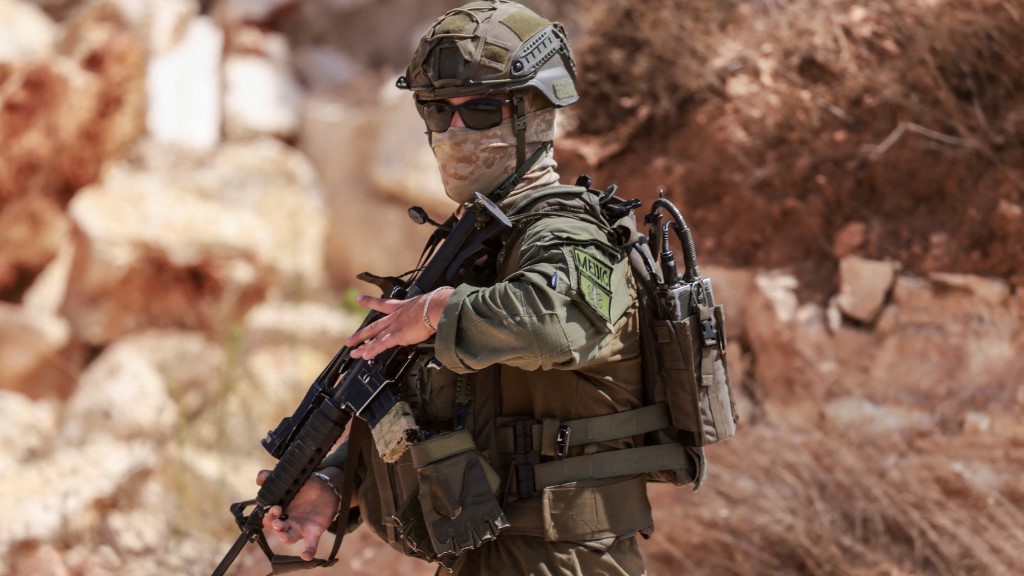
    On Sunday, Israel formally activated a controversial new law that mandates the death penalty as the default sentence for Palestinians convicted of killing Israelis in the occupied West Bank, following the signing of a required military order by Central Command Major General Avi Bluth.

    Under the terms of the new regulation, Israeli military courts — the only judicial bodies with jurisdiction over Palestinian residents of the West Bank — are required to hand down death sentences to Palestinians found guilty of murdering Israeli occupation soldiers or civilians. Life imprisonment can only be applied in rare, explicitly defined exceptional circumstances, shifting the entire sentencing framework to favor capital punishment as the standard outcome.

    First approved by Israeli lawmakers in March, the legislation codifies a dual-track legal system that operates exclusively along identity lines in the occupied territory. Israeli citizens and permanent residents living in West Bank settlements fall under the jurisdiction of Israeli civilian courts, and are thus entirely exempt from the new law’s provisions. This separation reinforces a longstanding legal structure that has been widely labeled by human rights groups as an apartheid system.

    The law’s wording further expands its reach to target acts of Palestinian resistance to occupation: one of the criteria for applying the death penalty requires only that the convicted person’s act was intended to “negate the existence of the State of Israel or the authority of the military commander in the area” — a broad standard that human rights advocates say overwhelmingly criminalizes Palestinians opposing Israeli occupation.

    Top Israeli officials have welcomed the activation of the measure, framing it as a critical tool to counter Palestinian resistance. National Security Minister Itamar Ben Gvir, leader of the far-right Jewish Power party, celebrated the order as a campaign promise fulfilled. “We promised and we fulfilled,” Ben Gvir said, adding, “we do not capitulate or contain murderous terrorism, we defeat it.” Israeli Defence Minister Israel Katz also endorsed the move.

    The new law has sparked fierce condemnation from Palestinian, Israeli, and international human rights organizations, which warn it formalizes systematic discrimination against Palestinians and erases what remains of their basic legal protections. Critics say the policy deepens the already entrenched apartheid-style dual legal regime in the West Bank, where two separate populations live side by side under entirely separate systems of justice.

    Multiple human rights groups have labeled the move a dangerous escalation of Israeli repressive policy in the occupied territories, pointing to a sharp surge in mass arrests of Palestinians on broad, vague security charges in recent months. Since the intensification of Israel’s military campaign in Gaza, rights monitors have also documented a steep rise in reports of torture, abuse, and deaths of Palestinian detainees in Israeli custody.

    Palestinian prisoners’ rights organizations have described the legislation as an “unprecedented act of savagery,” accusing Israel of codifying state violence against detainees at a time when conditions for Palestinian prisoners have deteriorated dramatically. Even leading Israeli human rights advocacy groups, including Adalah, the Public Committee Against Torture in Israel, HaMoked, and Physicians for Human Rights-Israel, have joined the condemnation, warning the law creates a deliberately “discriminatory punitive framework” that denies Palestinians equal protection under the law and removes legal safeguards against abuse.

  • ‘Everest Man’ and ‘Mountain Queen’ break own records scaling world’s tallest peak

    ‘Everest Man’ and ‘Mountain Queen’ break own records scaling world’s tallest peak

    Two legendary Nepali Sherpa climbers have etched their names into mountaineering history once again, shattering their own world records for the most successful ascents of Mount Everest, the highest point on Earth at 8,849 meters above sea level.

    Fifty-six-year-old Kami Rita Sherpa, globally celebrated by the nickname “Everest Man”, notched his 32nd summit of the iconic peak on Sunday while working as a guide for commercial expedition group 14 Peaks Expedition. This achievement extends his unrivaled status as the mountaineer with the most Everest summits in history. Born into a multi-generational climbing family in Nepal’s Solukhumbu district, the region that hosts Mount Everest’s southern approach, Kami Rita first stood atop Everest in 1994. He has returned to the peak almost every year since, even summiting twice in some single climbing seasons. He first claimed the outright world record for most Everest ascents in 2018, when he reached the peak for the 22nd time, breaking a shared record he had held with two other veteran Nepali Sherpa climbers, both of whom have since retired from high-altitude expeditions.

    On the exact same day that Kami Rita set his new record, 52-year-old Lakpa Sherpa, known widely as the “Mountain Queen”, also broke her own existing record for the most Everest summits by a female climber, logging her 11th successful ascent of the mountain. Lakpa made history of her own back in 2000, when she became the first Nepali woman to both summit Everest and complete a safe descent back to base camp. Her extraordinary life, which includes her decades of high-altitude climbing and her experience raising children as a single mother, was the focus of a 2023 documentary that shares her “Mountain Queen” nickname.

    The record-breaking feats come amid what is already the busiest climbing season in Everest’s modern history. Nepal’s tourism department has issued a record-high number of climbing permits to foreign aspirants hoping to reach the peak this year, totaling almost 500. Unlike foreign climbers, Nepali guide staff do not need individual permits to join expeditions, meaning the total number of people attempting the ascent this year is far higher than the permit count alone.

    The busy season has been accompanied by unanticipated disruptions that have raised widespread safety concerns among the climbing community. A large unstable chunk of glacial ice broke off and blocked the traditional route from Nepal’s Base Camp to the upper slopes of the mountain earlier in the season, creating significant delays in opening the route for climbing. Many observers have warned that the combination of delayed route opening and an unprecedented number of climbers could lead to dangerous “traffic jams” in the high-altitude death zone near the summit, where prolonged exposure to low oxygen and freezing temperatures can quickly become fatal.

    Nepali official and political leaders have already issued public praise for the two record-setting climbers. Nepal’s Department of Tourism congratulated the pair on their “historic achievement”, and Prime Minister Balendra Shah also shared his congratulations via the social platform X. “Such historic success can only be achieved through unwavering courage, rigorous self-discipline, and honest dedication to one’s work,” Shah wrote of the pair’s accomplishment.

  • China agrees to boost trade for US ag products such as beef and poultry following Trump-Xi summit

    China agrees to boost trade for US ag products such as beef and poultry following Trump-Xi summit

    WASHINGTON (AP) – Two days after U.S. President Donald Trump concluded a high-stakes negotiating summit in Beijing aimed at mitigating economic harm to American agricultural producers from the 2024 trade war he initiated, the White House made a major announcement Sunday: China has committed to scaling up purchases of key U.S. farm products including beef and poultry, hitting an annualized purchase target of $17 billion per year starting in 2026, with this level maintained through 2027 and 2028.

    According to the White House’s statement, the agreement will restore full Chinese market access for U.S. beef and resume Chinese imports of U.S. poultry from states certified as avian influenza-free by the U.S. Department of Agriculture (USDA). This new framework builds on existing soybean purchase commitments China made last year, offering a much-needed lifeline to American farmers who have lost critical export volume after China sharply cut agricultural imports amid the trade conflict.

    American agricultural producers have faced overlapping economic pressures in recent months. Beyond the trade war that erased China as a major export market for soybeans and other commodities, new disruptions stemming from the U.S.-Israel military campaign against Iran have restricted shipping through the Strait of Hormuz, a critical global trade chokepoint. This disruption has shrunk global fertilizer supplies and driven input prices to record highs, squeezing farm profit margins even further.

    As of Sunday, Beijing had not issued immediate public confirmation of the specific $17 billion purchase terms outlined by the White House. On Saturday, China’s Ministry of Commerce released a more general statement confirming that the two sides had reached agreement to “resolve or make substantial progress toward resolving certain non-tariff barriers and market access issues” for agricultural products.

    Per the Chinese commerce ministry’s spokesperson, the U.S. has agreed to actively address Chinese regulatory concerns covering detained Chinese dairy and seafood shipments, U.S. import rules for Chinese potted bonsai, and Chinese requests for official recognition of Shandong Province as an avian influenza-free zone. In turn, China will actively advance U.S. priorities including registration approvals for American beef processing facilities and market access for U.S. poultry from eligible states. The two sides also committed to expanding overall agricultural and general trade through reciprocal tariff cuts for an unspecified “specific range of products.”

    In the years since the trade war escalated, China has systematically diversified its sources of imported agricultural commodities to protect its own food and national security, shifting growing volumes of purchases to Brazil, Argentina and other supplier nations instead of the U.S. USDA data underscores the scale of the drop-off in U.S. agricultural exports to China: after peaking at $38 billion in total agricultural imports in 2022, Chinese purchases fell to just $8 billion in 2025. Soybean imports alone dropped from nearly $18 billion in 2022 to only $3 billion in 2025.

    After Trump hiked tariffs on Chinese goods last year, China — long the largest foreign buyer of U.S. soybeans — halted nearly all new soybean purchases, leaving U.S. soybean producers, the hardest-hit segment of American agriculture, facing massive surplus stock and depressed prices. The new announcement builds on an October trade truce between Trump and Chinese President Xi Jinping, where China first agreed to resume soybean purchases, with an initial commitment of 12 million metric tons for the 2025-2026 marketing year and 25 million metric tons annually for the following three years.

    For the U.S. beef sector, the agreement will re-open the Chinese market to hundreds of U.S. processing facilities, including major operations run by industry giants Tyson Foods and Cargill. China allowed licenses for hundreds of U.S. beef plants to expire last year, pushing total U.S. beef export value to China down to less than $500 million in 2025, a sharp drop from the 2022 peak of $2.14 billion. U.S. poultry exports to China have followed a similar trajectory, falling from over $1 billion in 2022 to just $286 million in 2025. It remains unclear what the actual annual export volume for U.S. beef and poultry will be under the new agreement.

    Beyond agricultural trade, the Beijing summit focused on identifying new areas of bilateral economic cooperation, including expanded market access for U.S. firms in China and increased Chinese investment in U.S. domestic industries. The two leaders announced plans to establish two new bilateral coordinating bodies: a Board of Trade to manage trade in “non-sensitive goods” and address specific tariff reduction issues, and a Board of Investments to facilitate dialogue on cross-border investment issues. Both sides have offered few details on how these new bodies will differ from existing bilateral trade dialogue frameworks. The commerce ministry spokesperson noted that the two sides agreed “in principle” to reciprocal tariff cuts of equivalent scale for products of mutual concern.

    Meeting with U.S. business leaders accompanying Trump on the trip, including Cargill CEO Brian Sikes, Xi emphasized that China’s door of opportunity for international business will continue to widen.

    Soybeans, used heavily for livestock feed and biofuel production in China, have long been the top U.S. agricultural export to the country, accounting for roughly half of all U.S. agricultural exports to China in past years. As of May 7, USDA data shows U.S. exports of soybeans to China have reached 10.9 million metric tons, putting China on track to meet its original October commitment by the end of the current marketing year on August 31. That volume remains far below the 25 million to 30 million metric tons China purchased annually before the latest escalation of the trade war.

    Before Trump’s originally scheduled Beijing trip in late March — postponed amid the outbreak of the Iran conflict — the American Soybean Association publicly urged the president to prioritize expanded soybean access in trade talks with Xi. Association president Scott Metzger said Thursday that the group is pushing for additional soybean purchases in the current marketing year alongside steady progress on meeting long-term purchase commitments. “Greater certainty and consistency in the marketplace help provide farmers with the confidence they need as they make decisions for the year ahead,” Metzger said.
    AP journalist Kevin Vineys contributed reporting to this article.

  • Taiwan will not provoke conflict nor give up sovereignty, says president

    Taiwan will not provoke conflict nor give up sovereignty, says president

    Following the high-profile summit between U.S. President Donald Trump and Chinese leader Xi Jinping that centered heavily on cross-Strait tensions, Taiwan’s leader Lai Ching-te has issued his first public direct response, laying out the island’s stance while emphasizing the critical need for the United States to maintain its longstanding arms sales policy to Taiwan.

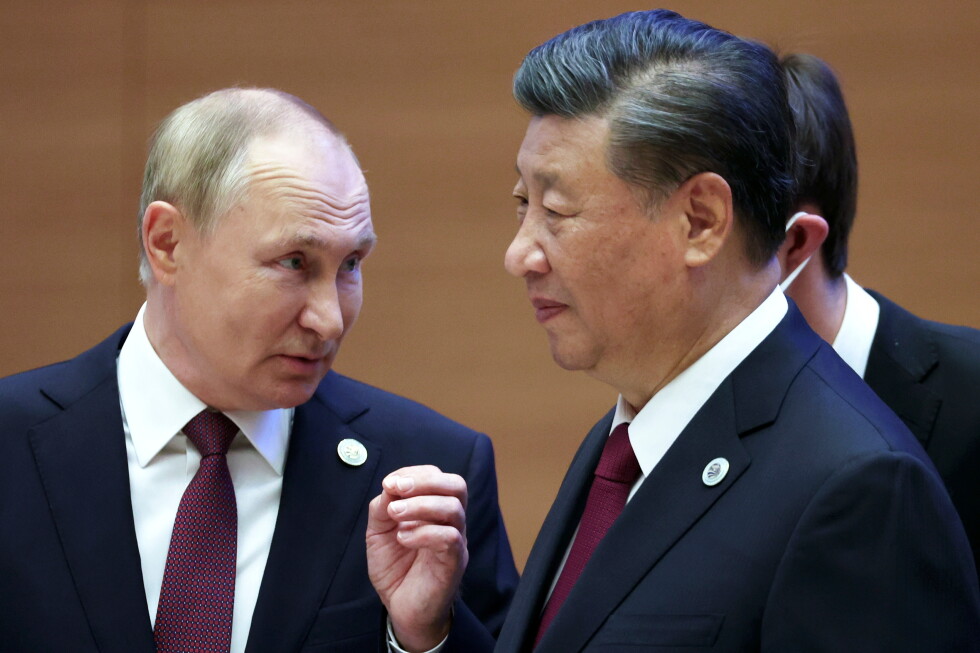
    During the meeting, Chinese state media reported that Xi framed the Taiwan issue—where Beijing claims the self-governing democratic island as an inalienable part of its territory—as the single most consequential matter in bilateral U.S.-China ties. Xi warned that mishandling the question of Taiwan could open the door to direct conflict between the two major global powers. After wrapping up his trip to Beijing, Trump made his own position clear in an interview with Fox News, stating he did not support any move toward formal Taiwan independence, while adding that U.S. policy toward the island had not shifted, and he had no intention of provoking a confrontation with Beijing. Trump also noted that Xi held deeply entrenched views on the Taiwan issue, but he had made no binding commitments to China on the matter during their talks.

    For years, under the administrations of Lai Ching-te and his predecessor Tsai Ing-wen, Taiwan’s government has held the position that no formal declaration of independence is necessary, as the island already considers itself a sovereign nation. Lai reiterated this long-held stance in a public post on his Facebook page, his first direct public comment following the Trump-Xi summit. He wrote, “Taiwan, the Republic of China, is a sovereign and independent democratic country,” and added that “Taiwan’s future must follow the will of all the Taiwanese people.” Public opinion data consistently shows that a majority of Taiwan’s residents identify as citizens of a sovereign nation, though most also support maintaining the current cross-Strait status quo: rejecting both immediate unification with China and an official formal declaration of independence.

    Beijing has repeatedly condemned Lai, labeling him a dangerous “troublemaker” and a threat to cross-Strait peace. In his Facebook post, Lai pushed back against these characterizations, emphasizing that Taiwan has no intention of initiating aggression or escalating tensions. “Taiwan will not provoke, will not escalate conflict, but will not under pressure give up national sovereignty and dignity, as well as the democratic and free way of life,” he wrote. He further clarified that Taiwan is a committed defender of the existing cross-Strait status quo, not a party seeking to unilaterally alter the current arrangement. Lai added that Taiwan is open to holding healthy, structured exchanges and dialogue with Beijing, as long as those talks take place on the basis of equal dignity and mutual respect. However, he firmly rejected Beijing’s practice of framing dialogue under the precondition of “unification” as a pretext to coerce Taiwan into accepting its terms.

    This position echoes an earlier statement from Lai’s presidential spokesperson, who affirmed that it is self-evident Taiwan is a sovereign, independent democratic nation, and the government remains dedicated to upholding the cross-Strait status quo. For its part, Beijing has consistently stated it prefers peaceful reunification with Taiwan, but has never formally ruled out the use of military force to bring the island under its control. In recent years, Beijing has ramped up military pressure on Taiwan, conducting regular large-scale military drills—including simulated blockades of the island—around Taiwan’s territorial waters and airspace.

    For more than four decades, the United States has supplied defensive arms to Taiwan under the terms of the Taiwan Relations Act, a U.S. law that requires the U.S. to provide Taiwan with the means to defend itself against potential aggression. The U.S. remains Taiwan’s most powerful international ally and its largest supplier of military equipment. In December prior to the summit, the Trump administration approved a massive $11 billion arms package for Taiwan, one of the largest single arms deals in the history of U.S.-Taiwan relations. That approval drew sharp condemnation from Beijing, which has long opposed all U.S. arms sales to the island.

    After leaving Beijing, Trump told reporters aboard Air Force One that he had discussed the proposed arms sale in great depth with Xi, and would make a final decision on whether to move forward with the transaction later. When pressed on the longstanding 1982 U.S. commitment that it would not consult Beijing on arms sales decisions to Taiwan, Trump dismissed the commitment, noting the 1980s were “a long time ago.”

    Over the weekend following the summit, Lai expressed gratitude to Trump for his continued support for peace across the Taiwan Strait, and reaffirmed that sustained U.S. arms sales are non-negotiable for regional stability. “Given that China has never given up the use of force to annex Taiwan and continues to expand its military power to try to change the regional and cross-strait status quo, America’s continued sale of arms to Taiwan and deeper U.S.-Taiwan security cooperation is necessary and a key factor in maintaining regional peace and stability,” Lai wrote.

  • An Australian journalist turns her harrowing China prison ordeal into a memoir and play

    An Australian journalist turns her harrowing China prison ordeal into a memoir and play

    Almost eight months after being deported from China following three years of detention, Australian journalist Cheng Lei is methodically rebuilding her life in her current home of Melbourne, turning her experience of imprisonment into creative work and a platform to advocate for others still detained under China’s justice system.

    Cheng first moved to Australia from China with her parents as a 10-year-old, eventually becoming a naturalized Australian citizen. At 25, she left a career as an accountant to pursue her passion for bilingual journalism, and over two decades of work across Asia, rose to become a high-profile anchor for the English-language *Global Business* program on Chinese state broadcaster CCTV.

    That stable, public career came to an abrupt end in August 2020. At CCTV’s Beijing headquarters, state security agents took Cheng into custody, accusing her of leaking state secrets to foreign organizations. She was blindfolded and transferred to an unknown detention location. In October 2023, a Beijing court convicted her of the charges and handed down a sentence of two years and 11 months — a term she had already nearly completed behind bars by the time the ruling was issued.

    According to Cheng’s memoir, the offense that led to her conviction amounted to a seven-minute premature release of data from former Chinese Premier Li Keqiang’s 2020 annual government work report. The early disclosure revealed that China would not set a formal GDP growth target that year amid uncertainty caused by the COVID-19 pandemic, a decision that was already unusual. Cheng maintains she had no knowledge of any media embargo surrounding the report at the time of the incident.

    The journalist says she believes her detention was a case of hostage diplomacy, linked to Australia’s call for an independent international investigation into the origins of COVID-19. In April 2020, then-Australian Foreign Minister Marise Payne publicly called for the inquiry; Chinese state security opened its investigation into Cheng just four days later. “Why me? Why that time? All these questions I’m still asking,” Cheng told the Associated Press in a recent interview.

    Relations between Canberra and Beijing had already been tense before the pandemic, but the global health crisis plunged the fraught bilateral relationship to its lowest point in decades. After Australia called for the COVID origins probe, Beijing halted direct communications with senior Australian government ministers and imposed official and unofficial trade bans on a range of Australian exports, including wine, coal, barley and lobster. Tensions only began to ease after Australia’s conservative government, which had drawn Beijing’s ire, was voted out of power and replaced by the current center-left Labor government in 2022, after which most trade restrictions were gradually lifted.

    Long before Cheng’s arrest, the Australian government had issued official warnings to its citizens about the risk of arbitrary detention in China. In the months after she was taken into custody, all Australian journalists based in China ultimately left the country, following high-stakes diplomatic standoffs in 2020.

    Since her release and deportation in October 2023, Cheng has thrown herself into multiple creative pursuits to process her experience and amplify the voices of people who cannot speak for themselves. She has published a memoir about her detention, and is currently preparing for the world premiere of her autobiographical play *1154 Days*, scheduled to open in Melbourne on May 28. The play explores how the mind adapts, resists, and creates connection even under extreme conditions of deprivation and surveillance. Cheng says during her months in isolation, she built entire television programs in her mind, invented memory games, and found small ways to connect with her cellmates and even her captors.

    “When your life gets shattered and you lose so many things that used to define you, you do have a kind of freedom to reorganize your atoms and create a new you,” Cheng explained during rehearsals for the production. “For me, it’s a fuller appreciation of life and much more adventurousness and also a serene sort of quiet fearlessness.”

    Beyond theater and writing, Cheng has also branched out into stand-up comedy, making her first stage appearance in Melbourne in June 2024 alongside Chinese-Australian writer and activist Vicky Xu, eight months after her release. She performed a five-minute set at the Melbourne International Comedy Festival’s RAW competition for new performers earlier this year, and says humor was a critical tool for survival during her detention. “If you can’t joke about incarceration, then you have no sense of humor,” she told the *Australian Financial Review*. “Humor got me through much of it and brightened the cell for me and my cellmates.” She now jokes that she has more source material for her comedy than most performers: “Life is a tragic comedy and we should mine it. I just have a bit more material than others.”

    Cheng now lives in Melbourne with her two teenage children, who were stranded in Australia visiting family when China closed its borders at the start of the pandemic, months before her arrest. For Cheng, her new creative projects are not just a way to heal — she says she has a responsibility to speak out for other detainees still held in China, including fellow Australian citizen Yang Hengjun, a Chinese-born democracy blogger who was sentenced to a suspended death penalty for espionage in 2024. Yang has been in detention since he returned to China from the United States in 2019, and his supporters warn his failing health means he is unlikely to survive a life sentence, which a court is expected to greenlight in the coming weeks.

    Australian officials have repeatedly raised Cheng’s case at high-level bilateral meetings with Beijing, and continue to push for Yang’s release. Cheng says her own experience of the Chinese prison system has given her a unique window into its harsh, opaque practices. The hardest part of her detention was the first six months, spent under Residential Surveillance at a Designated Location (RSDL), a system where detainees are held in complete isolation, under constant surveillance, with strict limits on movement and enforced silence, designed to break suspects to force guilty pleas. Even after six months in that system, Cheng only received credit for three months toward her eventual sentence.

    “I know people who are still going through RSDL, or unfair, unjust, arbitrary detention in China. Or being sentenced to ludicrous, harsh sentences for standing up for other people, for standing up for human rights,” Cheng said. “They would want this story to be told because they don’t have a voice. And for the people who are too scared to talk because their families are hostages in China, this is for them too.”

    The play *1154 Days* seeks to cut through official narratives, Cheng explains, allowing audiences to see beyond Beijing’s public framing of itself as a rule-of-law society and reliable global partner. “It’s about how it feels to have everything taken away from you. How it feels to be with three other people all the time in the same little cell for three years, how it feels to be watched every minute of the day and how it feels to finally regain your freedom,” she said.

  • France moves to deport prominent Palestinian-Egyptian activist over criticism of Israel

    France moves to deport prominent Palestinian-Egyptian activist over criticism of Israel

    A prominent Egyptian-Palestinian human rights defender and long-time political activist is facing expulsion from France, after French authorities labeled his pro-Palestinian advocacy a ‘serious threat to domestic public order’, escalating a wider crackdown on pro-ceasefire speech in the country that has alarmed rights campaigners.

    Ramy Shaath, a key organizing figure in the 2011 Arab Spring uprisings and former coordinator of the Egyptian branch of the Boycott, Divestment, Sanctions (BDS) movement, was released from arbitrary political detention in Egypt in January 2022 after direct intervention from French President Emmanuel Macron. At the time of his release, Paris framed his freedom as a victory for human rights, welcoming Shaath to reunite with his French wife on French soil.

    Now, just over two years later, the French government is moving to deport him. Shaath is scheduled to appear before a national deportation committee on May 21, and his attorney Damia Taharraoui confirmed that local prefecture officials could issue an immediate enforceable deportation order as soon as the hearing concludes.

    A copy of the deportation notice from Nanterre Prefecture, reviewed by Agence France-Presse, explicitly cites Shaath’s public pro-Palestinian activism and commentary as the justification for the expulsion. The activist confirmed to AFP that he has participated in multiple peaceful demonstrations calling for an immediate ceasefire in Gaza, an end to what he describes as Israeli genocide in the enclave, the imposition of economic sanctions and arms embargoes on Israel, and urgent multilateral international intervention to protect Palestinian civilians.

    “My stance has never changed since the time France worked to secure my release from Egyptian prisons where I was a political prisoner… but today, it seems they want to silence me,” Shaath told reporters.

    French authorities have specifically called out Shaath’s public descriptions of Israel’s military campaign in Gaza as a criminal occupation, and his references to Israeli forces as “terrorists” for targeting residential homes and civilian healthcare facilities. His legal team has argued that deportation is not a viable option in this case: Shaath no longer holds Egyptian citizenship, and cannot be sent to the Palestinian territories due to the active, large-scale conflict that has devastated Gaza since October 2023.

    In response to the expulsion order, Shaath’s family, friends and supporters launched a national campaign on Sunday to block the deportation, using the hashtag #FreeRamyShaath2 – a reference to his 2019 to 2022 imprisonment in Egyptian jails.

    In an official statement, the campaign condemned France’s abrupt reversal of position: “When he arrived in France, Ramy Shaath was welcomed as a prisoner of conscience, finally freed. President Macron himself publicly welcomed his release and his reunification with his French wife. France congratulated itself then on having helped wrest a human rights defender from the prisons of the Egyptian dictatorship. Today, that same State is turning against him with scandalous brutality by trying to portray him as a threat to public order. After claiming to denounce Egyptian arbitrariness, it is reproducing its logic: turning a Palestinian political voice into a security file.”

    Supporters added that even if the deportation attempt is blocked, French authorities have prepared alternative punitive measures, including imposing house arrest, seizing Shaath’s passport, and requiring mandatory daily check-ins with local police.

    Shaath’s case is not an isolated incident. Since the start of Israel’s military campaign in Gaza in October 2023, French student groups, teacher unions, and civil society organizations have repeatedly warned of growing systemic pressure against individuals who voice public support for Palestinian rights. Peaceful actions including demonstrations, public statements, and campus occupations have been increasingly criminalized, leading to disciplinary action, administrative fines, formal legal prosecution, and in multiple cases, permanent criminal records.

    Just last month, a controversial new bill tabled in the French National Assembly would codify new penalties for public criticism of Israel, including criminal sanctions for those who deny Israel’s right to exist or compare Israel’s actions to Nazi Germany. The draft legislation also expands the definition of terrorism-linked offenses to include so-called “implicit” incitement, broadening the scope for legal action against pro-Palestinian speakers.

    Context on the Egyptian political landscape further highlights the risks of deportation: the country ranks just 18 out of 100 on Freedom House’s 2024 Freedom in the World index, where lower scores reflect stricter restrictions on political rights and civil liberties. Independent human rights groups estimate that more than 60,000 political prisoners are currently detained in Egyptian facilities, and Human Rights Watch has documented that the Egyptian government engages in widespread, systematic repression of peaceful dissent, arbitrarily detaining and punishing critics and activists.

    Middle East Eye, which first reported on this case, reached out to the French Interior Ministry for comment and clarification on the government’s planned deportation destination for Shaath, but had not received a response as of the publication of this report.

  • Thai PM urges swift response to fatal Bangkok collision

    Thai PM urges swift response to fatal Bangkok collision

    A devastating collision between a freight train and a public bus in central Bangkok has left eight people dead and 25 others injured, prompting Thailand’s prime minister to demand rapid support for victims and a sweeping probe into transport safety across the capital. The deadly crash unfolded at approximately 3:40 p.m. local time on Saturday, in the immediate vicinity of the Airport Link Makkasan Station, one of the capital’s busy transit hubs.

    Eyewitness accounts confirm the public bus became trapped on the railway tracks after gridlocked city traffic forced it to stop in the train’s path. The force of the collision was so severe that the bus burst into flames, billowing thick black smoke across the surrounding neighborhood and damaging multiple vehicles parked or stopped nearby. Emergency response teams including urban search and rescue units, fire crews, and advanced medical teams were immediately dispatched to contain the blaze, extract survivors, and triage casualties.

    Official updates from Thai authorities later confirmed all eight fatalities were passengers aboard the public bus. All injured victims have been transported to adjacent medical facilities for urgent care, with several still listed in critical condition as of Sunday morning. The Thai Department of Rail Transport has formally launched a full investigation to determine the root causes of the disaster.

    Preliminary evidence points to chronic urban traffic congestion as a contributing factor, which left the bus unable to clear the railway crossing before the oncoming freight train arrived. Investigators are also conducting a full inspection of the crossing’s infrastructure to confirm whether warning signals and automatic safety barriers were operating correctly at the time of the crash.

    Thai Prime Minister Anutin Charnvirakul visited the accident site Saturday evening to meet first responders and oversee the response effort. During his visit, he issued explicit instructions for all relevant government agencies to accelerate victim assistance efforts, ensure full coverage of medical care for all those affected, complete a transparent full investigation, and conduct a comprehensive review of existing safety protocols for all at-grade railway crossings across the country.

    The tragedy has reignited long-simmering public concern over transportation safety in Thailand, particularly in densely populated, heavily congested urban centers where existing infrastructure has struggled to keep pace with growing road and rail traffic volumes. Many safety advocates have called for urgent upgrades to aging crossing systems and new traffic management strategies to reduce the risk of similar incidents in the future.

  • Iraqi farmer killed to hide evidence of two Israeli bases in country: Report

    Iraqi farmer killed to hide evidence of two Israeli bases in country: Report

    A New York Times investigation has uncovered explosive new details about unacknowledged Israeli military bases operating in Iraq’s western desert, linking the discovery of one facility to the fatal shooting of a local Iraqi shepherd who stumbled across the site by accident. The revelations have reignited deep tensions across Iraq, strained already fragile alliances in the region, and raised serious questions about alleged United States complicity in keeping the covert operations hidden from the Iraqi government.

    The disclosure of the secret outposts builds on reporting published last week by The Wall Street Journal, which first revealed that Israel established an initial covert presence in the remote western Iraqi desert amid its ongoing open conflict with Iran. According to initial accounts, the first installation was constructed in the weeks immediately before the outbreak of full-scale war in February, with the facility purpose-built to support Israeli air operations and house elite special forces detachments. In March, Israeli forces launched an airstrike against Iraqi troops that had nearly exposed the hidden outpost, using the site to coordinate the attack, the original report confirmed.

    Israeli outlet Maariv later added further context, reporting that the forward operating base also served as a staging point for Israeli rescue and commando units, whose core mission would be to extract downed Israeli aircrew from Iranian territory if any pilots were shot down during combat missions.

    The NYT investigation adds a previously unreported development: confirmation of a second secret Israeli base located in the same remote desert region. Unlike the first outpost, this facility was established before the 2025 full-scale war between Israel, the U.S. and Iran, and was actively used throughout the June 2025 conflict, unnamed officials told the NYT.

    The fatal incident that exposed the presence of the bases unfolded when 52-year-old Awad al-Shammari, a local Bedouin shepherd, accidentally came across one of the hidden installations while traveling through the desert to pick up groceries. Local witnesses told the NYT that after Shammari discovered the outpost, an Israeli helicopter opened fire on his pickup truck, killing him instantly.

    Shammari’s family spent two full days searching for him before they were able to confirm his death, with local residents too afraid of the sensitive site to approach the area immediately. “We were told that a burned-up pickup truck matching Awad’s was out there, but no one dared to go there,” his cousin Amir al-Shammari told the NYT. “When we got there, we found the car and his body burned beyond recognition.”

    The reports of uninvited Israeli military presence on Iraqi soil, and the killing of an unarmed civilian, have triggered widespread public anger across Iraq. The country has never maintained diplomatic relations with Israel, and public sentiment toward the Israeli government is overwhelmingly hostile. Iraqi citizens and political leaders are now increasingly demanding that the interim Iraqi government launch a full public investigation, disclose what officials knew about the bases, and hold all parties responsible for Shammari’s death accountable.

    One of the most damaging revelations to emerge from the NYT investigation is that U.S. officials have been aware of the existence of the base Shammari discovered since at least June 2025. Despite the United States’ formal security alliance with Iraq, which includes commitments to respect Iraqi territorial sovereignty, U.S. officials never shared information about the covert Israeli outpost with the Iraqi government, the NYT reported.

    Senior Iraqi political figures have already responded with sharp condemnation of both Israel and the United States. Raed al-Maliki, a prominent Iraqi member of parliament, accused the U.S. of effectively ceding control of Iraqi airspace and territory to Israel during the 2025 war. “The United States handed Iraqi airspace to the [Israeli] entity during the war and ordered radar systems to be shut down,” al-Maliki said in a statement responding to the reports. “Now it has become clear that Iraqi territory was also used to establish a secret intelligence centre or base for the Zionist entity.”

    As of press time, the Iraqi government has not issued any official public comment or response to the published reports. The revelations come at an already volatile moment for regional security, as the 2025 Iran-Israel war has left border regions across the Middle East unstable and fueled widespread anti-government sentiment in Iraq over perceived failures to protect territorial integrity.

  • Israel booed at Eurovision final as Bulgaria wins competition

    Israel booed at Eurovision final as Bulgaria wins competition

    The 2026 Eurovision Song Contest concluded Saturday with a historic milestone for Bulgarian pop artist Dara, born Darina Yotova, who secured the country’s first-ever victory in the competition’s 70-year existence. But the milestone win was overshadowed by widespread controversy and public uproar centered on Israel’s second-place finish, which was met with loud boos from the audience during the official score announcement.

    This year’s final went down as one of the least-watched and least-attended events in Eurovision history, triggered by a mass withdrawal of five competing nations: Spain, Iceland, Ireland, the Netherlands and Slovenia. All five pulled out in protest of the European Broadcasting Union’s (EBU) December ruling that allowed Israel to retain its spot in the 2026 contest. A coordinated international boycott campaign also pushed large swathes of global audiences to skip viewing the event, further dragging down audience numbers.

    Addressing reporters following her win, Dara struck a confident tone: “Everything is possible: Bulgaria just won Eurovision. I really like breaking rules. I’m really good with following my rules – not anybody else’s. We wanted to give to the audience something new and fresh, something that is not expected.”

    Outside the contest venue in Vienna, pro-Palestinian demonstrators gathered Saturday for a large-scale protest that drew roughly 2,000 attendees, per local police estimates. The controversy surrounding Israel’s inclusion has roiled the competition since the EBU’s initial decision, with reporting from The New York Times revealing that Israel has invested more than $1 million into leveraging Eurovision as a soft power instrument. According to the outlet, the country launched its promotional campaign as early as 2018, when scrutiny of its participation grew amid ongoing territorial expansion and military operations in the occupied Palestinian territories, with the explicit goal of improving its tarnished global image and rallying international backing.

    Bulgaria’s win ultimately spared the EBU from a far larger PR crisis: a first-place finish for Israel would have required the 2027 contest to be hosted on Israeli territory, a move that would have sparked even broader global backlash. Still, industry analysts and long-time Eurovision figures warn the damage done to the competition’s reputation may be irreversible. Many note the controversy threatens the long-term future of the annual event, which has long branded itself as a unifying cultural celebration of European artistry.

    The fallout has already strained relationships with major participating nations. Spain, one of Eurovision’s so-called “Big Five” funding countries that automatically qualify for the final and contributes a large share of the contest’s annual budget, pulled its public broadcaster RTVE from airing the 2026 final entirely. In a formal statement, RTVE said: “The Eurovision Song Contest is a competition, but human rights are not. There is no room for indifference. Peace and justice for Palestine.”

    Belgian public broadcaster VRT issued a stark pre-final warning, stating it would likely withdraw from 2027’s contest unless the EBU holds a general membership vote to reevaluate Israel’s eligibility to compete. Even former Eurovision winners have spoken out about the lasting damage to the competition’s brand. Emmelie de Forest, who took home the 2013 title for Denmark, told independent outlet Middle East Eye that while her relationship with the contest has long been deeply personal, the EBU’s choices have increasingly alienated fans and created deep rifts within the global Eurovision community.

    “It breaks my heart, but Eurovision’s decisions increasingly leave people feeling conflicted, divided or alienated from it. I think it has already done a lot of damage to Eurovision, and that makes me genuinely sad to say because the contest has been such a meaningful part of my life. I sadly think the contest is creating more division than unity. The controversy surrounding Israel’s participation, the backlash from fans and artists, the countries withdrawing and the growing distrust toward the EBU have all fundamentally changed the atmosphere around Eurovision,” de Forest said.