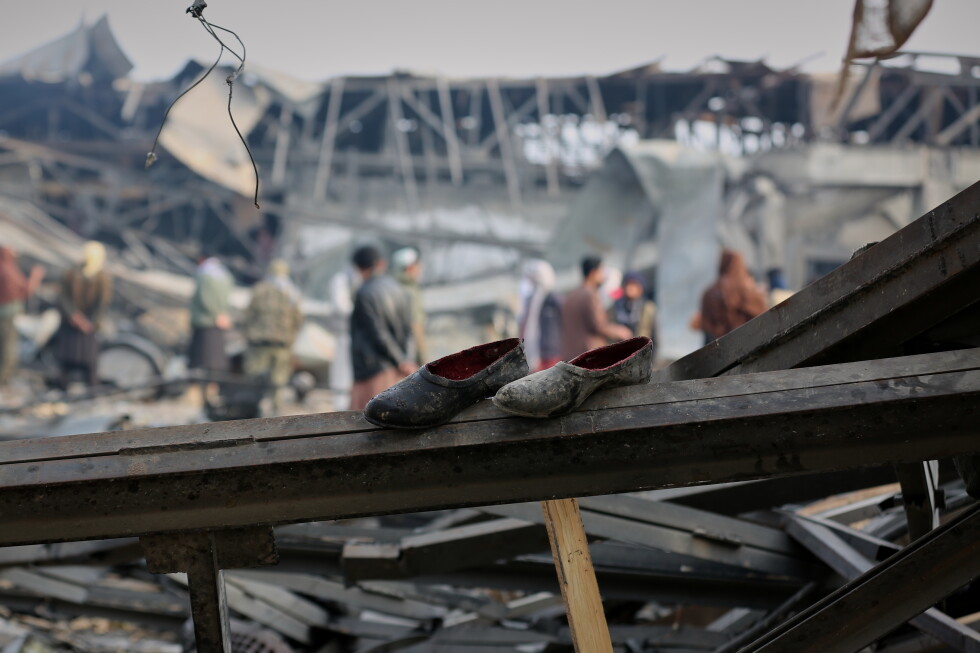
A March Pakistani airstrike that destroyed a large civilian drug rehabilitation facility in Afghanistan’s capital Kabul, leaving hundreds of civilians dead, must be probed as a potential war crime, global human rights watchdog Amnesty International has concluded following a months-long independent investigation.
The attack, carried out on March 16 against the 2,000-bed Omid drug treatment center, has sparked sharp disagreement between the two neighboring countries over casualty numbers and the nature of the site. Afghan officials have put the death toll at roughly 400 civilians, while Pakistan has disputed that count and maintained its forces targeted a legitimate military installation storing weapons and ammunition. The United Nations Assistance Mission in Afghanistan (UNAMA) previously confirmed at least 269 civilian deaths and 122 injuries from the strike in an independent May assessment, noting the actual fatality figure is likely far higher. Afghan authorities held multiple mass funerals for victims in the weeks following the attack.
Amnesty published its full investigative findings on Tuesday, outlining the rigorous verification process its researchers conducted to assess Pakistan’s claims. The team analyzed and authenticated more than 60 photos and videos—including footage released by the Pakistani military itself—reviewed more than 30 pre- and post-strike satellite images of the site, and conducted dozens of interviews with witnesses and local officials.
In its final report, the rights group confirmed it found no conclusive evidence to back Pakistan’s assertions. None of the reviewed footage showed secondary explosions immediately after the airstrike, a key indicator that ammunition or explosive stockpiles were stored at the location that would detonate following an initial impact. The Omid center had operated openly as a drug addiction treatment facility for nearly a decade, sitting on land that previously formed part of a NATO military base near Kabul’s international airport.
The deadly strike occurred against a backdrop of escalating cross-border hostilities between Pakistan and Afghanistan that began in early 2023 and intensified dramatically in February 2024, when Pakistan formally declared it was in “open war” with Afghan authorities. UNAMA data shows that between January 1 and March 31 of this year alone, cross-border violence killed 372 Afghan civilians and injured nearly 400 more. Multiple rounds of internationally mediated peace talks have so far failed to secure a lasting ceasefire between the two sides. As recently as late June, another Pakistani cross-border attack killed at least 28 civilians across three eastern Afghan provinces, UNAMA confirmed.
Pakistan’s core accusation against Afghanistan is that the ruling Afghan Taliban, which seized power in 2021 following the withdrawal of U.S.-led coalition forces, harbors Tehrik-e-Taliban Pakistan (TTP) militants that carry out deadly attacks inside Pakistani territory. The TTP, commonly known as the Pakistani Taliban, is organizationally separate from but militarily allied with the Afghan Taliban. Kabul has repeatedly denied Pakistan’s allegations of harboring anti-Pakistan militants.
Amnesty’s investigation concluded the airstrike violated core tenets of international humanitarian law, which grants special protected status to medical facilities. The attack also broke the fundamental principles of distinction (separating civilian targets from military objectives), precaution (taking all feasible steps to avoid civilian harm), and proportionality (requiring that expected civilian harm does not outweigh anticipated military gains) that are designed to protect civilian populations during armed conflict.
Isabelle Lassee, Amnesty International’s Acting Regional Director for South Asia, emphasized that the attack meets the legal threshold for a potential war crime. “Given the widely available information that the site had been used as a medical facility for more than a decade, this reflects a major failure in military planning by Pakistan that led to a significant loss of civilian life,” Lassee said. Immediately after the strike, Pakistan’s Information Minister Attaullah Tarar claimed on social media platform X that Pakistani forces carried out precision strikes against military infrastructure, destroying technical support hubs and ammunition storage sites at two locations in Kabul.
Amnesty confirmed it contacted Pakistan’s foreign ministry on July 9 to request details on any domestic investigation into the strike and any evidence supporting the government’s claim that the Omid center stored weapons and ammunition. As of the publication of Amnesty’s report, the organization had not received a response from Pakistani authorities.