标签: Asia

亚洲

  • English Premier League clubs accused of sportswashing Israel’s atrocities

    English Premier League clubs accused of sportswashing Israel’s atrocities

    London-based anti-poverty and human rights campaign group War on Want has released a damning new report that accuses four top English Premier League clubs of violating the freedom of expression and discriminating against pro-Palestinian staff and supporters, while documenting widespread corporate sponsorship ties between top flight clubs and entities that enable Israel’s military actions and apartheid policies in Gaza and the occupied Palestinian territories.

    Titled *Red Card: English Premier League sportswashing Israel’s atrocities against the Palestinians*, the investigation names Arsenal, Brighton & Hove Albion, Burnley and Everton as the clubs that have disproportionately targeted pro-Palestinian workers and fans for punishment. The report builds on years of scrutiny of the global league’s extensive commercial and ownership ties to international actors with direct links to Israel’s military occupation and ongoing military campaign in Gaza.

    Among the most high-profile cases documented is that of Mark Bonnick, a kitman who had served Arsenal for 22 years before his abrupt dismissal on Christmas Eve 2024. Bonnick was targeted in an online smear campaign that accused him of antisemitism over social media posts criticizing Israel’s conduct in Gaza. While both the Football Association (FA) and Arsenal’s own internal review found no evidence of antisemitism – a conclusion backed by Jewish anti-racism organizations – the club ultimately fired Bonnick on the grounds that his posts had brought the club “into disrepute”. War on Want argues Arsenal prioritized the demands of hostile pro-Israel campaigners over the staff’s right to peaceful expression in support of Palestinian human rights.

    Other cases of discriminatory treatment laid out in the report include a Brighton season-ticket holder banned from the club’s stadium for five years simply for wearing a pro-Palestine t-shirt, while an Israeli academy coach at the same club faced no disciplinary action after posting a social media message calling Palestinians “human animals” and saying “Let them die a death of suffering”. An Everton female fan was barred from entering the club’s new Hill Dickinson Stadium for wearing a Palestine-branded shirt, and Burnley has been criticized for failing to act after a senior club consultant liked a social media post claiming Palestinians are “invented people” and “the biggest Jew haters on Earth”.

    Beyond the suppression of pro-Palestinian speech, the investigation finds that at least nine of the 20 Premier League clubs count direct sponsorship from companies that War on Want deems complicit in Israel’s atrocities. The nine clubs named are Arsenal, Chelsea, Crystal Palace, Everton, Fulham, Liverpool, Manchester City, Manchester United and Tottenham Hotspur. Of these, War on Want identifies Liverpool, Arsenal, Tottenham, Manchester City and Manchester United as the most deeply entangled with companies facilitating Israeli military actions and apartheid. Additionally, Arsenal, Fulham, both Manchester clubs and Newcastle United are flagged for potential implication through the activities of their owners.

    In total, the report documents 15 current Premier League sponsors that it says profit from and are complicit in Israel’s genocide, illegal 56-year occupation and apartheid system. These include six major technology and surveillance firms – Canon, Cisco, Google/Alphabet, HPE, Oracle and Sony – that provide critical infrastructure enabling Israeli military and population control operations. Cisco, which holds an official technology partnership with Manchester City, supplies servers, cybersecurity tools and communications equipment to both the Israeli military and national police. Even as Manchester City manager Pep Guardiola has publicly voiced support for Palestinian rights this season, the club’s Emirati ownership maintains close political alliances with Israel and has been accused of fueling the ongoing civil war in Sudan through backing for the Rapid Support Forces paramilitary.

    Financial and energy firms that sponsor Premier League clubs also feature prominently in the report: AXA, BP, Eurobank, Evelyn Partners, HSBC and Standard Chartered are all named as enabling Israeli atrocities through financing and energy supplies. BP provides crude oil directly to the Israeli military, while the listed financial institutions have collectively invested billions of dollars in companies that support Israel’s military campaign and occupation. Coca-Cola, another major sponsor, operates subsidiaries and facilities including vineyards in occupied East Jerusalem, the West Bank and the Golan Heights, territory captured and occupied by Israel in 1967 in a move not recognized by international law.

    Additional firms that provide material or ideological support to Israel, per the report, include Meta, Deel, Emirates, Etihad, Puma, Wix and X (formerly Twitter). Google’s parent company Alphabet holds government contracts with Israel to provide cloud storage and core tech infrastructure that supports the country’s military, apartheid-era population tracking and border control systems. Oracle, co-founded by prominent Zionist philanthropist Larry Ellison, built the IT infrastructure that underpins Israel’s military operations and even donated specialized equipment to Israeli army units operating in Gaza during the current genocide.

    Notably, the entire Premier League is indirectly backed by Barclays, the league’s title sponsor, which War on Want says has a long history of enabling Israeli apartheid.

    “What remains unclear is why clubs and English football institutions can be so hostile to peaceful expressions of support and justice for Palestinians enduring genocide and apartheid,” said Neil Sammonds, War on Want’s senior Palestine campaigner, in an interview with Middle East Eye, which first reported on the findings. “Is it conscious or unconscious anti-Muslim or anti-Palestinian hatred? Is it support for Israel, or fear of upsetting people who support Israel? A lot more needs be done to understand this, and to challenge it.”

    The report comes amid longstanding criticism of the Premier League’s transformation into a globally focused, billion-pound business. The league is broadcast to 200 countries, generates more than £10 billion ($13.4 billion) in annual revenue and boasts a global fanbase of up to two billion people. Its clubs are increasingly owned by foreign investment vehicles, including sovereign wealth funds from Saudi Arabia and the United Arab Emirates, leading to repeated accusations that league officials have prioritized commercial profit over ethical standards and the working-class roots of the sport.

    War on Want’s findings add a new layer of ethical controversy to the league, which has faced repeated calls to address the suppression of pro-Palestinian speech and cut ties with sponsors complicit in Israel’s actions in Gaza.

  • ‘FedEx says your parcel has drugs’: The scam that trapped an Indian comedian

    ‘FedEx says your parcel has drugs’: The scam that trapped an Indian comedian

    In October 2024, Mumbai-based stand-up comedian Ankita Shrivastav received a routine phone call that would turn into an eight-hour ordeal of extortion and psychological manipulation, becoming a stark example of India’s exploding digital fraud crisis. The caller, claiming to represent FedEx, told Shrivastav that police had intercepted a package she had supposedly sent to Iraq containing illegal narcotics. The conversation quickly shifted to what scammers now call a “digital arrest”: the fraudsters connected her to two men posing as uniformed police officers over a video call, who ordered her to comply with their demands while her identity was being verified.

    For nearly a full workday, the fake officers controlled Shrivastav through her laptop camera: she was forbidden from turning off the device, leaving her home, or contacting any friends, family, or actual law enforcement. They bombarded her with detailed questions about her personal finances, bank accounts, and transaction history, repeatedly emphasizing the severity of the false charges and the legal trouble she would face if she did not cooperate. Speaking to the BBC, Shrivastav recalled the unrelenting pressure leaving her disoriented and emotionally drained, desperate to end the terrifying experience. By the time the scammers cut contact, she had authorized transfers totaling 900,000 Indian rupees, equal to roughly $9,300, only to realize minutes later that the entire operation was an elaborate scam.

    Like many scam victims, Shrivastav faced the added sting of judgment after the incident. “‘You’re educated, how did you get scammed?’ That is what everyone I told asked me,” she said, a question she has repeatedly asked herself. Shrivastav kept her experience private until April 2025, when she turned her trauma into a 30-minute stand-up set uploaded to her YouTube channel, designed to raise public awareness of how easily anyone can fall victim to these schemes.

    Shrivastav is far from alone in facing this type of cybercrime. New data from India’s National Crime Records Bureau (NCRB) shows that cybercrime incidents rose nearly 18% year-over-year in 2023-2024, with total losses to digital fraud exceeding 220 billion rupees. Registered cybercrime cases hit 101,928 in 2024, a nearly 50% jump from just three years prior in 2021. Among the most common cons reported nationwide is the “digital arrest” scam, a rapidly evolving tactic where criminals impersonate police or government officials to falsely accuse victims of crimes, trap them in continuous video calls, and intimidate them into transferring funds.

    Digital scams extend far beyond fake arrests: fraudsters also deploy fake investment platforms, phishing emails and SMS messages to steal sensitive credentials such as one-time passcodes (OTPs) and account passwords, and increasingly use artificial intelligence to clone voices of loved ones or public figures to extract money. Experts note that while rising reported cases partly reflect improved reporting systems, the trend also underscores a dramatic shift in the nature of criminal activity in India. An editorial in *The Telegraph* framed the NCRB data as a reflection of “the emerging anxieties of a society that is being reshaped by technology, urbanisation and economic change,” noting that new forms of cybercrime are putting unprecedented pressure on India’s overstretched criminal justice system.

    For Shrivastav, that pressure has translated to little progress recovering her lost funds. After multiple trips to local law enforcement and banking institutions, she said she has yet to see any results: “The scammers were one step ahead of the police and bank authorities.” NCRB data supports her frustration: by the end of 2024, roughly 100,000 cybercrime cases remained stuck in the investigation pipeline, with close to 75,000 yet to go to trial.

    Indian authorities have not ignored the growing crisis. In 2020, the federal government launched the Indian Cybercrime Coordination Centre (I4C), a national body that partners with domestic and international agencies to disrupt cybercrime networks. The government has also rolled out a dedicated 1930 cyber fraud helpline, an online portal for reporting and blocking fraudulent activity, run widespread public awareness campaigns, and updated data protection and technology laws to crack down on deepfake and AI-enabled voice scams. Most recently, Home Minister Amit Shah announced that I4C is collaborating with the Reserve Bank Innovation Hub to leverage artificial intelligence to identify and shut down “mule accounts” – the bank accounts and digital wallets scammers use to launder stolen funds while hiding their identity. India’s central bank is also currently drafting new regulatory measures to target digital scammers.

    Even with these interventions, cybercrime rates continue to climb. Journalist and author Soumya Gupta, who wrote *Bharat Bluff: Inside the cons of India’s internet revolution*, explains that the rapid expansion of internet and smartphone access across India has put hundreds of millions of new users at risk. Recent government data shows that more than 86% of Indian households now have internet access, but digital literacy initiatives have failed to keep pace with this boom. While public awareness campaigns and media reporting are slowly closing that gap, Gupta emphasizes that scamming relies far more on psychology than technology.

    In her writing, Gupta notes that scammers build schemes to exploit universal human vulnerabilities: fear, greed, core beliefs, and social connections. Once a victim is pulled into a scam, many struggle to extract themselves, either out of shame to admit their mistake or due to the sunk-cost fallacy that keeps them complying as more money is on the line. Scammers also closely track users’ online activity to craft personalized cons that feel credible and compelling to their targets.

    For Shrivastav, the scammers exploited two deep-rooted vulnerabilities: a cultural fear of police authority and a desire to protect her public reputation as a comedian. “From a young age, we’re taught to be afraid of the police and to obey authority. That ingrained fear overrode the alarm bells that were ringing in my brain,” she explained. “I was also eager to prevent any incident that would spoil my reputation among fans.”

    Sharing her story through stand-up comedy felt like a risky, vulnerable step – she worried audiences would judge her as foolish for falling for the scam. But she said the choice to go public was necessary: “I wanted people to know that if I – an educated, urban woman who considers herself to be street-smart – could get scammed, it could happen to anyone.”

    Gupta echoed Shrivastav’s call for caution, urging internet users to carefully protect their personal data online and follow two core rules: any offer that seems too good to be true almost certainly is, and if a situation feels off, stop all communication and reach out to a trusted source or official authority for help.

  • Selling children to survive: Afghan fathers forced to make impossible choices

    Selling children to survive: Afghan fathers forced to make impossible choices

    As the first pale light of dawn spreads over the dusty, arid streets of Chaghcharan, capital of Afghanistan’s hard-hit Ghor province, hundreds of jobless men already crowd the main square. They line the curbs, eyes scanning every passing vehicle, every potential passer-by, desperate for any day’s work that will put bread on their families’ tables. For most, this daily wait will end in disappointment. Forty-five-year-old Juma Khan is one of the lucky few: over the past six weeks, he has secured just three days of paid labour, earning between 150 and 200 Afghani – less than $3.20 – per day. His story lays bare the scale of the crisis unfolding across Afghanistan today. “My children went to bed hungry three nights straight,” Khan says, his voice heavy with despair. “My wife cried, my children cried. I had to beg a neighbour for money just to buy flour. I live in constant terror that my children will starve to death.”

    Khan’s agony is far from unusual. UN data paints an unthinkable portrait of crisis across the country: three out of every four Afghans cannot cover their most basic needs for food, shelter and healthcare. Unemployment has reached epidemic levels, what remains of the national healthcare system is teetering on collapse, and the international aid that once kept millions of Afghans alive has been slashed to a tiny fraction of its former volume. The country is now facing record-breaking famine risk: an estimated 4.7 million people – more than one-tenth of the entire population – are just one step away from catastrophic starvation.

    Ghor province sits at the epicentre of this disaster. In the daily job market in Chaghcharan, desperation hangs thick in the air. Rabani, another man waiting for work, says he received word days earlier that his children had gone without food for 48 hours. “I wanted to kill myself,” he says, his voice cracking with emotion. “But what good would that do my family? So I stay here, waiting for any work.” Seventy-eight-year-old Khwaja Ahmad can barely get a sentence out before he breaks down into sobs: “We are starving. My older children already died. I need work to feed the ones I have left, but I am too old – no one will hire me.”

    When a local bakery opens its doors and begins handing out stale bread to the waiting crowd, the loaves are torn apart in seconds, dozens of men scrapping for every crumb. Moments later, a chaotic rush erupts: a motorcyclist passes through looking for a single labourer to haul bricks, and dozens of men throw themselves toward him, desperate to be chosen. In the two hours reporters spent observing the square that morning, only three men were hired.

    A short drive from the square, across barren brown hills capped by the snow-capped peaks of the Siah Koh range, scattered mud homes tell the same devastating story. In one of these small dwellings, Abdul Rashid Azimi pulls his seven-year-old twin daughters Roqia and Rohila close, tears streaming down his face as he describes the unthinkable choice he has been forced to consider. “I am ready to sell one of my daughters,” he says. “I am poor, I am in debt, I have no other option. I come home after looking for work, hungry and parched and broken, and my children run to me asking for bread. What can I give them? There is no work anywhere. It breaks my heart, but this is the only way I can feed my other children.”

    Azimi’s wife Kayhan says their family survives on nothing but bread and hot water – they cannot even afford tea. Two of their teenage sons polish shoes in the town centre to earn pennies, while a third collects rubbish to burn for cooking fuel.

    Stories of child selling, once unthinkable in local communities, are now increasingly common. Saeed Ahmad already sold his five-year-old daughter Shaiqa two years ago, after the girl developed appendicitis and a liver cyst that required urgent surgery. “I had no money to pay for the operation,” Ahmad explains. “I sold her to a relative for 200,000 Afghani, roughly $3,200. I couldn’t take all the money at once – if I did, he would have taken her immediately. So I asked for just enough to cover her surgery, and arranged that he will take her in five years when he pays the rest. If I had any other option, I would never have done this. But if I didn’t, she would have died. This way, she gets to live, at least.” Shaiqa still lives with her father now, cuddling into his neck during the interview, but the clock is ticking down to her departure.

    Just two years ago, Saeed and his family, like millions of Afghans, received regular life-saving food aid – flour, cooking oil, lentils, and nutritional supplements for children. But steep, widespread cuts to international assistance over the past several years have stripped most Afghans of this support. The United States, once Afghanistan’s largest single donor, cut nearly all aid to the country last year, and other major donors including the United Kingdom have followed suit with deep cuts. UN data shows total aid received by Afghanistan so far this year is 70% lower than it was in 2025. A crippling multi-year drought, which has impacted more than half of Afghanistan’s 34 provinces, has only compounded the crisis, destroying crop yields and pushing millions of rural Afghans deeper into poverty.

    “We have received no help from anyone – not from the government, not from non-governmental organisations,” says local villager Abdul Malik.

    The Taliban government, which seized power in 2021 following the withdrawal of US and coalition foreign forces, blames the previous Western-backed administration for the current crisis. “During the 20 years of invasion, an artificial economy was built on an influx of US dollars,” Hamdullah Fitrat, deputy spokesman for the Taliban government, told the BBC. “When the invasion ended, we inherited poverty, unemployment, and all of these problems.” Fitrat added that the government has plans to address the crisis through major infrastructure and mining projects that will create jobs and reduce poverty over time.

    But the Taliban’s own restrictive policies, particularly sweeping bans on women’s education, work, and public life, have been a major factor driving donor nations to cut assistance. When asked about this link, the government rejected responsibility, stating that “humanitarian assistance should not be politicised.”

    For millions of Afghans on the brink of starvation, long-term economic projects are too little, too late. The crisis is already killing hundreds of the most vulnerable – especially young children. A few weeks before reporters visited, Mohammad Hashem lost his 14-month-old baby girl to hunger and lack of medical care. “My child died because she was hungry and we had no medicine,” he says. “When a baby is sick and starving, what do you expect will happen?”

    Local elder says child mortality driven by malnutrition has risen dramatically in the past two years. There are no official death records kept in the province, but the local graveyard tells the story: reporters counted roughly twice as many small graves as adult ones, confirming the surge in child deaths.

    At Chaghcharan’s main provincial hospital, the scale of the crisis is impossible to miss. The neonatal unit, where sick newborns receive care, is overflowing: every bed is full, and some cots hold two underweight babies at once. Most of the infants are severely undernourished, and many cannot breathe on their own without oxygen support.

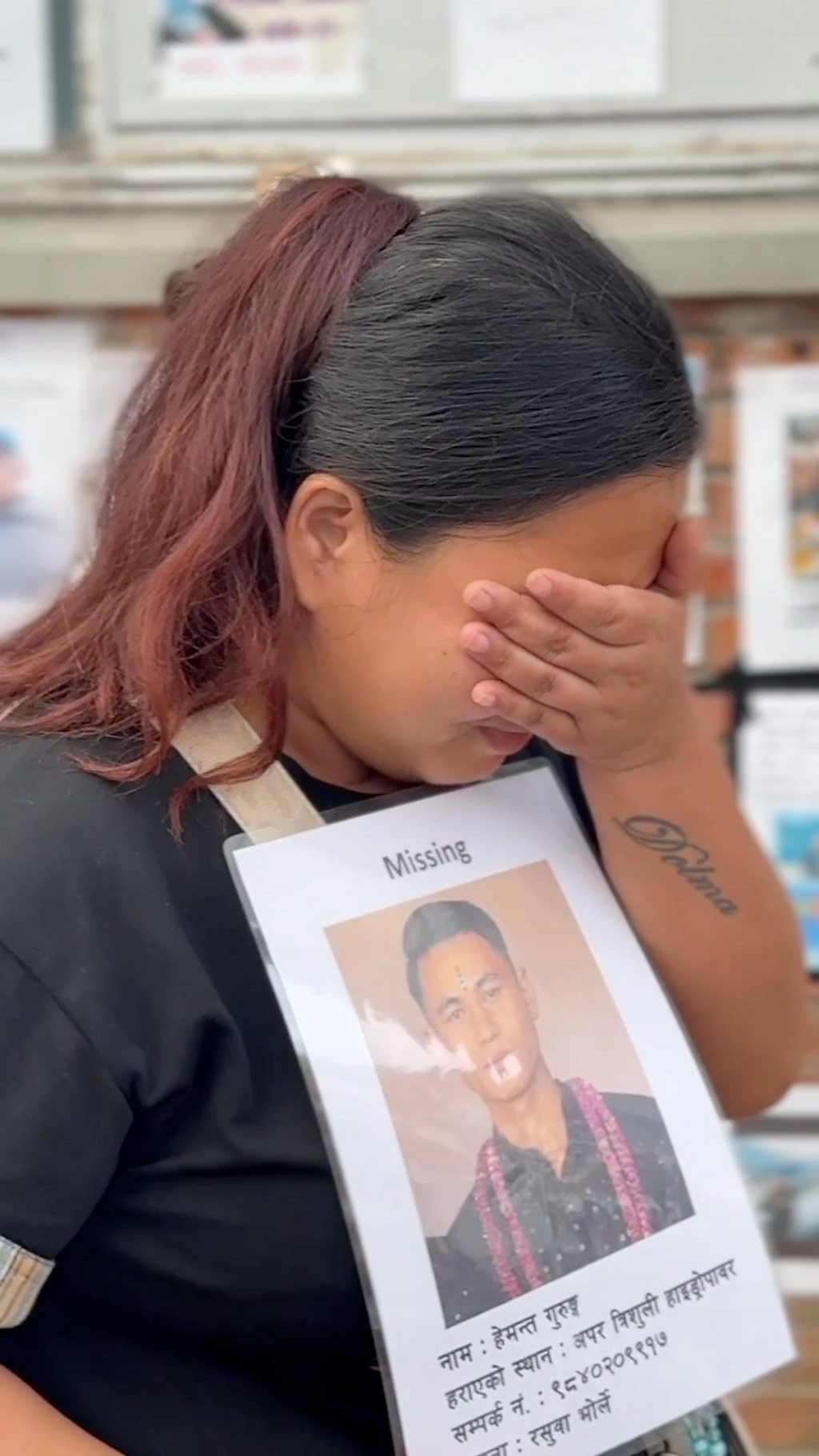
    When reporters visited, staff wheeled in a cot holding premature twin girls, born two months early to 22-year-old Shakila. One weighed just 2 kilograms, the other only 1kg. Both were placed immediately on oxygen, in critical condition. Their grandmother Gulbadan explained that Shakila had almost nothing to eat during her pregnancy, surviving on only bread and tea – that is why the babies were born so small and sick. A few hours after reporters left the hospital, the heavier of the two twins died before she could even be given a name. “The doctors tried everything, but she didn’t make it,” Gulbadan said the next day. “I wrapped her tiny body and brought her home. When her mother found out, she fainted. I just pray the other one survives.”

    Neonatal nurse Fatima Husseini says that on some days, up to three babies die in the unit. “When I started working here, it broke my heart every time a child died,” she says. “Now, it has become normal. We see it so often.” Dr Muhammad Mosa Oldat, head of the unit, says the infant mortality rate here reaches as high as 10% – a figure he calls “completely unacceptable.” “Every day, more and more malnourished babies are brought in, but we do not have the resources to treat them properly,” he says.

    In the paediatric intensive care unit, six-week-old Zameer is fighting for his life against meningitis and pneumonia – both easily treatable conditions, but the hospital has no MRI scanner to properly diagnose and manage his case. Even more shockingly, the public hospital does not provide most medications for patients: families have to buy all required drugs from private pharmacies outside, which most cannot afford. “Sometimes we can reuse leftover medicines from families that can afford them, for babies whose parents have no money,” Fatima says.

    Even when stabilised by hospital staff, most poor families cannot afford to keep their children in hospital for ongoing care. Gulbadan’s surviving granddaughter was gaining weight and her breathing had stabilised after a few days, but her family took her home because they could not pay for continuing care. Baby Zameer was also taken home by his parents for the same reason. Now, their tiny bodies will have to fight for survival on their own, with no medical support to help them.

  • ‘Like madmen’: Palestinian family attacked in their sleep by Israeli settlers

    ‘Like madmen’: Palestinian family attacked in their sleep by Israeli settlers

    In the pre-dawn darkness of Sunday, a brutal assault by dozens of Israeli settlers upended the life of the Shalalda family in the al-Daraja region, just east of the West Bank city of Hebron, leaving four family members injured and deepening a long-running pattern of settler intimidation designed to push Palestinians off their ancestral land.

    The attack began around 3 a.m., when Mohammed Shalalda, who was sleeping on the roof of his family’s decades-old home, woke to the sound of intruders. Before he could fully register what was happening, more than 15 settlers dragged him from his sleeping spot, beating him repeatedly with kicks and wooden clubs even as his blood soaked the ground.

    “I started screaming to wake the residents and rescue me, but the settlers put a blanket over me and continued beating me violently. I was bleeding, and I didn’t know where the bleeding was coming from; my whole body was their prey,” Shalalda told independent outlet Middle East Eye in an interview after the assault.

    During the beating, the settlers repeatedly demanded Shalalda tell them where the family’s sheep were kept. When he answered the family had no sheep present that night, they intensified the attack, spraying tear gas directly into his face from canisters they had brought to the scene.

    Hearing his brother’s screams from inside the home, 36-year-old Amer Shalalda rushed outside to intervene. The settlers turned on him too, beating him severely before tying a rope around his neck. Seeing his brother being attacked, a badly injured Mohammed Shalalda shouted at the group, prompting one settler to pull a knife from his pocket and stab Shalalda in the leg — the same leg that was targeted in a previous settler attack.

    As neighbors attempted to intervene, the number of attacking settlers grew, eventually splitting into five separate groups of at least 10 people each. Inside the home, 60-year-old Suad Shalalda and her 20-year-old daughter Arwa, who had been woken by the screams of Mohammed and Amer, initially hid inside, too afraid of being attacked to venture outside. Their safety did not last, however: the settlers soon stormed the home, ransacking every room.

    Arwa Shalalda grabbed her phone to call for emergency help, but a settler snatched the device from her hand before she could make a call. When Suad Shalalda pushed the intruder away to protect her daughter, he shoved her forcefully into a wall, cutting her head open when her skull struck the plaster. Another settler struck Arwa in the head, leaving a deep gash, before the group sprayed gas directly into the women’s faces, targeting their eyes. Before leaving, the settlers smashed all mobile phones they found in the home to eliminate any evidence of the attack.

    Eventually, a growing crowd of local residents gathered to chase the settlers off the property. The attackers fled before they could steal the family’s livestock, but not before leaving a trail of injury and destruction across the home.

    The Shalalda family has lived and worked as livestock farmers in al-Daraja for more than 35 years, but they have faced repeated, near-fatal attacks from Israeli settlers seeking to claim the land for settlement expansion. Despite the violence, the family says they have no intention of leaving the only home they have ever known.

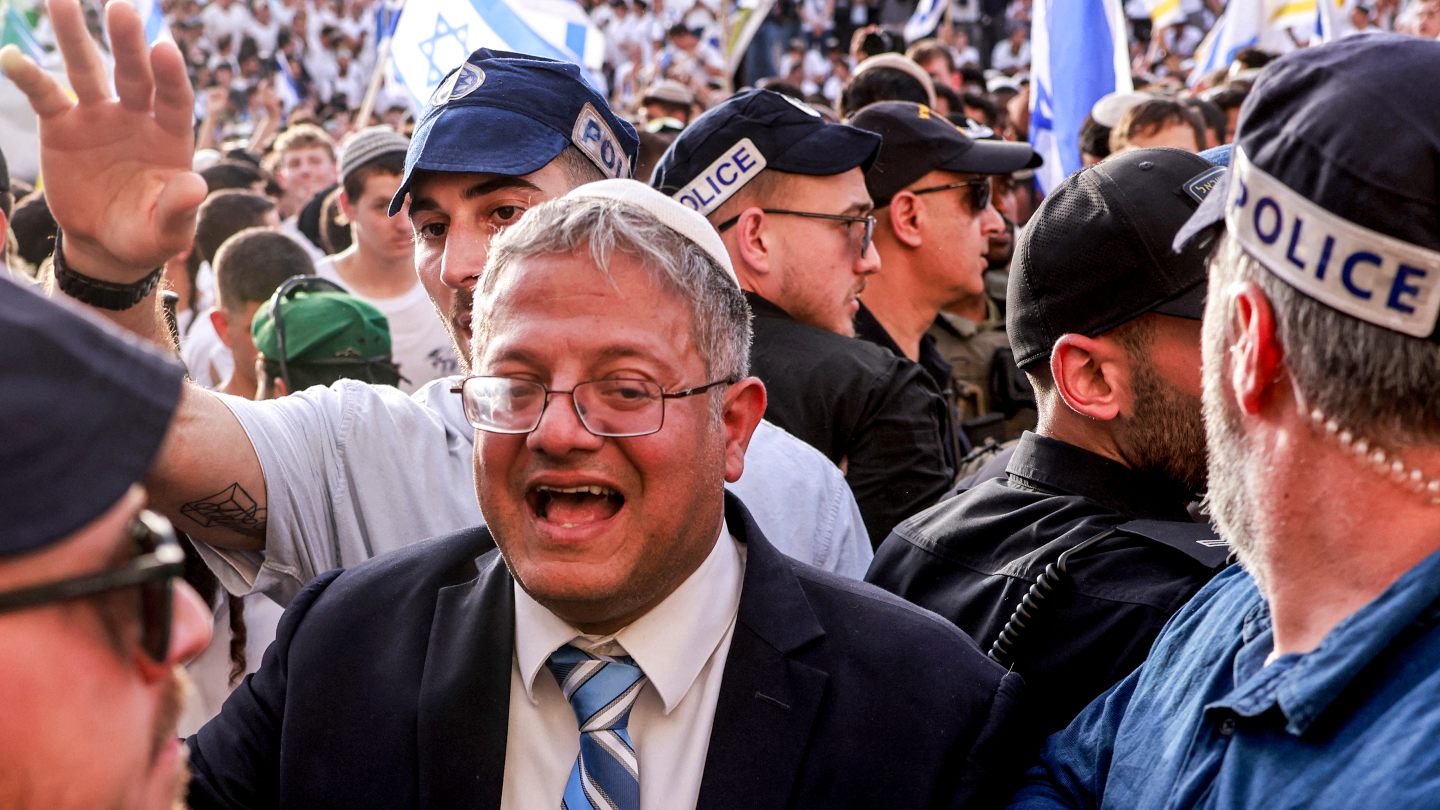
    “There’s no leaving from here. We have nowhere else to live but this area where we built our homes, raise our sheep, and make our living from farming. This attack is not the first against us, and it won’t be the last,” Mohammed Shalalda said. Suad Shalalda added that leaving would only achieve the goal of far-right Israeli National Security Minister Itamar Ben Gvir, whose policies have enabled and encouraged settler harassment of Palestinian communities across the West Bank. “They were like madmen, wreaking havoc in the house. I didn’t know what to do,” she told Middle East Eye.

    Al-Daraja is an open rural agricultural area on the eastern edge of Sair, bordering desert grazing lands, and holds strategic value for its fertile farmland, designated grazing areas, and historic herding routes. In recent years, and especially since October 2023, the eastern districts of Sair — including al-Daraja, Wadi Sair, and Jorat al-Khail — have emerged as major flashpoints for rising settler violence, as groups push to expand existing settlement outposts and the nearby formal settlements of Asfar and Kodovim.

    Settlers in the region have carried out a systematic campaign of intimidation to force Palestinian communities out: they block farmers and herders from accessing their land, remove residents at gunpoint from grazing areas and agricultural roads, set fire to olive, almond, and grape orchards, cut down mature trees with chainsaws, steal livestock, and harass Bedouin and pastoral communities to pressure small Palestinian population centers to relocate.

    Data from a recent report by the Palestine Liberation Organisation’s (PLO) Department of Labour and Planning underscores the dramatic surge in this violence. The report recorded 799 separate attacks by Israeli settlers against Palestinian civilians and their property in April 2025, representing a 135% increase compared to the same month in 2024. Between the start of 2025 and early May, 18 Palestinians have been killed by settlers, most from gunshot wounds. In April alone, there were 37 separate shooting attacks targeting Palestinians, settlers uprooted or destroyed 2,414 Palestinian-owned trees, and stole or slaughtered 488 head of livestock belonging to local farmers. Settlers also damaged 53 vehicles by arson and stone throwing, burned and destroyed five Palestinian homes, agricultural facilities, and service structures near Jerusalem and Nablus, and attempted to establish 20 new settlement outposts in April — the highest number of new outpost attempts recorded in a single month.

    As of the end of 2024, approximately 778,000 Israeli settlers reside in occupied East Jerusalem and the West Bank, alongside an estimated 3.4 million Palestinians, according to United Nations data. The surge in settler violence has been widely linked to the expansionist policies of Israel’s current far-right government, which has relaxed restrictions on settler activity and formalized dozens of previously unauthorized outposts.

  • MPs question lack of action on hate speech at Tommy Robinson’s anti-Muslim rally

    MPs question lack of action on hate speech at Tommy Robinson’s anti-Muslim rally

    A mass far-right rally organized by notorious convicted extremist Tommy Robinson in central London has sparked widespread outrage across British Muslim communities and political circles, with critics slamming the UK government for its failure to publicly denounce virulent anti-Muslim rhetoric delivered from the event’s main stage.

    Held Saturday and drawing an estimated crowd of 60,000 attendees, the “Unite the Kingdom” rally was led by Stephen Yaxley-Lennon, better known by his pseudonym Tommy Robinson — a far-right activist with a long rap sheet that includes convictions for violence, fraud, and contempt of court. Footage captured at the event captured Robinson making a series of inflammatory, anti-Muslim remarks: he told attendees he would “stop Islam” if he took national power, called for a mass “remigration” policy that would force ethnic and religious minorities out of the country, and demanded the military be deployed to remove migrants from government-funded accommodation hotels. Robinson went even further, declaring publicly that “it’s time for many Muslims to leave this country,” and urged the gathered crowd to prepare for what he framed as a coming “battle of Britain.”

    Robinson was not the only speaker to spread anti-Muslim animus at the rally. Kellie-Jay Keen-Minshull, who goes by the name Posie Parker and leads a small fringe group called the Party of Women, told the crowd that “it is not too late to get Islam out of every single official office in this country… we have to remove Islam from every single place of authority.” In a widely condemned stunt, three members of French anti-Islam far-right group Collectif Nemesis took the stage wearing full burqas as a deliberate mockery of Muslim women who choose to wear the Islamic veil. Alice Cordier, the group’s founder, told the crowd the movement stands “alone against the system that wants to destroy our Christian civilisation,” doubling down on the group’s open anti-migrant and Islamophobic ideology.

    In the aftermath of the rally, Muslim civil society organizations and cross-party political figures have launched sharp criticism of the UK government, which has not issued any formal condemnation of the anti-Muslim remarks made from the stage. While Prime Minister Keir Starmer did criticize the rally in advance of the event, warning “I will not let the likes of Tommy Robinson use their hate to drag our country backwards,” no senior minister has publicly addressed the specific hate speech delivered during the gathering.

    Independent Member of Parliament Ayoub Khan, speaking to independent news outlet Middle East Eye, rejected attempts to frame the remarks as ordinary heated political debate, arguing that the comments amounted to open, public anti-Muslim agitation. “Any government that fails to respond decisively to such rhetoric is failing in its basic duty to protect equal citizenship and public safety,” Khan said. “Ministers cannot claim to oppose extremism while remaining silent as an entire minority community is demonised in plain sight.”

    Fellow MP Iqbal Mohamed echoed that criticism, noting that speakers faced no immediate pushback from the government after calling for the exclusion of Muslims from public life, demanding Muslims leave the country, and mocking Muslim women’s religious clothing. “That tells you all you need to know about this government’s stated commitment to combatting Islamophobia,” Mohamed said, adding that political leaders have a clear responsibility to speak out consistently and take meaningful action against all forms of bigotry, including anti-Muslim hate.

    Baroness Shaista Gohir, a member of the House of Lords and CEO of Muslim Women’s Network UK, condemned the burqa mocking stunt as a deliberate act of public humiliation. “It was deliberate humiliation of Muslim women and a public display of anti-Muslim hostility aimed at dehumanising visibly Muslim women and reducing their religious dress to a source of ridicule and contempt,” Gohir said. “Such stunts have a direct and harmful impact on the safety and well-being of Muslim women.”

    Leading national Muslim organizations have amplified these calls for action, demanding the Metropolitan Police launch a full investigation into the rally speakers’ comments as potential incitement to religious hatred. The Muslim Council of Britain (MCB), the UK’s largest umbrella group for Muslim communities, said Robinson’s remarks were not protected political speech — they were criminal incitement. The group questioned why this virulent hate targeting Muslims is tolerated, when comparable rhetoric directed at any other minority community would almost certainly result in prosecution and immediate political condemnation.

    The Muslim Engagement and Development Initative (Mend) also condemned the rally’s rhetoric as incitement to religious hatred and violence against British Muslims, and announced it would file a formal request with the Metropolitan Police to obtain the force’s internal legal assessment explaining why no rally speakers had been arrested on hate crime charges. Thus far, Metropolitan Police have confirmed 20 total arrests were made at the rally, nine of which were for alleged hate crimes — but none of those arrests targeted the event’s featured speakers.

    The criticism over government silence comes amid ongoing scrutiny of UK policing and political responses to protests, with critics pointing to a stark contrast in how the government and police handled a simultaneous pro-Palestine Nakba Day march also held in London the same day. Three arrests were made at the pro-Palestine gathering: one for carrying a sign reading “Globalise the intifada” (a slogan recently criminalized under UK public order law), a second for a sign reading “We will not surrender, victory or martyrdom,” and a third for displaying support for Palestine Action, a direct action group the government banned as a terrorist organization last year.

    Ahead of the far-right rally, the government had announced it had barred 11 foreign far-right agitators from entering the UK to attend the event, including high-profile Colombian-American anti-Muslim campaigner Valentina Gomez. Middle East Eye, which first reported on the post-rally criticism, has reached out to the Metropolitan Police for comment on the calls for an investigation into the rally speakers’ remarks, and had not received a response as of publication.

  • ‘We have to remove Islam’: Social media reacts to racist speeches at Unite the Kingdom rally

    ‘We have to remove Islam’: Social media reacts to racist speeches at Unite the Kingdom rally

    On a Saturday in mid-May 2026, central London played host to two contrasting mass demonstrations, alongside the season’s FA Cup Final, stretching city policing resources as a far-right rally organized by British anti-Islam activist Tommy Robinson drew widespread condemnation for overtly hate-filled rhetoric targeting the UK’s Muslim community.

    Organized under the banner “Unite the Kingdom”, the rally led by Robinson – whose legal name is Stephen Yaxley-Lennon – drew an estimated crowd of 60,000 attendees, according to Metropolitan Police figures. This marked a sharp drop from the 150,000 attendees that turned out for Robinson’s September 2024 demonstration, signaling declining public traction for his movement despite the inflammatory messaging on display.

    At the same time the far-right gathering got underway, pro-Palestine organizers held their annual Nakba Day commemoration across the city, marking 78 years since the forced displacement of roughly 750,000 Palestinians during the establishment of the state of Israel. In total, more than 4,000 Metropolitan Police officers were deployed across London to manage all three major public events. By the end of the day, officials confirmed a total of 43 arrests across the two protests, with 20 of those taken into custody at Robinson’s rally facing charges that include public order violations, drunk and disorderly conduct, criminal property damage, and possession of an offensive weapon.

    Robinson opened his remarks by framing the event as a call for political organizing, urging attendees to register to vote ahead of upcoming elections. But his rhetoric quickly turned to division, asking the crowd if they were “ready for the battle of Britain” and warning that without greater grassroots activism from his supporters, “we are going to lose our country forever.” In a post-rally interview with pro-Israel influencer Weronika Rogowska, he doubled down on his anti-Muslim stance, stating that if he gained political power he would “stop Islam” and publicly called for “many Muslims to leave this country” – comments that were quickly labeled incitement to violence by social media users.

    Other speakers at the event amplified the Islamophobic messaging. A delegation from Collectif Nemesis, a French far-right feminist group that opposes immigration and the presence of Islam in Europe, staged a widely criticized performance: three members of the group, including founder Alice Cordier, walked onto the stage wearing full Islamic coverings. They then urged the crowd to chant “take it off” before removing the garments to reveal casual clothing underneath. The stunt drew immediate backlash across social media, with commentators labeling it a deliberate dehumanization of Muslim women. “6% of the UK is Muslim. This is bullying a minority group, pure and simple. It’s gross, despicable racism,” British commentator Harry Eccles wrote in a viral post on X.

    Anti-transgender activist Kellie Jay Keen also drew fierce criticism for her remarks, telling the crowd that the UK can only be “saved” if Islam is removed from every position of public authority. Many observers noted that such open targeting of a religious community would almost certainly lead to prosecution and widespread condemnation if directed at any other group, highlighting what they call growing normalization of anti-Muslim racism in British public life.

    The Muslim Council of Britain (MCB) released an official statement condemning the rally, questioning why such inflammatory rhetoric is tolerated when directed at Muslim communities. “We ask a simple question of the authorities, political leaders, and broadcasters: why is this rhetoric tolerated and even defended when it comes to Muslims, when the equivalent, directed at any other group, would rightly be met with prosecution, condemnation, and unequivocal political consequence?” the MCB asked, calling on the Home Office to launch a formal investigation into the speeches as incitements to religious hatred.

    Human rights experts echoed these criticisms. Alonso Gurmendi, a human rights fellow at the London School of Economics, noted that the stage stunt perpetuates dangerous false narratives that frame the oppression of Muslim women as “liberation,” putting all Muslim women at greater risk of targeted harassment and violence. Multiple Muslim members of the public also shared their distress online, with one Muslim woman writing that the “sickening behaviour” had no place in her home country of England.

    Critics also targeted the UK government and Prime Minister Keir Starmer for what they see as a deliberate silence on the rally’s hate speech. While Starmer’s administration did block 11 far-right figures from entering the UK to attend the event – including high-profile anti-Islam campaigner Valentina Gomez – no senior government official has publicly condemned the content of the speeches. Social media users have specifically called out Home Secretary Shabana Mahmood, who previously labeled pro-Palestine protests “hate marches”, for her silence on the far-right rally. As of publication, the Home Office and Mahmood have not responded to requests for comment from Middle East Eye.

    Police officials noted that while the events were largely contained, officers again faced targeted abuse from attendees of the Unite the Kingdom rally, in particular Muslim officers. “yesterday we saw more of the same” abuse targeting Muslim officers, a Metropolitan Police spokesperson said, referencing a similar pattern of abuse recorded at prior far-right gatherings.

  • A new Swatch model is introduced, and a case study in overexcited ‘drop culture’ plays out

    A new Swatch model is introduced, and a case study in overexcited ‘drop culture’ plays out

    Across major global cities, chaotic scenes unfolded this weekend over the launch of Swatch’s highly anticipated collaboration with luxury watchmaker Audemars Piguet, the Royal Pop bioceramic pocket watch. From violent crowd control measures in France to fistfights in Italy and all-night snaking lines outside retail locations in London, Singapore, and New York, the launch has become the latest flashpoint for modern “drop culture” where coveted limited-edition status symbols collide with lucrative resale market opportunities.

    At the center of the global mania is a timepiece that retails for approximately $400, but was being flipped within hours for thousands of dollars on secondary platforms. By the first business day after the launch, dozens of Royal Pop listings had already appeared on eBay, with one seller advertising an “IN HAND” unit for 3,055.58 British pounds, equal to more than $4,000, and inviting best offers from interested buyers.

    This frenzy marks a noticeable shift from the hyped product drops that defined Swatch and other major brands over the past generation, according to industry analysts. Pierre-Yves Donze, a business history professor at Osaka University Graduate School of Economics, explained that unlike earlier drops where buyers pursued collectibles out of genuine fandom, today’s rush is almost entirely driven by the prospect of quick profit.

    “It looks like people got crazy to get a Royal Pop to make money through resale, not because they are fans of the Swatch,” Donze noted. “People want money, especially. Royal Pop is not like a cool product, but a way to make easy money.”

    Swatch, which has decades of experience leveraging hype around new product launches, moved quickly to calm the frenzy. The Swiss watchmaker confirmed Monday that there is no supply shortage of the Royal Pop, pushing back against the narrative that the timepiece is extremely limited. The company noted that launch-day disruptions were only reported in roughly 20 of its 220 global stores that rolled out the new watch, attributing the issues to unexpectedly large turnout that overwhelmed shopping mall infrastructure, not limited stock.

    Social media has amplified the hype dramatically: the company reported that content tagged for the Royal Pop has accumulated more than 11 billion views across major platforms since the launch was announced. This mirrors the 2022 MoonSwatch launch, a collaboration between Swatch and its sister luxury brand Omega that sparked similar global in-store rushes amid pandemic restrictions. Swatch’s history of hype dates all the way back to the 1980s, when it revolutionized the watch industry with affordable, mass-produced, fashion-forward timepieces that broke from the tradition of expensive heirloom watches.

    This year’s launch brought far more disruption than many industry observers expected. In London, the iconic Carnaby Street and Oxford Street Swatch stores saw crowds of dozens of people block sidewalks ahead of opening Sunday, prompting local police to close all Swatch locations across London and multiple other U.K. cities. Similar disruptions were reported across Europe and North America: stores were shuttered across the Netherlands, and New York’s Times Square location developed what attendees described as a “mosh pit” vibe.

    In France, the situation escalated to require riot control measures. The French national police service confirmed that officers deployed tear gas grenades and spray to disperse unruly crowds outside multiple Swatch boutiques. At the large Westfield Parly 2 shopping mall west of Paris, television footage showed officers in riot gear and helmets stationed outside the shuttered Swatch outlet. In Lyon, officers used a tear gas grenade after the crowd ignored repeated orders to disperse from the city’s central Bellecour Square, while municipal police in Montpellier deployed tear gas spray. Swatch’s French division announced via Instagram that six stores would close for the day “because of public security considerations.”

    Unlike many modern brands that have moved hyped product drops entirely online to avoid safety and liability risks, Swatch chose to release the Royal Pop exclusively through in-store retail locations, a decision that industry critics say amplified the frenzy. The exclusive in-person model created perfect conditions for resellers to monopolize initial stock, driving up the potential profits for those who managed to secure a watch early. Reports from launch weekend noted sporadic injuries, multiple arrests, and minor property damage connected to the overcrowded crowds.

    London-based fashion and cultural critic Odunayo Ojo noted that most streetwear and sneaker brands abandoned in-person exclusive drops years ago over safety concerns. “Either Swatch ‘didn’t get the memo,’ he said, underestimated the draw to the new product or strategically hyped the drop to pump sales. Swatch already has a track record of understanding how these things go,” Ojo explained on his YouTube channel Fashion Roadman.

    By Monday, the long lines outside most Swatch locations had dissipated, with onlookers in Paris noting that most initial stock had already sold out. In a public reassurance to consumers, Swatch confirmed that the Royal Pop will remain available for purchase through retail locations for months to come, with new shipments already en route to restock stores around the world.

  • Iran’s nuclear project is ‘unchanged’, says senior ex-Israeli intelligence officer

    Iran’s nuclear project is ‘unchanged’, says senior ex-Israeli intelligence officer

    A stark, bombshell assessment from a former senior Israeli intelligence leader who held a command role during the ongoing US-Israeli war on Iran has pulled back the curtain on a major gap between official allied rhetoric and on-the-ground reality: Iran’s core nuclear infrastructure remains fundamentally intact, despite months of coordinated military strikes.

    Tamir Hayman, currently serving as executive director of Israel’s leading think tank the Institute for National Security Studies, occupied a senior position in Israeli military intelligence through the first two months of the bilateral conflict. His unvarnished findings were laid out in a new policy paper published Sunday, with initial reporting on the analysis first published by Israeli newspaper Haaretz.

    Hayman’s analysis acknowledges that Israeli and US forces secured limited tactical gains from strikes that began in February 2025 and included a 12-day Israeli air campaign in June that targeted deep inside Iranian territory. But he confirms the war’s two central stated objectives—removing the current Islamic Republic government and eliminating Iran’s nuclear program—remain unfulfilled.

    Specifically, the June 2025 Israeli offensive “failed to establish a permanent solution, and Iran demonstrated a rapid and dangerous recovery capability,” Hayman wrote. While the US carried out its first ever direct strikes on Iranian soil during the conflict, damaging three major nuclear sites, Hayman documents that Tehran has already made significant progress restoring its facilities. Key among these recovery efforts is work to rebuild the Fordow enrichment site and speed up construction of a deeply buried site near Natanz known as “Pickaxe Mountain,” which is reportedly engineered to withstand aerial bombardment.

    Beyond nuclear infrastructure, Hayman adds that Iran has sustained a breakneck pace of ballistic missile production, turning out approximately 125 new missiles each month. At the outbreak of the 2025 war, the country already had an accumulated stockpile of 2,500 missiles. The former intelligence official also notes Iran has led a major rebuilding of the Lebanese militant group Hezbollah, which suffered severe casualties in its 2023–2024 conflict with Israel. Tehran has doubled Hezbollah’s operating budget and kept arms supply routes through Syria open, even after the collapse of Bashar al-Assad’s government.

    Hayman explains that Israel’s split strategic goals have been undermined by a structural shift in Iran’s leadership following the assassination of former supreme leader Ayatollah Ali Khamenei. After Mojtaba Khamenei succeeded his father, Iran’s leadership transitioned to a highly decentralized command structure that has made it far harder for allied strikes to decapitate the regime. He also points out that Tehran’s decision to close the Strait of Hormuz—a critical chokepoint through which 20% of the world’s oil and liquefied natural gas flows—gave it major global leverage, forcing the US and international community to shift their priorities to stabilizing energy markets.

    The Israeli former official details that after the assassination of top Iranian leaders, the second phase of the allied campaign was meant to use an unprecedented new approach to destroy Iran’s nuclear program. “The ultimate ‘crown jewel’ – the destruction of the nuclear program – was not fully realised by the time the first lull took effect,” he wrote. Critically, Hayman adds that the new supreme leader Mojtaba Khamenei holds harder-line ideological views than his father, and does not feel bound by the elder Khamenei’s religious edict banning the development of nuclear weapons. “Iran has endured two major wars within a single year, and its leadership’s likely conclusion is that only nuclear deterrence can prevent the next war,” he argued.

    Hayman’s findings do not stand alone: just one week before the release of his policy paper, The New York Times published a report based on classified US intelligence assessments that reached nearly identical conclusions. The assessments, completed earlier this month, contradict repeated public claims from the US and its allies that Iran’s military capabilities have been decimated. According to the Times’ reporting, Iran has regained operational access to 30 out of 33 missile sites located along the Strait of Hormuz, allowing it to once again threaten international commercial shipping and US naval vessels transiting the waterway.

    Anonymous sources familiar with the intelligence assessment told the outlet that Tehran can already move mobile missile launchers within these sites to concealed locations, and in some cases launch missiles directly from the facility launch pads. The US intelligence document estimates that 70% of Iran’s mobile missile launchers remain operational across the country, and the country retains approximately 70% of its pre-war missile stockpile. US military analysts using satellite imagery and other surveillance tools also concluded that Iran has restored access to roughly 90% of its underground missile storage and launch facilities, most of which are now either fully or partially operational.

    These findings directly contradict public statements from US President Donald Trump and other senior US administration officials, who have repeatedly claimed the offensive “decimated” Iran’s military and nuclear infrastructure. When asked to respond to The New York Times report, a White House spokesperson doubled down on the administration’s position, reiterating that Iran had been “crushed” and claiming anyone who believes Iran has rebuilt its military capabilities is either “delusional or a mouthpiece” for Iran’s Islamic Revolutionary Guards Corps.

    The US and Israel launched the current conflict on February 28 with a massive opening wave of strikes across Iran. In response, Tehran launched retaliatory strikes targeting Israeli and Gulf Arab states and carried through on its threat to close the Strait of Hormuz, disrupting global energy supplies.

  • Israel raid of Gaza-bound flotilla near Cyprus sparks outrage

    Israel raid of Gaza-bound flotilla near Cyprus sparks outrage

    In a fresh escalation of actions against humanitarian missions targeting the besieged Gaza Strip, Israeli naval commandos have launched a raid on multiple vessels belonging to the Gaza-bound Global Sumud Flotilla, carrying out the interception in international waters off the coast of Cyprus. The incident comes just four days after the 54-vessel convoy departed Marmaris, Turkey, with the core goal of breaking Israel’s years-long air, land and sea blockade on Gaza that has pushed the enclave into a catastrophic humanitarian collapse.

    In an official statement shared with Middle East Eye shortly after the incursion began, the Global Sumud Flotilla organizing committee confirmed that its entire fleet is currently surrounded and actively targeted by Israeli warships, located approximately 250 nautical miles off Gaza’s coast. The mission described the military encirclement as the opening of yet another unlawful act of aggression on the high seas. Footage released from the scene shows Israeli military vessels circling small civilian aid boats before moving in to seize control of the craft, with activists confirming on the social platform X that Israeli soldiers began boarding the first seized vessel in broad daylight.

    Local Israeli media had already pre-announced the military’s interception plans, noting that the flotilla was projected to reach Gaza’s territorial waters within 48 hours of the raid. Israeli officials have confirmed that all 100 activists on board the seized vessels have been arrested, and the boats will be towed to Israel’s southern Ashdod port for processing. Ahead of the interception, Israeli Prime Minister Benjamin Netanyahu held high-level security consultations with top military and political leaders on Sunday to coordinate the operation, according to Israeli newspaper Israel Hayom. Another leading Israeli outlet, Yedioth Ahronoth, cited an unnamed official source stating that Israeli forces would “control all participants” and transfer detained activists to a so-called “floating prison” while the vessels are impounded.

    This latest interception is not an isolated incident: just one month prior in late April, Israeli naval forces carried out an almost identical raid on another Gaza-bound aid convoy off the coast of Greece, hundreds of nautical miles from the Gaza border. In that earlier attack, roughly 200 activists were detained, multiple vessels were deliberately and systematically disabled to render them immobile, and activists were left stranded in open water. Activists who participated in the April mission reported that Israeli military speedboats approached the convoy before the raid, soldiers pointed laser targeting devices and semi-automatic firearms at unarmed civilian crew members, ordered all on deck to crawl with hands and knees on the ground, and jammed all vessel communications systems to block calls for assistance.

    The Monday raid has already triggered widespread international condemnation, with Turkey’s foreign ministry leading diplomatic pushback against the action. In a formal statement, the Turkish government stressed that “Israel’s attacks and intimidation policies will in no way prevent the international community’s pursuit of justice and solidarity with the Palestinian people,” calling on Israel to immediately halt the ongoing operation and release all detained activists.

    The interception comes amid an ongoing catastrophic humanitarian crisis in Gaza, triggered by Israel’s large-scale military incursion that began in October 2023. To date, official Palestinian health data records at least 72,769 Palestinians killed in Israeli bombardment and ground operations, with thousands more still missing and presumed dead beneath the rubble of destroyed buildings. Israel’s total blockade of the enclave has cut off access to food, clean water, electricity and life-saving humanitarian aid, leading the United Nations and global humanitarian agencies to declare full-scale famine in multiple northern Gaza districts. The vast majority of Gaza’s hospitals, residential homes and schools have been completely destroyed in sustained air and ground attacks. Even after a temporary ceasefire was agreed in October 2023, Israeli air strikes have killed more than 800 additional Palestinians in Gaza, and Israel has continued to violate ceasefire terms by maintaining strict restrictions on aid entry, leaving the territory’s humanitarian emergency completely unresolved.

    Organizers of the Global Sumud Flotilla reiterated in their statement that Israel’s repeated interceptions of unarmed aid convoys in international waters demonstrate a deliberate and systematic disregard for core tenets of international maritime law, the fundamental right to freedom of navigation on the high seas, and the United Nations Convention on the Law of the Sea (UNCLOS), a binding international agreement that Israel is a party to.

  • French judge to probe complaints against Saudi crown prince over Khashoggi killing

    French judge to probe complaints against Saudi crown prince over Khashoggi killing

    Nearly six years after the brutal assassination of Saudi dissident journalist Jamal Khashoggi inside Saudi Arabia’s Istanbul consulate, a French investigating judge will move forward with a formal probe into the killing, multiple sources confirmed to Agence France-Presse on Saturday. The long-awaited investigation follows a years-long legal battle launched by global human rights and press freedom organizations that have accused Saudi Arabia’s de facto leader, Crown Prince Mohammed bin Salman, of direct involvement in the murder.

    Khashoggi, a contributing columnist for The Washington Post and reporter for Middle East Eye who was known for his critical reporting on the Saudi regime, was killed by Saudi agents shortly after he entered the consulate on October 2, 2018. His body was dismembered, and no remains have ever been recovered. In 2021, a declassified U.S. intelligence report publicly concluded that bin Salman had personally ordered the assassination, a finding the crown prince has repeatedly denied, though he has acknowledged the killing occurred on his watch. During a 2025 White House meeting with former U.S. President Donald Trump, he described the incident as “a huge mistake.”

    The legal push in France began in July 2022, when two organizations — Switzerland-based NGO Trial International and Democracy for the Arab World Now (Dawn), an advocacy group Khashoggi founded just months before his death — filed an official criminal complaint accusing bin Salman of complicity in torture, enforced disappearance, and premeditated murder, claiming he directly “ordered the assassination by asphyxiation.” Reporters Without Borders (RSF) later joined the complaint. For years, France’s public prosecutor’s office blocked the investigation, arguing the NGOs’ claims were legally inadmissible. That changed last week, when the Paris Court of Appeal ruled the complaints meet the threshold for investigation, noting that “the possibility that the case could be classified as a crime against humanity could not be ruled out” before a formal probe is completed.

    The case has now been assigned to an investigating judge with specialized expertise in prosecuting crimes against humanity. The judge’s core mandate will be to examine whether the assassination was part of a coordinated, state-level campaign by the Saudi government targeting political dissidents, which would qualify as a widespread or systematic attack against a civilian population under international criminal law.

    While Dawn was unable to gain formal status as a civil party to the proceedings, the organization welcomed the court’s ruling as a critical milestone for accountability. “The crime committed against Jamal Khashoggi is an abominable crime decided and planned at the highest levels of the Saudi state, which had a journalist executed who was a dissenting and independent voice,” said Emmanuel Daoud, legal counsel for RSF. Henri Thulliez, a lawyer representing Trial International, emphasized that France is legally obligated to pursue allegations of torture and enforced disappearance when suspects are present on its territory, adding that “there should no longer be any obstacle to opening a judicial inquiry into the atrocious crime against Jamal Khashoggi.”

    The 2018 killing sparked global condemnation from world leaders, press freedom advocates, and human rights groups, who widely criticized Saudi Arabia’s internal domestic trial over the incident as a sham. The closed-door 2018 trial sentenced five defendants to death and explicitly cleared bin Salman of any involvement, a outcome that rights groups dismissed as an “antithesis of justice” and “a mockery.” For years after the killing, bin Salman faced informal diplomatic isolation among Western leaders, though that has gradually eased in recent years amid shifting geopolitical priorities.

    This development marks the first formal judicial investigation by a Western country into the case, opening a new chapter in the multi-year push for accountability for Khashoggi’s killing.