标签: Asia

亚洲

  • Exclusive: Sole Muslim woman on Trump religious committee resigning in protest

    Exclusive: Sole Muslim woman on Trump religious committee resigning in protest

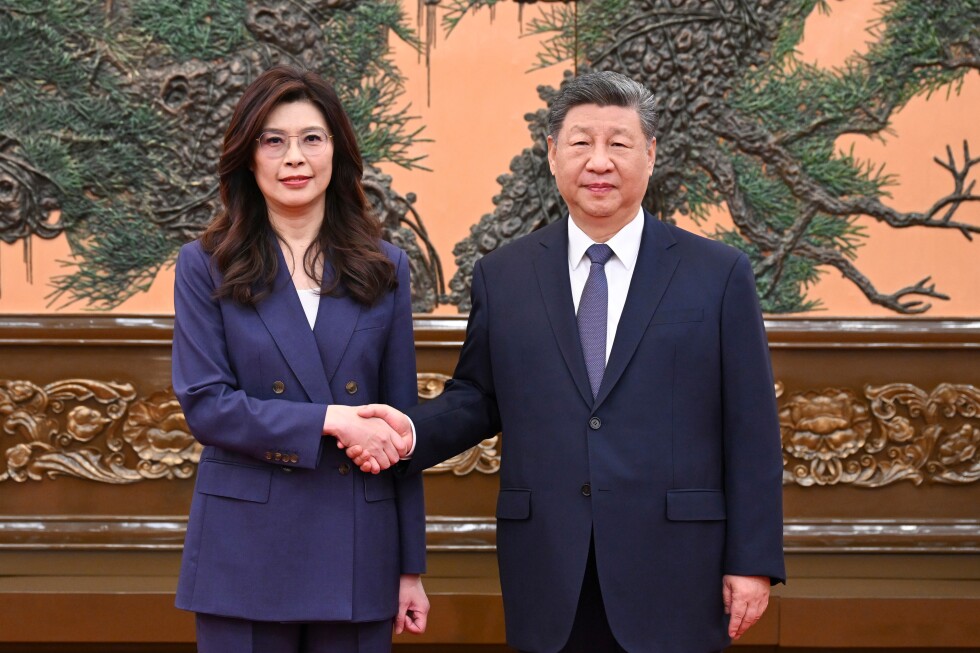
    A significant upheaval is unfolding within President Donald Trump’s Religious Liberties Commission as Sameerah Munshi, the sole Muslim woman serving on its advisory board, has tendered her resignation. Middle East Eye has obtained her resignation letter, which states her departure is a direct protest against the White House’s dismissal of anti-Zionist Catholic commissioner Carrie Prejean-Boller from the panel.

    The controversy stems from Prejean-Boller’s removal, which she revealed via social media platform X, attributing it to her vocal opposition to Israel’s military actions in Gaza and her anti-Zionist stance, which she insists is not antisemitic. This dismissal followed a widely circulated video from a February commission meeting featuring a heated debate where Prejean-Boller argued that Catholicism and Zionism are incompatible.

    In her resignation letter, Munshi powerfully questioned the state of religious freedom, writing, ‘If we are not free in America to abide by our religious beliefs and hold fast to them despite others’ disagreement, then in what country are we free to do so?’ She further leveled serious accusations, claiming certain commission members exhibited hostility and mockery towards the Muslim faith.

    The commission’s structure reveals a notable lack of Muslim representation at the commissioner level, the panel’s top tier. All three involved Muslims, including Munshi, held only advisory roles appointed by the administration. Munshi detailed a pattern of isolation that began after she testified in September 2025 about the constitutional right to protest Israel’s actions in Palestinian territories, after which she claims she was no longer provided witness lists before hearings.

    The bond between Munshi and Prejean-Boller formed following that testimony, with Munshi describing her as a rare conservative who ‘really respects Muslims.’ Munshi’s resignation is also motivated by the recent U.S.-Israeli military action against Iran, which her letter condemns as ‘unlawful killing of children and civilians.’

    Allegations from a Heritage Foundation member suggested Munshi provided Prejean-Boller with talking points, which Munshi firmly denied, explaining she was merely recording as requested to ensure her colleague’s comments were captured. Prejean-Boller, emotionally recounting her experience to MEE, stated she felt compelled to speak for Palestinians and described her removal as ‘un-American,’ expressing absolute disgust with the president for what she sees as a betrayal of the American people and the Constitution.

    The commission now faces scrutiny from lawmakers from both parties investigating potential violations of the Federal Advisory Committee Act (FACA) concerning balance, transparency, and fair representation, compounding existing legal challenges from religious groups questioning the panel’s motives.

  • Israel targets building in central Beirut in new wave of strikes

    Israel targets building in central Beirut in new wave of strikes

    BEIRUT – Israeli military forces conducted a new wave of airstrikes in central Beirut on Thursday, specifically targeting locations allegedly associated with Hezbollah operations. The bombardment represents a significant escalation in the ongoing conflict between Israel and the Lebanese militant group.

    The Israeli military issued pre-strike warnings urging residents to evacuate specific buildings in the Bachoura and Zkak al-Blat districts. One of the targeted structures housed a branch of Al-Qard Al-Hassan, an institution Israel identifies as Hezbollah’s financial apparatus for weapons procurement and fighter compensation.

    The precision strikes triggered widespread panic among residents, including numerous families who had previously fled from other conflict zones and sought refuge in central Beirut. The attacks have exacerbated the humanitarian crisis unfolding in Lebanon.

    According to Lebanon’s Public Health Ministry, the death toll from Israeli operations has reached 687 since March 2, with 1,774 individuals sustaining injuries. The ministry further reported that 18 paramedics have been killed and 45 others wounded in the ongoing hostilities.

    Lebanese Prime Minister Nawaf Salam addressed the deteriorating situation, pledging government efforts to halt the conflict and facilitate the safe return of displaced citizens. “We will work around the clock to stop this war and enable you to return to your homes as soon as possible, to a safe and dignified return,” Salam stated in a public address.

    The current escalation began on March 2 when Hezbollah launched rockets toward Israel, breaking a ceasefire that had been in effect since November 27, 2024. Israel responded with what it described as an “offensive military campaign” involving extensive airstrikes on Beirut’s southern suburbs, southern and eastern Lebanon regions, and ground incursions along the border areas.

  • Iran war brings history’s largest oil supply disruption, says IEA

    Iran war brings history’s largest oil supply disruption, says IEA

    The International Energy Agency (IEA) declared on Thursday that military actions against Iran have triggered the most severe supply disruption in global oil market history. According to the agency’s monthly market assessment, joint U.S.-Israeli airstrikes initiated on February 28 have created unprecedented volatility, with Brent crude futures approaching $120 per barrel amid critical supply chain interruptions.

    The strategic Strait of Hormuz, traditionally facilitating approximately 20% of global oil transit, has experienced catastrophic declines in tanker traffic. Gulf nations are now compelled to slash production capacities as storage facilities reach maximum capacity. IEA Executive Director Fatih Birol characterized the situation as requiring “emergency collective action of unprecedented size” as 32 member nations unanimously agreed to release 400 million barrels from strategic petroleum reserves.

    Market tensions intensified substantially when Iran’s new Supreme Leader Mojtaba Khamenei vowed to maintain the Strait’s closure indefinitely. Concurrently, Iraq suspended all terminal operations following attacks on two vessels off its coast, with Iranian forces claiming responsibility for targeting a U.S.-affiliated tanker.

    The conflict’s environmental consequences have raised international concern, as the World Health Organization warned populations about exposure to toxic chemicals from black rain and acidic precipitation resulting from bombed energy infrastructure. Amnesty International’s regional director Heba Morayef emphasized that attacks on energy installations potentially violate international humanitarian law, creating “devastating civilian harm including uncontrolled fires, essential service disruptions, and severe long-term health risks for millions.”

    The convergence of supply constraints, military actions, and environmental hazards has created a multidimensional crisis with far-reaching implications for global energy security and economic stability.

  • A young party led by a rapper wins a huge mandate – and Nepal steps into the unknown

    A young party led by a rapper wins a huge mandate – and Nepal steps into the unknown

    Nepal stands at a political crossroads following a seismic electoral shift that has fundamentally reshaped the nation’s governance landscape. The Rastriya Swatantra Party (RSP), led by rapper-turned-politician Balendra Shah, has achieved an unprecedented majority victory, overturning decades of established political dominance in a stunning display of public discontent.

    The four-year-old party’s triumph represents a profound rejection of Nepal’s political establishment, symbolized by Shah’s personal victory over former Prime Minister KP Sharma Oli in Jhapa 5—a constituency long considered an Oli stronghold. This electoral earthquake has shattered entrenched power structures and propelled a movement built on anti-corruption sentiment and demands for systemic reform into the highest echelons of government.

    Despite the jubilation among RSP supporters who expressed exhaustion with perceived corruption and political paralysis, the victory introduces significant governance uncertainties. The party now faces the formidable challenge of transitioning from a campaigning force to a governing entity while managing extraordinarily high public expectations for rapid transformation.

    Key policy priorities outlined by the RSP include comprehensive anti-corruption measures, judicial reform, and economic revitalization. The party has pledged to investigate assets accumulated by political figures since the 1990s, with promises to nationalize illegally acquired properties. Judicial reforms would eliminate political appointments of judges and potentially introduce live-streamed trials to enhance transparency.

    Economic challenges present particularly daunting obstacles. With youth unemployment hovering around 20% and approximately three million Nepalis working overseas, the RSP has committed to achieving 7% annual GDP growth to transform Nepal into a $100 billion economy within five to seven years. However, World Bank projections indicate growth of only 4.6% for 2025, with forecasts suggesting further slowing due to political instability, tourism declines, and natural disasters.

    The Middle East conflict introduces additional economic vulnerability, as remittances from Nepali workers abroad constitute over a quarter of the nation’s GDP. Any disruption to these financial flows could create severe economic consequences.

    Internally, the RSP must maintain cohesion among its diverse parliamentary representatives who lack extensive governance experience. Constitutional expert Bipin Adhikari notes that the party’s ‘very new’ politicians without ‘background in statecraft’ may struggle with unified governance implementation.

    Geopolitical navigation presents another critical challenge. Wedged between India and China, Nepal must maintain balanced relationships with both regional powers while adhering to its constitutional mandate against security partnerships. The United States’ watchful presence adds another layer of diplomatic complexity to an already challenging foreign policy landscape.

    As the RSP assumes leadership, the party confronts the immense responsibility of delivering tangible results to a population that has demonstrated both its hunger for change and its willingness to hold leadership accountable. The coming months will test whether this political movement can transform revolutionary energy into effective governance.

  • Netflix announces KPop Demon Hunters’ sequel

    Netflix announces KPop Demon Hunters’ sequel

    Netflix has officially confirmed production of a sequel to its record-breaking animated feature ‘KPop Demon Hunters,’ the platform’s most-watched film in history. The announcement arrives amid significant awards season momentum for the original production, which has received two Oscar nominations ahead of Sunday’s Academy Awards ceremony.

    The sequel represents the inaugural project under co-directors Maggie Kang and Chris Appelhans’ newly signed exclusive multi-year creative partnership with Netflix. This strategic collaboration signals the streaming giant’s continued investment in animated content with global appeal.

    The original Sony Pictures production, which follows fictional K-pop girl group Huntr/x as they navigate dual lives as pop idols and supernatural demon hunters, has achieved remarkable critical and commercial success. The film’s soundtrack has already made music history, with the song ‘Golden’ securing a Grammy Award for Best Song Written for Visual Media—marking the first time a K-pop composition has received this prestigious honor.

    Director Maggie Kang expressed profound cultural significance in the project’s continuation, stating via Netflix’s social media announcement: ‘I feel immense pride as a Korean filmmaker that the audience wants more from this Korean story and our Korean characters. There’s so much more to this world we have built and I’m excited to show you. This is only the beginning.’

    The sequel decision demonstrates Netflix’s commitment to expanding successful intellectual properties while celebrating diverse cultural narratives. The combination of K-pop’s global popularity with supernatural animation elements has proven to be a winning formula that resonates across international markets.

  • Iceland and Netherlands intervene in ICJ South Africa v Israel genocide case

    Iceland and Netherlands intervene in ICJ South Africa v Israel genocide case

    In a significant development at the International Court of Justice (ICJ), Iceland and the Netherlands formally submitted declarations to intervene in South Africa’s genocide case against Israel on Thursday. This brings the total number of nations seeking participation in these landmark proceedings to eighteen.

    The two European countries filed their interventions under Article 63 of the ICJ statute, a provision enabling state parties to a convention under legal scrutiny to present their interpretive perspectives on the treaty in question. The case centers on allegations that Israel’s military operations in Gaza since October 2023 violate the 1948 Genocide Convention.

    This legal action originated when South Africa initiated proceedings in December 2023, accusing Israel of genocidal acts through its Gaza campaign that has resulted in over 70,000 Palestinian casualties, predominantly women and children. South Africa’s submission contends that Israel’s military operations constitute genocide through systematic killing, infliction of severe physical and psychological harm, and the creation of conditions designed to physically destroy the Palestinian population—charges that Israel vehemently denies.

    The interventions coincide with Israel’s scheduled submission of its counter-memorial on Thursday, presenting its legal arguments responding to South Africa’s allegations after the court granted several deadline extensions. Judicial authorities have yet to confirm the filing’s receipt.

    The growing coalition of intervening states now includes Colombia, Libya, Mexico, Palestine, Spain, Turkey, Chile, the Maldives, Bolivia, Ireland, Cuba, Belize, Brazil, the Comoros, Belgium, and Paraguay. Palestine and Belize have additionally sought intervention under Article 62, which permits state participation when a nation believes its legal interests might be affected by the court’s determination.

    In their legal submissions, Iceland emphasized that the Genocide Convention must be interpreted to support its fundamental objective of preventing and punishing genocide. The Nordic nation argued that genocidal intent can be inferred from behavioral patterns rather than requiring direct evidence, noting that deprivation of essential resources like food, shelter, and medical care could constitute conditions intended to destroy protected groups, with particular vulnerability accorded to children.

    The Netherlands similarly advocated for the consideration of conduct patterns and circumstantial evidence in establishing genocidal intent, suggesting that forced displacement and obstruction of humanitarian assistance might constitute Convention violations depending on contextual circumstances.

    Both nations clarified that their interventions addressed strictly matters of treaty interpretation rather than factual allegations specific to the case. These proceedings have attracted unprecedented international attention, becoming one of the most closely monitored cases in ICJ history with an extraordinary number of third-state interventions.

    The World Court has previously issued binding provisional measures requiring Israel to implement preventive measures against potential Genocide Convention violations and facilitate humanitarian access to Gaza, though it stopped short of mandating a ceasefire. Israel stands accused of repeatedly disregarding these judicial orders.

    Legal experts project that a definitive ruling on whether Israel breached the Genocide Convention might not materialize until 2028, indicating a protracted legal battle ahead at The Hague.

  • Nation urges immediate ceasefire in Mideast

    Nation urges immediate ceasefire in Mideast

    The Middle East crisis has intensified dramatically with no resolution in sight, as global powers remain deeply divided on conflict resolution approaches. Chinese Foreign Minister Wang Yi has issued a forceful appeal for an immediate ceasefire during diplomatic communications with Egyptian counterpart Badr Abdelatty, emphasizing that prolonged hostilities would inflict severe humanitarian suffering and economic devastation across the region.

    Wang, representing China’s position as a responsible global actor, stressed that Beijing and Cairo share common ground in advocating peaceful dialogue over military confrontation. The Chinese diplomat confirmed China’s commitment to maintaining coordination with regional nations to facilitate constructive peacemaking efforts.

    The Egyptian leadership expressed appreciation for China’s balanced diplomatic stance while confirming Cairo’s readiness to collaborate closely in de-escalation initiatives. This diplomatic exchange occurs against a backdrop of escalating violence that has claimed approximately 2,000 lives since joint US-Israeli strikes targeted Iranian interests nearly two weeks ago.

    Iranian President Masoud Pezeshkian has established explicit conditions for conflict termination, demanding international recognition of Iran’s legitimate rights, substantial reparations, and ironclad security guarantees against future aggression. Conversely, US President Donald Trump has declared military victory and promised to complete operational objectives.

    The economic ramifications have reached critical levels, with Iran effectively closing the strategically vital Strait of Hormuz—a maritime passage handling twenty percent of global oil shipments. This blockade has triggered unprecedented market disruptions, driving crude prices above $100 per barrel despite the International Energy Agency’s historic release of 400 million barrels from emergency reserves.

    Regional security has deteriorated further with Iran threatening strikes against American and Israeli economic assets, including banking institutions and technology corporations, prompting multinational companies to evacuate personnel from the crisis zone.

  • Russell and Mercedes dominate again in qualifying for F1’s China sprint

    Russell and Mercedes dominate again in qualifying for F1’s China sprint

    Mercedes driver George Russell secured a commanding pole position for Saturday’s sprint race at the Chinese Grand Prix, declaring his car “a joy to drive” as the team continued its dominant form in Formula 1’s new regulatory era. Russell’s performance in Shanghai builds upon his decisive victory in Australia last week, with teammate Kimi Antonelli qualifying second to position Mercedes for another potential 1-2 finish.

    The qualifying gap demonstrated Mercedes’ overwhelming advantage, with McLaren’s Lando Norris trailing by 0.621 seconds in third position—a substantial margin in F1 terms. Only Lewis Hamilton (Ferrari) and Oscar Piastri (McLaren) managed to come within one second of Russell’s benchmark time.

    While Max Verstappen, the most vocal critic of the new regulations, endured another difficult qualifying session in eighth, Hamilton emerged as the most likely challenger to Mercedes’ dominance given Ferrari’s demonstrated straight-line speed advantage.

    Technical innovation took center stage as Ferrari debuted its unique rotating rear wing—dubbed the “Macarena” or “flip-flop” wing—which invertes aerodynamically to maximize straight-line speed. Though briefly tested previously and omitted in Australia, the innovative design could potentially help Ferrari compete with Mercedes, though concerns remain about its disruptive effect on airflow for trailing cars.

    Meanwhile, the FIA faces mounting pressure to address technical issues with the new power unit regulations. Drivers have expressed frustration with limited control over electrical power deployment, which Verstappen described as “not a lot of fun and also quite dangerous” after incidents in Australia where cars completed formation laps with depleted batteries.

    The session also featured a notable moment for Chinese motorsport as Zhou Guanyu, though now a reserve driver for Cadillac after leaving Sauber, remained a prominent figure in his home country, potentially boosting the new team’s recognition in this crucial market.

  • Democrats introduce ‘Justice for Hind Rajab Act’ as film about her death gains Oscar buzz

    Democrats introduce ‘Justice for Hind Rajab Act’ as film about her death gains Oscar buzz

    A coalition of Democratic legislators has initiated groundbreaking legislative action compelling the State Department to disclose its investigative actions regarding the killing of six-year-old Palestinian child Hind Rajab. The proposed “Justice for Hind Rajab Act,” introduced by Senator Peter Welch alongside Representatives Pramila Jayapal and Sara Jacobs, mandates comprehensive reporting on whether the January 2024 incident violated US arms export regulations.

    The legislation requires the Secretaries of State and Defense to produce within 45 days a detailed examination of whether Israeli forces violated the Leahy Law and Foreign Assistance Act during the incident that claimed Rajab’s life. This law prohibits US military assistance to foreign units committing human rights violations.

    Central to the inquiry are demands for identification of the soldiers involved and determination of possible US citizenship among perpetrators. The bill further pressures the administration to reveal all knowledge regarding the case, including potential Department of Justice investigations into human rights violations.

    Contextualizing the demand, the legislation notes that the US has provided over $21.7 billion in military assistance to Israel since October 2023, with approximately 10,000 US citizens reportedly activated for service in Gaza. These figures contrast starkly with Gaza Health Ministry reports indicating more than 20,000 child casualties in the conflict.

    The legislative effort coincides with Israel’s discontinuation of another high-profile investigation into alleged torture and rape at the Sde Teiman detention facility. Advocacy group A New Policy, founded by former US officials who resigned over Gaza policy, emphasizes that “Israel can’t be trusted to investigate itself,” advocating instead for international accountability mechanisms.

    The timing strategically leverages attention surrounding the Oscar-nominated documentary “The Voice of Hind Rajab,” which dramatizes the final hours of the child’s life through harrowing phone recordings with rescue workers. Forensic investigations revealed Rajab’s family vehicle was struck by 335 Israeli bullets during their evacuation attempt, with emergency responders also killed before reaching the scene.

  • UK base in Iraq hit by Iranian drones

    UK base in Iraq hit by Iranian drones

    A British military installation in Erbil, northern Iraq, was successfully targeted by Iranian drone assaults on Wednesday night, resulting in injuries to several American personnel stationed at the base. This incident represents the third successful offensive against British forces in the ongoing regional conflict that commenced nearly two weeks ago.

    According to defense officials, British air-defense units successfully intercepted and destroyed two unmanned aerial vehicles (UAVs), but multiple one-way attack drones penetrated defensive systems and struck the air base. The attack caused minor injuries to an undetermined number of US troops stationed at the facility.

    Brigadier Guy Foden, assistant chief of staff for operations at Permanent Joint Headquarters, confirmed the coordinated nature of the assault: “Erbil and Baghdad were both struck a number of times last night with increasing coordination. Our personnel in Erbil shot down two UAVs coming at the camp, but a number did impact on the camp.”

    This latest attack follows previous incidents targeting British interests in the region. On March 1, the same Erbil base was hit, with British personnel located within 400 meters of the impact site. The following day, a drone struck RAF Akrotiri, the UK’s air base in Cyprus, though Cypriot authorities reported no casualties and “minimal damage.”

    The escalating situation has sparked political controversy in Britain. Jeremy Corbyn, British MP and leader of Your Party, criticized Prime Minister Keir Starmer’s approach: “Keir Starmer has dragged Britain into yet another illegal war. In doing so, he has jeopardised the safety of us all. The government must end its complicity in this illegal war and rescind permission for the foreign use of British bases.”

    Tensions are further complicated by the United States’ utilization of British military installations. Numerous US B-1 Lancer bombers have recently operated from RAF Fairford in Gloucestershire to conduct strikes against Iranian missile sites. Three such bombers returned to the base on Thursday following a mission.

    Prime Minister Starmer has thus far resisted calls from opposition politicians for direct RAF participation in strikes against Iran, while simultaneously refusing to condemn US-Israeli military actions. Diplomatic relations with the United States have been strained due to Britain’s initial refusal to permit US utilization of the joint UK-US base on Diego Garcia for launching strikes against Iran.

    Starmer’s Sunday phone conversation with US President Donald Trump addressed “the latest situation in the Middle East and military cooperation between the UK and US through the use of RAF bases in support of the collective self-defence of partners in the region,” according to Downing Street. The discussion occurred despite Trump’s previous criticisms of Starmer, whom he characterized as “unhelpful” and “no Winston Churchill,” while accusing the British leader of seeking to “join wars after we’ve already won.”

    This remains a developing situation with potential implications for regional stability and international relations.