In a media landscape where many taboo topics remain buried under social and cultural norms, a breakout Hindi web series on India’s JioHotstar streaming platform has thrust a long-ignored injustice into the national conversation: marital rape, a crime still not outlawed in the world’s largest democracy.
Titled *Chiraiya* – Hindi for ‘little birds,’ a quiet nod to the women who are often caged and silenced by patriarchal norms – the series premiered in March 2025 and has already amassed an audience of millions, ranking among the streamer’s most popular Hindi original series in recent months. Widely praised by critics for its unflinching portrayal of a topic widely sidelined in Indian popular culture, the show has reignited social media discussions around sexual consent, systemic misogyny, and the failure of Indian law to protect married women from violence. At the same time, it has drawn sharp pushback from conservative and men’s rights groups, who have labeled the series ‘anti-men’ and claim it undermines the perceived ‘sanctity of marriage.’
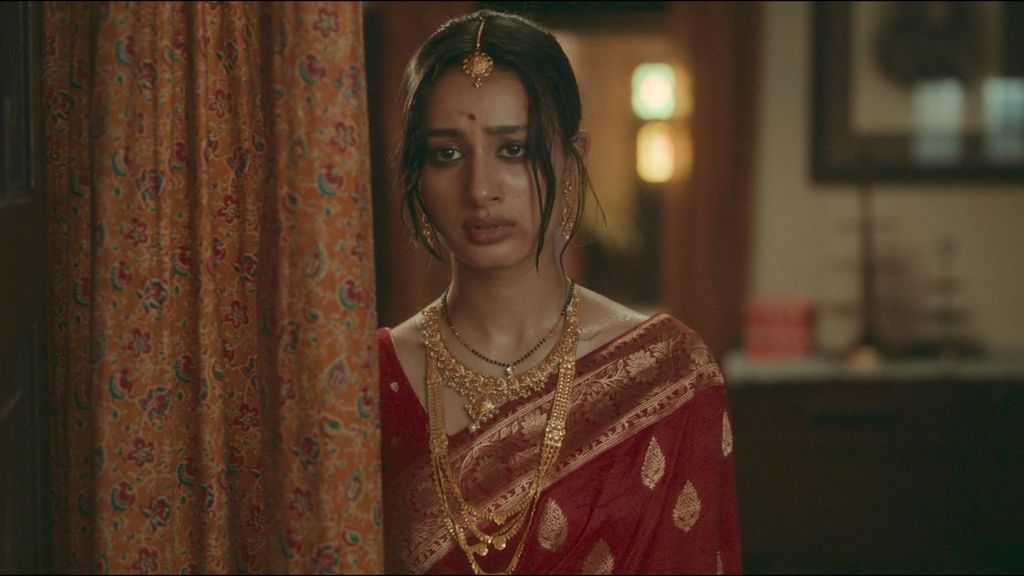
Adapted from the successful Bengali series *Sampoorna* and reimagined for the deeply patriarchal cultural context of northern India, *Chiraiya* centers on the intersecting lives of two women shaped by opposing views of gender roles. The first is Pooja, an educated, socially conscious young advocate for gender equality played by actor Prasanna Bisht, who marries Arun – a man widely seen as an ideal match, raised like a son by middle-aged homemaker Kamlesh, portrayed by award-winning veteran actor Divya Dutta. Kamlesh, a lifelong housewife who has internalized the belief that a woman’s place is in the home, initially holds the traditional view that sexual consent is automatically implied by marriage.
The story unravels dramatically on Pooja and Arun’s wedding night, when Arun rapes Pooja. When Pooja confronts him, he dismisses her complaint, declaring he has only ‘taken what is mine’ – and points out that under Indian law, marital rape is not a criminal offense, leaving her with no legal recourse. When Pooja dares to speak out about the abuse, even her own family pressures her to stay silent and adjust to the situation, arguing that public discussion of the issue would only bring shame to the entire family. As the series progresses, Kamlesh is forced to confront her own deep-seated beliefs, choosing between staying in her comfortable, socially approved bubble or standing with a woman she initially dislikes. By the story’s midpoint, she undergoes a gradual transformation, emerging as a loyal ally to Pooja.
In comments to the BBC, Dutta explained that the core theme of *Chiraiya* is the concept of consent, specifically within the institution of marriage, which is widely framed as an inherently sacred, unbreakable bond in Indian culture. ‘Marital rape is very difficult to talk about. Every woman who goes through it thinks it’s just her story. She thinks if she speaks about it, there will be social stigma, the harmony of the house will be disrupted,’ she said. Director Shashant Shah added that the creative team intentionally avoided framing the show’s male characters as one-dimensional villains. Instead, he noted, they are ordinary people molded by a deeply entrenched patriarchal system that normalizes misogyny, often without people even recognizing their own harmful biases. ‘They are not monsters – they are just regular people we encounter in our daily lives. Patriarchy is so deeply entrenched that most people are not even aware they are being misogynistic,’ Shah said. Unlike the original Bengali series, which centered an already radicalized feminist protagonist, *Chiraiya* follows Kamlesh, a woman so immersed in patriarchal conditioning that she does not even recognize the misogyny shaping her life. Through her gradual awakening, the creative team hoped to craft a character that millions of women across India could see themselves in. ‘We wanted to raise this question to the society – how do you look at it? We wanted to make people aware,’ Shah explained, adding that while Pooja’s story is fictional, it reflects the lived reality of millions of married women in India.
The series arrives amid a long-running national battle over the criminalization of marital rape in India. Official Indian government data shows that 6.1% of ever-married women in the country have experienced sexual violence at the hands of their spouses. Despite decades of advocacy from women’s rights activists, India remains one of roughly three dozen countries around the world – alongside Pakistan, Afghanistan, and Saudi Arabia – that have not criminalized marital rape. A colonial-era law still in force today exempts men from criminal prosecution for forced sex with an adult wife, and successive Indian governments, along with conservative religious groups and men’s rights organizations, have repeatedly blocked efforts to amend the legislation. Public outrage erupted last year after a man convicted of raping his wife (who died within hours of the assault) was released on appeal, after judges ruled that India does not legally recognize marital rape as a crime.
For *Chiraiya*’s scriptwriter Divy Nidhi Sharma, the gap in Indian law and social acceptance of marital rape made telling this story a moral imperative. ‘This injustice is happening within our homes, in our neighbourhoods. What I find most troubling is that there’s no legal or social recourse. So, as a writer I felt I should do my bit about it,’ he told the BBC. While critics and opponents have slammed the series for its portrayal of marital abuse, Sharma says the creative team’s only goal was to drag a taboo topic into public view. ‘But our aim was to just start a conversation. We are artists, we can’t make laws, we can’t curb crimes, we can’t change society rapidly, but we can use art to make a taboo topic mainstream,’ he said.
Reception to the series has been overwhelmingly positive, according to Dutta, who says the response has been ‘absolutely overwhelming.’ ‘I’ve been getting midnight messages and calls and personal notes on Instagram and Twitter. Everyone’s watching it. Veteran actors are calling me to say thank you for doing this. Someone sent me a sari with a heartfelt note, somebody’s sent a poem they’ve written. I think it really stirred something within everyone,’ she said. Though a small minority of viewers have reacted negatively, Dutta says she chooses to focus on the widespread support for the show’s message. Dutta added that she believes stories like *Chiraiya* carry unique power to drive social change, starting with conversations within households. ‘I think this will make a difference in more ways than one because it is telling us where we are going wrong. And rather than just putting the onus on the outside, for someone else to do something for us, this show just emphasises that let’s start from home first. And that is a first step, but it is a very strong step,’ she said.