标签: Asia

亚洲

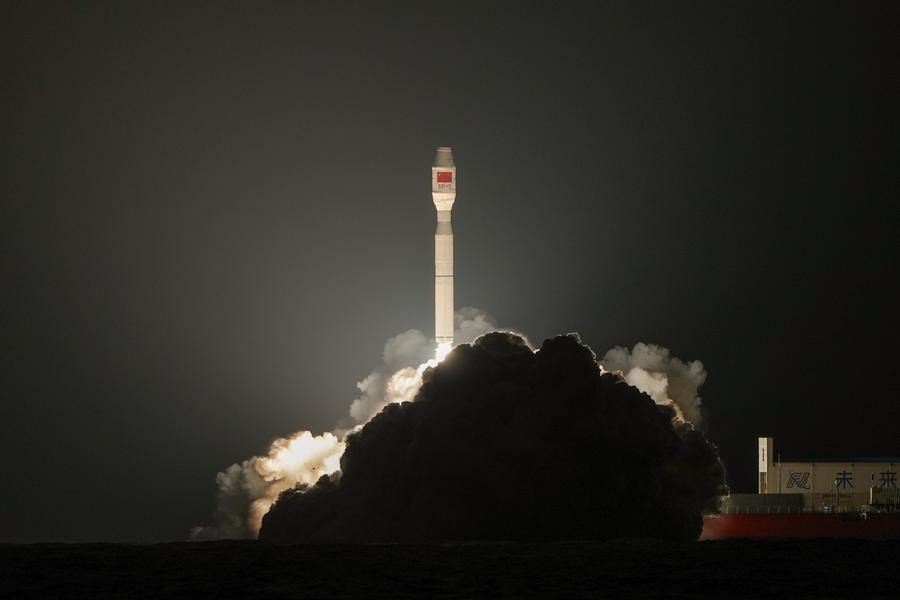
  • China’s Long March 8A rocket launches new internet satellites

    China’s Long March 8A rocket launches new internet satellites

    China has successfully advanced its space-based internet infrastructure with the deployment of a new satellite cluster. On March 13, 2026, at precisely 3:48 AM Beijing Time, a Long March 8A carrier rocket ascended from the Hainan Commercial Spacecraft Launch Site, carrying the twentieth batch of low-orbit internet satellites.

    The launch represents another milestone in China’s ambitious space internet project, designed to provide global broadband coverage through an expanding constellation of satellites. The successful placement of these payloads into predetermined orbit marks continued progress in the country’s commercial space capabilities.

    The Hainan launch facility, situated in China’s southern island province, has become increasingly strategic for space missions due to its equatorial proximity, which provides natural advantages for satellite deployments. This latest mission demonstrates China’s growing proficiency in frequent and reliable space launches using the Long March rocket series.

    The satellite network is expected to enhance internet connectivity capabilities, particularly in remote and underserved regions, while simultaneously strengthening China’s technological presence in space-based communications infrastructure. The development occurs within the broader context of global competition in satellite internet services, where multiple nations and private entities are racing to establish orbital networks.

    This successful launch contributes to the densification of China’s satellite constellation, bringing the nation closer to achieving continuous global coverage for its space internet initiative.

  • AI assists smart governance in Futian

    AI assists smart governance in Futian

    Shenzhen’s Futian District has emerged as a pioneer in artificial intelligence-driven governance through the successful implementation of its AI Digital Employee 2.0 system, marking a significant advancement in China’s smart city initiatives. The district government has leveraged the open-source AI agent OpenClaw to create a localized version known as ‘DinTal Claw’—colloquially dubbed ‘Government Lobster’ due to its distinctive crimson crustacean emblem.

    This sophisticated AI framework represents a substantial evolution from the original DeepSeek-based system introduced in 2025. The current iteration demonstrates remarkable capabilities in complex task decomposition, automated process scheduling, and autonomous decision-making that extends far beyond basic command execution. According to Professor Xiao Yanghua of Fudan University, who serves as chief scientist at development partner Shenzhen Aquaintelling Technology, this deployment constitutes China’s first operational governance application of OpenClaw-based agents.

    The core architecture, open-sourced on GitHub in mid-January, enables exponential capability growth through self-learning mechanisms that incorporate both self-correction functions and long-term memory retention. Professor Xiao emphasizes that the system’s intuitive adaptability to new operational scenarios eliminates the need for repetitive development cycles, creating increasingly efficient governance pathways with continued use.

    Practical implementations demonstrate transformative efficiency gains. Health permit modification procedures that previously required full-day manual reviews now conclude within minutes through automated document analysis of seven document types. The system also revolutionizes public complaint management by replacing month-long manual sorting processes with instantaneous categorization, data analysis, and actionable improvement suggestions derived from cross-municipal practice comparisons.

    Li Xiaoming, a Futian data management official, clarifies that the primary objective remains workload reduction for frontline staff, enabling higher-quality public service delivery through liberation from tedious tasks. Security integration occurs within the government’s external network infrastructure, utilizing existing cloud security protocols to ensure operational safety.

    The technology’s success has generated nationwide interest, with multiple government departments currently exploring similar AI solutions. This innovation aligns with broader regional support measures, including Longgang district’s establishment of dedicated Lobster service zones offering complimentary OpenClaw deployment and OPC community subsidies. Concurrently, Wuxi National Hi-tech District in Jiangsu province has proposed comprehensive policy measures featuring support packages reaching 5 million yuan to stimulate AI industrial application growth.

  • Asia-Pacific urged to combat air pollution

    Asia-Pacific urged to combat air pollution

    BANGKOK – Regional collaboration and strategic investments emerged as critical priorities at the 12th Better Air Quality Conference this week, where environmental experts highlighted air pollution as a fundamental barrier to sustainable development across the Asia-Pacific region.

    The forum, convened in Thailand’s capital from March 11-13, 2026, brought together over 1,100 delegates from 56 nations to address what organizers termed ‘an urgent environmental and public health crisis.’ Current United Nations data reveals that approximately 92% of the region’s population – nearly 4 billion people – regularly breathe air exceeding safety thresholds, resulting in millions of premature deaths annually alongside diminished educational outcomes, reduced productivity, and compromised human capital development.

    Bjarne Pedersen, Executive Director of Clean Air Asia and the conference’s principal organizer, emphasized the necessity of cross-sector collaboration. ‘We require strengthened partnerships across governments, funders, the private sector, technical experts, and civil society to catalyze transformative change,’ Pedersen stated during the opening session.

    Financial constraints remain a significant hurdle. Yevgeniy Zhukov of the Asian Development Bank disclosed that less than 1% of global climate finance currently targets air quality initiatives, creating substantial funding gaps for urban air management in developing nations.

    China’s substantial progress in pollution control featured prominently throughout the proceedings. Experts from Beijing, Shanghai, and Chengdu presented innovative approaches including Beijing’s integrated regulation-monitoring-inspection framework, Shanghai’s pioneering system for managing industrial volatile organic compounds and heavy-duty diesel emissions, and Chengdu’s pilot near-zero carbon construction initiative.

    Professor He Kebin of Tsinghua University’s School of Environment reported that China achieved a 57% average reduction in PM2.5 concentrations nationwide over the past decade through comprehensive emission controls across industrial, energy, transportation, and agricultural sectors.

    International representatives expressed strong interest in adopting Chinese methodologies. Le Thanh Thuy from Hanoi’s Department of Agriculture and Environment noted, ‘China’s rich experience and technological innovations provide substantial support for regional air quality enhancement efforts.’ Similarly, Erni Pelita Fitratunnisa of Jakarta’s Environment Agency indicated Indonesia’s willingness to pursue tailored cooperation with Chinese specialists.

    This collaborative momentum has already materialized through formal agreements, including a three-year memorandum of understanding between Beijing and Bangkok municipal authorities focusing on PM2.5 monitoring and reduction strategies.

  • Trusting thought to be its own light

    Trusting thought to be its own light

    In the quiet confines of a Wuchang district residence in Wuhan, an extraordinary academic pursuit unfolds daily. Zhou Shun, who lost his vision during childhood, has transformed his modest living space into an intellectual sanctuary where advanced mathematics and physics concepts come alive through auditory learning and tactile imagination.

    Initially attributed to congenital retinal atrophy, Zhou’s condition was later accurately diagnosed as retinitis pigmentosa – a cluster of inherited retinal disorders that progressively diminish eyesight. Rather than retreating from scientific exploration, Zhou developed innovative cognitive approaches utilizing sound, logical reasoning, and mental visualization to comprehend complex scientific principles.

    For over three decades, Zhou has collaborated with volunteer readers from Wuhan University who patiently articulate mathematical formulas and scientific diagrams. This sustained academic partnership has enabled him to construct what he describes as an intricate ‘universe of knowledge’ within his mind.

    His intellectual achievements culminated in December with the publication of his third scholarly work, ‘Mathematics in Physics,’ an expanded edition building upon his 2017 original publication. The treatise demonstrates remarkable breadth, spanning from fundamental undergraduate concepts like calculus and linear algebra to advanced graduate-level topics including spectral theory on infinite-dimensional vector spaces and tensor analysis.

    Professor Zhou Bin of Beijing Normal University, specializing in field theory and general relativity, noted in the book’s preface that the work presents substantial challenges even for mathematically trained master’s degree candidates.

    Those who work closely with Zhou emphasize his unique cognitive abilities. Chai Chengye, a third-year physics undergraduate at Wuhan University who began reading for Zhou in 2023, observed: ‘While we rely on blackboards for visualization, Zhou utilizes darkness as his canvas – projecting equations, formulas, and theoretical conjectures through a mind sharpened to extraordinary precision.’

    Zhou’s story transcends individual achievement, serving as powerful testament to human perseverance and the transformative potential of adaptive learning methodologies. His journey continues to inspire both disabled learners and academic professionals, demonstrating that intellectual boundaries can be redefined through determination and innovative thinking.

  • Bangladesh wins toss, elects to field against Pakistan in 2nd one-day cricket international

    Bangladesh wins toss, elects to field against Pakistan in 2nd one-day cricket international

    DHAKA, Bangladesh — In a strategic move at the toss, Bangladesh captain Mehidy Hasan Miraz opted to field first against Pakistan in the pivotal second One-Day International on Friday. This decision comes on the heels of a dominant performance that has the home team leading the three-match series 1-0.

    The opening game witnessed a spectacular bowling display from Bangladeshi fast bowler Nahid Rana, who dismantled the Pakistani batting order. Rana’s career-best figures of 5-24 bundled out the visitors for a meager 114 runs, paving the way for a comprehensive eight-wicket victory last Wednesday.

    Demonstrating confidence in a winning combination, Bangladesh has retained the exact same playing XI. In contrast, Pakistan has been forced into a tactical adjustment following their batting collapse. Despite a collective failure from their debutant quartet—Sahibzada Farhan, Shamyl Hussain, Maaz Sadaqat, and Abdul Samad—who struggled against the pace of Rana and the off-spin of Captain Miraz, the team management has persisted with its inexperienced top order.

    Pakistan’s sole change comes in the bowling department. Seeking to exploit what is anticipated to be a pace-friendly wicket, they have recalled express fast bowler Haris Rauf, replacing leg-spinner Abrar Ahmed.

    The lineups for the crucial encounter are:

    **Pakistan:** Sahibzada Farhan, Maaz Sadaqat, Shamyl Hussain, Mohammad Rizwan, Salman Ali Agha, Hussain Talat, Abdul Samad, Faheem Ashraf, Shaheen Shah Afridi (captain), Mohammad Wasim, Haris Rauf.

    **Bangladesh:** Saif Hassan, Tanzid Hasan, Towhid Hridoy, Najmul Hossain Shanto, Litton Das, Afif Hossain, Mehidy Hasan Miraz (captain), Rishad Hossain, Taskin Ahmed, Nahid Rana, Mustafizur Rahman.

  • Stepping on the gas necessary to realize carbon-peaking goal

    Stepping on the gas necessary to realize carbon-peaking goal

    As China advances toward its ambitious carbon emissions peak target set for 2030, the nation is implementing comprehensive strategies to overcome remaining challenges in its green energy transition. Despite remarkable progress in renewable energy deployment—with installed capacity reaching 2.34 billion kilowatts in 2025, accounting for approximately 60% of total power capacity—systemic hurdles require innovative solutions.

    The intermittent nature of renewable energy sources presents significant grid integration challenges. To address this, China is developing virtual power plants and smart management systems that coordinate supply, demand, storage, and grid operations. Energy storage infrastructure, including pumped hydro and electrochemical facilities, is being expanded to manage surplus green electricity.

    A key innovation involves converting excess renewable energy into ‘green hydrogen’ through water electrolysis, creating a carbon-free energy carrier that can replace coal in metallurgical processes and enable production of green ammonia, methanol, and sustainable aviation fuels. Technological advancements are needed to improve safety and reduce costs in this emerging sector.

    Recognizing coal’s continued role in China’s energy landscape, the country is advancing carbon capture technologies while promoting circular economy principles. The National Development and Reform Commission is formulating the 15th Five-Year Plan for circular economy development, emphasizing resource recovery from electronic waste—a approach that reduces emissions significantly compared to traditional metal production.

    Financial mechanisms are being strengthened through carbon market expansion, including new sectors and derivative products. Transition finance supports emissions-intensive industries, while comprehensive carbon footprint accounting systems cover product life cycles. Public participation remains crucial, with initiatives promoting green lifestyles, low-carbon transportation, and sustainable consumption patterns to ensure national targets are met.

  • Connecting labs and industry in new era

    Connecting labs and industry in new era

    The convergence of neuroscience and technology is accelerating at an unprecedented pace as brain-computer interfaces (BCIs) transition from laboratory curiosities to industrial realities. When patients can control robotic limbs through mere thought, and immersive human-machine interaction systems become operational, it becomes evident that a technological revolution is underway. China has emerged as a significant catalyst in this transformation, leveraging policy coordination, clinical advancements, and substantial industrial investment to propel BCIs into the mainstream.

    This rapid evolution raises a critical question: Does the current talent pool match the demands of this emerging industry? BCIs represent a fundamentally interdisciplinary field, integrating neuroscience, electrical engineering, artificial intelligence, biomedical engineering, clinical medicine, and materials science. The sector requires what experts term ‘boundary-spanners’—professionals capable of navigating multiple domains and synthesizing knowledge across traditional disciplinary lines.

    The talent challenge necessitates a comprehensive rethinking of educational and professional development systems. Higher education institutions must abandon rigid disciplinary silos in favor of integrated degree programs that combine neuroscience, computing, materials science, and clinical practice. Such long-cycle training, from undergraduate through doctoral levels, cultivates researchers who can both innovate and translate discoveries into tangible products.

    Industry-academia collaboration must evolve beyond occasional internships into deep, structural partnerships. Joint research centers, shared testing facilities, and co-supervised doctoral projects provide essential platforms for addressing real-world challenges. By embedding students in product development cycles, educational institutions can accelerate learning curves and produce graduates equipped to tackle commercialization barriers including manufacturability, clinical safety, and scalability.

    Equally crucial is reforming talent evaluation systems that currently prioritize single-discipline publications over translational, cross-disciplinary work. Recognition must expand to include team science, regulatory milestones, and successful industry collaborations. Funding and promotion mechanisms should incentivize integrative projects and support early-career researchers engaged in high-risk translational work.

    As an inherently international field, BCI development demands global engagement strategies. China must both attract leading international scientists and facilitate outward mobility for domestic researchers through joint PhD programs, multicenter clinical trials, and scholar exchanges. Such initiatives build not only expertise but also credibility within global standard-setting bodies.

    Throughout this transformation, ethical considerations remain paramount. Training programs must incorporate rigorous coursework on medical ethics, data protection, informed consent, and societal implications of cognitive interfaces. Engineers and clinicians require shared fluency to embed safety, privacy, and social responsibility into system designs from inception.

    The BCI revolution represents more than technological innovation—it tests a nation’s ability to reconfigure its talent ecosystem to meet complex, interdisciplinary challenges. Success demands educational innovation, deeper industry collaboration, reformed incentives, and international engagement. The foundation for an industrial BCI ecosystem exists; now the imperative is developing the human infrastructure to translate promise into reality across clinics, factories, and services worldwide.

  • China intensifies efforts to combat domestic violence

    China intensifies efforts to combat domestic violence

    China’s judicial authorities have significantly intensified their nationwide campaign against domestic violence through a multi-faceted approach emphasizing prevention, intervention, and comprehensive victim protection. According to Supreme People’s Procuratorate officials speaking during the recent Two Sessions, this enhanced judicial focus has produced measurable declines in domestic violence cases across the country.

    Hou Yahui, head of the Supreme People’s Procuratorate’s general crimes department, revealed that domestic violence prosecutions have dropped below 1,000 cases annually since 2022, representing a substantial decrease from the 1,200+ cases prosecuted in 2021. This downward trend demonstrates the increasing effectiveness of China’s legal framework and enforcement mechanisms against household violence.

    The judicial strategy has evolved beyond traditional criminal prosecution to incorporate integrated functions including civil litigation support, administrative oversight, and public interest litigation. Prosecutors now actively identify cases where victims cannot pursue legal action independently due to intimidation, coercion, or limited capacity, converting these into public prosecutions to ensure accountability.

    Notably, China’s legal recognition of domestic violence has expanded significantly beyond physical harm to encompass psychological abuse, emotional manipulation, and sustained verbal humiliation. This broader understanding reflects evolving social conditions and more comprehensive legal interpretations. In one landmark case from Shandong province, a perpetrator received a three-year prison sentence for psychological abuse that led to his partner’s suicide, establishing important precedent for prosecuting non-physical violence.

    Judicial authorities have strengthened coordination across multiple institutions including public security agencies, women’s federations, and community organizations. This collaborative approach has improved information sharing, rapid response protocols, and victim assistance mechanisms. Additionally, nationwide legal education campaigns are reshaping public perception that domestic violence constitutes a criminal offense rather than a private family matter.

    The procuratorate’s work report approved by the National People’s Congress documented 43,000 prosecutions for crimes against women’s personal rights and dignity, alongside 2,259 public interest litigations. These efforts form part of a broader integration of China’s Anti-Domestic Violence Law, Civil Code, and Law on the Protection of Women’s Rights and Interests into a cohesive protection framework that addresses both visible and concealed forms of abuse.

  • Environmental code unveiled

    Environmental code unveiled

    China has ushered in a new era of environmental governance with the formal adoption of the groundbreaking Ecological and Environmental Code by the National People’s Congress on March 12, 2026. This comprehensive legislation represents the culmination of a systematic compilation process initiated in November 2023, involving three rigorous deliberations by the NPC Standing Committee before reaching final approval.

    The code marks a revolutionary departure from previous fragmented environmental regulations by integrating disparate statutes into a unified legal framework. Professor Wang Canfa of China University of Political Science and Law hailed the legislation as “a significant event” in China’s ecological civilization advancement, noting that it effectively resolves conflicting rules and eliminates redundant legislation while establishing consistent environmental principles and core institutions.

    A pioneering aspect of the code is its dedicated section on green and low-carbon development—a global first among approximately 20 existing environmental codes worldwide. This innovative approach transforms climate objectives from policy goals into binding legal requirements, providing the foundation for China’s systematic transition toward carbon neutrality.

    Environmental Minister Huang Runqiu highlighted the legislation’s timing with China’s carbon peak targets, emphasizing how the code will accelerate the green transformation of industrial, energy, and transportation sectors while developing new quality productive forces. The minister noted significant progress already achieved, with heavy pollution days decreasing by 25% to just 1% nationally between 2021-2025, though some regions including Beijing-Tianjin-Hebei still experience 3% pollution days.

    Natural Resources Minister Guan Zhi’ou emphasized the code’s marine protection provisions, highlighting China’s success in maintaining over 35% natural coastline retention through strict control of land reclamation projects. Guan noted that numerous restored blue bays, beaches, and islands have become popular leisure destinations, demonstrating the tangible benefits of systematic environmental management.

  • ‘Fan’ transforming farming in Sanya

    ‘Fan’ transforming farming in Sanya

    At the Yazhouwan experimental fields in Sanya, Hainan province, artificial intelligence is fundamentally transforming agricultural practices that have remained largely unchanged for centuries. The traditional art of crop breeding, which typically required a decade of meticulous work guided by human intuition, is being reimagined as a data-driven precision science.

    The catalyst for this agricultural revolution is the ‘Future Agriculture Nexus’ (Fan), an innovative AI platform developed through a collaboration between the Yazhouwan National Laboratory and technology giant Huawei. Launched in November 2025, this sophisticated system functions as a centralized neural network for agricultural data, specifically designed to overcome the critical challenge of fragmented information in seed development.

    Chen Fan, deputy director of the Yazhouwan National Laboratory and National People’s Congress deputy, emphasized the laboratory’s strategic mission: ‘As China’s sole national-level agricultural laboratory, our objective is to develop major strategic crop varieties that address real-world demands.’

    The platform represents a paradigm shift from experience-dependent traditional breeding to data-powered precision agriculture. By aggregating and standardizing disparate datasets on genotype, phenotype, and environmental factors—previously isolated in what experts term ‘data silos’—Fan creates a unified analytical framework. Leveraging Huawei’s advanced AI data lake technology, the platform automates complex analytical workflows and screens information with unprecedented efficiency.

    The operational benefits are substantial. According to Yuan Yuan, president of Huawei’s data storage product line, the system can compress the breeding cycle for crops like rice from the conventional 8-10 years to just 3-4 years—achieving a 50% reduction in time requirements and a 30% improvement in overall efficiency.

    ‘We are deploying AI to enhance productivity across the entire breeding pipeline,’ Chen explained. ‘The Fan initiative establishes a foundational platform enabling the development of specialized vertical models and AI agents tailored to specific agricultural challenges.’

    This technological advancement aligns with China’s strategic emphasis on seed security, often described as the ‘semiconductor equivalent’ in global agriculture. The laboratory is constructing China’s most comprehensive biological breeding innovation platform, featuring unprecedented scale, scope, and infrastructure integration.

    Concurrently, the laboratory is expanding its international footprint through strategic partnerships with Global South nations. The China-LAC Sustainable Food Innovation Center, established with Yazhouwan’s support, inaugurated key branches in Brazil, Argentina, and Uruguay in August 2025. The Brazil division serves as a pivotal collaboration hub, leveraging geographical symmetries between Hainan’s position at 18 degrees north latitude and Brazil’s location at 18 degrees south—creating nearly identical sunshine and temperature conditions ideal for joint crop research.

    This geographical advantage enables the cooperative development of soybean varieties in Sanya that demonstrate direct applicability to Brazilian farm conditions. Additionally, the favorable policies of the Hainan Free Trade Port may facilitate future imports of these collaboratively developed soybeans into China.