For Indrani Ravichandran and her family, the nightmare began in the pitch-black of a November night, when Cyclone Ditwah’s unprecedented rainfall sent floodwaters surging through their small village of Kudugalhena in Sri Lanka’s Kandy district. Within minutes, rising waters swallowed portions of their home, forcing the family to flee into lashing rain, slippery hillsides and constant fear of encountering venomous wildlife displaced by the storm. They escaped with their lives, leaving almost all their belongings behind. Today, months after the cyclone passed, they have returned to the only section of their home that remained standing, joining hundreds of thousands of Sri Lankans still picking up the pieces of the worst natural disaster to hit the island nation in modern history.
Cyclone Ditwah left a trail of destruction that experts say outstripped even the devastating 2004 Indian Ocean tsunami in terms of infrastructure damage. Over just 72 hours, parts of Sri Lanka’s central highlands received up to 500 millimeters of rain – nearly two months of average rainfall – triggering catastrophic flash floods and landslides that washed away entire communities, businesses and residential settlements. The official human toll stands at 643 confirmed dead, with another 173 people still unaccounted for. Close to two million people across all 25 of Sri Lanka’s districts were impacted, with more than 165,000 people remaining displaced months after the storm, housed in temporary shelters or with host families.
According to estimates from the United Nations and international aid agencies, total damage from the cyclone reaches roughly $4 billion – an amount equivalent to 4% of Sri Lanka’s entire annual gross domestic product. Dr. Ganeshan Wignaraja, a visiting senior fellow at London’s ODI Global Institute, notes that while the cyclone’s death toll was lower than that of the 2004 tsunami, its damage to roads, public utilities, private property and critical economic infrastructure is unmatched in the country’s modern history.
The cyclone hit at the worst possible moment for Sri Lanka. The South Asian island nation had only just begun to claw its way back from a crippling 2022 economic crisis, when a collapse in foreign currency reserves led to a sovereign debt default and widespread shortages of food, medicine, fuel and cooking gas. Those shortages sparked mass public protests that ousted then-president Gotabaya Rajapaksa, and the new government had implemented austerity measures including cutting electricity subsidies and raising top income tax rates to 36% in an effort to stabilize public finances and restore growth.
Now, the fallout from the ongoing Iran conflict has compounded the country’s existing challenges, creating what Wignaraja calls a “triple shock” to the fragile economy: first, the $4 billion in damage from Cyclone Ditwah; second, skyrocketing global fuel prices driven by Middle East tensions; and third, a looming drought in parts of the country that threatens to deepen resource shortages.
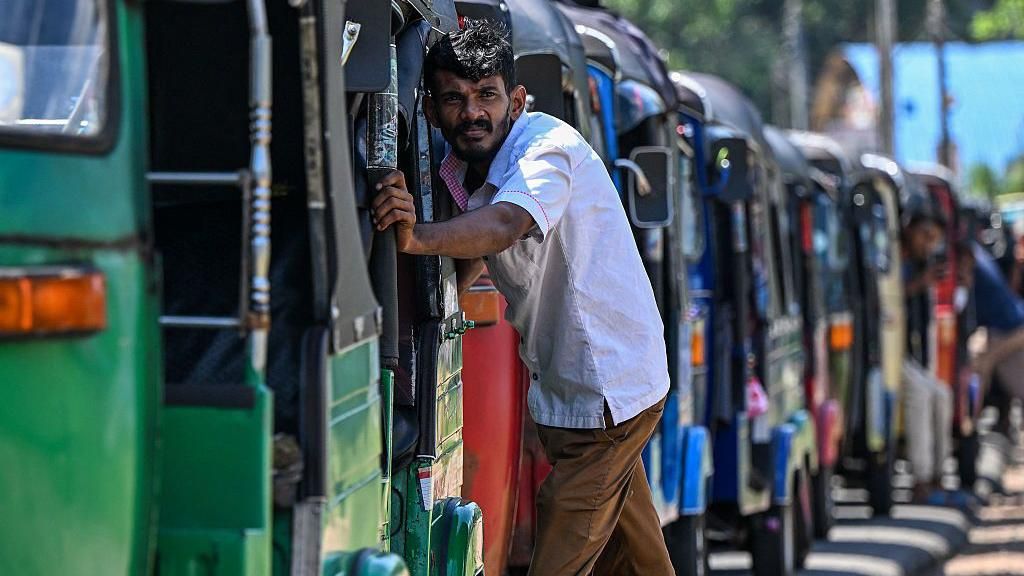
In response to shrinking fuel supplies and spiking global prices, the Sri Lankan government has been forced to implement emergency austerity measures in recent weeks: fuel rationing, broad price hikes, a mandatory four-day working week to cut energy consumption, a 40% increase in electricity tariffs, and rolling power and water cuts to conserve dwindling resources. Fuel and cooking gas shortages have already triggered panic buying across the country, stirring grim memories of the 2022 crisis, when daily power cuts stretched up to 13 hours and basic essentials were unobtainable for millions.
As the government struggles to fund post-cyclone reconstruction, it has secured only around $750 million of the estimated $4 billion in recovery costs – barely one-fifth of what is needed. Unlike the 2004 tsunami, which drew immediate billions in international donor pledges from across the globe, the international response to Cyclone Ditwah has been far more muted. Only neighboring India moved quickly to mount a large-scale relief effort, launching Operation Sagar Bandhu – “Friend Across the Sea” – deploying two warships including an aircraft carrier, launching rescue sorties that saved hundreds of people including foreign citizens, setting up field hospitals, restoring critical infrastructure, and delivering more than 1,000 tonnes of emergency supplies. New Delhi also provided $450 million in grants and direct aid, making it by far the largest international donor to date.
In contrast, long-time Sri Lankan ally and major investor China has offered minimal support: less than $2 million in financial aid and roughly 100 tonnes of emergency supplies. The Sri Lankan government formally requested Chinese support for key infrastructure reconstruction projects in January, but has yet to receive a substantive response.
Sri Lankan disaster management officials acknowledge that while most families with partially damaged homes – like the Ravichandrans, who received 50,000 rupees ($325) in repair aid plus additional support for their young children – have received government assistance, compensation for families who lost their entire homes or businesses has been delayed. KG Dharmathilake, a senior official in the country’s disaster management division, says the delay stems from the government’s focus on “building back better”: officials are prioritizing identifying safe, disaster-resilient land for new housing to protect families from future extreme weather events, rather than rushing construction in high-risk areas. He adds that more than 80% of all affected residents have already received the financial support they are eligible for.
For displaced Sri Lankans and economic analysts alike, the outlook has grown even bleaker in recent weeks due to the Iran conflict. Beyond spiking fuel prices, the crisis threatens Sri Lanka’s key source of foreign exchange: remittances from the estimated one million Sri Lankan workers based in Gulf nations. Last year, those remittances totalled roughly $7 billion, nearly matching the country’s current total foreign reserves of $7 billion. While mass layoffs have not yet occurred, economists warn that a prolonged conflict in the Middle East could cut off new job opportunities for Sri Lankan migrant workers and reduce overall remittance inflows, further straining the country’s ability to pay for critical imports and fund reconstruction.
Economists say that with careful fiscal management, the current $7 billion in foreign reserves should be enough to get the country through the immediate crisis of cyclone recovery and spiking fuel prices. But a prolonged fallout from the Iran conflict would push the country back into the kind of economic chaos it saw in 2022. For President Anura Kumara Dissanayake, who took office after the 2022 crisis, successfully navigating this compound of natural disaster and geopolitical economic shock will be the defining test of his leadership.