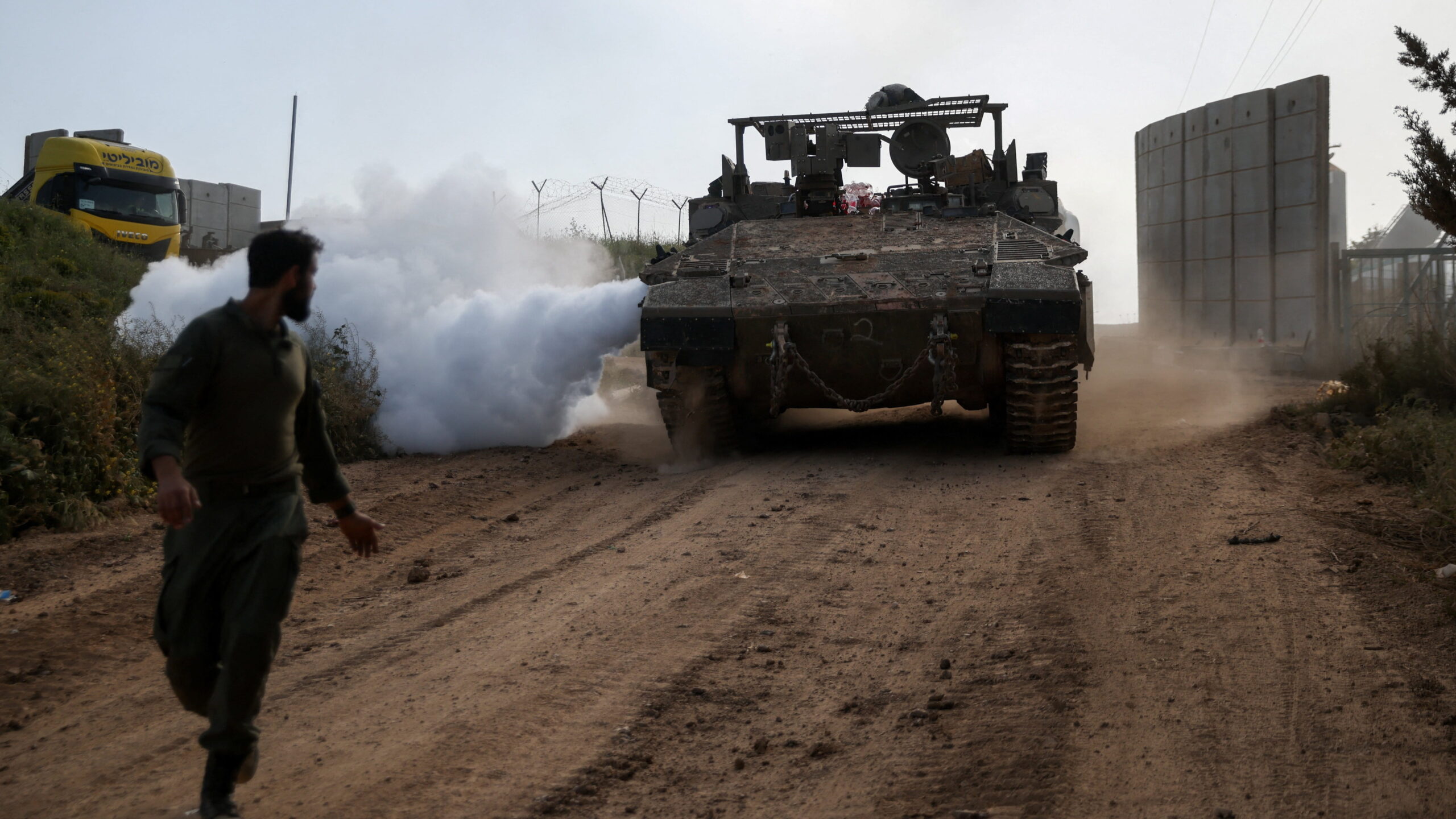
Deep divisions have emerged within Israeli military ranks over the nature of ongoing operations in southern Lebanon, with senior officers confirming that the force’s core mission has shifted from active combat to the systematic leveling of civilian infrastructure and residential communities, a new investigation by Israeli newspaper Haaretz has revealed.
The Wednesday report outlines a coordinated, top-down plan to destroy predominantly Shia villages across the border region, a strategy explicitly designed to block displaced local residents from returning to their homes once operations conclude. Under the current operational framework, infantry units are assigned specific geographic zones to clear for demolition, with commanding officers mandated to submit daily tallies of the number of structures destroyed to senior leadership.
“The only mission is to continue the destruction,” one unnamed Israeli commander told Haaretz. “There are no other tasks.” A second senior officer pushed back against official Israeli military narratives that frame the campaign as targeting solely “terrorist infrastructure,” saying: “These are not terrorist infrastructures – everything is being destroyed.”
Not all Israeli personnel have echoed the description of a blanket demolition order. One separate officer maintained that operations are targeted exclusively at Hezbollah’s underground militant networks, weapons caches, and surveillance and communications systems, arguing that “We are operating pragmatically, according to operational need.”
Despite this official framing, on-the-ground data and visual evidence confirm the scale of devastation being inflicted on civilian communities. Lebanon’s National Council for Scientific Research estimates that approximately 40,000 housing units have been partially or completely destroyed since operations began in early March. On peak days of activity, more than 1,000 residential structures are damaged or leveled, with entire neighborhoods reduced to rubble. Drone footage circulated publicly in recent weeks shows entire southern Lebanese villages wired for controlled demolition before being completely destroyed by Israeli explosive teams.
The investigation also uncovered that the majority of demolition work is being carried out by private contractors, whose compensation is tied directly to the volume of destruction they complete. “The companies profit based on the number of houses [destroyed],” one serving Israeli soldier told Haaretz. “And we’re there to provide security, at risk to our lives.”
Multiple frontline soldiers have criticized the demolition mission as strategically senseless, noting that the task of guarding contractors while they destroy civilian structures leaves troops exposed to regular Hezbollah drone strikes. “We stand exposed, guarding demolitions while drones are in the air,” one soldier said.
Official casualty figures from Lebanon’s Ministry of Health underscore the devastating human toll of the two-month campaign. Since Israeli ground operations launched on March 2, at least 2,290 people have been killed across Lebanon, including 100 rescue workers and healthcare personnel, and more than 7,500 others have been wounded. The violence has displaced roughly 1.2 million people nationwide, nearly a quarter of Lebanon’s total population.
Though a US-brokered truce was announced in mid-April, Israeli airstrikes and ground operations have continued uninterrupted in southern Lebanon, triggering renewed exchanges of fire with Hezbollah militants. Israeli forces maintain a permanent presence roughly 10 kilometers inside sovereign Lebanese territory, with consistent reports of targeted strikes on civilian areas and ongoing demolition of residential structures.