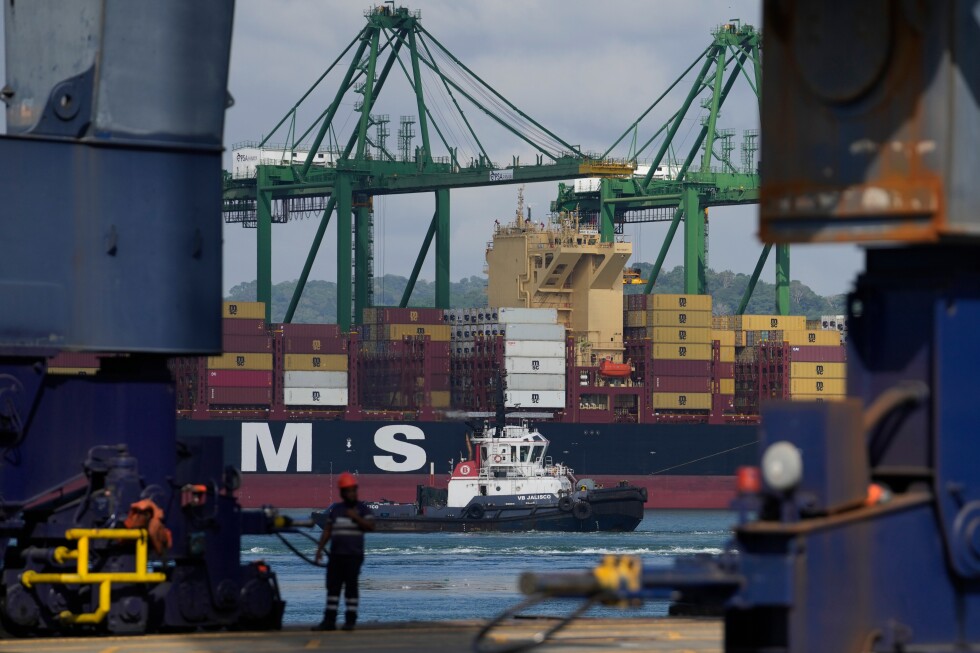
PANAMA CITY – A new high-profile diplomatic confrontation between the United States and China has broken out over a port and shipping dispute in Panama, dragging the Central American trade hub into the middle of intensifying great power competition in the Latin American region. The war of words erupted this week after the U.S. State Department joined several smaller regional allies to accuse Beijing of violating Panama’s national sovereignty, a charge China has forcefully rejected as unfounded distortion while turning accusations back on Washington for its own history of interference in the hemisphere.
The origins of the current dispute stretch back to earlier this year, when Panamanian authorities took control of two strategically critical ports along the Panama Canal from a subsidiary of a Hong Kong-based logistics firm. In early April, U.S. Senator Marco Rubio claimed that in response to the port seizure, China had engaged in “bullying” behavior by temporarily detaining and delaying dozens of commercial ships flying Panama’s national flag. China has repeatedly denied these allegations from the start.
Last Tuesday, the State Department released a coordinated joint statement alongside six regional partners – Bolivia, Costa Rica, Guyana, Paraguay, and Trinidad and Tobago – condemning the alleged ship detentions. The statement labeled the incident a “blatant attempt to politicize maritime trade” and affirmed that the signatories stood in solidarity with Panama. In a separate social media post Tuesday evening, Rubio, who currently serves as U.S. Secretary of State, emphasized that “the sovereignty of our hemisphere is non-negotiable.”
This latest escalation in U.S.-China tension comes as the Trump administration has adopted a far more aggressive policy approach to Latin America than any U.S. administration in recent decades. The current administration has carried out a high-profile overnight raid that captured Venezuela’s sitting president, pushed sweeping regulatory and political changes in Caracas, imposed a strict oil blockade on Cuba, intervened openly in regional elections, and even threatened direct military action against drug cartels based in Mexico.
On Wednesday, Chinese Foreign Ministry spokesperson Lin Jian pushed back firmly against the U.S.-led accusations during a regularly scheduled news conference, calling the joint statement “completely unfounded and distort reality.” Jian went on to question the U.S.’s own credibility on the issue of Panamanian sovereignty, pointing to Washington’s own historical actions in the country.
“Who occupied the Panama Canal for a long time, invaded Panama with its military, and arbitrarily trampled on its sovereignty and dignity? Who covets the Panama Canal, seeks to turn this international waterway — meant to remain permanently neutral — into its own territory, and disregards the sovereignty of regional countries? The answer is self-evident,” Jian said. He closed by noting that the United States itself is the power that has “politicized and securitized the issue of ports.”
Shortly after China’s rebuttal, Panamanian President José Raúl Mulino released a public statement seeking to defuse the rising tension. Mulino expressed appreciation for the “solidarity of friendly countries” regarding the status of Panamanian-flagged vessels in Chinese ports, but made clear that Panama sought to avoid being pulled into a larger diplomatic conflict. “We do not wish to engage in controversy, as we value respectful relations with all nations,” he said.
The current dispute is just the latest flashpoint in a long-running push by the United States to counter China’s expanding economic and political influence across Latin America. For Panama, the strategic importance of the Panama Canal to global trade has placed the country directly in the middle of the escalating geopolitical rivalry between the two global superpowers, a standoff that intensified last year after former President Trump openly accused Beijing of seeking to control the critical international waterway.