标签: Asia

亚洲

  • Xuankong Temple: A popular place to hang out

    Xuankong Temple: A popular place to hang out

    Perched dramatically on the vertiginous cliffs of Cuiping Mountain in Datong, Shanxi province, the 1,500-year-old Xuankong Temple (Hanging Temple) is experiencing an unprecedented tourism renaissance. This architectural marvel, which defies gravity through ingenious ancient engineering, has become a global pilgrimage site following its prominent featuring in the blockbuster video game ‘Black Myth: Wukong’.

    The temple’s sudden popularity surge has created extraordinary visitor demand, with waiting times extending for hours during peak seasons. In response to the overwhelming foot traffic, local authorities have implemented protective measures, reducing daily admission quotas from 3,275 to 2,475 visitors effective immediately. This conservation strategy aims to safeguard the fragile wooden structure that has clung to the mountainside since the Northern Wei Dynasty (386-534).

    What makes the temple’s endurance particularly remarkable is its revolutionary construction technique. Heritage expert Hao Weihe explains that the structure’s stability derives not from its visible supporting pillars, but from horizontal beams crafted from durable hemlock wood. These beams, shaped like scissors at one end, penetrate deep into the cliff face—functioning similarly to modern expansion bolts—with two-thirds embedded in rock and one-third exposed to support the temple’s weight. Each beam can reportedly support several metric tons.

    Beyond its architectural wonders, the temple serves as a symbol of religious harmony. The Hall of Three Religions simultaneously honors Buddhism, Confucianism, and Taoism through statues of Buddha, Confucius, and Lao Tzu. Visitors can additionally admire exquisite carvings adorning the upturned eaves, roof tiles, and plank path corners throughout the complex.

    International tourists like Yana from Ukraine have expressed awe at the temple’s preservation, describing it as ‘staggering’ in social media posts that encourage others to witness the ancient wonder firsthand. As gaming culture continues to influence travel patterns, this 1,500-year-old temple demonstrates how digital media can breathe new life into historical treasures while presenting contemporary conservation challenges.

  • After Trump said MBS was ‘kissing his ass’, Gulf leaders told to send children to fight Iran

    After Trump said MBS was ‘kissing his ass’, Gulf leaders told to send children to fight Iran

    Former White House strategist Steve Bannon has provoked controversy by demanding that Gulf Arab elites deploy their own children as frontline troops in any potential military confrontation with Iran. During his ‘War Room’ podcast broadcast on Saturday, the influential ally of President Donald Trump argued that regional powers should bear the human cost of conflict.

    Bannon specifically challenged Gulf royalty to demonstrate their commitment to the cause. ‘Maybe we can get a couple or three of those princes in uniform. Got any kids in special forces? Let’s line up those royal families and see how big they’re talking,’ he stated provocatively.

    The political commentator expanded his criticism to include Washington’s traditional allies, accusing Israel, Arab nations, and European partners of ‘playing games’ while American troops shoulder the burden. He emphasized that President Trump requires ‘options and alternatives to negotiate the military operational victory.’

    Bannon framed a potential ground campaign in historical terms, envisioning a modern recreation of Alexander the Great’s conquests from 2,300 years ago. He insisted that Arab forces should lead any offensive, particularly targeting Iran’s strategic Kharg Island facility.

    In specific operational suggestions, Bannon proposed that the United Arab Emirates should form the ‘first wave’ at Kharg Island, acknowledging Abu Dhabi Crown Prince Mohammed bin Zayed as ‘probably the best ally we have over there.’ He simultaneously demanded immediate action against Iranian financial operations within UAE territories.

    These remarks emerged shortly after President Trump’s own comments about Saudi leadership at a investment conference in Florida. The president mockingly recalled that Crown Prince Mohammed bin Salman ‘didn’t think he’d be kissing my ass’ following the administration’s support during the Khashoggi crisis.

    Meanwhile, diplomatic efforts continue independently of these inflammatory statements. Pakistan has offered to host substantive negotiations to resolve tensions, with officials from Saudi Arabia, Egypt, and Turkey convening in Islamabad to explore de-escalation pathways and potential US-Iran dialogue.

  • Australian police fatally shoot a suspect in a 3-hour standoff after 2 officers killed

    Australian police fatally shoot a suspect in a 3-hour standoff after 2 officers killed

    Australian authorities have concluded a dramatic seven-month manhunt with the fatal shooting of a suspect believed to be responsible for the killing of two police officers and serious injury of a third. The incident culminated Monday in a remote forest region northeast of Melbourne, Victoria.

    Victoria Police Chief Commissioner Mike Bush confirmed that tactical officers engaged in a three-hour standoff with the suspect near Thologolong, approximately two hours north of Porepunkah where the original shootings occurred last August. Heavily armed Special Operations Group personnel attempted to negotiate surrender before ultimately shooting the individual.

    The suspect, identified as 56-year-old Dezi Freeman, had evaded capture since allegedly opening fire on officers attempting to serve a warrant at his property on August 26, 2022. Freeman was reported to possess wilderness survival skills and held sovereign citizen beliefs, with authorities previously suspecting he might have taken his own life during the extensive search operation.

    Formal identification procedures, including fingerprint analysis, are underway and may require up to 48 hours for completion. Commissioner Bush emphasized that police priority was peaceful resolution but acknowledged strong belief that the suspect remained armed during the confrontation. Authorities continue to investigate whether Freeman received assistance in evading capture throughout the seven-month period, having previously offered a AU$1 million reward for information leading to his apprehension.

  • Myanmar junta chief Min Aung Hlaing nominated as president

    Myanmar junta chief Min Aung Hlaing nominated as president

    Myanmar’s military commander-in-chief Min Aung Hlaing has been formally nominated for the presidency as the nation’s parliament convened on Monday, marking a significant political transition following elections widely condemned by the international community. The nomination comes after a general election held between December and January that excluded major opposition parties and was dismissed by critics as fundamentally flawed.

    Min Aung Hlaing, who faces sanctions from numerous Western nations for orchestrating the military coup five years ago, stands as the certain choice for president. His nomination appears alongside two loyalists who present no substantial challenge for the position. The military establishment has defended the electoral process as legitimate despite widespread allegations of manipulation.

    The political landscape reveals approximately 90% of parliamentary members owe direct allegiance to Min Aung Hlaing, comprising both active military officers—guaranteed a constitutional quarter of seats—and elected representatives from the military’s political wing. Parliamentary proceedings this week will focus primarily on presidential selection, though the outcome appears predetermined.

    Analysts note Min Aung Hlaing’s longstanding ambition for the presidency, citing his dissatisfaction with the military party’s poor performance in the 2020 elections as a key catalyst for the coup that overthrew Aung San Suu Kyi’s democratically elected government. The constitutional requirement for the president to relinquish military command presents potential vulnerabilities, prompting Min Aung Hlaing to appoint General Ye Win Oo—a known loyalist with a reputation for brutal suppression of dissent—as his military successor.

    To mitigate power transition risks, the general has established a new consultative council under his leadership, potentially maintaining influence over both military and civilian governance structures. The emerging administration essentially represents an expanded version of the current military junta adopting civilian political trappings, with no indications of policy changes regarding the violent suppression of opposition movements that has characterized the past five years of military rule.

    The country continues to grapple with a devastating civil war that has claimed thousands of lives and displaced millions since the coup, with significant territories remaining under armed opposition control despite the junta’s characterization of elections as a pathway to peace.

  • China resumes direct flights to North Korea after 6 years

    China resumes direct flights to North Korea after 6 years

    China has fully reestablished transportation connectivity with North Korea as Air China resumed direct flight operations between Beijing and Pyongyang on Monday, completing the restoration of pre-pandemic travel links between the allied nations.

    The resumption of air service follows the earlier reinstatement of cross-border passenger rail connections on March 12, marking a significant step in North Korea’s gradual reopening to international travel after implementing some of the world’s most stringent border controls during the COVID-19 pandemic. Both flight and train services had remained suspended since early 2020.

    Chinese state media documented the arrival of the inaugural flight, which received an official welcome ceremony attended by Chinese Ambassador to North Korea Wang Yajun and diplomatic personnel. The event signals strengthening bilateral relations despite ongoing geopolitical complexities.

    North Korea’s national carrier, Air Koryo, had previously resumed flights between the capitals in 2023, but the return of Chinese commercial aviation represents a more substantial normalization of transportation infrastructure. The renewal of Chinese tourism is particularly significant given that Chinese tour groups constituted approximately 90% of all foreign visitors to North Korea prior to the pandemic-induced border closure.

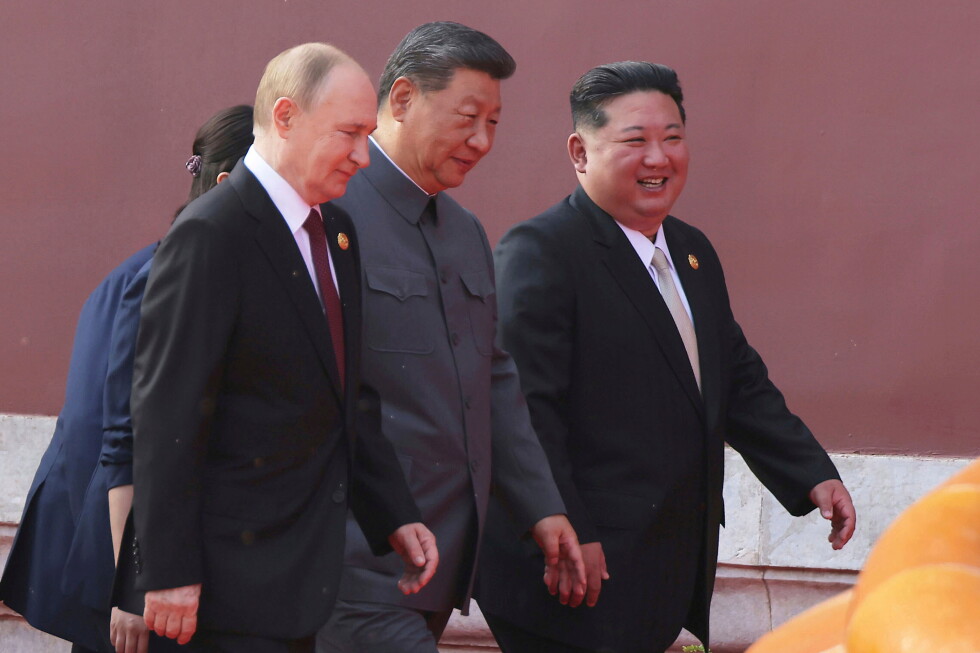
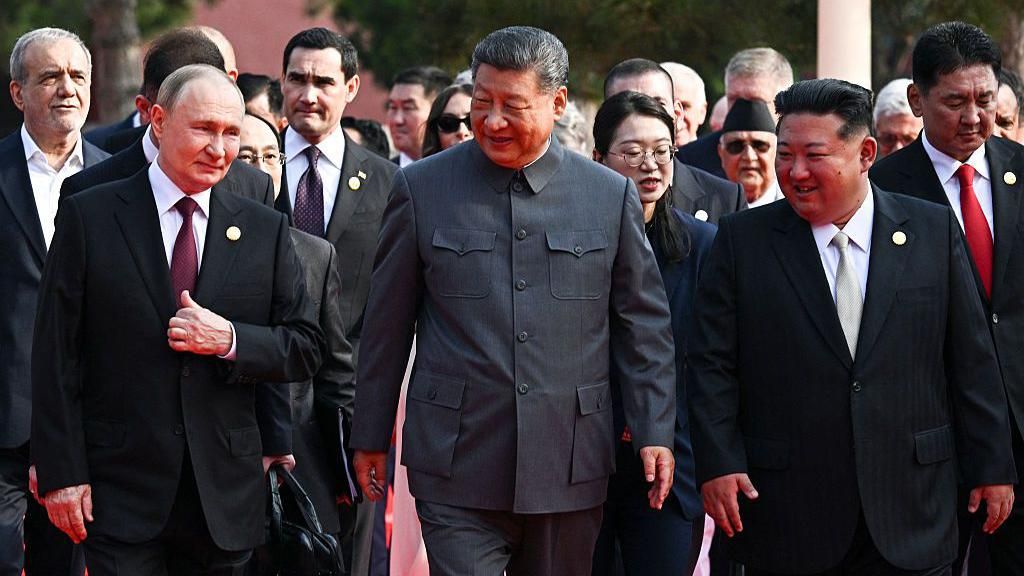
    The delayed resumption of Chinese tourism has puzzled regional observers, especially considering Russia successfully dispatched tourist groups to North Korea earlier in 2024. This comprehensive transportation restoration occurs against the backdrop of evolving diplomatic dynamics, including North Korean leader Kim Jong Un’s notable attendance at a Chinese military parade in September – the first such appearance by a North Korean leader in decades.

    Despite being Pyongyang’s primary trading partner and most important ally, Beijing has periodically expressed concern over North Korea’s provocative missile testing programs, particularly those involving systems capable of targeting South Korea and United States territories.

  • Israeli-US war batters UAE economy, wiping $120bn from Abu Dhabi, Dubai markets

    Israeli-US war batters UAE economy, wiping $120bn from Abu Dhabi, Dubai markets

    The United Arab Emirates is confronting its most severe economic crisis in decades as the ongoing regional conflict delivers a devastating blow to its core industries. Market capitalization on Dubai and Abu Dhabi stock exchanges has plummeted by over $120 billion within a single month, accompanied by the cancellation of more than 18,400 flights, signaling profound disruption to the nation’s economic infrastructure.

    Dubai’s financial markets have borne the brunt of the impact, with the emirate’s index plunging 16 percent since hostilities began on February 28—more than double the decline witnessed in Abu Dhabi. This stark contrast highlights the vulnerability of the UAE’s globally integrated economic model, which stands in sharp relief to neighboring Saudi Arabia and Oman, whose markets have benefited from rising oil prices.

    The UAE’s diversified economy, built strategically around tourism, real estate, logistics, and finance, has suffered direct hits from sustained missile and drone attacks. Despite most projectiles being intercepted, debris has caused significant damage to iconic landmarks including Burj Al Arab, Palm Jumeirah, Dubai International Airport, and the Fujairah oil industrial zone.

    Dubai’s property market, previously hailed by Savills as ‘one of the most dynamic in the world’ with transactions exceeding $147 billion in late 2025, has experienced a dramatic reversal. By March’s end, real estate indices had fallen至少 16 percent, with Goldman Sachs analysts reporting a 37 percent year-on-year decline in transactions and sales plunging over 50 percent compared to February 2026. Distressed sellers are now offering properties at 10-15 percent discounts.

    The aviation sector, cornerstone of the UAE’s economic strategy, has suffered catastrophic damage. Dubai International Airport—typically handling 95 million passengers annually—completely shut down on March 1 after sustaining damage. The single-day cancellation of 3,400 flights across major airports and the suspension of Emirates and Etihad operations are expected to generate billions in losses.

    Tourism-dependent sectors face unprecedented challenges. Hotel bookings have collapsed, forcing drastic price reductions, while wealthy expatriates have paid up to $250,000 for private evacuation flights. The absence of European tourists, who constitute over 20 percent of visitors, compounds the crisis.

    Demographic projections have turned pessimistic, with Citi forecasting just 1 percent population growth this year and approximately 2 percent annually through 2031—well below the recent 4 percent trend. Concurrently, reports of arrests targeting foreign nationals for documenting attacks risk further damaging the UAE’s carefully cultivated international image as a stable business hub.

    The convergence of these factors presents the most significant challenge to the UAE’s economic model since its diversification journey began, testing the resilience of what was once considered the region’s most successful development story.

  • Asian shares decline as oil prices soar amid the war in Iran, echoing last week’s Wall Street drop

    Asian shares decline as oil prices soar amid the war in Iran, echoing last week’s Wall Street drop

    Asian financial markets opened the week with significant losses as escalating geopolitical tensions and soaring energy prices continued to rattle investor confidence. The regional decline followed Wall Street’s fifth consecutive weekly downturn, marking its longest losing streak in nearly four years.

    Japan’s Nikkei 225 index led the decline with a 2.8% drop to close at 51,885.85, while South Korea’s Kospi experienced a substantial 3.3% plunge to 5,258.02. Australia’s S&P/ASX 200 retreated 0.7% to 8,461.00, and Hong Kong’s Hang Seng declined 0.7% to 24,775.65. China’s Shanghai Composite notably bucked the trend, reversing morning losses to close 0.2% higher at 3,920.90.

    The primary catalyst for market anxiety remains the potential disruption to oil shipments through the Strait of Hormuz, a critical maritime choke point for global energy supplies. Benchmark Brent crude soared to $115.06 per barrel, representing a dramatic increase from pre-conflict levels of approximately $70. Similarly, U.S. benchmark crude surged to $100.71 per barrel.

    Financial analysts warn that sustained conflict could trigger widespread inflationary pressures and potentially hamper economic growth across Asian economies. “While we do not anticipate a protracted conflict, we expect heightened market volatility in the near term,” commented Xavier Lee, senior equity analyst at Morningstar Research.

    The U.S. markets previously concluded their worst weekly performance since the conflict’s inception, with the S&P 500 dropping 1.7% and the Dow Jones Industrial Average shedding 793 points. Technology stocks, including Amazon and Nvidia, faced particularly heavy selling pressure.

    Currency markets also exhibited heightened activity, with the Japanese yen trading at 159.73 against the U.S. dollar amid concerns about its declining value. Japanese financial officials acknowledged increased speculative activity in foreign exchange markets, pledging comprehensive response measures without specifying particular interventions.

  • Victory options narrowing as Trump prepares Iran ground assault

    Victory options narrowing as Trump prepares Iran ground assault

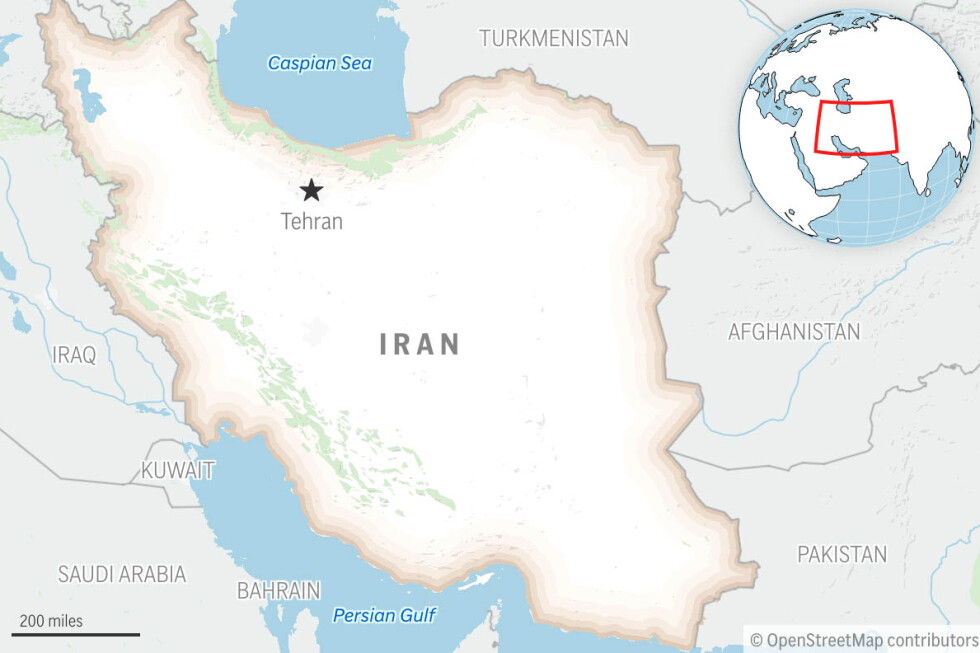
    The Pentagon is reportedly preparing for potential ground operations in Iran amid escalating tensions in the Persian Gulf, according to Washington Post sources. The planned military action would involve special operations forces and conventional infantry troops conducting targeted raids rather than a full-scale invasion. Primary objectives include seizing control of Kharg Island, Iran’s crucial oil export terminal, or neutralizing weapons systems threatening shipping lanes in the strategically vital Strait of Hormuz.

    Military strategists are expressing significant concerns about the operational viability of such missions. Michael Eisenstadt, director of the Military and Security Studies Program at the Washington Institute for Near East Policy, highlighted the extreme vulnerability American forces would face on Kharg Island, stating troops could be subjected to continuous drone and artillery attacks from mainland Iran.

    These concerns were reinforced by Retired General Joseph Votel, former head of US Central Command, who warned that occupying Iranian territory would place American soldiers in a state of perpetual danger from coastal-based missile systems and drone warfare.

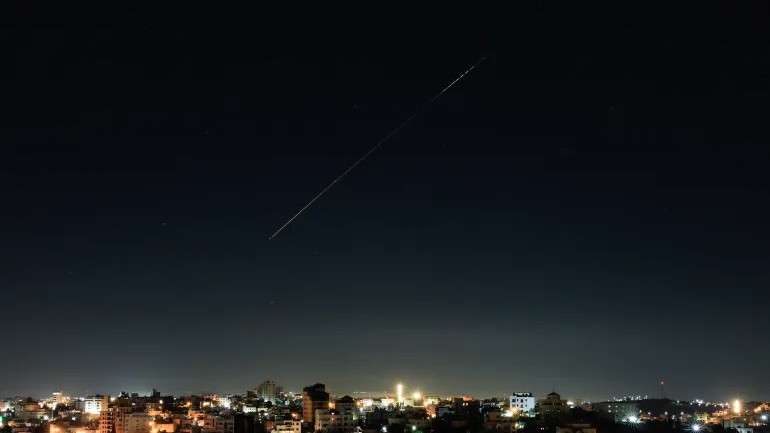
    The conflict has expanded significantly with the Houthi militia’s entry into the confrontation. The Yemen-based group claimed responsibility for a ballistic missile attack against Israel, opening a new front in the regional conflict. Security analysts note the Houthis possess the capability to shut down the Bab al-Mandeb strait in the Red Sea, which would dramatically exacerbate the global economic crisis already triggered by Iran’s closure of the Strait of Hormuz.

    Professor Lawrence Freedman, emeritus professor of war studies at King’s College London, argues that the Trump administration has strategically painted itself into a corner. Despite weeks of aerial assaults by US and Israeli forces, the Iranian regime shows no signs of collapsing. Freedman contends that success in warfare should be measured by political objectives achieved rather than damage inflicted, noting that the administration’s goals of regime change or establishing a compliant leadership in Tehran remain unfulfilled while global economic disruption continues to escalate.

  • Oil rises above $115 and Asia stocks slide as Iran war escalates

    Oil rises above $115 and Asia stocks slide as Iran war escalates

    Financial markets across Asia experienced significant turbulence on Monday morning as escalating military tensions between the US-Israel alliance and Iran triggered a dramatic surge in oil prices and substantial stock market declines.

    The global benchmark Brent crude oil skyrocketed by over 3%, surpassing $115 per barrel, while US-traded crude climbed approximately 3.5% to reach $103. This surge positions Brent for its most substantial monthly gain in recorded history. Concurrently, Asian equity markets opened sharply lower, with Japan’s Nikkei 225 index plummeting 4.5% and South Korea’s Kospi dropping 4%.

    This market volatility follows a dangerous escalation in Middle East hostilities over the weekend. Iran-backed Houthi rebels from Yemen launched strikes against Israel, while Tehran issued threats to expand retaliatory actions against educational institutions and residences of US and Israeli officials. The situation intensified when former US President Donald Trump stated in a Sunday interview with the Financial Times that he could potentially ‘take the oil in Iran’ and seize the country’s major fuel hub on Kharg Island, claiming such action could be accomplished ‘very easily.’

    Trump drew parallels to US actions in Venezuela, where American control over the oil industry continues ‘indefinitely’ following the January seizure from then-President Nicolás Maduro. Meanwhile, Iran’s parliament speaker declared that Iranian forces were ‘waiting for American soldiers’ as an additional 3,500 US troops deployed to the region.

    Global energy markets have exhibited extreme volatility since Tehran’s retaliation to US and Israeli strikes, including threats to attack vessels attempting to traverse the strategically critical Strait of Hormuz. Shipping operations through this vital waterway, which handles approximately 21% of global petroleum consumption, have largely halted, creating substantial upward pressure on oil and gas prices worldwide.

    The price escalation represents a dramatic increase from February 27th, when Brent traded at approximately $72 per barrel just before the initial US-Israel strikes on Iran. By March 18th, the benchmark contract reached $119.50—the highest level since June 2022—demonstrating the profound impact of geopolitical instability on energy markets.

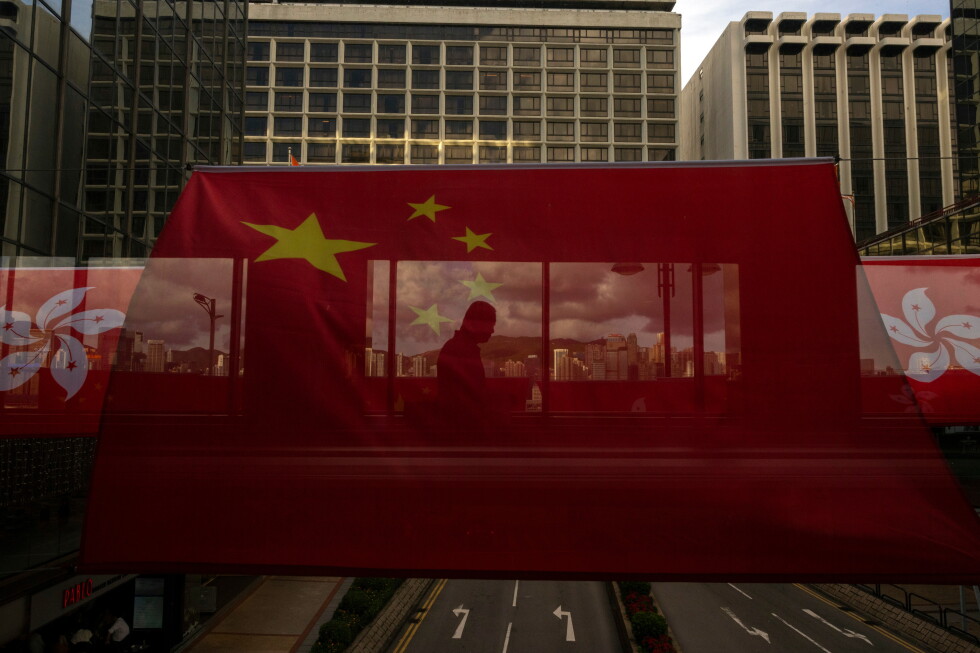
  • Why Chinese tech companies are racing to set up in Hong Kong

    Why Chinese tech companies are racing to set up in Hong Kong

    In the bustling lobby of an international hotel chain on Hong Kong Island, a delivery robot demonstrates sophisticated urban navigation capabilities. Manufactured by mainland Chinese technology company Yunji, the autonomous unit pauses strategically as elevator doors open, allowing guests to exit before proceeding seamlessly to its destination. This seemingly simple maneuver represents complex technological achievement in real-world environments.

    Yunji’s Hong Kong pilot program forms part of a broader strategic shift among Chinese tech enterprises utilizing the special administrative region as testing ground and credibility builder for international expansion. Vice-President Xie Yunpeng confirms the company’s methodology: “We aim to make our product succeed in Hong Kong, and then expand outward.”

    This approach gains significance against mounting geopolitical headwinds. Western nations have intensified scrutiny of Chinese technology firms over data security concerns and fears of excessive market domination—a phenomenon analysts term “China risk.” Consequently, mainland companies increasingly leverage Hong Kong’s international financial infrastructure and legal framework to establish global credibility.

    Financial data reveals this trend accelerating dramatically. PricewaterhouseCoopers reports mainland Chinese listings on Hong Kong’s exchange surged 153% year-over-year, climbing from 30 in 2024 to 76 in 2025. Investment promotion agency Invest Hong Kong simultaneously recorded rising numbers of mainland firms establishing innovation and technology operations within the territory.

    Geopolitical analysts identify structural drivers behind this pivot. Xiaomeng Lu of Eurasia Group observes Chinese tech firms “shifting to Hong Kong” for primary listings as “geopolitical headwinds dampen their dreams” of New York flotations. Wendy Chang from Germany’s Mercator Institute notes Hong Kong actively “fashioning itself as a connector to the outside world” through streamlined listing procedures and operational establishment policies.

    The strategy aligns with Beijing’s technological self-reliance objectives. Paul Triolo of DGA Group emphasizes how Hong Kong’s “strategic value for high-tech Chinese companies” has elevated amid national focus on reducing foreign technology dependence, particularly in artificial intelligence and semiconductors.

    For companies like Yunji and AI software firm MiningLamp Technology—which established Hong Kong operations simultaneously—the territory serves as crucial compliance testing ground. MiningLamp founder Wu Minghui describes Hong Kong as a “data compliance transfer station” where mainland firms can develop cross-border data handling protocols before entering stricter regulatory markets.

    Despite these advantages, significant expansion barriers persist. Western governments have tightened national security reviews of Chinese technology investments, with several nations restricting or phasing Chinese suppliers from critical infrastructure. The Luckin Coffee scandal continues affecting international investor trust in Chinese corporate governance.

    Hong Kong’s own political transformation introduces additional complexity. Since 2019’s national security legislation implementation, the territory has experienced diminished appeal among international investors concerned about diminished political freedoms. Triolo concludes that while Hong Kong “partially mitigates” geopolitical risks, it cannot fully shield Chinese companies from evolving Beijing regulations on cybersecurity, data controls, and public AI requirements.