标签: Asia

亚洲

  • Former Sichuan vice-governor indicted for bribery

    Former Sichuan vice-governor indicted for bribery

    China’s Supreme People’s Procuratorate announced Tuesday that Ye Hanbing, the former vice-governor of southwest China’s Sichuan province and former director of the Sichuan Provincial Public Security Department, has been formally indicted on charges of taking bribes.

    The corruption case against Ye was first investigated and closed by the National Commission of Supervision, China’s top anti-graft watchdog, before being transferred to procuratorial organs for review and formal prosecution. Following the investigation, the Supreme People’s Procuratorate approved Ye’s arrest on suspicion of bribery, and issued a designation that the Fifth Branch of the Chongqing People’s Procuratorate would handle the prosecution proceedings. That prosecuting body recently filed a formal public criminal case with the Chongqing No. 5 Intermediate People’s Court, opening the next phase of the legal process.

    Court documents from the prosecution detail the full scope of Ye’s alleged misconduct, spanning decades of his career in senior public security roles across two Chinese provinces. Prosecutors claim that Ye abused his authority in a series of senior positions, ranging from his earlier roles as head of the public security administration corps under the Zhejiang Provincial Public Security Department, chief of the Wenzhou Public Security Bureau, deputy head of the Zhejiang Provincial Public Security Department, and chief of the Hangzhou Public Security Bureau, to his final posts as vice-governor of Sichuan and head of the Sichuan Provincial Public Security Department. Across these roles, he is accused of improperly securing benefits for various individuals and entities in exchange for illegal acceptance of large sums of money and valuable assets. Prosecutors note that the total amount of bribes involved in the case is categorized as especially huge, which carries severe criminal penalties under Chinese law, and argue that Ye must be held fully legally accountable for his bribery offenses.

    A 60-year-old native of Zhejiang province, Ye began his professional career in 1982 and joined the Communist Party of China in 1985. He spent more than four decades working within China’s public security system, climbing the ranks to senior leadership roles over his career. In July 2000, he was promoted to lead the public security administration corps of the Zhejiang Provincial Public Security Department, followed by an appointment as head of the Wenzhou Public Security Bureau in March 2009. He rose to deputy head of the Zhejiang Provincial Public Security Department in January 2012, and took over as chief of the Hangzhou Public Security Bureau two years later.

    In 2018, Ye was transferred to Sichuan to take up the dual senior posts of vice-governor of the province and director of the Sichuan Provincial Public Security Department. He held these positions until May 2025, when anti-graft investigators launched a formal investigation into his suspected violations of discipline and law. By November 2025, following the completion of the internal disciplinary investigation, Ye was expelled from the Communist Party of China and removed from all his public positions, clearing the way for criminal prosecution.

  • Tianjin University festival blends blossoms with innovation

    Tianjin University festival blends blossoms with innovation

    Against the backdrop of blooming crabapple blossoms across campus, Tianjin University’s annual Crabapple Blossom Festival has undergone a striking transformation, evolving from a traditional cultural celebration into a multifaceted open campus event that weaves together technological展示, higher education outreach, cultural engagement and career development support.

    This year’s event stood out for its central highlight: a large-scale public exhibition showcasing inventive, student-led innovation projects that span multiple high-tech fields. Among the standout works on display were an intelligent inspection robot designed specifically to assess and preserve historic architecture, filling a gap in precision maintenance for cultural heritage sites, and an integrated unmanned inspection platform capable of operating across land, sea and air environments for industrial and scientific monitoring purposes.

    To deepen public engagement with its academic work, the university opened all 16 of its research and science education bases to community visitors and prospective students. The open bases offered a full suite of interactive activities, including guided lab tours, live technical demonstrations, and public lectures covering cutting-edge disciplines from synthetic biology and smart grid technology to marine science, giving attendees a rare first-hand look at frontier academic research.

    Beyond technology and culture, the festival also prioritized student career development, hosting a large-scale career planning carnival that drew more than 4,000 participating students. To equip young people with modern job search tools, the event provided free access to AI-powered resume optimization and mock interview platforms, alongside one-on-one career consultation sessions with industry experts and university career advisors.

  • Yunnan introduces measures to advance campus soccer and event economy

    Yunnan introduces measures to advance campus soccer and event economy

    Southwest China’s Yunnan province has launched a comprehensive 20-measure policy framework to accelerate the development of football, with a dual focus on nurturing grassroots youth talent through campus programs and leveraging the sport to unlock new consumption and economic growth opportunities.

    Released officially by the provincial government, the new policy integrates structured youth talent cultivation with market-oriented expansion, centering its core strategy on two key pillars: campus football development and the cultivation of a robust sports event economy.

    To back up the policy targets, Yunnan will ramp up targeted financial investment, allocating dedicated funding to build out standardized youth training systems, expand inclusive campus football programs, support high-potential talent development, and establish regionally influential branded football competitions.

    Primary and secondary educational institutions across the province sit at the core of the strategy. All public and private primary and secondary schools are mandated to integrate football into their standard physical education curricula and after-school activity offerings, while expanding intramural training and inter-class competitive events. Schools designated as football-focused institutions face stricter requirements: they must reserve dedicated funding for football development, construct at least one standard football pitch, allocate no less than one-third of total PE class time to football training and education, form official school football teams, guarantee at least three organized training sessions per week for team members, and host full-format annual campus football leagues.

    Beyond campus development, the policy places strong emphasis on growing the football-driven event economy through market-oriented mechanisms. Provincial and local authorities are encouraging event organizers to attract commercial sponsorships and social capital investment, while diversifying revenue streams through advertising partnerships, ticketing operations, and broadcasting right licensing.

    To amplify economic benefits, Yunnan will also deepen integration between football events and the province’s booming tourism sector, promoting football-themed travel packages and incorporating high-profile matches into the provincial government’s ongoing “A Many-Splendored Life in Yunnan” promotional campaign, which showcases the region’s diverse cultural and recreational offerings to domestic and international visitors.

    In addition to programmatic and policy changes, the province plans to carry out systematic upgrades to key supporting infrastructure, including existing football stadiums, inter- and intra-city transport networks, and local accommodation and hospitality services. These improvements are designed to enhance the experience for both participating athletes and visiting spectators, laying the groundwork for broader long-term economic and social development tied to the sports sector.

  • Turkey opposes Ukraine proposal to ship LNG through Bosphorus

    Turkey opposes Ukraine proposal to ship LNG through Bosphorus

    A senior Turkish government official has confirmed to Middle East Eye that Ankara is highly likely to turn down Ukraine’s renewed proposal to ship liquefied natural gas through the Bosphorus Strait off Istanbul, citing a cascade of intractable security, environmental and geopolitical concerns tied to the plan.

    The proposal, a long-debated initiative from Kyiv that was reintroduced during high-level bilateral talks in Istanbul over the weekend, calls for constructing a floating storage and regasification unit (FSRU) in the Black Sea and requires regular LNG tanker transits through Turkey’s strategically and ecologically sensitive Bosphorus and Dardanelles waterways. The renewed push came on the heels of a surprise one-on-one meeting between Ukrainian President Volodymyr Zelensky and Turkish President Recep Tayyip Erdogan held in Istanbul this past Friday.

    Following the summit, Zelensky noted that the two leaders had explored concrete steps to advance joint gas infrastructure development projects and explore collaborative development of natural gas fields. However, behind closed doors, Turkish authorities have deep and unresolvable objections to the Bosphorus transit route, the senior official disclosed.

    The Bosphorus is a 31-kilometer waterway widely regarded as one of the most technically challenging shipping lanes on the planet. At its narrowest point, the strait contracts to just 700 meters, and large vessels are forced to execute sharp turns of 70 to 80 degrees or more to navigate the passage. Against this geographically constrained backdrop, large LNG carriers carry inherent major accident risks, the official argued. A single explosion from a damaged tanker would trigger catastrophic harm to civilian life and irreparable damage to the region’s centuries-old cultural heritage, impacts that Turkey cannot accept.

    “We can’t allow that,” the senior official stated plainly.

    Traffic congestion is already a persistent issue for the strait: official data shows 40,172 vessels transited the Bosphorus in 2023 alone, and adding consistent LNG traffic would only exacerbate strain on the already overloaded waterway. Beyond physical navigation risks, the ongoing security threats stemming from the full-scale Russian invasion of Ukraine make the proposal untenable. Just last month, a Turkish-owned crude oil tanker was struck by an unmanned surface drone in the Black Sea, only 15 nautical miles from the mouth of the Bosphorus, a reminder that attacks on commercial shipping in the area remain an immediate danger.

    Turkish officials also warn of broader long-term geopolitical spillover. Approving Ukrainian LNG transit through the Bosphorus would set a precedent that would likely push neighboring Romania and Bulgaria to follow suit, as both nations are working to diversify their natural gas supply sources away from Russian fossil fuels. This would send even more tanker traffic through the strait, and eventually open the door to requests for Russian LNG carriers to use the route as well, a scenario that would complicate Turkey’s delicate diplomatic balancing act between Kyiv, Moscow and Western allies.

    Instead of the Bosphorus transit plan, Turkey has put forward an alternative energy security proposal for Ukraine: routing imported gas through Turkey’s existing FSRU terminals located on the Aegean Sea, then moving volumes to Ukraine via overland pipelines that run through Turkey to Bulgaria and Romania. This model leverages existing infrastructure rather than opening sensitive straits to new high-risk traffic.

    Turkey has already locked in a series of long-term LNG purchase agreements with U.S. energy firms to cover its own domestic demand and leave surplus volumes available for re-export to third parties including Ukraine. However, Turkish Energy Minister Alparslan Bayraktar told reporters back in December that the current interconnector pipeline linking Turkey to Bulgaria represents a major bottleneck for the alternative plan. The existing link only has capacity to carry 3.5 billion cubic meters of gas per year, a volume that would need to be doubled to accommodate additional supplies for Ukraine. Bayraktar added at the time that Ukrainian and Turkish state energy firms have been collaborating to resolve this capacity issue.

    Despite the disagreement over the Bosphorus route, Zelensky struck an optimistic tone about the bilateral talks in a public statement released on Monday. He described his meeting with Erdogan as “one of the most positive ever” held between the two leaders, and confirmed that Ukrainian national energy firm Naftogaz has already begun working alongside Turkish counterparts to advance all initiatives agreed during the Istanbul summit.

    “Working together with Turkey gives us energy security and logistical security,” Zelensky said. “There’s a solid foundation to take new joint steps.”

    The proposal comes as Ukraine faces a acute energy supply crisis tied to Russia’s relentless targeting of the country’s domestic energy infrastructure. Before the 2022 full-scale invasion, Ukraine met nearly all of its domestic natural gas demand through domestic production. But repeated Russian missile and drone strikes on energy facilities have cut Ukraine’s domestic gas output by roughly half, according to comments made by Ukraine’s central bank governor late last year. The production loss has forced Kyiv to scale up imports dramatically, and the country began building up stored gas reserves as early as March to prepare for the winter heating season.

    Currently, Ukraine meets most of its growing LNG import demand by bringing U.S. LNG through existing terminals in Poland and the Baltic states, as well as overland routes via Greece. Kyiv’s renewed push for the Bosphorus route is part of broader efforts to diversify import pathways and reduce reliance on existing northern routes.

  • US-Israeli strikes ‘completely destroy’ synagogue in Tehran

    US-Israeli strikes ‘completely destroy’ synagogue in Tehran

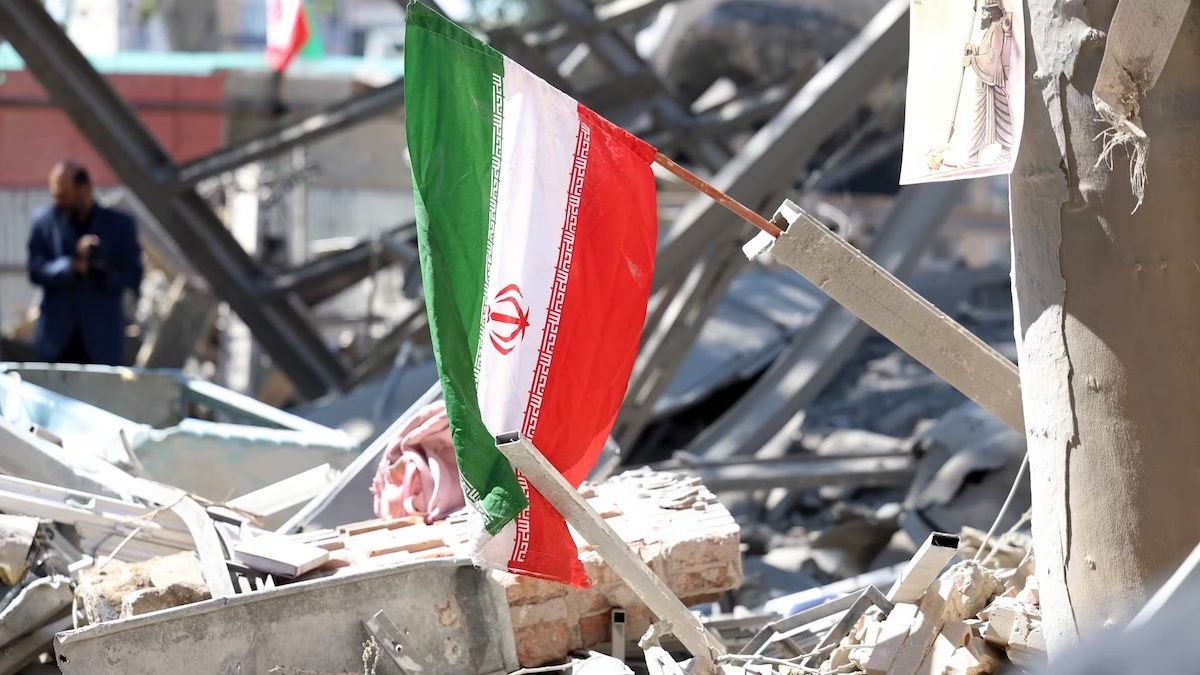
    Amid weeks of sustained Israeli and American air bombardment across Iran that has killed thousands of people, an early morning Israeli strike on the Iranian capital Tehran has completely leveled the city’s historic Rafi-Nia Synagogue, according to multiple Iranian local media reports.

    Iran’s official Mehr News Agency and reformist publication Shargh confirmed the synagogue was hit in the attack carried out on April 7, during the Jewish holy holiday of Passover. Video footage shared by local journalists and media outlets shows rescue teams sifting through the rubble of the destroyed structure, with scattered Hebrew religious liturgical texts visible among the debris. As of the latest updates, no casualties have been reported from the incident.

    Shargh noted that the Rafi-Nia Synagogue served as a central gathering place for Tehran’s Khorasan Jewish community, a group of Jewish Iranians whose families trace their roots back to Iran’s historical northeastern Khorasan region. Iran is home to the third-largest Jewish population in the Middle East, following only Israel and Turkey. A 2016 Iranian national census recorded the country’s Jewish population at just over 9,000, though many community members estimate the actual number is significantly higher. Under Iranian law, Judaism is an officially recognized and protected religion, and Tehran alone hosts roughly 30 active synagogues for the local Jewish community.

    The destruction of the synagogue comes amid a sustained campaign of cross-border strikes that began on February 28, when Israel and the United States launched ongoing bombardment across Iranian territory. Data collected by the U.S.-based Human Rights Activists News Agency (HRANA) indicates that more than 3,600 Iranians have been killed in the attacks since they began, including at least 1,665 civilian casualties. Neither Israel nor the United States has issued an official statement confirming or commenting on the strike that hit the synagogue. Middle East Eye has reached out to the Israeli military to request comment on the incident.

    For weeks, members of Iran’s Jewish community have already expressed growing anxiety over their safety and future amid the escalating conflict. In interviews with Middle East Eye conducted in March, multiple Jewish Iranians emphasized their deep ties to the country, rejecting framing that casts them as outsiders amid rising regional tensions. “Yes, I’m Jewish. But I cannot see the country where I was born and raised as my enemy,” a 46-year-old Jewish businesswoman from Shiraz told the outlet. “I am both Jewish and Iranian. Because of that, I believe I can judge this situation without hatred. Much of the chaos we have seen in the region in recent years is connected to Netanyahu’s policies.”

  • Lenovo’s chairman donates 200m yuan to Shanghai Jiao Tong University

    Lenovo’s chairman donates 200m yuan to Shanghai Jiao Tong University

    Ahead of Shanghai Jiao Tong University’s upcoming 130th founding anniversary, one of its most prominent graduates has made a landmark personal contribution to advance the institution’s work in cutting-edge technology education. On Monday, Yang Yuanqing, chairman and chief executive officer of global tech giant Lenovo, formally presented a 200 million yuan ($29 million) personal donation to his alma mater at a campus ceremony, alongside the launch of a broad new five-year strategic partnership between Lenovo and the university that will see the company commit an additional 300 million yuan to collaborative initiatives.

    Yang, who earned his undergraduate degree in computer science from Shanghai Jiao Tong University in 1982, outlined that his personal gift will be directed specifically at supporting research innovation and talent development within the university’s artificial intelligence programs. The core goal of the investment, he noted, is to help the institution cultivate a new generation of world-class AI professionals that can drive global progress in the fast-evolving field.

    This donation marks the third major personal contribution Yang has made to support his alma mater’s long-term growth. His most recent prior gift came in 2021, when he donated 100 million yuan to build what was at the time the most powerful university-based scientific computing center in all of China. In the years since its launch, that cutting-edge facility has emerged as a leading domestic and international research computing platform, providing critical infrastructure support for more than 1,200 individual research projects and enabling the publication of over 1,100 high-impact academic papers across a wide range of scientific and technical disciplines.

    The new strategic partnership between Lenovo and Shanghai Jiao Tong University will expand on this legacy of collaboration over the next five years, with three core focus areas: joint scientific research initiatives, industry-aligned talent development programs, and investment incubation for early-stage technology innovations emerging from the campus. The collaboration is expected to bridge academic research and real-world industry application, creating new pathways for technological innovation and talent growth at the intersection of academia and global tech development.

  • Xi urges building China’s strength in education, sci-tech, talent

    Xi urges building China’s strength in education, sci-tech, talent

    BEIJING, April 7, 2026 – Xi Jinping, President of the People’s Republic of China, General Secretary of the Communist Party of China Central Committee, and Chairman of the Central Military Commission, has issued a key directive calling for aligned efforts around China’s core strategic priorities, and urging dedicated contributions to advancing the country’s standing as a global leader in education, science and technology, and talent development.

    The statement was delivered in a formal reply letter addressed to faculty members and students from four Chinese higher education institutions, underscoring the central government’s prioritization of these three interconnected sectors as foundational pillars for long-term national development.

    The call comes amid China’s ongoing push to strengthen its indigenous innovation capacity, upgrade its education system to meet 21st-century economic and social challenges, and nurture a high-skilled domestic workforce that can drive sustainable growth across key industrial and technological sectors. By tying education, scientific advancement, and talent cultivation to the country’s major strategic needs, the directive signals a continued focus on building comprehensive national strength through knowledge-based development.

  • Ben Gvir raids Al-Aqsa as Israel plans to reopen mosque to settler incursions

    Ben Gvir raids Al-Aqsa as Israel plans to reopen mosque to settler incursions

    On a tense Monday in occupied East Jerusalem, Israeli far-right National Security Minister Itamar Ben Gvir launched a controversial incursion into the Al-Aqsa Mosque compound, entering through the Moroccan Gate under a heavy escort of armed Israeli police. The incursion took place against the backdrop of an unprecedented, month-long closure that has barred nearly all Muslim worshippers from accessing one of Islam’s most sacred holy sites, a move that has already stoked deep anger across the Muslim world.

    Israeli authorities have justified the ongoing closure by citing security concerns tied to the ongoing war with Iran, but Palestinian officials and advocacy groups have openly questioned the credibility of these claims. They point to the fact that Israeli officials have allowed large-scale public gatherings for Jewish holiday celebrations in other parts of the country, raising accusations that the security pretext is being used to advance a long-held far-right agenda to reshape control of Al-Aqsa.

    In parallel to Ben Gvir’s incursion, Israeli police — operating under Ben Gvir’s oversight — have drafted a new access plan that would resume daily incursions by ultra-nationalist Jewish settlers into the mosque compound once it reopens. The proposal, which still requires approval from Israel’s High Court, would cap entry at 150 people at a time, a limit that applies equally to both Muslim worshippers and Jewish visitors. The plan marks a break from the pre-war status quo arrangement, which has for decades recognized the Jerusalem Islamic Waqf as the sole exclusive administrative authority over Al-Aqsa, including full control over entry and site management.

    Critics of the plan warn that the 150-person cap is not an even-handed restriction: with the compound’s capacity to hold hundreds of thousands of worshippers for weekly Friday prayers and thousands for daily prayers, the limit effectively shuts out the vast majority of Muslim worshippers while normalizing and expanding daily settler incursions. Before the war, these incursions — which already violated the long-standing status quo — took place twice daily on non-weekends, with settlers entering in groups of fewer than 100 people under constant police protection. The new plan would raise the maximum group size to 150, a change that has been openly celebrated by ultra-nationalist Israeli activists who advocate for Israeli control over Al-Aqsa. Arnon Segal, a prominent leader in Temple Mount activist groups that organize these incursions, called the new cap a “historic development” and a long-awaited “dream” in a post on social media platform X.

    The incursion and the new access plan have drawn widespread condemnation from Palestinian, regional, and international actors. The Palestinian Ministry of Religious Affairs called Ben Gvir’s incursion, carried out while the site remains closed to Muslim worshippers, an extremely dangerous step that undermines the inherent religious sanctity of Al-Aqsa. The Al-Quds International Institution, in a hard-hitting official statement released Monday, argued that the plan “deepens the division of Al-Aqsa Mosque” between Muslim and Jewish communities, saying it leverages the ongoing war to quietly transform the site into a shared Jewish-Islamic holy site as a stepping stone to the full Judaization of the compound. The institution also noted that the arrangement would place Ben Gvir in de facto control of all of the mosque’s affairs, fully sidelining the Jerusalem Islamic Waqf, the internationally recognized governing body for the site. It called the move a deliberate insult to Arab and Muslim leaders who have so far only issued verbal statements against Israeli actions, reducing them to passive onlookers while a sacred site is reshaped against their will.

    In practical terms, the Al-Quds International Institution explained, the 150-person cap means that even when the site formally reopens, it will remain effectively closed to the vast majority of Muslim worshippers: 150 people would not even fill the first row of the Qibli Mosque, the largest indoor prayer hall in the 144,000-square-meter Al-Aqsa compound. The institution warned that the plan would have “serious consequences” and issued an urgent call for action from Palestinians and all Muslim-majority nations, specifically calling on Jordan — the internationally recognized custodian of Jerusalem’s holy sites — and the Jerusalem Waqf to take concrete steps to push back against attempts to eliminate their long-standing role governing Al-Aqsa. “If implemented, Al-Aqsa Mosque will effectively be closed to Muslims and open to settler incursions. This is a humiliating act of aggression and an unacceptable reality that must be confronted by all possible means,” the statement read.

    Hamas also issued a condemnation, saying Ben Gvir’s incursion “reflects a deepening of the occupation’s arrogance and its deliberate targeting of the mosque’s sanctity.” Jordan and Qatar have also added their voices to the criticism of the move. Ben Gvir, for his part, has defended the plan, arguing that it is a matter of fairness: he noted that anti-war protests of up to 600 people have been allowed in Israel, so he is “obliged to ensure justice and prevent discrimination” against those seeking access to the Western Wall and Al-Aqsa compound, which he refers to by the Israeli name Temple Mount. He called on the High Court to approve the plan to allow small-group access to both sites.

  • Inside a huge compound on Thailand-Cambodia border where 10,000 workers scammed people globally

    Inside a huge compound on Thailand-Cambodia border where 10,000 workers scammed people globally

    In the border town of O’Smach straddling Thailand and Cambodia, a recently seized illicit operation laid bare the staggering, industrial-scale expansion of transnational cyber scam networks that have exploded across Southeast Asia in the years since the COVID-19 pandemic.

    For a journalist who has tracked the rise of these criminal compounds for years from a base in the region, and visited multiple scam centers before, the size of the O’Smach Resort complex—seized by Thailand’s military during a December border conflict with Cambodia—still defied prior expectations. Covering roughly 197 acres, an area equal to 150 full-sized American football fields, it dwarfed every other scam facility the reporter had previously observed.

    Thailand’s military organized a guided media tour of the seized compound this week, revealing the full scope of the well-established criminal operation that once operated from the site. Thai officials stated they seized the territory after Cambodian actors used the complex as a base for cross-border attacks during the December dispute.

    The compound, bearing the innocuous name O’Smach Resort, is linked to Cambodian politician Ly Yong Phat, who is already sanctioned by the United States for documented human rights abuses tied to the same site. While it remains unconfirmed whether ongoing expansion work at the complex is also tied to Ly, visible signs of new construction are scattered across the self-contained facility: stacks of unused bricks and idle construction cranes dot the landscape, indicating the criminal network was actively growing its operations before the seizure.

    Inside the complex, the infrastructure is built explicitly to support large-scale coordinated fraud. In total, the site holds 157 separate structures. Twenty-nine of these are dedicated office buildings for scam operating companies, while the rest include mass worker dormitories, luxury staff apartments, and even three-story private villas for senior criminal leaders. Thai military estimates suggest at least 10,000 people resided and worked within the compound at the height of its operation. To accommodate the majority Chinese workforce that ran the scams, the compound even hosts a range of regional Chinese dining options, from spicy Hunan dishes and southern Chinese Shaxian delicacies to Sichuan-style hot and sour rice noodles.

    During the tour, reporters were led to a four-story office building where scammers specifically targeted American victims. The office was left largely intact after the seizure: half-eaten snacks remained on desks, and every workstation held detailed scam scripts and notes written in Chinese. American SIM cards were scattered across surfaces, confirming the operation’s direct targeting of United States consumers.

    One of the recovered scripts illustrates the sophisticated, long-con tactics scammers use to manipulate victims. The 24-page document builds out an elaborate backstory for a fake female persona named Mila, who is framed as a successful trader with huge earnings from gold options trading. The script goes far beyond basic financial fraud framing: it adds deeply personal details, including the death of Mila’s husband from leukemia when their daughter was an infant, childhood bullying, and a move to South Africa to live with her uncle as a teenager. These manufactured emotional details are designed to build trust with targets over weeks or months before scammers move to steal their money.

    The revelation of this massive single compound lines up with broader estimates from global authorities. The U.N. Office of the High Commissioner for Human Rights currently estimates that roughly 300,000 people are trapped in the scam industry across Southeast Asia, many of them coerced into committing fraud against victims worldwide. Newly released FBI data this week underscores the staggering human cost for one major target market: U.S. consumers lost nearly $21 billion to all types of scams in 2023 alone.

    While both Thailand and Cambodia have made public pledges to crack down on cross-border cyber scam operations, senior Thai officials emphasized that the problem is fundamentally global in scope, and cannot be solved by two neighboring countries acting alone. “Every country of the world has to join together to solve this problem. We cannot do it alone with Cambodia and Thailand,” stated Air Chief Marshal Prapas Sornchaidee, one of the senior military officials leading the media tour.

    Recent regional developments signal growing momentum to address the crisis: Cambodia has recently advanced new legislation that would impose penalties as severe as life imprisonment for operators of illicit scam centers, and multiple countries have already extradited high-profile scam suspects back to their home jurisdictions to face charges. Still, the discovery of a 10,000-person fully operational scam compound near the Thai-Cambodian border makes clear that transnational criminal networks have already built a far larger infrastructure than many global leaders had previously acknowledged.

  • 3,413 meters: China sets new record in global hot water ice drilling

    3,413 meters: China sets new record in global hot water ice drilling

    In a landmark milestone for polar scientific research, China has set a new world record for hot water ice drilling, reaching a depth of 3,413 meters during its first experimental deep drilling mission in Antarctica, China’s Ministry of Natural Resources announced on Tuesday. The achievement shatters the previous international benchmark of 2,540 meters, opening new doors for unexplored polar research.

    The successful mission was completed on February 5 by China’s 42nd Antarctic Expedition Team, which carried out the test at the Qilin Subglacial Lake, a massive buried Antarctic body of water first named by Chinese researchers in 2022. Located in Princess Elizabeth Land, within the inland ice sheet of East Antarctica, the subglacial lake sits roughly 120 kilometers from China’s Taishan Antarctic research station, making it an accessible yet geologically significant site for deep drilling operations.

    With this breakthrough, China now has the proven technical capacity to conduct drilling research across more than 90 percent of the Antarctic ice sheet and the entirety of the Arctic ice sheet, according to official project updates. Hot water ice drilling is widely recognized as a cutting-edge frontier of global Earth science, with core research goals that include unlocking clues about Earth’s ancient environmental shifts, improving the accuracy of future climate change projections, exploring the limits of life in extreme hidden ecosystems, and expanding humanity’s fundamental understanding of polar geoscience.

    Compared to traditional mechanical ice drilling methods, hot water drilling technology offers major advantages. It penetrates ice far faster while causing minimal disruption to the ice column and subglacial environment, supports clean, large-diameter drilling operations, and can efficiently reach critical geological interfaces including subglacial lakes, ice shelf bases, and subglacial bedrock. For these reasons, it has become the gold standard for international research into the deep, hidden environments of polar ice sheets.

    The 2026 experimental mission was designed primarily to validate the performance of China’s domestically developed deep ice sheet hot water drilling system under extreme Antarctic conditions. By drilling through the full thickness of the ice cover over Qilin Subglacial Lake, the project created a contamination-free access route and lays critical technical groundwork for upcoming research, including future in-situ observations of the subglacial ecosystem and collection of water and lakebed sediment samples.

    Targeting an ice sheet over 3,000 meters thick, the mission integrated multiple custom-built pieces of equipment engineered specifically to withstand polar conditions, while solving longstanding key technical challenges: reliable low-temperature operation of machinery, strict prevention of external contamination of the pristine subglacial environment, and precise management of deep hoses and winches at extreme depth.

    Officials noted that the successful drilling demonstrated the new system’s efficient, stable, and environmentally sustainable operation. The milestone fills a longstanding gap in China’s polar research capabilities and aligns with the country’s stated commitment to ‘green exploration’ and environmentally responsible polar science practices.