In the aftermath of the 40-day US-Israeli war on Iran, four interconnected developments have emerged from inside the country, painting a complex picture of military adaptation, domestic unrest, political division, and regional strategic risk, according to an Iranian press review compiled by Middle East Eye. None of the reporting included in this digest has been independently verified by MEE.
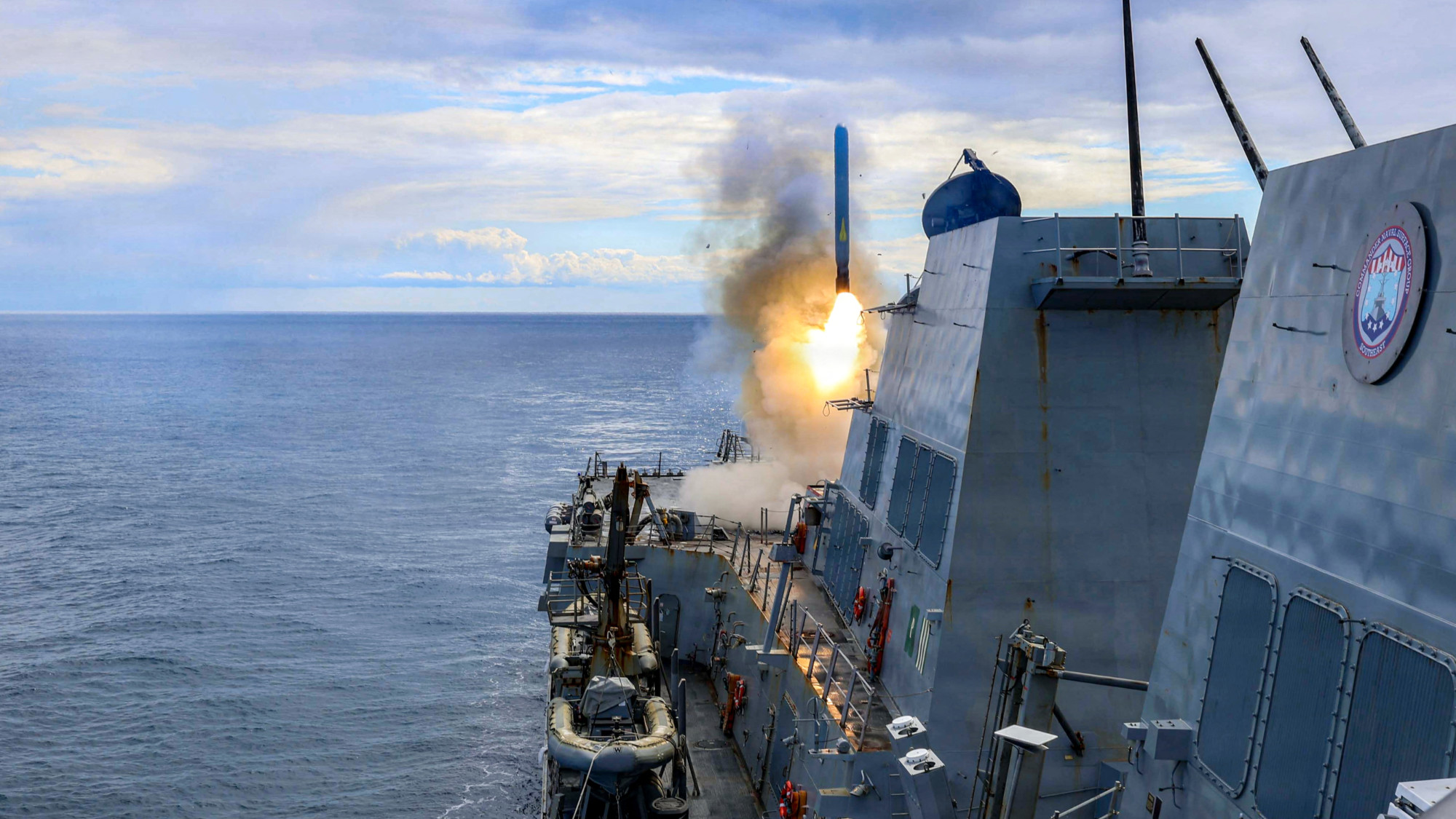
First, Iran’s military is working to reverse-engineer captured US-made Tomahawk missiles to replicate their advanced technology, Iran’s semi-official Mehr News Agency has claimed. The report states that multiple Tomahawk missiles fired during the war were either intercepted and downed by Iranian air defenses or failed to detonate on impact, leaving large portions of the weapons intact for analysis. Mehr added that some missiles failed to explode either due to faulty detonator systems or because Iranian electronic warfare units disrupted their guidance and detonation mechanisms. Iranian military engineers are now studying these intact components to develop the country’s own indigenous long-range missile systems. “In the 40-day war, Iran’s strategy switched to gaining knowledge from the battlefield. Every Tomahawk missile that landed and did not explode was an advanced textbook for Iranian engineers,” the agency reported. While Mehr’s claim has not been confirmed by independent third-party sources, Iranian officials have previously confirmed that they recovered and neutralized dozens of unused American and Israeli munitions in the weeks after a ceasefire took effect on April 7. On the final day of the conflict, Iran’s ILNA news agency released a public photograph of an unexploded missile that struck a section of Tehran’s iconic Grand Bazaar, identifying the weapon as a US-built Tomahawk. This approach to weapons development is not new for Iran: the country has been locked out of international arms markets under sweeping global sanctions since 1979, and for decades it has relied on reverse-engineering captured foreign weapons to build its domestic missile and drone programs.
Second, conflicting official statements have left thousands of Iranians displaced by US-Israeli airstrikes on Tehran uncertain about their long-term temporary housing. When the war first began, Tehran’s municipal government announced that any resident whose home was destroyed or rendered uninhabitable in attacks would be offered free accommodation in city-owned hotels until they could rebuild or secure permanent new housing. But on Saturday, Iran’s reformist Etemad daily newspaper reported that dozens of displaced households currently staying in capital city hotels had already received eviction notices ordering them to leave by the end of the week. One displaced resident, whose apartment suffered catastrophic damage in an airstrike explosion, told the outlet that they had nowhere else to go. “The fire department and the Red Crescent say my house is uninhabitable. Even if it was not destroyed, there are no stairs left in the building for me to reach my apartment,” the resident said. A day after Etemad published its report, Tehran Municipality spokesperson Abdolmotahar Mohammadkhani released a corrective statement saying displaced residents should reach out directly to municipal authorities to have their individual cases resolved. Mohammadkhani confirmed that the city has already housed 6,677 displaced people across 45 hotels and municipal housing complexes, and stressed that “as long as their housing problems are not solved, the municipality will cover all accommodation costs.”
Third, a prominent jailed Iranian reformist political philosopher has publicly called on Iran’s hardline government to pursue national reconciliation with the Iranian public and end open conflict with the United States and Israel. Mohammad Reza Tajik, a leading reformist figure who was detained during the 2009 Green Movement anti-government protests, published the commentary on Jamaran, a website aligned with the grandson of Ruhollah Khomeini, Iran’s first supreme leader. Tajik, a longstanding public critic of the government’s violent crackdown on political opposition, argued that ruling officials must address both widespread domestic public discontent and mounting international pressure to make adaptive policy choices in the post-war period. “It is only in the light of practical reason that one can discern what, in the present conditions, is to be done and what is to be left undone; and in this darkness of the world’s night, it becomes clear which is the path and which is the path astray,” he wrote. Tajik pointed to the deep public anger that followed the government’s bloody crackdown on nationwide anti-establishment protests in January, saying that ruling leaders must demonstrate a clear willingness to reform to restore public trust. “Through clear signs of a will to change, and a turning away from what has left so many citizens feeling dissatisfied, powerless, alienated, abandoned and without effect, these many [must] be given hope for the coming of that day of joy when they will be reconciled,” he added.
Finally, two recent high-profile developments involving the United Arab Emirates – the public exposure of secret military cooperation with Israel and Abu Dhabi’s withdrawal from OPEC – have sparked widespread speculation across Iranian political circles about the Gulf state’s future role in regional tensions. Iranian political analysts have focused heavily on how these moves signal a shift in the UAE’s long-term regional strategic posture. Writing in the reformist daily Shargh, Iranian analyst Mehdi Bazargan pointed to recent statements by US officials that downplayed reported Iranian attacks on the UAE that took place on May 4 and 5, arguing that the comments signal Washington may be stepping back from its security commitments to Abu Dhabi. Bazargan argued that after observing the trajectory of the recent US-Israeli war and the level of consistent US military backing for Israel, the UAE may choose to deepen its military alignment with Tel Aviv. “Trump’s words show that Washington is not currently willing to go to war with Iran again at the expense of the security of the Emiratis,” Bazargan wrote. “Even if some actors like Israel can push him towards a new escalation of tension with Iran, the end result will be nothing but the formation of a ‘scorched earth’ in the UAE.” The analyst also criticized the 2020 Abraham Accords, which normalized diplomatic relations between the UAE and Israel, calling it a fundamental strategic mistake. The agreement, he argued, was built on the incorrect assumption that the US and Israel could guarantee the UAE’s security against Iranian military retaliation. “Normalising relations with Israel in practice exposed Abu Dhabi to a more complex game whose requirements exceed the country’s actual capacities,” he wrote. “The idea of enjoying security benefits without accepting the consequences on the ground is now at odds with the harsh regional realities.” Speculation about the UAE’s role in the recent conflict intensified after The Wall Street Journal published a report on Monday claiming that the UAE had launched quiet offensive military strikes against Iranian targets earlier this spring, confirming Abu Dhabi’s active participation in the US-Israeli war. Citing anonymous sources familiar with the operation, the outlet reported that Emirati forces targeted an oil refinery on Iran’s Lavan Island in the Persian Gulf in early April. The UAE government has not made any public statement acknowledging or confirming the strike.