标签: Asia

亚洲

  • Tributes after British teenager dies while visiting Vietnam

    Tributes after British teenager dies while visiting Vietnam

    A 19-year-old British woman on a pre-university gap year trip through Southeast Asia has died following a road accident in northern Vietnam, in a tragedy that has been followed by an extraordinary act of cross-border compassion from her grieving family. Orla Wates, who was set to begin her degree studies at Durham University later this year, was traveling the popular Ha Giang Loop mountain route when she fell from the back of a motorcycle, local Vietnamese media has confirmed.

    After the accident, Wates was rushed from the remote northern mountain region to Hanoi’s major Viet Duc Friendship Hospital for emergency care. Despite medical teams’ best efforts, she died on April 2, with her parents Henrietta and Andrew Wates at her side.

    In the wake of their devastating loss, the Wates family made the deliberate decision to donate Orla’s organs to five critically ill Vietnamese patients at the hospital, a choice they say aligned with their daughter’s generous character. “Orla was beautiful, independent and very funny, with a sharp wit,” Henrietta Wates told Viet Nam News. “She loved to look good and lived life to the full. We chose to donate Orla’s organs, as we believe that if there were a way to give opportunity to others, this is what Orla would have wanted. Knowing that she is living on through them brings us great comfort.”

    Orla’s father added that his daughter had held deep affection for Vietnam, making the choice to give back to the country meaningful for the whole family. Hospital representatives praised the family’s selfless decision, noting that it crossed lines of nationality and race to give vulnerable patients a second chance at life. “In the face of profound grief, her family made a deeply compassionate decision that transcended nationality and race – to donate her organs, giving others a chance at life,” a hospital spokesperson said. “One journey has come to an end, but her life continues quietly and resiliently in others who have been given a second chance.”

    The UK’s Foreign, Commonwealth and Development Office has confirmed it is in contact with local authorities and providing consular support to the Wates family during what it called this “hugely difficult time.” “Our thoughts are with the family and friends of Orla Wates, following her tragic death in Vietnam,” an FCDO spokesperson said.

    The 350-kilometer Ha Giang Loop, which winds through rugged northern Vietnamese mountains, is one of the country’s most popular adventure routes for international tourists. It is common for visitors to ride pillion on a motorcycle driven by an experienced local guide, especially for those with no experience riding on Vietnamese roads. Vietnam has long struggled with high traffic fatality rates: government data shows more than 10,000 people were killed and another 16,000 injured in road accidents across the country in 2024.

  • North Korea launches a second projectile in 2 days, Seoul says

    North Korea launches a second projectile in 2 days, Seoul says

    South Korea’s joint military command confirmed Wednesday that North Korea has conducted a second projectile launch off its eastern coastline, coming just one day after a similar unidentified weapons test near the country’s capital area. The South Korean Joint Chiefs of Staff did not release additional details on the latest launch, including estimates of how far the projectile traveled or confirmation of what type of weapon system was tested.

    The launch activity follows a key weapons development announcement made earlier this week by North Korea: state reports confirmed leader Kim Jong Un personally oversaw testing of an upgraded solid-fuel engine designed for strategic weapons, a development Pyongyang framed as a major breakthrough for its national military arsenal.

    Solid-fuel missile technology represents a significant strategic advancement over older liquid-fuel systems. Unlike liquid-fuel weapons, which require on-site fueling immediately before launch and cannot remain stationary for long periods, solid-fuel missiles are far easier to transport, can be deployed faster, and are much harder for enemy intelligence agencies to detect and destroy prior to launch. This latest engine test marks the first test of its kind conducted by North Korea in seven months, and aligns directly with Kim Jong Un’s stated goal of developing a more maneuverable, stealthier missile force capable of striking targets across the United States and its regional allies.

    According to South Korean lawmakers who attended a closed-door briefing this week, Seoul’s National Intelligence Service has assessed that the solid-fuel engine work is part of a broader effort to develop a more powerful intercontinental ballistic missile (ICBM) capable of carrying multiple independent nuclear warheads.

    North Korea has accelerated its expansion of nuclear and conventional weapons capabilities since high-stakes denuclearization negotiations between Kim Jong Un and former U.S. President Donald Trump collapsed in 2019. During a ruling Workers’ Party Congress held in January of this year, Kim indicated Pyongyang remained open to the possibility of dialogue with the U.S., but set a key condition: Washington must abandon its demand that North Korea commit to nuclear disarmament before any formal talks can resume.

  • White House denies it is considering using nuclear weapons in Iran

    White House denies it is considering using nuclear weapons in Iran

    Tensions around US-Iran relations have spiked dramatically in recent days after a series of escalating, incendiary statements from senior US leadership, capped by a chaotic back-and-forth over whether the Trump administration is open to deploying nuclear weapons against the Islamic Republic.

    The controversy began unfolding last week, as US President Donald Trump adopted a sharply erratic policy tone toward Iran, swinging unexpectedly between public expressions of optimism that a new bilateral deal could be reached and harsh, violent threats targeting the country. On Sunday, the president took to his Truth Social platform for an expletive-filled post, ordering Iranian officials to immediately reopen the Strait of Hormuz — a critical global maritime chokepoint — and warning that Tehran would face “hell” if it refused to comply.

    As the Tuesday deadline Trump imposed for the strait’s reopening approached, the president doubled down on his rhetoric with an unprecedented apocalyptic warning. In a Truth Social post Tuesday evening, he declared that if Iran failed to meet his demand, “A whole civilization will die tonight, never to be brought back again.” Adding to the gravity of the threat, he framed the moment as a historic turning point, writing, “We will find out tonight, one of the most important moments in the long and complex history of the World.”

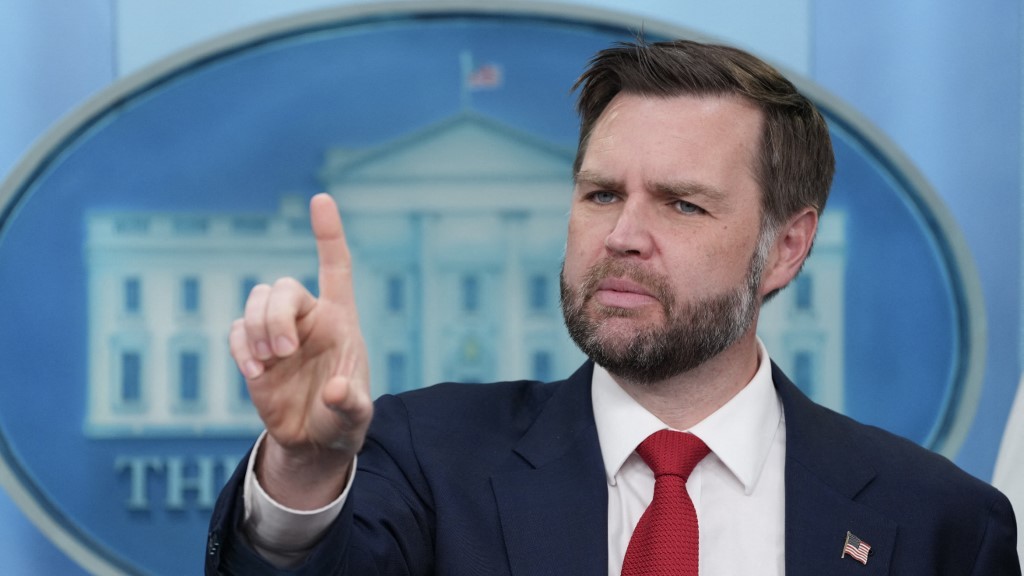
    Shortly after the president’s statement, Vice President JD Vance, during an official visit to Hungary, added fuel to the speculation around potential extreme military action. Vance argued that Tehran must recognize that the US maintains powerful, unused military capabilities in its arsenal, saying “The president of the United States can decide to use them, and he will decide to use them if the Iranians don’t change their course of conduct.”

    Vance’s comment, paired with Trump’s earlier warning that an entire civilization faced annihilation, led widespread international analysis to interpret the vice president’s remarks as a veiled reference to the possible use of nuclear weapons against Iran. Any deployment of nuclear weapons against human targets would mark a historic breaking point: it would be the first use of the technology by any state since the US dropped atomic bombs on the Japanese cities of Hiroshima and Nagasaki at the close of World War II. The catastrophic humanitarian and environmental impact of nuclear weapons, paired with the risk of uncontrollable regional and global escalation, has meant no nuclear-armed state — of which there are nine globally — has chosen to deploy these arms in conflict over the nearly 80 years since 1945.

    Within hours of the speculation emerging, the White House issued a blunt and public denial on its X (formerly Twitter) account pushing back against the inference. In an unusually profane rebuke to those reporting the connection, the administration wrote: “Literally nothing @VP said here ‘implies’ this, you absolute buffoons.”

    The rapid sequence of conflicting statements has deepened international concern over the Trump administration’s approach to the already volatile Persian Gulf region, with observers warning that unguarded, apocalyptic rhetoric risks raising the risk of miscalculation on both sides that could spiral into unintended conflict.

  • Kharg struck as Trump threatens to wipe out Iranian civilization

    Kharg struck as Trump threatens to wipe out Iranian civilization

    On Tuesday, mere hours before his self-declared deadline for a negotiated agreement to reopen the strategic Strait of Hormuz, former and current U.S. President Donald Trump delivered an extraordinary public threat to permanently erase Iran’s entire national civilization — remarks that legal and policy experts have universally characterized as a clear admission of genocidal intent. The threat was posted directly to Trump’s personal Truth Social platform, as U.S. military forces escalated a widening air campaign targeting Kharg Island, Iran’s central oil export terminal that underpins the country’s energy economy. Multiple regional defense reports add that U.S. and Israeli forces also carried out overnight airstrikes against key bridge infrastructure across Iran, as part of a broader offensive launched in late February that has already killed thousands of Iranian civilians and combatants.

    In his social media post, Trump declared: “A whole civilization will die tonight, never to be brought back again. I don’t want that to happen, but it probably will. However, now that we have Complete and Total Regime Change, where different, smarter, and less radicalized minds prevail, maybe something revolutionarily wonderful can happen, WHO KNOWS? We will find out tonight, one of the most important moments in the long and complex history of the World.”

    Leading global policy and legal experts were quick to condemn the remark, framing it as a violation of both U.S. domestic law and international humanitarian norms. Brian Finucane, senior advisor for the U.S. Program at the International Crisis Group, drew public attention to 18 U.S. Code § 1091, the federal statute that bars U.S. nationals from committing acts of genocide both within the United States and on foreign soil. Dylan Williams, vice president for government affairs at the Washington D.C.-based Center for International Policy, confirmed that the public threat meets the legal threshold for genocidal intent as defined by the same U.S. genocide statute, which prohibits actions intended to destroy a national group in whole or in part. Williams added that if any Iranian civilians are killed as a result of military action carried out following this threat, both Trump and any officials aiding him would be legally culpable for genocide. Former Human Rights Watch executive director Kenneth Roth echoed this assessment, noting that the threat itself constitutes an unlawful act under international law.

    Speaking to NBC News, Roth emphasized that Trump’s threat amounts to a public call for collective punishment that targets the Iranian people, not just Iranian military forces — a violation of the Fourth Geneva Convention. “Attacking civilians is a war crime. So is making threats with the aim of terrorizing the civilian population,” Roth said. He called on U.S. military personnel to refuse unlawful orders and for members of the U.S. Congress to immediately begin impeachment proceedings against Trump to remove him from office.

    Adil Haque, a professor of international law at Rutgers University, echoed these calls on Tuesday, urging the global community to intervene immediately to stop Trump from launching what he described as a catastrophic, criminal assault on a nation of more than 90 million people. “Soldiers must refuse unlawful orders. Members of Congress must call for impeachment and removal. Every American who loves their country must speak out. Enough is enough,” Haque stated.

    Trump’s arbitrary 8 p.m. Eastern Time deadline centers on his demand that the Iranian government fully reopen the Strait of Hormuz, the critical maritime chokepoint through which roughly 20 million barrels of crude oil and a large share of the world’s liquefied natural gas flowed daily before the outbreak of the current conflict. The U.S. president has already threatened massive airstrikes on Iranian power plants, energy infrastructure and national bridge networks if no agreement meets his deadline by the specified time. This threat marks an escalation of rhetoric Trump has deployed over recent days: on Sunday, he publicly demanded Iran “open the Fuckin’ Strait, you crazy bastards, or you’ll be living in Hell,” and has previously bragged he would bomb Iran “back to the Stone Ages.” When asked about potential war crimes committed during U.S. operations in Iran, Trump told reporters Sunday he was unconcerned, stating that “the time the Iranian people are most unhappy … is when those bombs stop.”

    In response to the escalating threats, Iranian officials have rejected international calls for a temporary 45-day ceasefire proposed by regional mediators led by Pakistan, with participation from Egypt and Turkey, and have insisted on ironclad guarantees that both the U.S. and Israel will end all current attacks and commit to no future aggression against Iran. “We only accept an end of the war with guarantees that we won’t be attacked again,” Mojtaba Ferdousi Pour, head of Iran’s diplomatic mission to Cairo, told The Associated Press, confirming the government’s rejection of the temporary truce proposal. Pour added that Tehran cannot trust Trump, who Iranian officials have repeatedly accused of using nuclear negotiations as a cover to extract political concessions and buy time to prepare for expanded military operations.

    That pattern of behavior was borne out most recently in February, when Omani Foreign Minister Badr bin Hamad Al Busaidi, the lead mediator for U.S.-Iran peace talks, confirmed that a comprehensive peace deal was within reach just hours before Trump ordered the launch of large-scale airstrikes on Iran. Prior to the February 28 outbreak of the current U.S.-Israeli offensive against Iran, Iranian negotiators had been willing to make unprecedented concessions on the country’s civilian nuclear program. Multiple U.S. presidential administrations dating back to George W. Bush, including Trump’s first term in office, have formally concluded that Iran is not actively pursuing development of nuclear weapons. Notably, the U.S. and Israel first launched large-scale airstrikes against Iran during ongoing negotiations in summer 2025, mirroring the 2026 pattern of breaking off talks for military action.

    A senior anonymous Iranian official speaking to Drop Site News on Monday offered insight into the government’s rejection of a temporary ceasefire, noting that the Trump administration is facing mounting domestic U.S. legal and political constraints over its prosecution of the war, as well as pressure to stabilize volatile global financial markets, creating a need for a short-term pause in hostilities. “Our assessment indicates that this proposal has been drafted solely on the basis of the mediators’ perception of the minimum demands of the parties for halting the war,” the official said. “Tehran does not consider a temporary ceasefire to be a logical course of action, inasmuch as the window for the United States’ exit from the conflict has already been delineated. Should the requisite political will exist, the parties are in a position to establish a permanent ceasefire and thereafter concentrate their efforts on diplomacy.”

  • China’s Long March-8 rocket launches new internet satellites

    China’s Long March-8 rocket launches new internet satellites

    In a successful commercial space mission carried out on Tuesday, China launched its Long March-8 carrier rocket from the Hainan commercial spacecraft launch site located on the country’s southern Hainan Island, placing 18 new internet satellites into their pre-planned orbital positions.

    The liftoff of the rocket occurred at 9:32 pm Beijing Time, marking another milestone in the expansion of China’s domestic satellite internet infrastructure. The 18 satellites delivered to orbit constitute the seventh batch of networking satellites developed for the Qianfan Constellation, a planned large-scale low-Earth orbit satellite network designed to deliver global internet connectivity services.

    The launch, conducted from China’s purpose-built commercial space launch facility in Hainan, demonstrates the continued reliability of the Long March rocket family and advances the country’s progress in building out its commercial space sector. This mission adds additional nodes to the growing Qianfan network, bringing the constellation closer to its operational goal of providing comprehensive, uninterrupted internet coverage across the globe.

    As demand for global satellite internet connectivity continues to rise driven by increasing remote work, IoT deployment, and connectivity needs in underserved regions, progress in the Qianfan Constellation project represents a key step forward in China’s commercial space development ambitions.

  • Beijing warns against Japan’s plan to ease restrictions on arms exports

    Beijing warns against Japan’s plan to ease restrictions on arms exports

    In a stark official rebuke, Beijing has issued a serious warning over Tokyo’s incoming plan to roll back long-standing restrictions on Japanese arms exports, a shift that China says signals the country’s growing drift toward an offensive, expansionist national security posture that demands sharp vigilance from the global community. The statement comes amid widespread opposition, both within Japan and across the international community, to the policy change that would upend 70 years of post-World War II constraints on Japanese military activity.

    Foreign Ministry spokesperson Mao Ning outlined China’s position during a routine Tuesday press briefing, confirming that the warning follows confirmed reports that Japanese officials are set to revise the nation’s Three Principles on Transfer of Defense Equipment and Technology as early as this month. The current framework, first introduced in 2014, strictly limits Japanese defense exports to five non-lethal categories centered on logistical support, including search-and-rescue gear and transportation equipment.

    The proposed revision would fundamentally rewrite these rules: it would open the door for exports of fully lethal weapons as a general rule, create carve-outs that allow arms shipments to nations actively involved in armed conflict, and replace the requirement for advance parliamentary approval with a far weaker after-the-fact notification system.

    Mao emphasized that concern over the shift is not limited to China. Leading international academics and prominent, forward-thinking figures within Japan have already raised urgent alarms, noting that the revision marks a paradigm shift in Japan’s post-war arms policy that would dismantle key guardrails built after 1945 specifically to block a return of Japanese militarism. The move, she added, directly violates the core spirit of binding international legal agreements forged in the aftermath of World War II, including the Cairo Declaration, the Potsdam Proclamation, and Japan’s own formal Instrument of Surrender. It also runs counter to the letter and spirit of Japan’s own pacifist post-war constitution, Mao said.

    Compounding the controversy, official polling previously conducted by the Japanese government itself confirms that a majority of Japanese citizens oppose rolling back arms export restrictions. Mao noted that this mounting shift is no accident: it is the deliberate product of campaigning by Japan’s right-wing political forces, which have openly pushed to rewrite the nation’s defense posture into one defined by offensive power and territorial expansion. Accelerated remilitarization in Japan is no longer a distant risk, she stressed—it is an established reality, backed by formal policy changes and concrete actions already put in place.

    This growing trend represents a direct threat to peace and stability across the East Asian region, Mao argued. She called on Japanese leaders to undertake sincere reflection on their nation’s history of militarist aggression, uphold the peaceful commitments the country made in the post-war era, act with far greater caution in military and security policy, and reverse course before traveling further down a dangerous, wrong path.

    Xiang Haoyu, a senior research fellow at the China Institute of International Studies, expanded on the regional and global risks of the policy shift. He explained that Japanese right-wing forces have long used the rhetoric of “national normalization” and “independent self-defense” as a cover to gradually chip away at the constraints imposed by Japan’s pacifist constitution and the post-WWII international order designed to prevent another catastrophic conflict.

    The push to ease arms export rules, framed by Tokyo as a response to external security threats, actually reflects an outdated Cold War-era zero-sum ideology and advances Japanese strategic goals of geopolitical containment and confrontation, Xiang said. If Japan moves forward with full liberalization of lethal arms exports, the ripple effects will be felt across the globe for decades to come.

    Most immediately, the change will dramatically raise the risk of a new regional arms race across the Asia-Pacific, Xiang warned. Increased flows of Japanese weaponry into already tense, sensitive geopolitical hotspots will likely inflame existing territorial and political disputes, create new conflict flashpoints, and cause irreversible damage to hard-won regional peace and stability.

    Beyond the Asia-Pacific, the wider proliferation of Japanese arms will also weaken the global international arms control framework that has limited the spread of deadly weaponry since the end of the Cold War, Xiang added. No matter what justifications Japanese politicians offer for their policy shift, they cannot obscure the hidden strategic motives and severe risks that come with rolling back arms export rules and pursuing full remilitarization, he said.

    The warning from China coincides with widespread public pushback within Japan itself: on Sunday, more than 6,000 Japanese citizens gathered in central Tokyo to protest the government’s push to ease arms export rules and advance sweeping military expansion, voicing deep anxiety over the dangerous direction the nation is taking.

  • US says military goals against Iran largely achieved, sets talks deadline

    US says military goals against Iran largely achieved, sets talks deadline

    In a joint press appearance held in Budapest alongside Hungarian Prime Minister Viktor Orban on Tuesday, United States Vice President JD Vance laid out a critical update on Washington’s military campaign against Iran, announcing that core American military objectives against Tehran have been almost fully completed. During the address, Vance issued a stark warning to the Iranian government: the window to enter into negotiations with the US is rapidly closing, and failure to engage will bring even deeper economic hardship for the country.

    Vance emphasized that the US will maintain ongoing pressure to roll back Iran’s ability to produce advanced weapons. He officially confirmed that US military forces carried out targeted strikes against military infrastructure on Iran’s strategic Kharg Island, but was quick to clarify that the strikes intentionally avoided hitting energy facilities, aligning with operational parameters the US had established ahead of the action.

    Outlining the two possible paths forward for Iran, Vance said that the White House believes the ongoing conflict could be brought to a swift conclusion if Tehran makes the right choice. The first option, he outlined, sees Iran abandon its support for what the US labels terrorist activity across the Middle East and re integrate into the global economic system. The alternative, Vance noted, is long-term, crippling economic isolation for the country.

    The US has set a firm deadline for Iran to respond to the negotiation offer: 8:00 pm US Eastern Time, giving Iranian authorities roughly 12 hours from the announcement to deliver a formal response. Vance added that the US holds out hope for a positive response that would clear the way for the resumption of unimpeded global oil shipments through the vital Strait of Hormuz, a chokepoint that carries nearly a fifth of the world’s daily oil supply.

    “While military force remains a valid option on the table if Iran refuses to adjust its behavior, it is by no means the outcome we prefer,” Vance added.

    Beyond the discussion of US-Iran tensions, Vance also touched on bilateral relations between the US and Hungary, noting that Washington is eager to build a robust cooperative partnership with Budapest, particularly on issues of cross-continental energy security and energy independence. He pushed back against what he described as heavy-handed pressure from Brussels-based European Union bureaucrats, or “Eurocrats,” on Hungary over its independent policy choices, and confirmed that the US maintains multiple active channels of collaboration with the Hungarian government despite EU objections.

    Vance also questioned the energy policy approaches adopted by many Western European nations, pointing out that many regional leaders warn of a widespread energy crisis while refusing to back Hungary’s independent energy strategy. He highlighted that Hungary’s approach has succeeded in keeping domestic energy prices lower than the levels seen in much of Western Europe.

    Hungary has long held the position that it must retain access to relatively low-cost Russian fossil fuels to sustain its economy, a stance that puts it at odds with broader European Union efforts to cut nearly all energy dependence on Russia following the 2022 invasion of Ukraine. Vance concluded by reaffirming that the US supports Europe’s long-term prosperity and collective energy independence, noting that Hungary’s chosen policy path can actually help strengthen energy security across the entire European continent.

  • Exclusive: Staff in Karim Khan’s office write in support of his return to ICC

    Exclusive: Staff in Karim Khan’s office write in support of his return to ICC

    A growing rift has emerged at the highest levels of the International Criminal Court (ICC), as a majority of staff from the Office of the Prosecutor (OTP) have publicly thrown their support behind Prosecutor Karim Khan, pushing for his immediate return to official duties amid mounting allegations that the ongoing misconduct investigation into him has been politicized. The development comes as the court’s governing body, the Assembly of States Parties (ASP) Bureau, nears its deadline for a preliminary assessment of the claims against Khan, who has been on administrative leave since May 2024 while facing unproven sexual misconduct allegations that he has repeatedly and strenuously denied.

    The unfolding controversy traces back to a multi-layered investigation launched after allegations against Khan surfaced. First, the United Nations Office of Internal Oversight Services (OIOS) conducted an inquiry, collecting testimony and evidence from both the accusers and Khan. After reviewing the OIOS report, an independent panel of judges appointed by the ASP Bureau issued a landmark ruling last month that cleared Khan of any wrongdoing. The panel found that the OIOS investigation had failed to produce any conclusive evidence of misconduct or breach of duty, noting that most claims relied on unsubstantiated hearsay rather than direct proof, and fell far short of the ‘beyond a reasonable doubt’ standard of proof required to sustain a finding of misconduct.

    In a surprise move that has alarmed legal observers, a majority of the 21-member ASP Bureau voted last Wednesday to disregard the independent judges’ clearing of Khan, voting to open their own separate assessment of the allegations based on the inconclusive UN report. The motion to set aside the judicial finding was backed by 15 states, mostly from Western and European blocs: Belgium, Bolivia, Brazil, Chile, Cyprus, Ecuador, Finland, Italy, Japan, Latvia, New Zealand, Poland, Slovenia, South Korea, and Switzerland. Legal experts have already warned that the decision to overrule the independent judicial panel’s conclusion risks turning the misconduct probe into a politically motivated process, rather than an impartial legal review.

    Now, internal documents obtained exclusively by Middle East Eye reveal that two separate anonymous letters from large groups of OTP staff have been sent to the ASP presidency in recent weeks, pushing back against efforts to oust Khan. The first letter, sent on March 31, one day before the key ASP Bureau vote, was submitted through an official staff channel on behalf of a ‘sizeable group’ of OTP staff, aligning with the judges’ conclusion that no misconduct was proven and calling for Khan to resume his responsibilities.

    A second, more explicit letter sent a week later on Tuesday went further, openly identifying the signatories as ‘a majority of staff of the ICC Office of the Prosecutor from different regional and gender backgrounds.’ The letter reaffirms the staff’s commitment to an independent, rule-of-law accountability process that is free from outside pressure, noting that ‘if the findings of the Panel of Judges lack evidence against the Prosecutor, then we welcome his return.’

    The staff also pushed back against public narratives that have painted Khan as an unpopular leader within the OTP, praising his tenure over the past years for delivering ‘unprecedented successes’ in the office’s core work. The letter stressed that disagreements over leadership style from a small minority of staff are not the subject of the investigation, and should not be used to undermine Khan’s position. Most critically, the majority of OTP staff warned that they are witnessing ‘concerning signs of political interventions and individual agendas’ that are driving a coordinated smearing campaign against Khan, and applying undue pressure on public opinion, the Bureau, and the ASP as a whole.

    The letter argued that the timing and goals of these campaigns are transparent: they are designed to force the ASP Bureau to ignore the objective judicial findings of the panel that the Bureau itself created, and reach a preordained conclusion against Khan. The staff also pushed back on an earlier statement from the ICC Staff Union Council, which claimed that ‘many OTP staff’ were suffering from heightened anxiety and even panic over the process. The majority letter rejects the Staff Union’s claim that it speaks for ‘many’ staff as inaccurate, noting that a large share of OTP employees support both the rights of the prosecutor and the complainant, calling for a fair process for all parties.

    The controversy has been further complicated by the revelation that an anonymous letter opposing Khan, claiming that the UN allegations are incompatible with his continued leadership, was read out in full to the ASP Bureau during last week’s meeting, while the pro-Khan letter from the majority of OTP staff was not shared with the body. The anti-Khan letter was later published in full by the International Federation for Human Rights (FIDH), but questions remain about why only the critical letter was presented to decision-makers. Middle East Eye has requested comment from the ASP on this discrepancy, and has not yet received a response.

    In their first public statement on the matter last Thursday, Khan’s legal team confirmed that the prosecutor has still not received any official correspondence from the ASP Bureau regarding the investigation. The lawyers emphasized that the UN inquiry never made any conclusive findings of misconduct across its 137 conclusions, and that the independent judges correctly ruled that the available evidence did not prove any misconduct or breach of duty of any kind. ‘If it is the case that this conclusion has instead been set aside, it raises cogent and troubling questions about whether political considerations have been allowed to displace legal judgment,’ the statement said.

    Observers have long linked the pressure campaign against Khan to his aggressive pursuit of war crime investigations in Gaza, which has put him in direct conflict with Israel and its Western backers. Khan and other ICC officials have been the target of an escalating intimidation campaign since he opened the Gaza investigation, including the imposition of US sanctions on Khan, his two deputies, and multiple ICC judges, following the court’s decision to issue arrest warrants for Israeli Prime Minister Benjamin Netanyahu and former Defense Minister Yoav Gallant.

    A Middle East Eye investigation last August documented a years-long campaign of pressure against Khan, including threats from prominent politicians, coordinated media leaks of the sexual misconduct allegations timed to coincide with key steps in the Gaza investigation, and even unconfirmed reports of a Mossad surveillance team operating in The Hague that raised fears for Khan’s personal safety. Pressure built first in April 2024, ahead of Khan’s application for arrest warrants for Netanyahu and Gallant, intensified again that October, one month before the warrants were issued, and ramped up further in early 2025 when Khan began moving toward arrest warrants for additional senior Israeli officials, which coincided with new media leaks of the sexual misconduct allegations. The Trump administration imposed new sanctions on Khan in February 2025, and Khan took leave in mid-May, shortly after an initial attempt to suspend him failed, and amid the ongoing UN investigation.

    The ASP Bureau is required to submit its preliminary assessment of the allegations by this Thursday, with a final ruling on the misconduct claims expected in early June. If the Bureau recommends a finding of serious misconduct, the full 123-member ASP will first hold a vote to determine whether Khan committed serious misconduct, less serious misconduct, or no misconduct at all. A finding of any level of misconduct requires a two-thirds majority vote of the states present and voting. If the ASP votes to confirm serious misconduct, a second vote will be held on whether to remove Khan from office, which requires an absolute majority of 63 votes from the 123 member states.

  • Israeli forces beat elderly Palestinian woman to death

    Israeli forces beat elderly Palestinian woman to death

    A 68-year-old Palestinian woman is dead after being violently beaten by Israeli soldiers during an early-morning incursion into her family home in the town of Jayyous, located in the northern sector of the Israeli-occupied West Bank, in an incident that underscores the mounting danger facing Palestinian civilians amid a sharp escalation of Israeli military raids across the territory.

    The incident unfolded around the pre-dawn hours of Tuesday, when Israeli forces stormed the residential property of Sabriya Shamasneh to carry out what they described as a targeted search operation, breaking into the home and interrogating members of the extended family on-site. Sabriya’s husband, Walid Shamasneh, recounted the chaotic moments leading up to the military incursion to local reporters: his daughter-in-law had first raised the alarm after spotting suspicious activity outside, believing intruders or thieves had entered the property after forcing open the front garden gate and generating unidentifiable noises.

    Before the family could react, Israeli soldiers breached the home’s locked front door, sending the entire household into immediate panic. According to Walid’s account, the commanding Israeli officer began demanding he provide identities of people Walid did not recognize, before the entire family was forced into a single corner of the main room while soldiers ransacked the residence’s other bedrooms in their search.

    The confrontation turned fatal when Sabriya tried to shift position and called out to her son Hassan, who she feared was being taken into custody by the raiding party. In response, soldiers violently shoved the elderly woman with the butts of their rifles, throwing her to the hard floor and screaming commands for her to stay silent. Sabriya’s head crashed into a nearby wall during the fall, and she immediately lost consciousness. A panicked Walid shouted for help and begged soldiers to provide medical assistance, but their requests were ignored by the Israeli forces.

    Once the military operation concluded and soldiers withdrew from the property, Walid and his son rushed Sabriya to the nearby Darwish Nazzal Governmental Hospital in Qalqilya. An ambulance could not reach the scene of the incident due to the heavy deployment of Israeli military vehicles blocking access to the area, forcing the family to transport her on their own. Upon arrival at the medical facility, medical staff pronounced Sabriya dead from the blunt force injuries she sustained during the raid, leaving her relatives and the broader local community reeling from sudden shock.

    The family has delayed Sabriya’s funeral to allow her daughter, who currently resides in Jordan, to travel to the West Bank to pay her final respects before burial. The entire town of Jayyous has joined the Shamasneh family in mourning over the killing.

    The fatal assault on Sabriya was not the only violence recorded during Tuesday’s raid on Jayyous, which sits east of Qalqilya. A young Palestinian man was also attacked by soldiers during the incursion, leaving him with multiple bruises and broken bones.

    Local Palestinian observers and residents have documented a sharp recent escalation in Israeli military incursions into Palestinian towns and villages across the occupied West Bank, alongside marked increases in the level of aggression soldiers display during house searches and raids, including routine physical assaults on civilian residents. These frequent incursions have also been paired with widespread mass arrest campaigns carried out by Israeli forces in Qalqilya and surrounding areas over recent weeks, which have targeted dozens of Palestinian people, including multiple women.

    The day before the fatal Jayyous raid, on Monday, Israeli forces arrested multiple relatives of Palestinians who had previously been killed by Israeli forces in the Qalqilya area, including the mothers of the deceased. The move has been widely condemned as an intentional act of collective intimidation that punishes family members even after their relatives have been killed.

    Just last month, the Israeli military detained 15 women from Qalqilya and its neighboring rural areas, including the wives of imprisoned Palestinians and local political activists. While most of the detained women have since been released, one remains held in Israeli administrative detention, a policy that allows Israeli authorities to hold prisoners indefinitely without formal charges or trial.

    This killing also marks the second death of an elderly Palestinian woman during an Israeli house raid in less than two months. Back in November, 80-year-old Haniya Hanoun died after Israeli soldiers stormed her family home in al-Mazraa al-Gharbiya, a village north of Ramallah, beat her severely in front of her family members, and arrested her grandson during the incursion.

  • Trump tells Iran: ‘A whole civilization will die tonight’

    Trump tells Iran: ‘A whole civilization will die tonight’

    Tensions in the Middle East reached a fever pitch on Tuesday as former U.S. President Donald Trump issued an unprecedented apocalyptic threat to Iran, warning that the country’s entire civilization could cease to exist by nightfall unless Tehran agrees to a surrender deal to end the ongoing regional conflict. The alarming warning came as the global community held its collective breath, watching closely to see if aggressive rhetoric would translate into full-scale military escalation after Trump had set a deadline for Iran to reopen the strategically vital Strait of Hormuz.

    In a post to his Truth Social platform, Trump doubled down on his increasingly belligerent rhetoric toward the Islamic Republic. “A whole civilization will die tonight, never to be brought back again. I don’t want that to happen, but it probably will,” he wrote. The former president added that Tuesday would stand as one of the most consequential moments in modern world history, leaving global leaders and populations on edge over the prospect of catastrophic regional war.

    Parallel to Trump’s threats, multiple regional reports confirmed that Israeli forces have already launched widespread targeted strikes against Iranian infrastructure, hitting civilian and key transport sites across the country. According to Iran’s semi-official Mehr News Agency, an explosive projectile struck a residential building in the city of Shahriar, leaving at least nine people dead and 15 others injured. A separate Israeli attack targeted the Yahya Abad railway bridge in the central city of Kashan, killing two additional people. These strikes mark a significant expansion of Israeli military action within Iranian territory, deepening an already volatile conflict that began when U.S. and Israeli forces launched a joint assault on Iran in late February.

    Trump’s posture toward Iran has grown increasingly erratic over the past seven days, with the former president swinging wildly between vague hints that a negotiated settlement was within reach and extreme threats of total destruction. Just days prior on Sunday, he released a profanity-laced tirade on Truth Social, calling Iranian leaders “crazy bastards” and demanding they immediately reopen the “fuckin’ strait” of Hormuz or face “hell.”

    The Strait of Hormuz, a narrow waterway that carries roughly 20% of the world’s daily oil supplies and serves as a critical chokepoint for global energy trade, was closed shortly after the U.S.-Israeli assault on Iran began in late February. Its closure has already sent shockwaves through international energy markets, disrupting supply chains and driving up crude prices worldwide. On Tuesday alone, following unconfirmed reports of strikes on Kharg Island—Iran’s primary oil export hub in the Persian Gulf—U.S. West Texas Intermediate crude prices jumped by more than 2%, exacerbating already widespread market volatility.

    In response to the escalating threats, Iran’s Islamic Revolutionary Guard Corps (IRGC) issued a stark warning of its own Tuesday, carried live on Iranian state television. The paramilitary force made clear that any further crossing of Tehran’s “red lines” by Washington would trigger a retaliatory response that extends far beyond the Middle East region. “If the American terrorist army crosses the red lines, our response will go beyond the region,” the statement read. The IRGC added that it would target regional energy infrastructure in order to cut off U.S. and allied access to Middle Eastern oil and gas for years, and noted that Iran’s previous self-imposed limits on retaliation have been lifted, with no more restraint remaining. The warning also extended to regional partners of the United States and Israel.

    Despite the escalating violence, there have been small signs of diplomatic movement in recent days. Tehran announced last Thursday that it is working alongside Oman to draft a peacetime protocol to oversee maritime traffic through the Strait of Hormuz, which would go into effect only after the conflict with the U.S. and Israel comes to an end. Iranian Deputy Foreign Minister Kazem Gharibabadi confirmed the plan to Russian state media, according to Iran’s official IRNA news agency. Last week, an Iranian parliamentary committee also approved measures to impose shipping tolls on all vessels transiting the strait, and implement a full ban on U.S. and Israeli-flagged ships from entering the waterway.

    This report is compiled from independent on-the-ground and open-source reporting on the fast-developing regional crisis.