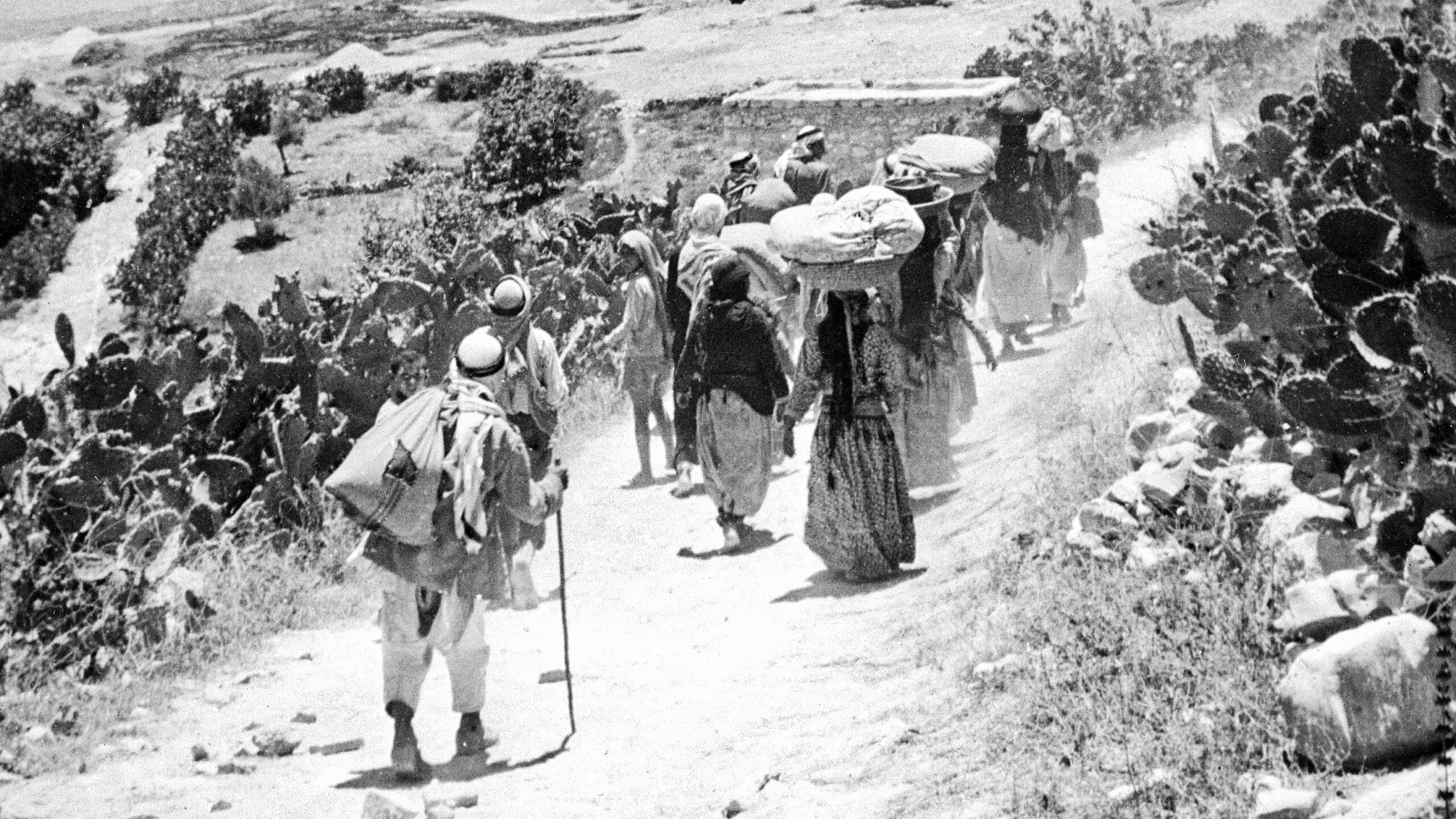
For Palestinians across the globe, May 15 is not an ordinary date on the calendar – it is a day etched in collective memory as a commemoration of loss, resilience, and a decades-long struggle for justice. Annually, millions gather to mark the Nakba, meaning “catastrophe” in Arabic, a defining turning point that refers to the 1948 displacement and ethnic cleansing of Palestinian people by Zionist militias to clear the way for the establishment of the State of Israel. To contextualize this event, the history of Palestine’s governance stretches back centuries under Ottoman rule, a period that ended when British forces seized control of the territory at the conclusion of World War I.
Following the war, the League of Nations granted Britain a formal mandate to administer Palestine, a framework that explicitly excluded input from the territory’s native Palestinian majority. While the official stated goal of the mandate system was to guide local populations toward self-governance and eventual independence, Palestine’s mandate deviated sharply from this promise: it embedded the 1917 Balfour Declaration, a pledge to create a “national home for the Jewish people” in Palestine, at a time when Jewish residents made up less than 10 percent of the total population. Over the course of the mandate era, from 1923 to 1948, Britain facilitated large-scale Jewish immigration from Europe, growing the Jewish population tenfold from roughly 60,000 before the mandate to 700,000 by 1948. British authorities also provided military training, weapons, and autonomy to Zionist armed groups, while violently suppressing native Palestinian uprisings that demanded independence and opposed the unregulated immigration project.
By 1947, growing unrest led Britain to announce it would abandon its mandate and cede authority over the Palestine question to the newly formed United Nations. In November of that year, the UN adopted a partition plan that would split historic Palestine into two entities: 55 percent of the territory would be allocated to a Jewish state, while 45 percent would go to an Arab Palestinian state, with Jerusalem designated as an internationally administered city. Like earlier arrangements, the plan was developed without any consultation with Palestinian leaders, and it never went into effect. Almost immediately after the plan was announced, Zionist armed groups launched a systematic campaign of expulsion, drawing on detailed military blueprints that had been drafted as early as 1945.
This military strategy coalesced into Plan Dalet, the official operational framework for Zionist forces that explicitly called for the destruction of Palestinian villages through arson, demolition, and mining, and mandated that in cases of local resistance, armed groups would destroy resistance forces and expel the entire civilian population outside the borders of the proposed Jewish state. Over the course of the campaign, Zionist militias deployed a range of brutal tactics to force Palestinian flight, including large-scale bombing campaigns, targeted massacres of civilian communities, and psychological warfare designed to terrorize residents into leaving. Unarmed civilian men, women, and children were killed indiscriminately, with many buried in unmarked mass graves.
Between December 1947 and May 14, 1948 – the day Zionist leaders unilaterally declared the establishment of the State of Israel, 24 hours before the British Mandate was set to officially expire – an estimated 175,000 Palestinians were expelled, and more than 200 Palestinian villages and urban neighborhoods were destroyed and seized. Following the declaration of statehood, neighboring Arab armies entered the territory to oppose Zionist expansion, leading to a full-scale war that concluded with armistice agreements between Israel and neighboring Arab states in July 1949. By the end of the conflict, the newly formed State of Israel controlled 78 percent of historic Palestine, with the remaining 22 percent held by Arab forces; that remaining territory, the West Bank and Gaza Strip, would fall under Israeli military occupation 19 years later in the 1967 Six-Day War, and remains under occupation to this day.
Final casualty and displacement figures from the 1948 campaign are staggering: an estimated 13,000 Palestinians were killed, more than 530 Palestinian villages and towns were completely destroyed and depopulated, at least 30 documented massacres were carried out, and roughly 750,000 Palestinians were forcibly expelled from their homeland. Around 150,000 Palestinians remained within the borders of the new Israeli state, the vast majority of them internally displaced from their original homes. In the years after the war, the Israeli government passed a series of laws that seized all abandoned property and assets left by expelled Palestinians – including land, homes, cash, stocks, businesses, furniture, and other personal belongings. It also enacted the Law of Return, which grants immediate Israeli citizenship to any Jewish person from anywhere in the world who relocates to Israel, while permanently barring Palestinian refugees from returning to their ancestral homes.
Today, the legacy of the 1948 Nakba endures for Palestinians across the globe. There are 5.8 million registered Palestinian refugees living in formal refugee camps across the occupied West Bank, Gaza Strip, Jordan, Syria, and Lebanon, with an additional 2 million internally displaced Palestinians holding Israeli citizenship within Israel’s 1948 borders. For Palestinians, the Nakba is not merely a historical event confined to 1948; it is an ongoing process of displacement, marked by decades of military occupation, blockade of Gaza, home demolitions, land confiscation, and systemic dispossession that continues to shape Palestinian life to this day. Every May 15, communities across the world gather to honor the lives lost, the homes destroyed, and the ongoing struggle for Palestinian self-determination, ensuring the memory of the Nakba remains central to the national Palestinian identity.