标签: Asia

亚洲

  • Trump tells Iran: ‘A whole civilization will die tonight’

    Trump tells Iran: ‘A whole civilization will die tonight’

    Tensions in the Middle East reached a fever pitch on Tuesday as former U.S. President Donald Trump issued an unprecedented apocalyptic threat to Iran, warning that the country’s entire civilization could cease to exist by nightfall unless Tehran agrees to a surrender deal to end the ongoing regional conflict. The alarming warning came as the global community held its collective breath, watching closely to see if aggressive rhetoric would translate into full-scale military escalation after Trump had set a deadline for Iran to reopen the strategically vital Strait of Hormuz.

    In a post to his Truth Social platform, Trump doubled down on his increasingly belligerent rhetoric toward the Islamic Republic. “A whole civilization will die tonight, never to be brought back again. I don’t want that to happen, but it probably will,” he wrote. The former president added that Tuesday would stand as one of the most consequential moments in modern world history, leaving global leaders and populations on edge over the prospect of catastrophic regional war.

    Parallel to Trump’s threats, multiple regional reports confirmed that Israeli forces have already launched widespread targeted strikes against Iranian infrastructure, hitting civilian and key transport sites across the country. According to Iran’s semi-official Mehr News Agency, an explosive projectile struck a residential building in the city of Shahriar, leaving at least nine people dead and 15 others injured. A separate Israeli attack targeted the Yahya Abad railway bridge in the central city of Kashan, killing two additional people. These strikes mark a significant expansion of Israeli military action within Iranian territory, deepening an already volatile conflict that began when U.S. and Israeli forces launched a joint assault on Iran in late February.

    Trump’s posture toward Iran has grown increasingly erratic over the past seven days, with the former president swinging wildly between vague hints that a negotiated settlement was within reach and extreme threats of total destruction. Just days prior on Sunday, he released a profanity-laced tirade on Truth Social, calling Iranian leaders “crazy bastards” and demanding they immediately reopen the “fuckin’ strait” of Hormuz or face “hell.”

    The Strait of Hormuz, a narrow waterway that carries roughly 20% of the world’s daily oil supplies and serves as a critical chokepoint for global energy trade, was closed shortly after the U.S.-Israeli assault on Iran began in late February. Its closure has already sent shockwaves through international energy markets, disrupting supply chains and driving up crude prices worldwide. On Tuesday alone, following unconfirmed reports of strikes on Kharg Island—Iran’s primary oil export hub in the Persian Gulf—U.S. West Texas Intermediate crude prices jumped by more than 2%, exacerbating already widespread market volatility.

    In response to the escalating threats, Iran’s Islamic Revolutionary Guard Corps (IRGC) issued a stark warning of its own Tuesday, carried live on Iranian state television. The paramilitary force made clear that any further crossing of Tehran’s “red lines” by Washington would trigger a retaliatory response that extends far beyond the Middle East region. “If the American terrorist army crosses the red lines, our response will go beyond the region,” the statement read. The IRGC added that it would target regional energy infrastructure in order to cut off U.S. and allied access to Middle Eastern oil and gas for years, and noted that Iran’s previous self-imposed limits on retaliation have been lifted, with no more restraint remaining. The warning also extended to regional partners of the United States and Israel.

    Despite the escalating violence, there have been small signs of diplomatic movement in recent days. Tehran announced last Thursday that it is working alongside Oman to draft a peacetime protocol to oversee maritime traffic through the Strait of Hormuz, which would go into effect only after the conflict with the U.S. and Israel comes to an end. Iranian Deputy Foreign Minister Kazem Gharibabadi confirmed the plan to Russian state media, according to Iran’s official IRNA news agency. Last week, an Iranian parliamentary committee also approved measures to impose shipping tolls on all vessels transiting the strait, and implement a full ban on U.S. and Israeli-flagged ships from entering the waterway.

    This report is compiled from independent on-the-ground and open-source reporting on the fast-developing regional crisis.

  • Israeli strikes on Gaza school kill 10 as health crisis deepens under siege

    Israeli strikes on Gaza school kill 10 as health crisis deepens under siege

    Five months after a ceasefire agreement was reached between Israeli forces and Hamas to de-escalate conflict in the Gaza Strip, repeated violations by Israeli military operations have sent civilian casualty numbers soaring and pushed the enclave’s already collapsing healthcare system to the brink of total failure. The most recent deadly incident unfolded Monday, when Israeli fighter jets launched an airstrike on a school in the Gaza Strip, leaving 10 Palestinians dead.

    Local media reports outline the sequence of events that led to the strike: Israeli-backed armed factions first launched a raid on the school, located east of the Maghazi refugee camp in central Gaza, with the stated goal of locating and abducting individuals on their target list. Local residents confronted the raiding groups, triggering intense armed clashes in the immediate area. In line with its longstanding practice of supporting its allied armed groups when they face resistance in Gaza, the Israeli military ordered airstrikes on the clash site, resulting in the 10 civilian fatalities.

    Palestinian health authorities confirmed Tuesday that the 10 deaths marked just a fraction of Israeli-inflicted casualties over the preceding 24-hour period, with an additional 144 Palestinians injured in separate operations across the enclave. This violence followed a deadly incident just one day prior, when seven Palestinians were killed including a United Nations contractor who worked as a driver for a World Health Organization (WHO) aid convoy that was targeted in an Israeli strike.

    WHO Director-General Tedros Adhanom Ghebreyesus released a statement expressing that he was “devastated” by the killing of the contractor, noting that an official investigation into the attack is currently underway. In the wake of this fatal incident targeting UN and WHO personnel, the United Nations has suspended its coordination of patient transfers from Gaza to Egyptian medical facilities through the Rafah border crossing. This suspension has drastically worsened the plight of an estimated 15,000 critically wounded and ill Gazans who are waiting for urgent medical care that is unavailable inside the blockaded enclave.

    Data from Palestinian officials shows that ceasefire violations have become routine for Israeli forces over the past five months. Since the ceasefire was signed, Israeli operations have killed at least 733 Palestinians, 223 of whom are children. Since the full-scale conflict began in October 2023, more than 72,300 Palestinians have been killed by Israeli forces, and more than 170,000 have sustained injuries, according to official Palestinian counts.

    Even with the ceasefire in place, Israeli military authorities continue to enforce near-total restrictions on the entry of humanitarian aid and essential goods into Gaza. In addition to blocking aid, Israeli officials also restrict the number of sick and wounded Gazans who are allowed to travel to Egypt for life-saving medical treatment.

    The Palestinian Ministry of Health has issued a stark warning that the ongoing Israeli restrictions on medical aid and patient evacuations have pushed Gaza’s medical crisis to a catastrophic tipping point. Shortages of critical supplies have reached unprecedented critical levels: only 50% of all essential medications are currently available to care providers, and more than 70% of all laboratory testing supplies have been completely depleted.

    Oncology services, which serve 4,100 Gazan cancer patients, are among the hardest hit, with a 61% shortage of specialized life-saving cancer drugs. Core medical services including primary care, neurology, nephrology, surgery, and intensive care all face essential drug shortages exceeding 40%. Critical cardiac procedures including open-heart surgeries and cardiac catheterisations have been completely halted due to a total lack of necessary resources. Additionally, 89% of all ophthalmic surgical supplies are no longer available, cutting off care for thousands of patients at risk of blindness. Overall hospital bed capacity across the Gaza Strip has fallen by more than 55%, even as the number of injured and ill patients continues to climb steadily with each new Israeli military incursion and strike.

  • China urges immediate ceasefire amid escalated Iran conflict

    China urges immediate ceasefire amid escalated Iran conflict

    As hostilities between Iran, Israel and the United States escalate sharply ahead of a US-imposed deadline for Tehran, the international community is racing to push for de-escalation and a return to diplomatic negotiations, with China leading calls for an immediate end to all fighting.

    In an official press briefing held on April 7, Chinese Foreign Ministry Spokesperson Mao Ning outlined China’s consistent stance on the spiraling crisis, emphasizing that the only sustainable path forward lies in political dialogue rather than military force. She pointed to the unlawful use of force by the United States and Israel against Iran, a violation of core principles of international law, as the fundamental root of the current heightened tension.

    “Force cannot bring peace,” Mao Ning stated. “The immediate priority is to secure a ceasefire, stop the fighting and return to the track of dialogue and negotiation in order to address the issue at its root and restore peace and stability in the Gulf region.”

    Mao noted that the rapidly deteriorating situation in the Middle East has already placed significant downward pressure on the global economy and threatened global energy security, triggering widespread concern across the international community. Since the conflict erupted, China has maintained an objective, fair and balanced position, and has worked consistently to facilitate a ceasefire. To advance diplomatic efforts, Foreign Minister Wang Yi has held 26 phone consultations with key stakeholders across the region, including officials from Iran, Israel, Russia and Gulf nations, while China’s special envoy for Middle East affairs has conducted intensive shuttle diplomacy across the region. Most recently, China and Pakistan jointly put forward a five-point peace initiative that reflects the broad international consensus in support of ending the war.

    Pakistan’s own diplomatic mediation efforts have reached a critical and sensitive stage, Reza Amiri Moghadam, Iran’s ambassador to Pakistan, confirmed in a post on the social platform X on Tuesday.

    The United Nations has also sounded the alarm over escalating rhetoric from Washington that threatens targeted attacks on Iranian energy and civilian infrastructure should Tehran refuse to accept a US-brokered deal ahead of the Trump administration’s deadline. UN Secretary-General spokesperson Stephane Dujarric told reporters on Monday that the UN is deeply alarmed by public threats targeting power plants, bridges and other civilian infrastructure.

    Dujarric reiterated that UN Secretary-General has repeatedly reaffirmed his commitment to upholding international law, and urged all parties to fully abide by their legal obligations during armed hostilities. “Civilian infrastructure, including energy infrastructure, must not be attacked,” Dujarric said, noting that even in cases where civilian infrastructure is incorrectly classified as a military target, international humanitarian law prohibits any attack that would be expected to cause excessive harm to civilian lives and property. “There is no viable alternative to the peaceful settlement of international disputes,” he added, echoing calls for an immediate end to hostilities.

    On April 6, US President Donald Trump claimed that indirect negotiations with Iran were “going well” while also threatening that the US could “take out” Iran’s military capabilities in a single night. As the deadline approaches, Iranian leaders have issued firm responses signaling national unity in the face of external threats. Iranian President Masoud Pezeshkian wrote on X on Tuesday that more than 14 million Iranians have already declared their readiness to defend the country, adding “I, too, have been, am and will be a sacrificer for Iran.”

    Ebrahim Zolfaghari, spokesperson for the Islamic Revolutionary Guard Corps’ Khatam al-Anbiya Central Headquarters, dismissed Trump’s threats as baseless, saying hostile rhetoric would not deter Iran from its military operations targeting US and Israeli assets, according to a report from Al Jazeera. Mahdi Mohammadi, an advisor to Iran’s parliamentary speaker, gave the US a stark 20-hour ultimatum, warning that if Washington does not stand down, “his allies will return to the Stone Age.”

    Iran’s Red Crescent confirmed Tuesday that US and Israeli strikes have hit 17 civilian areas across Iranian territory, calling the targeting of defenseless civilians an unjustifiable war crime under international law. Iranian media reports that at least 15 civilians were killed in overnight attacks, which targeted sites including a residential neighborhood in northern Tehran, a Jewish synagogue in central Tehran’s Enghelab district, Mehrabad International Airport, commercial areas in the Molavi district and a transport hub on Hakim Highway.

    As fast-paced tit-for-tat strikes and threats continue to dominate the region, de-escalation efforts have consistently been overshadowed by new violence. On Monday, Reuters reported that Pakistan put forward a two-stage peace plan that includes reopening the Strait of Hormuz to end US and Israeli attacks on Iran. Even as diplomatic talks continue, Gulf nations have spent days fending off cross-border attacks: Saudi Arabia’s defense ministry confirmed it intercepted and destroyed 18 incoming drones in the past 24 hours on April 7. The King Fahd Causeway, a critical transport link connecting Saudi Arabia and Bahrain, was temporarily closed after Iranian strikes targeted Saudi Arabia’s Eastern Province, but reopened hours later. Air raid sirens sounded across Bahrain and the United Arab Emirates as the region remained on high alert for an escalation of hostilities between Iran and the US-Israeli alliance.

    Qatari Prime Minister Sheikh Mohammed bin Abdulrahman Al Thani met with visiting Jordanian Foreign Minister Ayman Safadi on Monday, and emphasized the urgent need for enhanced regional cooperation to bring all parties back to the negotiating table. He called for global leaders to prioritize dialogue and reason to contain the crisis, ensuring global energy security, freedom of navigation, environmental protection and long-term regional stability.

    Across central Israel, rescue teams have been deployed to the sites of Iranian ballistic missile impacts in Rosh Haayin, Ramat Hasharon and other population centers. The Israeli Defense Forces confirmed it carried out a strike on a key petrochemical facility in Shiraz, claiming the site produced critical chemical components for explosives and ballistic missile development. The IDF added that it also struck a large ballistic missile deployment site in northwestern Iran in the same operation.

    As the deadline passes and hostilities continue to escalate, the international community remains on edge, warning that a full-scale regional war could have catastrophic consequences for global energy markets and international security.

  • Pear Blossom Festival blooms along Yellow River in Ningxia

    Pear Blossom Festival blooms along Yellow River in Ningxia

    Nestled along the fertile banks of the Yellow River in northwest China’s Ningxia Hui Autonomous Region, centuries-old pear trees have burst into full bloom, opening the curtain for one of the region’s most anticipated annual cultural and tourism gatherings.

    On April 4, the 20th Nanbei Changtan Yellow River Pear Blossom Festival, paired with a celebrated Northwest Folk Song (Hua’er) Concert, officially launched in the historic village of Nanchangtan, Zhongwei. Stretching across three days, the event weaves together three distinct layers of local identity: the millennia-old cultural legacy of the Yellow River, centuries-old regional folk performance traditions, and immersive rural tourism experiences designed to connect visitors with everyday life in the village.

    Organized to showcase Ningxia’s unique natural and cultural heritage, the festival draws tourists from across the country each year, who come to wander endless rows of snow-white blooming pear blossoms against the backdrop of the mighty Yellow River. Beyond scenic photography and nature walks, the event features a diverse lineup of themed activities tailored to different interests, from folk art workshops and local food markets to the rousing Hua’er folk concert that highlights the region’s distinct musical heritage.

    As a long-running annual event, the Pear Blossom Festival has also become a core driver of rural tourism development in Zhongwei, supporting local small businesses, homestays, and agricultural producers while introducing wider audiences to the hidden cultural gems of the Yellow River valley in Ningxia.

  • 135 million domestic trips made nationwide during the Qingming Festival holiday, with domestic tourism expenditure reached 61.37 billion yuan

    135 million domestic trips made nationwide during the Qingming Festival holiday, with domestic tourism expenditure reached 61.37 billion yuan

    China’s domestic tourism industry delivered steady year-on-year growth during the 2026 three-day Qingming Festival holiday, new official data shows, reflecting sustained momentum in the country’s domestic consumption and cultural travel sectors.

    Released on Tuesday by China’s Ministry of Culture and Tourism, the data confirms 135 million domestic trips were taken across the country between Saturday and Monday, when the 2026 holiday was held. This figure marks a 6.8% increase compared to the same holiday period in 2025. Total domestic tourism expenditure hit 61.37 billion yuan, equivalent to roughly $8.95 billion, representing a 6.6% annual rise. The ministry confirmed that the entire national cultural and tourism market operated safely, stably and in an orderly fashion throughout the long weekend.

    Qingming Festival, also widely known as Tomb Sweeping Day, is a centuries-old Chinese tradition centered on honoring deceased ancestors and revolutionary martyrs. This year’s observance fell on Sunday, creating the standard three-day weekend holiday from April 4 to 6. Across the country, memorial events drew large crowds to cemeteries, memorial halls and revolutionary heritage (or “red tourism”) sites, where visitors laid floral tributes and held silent remembrance ceremonies.

    Beyond traditional commemorative activities, spring leisure travel emerged as a major driver of holiday consumption. As temperatures warm across most of China, flower viewing and outdoor recreational activities became top travel choices for many holidaymakers. The ministry also noted that scheduled concerts and music festivals held over the weekend gave a clear boost to related local cultural and hospitality spending, while the country’s fast-growing nighttime tourism segment continued its steady expansion.

    A key factor boosting longer-distance travel this year was the alignment of the Qingming holiday with scheduled spring breaks for K-12 and university students in multiple Chinese provinces, including Jiangsu, Zhejiang, Anhui and Guizhou. This overlap created extended combined breaks of up to six consecutive days for residents in these regions, leading to a sharp rise in family vacation travel. Official data shows the share of minors among passengers on commercial flights and high-speed rail rose notably, alongside a clear increase in the number of travelers taking trips longer than 800 kilometers. Overall, family travel bookings accounted for 37% of all total tourism reservations for the holiday, cementing family groups as the largest core consumer group for the Qingming weekend.

    The steady growth of domestic tourism during the holiday adds to broader signs of recovering domestic consumption in China, with the cultural and travel sector continuing to evolve to meet changing traveler demand, from short local getaways to extended cross-region family vacations.

  • Zhuhai port vehicle traffic hits all-time high during Qingming holiday

    Zhuhai port vehicle traffic hits all-time high during Qingming holiday

    The Qingming Festival holiday wrapped up on a high note for cross-border connectivity in the Guangdong-Hong Kong-Macao Greater Bay Area, as the Zhuhai port of the Hong Kong-Zhuhai-Macao Bridge notched an unprecedented milestone in cross-border vehicle traffic. Data released by local border inspection authorities confirms that Monday, the final day of the 2026 three-day holiday, saw a historic peak in daily vehicle volumes passing through the port, marking a clear upward trajectory in cross-border travel and exchange across the Greater Bay Area.

    On that record-breaking Monday alone, border inspection personnel processed 29,800 inbound and outbound vehicles passing through the Zhuhai port. Of this total, 22,800 were Hong Kong and Macao single-plate vehicles — a classification for vehicles registered only in the two special administrative regions that are permitted to cross into the Chinese mainland. Both the overall daily vehicle count and the volume of Hong Kong and Macao single-plate vehicles shattered previous records set since the Hong Kong-Zhuhai-Macao Bridge opened to commercial traffic in 2018.

    Across the full three-day holiday period, the cumulative number of inbound and outbound vehicles passing through the Zhuhai port surpassed 77,400. This total placed the port at the top of all land border ports across China for holiday vehicle traffic volume, outperforming every other cross-border crossing nationwide.

    Further analysis of the traffic data highlights a major shift in cross-border travel patterns: Hong Kong and Macao residents driving personal vehicles into the Chinese mainland have emerged as the dominant driving force behind the port’s growing vehicle flow. Single-plate vehicles from the two special administrative regions accounted for 80.3 percent of all small passenger vehicles processed through the port during the holiday, underscoring rising demand for convenient cross-border travel, family visits, tourism and short business trips between the mainland, Hong Kong and Macao. This unprecedented traffic milestone also reflects the deepening economic and people-to-people integration that continues to reshape the Guangdong-Hong Kong-Macao Greater Bay Area, one of China’s most dynamic regional economic clusters.

  • Israel’s war on Lebanon: What exactly is the ‘Dahieh Doctrine’?

    Israel’s war on Lebanon: What exactly is the ‘Dahieh Doctrine’?

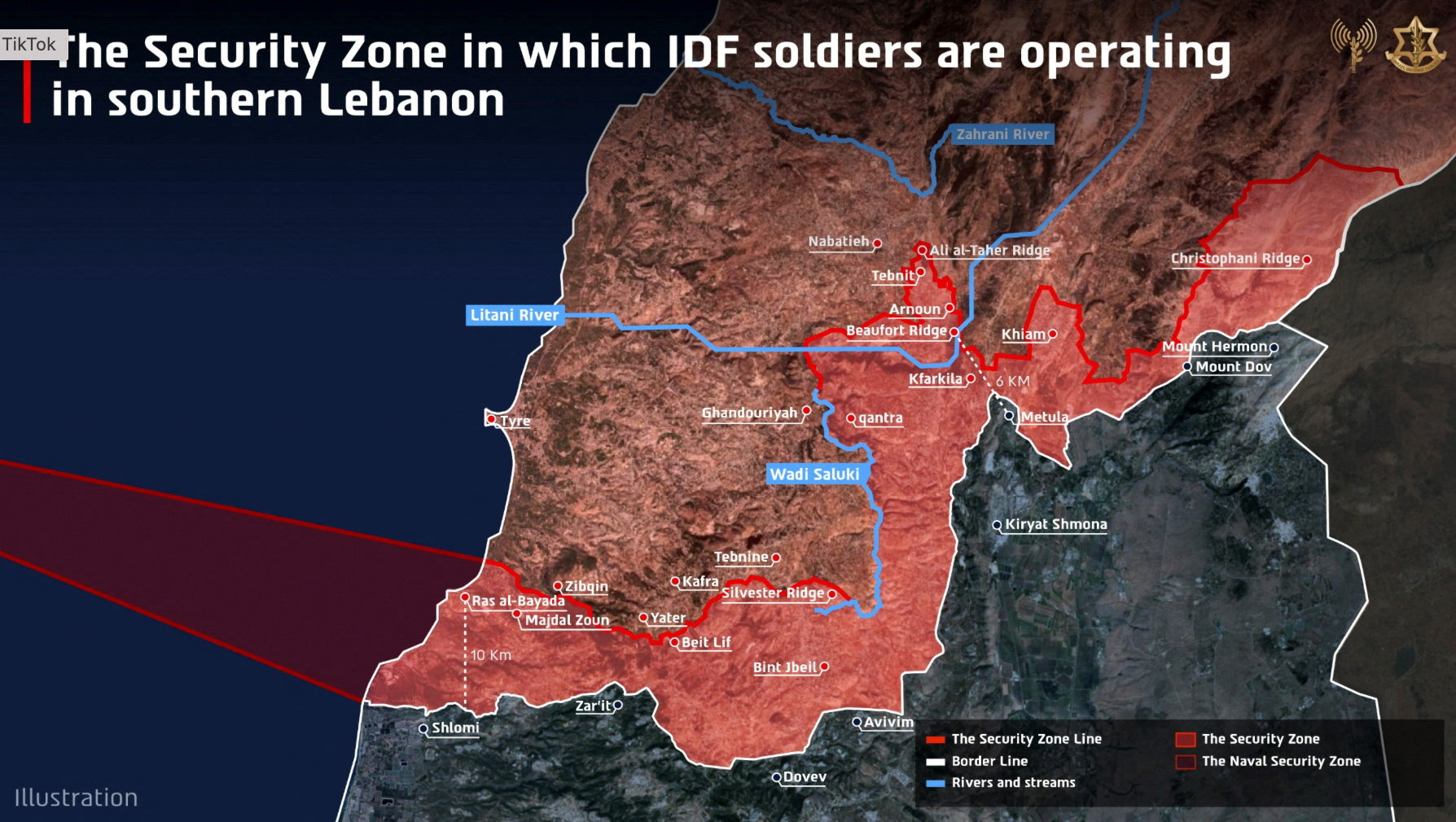
    Israel’s recent intensification of military operations against Hezbollah in southern Lebanon has triggered a devastating humanitarian crisis, with official casualty counts topping 1,300 people killed and more than one million residents displaced from their homes. Intensive Israeli airstrikes have leveled critical civilian infrastructure across southern Lebanon, including residential neighborhoods, places of worship, medical facilities, and key bridge crossings over the Litani River. One of the most heavily targeted areas has been Dahieh, the densely populated southern suburbs of Beirut, a site that holds outsized significance for Israeli military strategy: it was here that the Israeli Defense Forces first formally put the so-called “Dahieh Doctrine” into practice two decades ago.

    This controversial military strategy has since been systematically deployed by Israel across multiple conflict zones, most infamously in its ongoing military campaign in the Gaza Strip that began in October 2023, which has killed more than 72,000 people to date, the vast majority of them civilians. Even before the current Lebanon offensive launched on March 5, Israeli far-right Finance Minister Bezalel Smotrich explicitly teased the coming application of the doctrine in a video posted to X, stating that “very soon Dahieh will look like Khan Younis” — the decimated southern Gazan city that has been reduced to ruins by months of Israeli bombardment. This analysis from Middle East Eye unpacks the origins, implementation, and global legal standing of the polarizing Israeli military tactic.

    At its core, the Dahieh Doctrine advocates for the use of massively disproportionate force against civilian populations and civilian-held infrastructure in areas where armed groups are alleged to operate. The strategy’s explicit goal is to inflict widespread suffering on local civilian communities to stoke domestic resentment against the armed group in question — whether that is Hezbollah in Lebanon or Hamas in Gaza — and ultimately deter future attacks against Israeli territory.

    Dahieh, located immediately south of central Beirut, is a densely packed urban neighborhood whose population is overwhelmingly Shia Muslim, with a smaller share of residents from other Lebanese communities. A large share of the area’s residents identify as Hezbollah supporters or voters, and it also hosts many active members of the group. Many analysts, including prominent American economist Paul Krugman, traced the doctrine’s intellectual roots back to the U.S. military’s “shock and awe” strategy, which was deployed during the 2003 U.S.-led invasion of Iraq.

    The term “shock and awe” was first coined by military theorists Harlan K. Ullman and James P. Wade in a 1996 academic work. The framework argues that displays of overwhelming, overwhelming force can quickly overwhelm and demoralize both enemy combatants and the civilian population supporting them. The strategy explicitly targets core civilian infrastructure, including communication networks, transportation hubs, food production systems and water supplies to cripple everyday function in enemy-held territory. In the 2003 Iraq invasion alone, more than 6,700 Iraqi civilians were killed in the initial invasion phase, and cumulative civilian deaths across the entire subsequent conflict are estimated to reach at least 200,000. Ullman and Wade themselves cited earlier historical precedents for the approach, including the 1945 U.S. nuclear bombings of Hiroshima and Nagasaki, and the 1994 Russian assault on Grozny during the First Chechen War.

    Unlike formal, publicly documented Israeli military doctrines, the Dahieh Doctrine was first outlined explicitly by Israeli military officials and independent analysts in the aftermath of Israel’s 2006 war on Lebanon. During that conflict, Israel justified widespread bombardment across Lebanon after Hezbollah captured two Israeli soldiers. Then-Israeli Major General Udi Adam, who commanded the 2006 operation against Hezbollah, stated publicly in July 2006 that “once it is inside Lebanon, everything is legitimate – not just southern Lebanon, not just the line of Hezbollah posts.” Over the 33-day 2006 war, Israel killed more than 1,200 people and wounded more than 4,400, with the worst destruction concentrated in Dahieh, where Israeli bombing destroyed more than 15,000 residential homes.

    Major General Gadi Eisenkot, who served as Head of Israeli Military Operations during the 2006 assault, later went on to become IDF Chief of Staff from 2015 to 2019 and a cabinet minister in Benjamin Netanyahu’s far-right government from 2023 to 2024. In October 2008, two years after the end of the Lebanon war, Eisenkot openly confirmed the doctrine’s core principle: “What happened in the Dahieh quarter of Beirut will happen in every village from which Israel is fired on. We will wield disproportionate power against every village from which shots are fired on Israel, and cause immense damage and destruction. From our perspective, these are military bases. This isn’t a suggestion. This is a plan that has already been authorized.”

    That same week, Tel Aviv University’s Institute for National Security Studies published a landmark report by Israeli Colonel Gabriel Siboni titled “Disproportionate Force: Israel’s Concept of Response in Light of the Second Lebanon War” that formalized the doctrine. The report argued that “with an outbreak of hostilities, the IDF [Israeli military] will need to act immediately, decisively, and with force that is disproportionate to the enemy’s actions and the threat it poses. Such a response aims at inflicting damage and meting out punishment to an extent that will demand long and expensive reconstruction processes.” The report added that disproportionate force was necessary “to make it abundantly clear that the State of Israel will accept no attempt to disrupt the calm currently prevailing along its borders.”

    Israel has deployed this strategy repeatedly against civilian populations in the Palestinian territories, which it has occupied illegally under international law since 1967. In Gaza, data from the United Nations Satellite Centre shows that Israeli bombardment has destroyed roughly 80 percent of all structures across the strip, including residential homes, schools, hospitals, sewage treatment plants and marketplaces. Just three days into the October 2023 Israeli campaign, IDF spokesperson Daniel Hagari publicly confirmed the strategy’s priorities, stating: “While balancing accuracy with the scope of damage, right now we’re focused on what causes maximum damage.”

    As the current Lebanon offensive has expanded, Israel has already renewed heavy strikes on Dahieh itself, echoing the 2006 destruction. Before the 2023 Gaza war, Israel deployed the Dahieh Doctrine in two major prior offensives in Gaza. During the 2008-2009 invasion, Israel killed more than 1,400 Palestinians, destroyed more than 4,000 residential homes, and deployed white phosphorus munitions — weapons that cause permanent, often fatal burns — in densely populated civilian areas; just 13 Israelis were killed in the conflict. In the 2014 Gaza war, Israel killed more than 2,000 Palestinians, two-thirds of whom were confirmed civilians, including more than 500 children and nearly 300 women.

    Under core international humanitarian law treaties, the deliberate targeting of civilian populations and civilian infrastructure is explicitly classified as a war crime. Article 48 of the Fourth Geneva Convention requires that “The Parties to the conflict shall at all times distinguish between the civilian population and combatants.” Article 51 further prohibits any attack “which may be expected to cause incidental loss of civilian life, injury to civilians, damage to civilian objects, or a combination thereof, which would be excessive in relation to the concrete and direct military advantage anticipated.”

    The Rome Statute, which establishes the legal framework for the International Criminal Court (ICC) and codifies the international crimes of genocide, crimes against humanity, and war crimes, also explicitly bans disproportionate attacks on civilian communities. The statute prohibits “intentionally launching an attack in the knowledge that such attack will cause incidental loss of life or injury to civilians or damage to civilian objects or widespread, long-term and severe damage to the natural environment which would be clearly excessive in relation to the concrete and direct overall military advantage anticipated.” Currently, ICC arrest warrants are active for Israeli Prime Minister Benjamin Netanyahu and former Defense Minister Yoav Gallant, accusing the pair of committing war crimes and crimes against humanity during Israel’s ongoing military campaign in Gaza.

    The Dahieh Doctrine was formally identified and condemned by the 2009 Goldstone Report, a United Nations fact-finding commission investigation into Israel’s 2008-2009 Gaza war. The commission found that Israeli strategy during the conflict was “designed to punish, humiliate and terrorize a civilian population” and added: “The tactics used by the Israeli armed forces in the Gaza offensive are consistent with previous practices, most recently during the Lebanon war in 2006. A concept known as the Dahiya doctrine emerged then, involving the application of disproportionate force and the causing of great damage and destruction to civilian property and infrastructure, and suffering to civilian populations. The Mission concludes from a review of the facts on the ground that it witnessed for itself that what was prescribed as the best strategy appears to have been precisely what was put into practice.”

    The doctrine has also faced repeated condemnation from leading international human rights experts, including Richard Falk, the former United Nations Special Rapporteur on Palestinian human rights. Writing in April 2024, six months into Israel’s ongoing Gaza campaign, Falk noted that there was not “the slightest effort on Eisenkot’s part to reconcile the Dahiya Doctrine with international humanitarian law, which imposes a limit of proportionality on any use of force in situations of international combat.”

  • ‘Caught unawares’: France put to the test by the US-Israeli war in the Middle East

    ‘Caught unawares’: France put to the test by the US-Israeli war in the Middle East

    On March 30, former and current U.S. President Donald Trump launched a blunt, unfiltered attack on France via his Truth Social platform, accusing Paris of being “VERY UNHELPFUL” in the ongoing US-Israeli war on Iran and warning that Washington “will REMEMBER!!!”.

    The public rebuke, laced with implicit threats, stemmed directly from France’s confidential decision, implemented since the outbreak of hostilities, to deny overflight rights to American aircraft transporting military aid to Israel. Hours after Trump’s post, the Élysée Palace confirmed the policy, expressing open surprise at the sudden public criticism.

    More than a month into the conflict that has left the Trump administration bogged down in a costly campaign with no clear end in sight, Trump’s outburst lays bare growing frustration among U.S. leadership toward European allies that have refused to back its bellicose approach to Iran. For France, the choice to reject U.S. demands has been the product of a delicate high-wire balancing act: Paris seeks to avoid a catastrophic rupture in transatlantic ties while also positioning itself as a defender of multilateralism and shoring up its eroding global influence.

    The rift opened immediately after the first joint US-Israeli strikes on Tehran on February 28. In a national televised address, French President Emmanuel Macron questioned the legality of the operation, noting that while Iran bore primary responsibility for the crisis due to its nuclear program and ballistic missile development, the strikes violated international law. This position was uniformly echoed across France’s diplomatic establishment.

    In early March, French Foreign Minister Jean-Noel Barrot decried the fact that the offensive was launched without prior consultation or a mandate from the UN Security Council — the only global body authorized to legitimize cross-border military force. Nabil Hajlaoui, France’s ambassador to Oman, went even further in an exclusive interview with Middle East Eye, calling the entire operation “unjustified and illegal”, and stressing that “France’s objective is precisely to not be dragged or involved in any way in this war.”

    Karim Emile Bitar, research director at the Paris-based Institute for International and Strategic Relations and an associate professor at Saint Joseph University of Beirut, notes that Paris was caught completely off guard by the February strikes, even though France maintains critical military infrastructure in the Gulf. “France was neither consulted nor informed by the United States. The French, and more broadly the Europeans, have clearly been marginalized in this sequence of events,” Bitar explained.

    Maxime Lefebvre, a former French ambassador and professor at Sciences Po Paris, points out that this sidelining of European allies and prioritization of power politics over international law is not without precedent. He draws parallels to the 2003 U.S.-led invasion of Iraq, a comparison widely echoed by critics of the current Iran campaign. Like the 2003 war, the current conflict is framed around claims of a weapons threat — chemical weapons for Saddam Hussein’s Iraq, nuclear weapons for the Islamic Republic — the veracity of which remains heavily contested, and both are rooted in an explicit goal of regime change.

    But Lefebvre argues the parallel has clear limits: in 2003, the U.S. pursued a multilateral diplomatic process before launching the invasion, actively working to rally allies or at least negotiate buy-in. That has not been the case this time around. “Beforehand, Trump did not seek to involve the partners in the Iranian nuclear negotiations, i.e. the three major European powers [France, the United Kingdom and Germany], but also the Chinese and Russians. Nor is this the case for the aftermath, since there are no political, diplomatic or multilateral prospects,” Lefebvre added.

    A senior French diplomatic source based in the Middle East framed the current U.S. approach as a deliberate rejection of established global governance: “Today, we are witnessing a fully embraced and almost proudly proclaimed circumvention of multilateral frameworks, a fait accompli policy that is plunging the region into a new phase of instability.”

    Even as France has declined to join the offensive, its cautious neutrality has drawn criticism at home. Dominique de Villepin, the former French prime minister who became the global face of Paris’s 2003 opposition to the Iraq War, has blasted current authorities for being too timid, arguing France has failed to mobilize the European Union to end the conflict. “I believe that our democracies must and can act. Economic sanctions are possible, political sanctions are possible. France is missing the boat, it is missing history,” de Villepin said.

    Experts say France’s cautious stance stems from a long-running fear of alienating Washington. The 2019 Greenland controversy, when Trump’s public proposal to buy the territory triggered widespread European anger, already badly frayed transatlantic ties. Lefebvre summarizes Paris’s current approach: “France is trying to preserve the transatlantic relationship while setting red lines and moving towards greater European autonomy.”

    While that diplomatic autonomy remains elusive, France has already found itself pulled into the conflict through its existing military commitments in the Middle East, which are integrated into Western security architecture. Paris maintains a major air base in the United Arab Emirates, troops in Jordan, and a deployment in Iraq’s autonomous Kurdistan region. It was in Erbil that a French service member was killed and six others wounded in a March 12 drone attack claimed by Iranian-aligned Iraqi Shia militias.

    Though France’s bilateral defense agreements with Gulf states do not require it to join the US-Israeli offensive, Guillaume Ancel, a retired French lieutenant colonel, clarifies that “There is no defence commitment that France is obligated to follow. It has no obligation; there is no Article 5 [of the NATO charter, which requires collective defense for attacked allies].”

    Still, even without formal participation, French forces are indirectly supporting the war effort by helping intercept and neutralize Iranian missiles and drones launched at Israeli and Western targets, a mission that requires constant coordination with frontline forces. “Like all western countries, France is facing its limitations in terms of interception capabilities,” Ancel noted. French Rafale fighter jets have already shot down dozens of drones using advanced air-to-air missiles that cost roughly €1 million ($1.16 million) each and take 18 months to manufacture.

    After more than a month of sustained drone attacks, this has created a massive financial and logistical strain, with ammunition stocks dwindling rapidly. “Our entire concept of weaponry needs to be rethought,” French Prime Minister Sebastien Lecornu acknowledged to parliament on March 25. He unveiled plans to launch France Munitions, a centralized procurement platform that will serve domestic French forces, allied partners, and export clients, alongside an extra €8.5 billion ($9.8 billion) in munitions spending through 2030.

    Ancel explains the root of the shortfall: “We have fallen considerably behind, mainly because we no longer expected to face high-intensity conflicts. Drones have profoundly changed the nature of warfare and are leading to an overconsumption of munitions. The Americans and Israelis are in a similar situation. And the Iranians have understood this well. That is why they have opted for a sustained saturating effort rather than a massive attack.”

    Another major flashpoint is the Strait of Hormuz, the strategic waterway that carries roughly one-fifth of the world’s daily crude oil exports and has been blocked by Iran since the outbreak of war. The Trump administration has demanded European help, led by France, to reopen the strait even as hostilities continue, but Paris has refused to act until a ceasefire is reached, to avoid being labeled a co-belligerent by Tehran. That refusal has further stoked U.S. anger.

    Last week, U.S. Secretary of State Marco Rubio signaled that the U.S. would revisit its NATO commitments after the conflict, a threat French diplomatic sources dismiss as blatant pressure. “Trump is aware of Europe’s vulnerability to Russia, and he doesn’t hesitate to touch on it. It’s a real means of exerting pressure,” the anonymous source said. Lefebvre predicts European allies will pursue diplomatic concessions to preserve the alliance, but adds that “a plan B is clearly needed” to prepare for a future where the U.S. scales back its security commitments to Europe.

    Beyond the Iran crisis, France continues to navigate diplomatic efforts on the Lebanese front, where Israel has announced plans for a long-term occupation of southern Lebanon and has hinted at a policy similar to its post-2023 Gaza campaign. Leveraging its century-long historical ties to Lebanon, Paris is pushing for a diplomatic solution to the crisis. Despite its stated commitment to de-escalation, France has deployed the Charles de Gaulle aircraft carrier to the Eastern Mediterranean — officially to support Cyprus, whose British Akrotiri base was hit by a drone early in the war, but also to maintain a visible military presence near Lebanese waters.

    Bitar argues that France still has a unique role to play in Lebanon: it was Paris that guaranteed the sovereignty, unity, and territorial integrity of Greater Lebanon upon its founding in 1920, and helped prevent the country’s total fragmentation during the 1975-1990 civil war. “Today, with the possibility of Lebanon’s fragmentation once again being mentioned, France can exert pressure with its Arab allies and play a role at the United Nations, even if it remains dependent on US security guarantees and continues to operate within the western geopolitical orbit,” Bitar said.

    But the challenge remains steep, as deep domestic divisions have left Lebanon polarized: one camp blames Hezbollah for the current Israeli invasion and risk of territorial loss, while the other views the group as the only effective barrier to what it sees as Israeli expansionism. One senior Lebanese diplomat told Middle East Eye that “Sometimes one gets the impression that French diplomacy, like European diplomacy in general, is nothing more than empty words in the face of fait accompli. In Lebanon, as elsewhere, traditional diplomatic levers are no longer sufficient in the face of the profound transformations of the international system, with actors fighting for their political or sectarian survival. Today, international diplomacy is no longer based on reason or wisdom, but on power.”

  • 1 attacker killed, 4 people wounded in shootout near Israeli consulate in Istanbul — official

    1 attacker killed, 4 people wounded in shootout near Israeli consulate in Istanbul — official

    A violent shootout near the Israeli consulate in Istanbul’s upscale Besiktas district left one attacker dead and four people wounded on Tuesday, according to senior Turkish local and national officials. The targeted attack, which unfolded in one of the city’s busiest commercial hubs, sparked a large-scale emergency response that closed off the surrounding Levent neighborhood to civilian traffic.

    Istanbul Governor Davut Gul confirmed to on-site reporters that the assailants specifically targeted police officers deployed to the area for routine security duty. All injured individuals, including the two wounded officers, are reported to have only sustained minor injuries in the exchange of gunfire.

    Turkish Interior Minister Mustafa Ciftci later shared new details about the assailants via the social media platform X. He confirmed the group traveled to Istanbul from the northwestern city of Izmit using a rented vehicle. Official records show one of the two brother assailants classified as terrorists has a prior drug-related conviction, and one of the suspects has documented ties to a religiously exploited extremist organization, Ciftci added.

    Initial reporting from local Turkish broadcaster NTV differed slightly in its casualty count, stating security forces had “neutralized” two suspects and left a third critically injured. Regardless of the discrepancy in early counts, footage aired by NTV showed the immediate aftermath of the incident: dozens of heavily armed police units and emergency ambulances flooded the area, establishing a full security cordon around the site of the shooting amid heightened security alerts across the city.

  • Turkish police shoot three gunmen in clash outside Israel’s Istanbul consulate

    Turkish police shoot three gunmen in clash outside Israel’s Istanbul consulate

    A planned armed incursion at the Israeli consulate in Istanbul was successfully halted by Turkish security forces in a shootout that left one attacker dead and two others critically wounded, Turkish authorities have confirmed. All three gunmen involved were officially classified as “neutralized” following the clash, which unfolded right outside the building housing the diplomatic mission.

    According to reports from CNN Turk, the confrontation began when police officers patrolling the area ordered the armed men to halt as they advanced toward the consulate. When the attackers refused to surrender, a full gunfight erupted. Law enforcement officials believe the gunmen’s ultimate goal was to breach the consulate building and reach the floor that hosts Israel’s official diplomatic offices.

    Turkish Interior Minister Mustafa Ciftci released an official statement confirming the details of the incident, which took place outside the Yapı Kredi Plaza Blocks, the complex that houses the Israeli mission. “Three individuals who engaged in an armed clash with our police officers on duty in front of the Yapı Kredi Plaza Blocks in Istanbul have been neutralised. In the clash, two of our heroic police officers sustained minor injuries,” Ciftci said.

    Investigators have already completed the initial process of identifying the attackers. The three traveled to Istanbul from the northwestern Turkish city of Izmit in a rented vehicle. Authorities confirmed one of the gunmen has documented ties to a religiously exploitative extremist organization, and two of the attackers are biological brothers, one of whom has a prior criminal record for drug offenses.

    Additional details released by local media outlets paint a clearer picture of the attack preparation: NTV reported that the men were carrying long-range rifles, multiple stockpiles of ammunition, and were equipped with backpacks when they approached the consulate. The shootout lasted approximately six minutes from the first exchange of fire to when all attackers were neutralized, per local law enforcement accounts that match initial reports.

    It is important to note that the Israeli consulate in Istanbul has been empty of diplomatic staff for months. Following the October 7, 2023 attacks led by Hamas in southern Israel, Israel withdrew all its diplomatic and consular personnel from Turkey as a precautionary security measure, leaving the facility unoccupied at the time of the clash.

    This story remains ongoing as Turkish security agencies continue their investigation into potential broader networks connected to the attackers, and updates are expected as more information becomes available.