标签: Asia

亚洲

  • Blended travel model eases rush

    Blended travel model eases rush

    China’s national transport network has successfully navigated its first major peak travel period of 2026, with integrated air-rail and land-air intermodal services playing a key role in easing congestion amid an 842 million surge in cross-regional passenger trips over the three-day Qingming holiday, held from April 4 to 6 this year.

    New data released by China’s Ministry of Transport on April 7 shows that total cross-regional trips rose 5.6% year-on-year, with railway trips climbing 8.4% to 57.7 million. Road travel retained its position as the most popular mobility option for holidaymakers, while the first day of the break alone recorded more than 62.67 million highway vehicle trips — including over 14 million trips in new energy vehicles, a clear indicator of strong, sustained growth in domestic self-drive tourism and related consumer spending.

    Industry analysts note the higher travel volume this year was partially driven by overlapping spring break schedules at schools across multiple Chinese regions, which boosted demand for family getaways and short-distance leisure trips. Beyond the raw numbers, this holiday rush has also highlighted a rapid, ongoing transformation of China’s passenger transport ecosystem: national authorities are rolling out a new seamless travel model that enables single booking, unified payment, and uninterrupted journeys, anchored by the fast expansion of cross-modal connectivity between air, rail and road networks.

    Transport Minister Liu Wei explained that 2026 has seen accelerated investment in improving travel convenience by expanding these integrated services and simplifying end-to-end passenger journeys. To date, more than 80 major transport hub cities and over 2,000 national routes have activated formal air-rail interconnection, with 81% of China’s largest airports offering direct rail access to city and long-distance networks. During the 2026 Spring Festival travel rush that concluded in March, dozens of key hubs also launched a pilot program for mutual security check recognition between intercity rail and urban public transit systems, cutting average transfer waiting times dramatically.

    For frequent travelers, these infrastructure and service upgrades have already produced tangible changes to daily travel routines. A frequent business traveler based in Beijing, identified only as Wang, shared that he now regularly takes the subway to Beijing West Railway Station after work on Fridays, then transfers directly to a high-speed train bound for Shijiazhuang Zhengding International Airport for onward flights. “If I book my ticket far enough in advance, I can get a combined fare to Chongqing for less than 500 yuan ($73),” he explained. “Most of the time, it’s just as fast as fighting rush-hour traffic to one of Beijing’s major downtown airports, and it’s far cheaper.”

    Major transport hubs are continuing to refine their intermodal services to cut friction for transferring passengers. Cui Lin, deputy Party secretary of Beijing West Railway Station, noted the hub operates 24 daily direct train services connecting to Beijing Daxing International Airport, with roughly 1,000 passengers transferring from high-speed rail to flights via the station every day. “By moving flight check-in services forward to the railway station, we aim to create a far more convenient one-stop air-rail travel experience for all passengers,” Cui said.

    Chinese commercial airlines are also deepening their integration with national rail networks to streamline end-to-end journeys. Cai Yingzhu, general manager of marketing and sales at China Eastern Airlines’ Beijing branch, explained that passengers can now complete full airline check-in procedures directly at the connecting railway station via the carrier’s digital terminal system. “In the near future, travelers will be able to check their luggage at Beijing West Railway Station and only collect it again at their final flight destination after landing,” Cai said. “That will drastically cut down on travel time and improve overall journey efficiency.”

    Currently, passengers can already book combined “flight + high-speed rail” tickets in a single transaction through China Eastern’s official digital platform, with the system automatically matching the fastest and most convenient connecting options. “What used to require multiple independent searches and separate bookings on different platforms can now be completed in one step,” Cai added. “For families traveling together, we also offer more flexible offline seat arrangement services to meet group needs.”

  • Driverless delivery cars transform courier sector

    Driverless delivery cars transform courier sector

    Across Chinese cities and rural regions, a quiet technological revolution is transforming last-mile delivery. On a routine day in Qingdao, a coastal metropolis in eastern China’s Shandong Province, local resident Zhou Li stepped up to a boxy, driverless vehicle parked curbside, scanned a QR code on its exterior, and retrieved her grocery order of cold beer, savory sausage and roasted nuts. Minutes later, the compact autonomous vehicle glided away silently to its next drop-off, its navigation entirely self-directed.

    Zhou’s first encounter with unmanned delivery left her stunned, she recalled, adding that the service — priced at just 9.9 yuan ($1.44) for trips up to 30 kilometers — struck her as surprisingly affordable. What once seemed like science fiction has now become a common sight on Qingdao’s public streets, where roughly 1,150 autonomous delivery units currently operate, making the city one of China’s largest hubs for real-world testing and deployment of this technology.

    Unlike conventional passenger vehicles, these driverless delivery units have no steering wheel or dedicated driver cabin. Clocking in at roughly half the size of a standard sedan, they rely on sophisticated artificial intelligence systems to map optimal routes, interpret real-time road conditions, detect traffic signals and nearby obstacles, and execute automatic braking or evasive maneuvers to prevent collisions. Today, these vehicles handle a wide range of core logistics tasks across China: moving bulk parcels from central distribution hubs to local sorting stations, delivering temperature-sensitive perishable goods and cold-chain pharmaceuticals on tight schedules, and supporting internal logistics operations within large industrial parks.

    Qingdao’s largest fleet operator is Neolix, one of China’s leading domestic developers of autonomous delivery technology. The company launched its pilot service in the port city in June 2025, rolling out vehicles with a 1-ton load capacity, 6-cubic-meter cargo hold, a maximum cruising speed of 45 kilometers per hour and a 200-kilometer battery range on a single charge. According to Neolix Chief Technology Officer Miao Qiankun, the firm has been refining AI-powered visual navigation algorithms since 2021, equipping vehicles with the decision-making capabilities of a veteran human driver while drastically cutting the costs associated with map data collection and real-time updates. As of September 2025, Neolix has deployed more than 10,000 autonomous vehicles globally, partnering with major Chinese courier companies while expanding its footprint to more than 15 countries and regions across Asia, Europe and the Middle East, including Japan, South Korea, Germany and the United Arab Emirates.

    Qingdao is far from the only region embracing this innovation. Driverless delivery has moved from experimental testing to routine daily operation across more than 100 Chinese cities, supported by policy backing and growing market demand. In Shenzhen, the southern technology hub in Guangdong Province, 432 autonomous delivery vehicles completed 1.02 million drop-offs in September 2025 alone, generating 8.7 million yuan in operational revenue. In Beijing, leading on-demand delivery platform Meituan has adopted a hybrid human-machine model: autonomous vehicles transport bulk orders from warehouses to neighborhood relay points, where human couriers complete the final short-distance drop-off to customers. Even in remote rural areas of the Xinjiang Uygur Autonomous Region, unmanned vehicles now serve isolated villages located up to 60 kilometers from distribution hubs, where traditional delivery is unprofitable due to the small volume of parcels per trip.

    Industry operators highlight the drastic cost savings unlocked by this technology. Compared to traditional human-led delivery models, autonomous fleets can cut overall operating costs by nearly half, according to Yao Lei, a manager at major Chinese express provider Yunda Express. By June 2025, more than 100 Chinese cities had launched official pilot programs permitting autonomous delivery vehicles to operate on public roads. In September, China’s Ministry of Commerce and other national regulatory bodies released new policy guidelines encouraging regions with appropriate infrastructure to accelerate the development of unified operational and safety standards for the emerging sector.

    Economics professor Li Tiegang of Shandong University’s School of Economics explained that the key value of low-cost, easily dispatched, high-efficiency autonomous delivery is its ability to solve long-standing pain points in last-mile logistics, most notably rising operational costs and widespread industry labor shortages. Li noted that China’s rapid large-scale adoption of this technology stems from three overlapping factors: mature domestic autonomous driving technology, robust market demand from a fast-growing e-commerce sector, and clear policy support from national and local governments.

    The development of intelligent connected vehicles, including autonomous delivery units, is explicitly highlighted as a strategic emerging industry in China’s 14th Five-Year Plan (2026-2030), which also encourages the integration of artificial intelligence across all sectors of the economy to better meet evolving public daily needs. Li emphasized that the rollout of autonomous delivery is not aimed at replacing human workers entirely. Instead, the model centers on collaborative human-machine work: while autonomous systems optimize routine long-distance and bulk transport to improve service efficiency, the transition will also create new job opportunities in vehicle operation, maintenance and fleet dispatch.

  • Students play sports to welcome spring

    Students play sports to welcome spring

    As spring paints China’s landscapes in shades of blooming wildflowers and fresh green foliage, thousands of primary and secondary school students across the country are trading chalkboards and textbooks for hiking trails, sports fields and open wilderness, taking advantage of a newly expanded national spring break initiative designed to prioritize youth wellness over classroom time.

    Ten-year-old Zhang Zijian, a fourth-grade student from Nanjing, is among the millions of young people embracing the shift. Over a rare six-day holiday created by aligning the new regional spring break with the annual Qingming Festival, Zhang spent five straight days outdoors, exploring the scenic hills of eastern China, harvesting spring tea and digging for wild bamboo shoots alongside his friends. “It was exhausting, but the experience felt fresh and rewarding,” Zhang explained of his time away from textbooks.

    Zhang’s holiday is not an isolated exception, but part of a growing national policy experiment. Earlier this year, a national government work report called on regions with suitable geographic and logistical conditions to introduce formal spring and autumn breaks for K-12 students. In response, multiple provinces including Jiangsu, Zhejiang, Sichuan and Hunan have rolled out mandatory three-day spring breaks, which were coordinated this year with the three-day Qingming Festival public holiday to create an extended six-day window for outdoor recreation. The initiative follows a similar model to the “snow holidays” launched in several northern Chinese regions in recent years, which encourage students to hit ski slopes and embrace winter outdoor activity.

    Today, instead of sitting in crowded classrooms, students across participating regions are flocking to open fields and forested trails to take part in hiking, cycling, frisbee, tug-of-war, rock climbing and a wide range of other outdoor sports, working up a sweat under the mild spring sun.

    Local governments have moved quickly to support the new policy with structured programming and expanded access to public resources. Jiangsu’s provincial sports bureau launched a catalog of student-focused spring activity itineraries, featuring options ranging from kayaking and cycling to tactical simulation games. A kite-flying carnival held in Yangcheng as part of the initiative drew more than 1,000 participating families. In the southwestern province of Guizhou, organized youth sports events during the break included traditional team competitions like football, basketball and volleyball, alongside newer recreational activities such as rock climbing, martial arts and roller skating, drawing tens of thousands of participating students. In Huainan, Anhui province, local schools integrated spring outdoor excursions and campus sports meets into the holiday schedule, prioritizing family-focused activities including group rope skipping and community tug-of-war matches.

    The push to get students outdoors comes amid growing national concern over rising rates of childhood nearsightedness and obesity across China. Spring’s mild, comfortable temperatures make it an ideal season for sustained physical activity, which experts note can boost cardiovascular health, build muscle strength, improve motor coordination and support overall mental well-being for young people.

    Even in regions that have not yet formally adopted a regional spring break, such as Beijing, the Qingming holiday saw a sharp surge in outdoor, hands-on learning activities, with families taking children into nearby mountains to forage for wild plants, practice tree climbing and try slacklining. In the Inner Mongolia Autonomous Region, education officials have encouraged middle school students to combine physical activity with cultural learning, inviting them to practice traditional grassland sports including wrestling and archery.

    Public sports venues across participating regions have also expanded access to support the initiative. Across Jiangsu, public sports facilities extended operating hours and offer free or heavily discounted entry for student visitors during the break. At Nanjing’s iconic Olympic Sports Center, select tennis courts, badminton halls and public swimming pools opened entirely free of charge to young visitors for the duration of the holiday.

    Beyond physical health benefits, the new spring break policy is also designed to address growing concerns over excessive academic pressure and poor mental health among Chinese youth. Schools across participating regions are instructed not to assign written homework during the break, and unauthorized group tutoring and off-campus academic training are strictly prohibited for the duration of the holiday. “Without homework, my child just comes out to play football,” said Nanjing parent Wang Junjun, who watched his son play from the sidelines of a community pitch. “As long as he’s happy and healthy, we parents are happy too.”

    Researchers note that the new spring break initiative aligns with broader national efforts to strengthen physical education in China’s K-12 education system, which currently mandates a minimum of two hours of daily physical activity for all primary and secondary school students.

    “Holidays like this do more than improve children’s well-being,” said Wang Shuhua, a senior researcher at the Jiangsu Academy of Social Sciences. “They also stimulate the integration of sports and tourism, encourage spending on sporting equipment, and energize the broader sports economy. Some regions are already preparing to introduce autumn breaks as well,” she added, pointing to the potential for the policy to expand across the country in coming years.

  • Trump announces US pause on Iran strikes for two weeks

    Trump announces US pause on Iran strikes for two weeks

    In a dramatic late-Tuesday announcement on his Truth Social platform, former and current U.S. President Donald Trump confirmed he has authorized a two-week suspension of all U.S. bombing raids and offensive military operations against Iran, framing the move as a bilateral ceasefire that hinges on Tehran reopening the strategically critical Strait of Hormuz to global maritime traffic. The pivot away from imminent large-scale conflict came directly after a last-minute diplomatic appeal from Pakistan’s top leadership, which had stepped in as a neutral mediator between the two adversarial nations.

    Trump detailed that the decision to hold off on a planned major offensive, which he had threatened would destroy Iran’s “whole civilization” by the 8 p.m. EST deadline earlier that day, came out of consultations with Pakistani Prime Minister Shehbaz Sharif and Pakistan’s Chief of Army Staff Field Marshal Asim Munir. “Based on conversations with Prime Minister Shehbaz Sharif and Field Marshal Asim Munir, of Pakistan, and wherein they requested that I hold off the destructive force being sent tonight to Iran, and subject to the Islamic Republic of Iran agreeing to the COMPLETE, IMMEDIATE, and SAFE OPENING of the Strait of Hormuz, I agree to suspend the bombing and attack of Iran for a period of two weeks. This will be a double-sided CEASEFIRE,” Trump wrote in his post.

    The U.S. leader added that the bulk of outstanding disputes between Washington and Tehran have already been resolved, noting that a 10-point peace proposal submitted by Iran serves as a viable foundation for formal negotiations. “The reason for doing so is that we have already met and exceeded all Military objectives, and are very far along with a definitive Agreement concerning Longterm PEACE with Iran, and PEACE in the Middle East. We received a 10 point proposal from Iran, and believe it is a workable basis on which to negotiate,” he added.

    Shortly after Trump’s announcement, Iran’s Supreme Security Council confirmed that formal bilateral talks with the U.S. will kick off this Friday in the Pakistani capital of Islamabad, with the negotiations scheduled to run for up to 15 days. The Iranian body noted that Tehran shared its 10-point proposal with Washington via Pakistan’s diplomatic channel, and the upcoming discussions will cover core sticking points including unimpeded transit through the Strait of Hormuz, relief for crippling U.S. and international sanctions on Iran, and the full withdrawal of U.S. military forces from regional bases.

    In its official statement, the Supreme Security Council framed the outcome as a “historic” victory for Iran in the ongoing conflict, saying the country’s resistance forced the U.S. to accept Tehran’s 10-point framework. The council emphasized that the launch of negotiations does not mark the formal end of hostilities, and laid out key terms of Iran’s proposal: binding guarantees of non-aggression from the U.S. and its allies, permanent full Iranian sovereignty over the Strait of Hormuz, and immediate sanctions relief. The statement also noted that Iranian forces and their allied armed groups have inflicted heavy losses on opposing forces, and urged domestic unity among Iranians as the details of a final agreement are negotiated.

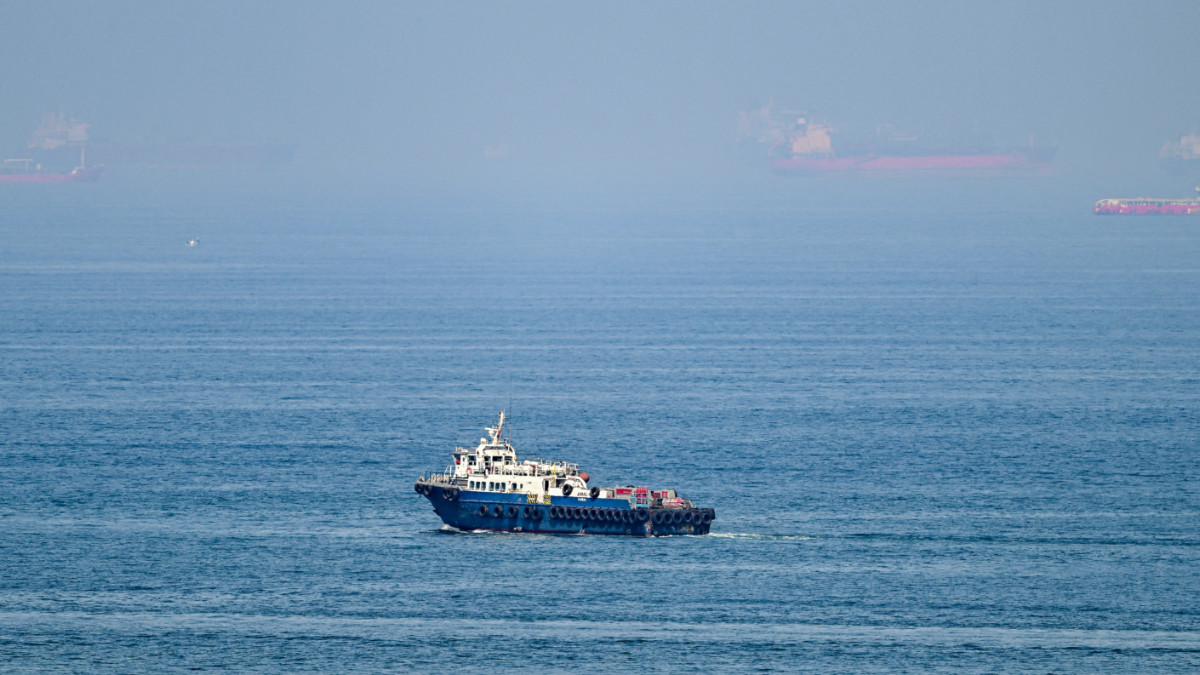
    Pakistan’s push for a ceasefire and negotiated settlement came as an 11th-hour intervention, after Trump gave Iran a stark deadline to cede control of the critical waterway, which carries roughly 20% of the world’s total global energy supplies. Just days earlier on Easter Sunday, Trump issued a profane, aggressive threat against Iran on social media, writing: “Open the fucking strait, you crazy bastards, or you’ll be living in hell…Praise be to Allah.” He doubled down on that warning Tuesday morning, reiterating that “a whole civilization will die tonight” if Tehran refused to meet his demands. Prior to the ceasefire announcement, multiple independent Iranian media reports confirmed that Israeli forces had launched strikes targeting Iranian steel and petrochemical facilities, amplifying tensions ahead of the deadline.

    Before Trump’s announcement, Sharif publicly shared his appeal for a two-week negotiation window on the X social media platform, urging both sides to pause hostilities to give diplomacy a chance to resolve the crisis. “To allow diplomacy to run its course, I earnestly request President Trump to extend the deadline for two weeks,” Sharif wrote, adding that he also called on Iran to reopen the Strait of Hormuz to all commercial traffic during the ceasefire period. “We also urge all warring parties to observe a ceasefire everywhere for two weeks to allow diplomacy to achieve conclusive termination of war, in the interest of long-term peace and stability in the region,” he added. When the Pakistani appeal was first made public, White House press secretary Karoline Leavitt told AFP that Trump had been briefed on the proposal and a response would be forthcoming.

    Earlier on Tuesday, a diplomatic development at the United Nations also shaped the crisis: Russia and China jointly vetoed a United Nations Security Council resolution put forward by Bahrain that would have authorized international military action to end Iran’s control over the Strait of Hormuz. Multiple conflicting reports emerged through Tuesday about the status of Pakistan-mediated talks, leading to initial uncertainty in global markets before Trump’s ceasefire announcement. U.S. stock markets traded mixed following the news of the diplomatic breakthrough, with the Dow Jones Industrial Average closing down 0.2% for the day while the Nasdaq Composite posted a small 0.1% gain.

  • Mideast conflict exposes Taiwan’s energy reliance

    Mideast conflict exposes Taiwan’s energy reliance

    The ongoing six-week conflict involving the United States, Israel, and Iran in the Middle East has pulled back the curtain on long-simmering energy and security vulnerabilities for Taiwan, with regional and global analysts warning that the Democratic Progressive Party (DPP) authorities’ overreliance on Washington for defense and energy security has left the island in an increasingly precarious position. This crisis has also amplified growing skepticism among Taiwan’s public and policy experts about the reliability of the United States as a purported “security guarantor” for the island.

    Analysts across academic and policy circles consistently trace Taiwan’s current vulnerabilities to the deliberate policy choices of the DPP administration, which has prioritized alignment with external forces and stoked regional tensions over constructive engagement. Experts uniformly argue that the only sustainable path to stable, peaceful development for Taiwan lies in open, consistent communication and cooperation with the Chinese mainland.

    The most immediate and visible impact of the Middle East conflict has fallen on Taiwan’s energy sector, a system already structurally weakened by overreliance on imported resources. Official data confirms that more than 96 percent of all energy consumed on the island is sourced from foreign markets, leaving it acutely exposed to any disruption of global supply chains. At an early April press briefing, Ho Chin-tsang, deputy head of Taiwan’s economic department, acknowledged that roughly 34 percent of the island’s oil shipments pass through the Strait of Hormuz, a chokepoint that has become a major flashpoint amid escalating Middle East tensions. Currently, Taiwan holds approximately 150 days of strategic oil reserves, while liquefied natural gas (LNG) stockpiles can only sustain current consumption levels for around 11 days, with existing supply forecasts projecting stability only through June.

    In a belated attempt to reduce its dependence on Middle Eastern energy supplies, the DPP administration has pushed to restructure its import portfolio, targeting a rise in U.S. LNG shipments from 10 percent to 30 percent of total imports, with Australia and Qatar each accounting for an additional 30 percent. Even with these adjustments, Ho admitted that significant uncertainty remains if Middle East tensions are sustained over the long term.

    Chen Guiqing, a senior research fellow at the Institute of Taiwan Studies of the Chinese Academy of Social Sciences, explains that Taiwan’s extreme energy vulnerability is rooted in the DPP’s longstanding ideological opposition to nuclear power, which led to the complete phase-out of all nuclear energy generation on the island. Last May, Taiwan’s leader Lai Ching-te formally declared the island had entered a “nuclear-free” era, a policy shift that forced the island to rapidly expand gas-fired power generation as renewable energy capacity failed to scale quickly enough to fill the resulting supply gap. Today, natural gas accounts for 47.8 percent of Taiwan’s power generation mix, followed by coal at 35.4 percent and renewables at just 13.1 percent, cementing fossil fuels as the backbone of the island’s energy system.

    Rising global energy costs triggered by Middle East tensions have already filtered through to industrial and consumer markets on the island. On March 31, Taiwan’s largest oil and gas supplier announced a 41.58 percent increase in natural gas prices for power sector users, including state-run Taiwan Power Company and independent power producers, to offset spiking global commodity costs. Chen warned that even a minor disruption to LNG shipments would cripple power generation across the island, posing catastrophic risks to Taiwan’s economy and the daily livelihoods of its residents.

    A separate analysis from global investment bank Morgan Stanley echoed these warnings, noting that any extended disruption to shipping routes through the Strait of Hormuz would also cut off access to critical chemical inputs required for Taiwan’s flagship advanced semiconductor manufacturing sector. Taiwan Semiconductor Manufacturing Company (TSMC) controls more than 90 percent of the global market for cutting-edge chips, and its revenue alone makes up more than 10 percent of Taiwan’s total gross domestic product, meaning a supply disruption would send shockwaves through both the island’s economy and global tech supply chains.

    Amid growing public and political pressure, Lai has recently softened his rigid anti-nuclear stance, confirming that authorities are currently evaluating the restart of two idled nuclear power plants. He cited rising electricity demand driven by economic growth and the need to strengthen energy resilience amid a shifting geopolitical landscape, but the reversal has drawn sharp criticism from opposition legislators who decry the move as evidence of a fundamentally flawed long-term energy strategy. A March public opinion poll found that 63.2 percent of Taiwanese respondents already believe the benefits of nuclear power outweigh its risks, a level of public support that has forced the DPP to confront the failure of its core energy policy. Chen notes that any concrete move to restart nuclear facilities would effectively mark the collapse of one of the DPP’s long-held core ideological positions.

    Tightening global oil supplies have already begun to disrupt daily life for ordinary Taiwanese residents, with reports of shortages of plastic bags and other petrochemical products, alongside broad price increases for consumer goods. At an April 1 press conference, Zhang Han, spokeswoman for the Taiwan Affairs Office of the State Council of the People’s Republic of China, dismissed the DPP’s claims of secure energy supplies as nothing more than “self-comfort” and “misleading reassurance.” She criticized the DPP authorities for lacking both the willingness and capacity to address pressing livelihood challenges, accusing them of systematically evading responsibility for the island’s current crisis.

    As energy resilience comes under growing public scrutiny amid rising geopolitical instability, the Lai administration has doubled down on its push to expand what it calls “defense resilience,” prioritizing massive arms purchases from the United States. A special $40 billion defense budget proposed by Lai in November 2025 remains stalled in Taiwan’s legislative yuan, with opposition parties raising widespread concerns over a lack of transparency in spending allocations. The budget is specifically earmarked for U.S. arms purchases, including development of the controversial T-Dome air defense system.

    However, the conflict in the Middle East has amplified longstanding concerns over the reliability and timeliness of U.S. arms deliveries, as Washington already faces a backlog of more than $20 billion in undelivered weapons to Taiwan due to limited U.S. domestic production capacity, a constraint that has been further tightened by U.S. military support for Israel amid the current conflict. Lu De-yun, a former senior official at Taiwan’s defense department, recently noted in a public online forum that U.S. weapons systems included in the proposed procurement plan, such as the Patriot missile defense system and the National Advanced Surface-to-Air Missile System, have demonstrated limited effectiveness in recent Middle East combat operations. He labeled the planned purchases a misguided investment that would do little to actually improve Taiwan’s defensive capabilities, instead wasting the island’s limited financial resources.

    The underperformance of U.S. defense systems in the current conflict has also drawn widespread attention from Taiwanese media. Reports have highlighted high-profile failures, including Patriot systems failing to intercept Iranian missiles, the destruction of a Terminal High Altitude Area Defense (THAAD) radar system, and the downing of multiple U.S. MQ-9 Reaper drones. The penetration of Israel’s Iron Dome defense system by Iranian missiles has also sparked intense public debate on the island over the value of the proposed T-Dome system, which is modeled on the Israeli technology.

    While Lai has pushed to increase Taiwan’s defense budget to 3.32 percent of GDP, with a stated goal of reaching the 5 percent benchmark set by NATO by 2030, independent experts uniformly reject the idea that reliance on U.S. military support can deliver long-term peace and security for the island. Chen argues that the so-called U.S. security commitment to the Taiwan Strait is nothing more than a “one-sided illusion” held by a small group of separatist figures who rely on external interference to advance their political agenda. “No amount of U.S. arms sales to Taiwan will alter the current military balance across the Taiwan Strait,” Chen explained, adding that these purchases only drain the hard-earned financial resources of Taiwan’s people and can never deliver genuine security for the island.

    Prominent U.S. economist Jeffrey Sachs reinforced this assessment during a recent interview with Taiwanese broadcaster CTITV, arguing that viewing the United States as Taiwan’s security guarantor is a dangerous mistake, and urged the Taiwanese public to reevaluate whether U.S. arms sales can truly deliver meaningful protection. “Taiwan’s security ultimately lies in peace, understanding and dialogue with the Chinese mainland,” Sachs said. “The U.S. is not a source of security; it is a magnet for war.”

    Despite widespread criticism from both domestic and international experts, Lai has continued to prioritize military buildup and frame his policy as “pursuing peace through strength,” while repeatedly emphasizing what the DPP frames as a “threat from the Chinese mainland.” Last week, four sitting U.S. senators visited Taiwan and publicly urged the island’s legislature to approve the special $40 billion defense budget. On March 26, Raymond Greene, head of the American Institute in Taiwan, the U.S.’s de facto diplomatic mission on the island, reaffirmed that Washington would continue to support Taiwan’s efforts to acquire what it calls critical defense capabilities, according to reporting from Reuters.

    Zhang Han, the Taiwan Affairs Office spokeswoman, countered that the Lai administration has deliberately whitewashed what she describes as blatant exploitation by external forces, misleading Taiwanese public opinion and willingly acting as a “cash machine” for U.S. arms dealers. The Chinese mainland has consistently attributed rising cross-Strait tensions to the DPP authorities’ pursuit of a separatist political agenda and overreliance on external interference, labeling Lai Ching-te a “troublemaker” and a “warmonger.” On March 26, Jiang Bin, a spokesman for China’s Ministry of National Defense, confirmed that the Chinese mainland will continue to strengthen combat readiness and use all necessary capabilities and measures to resolutely oppose “Taiwan independence” separatist forces and external interference in cross-Strait affairs.

    Growing disillusionment with U.S. reliability among Taiwan’s public is already visible in opinion polling. A January 2026 poll conducted by Taiwan’s Academia Sinica found that only 34 percent of respondents view the United States as a trustworthy partner, a sharp 11 percentage point drop from 45 percent in 2021. Recent trade policy actions have further eroded trust: after the U.S. Supreme Court invalidated a prior reciprocal tariff arrangement, Taiwan had pledged $500 billion in investment to secure a reduction in U.S. tariffs from 20 percent to 15 percent, only to be subsequently placed under a new Section 301 trade investigation by Washington. Despite this, Lai reaffirmed at a late March event that the U.S. is now Taiwan’s largest export market and top destination for outbound investment, and that the island will continue to deepen political and economic alignment with Washington.

    Chen notes that unconditional political and economic alignment with the United States will only invite greater demands and exploitation from Washington, adding that the only viable path for Taiwan to achieve genuine long-term security and peaceful development is to improve cross-Strait relations based on the 1992 Consensus and the one-China principle. Jennifer Kavanagh, senior fellow and director of military analysis at U.S.-based think tank Defense Priorities, has also called on Washington to adopt a nonintervention policy on the Taiwan question and allow cross-Strait issues to be resolved peacefully by people on both sides of the Strait. Ahead of a six-day visit to the Chinese mainland that began April 7, Cheng Li-wun, chairwoman of Taiwan’s opposition Kuomintang party, said both sides of the Strait can build peaceful, stable cross-Strait relations through dialogue and people-to-people exchanges, a step that would contribute to both regional stability and global peace.

  • Old photo spurs unlikely meeting three decades on

    Old photo spurs unlikely meeting three decades on

    Across the bustling northern Chinese city of Taiyuan, two photographs separated by nearly three decades have recently gone viral, touching the hearts of millions of online users across the country. The first is a faded, candid snapshot taken in 1999; the second, a sharp modern portrait captured in early 2026. Together, they tell an extraordinary story of chance connection, the passage of time, and quiet human resilience, centered around a reunion between 49-year-old veteran fruit vendor Yang Guoping and Henan-based children’s art educator Wang Mango.

    The unlikely chain of events began when Wang, a native of Jiaozuo in Henan province, was sorting through boxes of childhood belongings earlier this year. Tucked between old drawings and hand-me-down toys, she found the 1999 photo, snapped by her father during a family trip to Taiyuan when she was just 3 years old. In the frame, a lean young vendor stands behind a fruit-heavy tricycle, his face youthful and unfamiliar to Wang decades later.

    That vendor was Yang. To Wang’s surprise, her cousin, who lives locally in Taiyuan, immediately recognized Yang in the snapshot. Even 27 years after the original photo was taken, Yang still ran his fruit business within blocks of the spot where the image was captured. Wang arranged a visit, bringing the faded old photograph with her, and Yang greeted her with a mix of shock and joy — he barely recognized his own younger self in the worn shot.

    The pair returned to the approximate location of the original photo to take a new side-by-side portrait, freezing in time both the slow march of years and the unexpected, enduring bond that linked them across a generation. After Wang shared the pair of comparison photos on Douyin, China’s leading short-video platform, the content spread rapidly, drawing thousands of comments from netizens reflecting on how much both the city and the people within it had changed.

    For Yang, however, the decades of change have simply unfolded as part of his steady daily routine. He recalled to China Daily how different life was back when the first photo was taken: “Back then, hardly anyone had mobile phones, and cameras were rare. That photo was quite a novelty.”

    Yang’s journey in Taiyuan began in the early 1990s, when he left his rural hometown in Xinzhou, Shanxi, to seek work in the provincial capital. He started out as a restaurant waiter, slowly saving every extra yuan until he could afford a secondhand tricycle, and launched a mobile fruit stall on Yijing Street. By 2009, he had worked hard enough to open his own fixed brick-and-mortar fruit shop, a milestone he had spent years working toward.

    Looking back, Yang remembers old Yijing Street as a crowded, vibrant thoroughfare, buzzing with the energy of a traditional farmers’ market. Today, the street has been reborn as a trendy culinary destination, one of the most visited spots in Taiyuan. Reflecting on the changes captured in the two photos, Yang noted: “Time has left its marks, the era has progressed, and technology has developed. The old phone booth that stood in the background back then is now a 5G service center, and the entire street has been transformed. But what remains unchanged is the simplicity and kindness of people’s hearts.”

    Today, Wang runs her own small art studio for children back in Henan. She describes the cross-decade reunion as not just a magical twist of fate, but a powerful reminder of the steady perseverance that drives ordinary people. “I hope to be like him, steadfastly pursuing what I love and doing every little thing with heart,” she said.

    A closer look at the 1999 snapshot reveals another warm, untold detail: the woman standing just behind Yang is his wife, Li Xiuying. For more than 30 years, the couple has built their life around their fruit business, raising two children and helping them put down roots in the city. Over the decades, their tiny mobile stall grew into an 80-square-meter retail shop, and the beat-up secondhand tricycle was replaced by a modern delivery van. “I’m incredibly grateful for my wife’s companionship,” Yang said. “When I had nothing and started this venture, she endured hardships without complaint. Without her, we wouldn’t have what we have today.”

    Remarkably, Yang’s shop has stayed in the same neighborhood for all these years. Many of his loyal customers are people who grew up buying fruit from him as children, and now they bring their own kids to his store — a tradition Yang cherishes deeply. Even after the story went viral and drew crowds of new curious customers to his shop, Yang has remained humble. “I’m just an ordinary fruit seller. Being noticed and appreciated by everyone is already very touching. I will continue to serve each customer with care and sell the best fruits,” he said.

    Following their heartwarming reunion, Wang and Yang have already planned a future meeting: they agreed to gather again on Yijing Street for the next Chinese New Year, continuing the connection that a 27-year-old photograph first made possible.

  • Homegrown police dog bred for success

    Homegrown police dog bred for success

    On a sun-drenched early March afternoon at the Ministry of Public Security’s Kunming Police Dog Base in Yunnan Province, China’s leading training and research facility for this specialized working breed, senior trainer Long Ling and his 2-year-old Kunming dog Kunkun moved in flawless sync to complete three high-level training drills.

    Kunkun, a demonstration canine at the base, embodies the ideal temperament that breeders and trainers have spent decades refining in China’s indigenous police dog. Around civilians, he is even-tempered, gentle and playful, especially with children, but shifts instantly to a sharp, intimidating stance when confronting hostile suspects. Long describes this balanced demeanor as an “Eastern temperament” — naturally reserved and restrained, yet able to switch to intense focus and assertiveness when duty calls.

    A small moment during the on-site interview revealed just how attuned Kunkun is to his trainer’s feedback. When Long praised the dog for his sharp instincts and strong working capabilities, Kunkun settled calmly on the ground, wagging his tail in quiet contentment. But when Long brought up the young dog’s earlier incident of biting another dog and noted that he still required closer supervision, Kunkun instantly stood alert, ears perked straight up, clearly understanding he was being called out.

    The close bond between Long and Kunkun dates back to a puppy suitability assessment in 2024, when Kunkun was just 10 weeks old. While other puppies hesitated, the young Kunkun scampered straight over to Long and nipped playfully at his pant leg, displaying a fearless curiosity that caught the trainer’s eye. That natural confidence convinced Long to select the puppy for training, and he named him Kunkun in honor of the breed’s Yunnan origins.

    Over the past two years, Long has raised Kunkun like a member of his own family, personally overseeing his feeding and care even during national holidays, and treating the dog to a weekly reward of home-cooked beef. That consistent, attentive care and targeted training has turned Kunkun into an outstanding all-around working dog, excelling in tactical coordination, close-quarter reconnaissance, and long-distance obedience — the full range of skills modern security operations demand.

    As a homegrown breed developed exclusively in China, Kunming dogs have gained growing recognition for their superior adaptability to China’s diverse climates and terrain, as well as their well-balanced character traits that make them uniquely suited to domestic public security and law enforcement work. Kunkun’s development from a curious puppy to a top-performing police dog stands as a powerful example of the breed’s decades-long success as a working dog developed for China’s specific security needs.

  • Wallaby flanker Carlo Tizzano says ‘benvenuto’ to Italy ahead of Nations Championship match

    Wallaby flanker Carlo Tizzano says ‘benvenuto’ to Italy ahead of Nations Championship match

    When Rugby Australia set out to build hype for Italy’s long-awaited return to Australian soil, it could not have picked a better ambassador than Carlo Tizzano.

    Nine years have passed since Italy last competed in a rugby test match on Australian shores, and on July 18, the Azzurri will face off against the Australian Wallabies at Perth’s Optus Stadium as part of the newly launched World Rugby Nations Championship. This groundbreaking competition marks a historic shift in international rugby, pitting six top teams from the Southern Hemisphere against six leading Northern Hemisphere sides across a full annual calendar, with a grand final weekend scheduled for London this coming November to crown the first-ever overall champion of the new competition.

    For Tizzano, the 100-day countdown to the clash carries a uniquely personal twist. The back-row flanker, who currently plies his trade for Super Rugby’s Perth-based Western Force after a 2022-23 stint with England’s Ealing Trailfinders, was born and raised in Australia to parents of Italian origin. Back in 2018, former Italy head coach Conor O’Shea reached out to Tizzano to recruit him to the Italian national side, but the flanker ultimately chose to hold off on committing, a decision he has since reflected on by saying “Lucky I didn’t pull the trigger.” In 2024, he made his test debut for the Wallabies against South Africa, fulfilling a lifelong dream of representing the country of his birth.

    This upcoming test also comes against a backdrop of shifting momentum in the Italy-Australia rugby rivalry. Before 2022, Italy had never secured a victory over Australia across 20 previous meetings between the two sides. But Italy’s 28-27 win in Florence that year was no one-off upset: last November, the Azzurri claimed a second consecutive victory over the Wallabies, winning 26-19 in Udine thanks in part to two star players with deep Australian connections. Louis Lynagh, son of Australian rugby legend Michael Lynagh, and Melbourne-born Monty Ioane, nephew of former Wallabies winger Digby Ioane, scored consecutive second-half tries to power Italy’s comeback win.

    Italy’s recent rise in form has extended beyond matches against Australia, too. In March of this year, the Azzurri notched their first ever victory over England in international test rugby, signaling that the side has become a consistent contender at the top of the international rugby circuit.

    As anticipation builds in Perth for the historic July clash, Tizzano’s dual heritage offers a fitting symbolic bridge between the two nations set to face off on the pitch.

  • Trump says he agrees to suspend bombing and attack of Iran for two weeks

    Trump says he agrees to suspend bombing and attack of Iran for two weeks

    In a major development that eases immediate regional tensions across the Middle East, former U.S. President and current U.S. political figure Donald Trump has confirmed he has approved a 14-day pause on planned bombing operations and offensive military attacks targeting Iran. The announcement, first reported by Xinhua News Agency, was updated on April 8, 2026.

    The unexpected move marks a sharp shift from escalating rhetoric and military posturing between the United States and Iran in preceding weeks, which had stoked widespread international fears of a full-scale armed conflict that could disrupt global energy supplies and drag neighboring regional powers into open hostilities. A 14-day suspension of offensive operations creates a narrow window for diplomatic stakeholders to pursue de-escalation talks and open channels for negotiation to address long-standing disagreements between the two nations.

    Global governments and international observers are currently monitoring the situation closely to see whether both parties will use this pause to advance productive dialogue. The decision marks one of the most significant U.S. foreign policy moves in the Middle East so far this year, with the potential to alter the trajectory of regional security if both sides uphold the proposed truce and move toward sustained diplomatic engagement.

  • US-China space race shifts into a higher lunar gear

    US-China space race shifts into a higher lunar gear

    Following NASA’s landmark successful crewed lunar flyby mission, Artemis II, which wrapped up its 10-day lunar approach and began its return voyage to Earth, China has announced a ramp-up of its own lunar exploration program, reigniting discussion of the growing technological and geopolitical competition in deep space exploration.

    Launched on April 1, Artemis II carried four astronauts into space aboard NASA’s heavy-lift Space Launch System rocket and Orion capsule, marking the first crewed test flight for NASA’s flagship Artemis program, which aims to return humans to the lunar surface for the first time since the Apollo era. The U.S. has set a 2028 target for its first crewed landing via the Artemis III mission, while China has formally committed to landing its own astronauts on the moon by 2030, creating a tight, overlapping timeline that underscores the high stakes of this new space race.

    To advance its crewed landing goals, China is moving forward at an accelerated pace on critical heavy-lift launch infrastructure, most notably the Long March 10A rocket, a reusable next-generation launch vehicle purpose-built to carry crewed spacecraft and lunar landing hardware to orbit. According to chinastarmarket.cn, which cited Lian Jie, deputy chief engineer of the Lijian-2 rocket program, the China Manned Space Agency (CMSA) has formally approved a plan to conduct the first ever launch of the Long March 10A in mid-2026. For this mission, the Long March 10A will serve as the first-stage booster, paired with an upper stage from the commercial Lijian-2 rocket, to deliver navigation satellites into a trans-lunar injection (TLI) bound for cislunar space — the region between Earth and the moon where the two bodies’ gravitational fields interact.

    This 2026 mission will mark a number of key milestones for China’s space program: it is the first test flight of the Long March 10A, and it will also mark the first time a rocket built by a Chinese commercial space enterprise has operated in cislunar space. The Lijian-2 rocket, developed by CAS Space — a commercial spin-off from the Chinese Academy of Sciences — just completed a successful launch on March 30, placing three satellites into their intended orbits. Like SpaceX’s workhorse Falcon 9 rocket, Lijian-2 uses kerosene and liquid oxygen as propellants. Lian added that a second Lijian-2 mission, carrying a carbon-monitoring satellite focused on terrestrial ecosystem research, is scheduled for September 2026, with an upgraded design that will substantially increase the rocket’s payload capacity.

    Prior to this formal announcement, CMSA had only confirmed that the Long March 10A would launch sometime in 2026, without sharing a specific timeline. Progress on the rocket’s development has proceeded steadily in recent months: on February 11, 2026, the Long March 10A first stage completed a successful controlled sea-landing test in Wenchang, Hainan, validating key rocket recovery technologies as well as low-altitude flight performance and maximum dynamic pressure escape capabilities for China’s next-generation crewed spacecraft.

    China has also completed key ground infrastructure to support its lunar ambitions, finishing construction of two dedicated spacecraft and launch vehicle assembly towers at the Wenchang Space Launch Site. These new facilities are designed to enable parallel processing of mission hardware and cut down preparation time between crewed lunar launches.

    Observers of China’s space program note that while progress appears slower to some observers following Artemis II’s successful flight, China is sticking to its own well-defined roadmap. A Sichuan-based space columnist outlined the coming milestones: following the Long March 10A’s maiden flight in mid-2026, tests of the Mengzhou crewed lunar spacecraft are scheduled for the second half of the year, with a combined test of the Long March 10A and Mengzhou expected as early as November. If all these milestones are met, the 2030 landing target remains firmly achievable, with preparations proceeding incrementally ahead of a long-term plan to establish a sustained human presence on the moon. The Long March 10A itself is designed to be reusable, capable of lifting 14 tons to low Earth orbit (LEO), or carrying a crew capsule with up to seven astronauts.

    For the actual 2030 crewed landing mission, China will use a modified Long March 10 configuration, created by adding two additional boosters to the base Long March 10A design. This upgraded rocket will generate a total thrust of 26,250 kN, capable of lifting 70 tons to LEO and 27 tons to trans-lunar injection. For comparison, the Saturn V rocket that carried Apollo 11 to the first historic lunar landing in 1969 delivered between 43.5 and 47 metric tons to TLI.

    China will use a dual-launch architecture for its 2030 landing: one Long March 10 will launch the Mengzhou crew capsule carrying three astronauts, while a second will launch the Lanyue lunar lander. The two craft will rendezvous and dock in lunar orbit; two astronauts will transfer to the lander and descend to the lunar surface, while the third remains in orbit aboard Mengzhou. After completing surface operations, the crew will ascend back to lunar orbit, re-dock with Mengzhou, and return to Earth together.

    On the U.S. side, the Artemis program plans to conduct its first crewed landing with Artemis III in 2028, followed by Artemis IV in 2029, which will begin assembly of the Lunar Gateway orbital space station. Both missions rely on SpaceX’s Starship as the human landing system to transport crews between lunar orbit and the surface. Artemis V, targeted for 2030 or later, will expand sustained lunar operations, using Blue Origin’s Blue Moon lander under a second NASA contract. SpaceX founder Elon Musk has also stated that the company aims to build a permanent human settlement on the moon within the next decade, pairing lunar development with its long-term goal of crewed missions to Mars.

    Many industry analysts point out that as both the U.S. and China ramp up investment in lunar exploration and base development, more capital will flow into lunar infrastructure, creating more immediate commercial opportunities for space equipment suppliers and related private industries than the more distant, long-term goal of Mars exploration.

    Beyond the 2030 crewed landing, China has laid out a clear long-term lunar exploration roadmap. In August 2026, China plans to launch the Chang’e-7 probe to the lunar south pole, a region believed to hold significant deposits of water ice in permanently shadowed craters. Sun Zezhou, a senior researcher at the China Academy of Space Technology, explained that Chang’e-7 will conduct comprehensive surveys of the local polar environment, analyze lunar surface composition, map geological structures, and search for water ice that could be processed into hydrogen and oxygen for rocket fuel and life support. The mission also reflects China’s commitment to international collaboration, carrying six scientific payloads provided by international partners including Italy, Russia, Egypt, Bahrain, Switzerland and Thailand.

    Chang’e-8 is scheduled for launch around 2028, and will test key technologies for in-situ resource utilization — the ability to extract and use materials found on the moon — laying the technical groundwork for a future permanent lunar research station. After Chinese astronauts complete the 2030 landing, China plans to begin construction of the initial International Lunar Research Station (ILRS) by around 2035, developed in partnership with a coalition of international partners including Nicaragua, the Asia-Pacific Space Cooperation Organization, and the Arab Union for Astronomy and Space Sciences. The ILRS is designed as a long-term, multi-node research network linking lunar surface facilities, orbital infrastructure, and ground control systems, capable of sustained operation with periodic crewed missions.