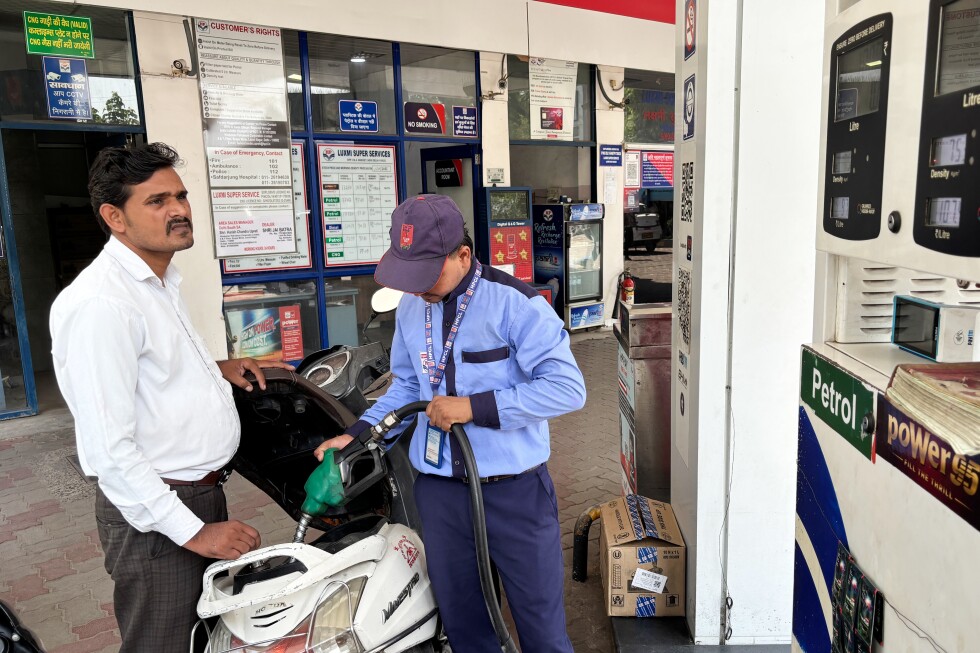
NEW DELHI – In a long-awaited policy shift triggered by spiking global crude costs, India implemented a 3-rupee ($0.03) per liter increase in retail fuel prices on Friday, marking the first major pass-through of global energy market volatility to domestic consumers in one of the world’s largest emerging economies.
Following the adjustment, retail gasoline in New Delhi now costs 97.77 rupees ($1.17) per liter, while diesel, the fuel that powers most of India’s commercial and freight sectors, has climbed to 90.67 rupees ($1.09) per liter.
As a nation that relies on imports for roughly 90% of its total crude oil demand, India has faced extreme pressure on its energy budget and foreign exchange reserves amid ongoing supply disruptions tied to the Iran war and repeated closures of the critical Strait of Hormuz chokepoint. Until Friday, New Delhi had kept retail fuel prices frozen despite months of skyrocketing global energy costs, making it the last major global economy to avoid passing crude price increases on to end consumers.
The price adjustment comes just days after Prime Minister Narendra Modi launched a national call for voluntary energy austerity, framing fuel conservation and foreign exchange savings as an act of national patriotism. In his address Sunday, Modi urged Indian citizens to work from home wherever feasible, cut back on non-essential international travel, reduce gold purchases, and expand adoption of public transit and carpooling. He also called for reduced fertilizer use across the agricultural sector to further cut import costs.
Opposition political leaders have been quick to criticize the timing of both the fuel price hike and Modi’s austerity appeal, noting that retail prices were kept artificially frozen through the entirety of a key round of state elections, only moving upward once voting concluded.
The fuel price increase is just the latest in a series of policy moves to shore up India’s strained foreign exchange reserves, which have come under heavy pressure as the Indian rupee has slid to repeated record lows in recent weeks. Earlier this week, New Delhi raised import duties on gold and silver to 15% to dampen consumer demand for the precious metals, which are one of the country’s largest import categories after crude oil.
India’s national capital has already become the first subnational government to roll out formal austerity measures to cut fuel consumption. On Thursday, New Delhi’s local government announced a 90-day fuel-saving campaign that includes mandatory two-day work-from-home arrangements for all government employees whose roles can be completed remotely. Private sector companies are being encouraged to adopt the same policy voluntarily. Delhi Chief Minister Rekha Gupta said the initiative is designed to cut official fuel consumption and encourage residents to shift from private cars to public transit.
To reduce long-term dependence on imported crude, India has also accelerated its national program to blend ethanol into gasoline. Most fuel retail outlets across the country now offer E20 gasoline, which contains 20% ethanol, and the federal government has proposed expanding access to higher-blend fuels including E85 (85% ethanol) and even pure E100 ethanol for compatible vehicles.
Energy analysts have cautioned that while expanded biofuel blending can reduce India’s exposure to global energy market shocks, it carries significant trade-offs. Increased ethanol production, which is largely sourced from food crops including sugarcane in India, could put additional pressure on already overexploited groundwater reserves, divert agricultural land away from food production, and cause damage to the engines of older vehicles not designed to run on high-ethanol blends.
AP journalist Sibi Arasu in Bengaluru contributed reporting to this article.